作者: admin

  • Trump says Iran talks could resume within ‘days’

    Trump says Iran talks could resume within ‘days’

    Diplomatic efforts across the Middle East have entered a critical new phase this week, with U.S. President Donald Trump signaling that a second round of nuclear negotiations with Iran could kick off as early as this week, even as Washington ramps up military pressure via a full naval blockade of Iranian maritime trade. The twin diplomatic pushes, which also include newly launched direct talks between Israel and Lebanon, remain deeply fragile, with ongoing clashes between Israeli forces and Iran-backed Hezbollah continuing to roil the border region and undermine ceasefire hopes.

    Trump first revealed the timeline during an interview with the New York Post on Tuesday, telling reporters that negotiations would likely reconvene in Pakistan within the next 48 hours, following an inconclusive first marathon negotiating round that ended without a breakthrough. In a separate pre-recorded interview with FOX Business set to air Wednesday, the president went a step further, claiming the broader regional conflict was “very close to being over.” Senior diplomatic sources in Pakistan confirmed to AFP that Islamabad has been working behind the scenes to bring both delegations back to the table, as Pakistani Prime Minister Shehbaz Sharif launched a four-day diplomatic tour of Saudi Arabia, Qatar and Turkey to build regional support for the negotiations.

    Parallel to the U.S.-Iran talks, a historic breakthrough occurred this week between Israel and Lebanon, which held their first direct high-level negotiation since 1993 at a face-to-face meeting in Washington mediated by U.S. Secretary of State Marco Rubio. The talks came after Lebanon was dragged into the wider conflict when Hezbollah launched attacks on Israel in solidarity with Iran, triggering a full-scale Israeli ground incursion into southern Lebanon and a sustained bombing campaign that has killed hundreds.

    After the closed-door meeting, Israeli envoy Yechiel Leiter praised the gathering as a “wonderful exchange” between parties “united in liberating Lebanon” from Hezbollah. His Lebanese counterpart, Nada Hamadeh Moawad, struck a more measured tone, describing the discussion as “constructive” while noting she had pushed forcefully for an immediate ceasefire. The U.S. State Department confirmed in a post-meeting statement that “all sides agreed to launch direct negotiations at a mutually agreed time and venue,” though Israel remains adamant that it will not agree to a ceasefire that leaves Hezbollah’s military infrastructure intact. Israeli officials have repeatedly described the Iran-aligned group as the single greatest barrier to long-term stability along their northern border, and Israeli forces continue to occupy large swathes of southern Lebanon amid ongoing operations.

    To pressure Tehran into making concessions at the negotiating table, the U.S. implemented a full naval blockade of Iranian ports this week, which U.S. Central Command announced Wednesday had been “fully implemented” and had “completely halted economic trade going into and out of Iran by sea.” However, independent maritime tracking data from Tuesday tells a more ambiguous story, showing multiple vessels departing Iranian ports and transiting the Strait of Hormuz despite the announced blockade.

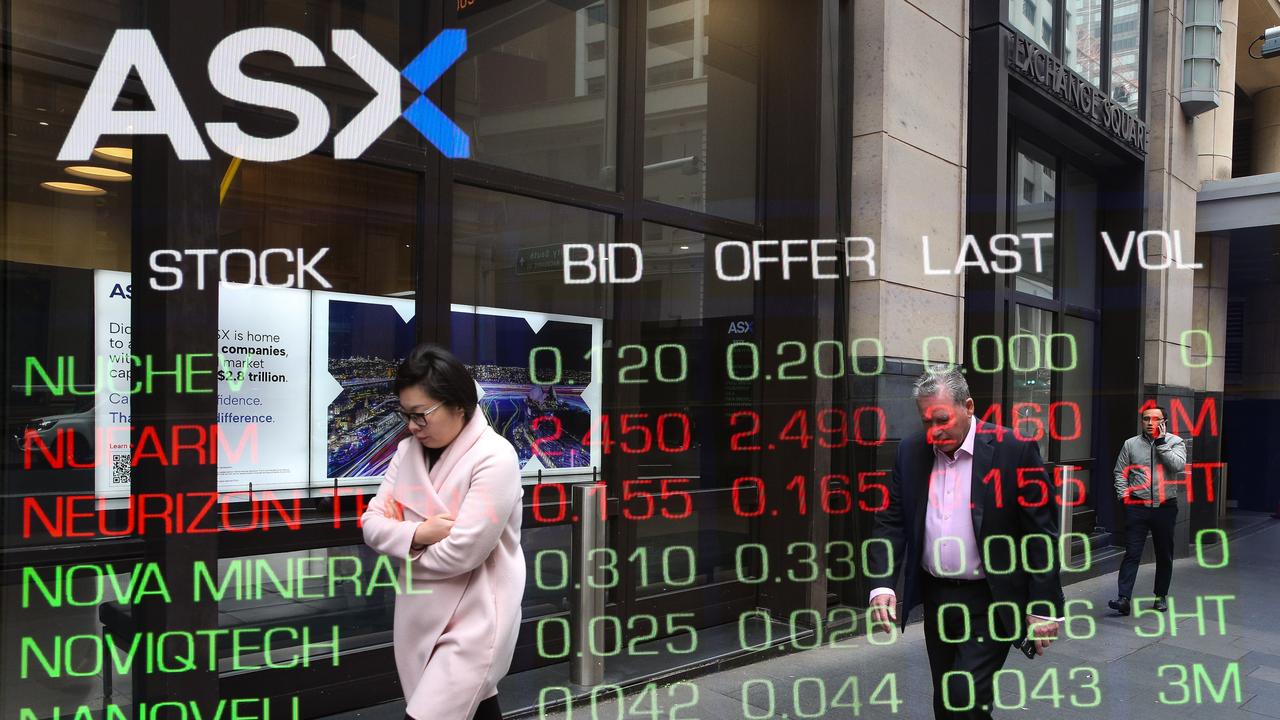
    The choke point has been closed to commercial oil traffic by Iranian forces since the start of the U.S.-Israeli offensive in late February, and hopes that a new negotiating round could lead to the strait reopening pushed global stock markets higher and pulled crude oil prices down on Tuesday. Analysts note that Trump’s pressure campaign targets not just Iranian oil revenue, but also China, Iran’s largest crude customer, with Washington hoping Beijing will use its influence to push Tehran into reopening the waterway. On Wednesday, Chinese President Xi Jinping hosted Russian Foreign Minister Sergei Lavrov in Beijing, with both leaders issuing a joint statement pledging to work together to push for de-escalation across the Middle East.

    The core sticking point in U.S.-Iran talks remains the decades-long dispute over Tehran’s nuclear program. U.S. Vice President JD Vance confirmed Tuesday that the Trump administration has put a “grand bargain” on the table for Tehran: full sanctions relief and economic integration in exchange for permanently abandoning any pursuit of a nuclear weapon. Trump launched the current conflict earlier this year on the claim that Iran was rushing to complete an atomic bomb, an allegation that has never been corroborated by the United Nations’ nuclear watchdog agency. Iran has consistently maintained that its nuclear program is exclusively for civilian energy and medical purposes.

    During the first round of talks in Islamabad, U.S. negotiators tabled a proposal demanding a 20-year suspension of all Iranian uranium enrichment activity. Iranian negotiators countered with an offer of a five-year suspension, which U.S. officials rejected out of hand. Speaking at a campaign event in Georgia Tuesday, Vance reiterated that Trump has offered Tehran a clear path: “If Iran commits to not having a nuclear weapon, the president has pledged to make Iran thrive. That’s the kind of Trumpian grand bargain that the president has put on the table. We’re going to keep on negotiating and try to make it happen.”

    Despite the optimistic hints from Washington, the security situation remains volatile: Lebanese state media reported fresh Israeli airstrikes on areas south of Beirut Wednesday, while Hezbollah, which has publicly rejected any Lebanese-Israeli negotiations, launched a barrage of dozens of rockets into northern Israeli territory hours later. The U.S. has made ending the Hezbollah-Israel conflict a top diplomatic priority, fearing that a widening war could scuttle the existing two-week ceasefire with Iran and kill any chance of a broader nuclear settlement.

  • Ex-property developer pleads guilty

    Ex-property developer pleads guilty

    One of China’s most high-profile former business leaders has entered a guilty plea in a landmark financial corruption trial that carries major implications for the country’s years-long property sector restructuring. On Tuesday, the Shenzhen Intermediate People’s Court released an official statement confirming that Xu Jiayin, the founding former chairman of embattled real estate giant China Evergrande Group, pleaded guilty to a sweeping array of charges and expressed formal remorse for his actions during the two-day court proceeding held in Guangdong province.

    The charges against Xu span seven distinct violations of Chinese law: illegal absorption of public deposits, fundraising fraud, unlawful loan issuance, fraudulent securities issuance, breach of mandatory information disclosure rules, embezzlement, and corporate bribery. Prosecutors also brought forward separate criminal charges against two core corporate entities under the Evergrande umbrella: Evergrande Group itself and Evergrande Real Estate Group, accusing the firms of committing offenses including fraudulent securities issuance and unlawful loan issuance.

    Court officials confirmed that the judicial process followed full procedural requirements. Over the course of the trial, both prosecuting teams and defense legal representatives presented evidence, delivered legal arguments, and made closing statements. The proceeding was open to a range of observers, including national-level people’s congress deputies, members of the Chinese People’s Political Consultative Conference, family members of the defendants, and representatives of retail investors who hold stakes in the troubled developer. No further details on sentencing or corporate penalties have been issued, as the court announced that a formal verdict will be handed down at a later, unspecified date.

    Xu, who built Evergrande from a small regional business into one of the world’s largest property developers after launching the firm in the 1990s, was once ranked among the wealthiest individuals in China. His rapid fall from grace began in 2023, when Chinese authorities launched a formal investigation into suspected illegal activity connected to Evergrande’s catastrophic collapse, which triggered more than $300 billion in unpaid debt and sent shockwaves through global markets. Ahead of the trial, authorities moved to seize or freeze a wide range of assets linked to Xu, including multiple companies controlled by his family and a number of personal overseas bank accounts.

    The trial marks a key milestone in China’s campaign to root out financial misconduct in its $60 trillion property sector, which has faced widespread insolvency and systemic risk since 2021, when a wave of developer defaults exposed years of reckless borrowing and opaque corporate governance. Legal analysts note that the open, transparent nature of the trial — which included public observation and an official statement via the court’s social media channel — signals the Chinese government’s commitment to enforcing accountability for high-profile figures involved in sector-wide instability.

  • HKSAR’s expanded e-cigarette ban hailed

    HKSAR’s expanded e-cigarette ban hailed

    The Hong Kong Special Administrative Region (HKSAR) is set to roll out an expanded ban on e-cigarettes and other alternative smoking products, with restrictions on public possession and use set to take effect on April 30, building on sweeping trade-focused regulations introduced in 2022.

    Under the new policy, the HKSAR Department of Health confirms that it will become a criminal offense for any individual, whether local resident or visitor, to possess or consume alternative smoking products — a category that includes e-cigarettes, heated tobacco products, and herbal cigarettes — across all public spaces once the rule enters into force.

    Penalties for violations are structured to match the severity of the offense: casual offenders, including tourists who break the rule, face an immediate fixed fine of HK$3,000 (equivalent to roughly $383 USD). For individuals found carrying quantities of prohibited products that exceed legally set thresholds, which suggests potential intent for commercial distribution, consequences rise to a maximum fine of HK$50,000 and up to six months of imprisonment.

    This latest measure strengthens the original 2022 ban, which already criminalized the import, promotion, manufacturing, sale, and commercial possession of these alternative smoking products, closing a regulatory gap that previously allowed personal possession in public spaces.

    The policy expansion has drawn widespread discussion on social media platforms across the Chinese mainland, with the overwhelming majority of users expressing clear support for the new rule. Many mainland users noted the ban would not discourage them from traveling to Hong Kong, and went a step further to call for mainland Chinese cities to adopt similar strict regulations to reduce public exposure to secondhand smoke and harmful vapor.

    Sonia Liu, a Shanghai resident who has traveled to Hong Kong multiple times, said she fully backs the HKSAR government’s tobacco control efforts, noting that stricter rules will improve the experience for non-smoking visitors and ultimately encourage more tourist visits to the city.

    “Hopefully, these measures can be strictly enforced, especially by screening tourists who intend to dodge them and imposing appropriate penalties,” Liu said. She also recommended that authorities ramp up public outreach, including posting clear warning signs at border checkpoints and running more widespread awareness campaigns on advertisements and billboards, to prevent visitors from accidentally violating the regulation out of ignorance.

    Eva, a Shenzhen resident who makes frequent cross-border trips to Hong Kong, also voiced support for the new rules but suggested that first-time offenders who unknowingly break the ban should be given more lenient treatment rather than facing full penalties immediately.

    Local opinions in Hong Kong are largely supportive, though some residents have raised questions about the scope of penalties. A Hong Kong resident surnamed Liu acknowledged that stricter legislation will help create a cleaner, healthier public environment, but questioned whether penalizing individuals simply for carrying unused e-cigarettes is excessively harsh. Another local resident, Jack So, agreed that the ban will cut down non-smokers’ exposure to secondhand vapor and deliver widespread public health benefits, but expressed hope that the regulation will eventually be expanded to cover all tobacco products to create a fully smoke-free city.

    Legislator Rebecca Chan Hoiyan framed the expanded ban as a key step to cement Hong Kong’s goal of becoming a smoke-free city, arguing that the initiative will actually boost the city’s appeal to international and domestic tourists by prioritizing public health. Addressing widespread concerns that the new restrictions could harm Hong Kong’s tourism sector, Chan pointed out that the city’s core attractions — its unique blend of Eastern and Western cultures, rich intangible cultural heritage, and diverse leisure offerings — far outweigh any concerns related to tobacco rules.

    David Lam Tzit-yuen, the Legislative Council representative for the medical sector, noted that a full, comprehensive ban on alternative smoking products sends an unambiguous public health message that these harmful products are not tolerated in Hong Kong. He described the April 30 expansion as a landmark milestone in the city’s decades-long push to raise a smoke-free new generation free from the health risks of tobacco and alternative smoking products.

    Hong Kong has built a multi-pronged, progressive tobacco control strategy dating back to the 1980s. Already, smoking is prohibited in a wide range of public spaces, including all public transport, indoor public venues, and outdoor public areas such as schools, public parks, and cinemas, with existing violations carrying the same fixed HK$3,000 penalty. In addition to strict spatial restrictions, the government also imposes high excise taxes on conventional tobacco products: a standard pack of major-brand cigarettes retails for approximately HK$105, with taxes making up roughly 63 percent of the final retail price to discourage consumption.

  • Growth focused on quality over speed

    Growth focused on quality over speed

    Against a backdrop of surging global protectionism and escalating geopolitical friction, China’s 2026 economic growth target of 4.5 to 5 percent, framed by a deliberate shift toward high-quality development over rapid expansion, is positioning the country as an irreplaceable market, production base and innovation test bed for multinational corporations worldwide, top policymakers and global business leaders have confirmed.

    After decades of prioritizing speed above all else, the world’s second-largest economy has transitioned to a new growth model centered on “new quality productive forces”, anchored in rising consumer demand, robust manufacturing foundations and accelerating homegrown innovation. The shift aligns with policy priorities laid out by Premier Li Qiang in mid-March, who outlined targeted, urgent policy measures to deliver on growth goals and advance work across all key economic priority areas.

    Expanding domestic demand by stimulating consumer spending has been named the top policy priority for 2026 in China’s Government Work Report, a reorientation designed to insulate the economy from external volatility and build a more sustainable, consumer-led growth trajectory. Han Wenxiu, executive deputy director of the Office of the Central Commission for Financial and Economic Affairs, emphasized at the late-March China Development Forum that steadily lifting consumption’s contribution to GDP is both the most critical priority and the most pressing challenge facing China’s push for coordinated, balanced economic development.

    “We must promote the formation of a development model driven more by domestic demand, propelled by consumption, and powered by endogenous growth,” Han said.

    Current data underscores the untapped potential of China’s consumer market: household spending accounted for just 39.9 percent of China’s GDP in 2024, 10 to 30 percentage points lower than the average rate seen in major developed economies. “China’s advantages as a super-sized market have not been fully leveraged,” Han noted, adding that enormous room remains for consumption growth, particularly in service sectors. A third-quarter 2025 survey from the People’s Bank of China found that Chinese households rank tourism, education, healthcare and cultural entertainment as the four categories where they most plan to increase spending in the near term, placing goods consumption fifth.

    To meet rising consumer expectations and diversify service offerings, China is rolling out pilot opening-up programs for key service sectors, including value-added telecommunications, biotechnology and wholly foreign-owned hospitals. For global enterprises, this opening creates expanded opportunities to connect with Chinese consumers and integrate into the country’s evolving market ecosystem.

    Ramon Laguarta, chairman and CEO of global food and beverage giant PepsiCo, noted that China’s 15th Five-Year Plan (2026-2030) places clear focus on expanding high-quality consumption, accelerating innovation and boosting domestic demand — priorities that align perfectly with PepsiCo’s long-term global strategy. Today, PepsiCo operates more than 70 farms, over 50 beverage bottling plants, 10 food manufacturing facilities and a dedicated R&D center in China focused on understanding local consumer preferences.

    “Many innovations inspired by traditional Chinese food culture and consumer insights have now successfully entered markets across Asia, and have even reached the United States and Europe,” Laguarta said. “China not only drives our growth — it is shaping our global future. China’s digital ecosystem allows us to test our bold ideas with far greater efficiency than anywhere else — from AI-powered supply chains to e-commerce platforms. We are constantly exploring new ways to serve consumers more effectively.”

    PepsiCo is far from an outlier. Senior industry executives across sectors report a growing cohort of multinationals now view China as more than just a large, profitable end market — it has become a critical production base for strengthening global supply chain resilience and a dynamic innovation hub for collaborative product development.

    “Whenever I come to China, I am impressed by the dynamism of this market. New technologies move quickly into practical use. Products reach the market fast. And in many industries, development takes place with remarkable speed,” said Stefan Hartung, chairman of the board of management at German industrial multinational Bosch Group.

    Commerce Minister Wang Wentao highlighted that China’s economic scale is supported by one of the world’s most comprehensive industrial systems, which includes more than 200 mature industrial clusters spanning sectors from consumer electronics to advanced materials and new energy vehicles. Beyond industrial infrastructure, Wang noted China’s human capital pool is undergoing a transformative shift: the country now boasts the world’s largest community of scientists and engineers, with its full-time equivalent R&D personnel ranking first globally.

    This growing innovation capacity has earned global recognition: the 2025 Global Innovation Index released by the World Intellectual Property Organization last September marked the first time China broke into the global top 10 for innovation performance.

    Han emphasized that after years of sustained investment, China’s indigenous innovation capacity has passed a critical inflection point, and external pressure cannot reverse its development trajectory. “In areas where gaps remain, we will accelerate efforts to catch up and run alongside,” Han said. “In areas where we have strengths, we will achieve running alongside and ultimately leading — striving to realize higher-level technological self-reliance.”

    China’s push to cultivate new quality productive forces represents a fundamental paradigm shift, prioritizing scientific breakthroughs, green transition and digital integration over the traditional factor-driven growth model of the past. At the same time, the country is actively expanding international collaboration in these high-growth fields, targeting foreign investment in advanced manufacturing, modern services, high-tech industries and environmental protection and energy conservation.

    Roland Busch, CEO of German industrial conglomerate Siemens, pointed out that while the 15th Five-Year Plan emphasizes independent innovation, it also recognizes the critical role of foreign technology and capital in achieving China’s ambitious development goals. Busch described the new five-year blueprint as an open invitation for foreign companies to deepen their participation in China’s domestic production system, adding that China serves as both a core market and a key source of innovation for Siemens. In late March, the company launched 26 new products developed and manufactured in China for distribution to global markets.

    Ola Kaellenius, chairman of the Board of Management of Mercedes-Benz Group, echoed this sentiment, noting that China is an indispensable innovation hub, particularly for electric and intelligent vehicle technology. “We are accelerating the next level of localization in China, tapping even more into the potential of its unique local ecosystem,” he said.

    Denis Depoux, global managing director of global management consultancy Roland Berger, compared China’s dynamic, competitive market to a fitness club for foreign investors: “Foreign companies have to be competitive, have to move quickly, and have to bring the most cutting-edge innovations to China,” he explained.

    Recent investment data reflects growing multinational confidence in China: the number of newly established foreign-invested enterprises in the first two months of 2026 reached 8,631, marking a 14 percent year-on-year increase, according to Ministry of Commerce data.

  • IMF report shows global economy in dangerous time, says Australian treasurer

    IMF report shows global economy in dangerous time, says Australian treasurer

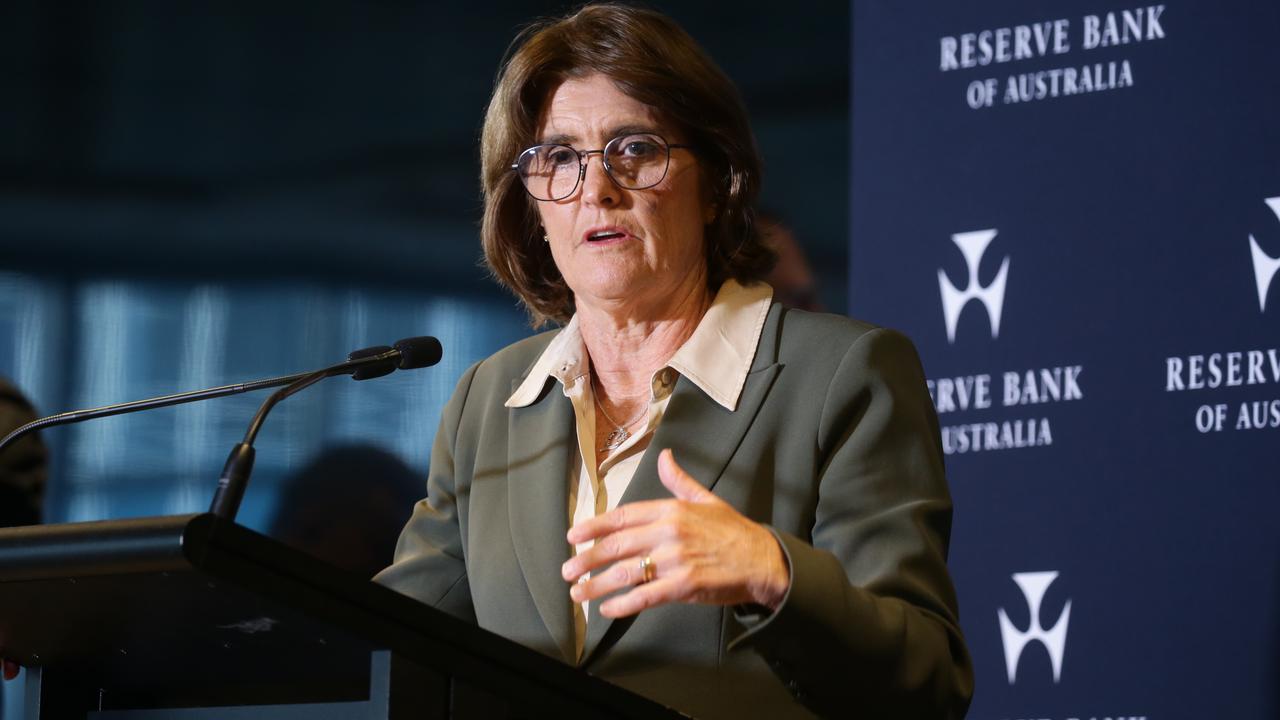
    CANBERRA, April 15 — The world has entered a perilous new phase for the global economy, rocked by persistent downside risks tied to the ongoing conflict in the Middle East, Australia’s top finance official has warned, following downbeat new projections from the International Monetary Fund.

    Australian Treasurer Jim Chalmers told public broadcaster Australian Broadcasting Corporation (ABC) Radio on Wednesday that the IMF’s latest World Economic Outlook, published Tuesday, is sounding a clear alarm over the far-reaching economic fallout of the regional conflict. The multilateral lender slashed its 2026 global growth forecast to 3.1 percent, down from earlier more optimistic projections, and outlined a severe downside scenario where sustained energy supply disruptions through 2027 could drag global growth all the way down to 2.0 percent.

    “This is a really dangerous time for the global economy. The International Monetary Fund is expecting slower growth and higher inflation, and we are too,” Chalmers said, ahead of his trip to Washington D.C. this week to attend the spring meetings of the IMF and World Bank.

    Chalmers emphasized that the conflict’s economic spillovers are already being felt by ordinary Australian households, even though the country is not a party to the hostilities. “From an economic point of view, the end of this war can’t come soon enough. Australians didn’t choose the circumstances of that war, but they are paying a very hefty price for it,” he added.

    The IMF also revised down its growth projections for Australia’s domestic economy. The lender now expects the Australian economy to expand by just 2.0 percent in 2026, a 0.1 percentage point downgrade from its January forecast, followed by 1.7 percent growth in 2027 — a sharp 0.5 percentage point cut from its earlier projection.

    On the inflation front, the IMF projects that Australian consumer price growth will tick back up from 2.9 percent in 2025 to 4.0 percent in 2026, eroding recent progress on taming rising cost of living pressures. It also issued a caution to policymakers, warning that any new government support programs introduced to ease household cost burdens would likely add additional fuel to inflationary pressures across the economy.

  • Digital avatars spark debates over human rights, ethics and job security

    Digital avatars spark debates over human rights, ethics and job security

    The concept of digital immortality, long confined to the plotlines of science fiction, has stepped out of fictional worlds and into mainstream reality, triggering fierce public and professional debate over ethics, human rights, and labor security. In the hit Hulu sci-fi series *Devs*, characters are reborn as digital entities inside a simulated universe, grappling with the question of whether their existence makes them “real” or just lines of code. Today, that fictional dilemma is playing out in real life, as artificial intelligence makes it possible to create convincing replicas of real people, from deceased public figures to currently employed workers.

    The conversation around this technology intensified last month following the death of prominent Chinese higher education influencer Zhang Xuefeng, who passed away at the age of 41. Just days after thousands of followers mourned his passing, an AI-powered digital avatar titled *Zhang Xuefeng.skill* appeared online, trained on years of the influencer’s public content including livestream recordings, media interviews, and published books. The replica preserved Zhang’s approachable communication style and core professional values, but its unauthorised creation immediately sparked widespread public outrage and ethical debate.

    Wang Ziyue, an AI researcher from Stanford University, publicly criticized the avatar in a viral video, arguing that the technology amounts to “extracting humanity from the human body and creating something that looks human but is not truly human” — a development that has left many observers with a deep sense of unease.

    Weeks before the Zhang avatar controversy, a separate experimental project titled *colleague.skill* was published to the open-source code platform GitHub, which claimed it could convert an employee’s existing workplace data into a functional digital avatar capable of replacing the original worker in their daily role. The project’s developer used dark humor to acknowledge widespread public anxiety about AI-driven automation, writing: “You AI guys are traitors to the codebase — you’ve already killed frontend, now you’re coming for backend, QA, ops, infosec, chip design, and eventually yourselves and all of humanity.” The project framed the technology as a solution to the disruptions caused by employee turnover, pitching it with the tagline: “Turn cold farewells into warm skills. Welcome to cyber immortality!”

    After going viral across Chinese social media, the project ignited a broader national conversation about the intersection of this new technology with job security, technological ethics, privacy, and personality rights. A small but growing number of companies have already begun quietly testing similar tools, according to industry insiders.

    Jia, an employee at a major Beijing-based internet company who spoke on condition of anonymity, explained that high rates of worker turnover often create costly productivity gaps for businesses. Still, she argued that unauthorised replication of workers crosses a fundamental line: “If your chat logs, emails and work documents could be used to train an AI version of you without your knowledge after you leave, this is not just a data breach — it is a disrespect for individual labor.”

    Public reaction to the trend has been deeply divided. On the Chinese social platform Xiaohongshu, one user shared a greeting from a digital replica of a former coworker that read: “I’m the digital avatar of the former employee. You may ask me questions, and I will answer based on documents from my time working here.”

    One commenter responded to the post with unease, writing: “This is spine-chilling. In the past, when someone left a job, their desk was cleared and their work account deactivated. Now, even after your physical self has moved on, your ‘digital ghost’ remains trapped in your former workplace, working for the boss for free.” Another user made an unconfirmed claim that their employer forced them to train an AI model of their own work skills just before terminating their contract.

    Legal experts have warned that unregulated use of this technology carries significant legal and ethical risks. Meng Zedong, a Beijing-based lawyer with Yingke Law Firm, explained that collecting an individual’s private work records, emails, and personal work documents without explicit consent qualifies as an abuse of personal information under Chinese law. “Intellectual property such as design drawings and technical plans created during employment belongs to the company,” Meng noted. “However, logical thinking, communication habits and work experience are part of personal privacy. Companies have no right to use such data to train AI without the individual’s knowledge.”

    Meng added that if an AI avatar can be traced back to a specific identifiable individual, it may also violate that person’s personality rights. “Chinese law stipulates that personal dignity is inviolable. Such acts may violate that principle and contravene public order and good morals,” he said.

    Wang Yegang, a professor of law at the Central University of Finance and Economics, echoed that assessment, noting that creating unauthorised digital replicas using personal data can infringe on multiple distinct civil rights. If a replica uses a person’s name, voice, or unique identity, it immediately violates personality rights, he explained, and if the avatar makes inappropriate statements that damage the original person’s reputation, it can also qualify as defamation.

    Wang added that companies generally have no legal grounds to force employees to train AI systems using their personal skills and professional habits, as this does not qualify as a necessary component of routine labor management. “Individuals who find themselves replicated have the right to request deletion of data, destruction of models and an apology,” Wang said. “They may also seek compensation for property damage and emotional distress.”

    Not all industry observers view the rise of digital worker avatars as entirely negative. Li Qiang, vice-president of major Chinese recruitment platform Zhaopin, noted that some legitimate businesses are testing the technology as a way to codify exiting employees’ professional knowledge into shared organizational assets, reducing the workflow disruptions that commonly occur when experienced staff leave a role.

    Li added that the technology is unlikely to cause mass layoffs in the short term, because AI avatars built from existing employee data are only capable of handling structured, routine tasks, and cannot replace human workers when it comes to complex decision-making or interpersonal coordination. That said, he did warn that overreliance on these systems could carry long-term risks for corporate innovation. “AI is good at replicating past experience, but human judgment is still essential when confronting new problems,” he explained.

    Li urged the public and policymakers to take a balanced approach to the emerging technology. “Every technological revolution redefines human value,” he said. “This time, AI may help us better understand which abilities are truly unique to human beings.”

  • Calls grow for diplomacy amid sea standoff, retaliation threats

    Calls grow for diplomacy amid sea standoff, retaliation threats

    Tensions between the United States and Iran have reached a new boiling point this week, as a newly imposed US naval blockade on Iranian ports has triggered sharp retaliatory threats from Tehran, even as global and regional diplomatic momentum builds to convene a second round of high-level nuclear talks. Pakistan has emerged as a key intermediary, confirming it is ready to host the next round of negotiations after the first round of talks in Islamabad collapsed in a stalemate over the weekend.

    Despite the breakdown of initial negotiations, top US officials have signaled openness to compromise. JD Vance, the US Vice President who led the American delegation to the first talks, told Fox News on Monday that Washington had already made significant headway in laying out potential concessions for Tehran. “I really think the ball is in the Iranian court, because we put a lot on the table,” Vance said, with a second senior US administration official confirming that ongoing behind-the-scenes work continues to salvage a diplomatic agreement.

    The current showdown took shape on Monday, when the US naval blockade officially entered into force. Iran responded immediately with a credible threat of retaliation that has raised global alarms: the standoff threatens to upend fragile global economic recovery, disrupt critical energy supply chains, and collapse the existing ceasefire to resume full-scale open hostilities between the two nations. The International Energy Agency issued a stark warning on Tuesday, noting that crude oil demand is projected to see its sharpest second-quarter decline since the 2020 COVID-19 pandemic crashed global markets.

    In a related military move, US Naval Institute News reported this week that the USS George H.W. Bush aircraft carrier is rerouting to the Arabian Sea along the African coast, intentionally bypassing the Red Sea and Bab el-Mandeb Strait. The detour avoids the strategic waterway that has been the site of repeated drone and missile attacks on US shipping by Yemen’s Houthi militants in 2024 and 2025.

    An Iranian military spokesman condemned the US shipping restrictions as unlawful acts of piracy, issuing a clear warning that if Iranian commercial ports are placed under blockade, no ports across the Persian Gulf or Gulf of Oman will remain safe from retaliation.

    Core disagreements between the two sides remain centered on the future of Iran’s nuclear program. US President Donald Trump has repeatedly stated that any final agreement must permanently end Iran’s capacity to develop a nuclear weapon, while Iranian officials have consistently reaffirmed that their country’s nuclear activities are exclusively for peaceful civilian energy and medical purposes. Trump told reporters on Monday that Tehran has reached out to Washington to signal its strong desire to reach a negotiated settlement: “They’d like to make a deal. Very badly, very badly.”

    Details released by The New York Times shed light on the gap between the two sides’ initial proposals from the Islamabad talks. During the weekend negotiations, US negotiators pushed for a 20-year suspension of Iran’s uranium enrichment program, while Iran countered with an offer of a five-year freeze on enrichment activities, a proposal US officials rejected outright.

    Pakistan, which hosted the first round of discussions, has ramped up its diplomatic mediation efforts. Pakistani Prime Minister Shehbaz Sharif confirmed Monday that the country is making “all-out efforts” to broker a final agreement that would end hostilities, adding that the current ceasefire between the two sides remains intact. Hadi Golriz, head of press for Iran’s embassy in Islamabad, told Xinhua News Agency on Tuesday that while future talks could be held at any time and any location, no official agreement on timing or venue has been reached yet, dismissing some earlier media reports of an agreement to reconvene this week as “baseless.” Despite Golriz’s pushback, Reuters earlier this week cited multiple anonymous sources confirming that both sides are preparing to return to the Pakistani capital as early as the end of this week.

    Regional analysts note that both Tehran and Washington are actively seeking a diplomatic exit from the current crisis, but each needs a face-saving way to back away from open conflict. Mohamad Elmasry, a professor at the Doha Institute for Graduate Studies, told Al Jazeera that the ongoing conflict has imposed extreme costs on both nations and the wider region. “Iran has greater leverage than it did at the start of the war, but I have no doubt they would seek an end to hostilities,” Elmasry said.

    Iranian President Masoud Pezeshkian has reaffirmed Tehran’s red line for future negotiations, stating that Iran will only continue talks within the framework of international law, according to Iran’s state broadcaster IRIB. Third-party diplomatic offers remain on the table to help bridge the gap: Kremlin spokesman Dmitry Peskov confirmed Tuesday that Russia’s standing offer to accept Iran’s enriched uranium as part of a potential final deal between the US and Iran remains available.

  • The Middle East war: latest developments

    The Middle East war: latest developments

    Just hours after Lebanon and Israel reached an agreement to begin direct negotiations in Washington, fresh military violence upended the region on Wednesday, bringing new volatility to a conflict that continues to ripple across global energy markets and international diplomacy.

    Israeli military forces carried out two targeted strikes on vehicles in southern Lebanon, Lebanese state media confirmed Wednesday. One strike hit a vehicle in the coastal town of Saadiyat, while the second targeted a car on the coastal highway in nearby Jiyeh, located roughly 12 miles south of Beirut and outside the traditional strongholds of the Iran-aligned militant group Hezbollah. In response to the strikes, Hezbollah launched approximately 30 rocket projectiles toward northern Israeli territory starting in the early hours of Wednesday, an Israel Defense Forces spokesperson confirmed to Agence France-Presse. Israeli authorities also issued a new mandatory evacuation order for civilian residents in southern Lebanon, escalating warnings ahead of anticipated further clashes.

    The fresh outbreak of violence came as diplomatic activity surrounding the broader Middle East conflict accelerated across multiple fronts. Pakistan’s Prime Minister Shehbaz Sharif launched a four-day shuttle diplomacy tour Wednesday, with stops planned in Saudi Arabia, Qatar and Turkey, as regional powers position themselves ahead of potential new peace negotiations between the United States and Iran.

    In a major development that lifted global market sentiment, former U.S. President Donald Trump announced Wednesday that a second round of direct talks between U.S. and Iranian negotiators could begin within 48 hours, stoking widespread optimism that a breakthrough deal could reopen the strategically vital Strait of Hormuz, through which roughly a fifth of global oil supplies pass daily. Trump reinforced that optimistic tone in an interview with Fox Business Network’s *Mornings with Maria*, set to air Wednesday, saying the open conflict with Iran is “very close to being over.”

    Market indicators reacted immediately to the news of upcoming talks: South Korea’s Kospi index surged more than 2%, ending the trading session just hundreds of points away from its all-time record high, while major European indices in London and Frankfurt held steady. Crude oil prices, which have spiked repeatedly amid conflict-related supply disruptions, dropped for a second consecutive session, with West Texas Intermediate crude trading at approximately $90.39 per barrel and Brent North Sea crude settling at $94.62 per barrel.

    Despite the upbeat rhetoric around upcoming negotiations, U.S. authorities have moved to maintain harsh economic pressure on Tehran. U.S. Central Command confirmed that American naval forces have “completely halted economic trade going into and out of Iran by sea,” though maritime tracking data from Tuesday showed multiple commercial vessels that recently docked at Iranian ports passing through the Strait of Hormuz in open defiance of the U.S. naval blockade. Industry analysts note that Trump’s blockade strategy targets not just Iranian oil export revenue, but also aims to pressure China — Iran’s largest crude oil customer — to compel Tehran to reopen the critical chokepoint.

    The U.S. Treasury Department announced Tuesday it will not extend a temporary sanctions waiver that allowed for the sale of Iranian oil already held in storage tankers at sea, a measure originally introduced to cushion global supply shocks caused by the conflict. The short-term authorization is set to expire in coming days and will not be renewed, the department confirmed, adding that it remains committed to “maintaining maximum pressure” on the Iranian government.

    U.S. Vice President JD Vance laid out the core U.S. negotiating position Wednesday during an event hosted by conservative advocacy group Turning Point USA, saying Trump has offered Iran a clear grand bargain: Tehran will be allowed to rebuild economically and “thrive” if it commits to permanently abandoning its nuclear weapons program. The dispute over Iran’s nuclear activities remains the central sticking point in any potential diplomatic deal; Trump launched the original conflict on the claim that Iran was developing an atomic weapon, a charge Tehran has repeatedly denied. “That’s the kind of Trumpian grand bargain that the president has put on the table. Man, we’re going to keep on negotiating and try to make it happen,” Vance said.

    Diplomatic activity is also ramping up in Beijing, where regional and global powers are coordinating positions amid the conflict. Chinese President Xi Jinping met with Russian Foreign Minister Sergei Lavrov this week, Chinese state media reported, as a wave of leaders from conflict-impacted states travel to the Chinese capital for talks. Lavrov told reporters after the meeting that Russia stands ready to “compensate” for any energy shortages China may face if Strait of Hormuz shipping remains disrupted by the ongoing conflict, according to Russian state media reports.

    In a separate humanitarian development, Sri Lanka has completed the repatriation of 238 Iranian sailors who were stranded in the South Asian nation after their vessel was torpedoed by a U.S. submarine in the Indian Ocean on March 4, a Sri Lankan government minister confirmed to AFP.

  • Ottawa eyes pragmatic approach to Beijing ties

    Ottawa eyes pragmatic approach to Beijing ties

    Following a series of landmark high-level exchanges between China and Canada, Canadian policy and academic experts say Ottawa is moving toward a distinctly pragmatic approach to resetting its strained bilateral relationship with Beijing, after years of diplomatic friction.

    The turning point traces back to the January meeting between Chinese President Xi Jinping and Canadian Prime Minister Mark Carney, a gathering that former senior Global Affairs Canada official Jeff Mahon described as laying the groundwork for a “positive upward trajectory” in Canada-China relations.

    Mahon, who previously served as deputy director of Global Affairs Canada’s China division, noted that both governments have already taken tangible, good-faith steps to advance cooperation. Most notably, the two sides have moved forward with commitments outlined in a preliminary agreement-in-principle, launching measures to roll back some of the restrictive trade barriers that have hampered bilateral commerce for years.

    “While more work remains to be done in order to deepen and expand collaboration, these initial steps highlight the good-faith approach adopted by the two leaders,” Mahon told China Daily in an interview.

    The most recent concrete demonstration of Ottawa’s outreach came with an official visit to Beijing by Canadian Finance Minister Francois-Philippe Champagne, a trip that experts frame as a direct follow-through on the January summit outcomes. To expand structured, institutional cooperation, Mahon explained that both countries are advancing joint initiatives aligned with a pre-agreed bilateral road map, and have formally agreed to establish a new financial working group. This new body will create dedicated channels for regulatory and policy officials to deepen collaboration across Canada’s competitive financial services sector, opening new doors for private sector engagement on both sides.

    More frequent high-level dialogue has also emerged as a core pillar of the improved relationship, creating space for candid, constructive exchanges on thorny sensitive issues while creating momentum for expanded collaborative work, Mahon added. This shift, he noted, reflects a deliberate broader policy reorientation by the Canadian federal government in Ottawa.

    Even as ties warm, both sides will need to manage existing differences with deliberate care, experts emphasize. Resolving long-running trade frictions remains a critical priority: this includes forging durable solutions to persistent trade irritants, particularly in the agricultural sector, and negotiating expanded mutual market access that benefits producers and businesses on both sides. Against a backdrop of widespread global economic uncertainty, sustaining this stable, constructive trajectory is essential for both economies, Mahon added.

    Jiang Wenran, founding director of the China Institute at the University of Alberta, explained that since Carney took office, Ottawa has made a deliberate push to rebuild closer bilateral ties and move past the diplomatic standoffs that defined Canada-China relations in previous years. This policy shift, Jiang noted, has earned broad support from most Canadian provincial premiers, the national business community, and a growing share of the Canadian public, though it still faces scattered political opposition. Security-focused policy debates remain one of the most prominent constraints on deeper bilateral engagement, he added.

    Ottawa has formally moved forward with what it frames as a “new strategic partnership” with Beijing, and has begun implementing all agreements reached at the leaders’ summit, Jiang said. Early areas of expanding cooperation include electric vehicle supply chains, cross-border energy trade, and financial sector collaboration.

    Against that backdrop, Champagne’s Beijing visit — which included a large delegation of Canadian business leaders — stands as a tangible step toward turning summit consensus into actionable cooperation. The trip also highlights Ottawa’s commitment to deepening financial sector collaboration, a field where Canadian financial institutions have long-standing global expertise and competitive advantages. Beyond bilateral ties, Jiang noted that the visit also fits into Canada’s broader strategy to diversify its international economic partnerships, reducing overreliance on a single trade partner.

    A key sign of deepening institutional engagement, Jiang added, is the planned launch of a new bilateral policy forum: the China-Canada Economic and Financial Strategic Dialogue, scheduled to convene in the second half of 2026.

    Jiang explained that Canada’s current approach aligns with what Prime Minister Carney has described as an independent “third path” in foreign policy. A sustainable, durable China policy requires Canada to pursue an independent diplomatic course, he noted — one that does not automatically align with the United States’ strategic containment approach toward China.

  • Hollywood stars sign open letter against deal

    Hollywood stars sign open letter against deal

    LOS ANGELES – A growing wave of opposition is roiling Hollywood’s top creative circles, as more than 1,000 influential industry figures have signed a public open letter condemning the proposed $111 billion acquisition of iconic Warner Bros. by Paramount Skydance. The list of signatories reads like a who’s who of A-list talent and award-winning creators, including Academy Award-winning actors Jane Fonda and Joaquin Phoenix, Breaking Bad star Bryan Cranston, blockbuster director J.J. Abrams, and Dune visionary Denis Villeneuve.

    The core argument laid out in the petition centers on the risks of further media consolidation in an already overly concentrated entertainment landscape. Signatories warn that the merger, which would shrink the number of major U.S. film studios from five to just four, would deliver widespread harm across the entire industry—from working creators to global audiences. “This transaction would further consolidate an already concentrated media landscape, reducing competition at a moment when our industries — and the audiences we serve — can least afford it,” the letter reads. The group projects that the merger would lead to fewer creative opportunities for emerging and established artists alike, widespread job losses across the production ecosystem, inflated content costs, and diminished viewing options for consumers.

    Paramount Skydance, helmed by CEO David Ellison, first unveiled its takeover plans for Warner Bros.—home to some of Hollywood’s highest-grossing and most culturally influential franchises including *Harry Potter*, *The Lord of the Rings*, and *Game of Thrones*—in February. The bid beat out an earlier offer from streaming giant Netflix, which many Hollywood insiders had viewed as the more favorable of the two potential suitors.

    Across Los Angeles’ entertainment community, widespread anxiety persists that merging two major studios will trigger sweeping cost cuts, a concern amplified by reports that the massive acquisition price will be largely debt-financed, forcing new leadership to pursue aggressive savings to offset the purchase. These cuts would not only impact high-profile writers, directors and actors, organizers argue, but would also decimate employment for the tens of thousands of below-the-line workers and small business operators that underpin Southern California’s film production ecosystem—from makeup artists and set builders to local limousine services, on-location food vendors, and event florists.

    The letter also notes that the U.S. entertainment sector, one of America’s most valuable cultural and economic exports, has already been pushed to the breaking point by decades of successive industry consolidation. “Competition is essential for a healthy economy and a healthy democracy. So is thoughtful regulation and enforcement. Media consolidation has already weakened one of America’s most vital global industries — one that has long shaped culture and connected people around the world,” the statement continues.

    The proposed merger has already attracted high-level political backing: multiple industry reports confirm that the bid has the support of U.S. President Donald Trump. For its part, Paramount Skydance has pushed back against critics, releasing a public statement on Monday reaffirming its commitment to robust theatrical film production. The company said, “We have been clear in our commitments to increase output to a minimum of 30 high-quality feature films annually with full theatrical releases.”

    As regulatory review of the proposed acquisition gets underway, the open letter signals that the Hollywood creative community is prepared to keep organizing against the merger to protect the industry’s long-term health and competitiveness.