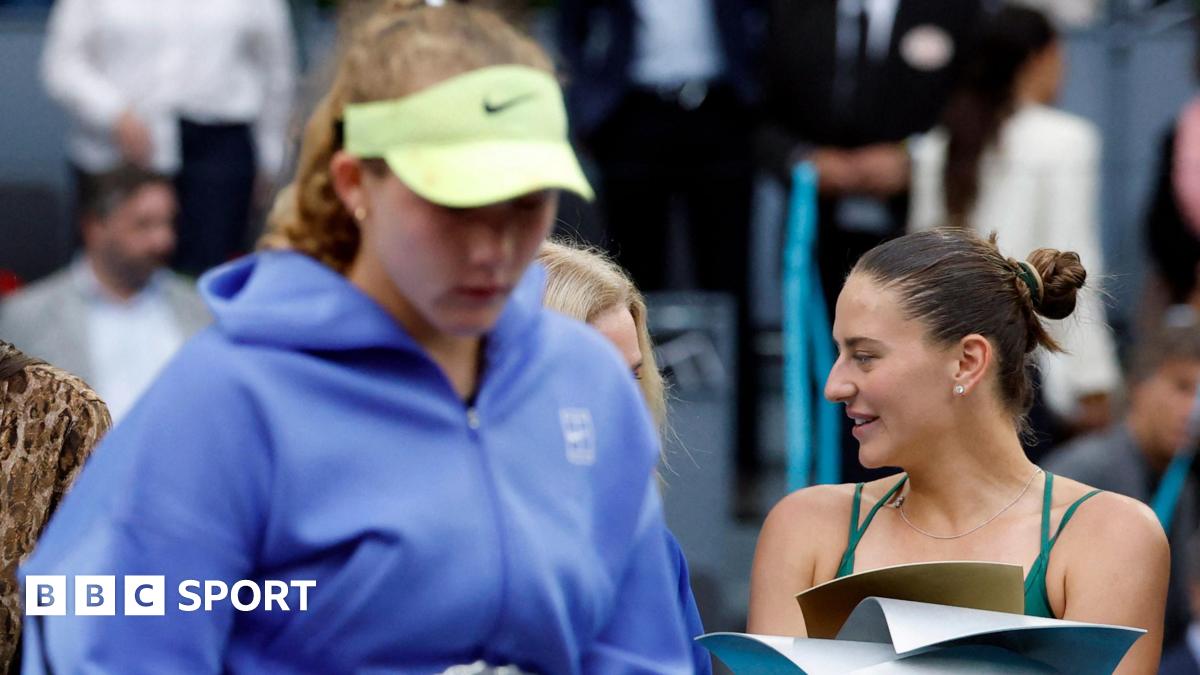
The 2026 French Open women’s singles draw has already delivered a string of stunning upsets and historic breakthroughs, but all eyes will turn to a highly anticipated semi-final match on Thursday that carries far more stakes than just a spot in a Grand Slam final. With Russia’s full-scale invasion of Ukraine entering its fifth year, the showdown between Ukraine’s Marta Kostyuk and Russia’s teen star Mirra Andreeva will play out against the unavoidable, weighty backdrop of ongoing armed conflict between their home nations.
Kostyuk, the 23-year-old 15th seed, has emerged as one of the most vocal Ukrainian athlete advocates since the 2022 invasion, consistently using her platform as a top tennis player to keep global attention focused on the human cost of the war. Just last week, she revealed that a Russian missile strike hit a building less than 100 meters from her family’s home in Kyiv during a renewed wave of attacks on the Ukrainian capital. Following her hard-fought quarter-final win over fellow Ukrainian Elina Svitolina, Kostyuk reiterated that speaking out about the war is the most critical contribution she can make amid the crisis.
“The biggest thing I can do is sit here and talk about [the war] so more people can find out about it and don’t get used to this terrible life,” she told reporters.
Her opponent, 19-year-old eighth seed Andreeva, has repeatedly declined to engage with questions about the conflict, sticking to that stance again in pre-match press conferences ahead of Thursday’s semi-final. This is Andreeva’s second consecutive appearance in the French Open semi-finals, and she says she is focused solely on executing her game plan, regardless of who stands across the net.
“It doesn’t matter who I play. I really try to play against the ball that is coming at me,” Andreeva said. “It doesn’t matter to me who I’m playing against, so I’m trying to really focus on the game and on the gameplan that I have to use on the court.”
This match marks the second meeting between Kostyuk and Andreeva in just over a month. The pair faced off in the Madrid Open final last month, where Kostyuk claimed a 6-3 7-5 victory to win the biggest title of her professional career. Following that match, the two players did not share the customary post-match handshake, a policy adopted by all Ukrainian tennis players against competitors from Russia and Belarus (a Russian ally that backed the invasion) that will remain in place at Roland Garros.
If Kostyuk defeats Andreeva to extend her 17-match clay-court winning streak to 18, she will face a second Russian player, 22-year-old Diana Shnaider, in Saturday’s final. Shnaider earned her spot in her first ever Grand Slam semi-final after pulling off one of the biggest upsets of the tournament, knocking out Belarusian world No. 1 Aryna Sabalenka, who has publicly condemned the invasion.
Shnaider has already faced her own share of controversy at this year’s tournament. Before her third-round match against Ukrainian player Oleksandra Oliynykova, Oliynykova publicly accused Shnaider of supporting the invasion, citing Shnaider’s decision to compete in a St. Petersburg exhibition event sponsored by Gazprom, Russia’s state-owned energy giant. Oliynykova compared participating in the event to playing in a tournament organized by Nazi Germany during World War II.
Shnaider defended her choice to compete in the event, noting it was her only opportunity in 2026 to play in front of her family in Russia. Like Andreeva, she has declined to comment publicly on the war, a choice that has drawn sharp criticism from Kostyuk.
“They are all grown-ups. They know what they’re talking about. They know what’s going on. They have phones. They have Instagram. They have news. They are clearly aware of what’s going on,” Kostyuk told reporters. “I don’t know how you can sleep at night peacefully when you know that this is going on and you have nothing to say about it.”
For Kostyuk, every win she earns at Roland Garros is a tribute to her war-torn home nation. Though she acknowledges the privilege of building her career away from the active conflict zone, she says the ongoing suffering of Ukrainians back home is her core source of motivation to keep competing and winning.
Former world No. 5 Slovakian player Daniela Hantuchova, speaking to BBC Radio 5 Live, says the pressure and adversity faced by players from conflict-affected regions in Eastern Europe creates a unique drive to succeed.
“This desire comes from there being no other options, when you have war behind your courtyard and you know sport in particular is the only way to escape that,” Hantuchova said. “You don’t question anything you are told to do to get where you want. The starting point creates this incredible hunger and willingness to do whatever it takes.”
In the other semi-final, Shnaider will face unseeded Polish qualifier Maja Chwalinska, who has continued her Cinderella run through the draw after entering the tournament ranked outside the world’s top 100. Remarkably, all four 2026 French Open women’s semi-finalists hail from Eastern or Central Europe, each carrying their own personal story of resilience amid extraordinary pressure. All four players have outperformed pre-tournament expectations in a wide-open draw that lacked many of the tour’s top contenders.
Regardless of how the semi-finals unfold, Saturday’s final will crown a first-time Grand Slam singles champion, a result that very few tennis pundits or fans predicted at the start of the tournament two weeks ago. The question remaining is not just who will hold the trophy, but how the weight of geopolitical conflict will shape one of the most politically charged matches in recent Grand Slam history.