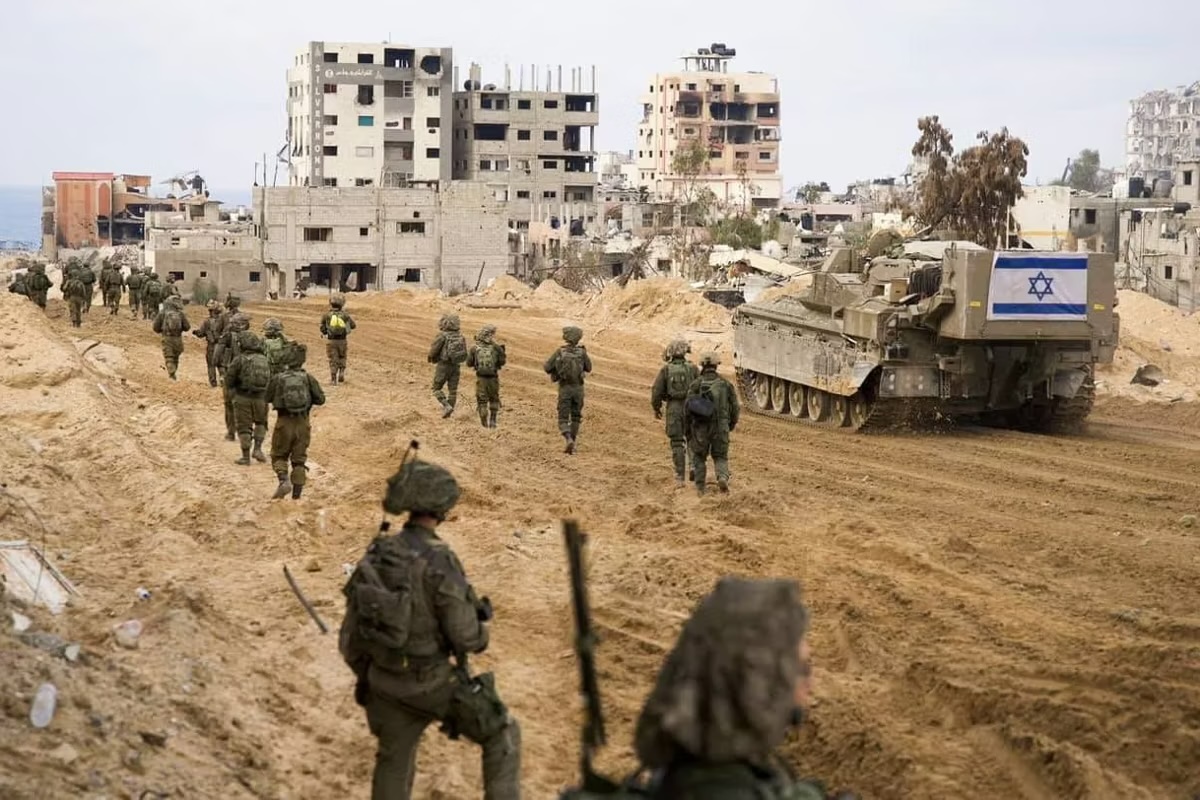
Newly released satellite analysis from Al Jazeera has uncovered a significant violation of the 2025 Israel-Hamas ceasefire agreement: Israel has been quietly constructing dozens of permanent, heavily fortified military outposts across Gaza’s internal perimeter, rather than withdrawing its forces as required by the U.S.-brokered truce.
Al Jazeera’s Open Source Unit conducted a full review of satellite data collected through May 2026, confirming that 40 completed Israel Defense Forces (IDF) bases have been erected since the October 2025 ceasefire took effect, with one additional outpost still under construction. Independent regional observers warn that this network of permanent infrastructure aligns directly with Israeli Prime Minister Benjamin Netanyahu’s publicly stated goal of seizing at least 70% of the besieged Palestinian exclave.
Unlike temporary forward observation posts, the infrastructure uncovered by satellite imagery forms a systematic, long-term military occupation grid. The outposts are linked by a connected network of earthen berms, deep trenches, and dedicated military access roads, forming a tight encirclement of major Palestinian population centers from multiple directions. This encirclement has already crippled civilian mobility, blocking ordinary Palestinians from accessing their agricultural lands and moving freely between communities, particularly in areas adjacent to Israeli deployment lines. The buildup also accompanies Israel’s ongoing expansion of its so-called “yellow line” security boundary, which has steadily pushed deeper into Gaza territory since the truce was signed.
The construction directly contravenes the terms of the October 2025 ceasefire, a 21-point framework negotiated under then-U.S. President Donald Trump that required an immediate end to hostilities, unimpeded entry of humanitarian aid, the disarmament of Hamas, and a phased full Israeli withdrawal from Gaza. Palestinian political analyst Abdullah Aqrabawi notes that the buildup reflects a long-entrenched Israeli security doctrine centered on permanent occupation, territorial expansion, and ongoing control over Palestinian land and life.
Netanyahu has repeatedly articulated his vision for permanent Israeli control over Gaza since the outbreak of conflict in October 2023. In early 2024, he publicly declared Israel would establish “full security control” over the entire strip. In April 2025, he announced the creation of the Morag Corridor, a new security buffer that cuts Gaza into fragmented sections, explicitly framing the move as a tactic to increase pressure on Hamas. Just last week, he told attendees at a youth military academy that Israeli forces currently control roughly 60% of Gaza. When the crowd chanted demands for full control of 100% of the territory, Netanyahu responded that the government would proceed in stages, with 70% as the immediate next target.
Israeli Defense Minister Israel Katz echoed these expansionist goals last year, stating that IDF forces were “expanding to crush and clean” Gaza while seizing large swaths of territory that would be incorporated into Israel’s national security zones to accommodate future settlements. This language references open plans from far-right members of Netanyahu’s governing coalition and settler movement leaders to ethnically cleanse Gaza’s existing Palestinian population and reestablish Israeli civilian settlements in the enclave — a reversal of the 2005 disengagement under then-Prime Minister Ariel Sharon, when Israel withdrew all settlers and military forces from Gaza after 38 years of occupation following the 1967 Six-Day War.
Katz and other senior Israeli officials have framed their displacement plan as a U.S.-backed “voluntary migration” initiative for Gaza’s 2 million-plus Palestinians. Critics, however, universally dismiss the term as a deliberate euphemism for ethnic cleansing, noting that the vast majority of Gaza’s residents are descendants of Palestinians forcibly expelled from their lands during the establishment of the state of Israel in 1948, and have no willingness to leave the only home their families have known for generations.
Even under the formal ceasefire, IDF operations have continued to kill Palestinian civilians at rising rates. Gaza’s Ministry of Health confirmed Wednesday that at least 119 Palestinians were killed by Israeli forces in May 2026 — the highest monthly death toll recorded this year, including 19 children and 10 women. According to Gaza’s Government Media Office, Israel has violated the ceasefire more than 3,000 times since it took effect last October, leaving more than 900 Palestinians dead and nearly 2,800 injured. Since the start of the current conflict in October 2023, more than 250,000 Palestinians in Gaza have been killed or wounded, with thousands more still missing and presumed buried under rubble destroyed by Israeli airstrikes and ground operations.
Wednesday’s satellite report is not the first to expose Israel’s post-ceasefire territorial changes in Gaza. Last week, Al Jazeera published separate satellite analysis showing Israel has systematically erased large sections of southern Gaza, including entire cities, agricultural lands, community infrastructure, and even historic cemeteries, in a campaign researchers described as an effort to “erase geography and memory” of Palestinian presence in the territory. “Satellites photograph the destroyed buildings, but they cannot document the feeling of a human searching for their home to no avail,” said Palestinian journalist Muhannad Qishta. “The hardest thing is not the destruction itself, but the stories buried beneath it.”