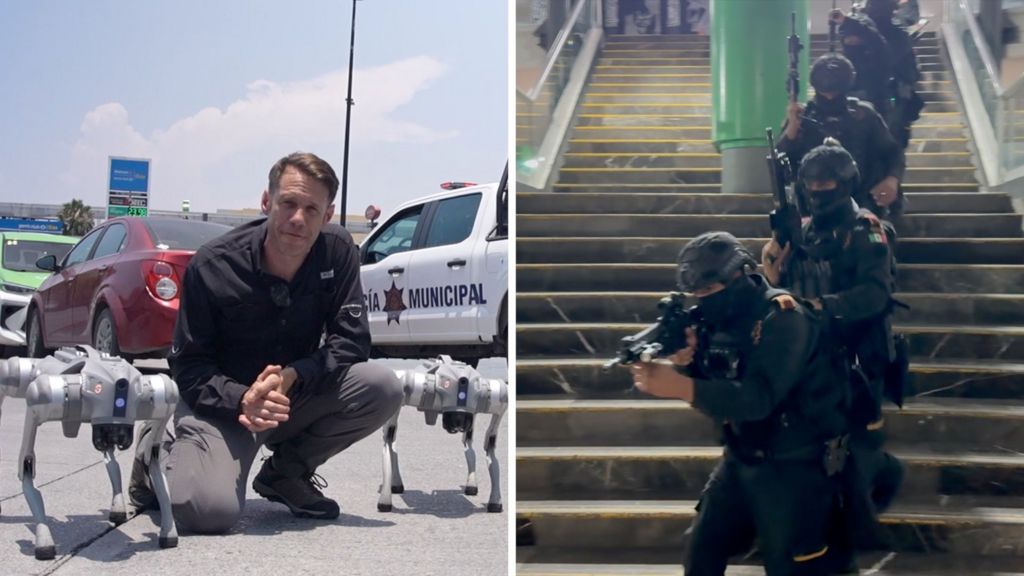
As one of the host cities for the upcoming 2026 FIFA World Cup, the northern Mexican metropolis of Monterrey is leaving no stone unturned when it comes to securing its match venues and surrounding areas, rolling out a cutting-edge security operation that combines cutting-edge robotics, aerial surveillance, and traditional law enforcement coordination. BBC correspondent Will Grant recently gained exclusive on-the-ground access to tour the city’s preparation sites, giving global audiences a first-hand look at the unprecedented safety measures being put in place ahead of four high-profile World Cup group stage and knockout matches that will draw tens of thousands of local fans and international visitors.
Unlike standard large-scale event security setups, Monterrey’s plan integrates unusual new tools to bolster patrol capacity and response speed: quadrupedal robodogs, designed to navigate tight spaces and crowded venues that are hard for human officers to access quickly, and Black Hawk unmanned aerial vehicles that provide real-time, 360-degree aerial monitoring of public spaces, fan zones, transportation hubs, and stadium perimeters. City security officials told Grant that the new technologies are not meant to replace on-the-ground police teams, but rather to extend their situational awareness and reduce risk to officers during potential emergency situations.
Monterrey, which has faced long-standing public safety challenges linked to organized crime in recent decades, has faced increased scrutiny over its ability to host a global event of the World Cup’s scale. Security planners have emphasized that the integrated system of new tech and increased personnel is designed to create a safe, welcoming environment for fans from across the world, while also addressing any potential security threats before they can escalate. Grant’s on-site reporting confirmed that final drills and training exercises for the new security system are already underway, with teams testing robodog navigation in crowded stadium corridors and Black Hawk drone surveillance across the city’s busiest fan zones ahead of the tournament’s kickoff in 2026.