作者: admin

  • After three years of war, Sudan confronts devastation as donors gather in Berlin

    After three years of war, Sudan confronts devastation as donors gather in Berlin

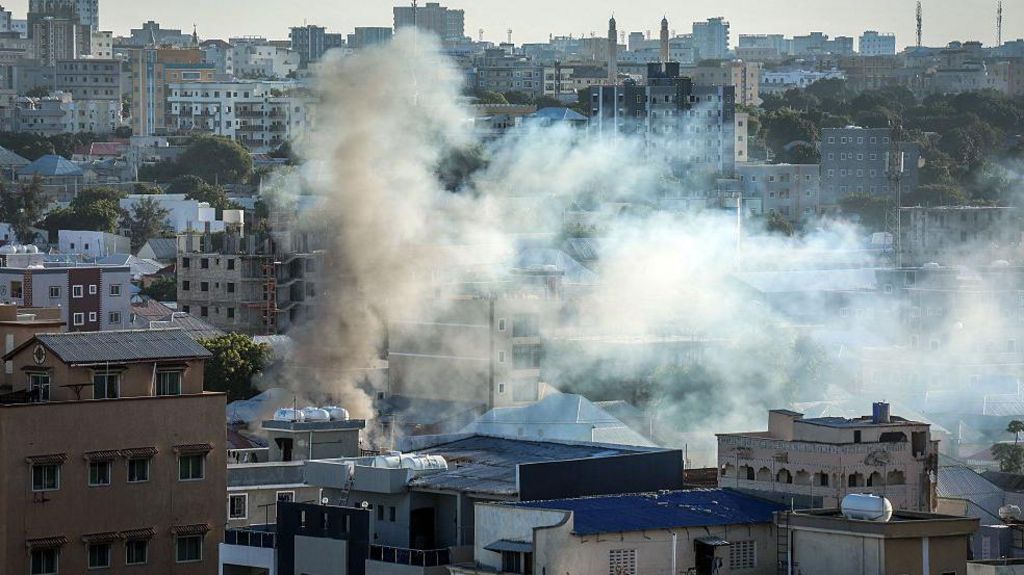
    Three years after conflict erupted between Sudan’s regular army and the Rapid Support Forces (RSF) paramilitary group in April 2023, the northeastern African nation remains mired in one of the world’s worst humanitarian catastrophes, even as global attention has shifted to other crisis hotspots. As international stakeholders gathered in Berlin this week for a high-stakes donor conference, German officials are pushing to secure more than $1 billion in new humanitarian pledges — exceeding the total raised at the previous London-hosted conference — to address an unfolding emergency that has been largely overlooked by the international community.

    Speaking to public broadcaster Deutschlandfunk ahead of the conference opening, German Foreign Minister Johann Wadephul expressed cautious optimism that the funding target would be met, noting that new pledges were already flowing in ahead of the gathering. “Despite the fact that global diplomatic focus is currently absorbed by Ukraine and Iran, this massive humanitarian catastrophe in Africa cannot be pushed to the margins of global consciousness,” Wadephul emphasized.

    Unlike previous diplomatic gatherings, neither the Sudanese army nor the RSF — the two warring parties that have torn the country apart since 2023 — were invited to participate in the Berlin conference. Beyond rallying much-needed humanitarian funding, the gathering also carries a secondary diplomatic goal: to jumpstart stalled peace talks that have collapsed since last November. The so-called Quad diplomatic bloc, made up of the United States, Saudi Arabia, the United Arab Emirates and Egypt, has led international peace efforts to date, but those efforts have ground to a halt amid deep disagreements and accusations of foreign interference. Rival regional powers back opposing sides in the conflict: Saudi Arabia, Egypt and Turkey publicly support the Sudanese army, while the UAE has been widely accused of supplying arms to the RSF. All four nations deny direct involvement in the fighting, and talks collapsed after Sudanese army chief Abdel Fattah al-Burhan accused the Quad of pro-RSF bias due to the UAE’s membership in the group.

    Wadephul argued that even without the warring parties in the room, the Berlin conference can still advance the cause of peace by creating space for local Sudanese stakeholders to open dialogue with one another. But Luca Renda, the United Nations Development Programme’s representative in Sudan, struck a far more pessimistic tone. “There are many external actors involved in this war, and as long as this continues, unfortunately, the chances of peace are very slim,” Renda warned.

    The human cost of three years of continuous war is staggering. Tens of thousands of people have been killed since fighting began, with the United Nations recording nearly 700 civilian deaths from drone strikes alone since the start of 2025, as attacks have intensified in southern Kordofan and Blue Nile State. More than 11 million Sudanese have been displaced from their homes, and nearly 25 million — almost half the country’s population — face acute food insecurity. Famine was officially declared last year in El-Fasher, the capital of North Darfur, and Kadugli, the capital of South Kordofan, with 20 additional regions across the country at imminent risk of famine. The conflict has pushed more than 90 percent of Sudan’s population below the poverty line, and global humanitarian funding for the crisis currently meets only 16 percent of the UN’s requested target.

    For ordinary Sudanese who have lived through three years of violence, the toll has been crippling. “People are exhausted,” Amgad Ahmed, a 42-year-old resident of Omdurman, Khartoum’s twin city, told Agence France-Presse. “Three years of war have worn people down. We have lost work, savings and any sense of stability.”

    A fragile veneer of normality has begun to emerge in Khartoum after the Sudanese army retook full control of the capital last year. Roughly 1.7 million displaced residents have returned to the city, markets have reopened, traffic has returned to long-deserted streets, and national secondary school exams were held this week for the first time after two years of widespread school closures. But visible scars of war remain everywhere, and deadly hazards still lurk beneath the tentative recovery: authorities are still working slowly to clear tens of thousands of unexploded ordnance left scattered across the city by years of urban combat.

    Al-Basheer Babker al-Basheer, a 41-year-old Sudanese who returned to Khartoum twice this year after three years away, said the capital will require decades to fully recover from the destruction. “I was happy to come back,” he said. “But when I went into the city centre, it was heartbreaking. The road to the university where I studied is no longer the same. The walls are black. They are not the same places we used to go to.”

    The Berlin conference brings together more than 80 participants, including foreign government representatives, international aid agencies, and Sudanese civil society groups, marking the third high-level international donor gathering for Sudan after conferences hosted by London and Paris over the past two years. Organizers hope the new pledges will help scale up life-saving aid across the country, even as the ongoing conflict and lack of progress on peace leave the long-term future of the world’s third-poorest nation deeply uncertain.

  • Ukraine’s Zelenskyy pursues more arms deals with allies to help check Russia’s invasion

    Ukraine’s Zelenskyy pursues more arms deals with allies to help check Russia’s invasion

    As Russia escalates deadly targeting of Ukrainian civilians and critical public infrastructure, Ukrainian President Volodymyr Zelenskyy has made securing Western backing for expanded air defense capabilities his nation’s top diplomatic priority during a urgent three-capital tour of Europe this week.

    Zelenskyy’s trip, which unfolded across 48 hours with stops in Berlin, Oslo, and Rome, comes amid a fresh wave of Russian long-range attacks that left at least two civilians dead this week, including an 8-year-old boy killed in the central Cherkasy region and a woman killed in a strike on a bus stop kiosk in southern Zaporizhzhia. The strikes hit more than six rear-area regions far from the front lines between Tuesday and Wednesday, extending a relentless campaign of bombardment that has stretched Ukraine’s existing air defense stocks thin.

    “Every day we need air defense missiles — every day Russia continues its strikes,” Zelenskyy wrote in a post on the Telegram messaging platform Wednesday. More than four years into Russia’s full-scale invasion, Ukraine has built combat-proven expertise in drone interception and even developed innovative indigenous air defense technologies. But Kyiv has been blocked from leveraging these advances by a critical gap in funding that prevents scaling up domestic production to meet the constant demand for defensive systems.

    Ahead of Wednesday’s online coordination meeting of over 50 defense partners supporting Ukraine — chaired by German Defense Minister Boris Pistorius and British Defense Secretary John Healey, with NATO Secretary-General Mark Rutte in attendance — the United Kingdom announced a major new weapons package: 120,000 drones set to be delivered to Ukraine this year, marking the largest single drone commitment London has made to date. The shipment includes long-range strike platforms, intelligence and reconnaissance drones, logistics support drones, and maritime-capability systems, though officials have not yet specified a timeline for deployment.

    The latest Russian assault on Wednesday included the largest single drone barrage Ukraine has faced in nearly two weeks: the Ukrainian Air Force confirmed that Russia launched 324 drones and three ballistic missiles into Ukrainian territory overnight, 309 of which were successfully intercepted by existing air defenses. Before dawn Wednesday, Russian forces also dropped a 1.5-ton FAB-1500 glide bomb on central Sloviansk, destroying a landmark children’s sports facility the city relied on for youth programming. A separate overnight strike on Dnipro, a major southeastern Ukrainian city, hit two university campuses, damaging academic buildings, student dormitories, and adjacent residential homes. Dnipro Mayor Borys Filatov confirmed that over 1,000 windows in surrounding structures were shattered by the blast wave, and emphasized that no military targets were located in the strike zone.

    On the opposite side of the front, Russian air defenses claimed to have intercepted 85 Ukrainian drones overnight across multiple western and southern Russian regions, the annexed Crimean Peninsula, and the waters of the Black and Azov Seas. Local authorities in Sterlitamak, a Russian industrial city roughly 1,300 kilometers east of the Ukrainian border, confirmed that downed drone debris sparked a fire at a facility in the city’s industrial zone. Radiy Habirov, governor of the Bashkortostan region that hosts Sterlitamak, did not release additional details on the extent of damage or any casualties from the incident.

    During his European tour, Zelenskyy has already secured new pledges of military and financial support from Germany and Norway, and is pushing two key priorities to address Ukraine’s air defense gap: first, urging European nations to continue contributing to a shared fund dedicated to purchasing American-made air defense systems, particularly Patriot batteries capable of intercepting Russian cruise and ballistic missiles that regularly target civilian areas. Second, he is advocating for accelerated joint weapons production agreements with European partners for drones and interceptors, while pressing the European Union to quickly disburse a promised €90 billion ($106 billion) support loan that has faced political delays in recent months. No new U.S.-mediated peace talks between Kyiv and Moscow have been announced amid the ongoing escalation.

  • China activates its largest scientific intelligent computing cluster

    China activates its largest scientific intelligent computing cluster

    ZHENGZHOU, April 15 — China has officially brought its largest-scale scientific intelligent computing cluster into full operation this Tuesday, hosted at the core node of the country’s national supercomputing network in the central Chinese province of Henan, state broadcaster China Media Group (CMG) has announced.

    The launch of this infrastructure marks a landmark breakthrough in China’s development of computing power systems tailored for artificial intelligence-powered scientific research, and is set to cement the country’s leading position in the fast-growing field of industrial AI applications.

    The core node first entered trial operation back on February 5, initially equipped with more than 30,000 domestically manufactured AI accelerator chips. By the time of its official launch on Tuesday, that number has doubled to 60,000 units of locally produced chips, according to CMG’s report.

    Unlike many existing computing facilities that rely on imported core components, this new core node has built a fully integrated, accessible, and entirely domestically developed technological ecosystem that unifies data storage, computing power, algorithm models, and real-world applications. It aggregates a wide range of standardized datasets, development tools, and over thousands of open-source large models, creating an environment that supports rapid deployment of new research projects and accelerates iterative development.

    One of the most user-centric innovations of the new supercomputing platform is its simplified workflow design. Instead of requiring researchers to handle complex software configuration and cumbersome IT management processes, the platform allows users to input their research requirements directly in natural language. An automated super scientific computing agent then takes over: it breaks down large-scale tasks into manageable sub-tasks, calls matching pre-trained models, dynamically schedules available computing resources, and delivers complete end-to-end research results. This streamlined process drastically cuts down the time required to complete complex research projects, removing major technical barriers for smaller research teams and industry users.

    Officials and developers behind the project note that the infrastructure will maintain an open development model moving forward, designed to cover all application scenarios across both basic scientific research and commercial industrial sectors, while providing low-threshold, user-friendly services for researchers and enterprises across the country. Experts quoted in the CMG report project that this new computing cluster will help China unlock more groundbreaking advancements in general and scientific AI, and secure an early competitive edge in the global race for next-generation artificial intelligence technology.

  • War with the United States draws attention to Iran in Group G

    War with the United States draws attention to Iran in Group G

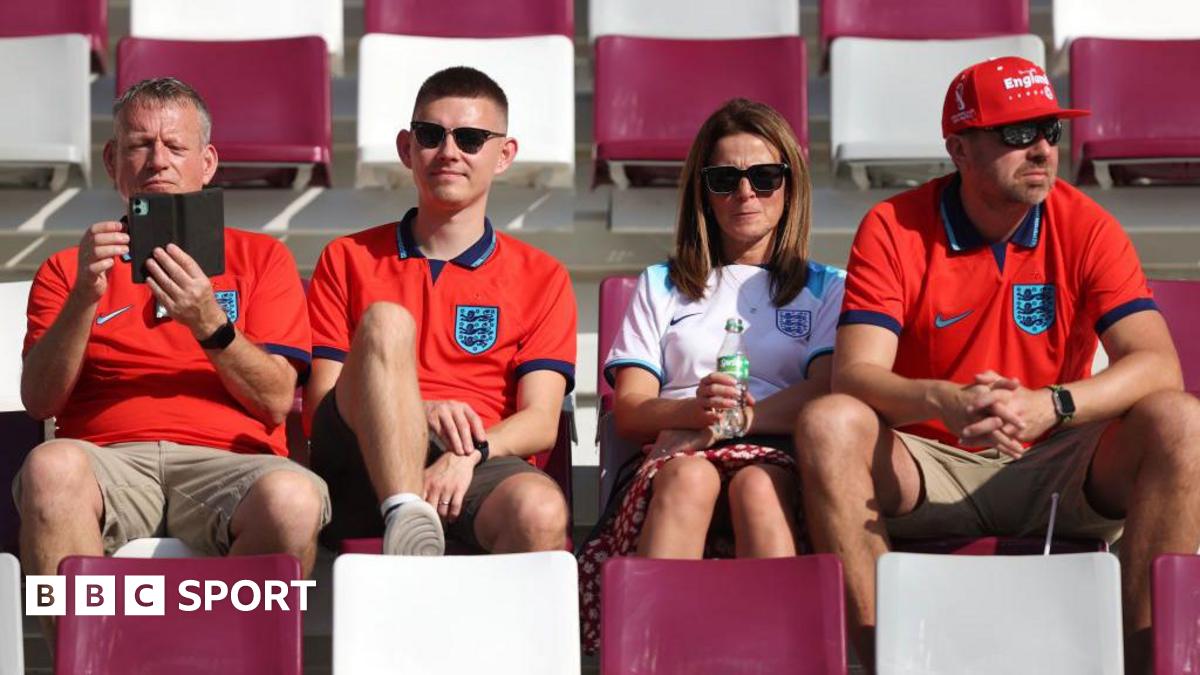
    As the 2026 FIFA World Cup hosted in North America approaches, Group G has emerged as one of the tournament’s most talked-about sections, melding on-pitch athletic competition with off-field political, social and cultural tensions. The four-team group brings together Iran, Belgium, Egypt and New Zealand, each carrying distinct narratives, challenges and aspirations ahead of their opening fixtures.

    Iran, which has qualified for its fourth consecutive World Cup and seventh overall appearance, has never progressed past the group stage in the tournament’s history. Currently sitting 21st in the global FIFA rankings under head coach Amir Ghalenoei — a former Iranian international player — the side lost just one match during its Asian qualifying campaign, marking it as a competitive dark horse in the group. Led by star captain and striker Mehdi Taremi, who has notched an impressive 57 goals across 102 senior national team caps and currently plies his trade at Greek club Olympiacos after successful stints at Porto and Inter Milan, Iran also boasts experienced midfielder Alireza Jahanbakhsh, who plays his club football in Belgium’s top flight.

    However, Iran’s participation has been marked by controversy from the outset, exacerbated by long-running geopolitical tensions between Iran and the United States, one of the World Cup host nations. Back in March, Iran’s embassy in Mexico City confirmed the country was in negotiations with FIFA to relocate its three group-stage matches to Mexican venues, though the global governing body has repeatedly stated all fixtures will proceed as originally planned on U.S. soil. Iran has also faced international backlash over its stance on LGBTQ+ rights: the team’s June 26 fixture against Egypt in Seattle is scheduled for the same weekend as the city’s annual Pride celebration, which honors the LGBTQ+ community. Both Iran and Egypt have formally complained to FIFA over the “Pride Match” label applied to the fixture, citing religious and cultural objections. Human rights organizations have also highlighted that same-sex relations carry harsh penalties in Iran, including capital punishment.

    Earlier this year, Iranian players made a political gesture of their own ahead of a March friendly against Nigeria: during the playing of the national anthem, squad members carried small pink and purple backpacks to pay tribute to victims of a February missile strike on an Iranian elementary school, which multiple lines of evidence indicate was carried out by a U.S. missile. In a logistical quirk, Iran is set to host its pre-tournament training camp in Tucson, Arizona, and will kick off its World Cup campaign against New Zealand in Inglewood, California, just outside Los Angeles.

    Group G’s clear favorite is Belgium, which is making its 15th World Cup appearance. The Red Devils earned their best-ever tournament finish with a third-place showing at the 2018 World Cup in Russia, but suffered a shock early exit in 2022, failing to advance from their group. Currently guided by head coach Rudi Garcia, Belgium demonstrated their strength earlier this year with a dominant 5-2 win over the United States on American soil in March, cementing their status as the top-ranked side in Group G.

    Belgium’s squad blends breakout young talent and veteran experience: 2024 Champions League winner Jeremy Doku of Manchester City is one of the team’s most exciting rising stars, while veteran playmaker Kevin De Bruyne — recently traded to Napoli — returns for his fourth World Cup after recovering from a thigh injury. De Bruyne has scored 36 goals across 117 caps for the Belgian national side. A major question mark hangs over star striker Romelu Lukaku, however, who has been sidelined for months with a hamstring injury, and his availability for the tournament remains unconfirmed. Belgium opens its World Cup campaign against Egypt in Seattle on June 15.

    For Egypt, this year’s tournament marks their fourth World Cup appearance overall, and the North African side is still chasing its first-ever win at the global tournament. Their last showing in 2018 was defined by a crushing injury blow to their star captain Mohamed Salah, who missed the opening fixture after picking up a shoulder injury in the UEFA Champions League final. This year, Salah is once again the center of attention: after nine trophy-laden seasons with Liverpool, the winger has confirmed he will leave the Premier League side at the end of the current season, leading to widespread speculation about his next club move in the lead-up to the World Cup. The side is managed by Egyptian legend Hossam Hassan, the country’s all-time leading scorer with 69 international goals. Egypt’s preparations have not been smooth: a March friendly against Spain that ended in a credible 0-0 draw was marred by anti-Muslim chants from a section of the crowd, while Salah missed the fixture with a minor muscle injury sustained in a Champions League match against Galatasaray.

    Rounding out Group G is New Zealand, ranked 85th in the world — the lowest ranking of any team in the group. The All Whites, led by head coach Darren Bazeley who has held his role since 2022, are making just their third World Cup appearance after qualifying for the tournament in 1982 and 2010. Like Iran, New Zealand has never advanced past the group stage of a World Cup. The side is captained by striker Chris Wood, who has scored 45 goals for his country, but the Nottingham Forest forward missed five months of club action in the English Premier League with a long-term injury and is still working to regain full match fitness ahead of the tournament. As the tournament draws near, all eyes will be on Group G to see how off-field tensions intersect with on-pitch competition, and which side can claim one of the two knockout stage spots up for grabs.

  • Meghan to appear as guest judge on MasterChef Australia

    Meghan to appear as guest judge on MasterChef Australia

    Almost eight years after their wedding, the Duke and Duchess of Sussex have returned to Australian shores for a four-day private visit, marking their first trip to the country together since 2018. The tour, which blends philanthropic engagements with paid commercial events, has drawn widespread public and media attention across the nation.

    On the second day of the tour, Duchess Meghan made a pre-taped guest appearance as a judge on the upcoming 18th season of Australia’s iconic cooking competition MasterChef Australia, filming the segment in Melbourne on Wednesday. According to broadcaster Network 10, the episode featuring Meghan is scheduled to premiere on April 19, aligning with the end of the couple’s visit. The appearance builds on Meghan’s existing lifestyle media project *With Love, Meghan*, a streaming series focused on cooking and hosting that has laid groundwork for her expanding personal brand.

    Across the tour, the couple has balanced public charity visits with paid, ticketed engagements. On the opening day of the tour Tuesday, they greeted hundreds of well-wishers gathered in the foyer of Melbourne’s Royal Children’s Hospital during a scheduled charitable visit. Later that day, Meghan stopped by a local women’s refuge, where she helped serve frittata to center residents. On Wednesday, while Meghan filmed her MasterChef segment, Prince Harry split his time between two Canberra engagements: he joined a local Australian Rules Football team for a casual training session to learn the sport, before paying his respects at the Australian War Memorial.

    Moving forward, the pair has a full schedule of remaining stops across Melbourne and Sydney. On Thursday, they will carry out additional pre-planned engagements in Melbourne before traveling north to Sydney. Later this week, Prince Harry is set to deliver a keynote address at the InterEdge Psychosocial Safety Summit in Melbourne, where ticket prices range from roughly A$1,000 (approximately $713 USD) to A$2,400. All proceeds from ticket sales for the summit will be donated to Lifeline, an Australian national mental health charity. The BBC has confirmed it has reached out to event organizers to inquire whether Prince Harry will receive a speaking fee for his appearance.

    In Sydney, Meghan will headline a private women’s-only weekend retreat, where attendees pay up to A$3,199 for access. A premium VIP package includes a spot at a group table for a photo opportunity with the Duchess. It remains unclear what compensation Meghan will receive for the event, which has not yet sold out; organizers are still advertising a small number of remaining rooms.

    Industry analysts have noted the visit comes amid growing signs that Meghan is positioning her lifestyle brand As Ever, which gained significant visibility through the couple’s Netflix docuseries, for an expansion into the Australian market. A search of the Australian government’s intellectual property database shows the brand registered trademarks for 12 different product categories in the country last year, signaling long-term commercial plans for the region.

    As non-working members of the British royal family, the couple is undertaking the entire visit in a private capacity, rather than as official representatives of the monarchy.

  • Japan’s record budget raises fiscal concerns

    Japan’s record budget raises fiscal concerns

    In early 2026, Japan’s Sanae Takaichi administration passed a historic record-breaking national budget that has quickly become a flashpoint of controversy, drawing sharp criticism from economic experts, public protesters and policy analysts over its dramatic ramp-up in defense outlays and growing reliance on debt financing.

    The controversial budget, which lifts Japanese defense spending from its long-held cap of roughly 1% of gross domestic product to the 2% threshold the ruling party pledged years earlier, has sparked fears of cascading risks for both the country’s already strained public finances and regional geopolitical stability. Compounding these concerns is the global energy volatility triggered by ongoing Middle Eastern conflict, which has pushed Japan — a nation almost entirely dependent on fossil fuel imports — into a doubly vulnerable position, raising the stakes for fiscal management.

    Shinjiro Hagiwara, emeritus professor of economics at Yokohama National University, warned that the Takaichi administration is already confronting severe gaps in available fiscal resources. Beyond long-running structural pressures, including Japan’s aging population and decades of stagnant growth, the sharp spike in defense spending has forced the government to turn increasingly to large-scale government bond issuances to cover its new expenses. This growing debt dependency has already moved financial markets, Hagiwara noted, with bond prices sliding and long-term interest rates climbing — trends that will put additional downward pressure on Japan’s fragile economic expansion. Most alarmingly, he argued, the government has fallen into a dangerous cycle of issuing new debt to cover payments on existing older obligations, a trajectory that is unsustainable long-term.

    Hagiwara also pointed to a deeply concerning parallel with Japan’s pre-World War II history: in that era, the Bank of Japan similarly absorbed large volumes of government bonds to fund military expansion, a policy path that ultimately ended in catastrophic war, national defeat and crippling hyperinflation. “This history cannot be repeated,” he emphasized, warning that allowing the administration’s hawkish policy agenda to advance without checks would carry catastrophic consequences for Japan and the broader region.

    Hiroshi Onishi, emeritus professor at Tokyo’s Keio University and vice-chairman of the World Association for Political Economy, echoed these warnings, noting that the risks of loosening long-standing constraints on government bond issuance are widely recognized by both economists and the Japanese public. Yet those guardrails have been steadily eroded in recent years, he said, pointing to the current Takaichi administration as a clear example of this trend. Onishi warned that if defense spending continues to climb to a projected 3.5% of GDP in coming years, the reallocation of public resources will sharply erode household disposable income and weaken Japan’s overall long-term economic strength, a shift he opposes outright.

    The expansion of defense spending has also been enabled by a long-standing policy where the Bank of Japan, the country’s central bank, holds a large share of newly issued government bonds, with a growing portion of the proceeds channeled directly to the domestic defense industry. Hagiwara stressed that this policy framework carries extraordinary risks that demand far more public scrutiny and caution.

    Public pushback against the budget and the administration’s hawkish agenda has grown rapidly across Japan. On the evening of April 8, an estimated 30,000 demonstrators gathered outside the national parliament building in central Tokyo to protest the Takaichi administration and the ruling Liberal Democratic Party’s plans to expand military capacity and revise Japan’s post-war pacifist constitution. According to Kyodo News, simultaneous protest actions were held at more than 160 locations across all of Japan’s prefectures, signaling broad grassroots opposition to the government’s current policy direction.

    Beyond fiscal and military risks, the ongoing energy crisis tied to Middle East tensions has added a new layer of urgency to Japan’s challenges. Over the past two to three years, prices across Japan have risen steadily, driven primarily by climbing energy and raw material costs, explained Jusen Asuka, emeritus professor at Tohoku University. Asuka noted that broad-based commodity price hikes could see additional increases of several percentage points in the coming months, fueled by persistent supply chain disruptions.

    He also warned that the current energy volatility could mirror the chaos of the 1970s oil crisis, when panic buying led to widespread shortages of essential consumer goods. This time around, Asuka said, critical medical supplies face the greatest risk: disruptions to naphtha imports could lead to severe shortages of single-use medical goods, including disposable gloves used in routine clinical care. As of the end of 2024, Japan is home to roughly 340,000 patients dependent on regular dialysis treatment, and Japanese media reported earlier this month that dozens of medical institutions have raised alarms that shortages of dialysis-related consumables could directly put thousands of patients’ lives at risk.

    In response to growing public pressure over energy costs and supply security, Prime Minister Takaichi announced on April 10 that the government will release a second batch of national oil reserves in early May to ease supply pressures. The upcoming release is projected to cover roughly 20 days of domestic oil demand. It follows a much larger release that began on March 16, which totaled approximately 80 million barrels — equal to 45 days of domestic consumption, and the largest strategic reserve release in Japan’s modern history. Since March 19, the government has also implemented subsidies for domestic oil wholesalers to cap rising retail gasoline prices, but independent analysts warn that the cost of these ongoing subsidies will add even more strain to the country’s already stretched national budget, worsening the core fiscal risks experts have flagged.

  • Humanitarian aid needs soar in Sudan

    Humanitarian aid needs soar in Sudan

    As Sudan prepares to mark the third anniversary of a brutal civil conflict that erupted between the Sudanese Armed Forces and the Rapid Support Forces paramilitary group on April 15, 2023, the nation is sinking deeper into one of the most catastrophic humanitarian emergencies the world has seen in decades. Aid organizations are sounding the alarm that the staggering scale of unmet need among vulnerable Sudanese communities has far outpaced the current international relief response.

    New data from the International Rescue Committee underscores the severity of the crisis: over the past three years of continuous fighting, more than 12 million Sudanese people have been forced to flee their homes, and a full 34 million people — roughly two-thirds of the country’s entire population — now require life-saving humanitarian assistance to survive. This officially ranks Sudan’s crisis as the largest single humanitarian catastrophe on the global stage today.

    Testimonies from conflict survivors and on-the-ground reports from aid groups paint a grim picture of daily life across vast swathes of Sudan. Displaced families repeatedly forced to flee new outbreaks of violence struggle to access basic necessities including nutritious food, clean drinking water, and life-sustaining medical care, with critical public infrastructure destroyed by ongoing fighting.

    “The humanitarian situation in Darfur, and in Sudan in general, is extremely dire,” explained Ali Almohammed, emergency health manager for Doctors Without Borders (Médecins Sans Frontières, MSF). Almohammed characterized the crisis as defined by the total collapse of civilian protection systems, mass forced displacement, the near-total destruction of functional health services, and a catastrophic level of unmet medical and humanitarian needs that has left millions without support.

    Women and children, he added, remain the most vulnerable groups caught up in the conflict, facing exponentially elevated risks of preventable disease, acute malnutrition, targeted violence, and total lack of access to essential life-saving care as fighting drags on with no end in sight. A March 30 report from MSF further highlights that danger persists for vulnerable communities even after they flee active front lines. Women and girls face persistent insecurity across every space they occupy — on travel routes, in local markets, when collecting food or tending to farms, and even inside overcrowded displacement camps, even when fighting has moved to other regions.

    “Every day, when people go to the market, there are four or five cases of rape. When we go to the farm, this happens,” a 40-year-old woman from Sudan’s Jebel Marra region stated in testimony included in the MSF report.

    MSF officials note that survivors of gender-based violence urgently require targeted support, including confidential clinical care, injury treatment, emergency contraception, prevention and treatment for sexually transmitted infections, dedicated child protection services, and clear, functional referral pathways to connect survivors with ongoing support.

    As the conflict enters its fourth year, Almohammed says humanitarian organizations across Sudan are urgently calling for expanded international backing to scale up life-saving assistance and reestablish basic protection for civilians caught in the crossfire. Without immediate, concerted international action, aid leaders warn, Sudan’s humanitarian crisis will only continue to deepen, pushing millions more into life-threatening vulnerability in the months ahead.

  • Mandarin opens doors for Kenyan youth

    Mandarin opens doors for Kenyan youth

    Nairobi, Kenya – Ahead of the 17th annual United Nations Chinese Language Day, observed globally on April 20, a growing cohort of young Kenyans are embracing Mandarin studies, framing the language as a transformative pathway to expanded education, employment, and cross-cultural connection amid deepening bilateral relations between Kenya and China.

    For 20-year-old John Waigua, a second-year education student at Kenyatta University who also studies Mandarin at the institution’s Confucius Institute, a last-minute teaching gap turned into a life-altering perspective shift. When the school’s permanent Mandarin instructor resigned unexpectedly during Waigua’s university holiday internship, he stepped in to cover the role – and the experience revealed just how much demand exists for Mandarin speakers across the country. That firsthand insight reshaped his long-term goals: he now aims to become a certified Mandarin educator and eventually pursue a scholarship to advance his studies in China.

    Waigna’s journey is far from unique. Across Kenyan universities, growing numbers of young people are integrating Mandarin studies into their academic plans, drawn by both academic relevance and clear professional advantages. Rebecca Bukachi, an architecture student studying Mandarin at the University of Nairobi’s Confucius Institute, notes that Chinese firms lead many of Kenya’s largest infrastructure and construction projects. For her, learning Mandarin is not an extracurricular hobby – it is a direct investment in her future career, aligning perfectly with her architectural training. Damaris Gathoni, another Kenyatta University student, echoes that sentiment: as Chinese businesses and cultural exchanges become increasingly embedded in Kenya’s economy and society, the ability to speak Mandarin opens doors to interactions and opportunities that would otherwise remain out of reach.

    Educators confirm that this growing interest has translated to a rapid surge in demand for Mandarin courses. Leonard Chacha Mwita, director of the Confucius Institute at Kenyatta University, says the institute now receives daily inquiries from prospective students and their parents eager to enroll. He attributes the boom to three key drivers: expanding trade ties between China and Kenya, growing educational exchange opportunities between the two countries, and shifting global economic dynamics that have put China at the center of many young Africans’ professional outlooks. “People are traveling to China for trade, for education, and suddenly everyone recognizes that Mandarin is the language that opens those doors,” Mwita explained. “This rising enthusiasm isn’t just about language – it’s a reflection of how much stronger our cultural and educational bonds with China have become.”

    The growing embrace of Mandarin in Kenya was highlighted at a pre-UN Chinese Language Day cultural event held earlier this week at the UN Office at Nairobi, where attendees tried traditional Chinese calligraphy rubbing and other cultural activities. Zainab Hawa Bangura, director-general of the UN Office at Nairobi – the only UN headquarters located in the Global South – emphasized that linguistic diversity is a core pillar of inclusive global cooperation. As one of the UN’s six official languages, Mandarin plays a critical role in strengthening cross-border dialogue and mutual understanding, she said, adding that “here in Nairobi, we see firsthand how linguistic diversity strengthens dialogue, fosters mutual understanding, and enhances cooperation to tackle complex shared global challenges.”

    Chinese Ambassador to Kenya Guo Haiyan echoed those remarks, noting that rising interest in Mandarin among Kenyan youth speaks to the language’s growing practical value across education, skills development, and cultural exchange. “I am pleased to see that in Africa, and in Kenya in particular, the Chinese language is becoming a ‘golden key’ to unlocking new opportunities,” she said. Guo added that beyond basic communication, more young Kenyans are using Mandarin to build technical skills and engage more deeply with Chinese culture, supported by institutions ranging from Confucius Institutes to Luban Workshops, which focus on vocational training. This year, 2026, has been designated the China-Africa Year of People-to-People Exchanges, and people-to-people connections will remain a central pillar of advancing bilateral cooperation between China and African nations, Guo noted.

    As Kenya’s youth continue to turn to Mandarin to expand their horizons, the trend underscores how deepening ties between China and Kenya are creating tangible new opportunities for the next generation of East African leaders.

  • Excess supply lowers prices of blueberries

    Excess supply lowers prices of blueberries

    Once considered a premium luxury item reserved for special occasions, blueberries have quickly become an accessible everyday snack for Chinese consumers, driven by a massive expansion in domestic cultivation that has flooded the market and pushed prices sharply downward. This price shift has not only reshaped consumer access to the popular fruit but also underscored China’s rapid ascent to become the world’s top blueberry producer, while creating new conversations about future industry innovation and growth.

  • 2 congressmen resign as House braces for rare expulsions

    2 congressmen resign as House braces for rare expulsions

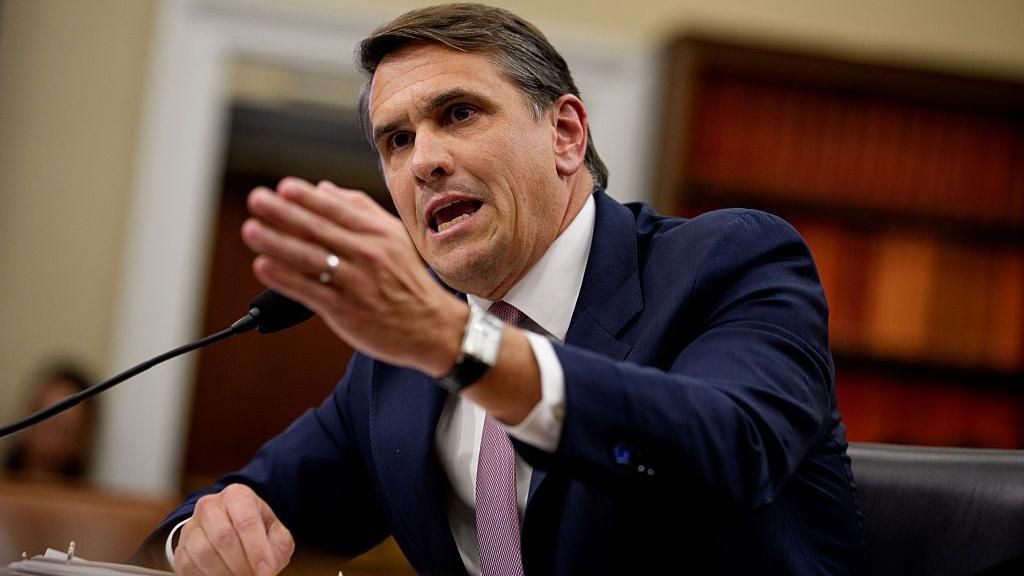
    WASHINGTON — In a seismic shakeup that has thrown Capitol Hill into unprecedented chaos and drawn bipartisan condemnation, two sitting U.S. House of Representatives members submitted their resignations Monday, as two additional lawmakers face mounting pressure and the growing threat of rare expulsion votes over a cascade of overlapping personal and ethical scandals.

    The first departure came from Democratic Representative Eric Swalwell of California, who announced his resignation in a post on the social platform X Monday morning. Swalwell, who had already dropped out of the 2026 California gubernatorial race, stepped down days after multiple women came forward with public allegations of sexual assault and professional misconduct.

    Just hours after Swalwell’s announcement, Republican Representative Tony Gonzales of Texas revealed he would leave office immediately rather than finish his current term. Gonzales’s decision comes after he confirmed he had engaged in an extramarital affair with a former congressional aide who later died by suicide. Top House Republican leadership, including Speaker Mike Johnson, had already privately and publicly pressured Gonzales to abandon his reelection bid, and growing calls for his resignation left him with no path to remain in office.

    The resignations have set off a broader reckoning in the chamber, where lawmakers are already preparing disciplinary action against two additional Florida-based House members: Democratic Representative Sheila Cherfilus-McCormick and Republican Representative Cory Mills, who are each facing separate unconnected ethical controversies that have eroded cross-party support for their continued service.

    New York Democratic Representative Nydia Velazquez, who has led the cross-party push for accountability, voiced the widespread sentiment of anger among rank-and-file lawmakers in a social media post Monday. “Congress should not tolerate representatives who abuse staff, betray public trust for personal gain, and generally violate their oath of office,” she wrote, adding that all four scandal-tarred lawmakers should step down voluntarily, and face expulsion if they refuse to leave.

    Expulsion from the House is one of the harshest disciplinary actions the chamber can impose, requiring a two-thirds majority vote to pass. The threshold is so high that in the 237-year history of the House, Congress has only removed six sitting members via expulsion, reserving the penalty only for the most severe violations of public trust.

    Swalwell’s scandal moved at a breakneck pace over the weekend, after major U.S. outlets the San Francisco Chronicle and CNN published detailed reporting outlining allegations from four separate women. One accuser, a former member of Swalwell’s congressional staff, told reporters he sexually assaulted her twice on occasions when she was too intoxicated to give legal consent.

    Swalwell has pushed back against the most serious allegations, insisting all claims of sexual assault are completely false. He has, however, apologized publicly for what he describes as “mistakes in judgment” made during his time in office. “I will fight the serious, false allegation made against me. However, I must take responsibility and ownership for the mistakes I did make,” Swalwell said in a statement announcing his resignation.

    Even after Swalwell suspended his gubernatorial campaign, the backlash against him continued to build, with lawmakers from both major parties calling for him to leave Congress immediately. A scheduled expulsion resolution from Republican Representative Anna Paulina Luna had been set for a vote Tuesday, and cross-party support for expulsion votes for all four implicated lawmakers has already been confirmed by lawmakers across the ideological spectrum.

    The cascading scandals have created an unprecedented moment for the narrow divided House, where a series of vacancies and leadership fights have already slowed legislative work for months. The upcoming expulsion votes, which would be among only a handful in U.S. history, mark one of the most broad-ranging ethical purges in modern congressional history.