标签: Europe

欧洲

  • Katya Adler: Jubilation in Budapest will be felt in Europe but leaves Moscow cold

    Katya Adler: Jubilation in Budapest will be felt in Europe but leaves Moscow cold

    For decades, Budapest’s iconic Chain Bridge has stood as a quiet architectural centerpiece, connecting the rolling hills of historic Buda to the bustling, energetic streets of central Pest across the Danube River. By night, its string of glowing lights reflect off the river’s surface, dancing like scattered tiny moons in the dark water, drawing thousands of tourists each year who crowd its walkways to snap selfies against the postcard-perfect backdrop. But on election Sunday this year, the bridge served a far different, far more historic purpose: draped in the green, white, and red of the Hungarian flag, it became the gathering ground for a nation celebrating the end of an era.

    After 16 consecutive years in power, Hungarian Prime Minister Viktor Orbán and his long-ruling Fidesz party were ousted from government in a historic election upset that has sent ripples across Europe and beyond. The victory went to opposition leader Péter Magyar and his Tisza party, whose supporters flooded the Chain Bridge that night, their chants and cheers echoing across the river as they celebrated what they described as the liberation of their homeland. In his triumphant victory speech to the crowd, Magyar doubled down on that shared feeling of renewal: “We did it,” he told the roaring gathering. “We brought down the Orbán regime — together we liberated Hungary. We took back our homeland! Thank you! Thank you all!”

    The result capped a seismic shift in Hungarian politics, achieved against all odds. Orbán had spent years consolidating power, building what he openly called an “illiberal democracy” marked by tight control of state media, electoral rule changes designed to favor his party, and deep influence over key government and industry positions held by his allies and family members. Even with these structural advantages, he suffered a decisive defeat at the polls, driven by a record-breaking voter turnout that saw millions of Hungarians turn out to oust his government.

    By the early hours of Monday morning, crowds of first-time voters danced through Budapest’s side streets, giddy with a heady mix of hope and disbelief. “I cried when I put the X on my ballot paper,” 20-something voter Zofia told reporters on the ground. “I still can’t quite believe we did it. But we did!” As she spoke, her group of friends chanted a phrase with deep roots in Hungarian history: “Russians Go home!”

    That slogan carries a sharp, ironic weight for Orbán, who first rose to national prominence back in 1989, as communist rule in Hungary collapsed. At that historic moment, he made his name with a fiery speech demanding Soviet troops withdraw from Hungarian soil, echoing the same rallying cry that first emerged during the 1956 anti-communist uprising. But over his decades in power, Orbán shifted dramatically, moving steadily to the authoritarian right and building a close, cozy relationship with Russian President Vladimir Putin. On the campaign trail, his own 1989 slogan was thrown back in his face by critics angered by his proximity to Moscow.

    Orbán’s removal from power marks a significant strategic blow to Putin, who relied on his loyal ally within the European Union to undermine Western efforts to hold Russia accountable for its full-scale invasion of Ukraine. Over the course of the war, Orbán repeatedly delayed EU sanctions packages against Moscow and has blocked a critical €90 billion EU support loan that Kyiv says it needs to maintain its economic and military stability. For Ukraine, the election result is a clear win: President Volodymyr Zelenskyy was quick to congratulate Magyar on his victory, writing on social media that he looked forward to “constructive work” between the two nations.

    Magyar has already signaled he will not fully reverse Orbán’s policy of refusing direct military aid to Kyiv, a cautious move designed to avoid alienating the large share of Hungarian voters who remain wary of being drawn into the conflict — a fear Orbán deliberately stoked throughout the campaign, warning that an opposition win would bring the war across Hungary’s border. But the new leader has pledged to end the block on the €90 billion EU loan to Kyiv, a major shift that will remove one of the biggest obstacles to European support for Ukraine.

    Across the EU, Orbán’s departure has been widely welcomed. For years, the Hungarian leader was nicknamed “the Obstructor” in Brussels, widely seen as a persistent fracture in the European union’s unified front against threats from Russia, China, and other global rivals. UK Prime Minister Keir Starmer called the result “an historic moment for European democracy,” while European Commission President Ursula von der Leyen said simply that “Hungary has chosen Europe.”

    The upset is far less welcome in Washington, where US President Donald Trump has lost his closest European ideological ally. Trump repeatedly endorsed Orbán during the campaign, even sending Vice President JD Vance to Budapest to speak at a pro-Orbán rally mid-campaign. Both Trump and his former chief strategist Steve Bannon, a key backer of populist nationalist movements across Europe, have long held Orbán up as a hero of their anti-globalist, Christian nationalist political project. Bannon once described Orbán as a trailblazer for the global right-wing movement Trump leads.

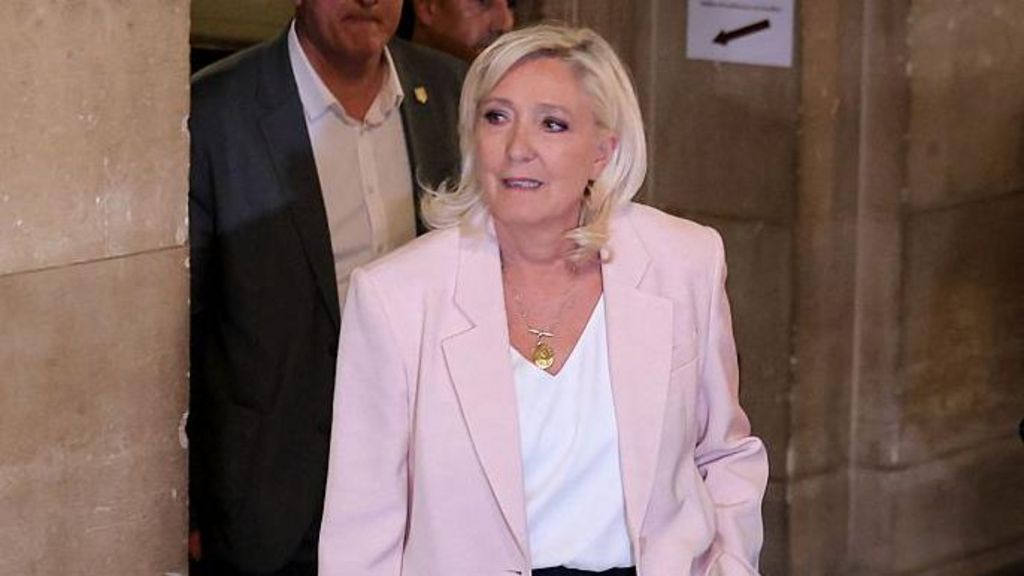
    Some political analysts have framed Orbán’s defeat as evidence that the wave of populist nationalism that swept across Europe over the past 15 years has reached a turning point, and entered a period of decline. But this narrative overlooks the unique set of factors that led to Orbán’s ouster, and ignores that recent setbacks for other right-wing populist leaders — from Marine Le Pen’s underperformance in recent French local elections to Italian Prime Minister Giorgia Meloni’s recent referendum defeat — are rooted in country-specific political dynamics that don’t add up to a broader regional trend.

    In Orbán’s case, his downfall was driven by a combination of long-simmering discontent across multiple segments of Hungarian society, and a final collapse of support even among his traditional base. For years, he alienated liberal and left-leaning Hungarians, as well as LGBTQ+ Hungarians and many women who saw their rights eroded under his socially conservative “pro-family” agenda that rigidly enforced traditional gender roles. But in the end, even long-time Orbán voters abandoned him in droves, driven by economic discontent and growing anger at corruption.

    A visit to Orbán’s home village of Felcsút, the day before the election, laid bare that anger. Once a humble boy from the village, Orbán poured public and private investment into the community, building a local football stadium and youth football academy. But his family’s growing wealth has become a flashpoint for anger: his son-in-law is linked to a luxury local golf course, while his father is currently rebuilding a nearby private estate estimated to cost around $30 million. Orbán has consistently denied all corruption allegations, and for years when the Hungarian economy was strong, many locals were willing to overlook the accumulation of wealth among his inner circle. But in recent years, soaring inflation and plummeting living standards have turned that tolerance to anger, even among his onetime supporters.

    “He failed us. He failed his country. He hoodwinked us,” Gyárfás Oláh, a former Orbán supporter and one-time local mayor, told reporters wearily. A large share of Magyar’s vote came from Hungarians who voted against Orbán, not necessarily for the new leader — who remains untested in national government. So what can we expect from the new prime minister?

    At 45, Magyar is an energetic, telegenic, and shrewd politician who was once a member of Orbán’s own Fidesz party. Like Orbán, he identifies as a conservative nationalist, and often carries a Hungarian flag to every campaign event. Political analysts note that Hungarian voters, who largely lean socially conservative, needed a center-right candidate to unify around to defeat Orbán — and it is likely that many of Orbán’s existing policies, including his hardline anti-immigration stance, will continue under the new government. Where Magyar has promised dramatic change is in institutional reform: he has pledged sweeping changes to “roll back the Orbán regime,” distance Hungary from Russia, and repair the fractured relationship with the European Union.

    For most Hungarians, the top priorities remain domestic: rebuilding the struggling economy, fixing underfunded public services, bringing down inflation, and lowering the sky-high cost of living that drove so many to abandon Orbán. There is a long to-do list for the new government, and Magyar has made clear he is ready to get to work. “Tonight we celebrate,” he told jubilant supporters late on Sunday night, grinning as he stood surrounded by cheering supporters. “Tomorrow, we get to work!”

    Magyar will not officially take office as prime minister until Hungary’s president formally asks him to form a new government, a step expected to take place within roughly a month.

  • In their words: How leaders reacted to Viktor Orbán’s defeat in Hungary’s election

    In their words: How leaders reacted to Viktor Orbán’s defeat in Hungary’s election

    BUDAPEST, Hungary — After 16 years of dominating Hungarian politics and carving out an outsize role in global conservative movements, Viktor Orbán’s tenure as prime minister has come to an abrupt end following a crushing landslide defeat in Sunday’s national election. The political shakeup, which saw opposition challenger Péter Magyar secure an overwhelming mandate from Hungarian voters, is sending ripples across Europe and beyond, as leaders from Kyiv to Brussels react to the end of an era defined by Orbán’s controversial illiberal agenda.

    During his four consecutive terms in office, Orbán built a global following among right-wing populists, who replicated his political playbook: systematically restructuring state institutions to consolidate ruling party power, rolling back protections for minority groups, narrowing the space for independent media, and positioning himself as a fiery champion of national sovereignty against what he framed as the overreach of globalization and uncontrolled migration. To his critics across the European continent, however, Orbán represented a direct threat to European democracy, eroding the bloc’s core shared commitments to human rights, the rule of law, and institutional accountability.

    Ultimately, Hungarian voters delivered a clear verdict that it was time for political change, handing Magyar a decisive victory that has reshaped the European political landscape. The outcome carries particularly profound stakes for Ukraine, as Orbán maintained the closest ties to the Kremlin of any European Union leader, repeatedly blocking bloc-wide aid packages to Kyiv amid Russia’s full-scale invasion.

    Within hours of the election results being confirmed, Ukrainian President Volodymyr Zelenskyy extended an olive branch to the new Hungarian administration, emphasizing Kyiv’s longstanding goal of building constructive, good-neighborly relations across the continent. “It is important when constructive approach prevails. Ukraine has always sought good-neighbourly relations with everyone in Europe and we are ready to advance our cooperation with Hungary,” Zelenskyy wrote on social media. “We are ready for meetings and joint constructive work for the benefit of both nations, as well as peace, security, and stability in Europe.”

    For the European Union, Orbán’s defeat has been met with widespread relief, ending years of diplomatic gridlock and public friction between Budapest and Brussels. Despite Hungary receiving billions of euros in structural development funding from the bloc, Orbán consistently attacked EU institutions and its policy agenda, often deriding top EU leaders in public remarks.

    Minutes after Orbán delivered his concession speech, European Commission President Ursula von der Leyen — a frequent target of Orbán’s criticism — issued a celebratory message on X: “Europe’s heart is beating stronger in Hungary tonight.”

    Top leaders from Europe’s largest major powers quickly echoed the sentiment. British Prime Minister Keir Starmer called the election outcome “an historic moment, not only for Hungary, but for European democracy. I look forward to working with you for the security and prosperity of both our countries.” German Chancellor Friedrich Merz extended warm congratulations to Magyar, writing “Let’s join forces for a strong, secure and, above all, united Europe. Gratulálok, kedves Magyar Péter!” French President Emmanuel Macron added that “France welcomes the victory of democratic participation, the Hungarian people’s commitment to the values of the European Union, and Hungary’s commitment to Europe.”

    Meanwhile, populist leaders and far-right parties that counted Orbán as a close ideological ally have reacted with measured, careful rhetoric following his defeat. Italian Prime Minister Giorgia Meloni, who aligned closely with Orbán on a range of EU policy issues, thanked her “friend Viktor Orbán” for their past collaboration, noting “I know that even from the opposition he will continue to serve his Nation.”

    In France, the far-right National Rally — which is gearing up for a 2025 presidential run to unseat Macron and long supported Orbán’s agenda — struck a cautious tone. Party leader Jordan Bardella wrote that “This result, respectfully welcomed by Viktor Orbán, shows that the incessant accusations by European institutions in recent years against Hungarian democracy were unfounded.”

    The election result marks one of the most significant political shifts in Europe in recent years, with implications for EU policy, Ukraine’s war effort, and the future of global populist politics. As Magyar prepares to take office, leaders across the continent are waiting to see how his new administration will reshape Hungary’s place in Europe.

  • Election loss for Hungarian Prime Minister Orbán has ripple effects for Trump, US conservatives

    Election loss for Hungarian Prime Minister Orbán has ripple effects for Trump, US conservatives

    Half a globe away from Washington D.C., a small European nation delivered a seismic political upset over the weekend that is already reshaping conversations about authoritarianism, democratic resilience, and Donald Trump’s global influence on the modern right. After 16 years in power, Hungarian Prime Minister Viktor Orbán — a towering icon of global conservative illiberalism with deep ties to leading U.S. right-wing figures — was ousted from office in a result that carries sweeping implications for both transatlantic politics and U.S. domestic discourse.

    Orbán’s rise to long-term power was built on a deliberate, well-documented project of authoritarian consolidation. First elected as an anti-communist activist in 1998, he shifted sharply to the nationalist right after losing office in 2002. Returning to power in 2010 amid the global recession, Orbán and his Fidesz party leveraged a parliamentary supermajority to rewrite Hungary’s constitution, restructuring the judiciary to stack courts with party loyalists, redraw legislative districts to lock in electoral advantages, and pressure independent media outlets to sell to allies of the ruling party. He embraced a brand he called “illiberal democracy”, built a massive border barrier to block migration from Africa and Asia, cracked down on LGBTQ+ rights, stifled press freedom, and undermined judicial independence — moves that led the European Union to formally classify Hungary as an “electoral autocracy”.

    For years, Orbán has been a beloved figure among large swathes of the U.S. conservative movement. Donald Trump, who has long drawn parallels between his own political agenda and Orbán’s approach to consolidating power, openly backed the incumbent’s re-election bid. In a high-profile move that highlighted the depth of that support, Trump dispatched Vice President JD Vance to Budapest just one week before the election — while the U.S. was already engaged in active conflict with Iran — to campaign on Orbán’s behalf. Leading conservative organizations have also cultivated close ties to the Hungarian leader: the American Conservative Union, chaired by Matt Schlapp, hosted the first European iteration of its Conservative Political Action Conference (CPAC) in Budapest and has made the country a regular stop for conservative gatherings, with Orbán even headlining CPAC’s 2022 conference in Dallas.

    But Orbán’s defeat has exposed growing limits to Trump’s ability to sway outcomes for allied politicians abroad, analysts and political figures say. The ongoing Iran war, which has roiled global energy markets and sparked widespread public anger across Europe, eroded whatever advantage Vance’s last-minute campaign visit could deliver. Even with a heavily rigged electoral playing field that gave Orbán’s ruling party enormous structural advantages, Hungarian voters — frustrated by soaring inflation, economic stagnation, and the fallout of the ongoing regional conflict — delivered a clear vote for change. This outcome aligns with a broader global trend of voter discontent that has hurt incumbents across the ideological spectrum in recent elections.

    The result has drawn reactions from across the U.S. political spectrum, with many lawmakers from both parties celebrating Orbán’s ouster. Republican Rep. Don Bacon of Nebraska used the moment to criticize overt U.S. interference in foreign democracies, writing on X: “Don’t fiddle-paddle in other democracies’ elections.” Republican Sen. Roger Wicker of Mississippi added: “The freedom-loving people of Hungary have voted decisively in favor of democracy and the rule of law.” Even Schlapp, a long-time Orbán ally, acknowledged the public desire for change, noting that the economic and energy turmoil spurred by the Iran war significantly hurt the incumbent’s standing. “The people of Hungary were saying, ‘We’re having a difficult time with inflation, the economy and the war. Let’s try the new guy,’” Schlapp said. Far-right Romanian European Parliament member Diana Sosoaca went further, calling Vance’s pre-election visit a “big mistake” given widespread European anger over the conflict.

    For U.S. democracy watchers and political observers, Orbán’s defeat carries particularly sharp lessons for American politics, given the well-documented parallels between Orbán’s consolidation of power and Trump’s own political ambitions. For years, Democrats have warned that Trump has sought to use executive power to tilt electoral outcomes in his favor, pointing to his 2020 attempt to overturn Joe Biden’s election victory and his ongoing efforts to reshape election rules for 2028. Ian Bassin, executive director of nonpartisan anti-authoritarian group Protect Democracy, framed the Hungarian result as a reassuring signal for U.S. voters: “Even a guy who rigs the system can be defeated when the people unite and turn out against him.”

    Democratic lawmakers have echoed that framing, drawing direct parallels between Orbán’s project and Trump’s efforts in the U.S. “He was essentially doing what Donald Trump is trying to do here in the United States,” said Sen. Chris Van Hollen of Maryland. “My read of the election is that the people of Hungary rejected that, just like people in the United States are rejecting that here at home.” Rep. Ro Khanna of California even used the upset to jab Vance directly, writing on X: “Your ally Orban conceded. In 2028, will you @JDVance follow suit if you lose?”

    Some experts, however, warn against overstating the lessons of Orbán’s defeat for U.S. democracy. Harvard political scientist Steven Levitsky, co-author of *How Democracies Die*, noted that while the result proves oppositions can win even on a tilted playing field, Trump has already taken steps toward authoritarian consolidation that Orbán never attempted. He pointed to Trump’s use of the Justice Department to target political opponents and fatal shootings of protesters by U.S. immigration authorities as steps beyond what Orbán’s government enacted. Still, Levitsky noted the broader global takeaway: “Democracies are facing many challenges in many parts of the world, but so are autocracies.”

    Beyond U.S. politics, Orbán’s ouster carries immediate geopolitical implications for the war in Ukraine. Orbán was the European leader closest to Russian President Vladimir Putin, and he repeatedly blocked European Union military and humanitarian aid to Ukraine following Russia’s 2022 full-scale invasion. As of Sunday, Trump had not issued any public comment on Orbán’s defeat.

  • UK could adopt EU single market rules under new legislation

    UK could adopt EU single market rules under new legislation

    Four years after the UK completed its full exit from the European Union’s economic structures, a contentious new legislative proposal from the opposition Labour Party has reignited fierce debates over the country’s post-Brexit trade relationship with its largest trading partner. Under the plan put forward by Labour leader Sir Keir Starmer, the UK government would gain new powers to adopt updated EU single market regulations for specific trade sectors, most notably food safety and product standards, without requiring full parliamentary votes for each new rule.

    This framework, known as “dynamic alignment,” is designed to streamline UK-EU trade by ensuring British rules match evolving EU standards in areas covered by existing negotiated agreements. If enacted, any new regulation drafted in Brussels would be brought into UK law via secondary legislation, a procedural mechanism that typically does not allow for amendments and is generally approved without a full floor vote in Parliament, leaving MPs with only limited opportunities for formal scrutiny.

    Labour insiders argue the reform is a pragmatic solution to long-standing post-Brexit trade frictions. The party frames the change as a way to cut unnecessary operational costs for British businesses and eliminate what it calls the “Brexit paperwork tax,” a hidden burden that pushes up everyday grocery prices for UK households. A Labour source emphasized that the plan does not reverse the UK’s Brexit departure, noting the party has consistently ruled out rejoining the single market or customs union. Instead, the source framed the proposal as a sovereign choice: the UK would voluntarily enter into agreements that lower trade barriers, while Parliament still retains a formal role in the process.

    The government further argues the reform will unlock a UK-EU food and drink trade agreement estimated to add £5.1 billion annually to the economy, support domestic British jobs, and cut through burdensome red tape for farmers, food producers and small businesses across the country. A government spokesperson added that the full bill itself will undergo the standard parliamentary passage process, and any new wider treaties or trade deals with the EU will still face full parliamentary scrutiny before approval.

    But the proposal has drawn fierce pushback from across the political spectrum. The Conservative Party’s shadow business secretary Andrew Griffith condemned the plan, arguing it would reduce Parliament to a mere spectator while EU regulators in Brussels set the trade rules that govern British businesses. Reform UK leader Nigel Farage, one of the most prominent architects of the original Brexit campaign, has pledged to oppose the legislation at every stage, dismissing it as a backdoor attempt to bring the UK back under EU regulatory control.

    Even pro-EU opposition parties have raised concerns over the erosion of parliamentary sovereignty. Liberal Democrat MP Munira Wilson told the BBC’s *Westminster Hour* that while her party supports closer economic ties with the EU, any alignment must go hand in hand with full parliamentary democratic scrutiny.

    The legislative proposal comes as the UK and EU continue ongoing negotiations to update post-Brexit trade arrangements, including a targeted deal on food safety, animal and plant health standards. Full text of the bill is expected to be introduced to Parliament later this year, ahead of a scheduled UK-EU summit that Starmer has signaled will be more ambitious than the 2025 meeting, where the two sides struck a landmark agreement covering fishing rights, trade, defense and energy cooperation.

  • US military is poised to blockade Iranian ports, while Tehran threatens ports in the Mideast

    US military is poised to blockade Iranian ports, while Tehran threatens ports in the Mideast

    Tensions between the United States and Iran have escalated to a dangerous new standoff in the Persian Gulf, following the collapse of weekend ceasefire negotiations that has left the global energy market bracing for severe disruption and raised fears of a resumption of active conflict.

    The crisis traces back to late February, when the United States and Israel launched joint military strikes against Iran, igniting a regional conflict that has already claimed more than 5,000 lives across six nations. A fragile ceasefire has held in recent weeks, but marathon talks hosted in Pakistan aimed at reaching a permanent peace deal failed to produce an agreement this past Saturday, clearing the way for the U.S. military’s vow to impose a full naval blockade on all Iranian ports starting Monday.

    The core sticking points in the collapsed negotiations align with longstanding U.S. demands: Iran has rejected Washington’s non-negotiable red lines, which require Tehran to permanently abandon any pursuit of a nuclear weapon, end all uranium enrichment activities, dismantle key enrichment infrastructure, surrender existing stockpiles of highly enriched uranium, reopen the Strait of Hormuz to unimpeded global shipping, and cut funding for regional armed proxies including Hamas, Hezbollah, and the Houthis. For Iran, the main barriers to a deal are U.S. demands on its civilian nuclear program, demands for war reparations from Tehran, and the removal of crippling Western sanctions, according to Iranian ambassador to India Mohammad Fathali. U.S. Vice President JD Vance confirmed the talks stalled after Iran refused to accept Washington’s nuclear terms, while Iran has repeatedly maintained its nuclear program is for peaceful energy and medical purposes only, despite advancing enrichment to near-weapons-grade levels and developing long-range delivery systems.

    As the Monday deadline for the U.S. blockade arrived, clarity on the operation’s actual start remained murky. Just minutes before the 10 a.m. EDT deadline, the UK Maritime Trade Operations agency, which monitors regional maritime security, issued a notice to mariners confirming the restrictions would cover the entire Iranian coastline, including all commercial ports and national energy infrastructure. The agency clarified that transit through the Strait of Hormuz to or from non-Iranian destinations would not be blocked under the current measures, but warned commercial vessels to expect heavy military presence throughout the waterway.

    U.S. Central Command, the military command overseeing Middle East operations, later confirmed the blockade would apply to all vessels of any flag seeking to enter or depart Iranian coastal areas across both the Persian Gulf and Gulf of Oman. The current framework represents a partial walk-back of an earlier, more extreme threat from former President Donald Trump to blockade the entire strait, a concession that reflects growing concern over global economic backlash. Shortly after the deadline passed, Trump posted a message to social media claiming Iran’s conventional navy had been “completely obliterated” and lies at the bottom of the sea, but warned that any remaining Iranian fast attack craft that approach the U.S. blockade line would be immediately destroyed.

    Iran has responded with sweeping reciprocal threats, vowing that no regional ports belonging to U.S.-allied nations will remain safe if Washington follows through on its blockade. “Security in the Persian Gulf and the Sea of Oman is either for everyone or for NO ONE,” the Iranian military and Islamic Revolutionary Guard Corps said in an official statement carried by Iran’s state broadcaster. Top Iranian officials have dismissed the U.S. blockade threat as empty posturing, but warned of overwhelming retaliation if hostilities escalate. “It will make the current situation (Trump) is in more complicated and makes the market — which he is angry about — more turbulent. And we may also reveal other cards that we have not used in the game,” Ebrahim Rezaei, spokesperson for the Iranian parliament’s National Security Commission, wrote in a post on X. Iranian Parliament Speaker Mohammad Bagher Qalibaf issued a direct warning to Trump: “If you fight, we will fight.”

    The showdown already has had immediate ripple effects across global commodity markets. Iran effectively closed the Strait of Hormuz — through which roughly 20% of the world’s traded oil flows in peacetime — after the outbreak of war, sending energy and commodity prices soaring worldwide and pushing up costs for gasoline, food, and basic consumer goods far beyond the Middle East. Tehran has allowed limited passage for vessels perceived as friendly, but charges steep transit fees, a practice that has drawn widespread accusations that Iran is holding the global economy hostage. As of Monday, international benchmark Brent crude rose 7% to trade near $102 per barrel, up from roughly $70 per barrel before the outbreak of conflict. The latest Iranian threats have already halted the limited commercial traffic that resumed through the strait during the ceasefire, according to Lloyd’s List Intelligence. Before the war, an average of 100 to 135 commercial vessels transited the strait daily; that number dropped to just over 40 per week since the ceasefire took effect, and has now ground to a near-halt.

    Analysts have cast significant doubt on the effectiveness of a U.S. blockade, questioning whether military pressure alone can force Iran to reopen the strait, and warning of severe risks to U.S. naval forces deployed to the region. The standoff has become a test of political and economic endurance: will a full blockade push Iran’s already battered economy to collapse, forcing Tehran to concede to U.S. terms? Or will the resulting spike in global energy prices create enough domestic pressure in the U.S. to force the Trump administration to back down?

    The current ceasefire is set to expire on April 22, and neither Washington nor Tehran has signaled whether it will be extended, or when negotiations might resume. Pakistani Foreign Minister Ishaq Dar, whose country hosted the failed talks, has said Pakistan will continue working to facilitate a new round of dialogue in the coming days, while Turkish Foreign Minister Hakan Fidan — whose country has led regional mediation efforts — has proposed extending the ceasefire by 45 to 60 days to create space for further negotiations. European leaders have also moved to address the crisis, with British Prime Minister Keir Starmer announcing he will host a summit this week with French President Emmanuel Macron to coordinate international action to reopen the strait and end the conflict, with Starmer insisting the waterway must be reopened with no conditions and no transit tolls.

    The conflict has already taken a heavy human toll: at least 3,000 people have been killed in Iran, 2,089 in Lebanon, 23 in Israel, and more than a dozen across Gulf Arab states, with widespread infrastructure damage across half a dozen regional nations.

  • Viktor Orbán’s Hungarian experiment runs out of steam

    Viktor Orbán’s Hungarian experiment runs out of steam

    For 16 years, Hungarian Prime Minister Viktor Orbán governed the Central European nation through a unique, constantly shifting political experiment that even he struggled to name. The label “illiberal democracy,” often attached to his leadership, carried harshly negative connotations he rejected, while the term preferred by his right-wing American allies—“national conservatism”—never accurately fit his ideological profile. Unlike most traditional conservatives who seek to preserve established systems, Orbán built his power on constant radicalization, leaving little existing institutional order to conserve.

    A defining feature of his tenure was theatrical defiance of European Union leadership in Brussels, where he positioned himself as a rogue outsider thumbing his nose at mainstream European politics. Every time Brussels pushed back against his policies, Orbán turned the backlash into political capital, framing himself as the sole defender of Hungarian national interests against overreaching foreign bureaucrats.

    His leadership was marked by stark contradictions that went largely unchallenged for decades. He painted himself as a fierce opponent of globalization, yet actively courted German automakers and Chinese and South Korean electric vehicle battery manufacturers to set up large-scale operations in Hungary. He positioned himself as the ultimate champion of national sovereignty, but refused to condemn Russian aggression or stand up for Ukraine’s territorial integrity amid the ongoing war with Moscow. He railed against mass immigration from the Middle East and Africa to win political support, while quietly encouraging labor migration from Sri Lanka, the Philippines, Ukraine and Turkey to staff the new foreign-owned factories he attracted to the country. Even his signature pro-natal policy, which poured billions in public funds into encouraging Hungarian families to have more children, failed to deliver its core promise: by 2025, Hungary’s fertility rate had dropped back to 1.31, the exact same figure he inherited from the socialist government he ousted in 2010.

    After winning a two-thirds parliamentary supermajority in 2010, Orbán moved swiftly to reshape Hungary’s entire institutional framework to lock in his power. Just one year into his first term, he rammed through a new constitution aligned with his political agenda, then used his parliamentary majority to rewrite laws governing the judiciary, electoral system, and national economy, remaking the country in the image of his ruling party.

    But on a historic Sunday election, Hungarian voters delivered a decisive rejection of Orbán’s long-running experiment. The opposition candidate, Péter Magyar, won a landslide victory, ending the ruling party’s 16-year hold on power. Orbán swiftly conceded defeat Sunday night, a move widely seen as a calculated effort to preserve his public legacy after more than a decade in power.

    Magyar’s victory stemmed from a clear rejection of Orbán’s polarizing approach to governance. He campaigned on an inclusive vision of national identity that contrasted sharply with Orbán’s divisive, exclusionary rhetoric, carrying the Hungarian flag to every campaign rally to connect with broad voter dissatisfaction. Most importantly, analysts say, Hungarian voters had grown exhausted by the constant state of conflict Orbán relied on to maintain power. Voters also expressed widespread anger at growing economic inequality under Orbán: the country’s wealthy elite amassed unprecedented fortunes, while poverty deepened and the middle class shrank dramatically.

    Orbán won nearly every political battle he fought over his 16 years in office, but his people ultimately wanted peace, stability, and the normalcy of a functional European democracy, rather than constant confrontation. That is exactly what Magyar has promised to deliver. Addressing thousands of jubilant supporters celebrating on the banks of the Danube after his win, Magyar declared: “Tonight we celebrate. But tomorrow, we start work.”

  • ‘A truly historic moment’: Hungarian opposition wins election landslide

    ‘A truly historic moment’: Hungarian opposition wins election landslide

    Hungary has entered a new political era following a watershed election that saw the country’s united opposition claim an extraordinary landslide win, a result already being described by political observers as a truly transformative moment for the central European nation.

    As thousands of people gathered outside Hungary’s ornate parliament building in central Budapest to wait for official confirmation of the outcome, Rajini Vaidyanathan reported live from the scene on the dramatic turn of events. The air was thick with a mix of excitement and disbelief as crowds followed updates, their murmurs growing louder when news broke that the sitting prime minister had formally conceded defeat.

    Witnesses at the scene described spontaneous celebrations breaking out across the capital after the concession announcement, with opposition supporters waving flags, cheering, and embracing one another outside the seat of national power. The scale of the victory marks a dramatic end to what had been a prolonged period of incumbent rule in Hungary, opening the door to a new government with vastly different policy priorities for the country.

    Political analysts note that this landslide result reflects a significant shift in voter sentiment across Hungary, with large numbers of citizens turning away from the ruling administration in favor of the opposition’s policy platform. The outcome is expected to have ripple effects across European politics, as the new administration prepares to take office and implement its planned policy agenda.

  • Orbán era swept away by Péter Magyar’s Hungary election landslide

    Orbán era swept away by Péter Magyar’s Hungary election landslide

    After 16 consecutive years holding power in Hungary, Prime Minister Viktor Orbán’s long tenure has come to an abrupt end, following a historic general election that saw a stunning political upheaval led by 45-year-old former ruling party insider Péter Magyar. His newly formed Tisza Party has secured what appears to be an overwhelming constitutional majority, bringing down the Orbán administration that critics had long labeled an “electoral autocracy.”

    Preliminary vote counting, which has processed more than 98% of all ballots, projects Tisza will take 138 seats in Hungary’s parliament — five more than the 133 two-thirds supermajority required to amend the national constitution. Orbán’s long-ruling Fidesz party is on track to win just 55 seats, with the far-right Our Homeland movement claiming the remaining six seats. The election saw a historic 79% voter turnout, the highest participation rate in the democratic history of modern Hungary.

    Shortly after the unofficial results began trending toward a Tisza victory, Orbán personally called Magyar to congratulate him on the win, a confirmation that Magyar shared publicly on his Facebook page. Speaking to thousands of jubilant supporters gathered on a Danube River square overlooking Budapest’s iconic parliament building, Magyar declared, “We did it. Together we overthrew the Hungarian regime.”

    Minutes after Magyar’s announcement, a visibly somber Orbán addressed his dejected Fidesz supporters at a downtown conference center. “The result of the election is clear and painful,” he told the crowd, thanking the roughly 2.5 million voters who remained loyal to his party. “The days ahead of us are for us to heal our wounds.” Orbán, 62, has not stepped down as leader of Fidesz and will remain in office as a caretaker prime minister until a new government is formed.

    Magyar built his anti-incumbent movement over two years, crisscrossing Hungary from small rural villages to major city squares, rallying voters frustrated by the systemic cronyism and corruption that became entrenched during Orbán’s four consecutive terms in office. Once a member of Fidesz himself, Magyar positioned himself as the voice of Hungarians ready for sweeping change. He has pledged an ambitious policy agenda: rolling back controversial Orbán-era reforms to education and healthcare, dismantling the widely unpopular National Unity Regime (NER) patronage system that enriched loyal Fidesz allies with state resources, restoring judicial independence, and cracking down on systemic public corruption.

    The election result upended weeks of misleading polling from pollsters aligned with Fidesz, which continued to forecast a narrow Orbán victory as late as election night. For years, Hungarian society had existed as two parallel political worlds: one in which Orbán’s supporters and state media outlets maintained confidence in a fourth re-election, and another where Magyar drew massive, enthusiastic crowds and independent pollsters tracked his growing lead. On election night, those two worlds collided, with Magyar’s movement emerging as the clear will of the majority.

    One of the first institutional changes Magyar’s administration is expected to pursue is overhauling Hungary’s pro-Orbán state media ecosystem, which for years had strictly toed the Fidesz party line. On election night, even state broadcaster M1 — long a mouthpiece for Fidesz — rebroadcast a pre-victory speech from Magyar, a sign of the immediate shift sweeping through the country’s media landscape.

    Magyar’s victory also signals a major shift in Hungary’s foreign policy. For years, Orbán cultivated a close alliance with Russian President Vladimir Putin, justifying his reliance on cheap Russian energy and defying EU efforts to cut dependence on Russian fossil fuels. He also recently blocked a bloc-wide €90 billion aid package for Ukraine, straining Hungary’s relationships with other EU member states. As celebrations erupted on the streets of Budapest, Tisza supporters chanted “Russians go home,” and Magyar has pledged to reset Hungary’s relationship with the European Union.

    European leaders were quick to welcome the historic election outcome. Polish Prime Minister Donald Tusk, one of the first regional leaders to issue a statement, praised Magyar’s “glorious victory” and echoed the crowd’s slogan in Hungarian: “Ruszkik Haza” — Russians go home. Magyar has announced his first foreign trip as prime minister will be to Warsaw, to reinforce the long-standing historical friendship between Hungary and Poland.

    As the dust settles on the most dramatic political shift in Hungary’s post-communist history, the future of Fidesz remains uncertain. While Orbán retains his position as party leader, political analysts widely agree that the once-dominant right-wing party will face a period of major internal restructuring and soul-searching in the wake of its historic defeat. For Hungary and the broader European Union, the election marks the start of a new political era after nearly two decades of Orbán’s illiberal rule.

  • European leaders celebrate Péter Magyar’s victory in a stunning Hungarian election

    European leaders celebrate Péter Magyar’s victory in a stunning Hungarian election

    In a seismic political shift that has sent ripples across the European continent, Hungarian opposition leader Péter Magyar has claimed a historic election victory that ends 16 years of authoritarian-leaning rule by Viktor Orbán, drawing an outpouring of congratulatory messages from top European Union leaders and key global figures.

    The sweeping celebration of Magyar’s win stems not only from what the new incoming prime minister has pledged to accomplish, but from what his victory represents: the end of Orbán’s Euroskeptic, populist rule that long destabilized EU collective governance and frustrated the bloc’s unified policy goals. For years, Orbán positioned himself against Brussels-centric strategy, framing his agenda as a defense of Hungarian national interests against overreach from EU institutions. His repeated vetoes of coordinated EU action, most notably collective military and political support for Ukraine following Russia’s full-scale 2022 invasion, put him at constant odds with the 27-nation bloc. Most recently, his administration’s admission that it maintained secret backchannel communications with Moscow during key EU summits sparked outright outrage among European leaders.

    In the wake of the election result, congratulations flooded official social media channels and poured in via personal calls from the bloc’s most senior figures. Even before Magyar delivered his victory speech on the banks of the Danube River in downtown Budapest on Sunday night, he had already received congratulatory calls from French President Emmanuel Macron, European Commission President Ursula von der Leyen, NATO Secretary-General Mark Rutte, and German Chancellor Friedrich Merz. Online, messages of celebration came from British Prime Minister Keir Starmer, Irish Prime Minister Micheál Martin, Swedish Prime Minister Ulf Kristersson, European Parliament Speaker Roberta Metsola, Danish Prime Minister Mette Frederiksen, Romanian President Nicușor Dan, and European Council President António Costa, among many others.

    Spanish Prime Minister Pedro Sánchez summed up the prevailing mood among pro-European leaders in a post on X, writing simply: “Today Europe wins and European values win.” Polish Prime Minister Donald Tusk echoed the enthusiasm, posting “Back together! Glorious victory, dear friends!” Starmer framed the outcome as a defining moment for democratic governance across the continent, noting “This is an historic moment, not only for Hungary, but for European democracy.” Macron emphasized that France welcomed the Hungarian people’s clear commitment to EU values, while Merz called for renewed collective action: “Let’s join forces for a strong, secure and, above all, united Europe.” Kristersson framed the result as a new chapter for both Hungary and the bloc, adding that he looked forward to close collaboration as NATO allies and EU partners. Von der Leyen, who was a frequent target of Orbán’s anti-Brussels rhetoric, struck a unifying tone, writing: “Hungary has chosen Europe. Europe has always chosen Hungary. Together, we are stronger. A country returns to its European path. The Union grows stronger.”

    Slovenian Prime Minister Robert Golob went further, framing Magyar’s win as a victory for the entire European project: “His victory over right-wing populism is also a great victory for the EU and its future. Only a more united and more effective EU will be able to respond to the extremely serious challenges of the times ahead.” German lawmaker Daniel Freund noted that the upset would have far-reaching implications for populist movements globally, arguing that Orbán, long the icon of illiberal anti-European politics, was brought down by his own government’s failures: “Hungarians are sending a signal to the world. The icon of illiberal anti-European forces has now failed – brought down by a disastrous economy, corruption, and his own unfair electoral system.”

    Ukraine’s official government account also offered congratulations, leaning into the shared geographic and political future of the two nations within Europe. “The Dnipro and the Tisza flow through a shared home — Europe,” the post read.

    Beyond his commitment to repairing Hungary’s strained relationship with the EU, which Magyar confirmed to the Associated Press ahead of the vote, the new prime-minister-elect has struck a unifying tone in his first public remarks. “All Hungarians know that this is a shared victory. Our homeland made up its mind. It wants to live again. It wants to be a European country,” he told supporters gathered for his victory celebration.

    Notably, Magyar has avoided taking firm stances on several divisive policy issues carried over from the Orbán era, including Orbán’s widely criticized anti-LGBTQ+ policies and the question of whether his administration will expand Hungary’s military and humanitarian support for Ukraine.

    Not all reactions to the power shift were uniformly celebratory. Italian Prime Minister Giorgia Meloni, a fellow right-wing leader, congratulated Magyar but also extended thanks to Orbán for years of close collaboration. Far-right French politician Jordan Bardella, a leading contender in France’s 2027 presidential election, praised Orbán’s legacy advancing populist causes in a social media post, and made no mention of the new winner. Israeli opposition leader Yair Lapid, a descendant of Hungarian Holocaust survivors, was among non-European figures to offer congratulations to Magyar.

    European People’s Party President Manfried Weber, another frequent critic of Orbán, summed up the broader shift for the EU, writing simply: “Hungary is back at the heart of Europe.”

  • The Dutch village at risk of being demolished

    The Dutch village at risk of being demolished

    Tucked along the sun-dappled shores of the Hollands Diep estuary, 21 miles south of Rotterdam, Moerdijk has been a tight-knit fishing community for more than a century. Home to roughly 1,100 residents, generations of families have built their lives, livelihoods, and legacies here: third-generation fishmongers have trawled its waters since 1918, homeowners have built their houses with their own hands, and generations of ancestors rest in its quiet village cemetery. Today, however, this centuries-old settlement stands at the center of a national conflict that threatens to wipe it entirely off the map.

    The Dutch government’s ambitious push to expand offshore wind energy has created an urgent need for large-scale high-voltage substations, facilities that connect power carried by undersea wind farm cables to the country’s national electricity grid. With the Netherlands being one of Europe’s most densely populated countries, available developable land is an extremely scarce resource. Government planners have identified Moerdijk as an ideal candidate for the site: its coastal position adjacent to existing ports, major motorways, and established power infrastructure aligns perfectly with the technical requirements of the substation project. If the plan moves forward, the entire village will be demolished within the next 10 years, its homes and community replaced by industrial energy infrastructure.

    For residents who have rooted their lives in Moerdijk, the news has been devastating. Jaco Koman, a third-generation fishmonger whose family has operated in the village for more than a century, sees the proposal as an unnecessary sacrifice of a thriving community. His business, which supplies traditional smoked eel to high-end restaurants across the country, depends on the deep coastal waters and open land that drew planners to Moerdijk in the first place. “You go to bed with it and you wake up with it,” Koman said of the constant threat of displacement. While he does not oppose the country’s transition to clean energy, he argues that the burden of this transition should not fall on his community. “Why does our village have to disappear? We could connect these wind farms further out at sea, away from inhabited areas,” he asked.

    The atmosphere of uncertainty hangs heavy over Moerdijk’s quiet streets. For-sale signs dot residential driveways, but few buyers are willing to invest in a community marked for demolition. Many residents have flown their flags at half-mast, a quiet act of mourning for a village that still stands, but is already considered lost by many who live here. For Andrea, owner of the local grocery store, the threat is deeply personal: her husband built the family home by hand, all three of her children were born within its walls, and her grandparents and in-laws are buried in the village cemetery. “I’m scared I’ll lose my house,” she said. “There’s so much life here. But in 10 years’ time it may be nothing.”

    The conflict unfolding in Moerdijk is not an isolated incident; it lays bare a growing national dilemma across the Netherlands. For decades, the country has grappled with competing demands for its limited land: housing development, agricultural production, conservation, transportation networks, industrial development, and now the new infrastructure required to deliver large-scale renewable energy. The country’s existing electricity grid is already at maximum capacity, delaying new business and housing projects across the nation, while the government’s target to expand North Sea offshore wind will require massive new onshore infrastructure to bring that power to consumers.

    Geerten Boogaard, a professor of local government at Leiden University, explained that the Moerdijk conflict exposes the core dynamics of Dutch governance. “In the end we are a centralist state,” Boogaard noted. When the national government labels a project a “vital national interest”, it holds the legal authority to push the project forward over local objections. While local councils can protest and residents can challenge the decision in court, the central government ultimately holds the power. Beyond the legal and planning issues, Boogaard frames the conflict as a larger clash of priorities: “It is a collision between two ways of life – that of a local, tightly knit community, and that of a country trying to transform its energy system in response to climate change, security concerns and pressure to phase out fossil fuels.”

    For 71-year-old retired engineer Jacques, who built an eco-friendly home on the edge of Moerdijk in the 1990s, the transformation of the area has already been dramatic. When he moved in, the horizon was clear of industrial development; today, it overlooks one of Europe’s largest logistics hubs, and the constant rumble of passing trucks drowns out local birdsong. “This village will be demolished. That I know for sure,” he said.

    The Dutch government has delayed a final decision on Moerdijk’s fate, but an announcement is expected later this year. Ministers declined to comment for this report. Aart Jan Moerkerke, mayor of the Moerdijk municipality, described the pressure on local leaders as immense. The central government is seeking roughly 450 hectares of land – an area equivalent to more than 700 full-size football pitches – to develop not just the substation, but also new hydrogen production facilities and major pipeline routes for transporting hydrogen and ammonia from the Port of Rotterdam to southeastern Netherlands.

    In a painful compromise, the municipal council has already agreed in principle to accept the relocation of Moerdijk, choosing to sacrifice one small village to avoid major disruption and declining quality of life in four nearby settlements. The central government could still reverse course, opting instead to squeeze the new infrastructure around existing communities to save Moerdijk, but that alternative carries its own risks of wider disruption. The municipality is currently waiting for the national government to provide binding guarantees on compensation, relocation timelines, and development conditions before moving forward with any formal agreement. For Moerkerke, telling the residents of Moerdijk that their homes and community could be gone within a decade was “the hardest decision of my career”.

    What is at stake in Moerdijk extends far beyond the future of this single small village. The decision will serve as a critical test of how nations balance the urgent need for green energy transition against the rights and lives of small local communities that stand in the way of that progress. For the 1,100 residents of Moerdijk, that abstract policy dilemma is a daily reality. For now, they live in limbo, never knowing whether the village they call home will exist in 10 years, or whether it will live on only as a memory and a line on an old map.