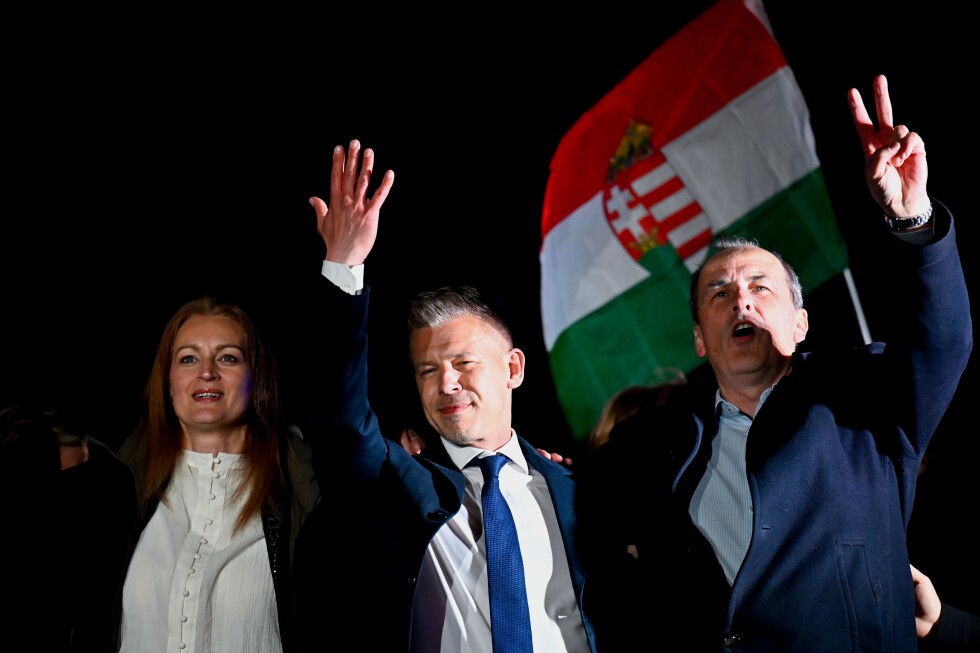
In a seismic political shift that has sent ripples across the European continent, Hungarian opposition leader Péter Magyar has claimed a historic election victory that ends 16 years of authoritarian-leaning rule by Viktor Orbán, drawing an outpouring of congratulatory messages from top European Union leaders and key global figures.
The sweeping celebration of Magyar’s win stems not only from what the new incoming prime minister has pledged to accomplish, but from what his victory represents: the end of Orbán’s Euroskeptic, populist rule that long destabilized EU collective governance and frustrated the bloc’s unified policy goals. For years, Orbán positioned himself against Brussels-centric strategy, framing his agenda as a defense of Hungarian national interests against overreach from EU institutions. His repeated vetoes of coordinated EU action, most notably collective military and political support for Ukraine following Russia’s full-scale 2022 invasion, put him at constant odds with the 27-nation bloc. Most recently, his administration’s admission that it maintained secret backchannel communications with Moscow during key EU summits sparked outright outrage among European leaders.
In the wake of the election result, congratulations flooded official social media channels and poured in via personal calls from the bloc’s most senior figures. Even before Magyar delivered his victory speech on the banks of the Danube River in downtown Budapest on Sunday night, he had already received congratulatory calls from French President Emmanuel Macron, European Commission President Ursula von der Leyen, NATO Secretary-General Mark Rutte, and German Chancellor Friedrich Merz. Online, messages of celebration came from British Prime Minister Keir Starmer, Irish Prime Minister Micheál Martin, Swedish Prime Minister Ulf Kristersson, European Parliament Speaker Roberta Metsola, Danish Prime Minister Mette Frederiksen, Romanian President Nicușor Dan, and European Council President António Costa, among many others.
Spanish Prime Minister Pedro Sánchez summed up the prevailing mood among pro-European leaders in a post on X, writing simply: “Today Europe wins and European values win.” Polish Prime Minister Donald Tusk echoed the enthusiasm, posting “Back together! Glorious victory, dear friends!” Starmer framed the outcome as a defining moment for democratic governance across the continent, noting “This is an historic moment, not only for Hungary, but for European democracy.” Macron emphasized that France welcomed the Hungarian people’s clear commitment to EU values, while Merz called for renewed collective action: “Let’s join forces for a strong, secure and, above all, united Europe.” Kristersson framed the result as a new chapter for both Hungary and the bloc, adding that he looked forward to close collaboration as NATO allies and EU partners. Von der Leyen, who was a frequent target of Orbán’s anti-Brussels rhetoric, struck a unifying tone, writing: “Hungary has chosen Europe. Europe has always chosen Hungary. Together, we are stronger. A country returns to its European path. The Union grows stronger.”
Slovenian Prime Minister Robert Golob went further, framing Magyar’s win as a victory for the entire European project: “His victory over right-wing populism is also a great victory for the EU and its future. Only a more united and more effective EU will be able to respond to the extremely serious challenges of the times ahead.” German lawmaker Daniel Freund noted that the upset would have far-reaching implications for populist movements globally, arguing that Orbán, long the icon of illiberal anti-European politics, was brought down by his own government’s failures: “Hungarians are sending a signal to the world. The icon of illiberal anti-European forces has now failed – brought down by a disastrous economy, corruption, and his own unfair electoral system.”
Ukraine’s official government account also offered congratulations, leaning into the shared geographic and political future of the two nations within Europe. “The Dnipro and the Tisza flow through a shared home — Europe,” the post read.
Beyond his commitment to repairing Hungary’s strained relationship with the EU, which Magyar confirmed to the Associated Press ahead of the vote, the new prime-minister-elect has struck a unifying tone in his first public remarks. “All Hungarians know that this is a shared victory. Our homeland made up its mind. It wants to live again. It wants to be a European country,” he told supporters gathered for his victory celebration.
Notably, Magyar has avoided taking firm stances on several divisive policy issues carried over from the Orbán era, including Orbán’s widely criticized anti-LGBTQ+ policies and the question of whether his administration will expand Hungary’s military and humanitarian support for Ukraine.
Not all reactions to the power shift were uniformly celebratory. Italian Prime Minister Giorgia Meloni, a fellow right-wing leader, congratulated Magyar but also extended thanks to Orbán for years of close collaboration. Far-right French politician Jordan Bardella, a leading contender in France’s 2027 presidential election, praised Orbán’s legacy advancing populist causes in a social media post, and made no mention of the new winner. Israeli opposition leader Yair Lapid, a descendant of Hungarian Holocaust survivors, was among non-European figures to offer congratulations to Magyar.
European People’s Party President Manfried Weber, another frequent critic of Orbán, summed up the broader shift for the EU, writing simply: “Hungary is back at the heart of Europe.”