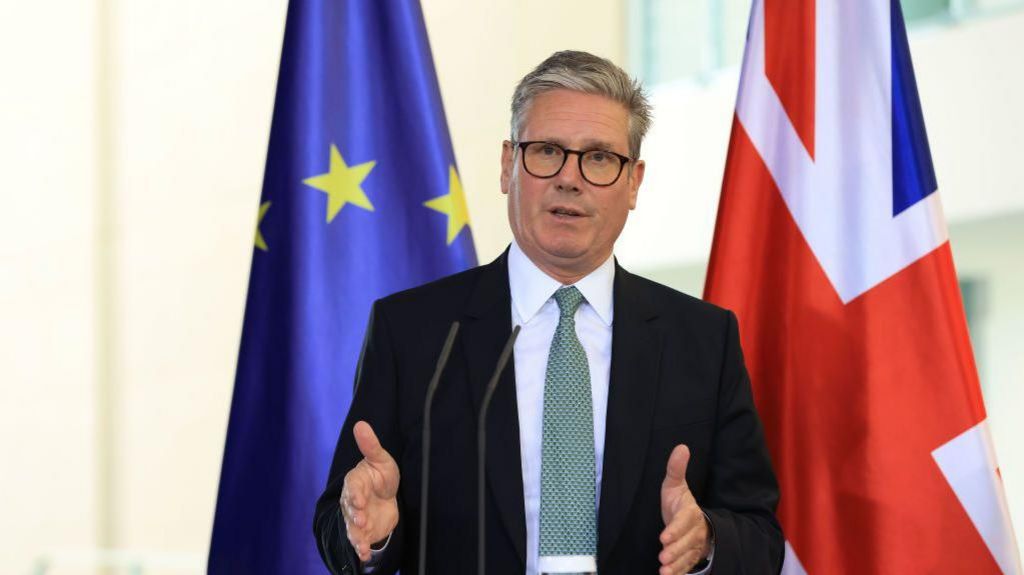
Four years after the UK completed its full exit from the European Union’s economic structures, a contentious new legislative proposal from the opposition Labour Party has reignited fierce debates over the country’s post-Brexit trade relationship with its largest trading partner. Under the plan put forward by Labour leader Sir Keir Starmer, the UK government would gain new powers to adopt updated EU single market regulations for specific trade sectors, most notably food safety and product standards, without requiring full parliamentary votes for each new rule.
This framework, known as “dynamic alignment,” is designed to streamline UK-EU trade by ensuring British rules match evolving EU standards in areas covered by existing negotiated agreements. If enacted, any new regulation drafted in Brussels would be brought into UK law via secondary legislation, a procedural mechanism that typically does not allow for amendments and is generally approved without a full floor vote in Parliament, leaving MPs with only limited opportunities for formal scrutiny.
Labour insiders argue the reform is a pragmatic solution to long-standing post-Brexit trade frictions. The party frames the change as a way to cut unnecessary operational costs for British businesses and eliminate what it calls the “Brexit paperwork tax,” a hidden burden that pushes up everyday grocery prices for UK households. A Labour source emphasized that the plan does not reverse the UK’s Brexit departure, noting the party has consistently ruled out rejoining the single market or customs union. Instead, the source framed the proposal as a sovereign choice: the UK would voluntarily enter into agreements that lower trade barriers, while Parliament still retains a formal role in the process.
The government further argues the reform will unlock a UK-EU food and drink trade agreement estimated to add £5.1 billion annually to the economy, support domestic British jobs, and cut through burdensome red tape for farmers, food producers and small businesses across the country. A government spokesperson added that the full bill itself will undergo the standard parliamentary passage process, and any new wider treaties or trade deals with the EU will still face full parliamentary scrutiny before approval.
But the proposal has drawn fierce pushback from across the political spectrum. The Conservative Party’s shadow business secretary Andrew Griffith condemned the plan, arguing it would reduce Parliament to a mere spectator while EU regulators in Brussels set the trade rules that govern British businesses. Reform UK leader Nigel Farage, one of the most prominent architects of the original Brexit campaign, has pledged to oppose the legislation at every stage, dismissing it as a backdoor attempt to bring the UK back under EU regulatory control.
Even pro-EU opposition parties have raised concerns over the erosion of parliamentary sovereignty. Liberal Democrat MP Munira Wilson told the BBC’s *Westminster Hour* that while her party supports closer economic ties with the EU, any alignment must go hand in hand with full parliamentary democratic scrutiny.
The legislative proposal comes as the UK and EU continue ongoing negotiations to update post-Brexit trade arrangements, including a targeted deal on food safety, animal and plant health standards. Full text of the bill is expected to be introduced to Parliament later this year, ahead of a scheduled UK-EU summit that Starmer has signaled will be more ambitious than the 2025 meeting, where the two sides struck a landmark agreement covering fishing rights, trade, defense and energy cooperation.