标签: Europe

欧洲

  • Greek police using masked migrants to forcibly push other migrants back across border

    Greek police using masked migrants to forcibly push other migrants back across border

    A years-long joint investigation by the BBC and the Consolidated Rescue Group (CRG) has uncovered explosive evidence of systematic illegal pushbacks at Greece’s Evros land border with Turkey, revealing that Greek police have been recruiting migrant mercenaries to carry out violent, unlawful expulsions of asylum seekers and irregular migrants since at least 2020. The 200-kilometer Evros border forms the European Union’s eastern external frontier, a heavily militarized restricted zone dotted with watchtowers that has been a key entry point for more than 1 million migrants arriving in Greece since 2015. What the investigation uncovered is a shadowy, officially overseen system that violates both international and European Union human rights law.

    The inquiry began in autumn 2024, after a disgruntled smuggler shared graphic footage purporting to show migrants being abused by masked, third-country men at the border. While the BBC could not independently verify the footage’s content, its accounts aligned with testimony gathered from more than a dozen independent sources, including current and former Greek border guards, migrant victims, former mercenaries, leaked official disciplinary documents, and independent human rights investigations. Internal police documents reviewed by the BBC confirm that senior Greek police officers ordered and oversaw the recruitment of mercenaries, who are themselves migrants from countries including Pakistan, Syria, and Afghanistan. Recruits are compensated with cash, stolen mobile phones and valuables from other migrants, and unofficial permission to travel onward through Greece. In some cases, recruitment has happened under duress: Marwan, a Moroccan former mercenary who spoke to the BBC from Paris under a pseudonym, said he was pulled from a migrant detention cell in 2020 and given no choice but to agree to work. He described being held in an abandoned prison with other recruits, and told the BBC he witnessed routine brutal violence against migrants at the hands of Greek officers and other mercenaries, leaving him “completely destroyed” by trauma. “I am deeply sorry… I was under threat,” he said of his involvement.

    Multiple witnesses and documents corroborate allegations of widespread brutality against migrants subjected to pushbacks. Testimony collected by the BBC includes accounts of migrants being stripped, beaten until unconscious, robbed, subjected to invasive and degrading body searches, and sexually assaulted. One Syrian migrant, Amal (using a pseudonym for security), described how her family was detained by Greek police in Orestiada in 2025 while traveling to reunite with relatives who had already been granted asylum in Greece. She said police handed the group over to masked mercenaries, who removed her young daughter’s diaper during a search for valuables, leaving the child screaming in fear, and beat a young migrant so severely he lost consciousness. Another Syrian migrant, Ahmad, said he was beaten unconscious by Greek police, then loaded into an overcrowded truck where many passengers struggled to breathe before being handed over to mercenaries who stripped him, beat anyone hiding money, and forced migrants into dinghies half-way across the Evros River, throwing those who refused to jump overboard despite the risk of drowning.

    Official investigations and disciplinary records support these accounts. Excerpts from a 2024 Greek border guard disciplinary hearing reviewed by the BBC show multiple guards openly acknowledged the use of “boatmen” – the coded term for mercenary recruiters – for pushbacks. One guard told the hearing he was ordered to find recruits in 2020, when COVID-19 restrictions and heightened tensions with Turkey made direct police involvement too risky, and that the program was already active in southern Evros. Guards used coded language on the Viber messaging app to coordinate pushbacks, referencing “Special Team” operations, and told the hearing they had reported to senior officers that mercenaries were raping female migrants and stealing valuables, but no action was taken. Five border guards are currently awaiting trial on corruption charges related to the program, all of which they deny.

    A 2023 investigation by Frontex’s own independent Fundamental Rights Office into one ambush of a group of asylum seekers near Evros found that between 10 and 20 third-country nationals were acting under direct instruction of Greek officers. The report confirmed the group was subjected to death and rape threats, invasive sexualized body searches, beatings, stabbings, theft, and forced expulsion back to Turkey, in clear violation of EU human rights law. Greek authorities have denied any migrants were present in the area that day. The Greek National Commission for Human Rights (GNCHR) has itself documented more than 100 alleged forced pushback incidents in Evros dating back to 2020, dozens of which involved third-country mercenaries, with the most recent incident recorded in October 2025. GNCHR president Maria Gavouneli called the BBC’s findings “extremely significant” evidence of widespread human rights abuse.

    When confronted with the allegations by the BBC in March 2026, Greek Prime Minister Kyriakos Mitsotakis said he was “totally unaware” of any program using migrant mercenaries for pushbacks. He defended Greece’s border protection policies, adding that European leaders have made clear they will not repeat past “mistakes” of allowing a “massive influx” of migrants and refugees. Greek national authorities have not responded to the BBC’s detailed written requests for comment on the investigation’s findings. Frontex, the EU’s border and coast guard agency, has rejected claims it turns a blind eye to human rights violations, saying it works to ensure lawful border management and supports frontline states under pressure. A regional police source told the BBC that every uniformed officer serving in Evros – including Greek police, soldiers and Frontex staff – is aware pushbacks are taking place, with mercenaries pushing back as many as hundreds of migrants every week.

    The investigation also identified a leading former mercenary, a Syrian man known as “Mike”, who is referenced in internal police documents and confirmed by five separate sources to have held a senior role in the program. A photo provided by the smuggler shows a group of masked men in a van, and facial recognition analysis found a 90% match between the right-most individual in the photo and publicly available images of Mike. When contacted via social media, Mike did not respond directly, and his lawyer sent a warning letter opposing publication of the image and what he called “unproven allegations”. A lawyer has also confirmed she has filed a case before the European Court of Human Rights on behalf of an Afghan woman who alleges she was raped by a Farsi-speaking masked mercenary during a 2023 pushback.

    Pushbacks – the forced expulsion of migrants and asylum seekers across international borders without formal due process or access to asylum claims – are universally recognized as illegal under international law. Claims of masked third-country men carrying out pushbacks in Evros were first reported in 2022 by Dutch-based independent news outlet Lighthouse Reports. The BBC’s investigation provides the most comprehensive evidence to date of official involvement in the program, spanning more than five years and continuing into 2025.

  • The Trump and Leo chronicles: A president and a pope square off over Iran and its aftermath

    The Trump and Leo chronicles: A president and a pope square off over Iran and its aftermath

    For the first time in history, two of the world’s most influential public platforms are held by American-born figures — and their long-simmering rhetorical clash over the ongoing Israel-U.S. war in Iran has erupted into an extraordinary public split, exposing deep divides over faith, war, and the role of religious leadership in global politics.

    The confrontation reached a new peak this week, as Pope Leo XIV, the soft-spoken, studious first U.S.-born pontiff, pushed back forcefully against a volley of personal attacks from former and current U.S. President Donald Trump, an unapologetically combative politician who has framed his hardline stance on Iran as central to his political agenda. Speaking to reporters aboard his flight to Algeria this Monday, the pope made clear the Vatican’s consistent calls for peace and reconciliation are rooted in Christian Gospel teachings, and he has no intention of backing down to pressure from the Trump administration. “I’m not afraid of the Trump administration, or of speaking out loudly about the message of the Gospel, which is what the Church works for,” Leo said.

    Trump, for his part, launched a scathing series of posts on his Truth Social platform over the weekend, labeling Pope Leo “Weak,” claiming the pontiff was held captive by the “Radical Left,” and even suggesting that Leo owed his papal election to Trump’s political influence. The feud follows the pope’s blunt rebuke of Trump’s threats to expand military action in Iran, which Leo called “truly unacceptable.” To contextualize this unprecedented clash, it is necessary to trace how the relationship between the two American leaders shifted from initial celebration to open conflict, shaped by long-standing patterns of speech and conviction from both men.

    Long before his election to the papacy, Robert Prevost — who would become Pope Leo XIV — established a track record of unflinching public commentary on global politics. As a bishop serving in Peru when Russia launched its full-scale invasion of Ukraine in 2022, he did not hesitate to assign direct blame to Moscow, describing the incursion on a Peruvian current affairs program as “an imperialist invasion in which Russia wants to conquer territory for reasons of power given Ukraine’s strategic location.” The clip resurfaced widely in Italian media shortly after his May 2025 papal election.

    Earlier that same year, while still a cardinal based in Rome, Prevost sparked conversation by sharing a critical news analysis of U.S. Vice President JD Vance, a convert to Catholicism who had argued that Christian teachings mandate a hierarchical order of care, prioritizing one’s own family, local community and fellow citizens over foreign-born people. The headline of the analysis Prevost shared read: “JD Vance is wrong: Jesus doesn’t ask us to rank our love for others.”

    This pattern of direct engagement set Prevost apart from many Catholic bishops, who often limit public commentary to broad statements of church doctrine and avoid direct critiques of sitting politicians. As the context makes clear, these early actions revealed a leader who kept close track of global affairs and was willing to stake out clear, controversial positions long before he took the papal throne.

    On the day of Leo’s election, Trump was quick to celebrate the milestone, framing the first American pontiff as a personal win for the United States and for his own presidency. “It is such an honor to realize that he is the first American Pope. What excitement, and what a Great Honor for our Country,” Trump posted on Truth Social. “I look forward to meeting Pope Leo XIV. It will be a very meaningful moment!” He later told reporters at the White House that the administration was “a little bit surprised and very happy” with the outcome of the papal conclave.

    By this week, that celebration had curdled into blame and grievance, with Trump claiming that Leo was only elected because the College of Cardinals picked an American specifically to curry favor with his administration. The shift highlights how Trump has consistently framed Leo through a lens of nationalist loyalty and personal power, rather than as the leader of a global religious institution. That perspective overlooks key context: the College of Cardinals has historically viewed the U.S. with a degree of skepticism, concerned about the global impact of Washington’s military and economic policies on low-income nations, and has long been reluctant to name a pope from the world’s dominant superpower. Though Leo was born, educated and ordained in the U.S., he spent decades serving as a church leader in impoverished regions of South America. As Steven Millies, a professor at Chicago’s Catholic Theological Union — where Leo earned his master of divinity — noted, “He was the least American of the Americans.”

    From the very first moments of his papacy, Leo made clear that peacemaking would be the defining mission of his tenure. His opening remarks from the balcony of St. Peter’s Basilica opened with a message of peace: “Peace with you all … the first greeting of the risen Christ, the Good Shepherd who gave his life for the flock of God.” At his first Sunday blessing from the loggia, he addressed both the Russian war in Ukraine and the ongoing Israel-Gaza violence, decrying the spate of global conflicts as a “third world war in pieces.” The following Monday, he opened a meeting with journalists by quoting Jesus’ words from the Sermon on the Mount: “Blessed are the peacemakers.”

    Beyond his words, Leo took deliberate steps to distance himself from overt American branding, even in his choice of language. A fluent polyglot, Leo did not use English in any of his opening high-profile papal remarks: he spoke first in Italian when he was introduced to the world in St. Peter’s Square, then switched to Spanish to address the Peruvian people he had served for years. His first Sunday blessing was delivered entirely in Italian. While he briefly greeted the assembly of journalists in his native Chicago-inflected English, he quickly transitioned back to Italian for his formal remarks. The choice is a deliberate one, experts say, that underscores his role as the head of a global church with 1.4 billion followers worldwide. “He doesn’t want to be perceived, I think, as coming from the American side or as relying on his authority as American,” said William Barbieri, a professor at Catholic University of America. “He wants to speak in the name of the church.”

    The gulf between the two men’s views widened dramatically during this year’s Holy Week and Easter season, as Trump escalated military threats against Iran. In his Palm Sunday address, Leo framed Jesus as the “King of Peace” and directly challenged warmaking, quoting the Hebrew Bible: “Even though you make many prayers, I will not listen: your hands are full of blood.” Around the same time, Trump welcomed conservative Christian leaders to the White House for a Holy Week event, where his spiritual advisor Paula White drew a parallel between Trump and Jesus, framing both as persecuted figures.

    Later that week, Leo performed the traditional foot-washing ceremony and became the first pope to name Trump directly in a public critique, calling on the president to pursue an “off-ramp” from escalating conflict in Iran. On Easter Sunday, Trump issued a new threat to bomb civilian infrastructure across Iran and erase what he called an entire civilization, prompting Leo’s public rebuke that the threat was “truly unacceptable.” The back-and-forth stripped away all pretense of cordiality, making an open confrontation unavoidable.

    In his recent social media broadside, Trump doubled down on his attack, arguing: “I don’t want a Pope who criticizes the President of the United States because I’m doing exactly what I was elected, IN A LANDSLIDE, to do.” He added that Leo should “focus on being a Great Pope, not a Politician.”

    For his part, Leo has repeatedly pushed back against framing his comments as political interference. “To put my message on the same plane as what the president has attempted to do here, I think is not understanding what the message of the Gospel is,” Leo told the Associated Press aboard his flight to Africa. “And I’m sorry to hear that but I will continue on what I believe is the mission of the church in the world today.”

    The clash is a historic one: popes have long commented on global conflicts, but rarely name sitting heads of state directly for public criticism. For Trump, too, the dynamic is unusual: while he regularly lashes out at perceived political rivals, he is facing off against a global religious leader who operates outside U.S. electoral politics and faces no pressure to comply with Trump’s terms.

  • Hungary’s next PM would pick up if Putin calls and tell him to stop Ukraine war

    Hungary’s next PM would pick up if Putin calls and tell him to stop Ukraine war

    One day after delivering a historic political upset that ended Viktor Orbán’s 16 consecutive years in power as Hungary’s prime minister, Péter Magyar, leader of the newly victorious Tisza party, laid out his bold domestic and foreign policy agenda during a marathon three-hour press conference on Monday.

    Magyar opened his remarks by revealing that he had already held introductory conversations with 10 European leaders in the immediate aftermath of his landslide victory, signaling a sharp shift away from Orbán’s often Euroskeptic and Russia-aligned agenda. On the topic of Russia, which had maintained a close partnership with Orbán’s outgoing administration, Magyar struck a clear, firm tone: he would not be the one to initiate contact with Russian President Vladimir Putin, though he would take the call if Putin reached out. “If Vladimir Putin calls I’ll pick up the phone,” Magyar told assembled reporters. “I don’t think it’ll happen, but if we did talk I’d tell him to please, after four years, put an end to the killing and end this war.”

    The Kremlin responded to Magyar’s victory with a measured statement, saying it respects the election outcome and expects to maintain pragmatic bilateral relations with the new Budapest government.

    Magyar mirrored his stance on another high-profile relationship, saying he would not reach out to former U.S. President Donald Trump, who had openly endorsed Orbán’s re-election bid and received public backing from U.S. Vice President JD Vance during a two-day campaign stop in Hungary last week. If Trump contacts him, however, Magyar said he would affirm that the two are strong NATO allies and extend an invitation to Hungary for the 70th anniversary of the 1956 Hungarian uprising against Soviet occupation, scheduled for next October.

    A one-time insider within Orbán’s own Fidesz party, Magyar launched his political movement as a grassroots campaign centered on rooting out systemic corruption and cronyism that had flourished under Orbán’s long tenure. Preliminary official election results, adjusted after an initial count, give Tisza 136 seats in Hungary’s parliament — still a comfortable two-thirds supermajority, enough to allow the new government to amend the national constitution. With roughly 400,000 ballots still left to tally, Magyar said he remained optimistic his party would pick up additional seats in the final count. He emphasized that Sunday’s result was far more than a routine change of government: it was a mandate for complete regime change.

    European Commission President Ursula von der Leyen, one of the 10 leaders Magyar had already spoken to on Monday, summed up the bloc’s reaction in one line: “Hungary has chosen Europe.” Magyar doubled down on that sentiment, stressing that Hungary’s place is firmly within the European Union regardless of the outgoing government’s past positioning, and that joining the eurozone is a core national interest for his country. He also outlined his first round of diplomatic visits, which will take him to Poland, Austria, and Germany — three nations he said Hungary shares deep historical and political ties with.

    The contrast between Magyar’s agenda and Orbán’s outgoing administration could not be clearer on the war in Ukraine. For years, Orbán has blamed the EU and Ukrainian President Volodymyr Zelenskyy for prolonging Russia’s full-scale invasion, a narrative he repeated throughout his election campaign. Last month, Orbán blocked a proposed €90 billion EU aid package for Kyiv, drawing widespread accusations of disloyalty from fellow EU member states.

    Magyar rejected that framing outright, telling reporters: “Every Hungarian knew that Ukraine was the victim of the war with Russia.” He added that the war is also senseless from Russia’s perspective, noting “tens of thousands of Russians have lost their lives, and tens or even hundreds of thousands of Russian families have been destroyed”, including Russian-speaking communities living in Ukraine. He joked that any call with Putin would likely be brief, adding “I don’t think he’d end the war on my advice.”

    Orbán’s government has long faced questions over its close ties to Moscow, with scrutiny intensifying in recent months after Hungarian Foreign Minister Péter Szijjártó admitted he shared information about EU sanctions discussions with Russian officials both before and after EU meetings. A leaked recording also alleged Szijjártó told Russian Foreign Minister Sergei Lavrov “I am at your service”, a revelation that prompted Orbán to order a domestic wiretapping investigation into the leak.

    Midway through Monday’s press conference, Magyar was handed an urgent note that led him to make a fresh allegation: Szijjártó’s foreign ministry was actively shredding confidential documents related to the government’s dealings with Russia and sanctions policy on the very same day. As of the press conference, the outgoing foreign ministry had not issued any comment responding to the claim.

  • Spanish PM’s wife charged with corruption after two-year probe

    Spanish PM’s wife charged with corruption after two-year probe

    In a major legal development that has sent shockwaves through Spanish politics, a Spanish court has officially filed four criminal charges against Begoña Gómez, the wife of incumbent Prime Minister Pedro Sánchez, concluding a two-year long criminal investigation into alleged corrupt activity. The charges handed down include embezzlement, influence peddling, business corruption, and misappropriation of public funds, according to the formal court ruling released this week. The case now enters a new phase, with judiciary officials set to determine in coming weeks whether Gómez will proceed to a public trial.

    The core allegations against Gómez center on claims that she leveraged her close familial connection to the Spanish prime minister to advance her own private professional interests, including securing a senior academic position at one of Spain’s most prestigious higher education institutions, Madrid’s Complutense University. Investigators further allege that she diverted public resources to benefit private projects and personal gain. Investigating Judge Juan Carlos Peinado, who opened the initial probe in April 2024, has highlighted Gómez’s lack of relevant academic and professional qualifications for her role leading a master’s degree program in business studies at the university as key evidence supporting the charges.

    The original complaint against Gómez was brought forward by Manos Limpias (Clean Hands), a Spanish anti-corruption activist group headed by Miguel Bernad, a figure with documented ties to Spain’s far-right political sphere. The organization has a well-documented history of bringing a long string of unsuccessful legal claims against left-leaning Spanish politicians over the past decade.

    Gómez has issued a firm denial of all charges brought against her. For his part, Prime Minister Sánchez has repeatedly dismissed the entire investigation as a coordinated political smear campaign orchestrated by Spain’s right-wing and far-right opposition to destabilize his left-wing coalition government. When the investigation was first launched in 2024, Sánchez made the unprecedented decision to suspend all public official duties for five days, stating he would pause to reflect on whether he would continue in his role as prime minister. He accused political opponents of waging a months-long “harassment strategy” designed to weaken him politically and personally target his family. As the charges were made public this week, Gómez and Sánchez were already out of the country, carrying out a scheduled official state visit to China.

    This latest legal development comes amid a string of ongoing corruption-related cases affecting senior figures linked to Sánchez and his government. Just this month, José Luis Ábalos, Sánchez’s former transport minister, went on trial on charges that he accepted illegal kickbacks in connection with public contracts for personal protective equipment (PPE) purchased by the Spanish government at the height of the COVID-19 pandemic. Separately, the prime minister’s brother, David Sánchez, has also been indicted in an unrelated influence peddling probe connected to his hiring by a Spanish regional government.

  • Woman dies more than three weeks after assault

    Woman dies more than three weeks after assault

    Nearly three weeks after a brutal assault left her fighting for her life in Birdhill, a small village in Ireland’s County Tipperary, 20-something-year-old Scarlett Faulkner has succumbed to her injuries at Cork University Hospital, authorities confirmed this week. The 21 March attack left Faulkner in critical condition immediately after the incident, prompting an urgent investigation from local law enforcement. Just seven days following the violent assault, two suspects — a teenage girl and a woman in her 40s — were taken into custody and appeared before a local court to face charges connected to the attack on Faulkner. The case remains ongoing as the community comes to terms with the tragic outcome of the violence that shocked the small rural village.

  • French cement giant guilty of financing militant groups including Islamic State

    French cement giant guilty of financing militant groups including Islamic State

    In a historic legal milestone that marks the first time a corporation has stood trial on terrorism financing charges in France, Paris-based judges have delivered a guilty verdict against global cement manufacturer Lafarge for paying millions of dollars in extortion and protection payments to designated jihadist groups, including the self-proclaimed Islamic State (IS), to maintain operations at its Syrian plant amid the country’s ongoing civil war. Eight former senior Lafarge employees, including the firm’s one-time chief executive officer Bruno Lafont, were also convicted of the same terrorism financing charges on Monday, with Lafont handed a six-year prison sentence by the court.

    The judicial panel confirmed that between 2013 and 2014, at the height of escalating conflict in northern Syria, Lafarge transferred a total of $6.5 million (equivalent to €5.59 million or £4.83 million at current exchange rates) to armed militant groups to keep its Jalabiya cement factory operational. The plant, which Lafarge acquired for $680 million in 2008 and launched just months before the 2011 outbreak of the Syrian civil war, sat in territory that had fallen under the control of multiple jihadist factions by 2013.

    Presiding judge Isabelle Prevost-Desprez outlined the gravity of the offenses in court, emphasizing that these direct payments allowed banned terrorist organizations to consolidate control over Syria’s critical natural resources, generating critical revenue that they used to fund violent attacks across the Middle East and into European countries. “It is clear to the court that the sole purpose of the funding of a terrorist organisation was to keep the Syrian plant running for economic reasons. Payments to terrorist entities enabled Lafarge to continue its operations,” Prevost-Desprez stated. She added that the financial arrangement amounted to “a genuine commercial partnership with IS.”

    Prosecutors laid out details of the payments during the trial, explaining that Lafarge’s personnel were based in the nearby northern town of Manbij and were forced to cross the Euphrates River to reach the plant. Of the total transfers, roughly €800,000 went toward securing safe passage for staff and supplies, while an additional €1.6 million was paid to access raw material from quarries controlled directly by IS. Alongside IS, the court confirmed the Nusra Front—an al-Qaeda-affiliated group designated as a terrorist organization by the European Union and most of the global community—also received payments from the firm.

    Beyond Lafont’s six-year sentence, Christian Herrault, Lafarge’s former deputy managing director, received a five-year prison term. Syrian former employee Firas Tlass, who directly facilitated the payments to militant groups, was sentenced in absentia to seven years behind bars. Herrault had defended his actions during the trial, arguing that the decision to keep the factory open stemmed from a sense of responsibility to local staff. “We could have washed our hands of it and walked away, but what would have happened to the factory’s employees?” he said.

    Lafarge, which is now a subsidiary of Swiss building materials conglomerate Holcim, was fined more than €1 million ($1.3 million) as part of the verdict. The company has not yet issued an official public statement following the ruling, and a separate parallel investigation into allegations that the company was complicit in crimes against humanity remains ongoing.

    This French conviction comes three years after a 2022 legal settlement in the United States, where Lafarge admitted to violating U.S. sanctions by providing support to designated terrorist groups and agreed to pay a $777.8 million (£687.2 million) penalty to resolve the charges. The case is widely regarded as a landmark precedent for corporate accountability in relation to business operations in conflict zones where terrorist groups control territory.

    To provide context for the case, Syria’s civil war erupted in March 2011 after the regime of then-president Bashar al-Assad launched a brutal crackdown on peaceful anti-government protests. By 2014, IS had seized large swathes of territory across northern Syria and neighboring Iraq, declaring a transnational “caliphate” and enforcing a violent, extremist interpretation of Islamic law across the areas under its control.

  • UK report lays bare ‘catastrophic’ missed chances before stabbings at girls’ dance class

    UK report lays bare ‘catastrophic’ missed chances before stabbings at girls’ dance class

    In the wake of one of the most brutal acts of violence in recent British history, a landmark public inquiry has concluded that the 2024 mass stabbing that left three young girls dead and 10 others injured at a Taylor Swift-themed dance class in Southport, northwestern England, could and should have been averted. The attack, carried out by 17-year-old Axel Rudakubana, exposed cascading, repeated missed opportunities for intervention by both public agencies and the teenager’s own parents as his violent obsessions escalated over years, retired judge Adrian Fulford, who led the nine-week probe, outlined in a 763-page final report released Monday.

    Fulford’s report catalogs a years-long pattern of red flags that were never properly addressed, documenting dozens of moments when targeted action could have stopped Rudakubana before he launched his attack. He described the killings as unprecedented in the UK for their “extreme and very particular depravity,” emphasizing that the sheer volume of unaddressed warning signs directly enabled the catastrophe.

    “One of the most striking conclusions from this inquiry’s extensive investigation is the sheer number of missed opportunities over many years to intervene meaningfully, which directly contributed to the failure to avert this disaster,” Fulford said. “The consequences were catastrophic.”

    Rudakubana is currently serving a life sentence with a 52-year minimum term before eligibility for parole, convicted of murdering 9-year-old Alice da Silva Aguiar, 7-year-old Elsie Dot Stancombe, and 6-year-old Bebe King. Eight children and two adults were also wounded in the targeted attack on the children’s dance class.

    In the days immediately after the attack, Southport was rocked by days of far-right unrest, after extremist groups circulated false claims that the attacker was a recently arrived Muslim migrant. In reality, Rudakubana was born in Wales to Rwandan Christian parents.

    The inquiry’s investigation laid bare systemic failures across multiple public institutions: police, social services, education authorities, and the UK’s anti-extremism program Prevent all missed critical chances to intervene. As early as 2019, when Rudakubana was just 13, he was convicted of assaulting a fellow student with a hockey stick, and placed under youth offender supervision. Between 2019 and 2021, he was referred to Prevent three separate times for openly expressing fascination with school shootings, the 2017 London Bridge terror attack, the IRA, and political violence in the Middle East. In each instance, investigators closed his case after determining he was not at risk of radicalization into terrorism.

    Over that same period, local police were called to Rudakubana’s home five times in response to concerns over his behavior. He was connected to mental health and educational support services, but gradually disengagement from social work support. He was ultimately expelled from school after being caught carrying a knife, and rarely attended any alternative education placement afterward. In Fulford’s assessment, the teenager’s care became a disjointed “merry-go-round of referrals, assessments, case-closures and ‘hand-offs’” between disconnected public agencies, with no entity taking responsibility for monitoring his escalating risk.

    Fulford highlighted one particularly glaring missed opportunity in March 2022, when Rudakubana was stopped on a bus carrying a knife. When questioned by police, he openly admitted he wanted to stab someone, and confessed he had been attempting to manufacture poison. According to Fulford, this encounter should have resulted in immediate arrest and a home search, which would have uncovered his purchases of ricin-producing seeds and downloads of terrorist propaganda on his personal computer. Instead, Rudakubana was released without arrest and returned to his parents’ custody.

    The report also notes that Rudakubana’s parents, who lived in fear of their son, failed to report the multiple weapons he purchased, his persistent threatening behavior, and his graphic threats of violence. While Fulford emphasized these parental failures contributed to the tragedy, he urged against public vilification of the couple, noting their home life had become overwhelming.

    “Their life at home must have become little short of a nightmare given, to use the words of his own father, AR had turned into a ‘monster,’” Fulford said.

    After the attack, a search of Rudakubana’s home uncovered the ricin toxin hidden under his bed and a downloaded copy of an al-Qaida training manual. Despite this find, counterterrorism police concluded the attack did not qualify as an act of terrorism, as Rudakubana had no clear political or religious ideological motivation for his violence.

    The inquiry has put forward 67 formal recommendations to address systemic gaps and prevent similar atrocities from occurring in the future. Prime Minister Keir Starmer has pledged to implement sweeping reforms to correct the systemic failures that led to the attack. “The report today is truly harrowing and profoundly disturbing,” Starmer said. “While nothing will ever bring these three little girls back, I’m determined to make the fundamental changes needed to keep the public safe.”

    Starmer has previously argued that the case highlights a shifting nature of extremist violence in the UK, suggesting that existing laws may need to be updated to better address the growing threat of extreme violence perpetrated by isolated, self-radicalized individuals operating outside formal terrorist groups.

  • Three of European soccer’s greats are on the brink of Champions League elimination

    Three of European soccer’s greats are on the brink of Champions League elimination

    As the UEFA Champions League enters the decisive second leg of its quarterfinal stage this week, European soccer is bracing for a potentially historic shakeup: three of the competition’s most decorated and storied clubs are just 90 minutes away from shocking early elimination, all needing a dramatic comeback to keep their title dreams alive.

    Between them, Real Madrid, Liverpool FC and FC Barcelona have lifted the Champions League trophy 26 times — a combined haul that accounts for nearly a third of the competition’s entire history of titles. Yet all three dropped costly first-leg defeats last week, leaving them with steep deficits to overturn to advance to the final four.

    ### Real Madrid: Season Hinges on a Comeback Against a Red-Hot Bayern
    For 15-time record champion Real Madrid, this tie against Bayern Munich may well define the club’s entire season. Trailing closest title rival Barcelona by nine points in La Liga, the Champions League — the competition where Madrid has built its global legacy — stands as the club’s clearest path to silverware this campaign. After dropping a 2-1 home defeat at the Santiago Bernabéu last week, Carlo Ancelotti’s side must reverse the deficit in Munich on Wednesday to avoid an early exit.

    Bayern Munich enters this tie as one of Europe’s most in-form sides. Managed by Vincent Kompany, the German giant has notched 39 wins from 45 matches across all competitions this season, with only two losses total. It finished second in the Champions League league phase with seven wins from eight matches, and crushed Atalanta 10-2 on aggregate in the round of 16. A seventh Champions League title would draw Bayern level with AC Milan as the second-most successful club in competition history.

    Though Bayern boasts one of the continent’s most lethal attacking units, led by Harry Kane, Michael Olise and Luis Diaz, it was 40-year-old veteran goalkeeper Manuel Neuer who shut out Madrid’s high-powered offense to protect the first-leg lead in the opening match. While Madrid’s ability to create multiple clear chances against Bayern’s tight defense offers a glimmer of hope, the Spanish side will finally need to find a way past Neuer to keep their campaign alive.

    ### Liverpool Chases 2019-Style Comeback Against PSG
    Liverpool, winner of six Champions League titles, faces its own do-or-die test on Tuesday at Anfield, where it hosts defending champion Paris Saint-Germain. Trailing 2-0 from the first leg in Paris, the Merseyside club is facing the very real prospect of being eliminated by PSG for the second consecutive season.

    First-leg dominance from Luis Enrique’s PSG could have easily resulted in a far larger deficit, with the French side wasting a host of clear scoring opportunities to put the tie out of reach. “Paris Saint-Germain was the better team, but we didn’t give up and that’s why we still have a chance now in this tie — they kept us alive by not finishing those open chances,” Liverpool manager Arne Slot said ahead of the return leg.

    Liverpool will lean on the iconic intimidating atmosphere of Anfield’s home crowd to fuel a historic comeback, echoing the club’s legendary 4-0 second-leg win over Barcelona in 2019, when it overturned a 3-0 first-leg deficit to reach the final. A defeat, however, would pile further pressure on Slot, after Liverpool’s Premier League title defense fell apart early in the current campaign.

    ### Barcelona Facing Double Domestic Elimination at the Hands of Atletico
    Top of La Liga and on track for back-to-back Spanish titles, Barcelona is also at risk of a stunning Champions League exit. After a shocking semifinal elimination by Inter Milan last season, a quarterfinal exit to Atletico Madrid would be an even bigger upset. Hansi Flick’s side needs to overturn a 2-0 home first-leg deficit when it travels to Atletico’s Metropolitano Stadium on Tuesday.

    Diego Simeone’s tough Atletico side already knocked Barcelona out of the Copa del Rey last month, and is now targeting a season double over the Catalan side. Barcelona does have a recent comeback to draw confidence from: it fought back from a 4-0 first-leg Copa del Rey deficit to win 3-0 in the return leg, though it ultimately exited on aggregate. The club boasts a dynamic attacking corps featuring Lamine Yamal, Ferran Torres, Robert Lewandowski and recent signing Marcus Rashford, but the absence of injured winger Raphinha could prove a decisive gap in their quest for goals.

    ### Arsenal Looks to Lock in Semifinal Spot Amid Domestic Pressure
    The only quarterfinal tie not headed for a comeback story centers on Arsenal, which carries a 1-0 lead into its home leg against Sporting CP at the Emirates Stadium on Wednesday. The narrow first-leg lead came courtesy of a late stoppage-time goal from Kai Havertz in Portugal, making Mikel Arteta’s side the clear favorite to advance.

    For Arsenal, this match comes amid a critical stretch of the season as the club chases an unprecedented Premier League and Champions League double. Just days after facing Sporting, Arsenal travels to face defending champion Manchester City in a make-or-break Premier League clash. Recent results have heaped pressure on the league leaders: a loss to City in the League Cup final, a shock FA Cup exit to second-tier Southampton, and a recent league defeat to Bournemouth have seen City close the gap at the top of the table to six points, with City holding a game in hand. For many in the squad, a Champions League win this week could offer a welcome respite from domestic title pressure.

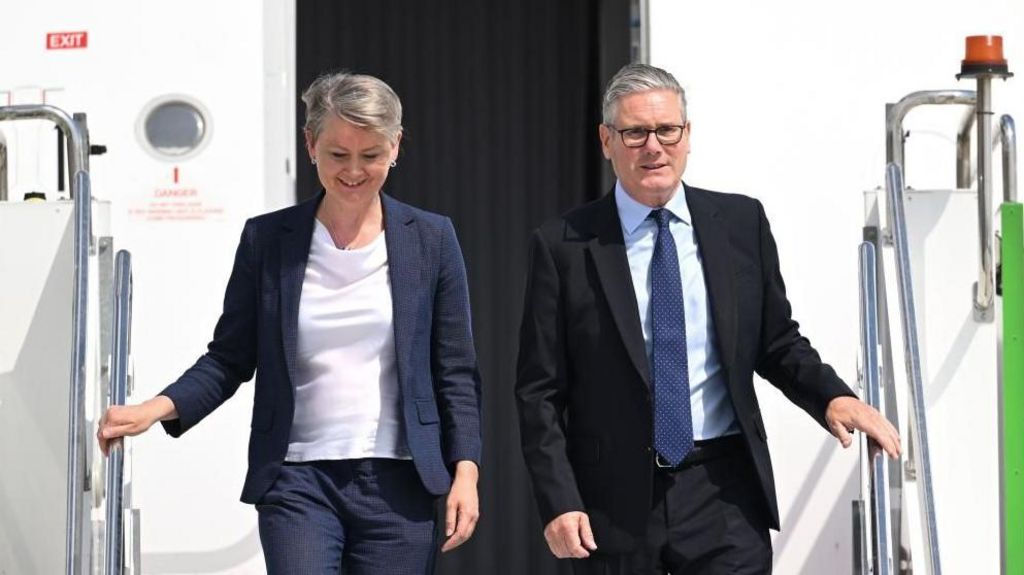
  • PM embraces Brexit divisions as he seeks closer ties with Europe

    PM embraces Brexit divisions as he seeks closer ties with Europe

    For more than a decade, the question of Britain’s relationship with the European Union has defined the fault lines of UK domestic politics. Now, a decade after the 2016 Brexit referendum, that long-simmering divide has erupted back into the open after the Keir Starmer government confirmed the parliamentary framework for its planned closer regulatory alignment with Brussels, reigniting bitter disputes over sovereignty, economic strategy, and the UK’s global standing.

    It has been public knowledge since Starmer took office following the 2024 general election that the Labour prime minister has prioritized rebuilding a tighter partnership with the EU. This commitment formed a core plank of his election campaign, even if details were kept deliberately vague during the race. For 11 months, since the inaugural UK-EU summit, Whitehall has been actively negotiating new cooperative agreements with Brussels on three critical policy areas: food and beverage safety standards, carbon emission regulations, and cross-border electricity market rules.

    What has not been broadly understood until recently is the government’s full intention: it plans not just to match current EU rules in these sectors, but to align with future updates to European regulatory frameworks as they evolve. When legislation to enshrine this arrangement is brought before Parliament later this year, a full up-or-down vote will be held. But subsequent adjustments to UK rules to mirror changing EU standards will in most cases be implemented through secondary legislation, a mechanism that does not require repeated new parliamentary votes.

    This procedural confirmation has already sparked immediate outrage from opposition benches. The Conservative Party and the right-wing Reform UK have both slammed the plan, though analysts note the underlying disagreement runs far deeper than parliamentary procedure. At its core, the fight revolves around the same foundational questions that have split British politics since 2016: what does national sovereignty mean in a post-Brexit world, how should the UK balance economic growth and independent rule-setting, and what place should Britain claim on the global stage?

    Conservative Shadow Business Secretary Andrew Griffith summed up the opposition’s core argument, arguing the arrangement would relegate Parliament to a passive observer role while Brussels dictates policy. “This is exactly what the country rejected in 2016,” Griffith said. Nigel Farage, the figurehead of the original Brexit campaign and leader of Reform UK, echoed that criticism, framing the no-vote alignment process as a direct betrayal of the 2016 referendum result. The opposition’s core objection is simple: it is wrong for the UK to abide by EU rules without retaining a seat at the table to shape those rules as a member bloc.

    While Starmer has not directly addressed that framing, his government’s response is clear: accepting aligned rules in targeted sectors is a reasonable trade-off for tangible economic gains. What is most striking about Starmer’s current approach is his newfound willingness to openly lean into this debate, a sharp shift from the cautious positioning he adopted as Labour leader for years. In recent public remarks, Starmer has tied his push for closer ties to rising global instability, casting stronger alignment with European allies as a critical national interest amid widespread geopolitical uncertainty.

    Speaking to BBC Radio 5 Live, Starmer emphasized, “We’re in a world where there’s massive conflict, great uncertainty, and I strongly believe the UK’s best interests are in a stronger, closer relationship with Europe.” At a press conference earlier this month addressing the economic fallout from the war in Iran, he doubled down on the stance: “our long-term national interest requires closer partnership with our allies in Europe.” He also reiterated a long-held Labour position that Brexit inflicted deep, lasting damage on the UK economy, and that the country needs to pursue more ambitious closer economic cooperation with the bloc.

    This public embrace of the Brexit issue marks a dramatic reversal for Starmer, who built his early political profile in the Labour Party as Jeremy Corbyn’s shadow Brexit secretary, but avoided open confrontation on the topic after taking the party’s leadership. For years, party strategists were deeply concerned that reopening the Brexit debate would alienate Labour voters: both Leave supporters who backed the party, and Remain supporters who preferred the issue be put to rest rather than relitigated.

    That political calculus has shifted dramatically in recent months. Polling has consistently shown growing public dissatisfaction with the outcomes of Brexit, shifting the electoral incentives for Labour. Additionally, the party has faced mounting pressure from its progressive flank, a threat that was underscored by the Green Party’s by-election victory in Gorton and Denton in February. The shift in Starmer’s public positioning is a direct response to these changing political dynamics.

    Yet the new approach carries clear political risks. Even as progressive voters push for deeper UK-EU integration, Starmer remains committed to retaining the core framework of the post-Brexit settlement negotiated by former Conservative Prime Minister Theresa May. That means the UK will not rejoin the EU single market, which requires the free movement of people, and will not rejoin the EU customs union, which would require the UK to abandon its ability to negotiate independent free trade agreements with non-EU nations. This middle-ground stance leaves Starmer vulnerable to criticism from progressives who argue he is not going far enough to reverse the economic damage of Brexit.

    Pressure for deeper integration is already building within Starmer’s own party. London Mayor Sadiq Khan, who is widely expected to run for a fourth term in 2028, has publicly called for the UK to rejoin the single market and customs union before the next general election, and to take the promise of full EU re-accession into that campaign.

    Even some government officials who support closer alignment recognize another key risk: every time Starmer emphasizes how critical closer ties are to his agenda, it increases the likelihood that Brussels will drive a harder bargain in negotiations. “We know from the Tory experience that the EU drives a hard bargain, especially if we’re seen as wanting to cherrypick the best bits of the single market,” a senior anonymous government source acknowledged.

    The ongoing regulatory negotiations are not even the most contentious discussion underway between London and Brussels. Talks to establish a new UK-EU youth mobility scheme have already reached an impasse, after the UK insisted on a cap on the number of young EU citizens that can relocate to the UK annually. Several EU member states have also demanded that UK universities charge European students the same tuition rates that British students pay at European higher education institutions, a demand that creates additional friction.

    All outstanding negotiations are on track to be finalized at the second UK-EU summit scheduled for the coming months. One decade after the UK’s historic Brexit referendum, the issue that remade British politics has returned to center stage, shaping the current government’s agenda and reigniting the debate that will continue to define the UK’s future for years to come.

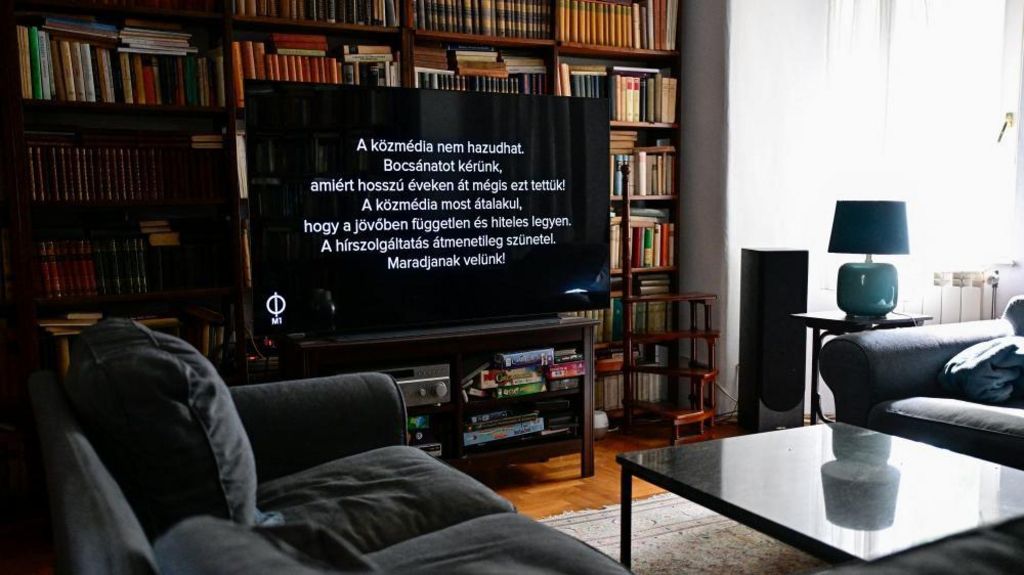
  • Following an election earthquake, Hungary ponders life after Orbán

    Following an election earthquake, Hungary ponders life after Orbán

    BUDAPEST – Hungary is entering a new political era after a historic electoral upheaval that ousted long-serving pro-Russian Prime Minister Viktor Orbán, leaving the nation navigating what lies ahead for incoming leader Péter Magyar, a pro-European reformer who has pledged to upend the country’s entrenched political landscape.

    Magyar’s decisive victory sparked mass jubilation across Budapest’s streets Sunday night, as tens of thousands of supporters — many of them young Hungarians — gathered to celebrate what they see as a long-awaited turning point. For these citizens, Orbán’s defeat brings new hope that Hungary will grow more free, improve quality of life, and cement its place as a full member of Europe’s democratic community.

    Among the celebrants was Adrien Rixer, who returned to his native Hungary from his current home in London specifically to cast a ballot in the high-stakes vote. “I really wanted to make my vote count, and I’m over the moon,” Rixer said. “Finally I can say that I’m a proud Hungarian, finally after 16 years.”

    Throughout his campaign, Magyar centered his platform on reversing Hungary’s years-long geopolitical shift toward Russia and repairing strained relations with European allies. In the wake of 16 years of increasingly autocratic rule and gradual erosion of democratic checks and balances under Orbán, he has promised to root out systemic corruption and build a “peaceful, functioning and humane” Hungary for all citizens.

    Over his 16 years in power, Orbán leveraged a two-thirds parliamentary supermajority to advance his illiberal agenda: he enacted a new national constitution, rewrote the country’s electoral rules to entrench his power, and reshaped the judiciary to align with his government’s priorities. In a striking parallel, Magyar’s Tisza Party secured exactly that same supermajority in Sunday’s vote, winning 138 of the 199 seats in Hungary’s parliament.

    This broad governing mandate gives Tisza unprecedented authority to roll back the bulk of Orbán-era legislation that enabled his government to stack the courts with political allies, gerrymander electoral districts, restrict independent press freedom, and entrench legal discrimination against the LGBTQ+ community. The outcome has eased widespread anxiety among supporters both in Hungary and across Europe, where many had worried a narrow simple majority would leave Magyar unable to dismantle Orbán’s political system entirely. Still, uncertainty lingers: even some supporters have expressed unease over concentrating that level of governing power in the hands of any new administration.

    “It’s hard to see that with two-thirds that it’s going to be a fair government, but we will see,” said Dániel Kovács, a celebrant at Sunday’s victory rally. “Let’s hope that it’s going to be a promising four years.”

    Magyar has repeatedly criticized Orbán’s administration for mismanaging Hungary’s economy and public social services, while allowing systemic, unchecked corruption that allowed a small circle of politically connected elites to amass extreme wealth at the expense of ordinary Hungarian households. He has vowed to hold corrupt actors accountable, and has proposed creating a new Office for the Recovery of National Assets to reclaim funds and assets that he argues were obtained illegally by Orbán’s closest allies.

    A core campaign promise from Magyar centers on unlocking billions of euros in frozen European Union funding, which Brussels has withheld from Hungary for years over the Orbán government’s persistent failures to address corruption and roll back democratic safeguards. He has also pledged to adopt the euro as Hungary’s official currency by 2030, a policy that Orbán’s government resisted for more than a decade.

    Imre Végh, a long-time Budapest resident, framed the election outcome as a rejection of the illiberal state Orbán built over 16 years. “Orbán had built an ‘illiberal system’ that was against Hungary’s fundamental values,” Végh said Monday. “We are Europeans and we want to stay in Europe.”