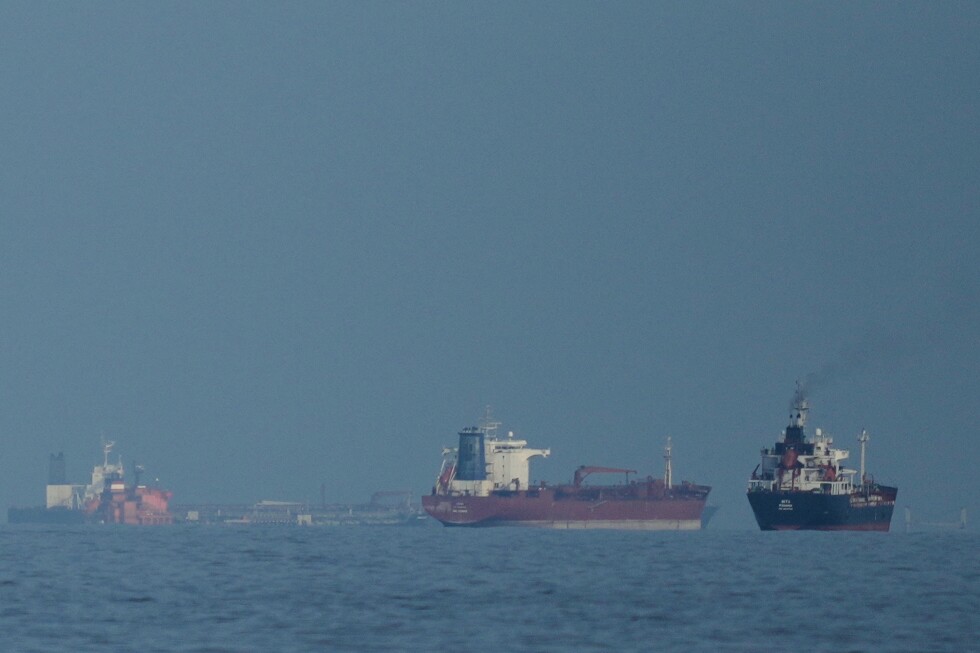
Tensions between the United States and Iran have escalated to a dangerous new standoff in the Persian Gulf, following the collapse of weekend ceasefire negotiations that has left the global energy market bracing for severe disruption and raised fears of a resumption of active conflict.
The crisis traces back to late February, when the United States and Israel launched joint military strikes against Iran, igniting a regional conflict that has already claimed more than 5,000 lives across six nations. A fragile ceasefire has held in recent weeks, but marathon talks hosted in Pakistan aimed at reaching a permanent peace deal failed to produce an agreement this past Saturday, clearing the way for the U.S. military’s vow to impose a full naval blockade on all Iranian ports starting Monday.
The core sticking points in the collapsed negotiations align with longstanding U.S. demands: Iran has rejected Washington’s non-negotiable red lines, which require Tehran to permanently abandon any pursuit of a nuclear weapon, end all uranium enrichment activities, dismantle key enrichment infrastructure, surrender existing stockpiles of highly enriched uranium, reopen the Strait of Hormuz to unimpeded global shipping, and cut funding for regional armed proxies including Hamas, Hezbollah, and the Houthis. For Iran, the main barriers to a deal are U.S. demands on its civilian nuclear program, demands for war reparations from Tehran, and the removal of crippling Western sanctions, according to Iranian ambassador to India Mohammad Fathali. U.S. Vice President JD Vance confirmed the talks stalled after Iran refused to accept Washington’s nuclear terms, while Iran has repeatedly maintained its nuclear program is for peaceful energy and medical purposes only, despite advancing enrichment to near-weapons-grade levels and developing long-range delivery systems.
As the Monday deadline for the U.S. blockade arrived, clarity on the operation’s actual start remained murky. Just minutes before the 10 a.m. EDT deadline, the UK Maritime Trade Operations agency, which monitors regional maritime security, issued a notice to mariners confirming the restrictions would cover the entire Iranian coastline, including all commercial ports and national energy infrastructure. The agency clarified that transit through the Strait of Hormuz to or from non-Iranian destinations would not be blocked under the current measures, but warned commercial vessels to expect heavy military presence throughout the waterway.
U.S. Central Command, the military command overseeing Middle East operations, later confirmed the blockade would apply to all vessels of any flag seeking to enter or depart Iranian coastal areas across both the Persian Gulf and Gulf of Oman. The current framework represents a partial walk-back of an earlier, more extreme threat from former President Donald Trump to blockade the entire strait, a concession that reflects growing concern over global economic backlash. Shortly after the deadline passed, Trump posted a message to social media claiming Iran’s conventional navy had been “completely obliterated” and lies at the bottom of the sea, but warned that any remaining Iranian fast attack craft that approach the U.S. blockade line would be immediately destroyed.
Iran has responded with sweeping reciprocal threats, vowing that no regional ports belonging to U.S.-allied nations will remain safe if Washington follows through on its blockade. “Security in the Persian Gulf and the Sea of Oman is either for everyone or for NO ONE,” the Iranian military and Islamic Revolutionary Guard Corps said in an official statement carried by Iran’s state broadcaster. Top Iranian officials have dismissed the U.S. blockade threat as empty posturing, but warned of overwhelming retaliation if hostilities escalate. “It will make the current situation (Trump) is in more complicated and makes the market — which he is angry about — more turbulent. And we may also reveal other cards that we have not used in the game,” Ebrahim Rezaei, spokesperson for the Iranian parliament’s National Security Commission, wrote in a post on X. Iranian Parliament Speaker Mohammad Bagher Qalibaf issued a direct warning to Trump: “If you fight, we will fight.”
The showdown already has had immediate ripple effects across global commodity markets. Iran effectively closed the Strait of Hormuz — through which roughly 20% of the world’s traded oil flows in peacetime — after the outbreak of war, sending energy and commodity prices soaring worldwide and pushing up costs for gasoline, food, and basic consumer goods far beyond the Middle East. Tehran has allowed limited passage for vessels perceived as friendly, but charges steep transit fees, a practice that has drawn widespread accusations that Iran is holding the global economy hostage. As of Monday, international benchmark Brent crude rose 7% to trade near $102 per barrel, up from roughly $70 per barrel before the outbreak of conflict. The latest Iranian threats have already halted the limited commercial traffic that resumed through the strait during the ceasefire, according to Lloyd’s List Intelligence. Before the war, an average of 100 to 135 commercial vessels transited the strait daily; that number dropped to just over 40 per week since the ceasefire took effect, and has now ground to a near-halt.
Analysts have cast significant doubt on the effectiveness of a U.S. blockade, questioning whether military pressure alone can force Iran to reopen the strait, and warning of severe risks to U.S. naval forces deployed to the region. The standoff has become a test of political and economic endurance: will a full blockade push Iran’s already battered economy to collapse, forcing Tehran to concede to U.S. terms? Or will the resulting spike in global energy prices create enough domestic pressure in the U.S. to force the Trump administration to back down?
The current ceasefire is set to expire on April 22, and neither Washington nor Tehran has signaled whether it will be extended, or when negotiations might resume. Pakistani Foreign Minister Ishaq Dar, whose country hosted the failed talks, has said Pakistan will continue working to facilitate a new round of dialogue in the coming days, while Turkish Foreign Minister Hakan Fidan — whose country has led regional mediation efforts — has proposed extending the ceasefire by 45 to 60 days to create space for further negotiations. European leaders have also moved to address the crisis, with British Prime Minister Keir Starmer announcing he will host a summit this week with French President Emmanuel Macron to coordinate international action to reopen the strait and end the conflict, with Starmer insisting the waterway must be reopened with no conditions and no transit tolls.
The conflict has already taken a heavy human toll: at least 3,000 people have been killed in Iran, 2,089 in Lebanon, 23 in Israel, and more than a dozen across Gulf Arab states, with widespread infrastructure damage across half a dozen regional nations.