标签: Asia

亚洲

  • China faces Trump’s Iran offensive in the Hormuz Strait

    China faces Trump’s Iran offensive in the Hormuz Strait

    Six weeks into the joint U.S.-Israeli military campaign against Iran, a dramatic new escalation by former U.S. President Donald Trump has pushed a long-simmering geopolitical rivalry to the brink of direct superpower conflict. Trump’s recent decision to close the Strait of Hormuz to all commercial ship traffic has left China facing an unprecedented and high-stakes dilemma: comply with the American ban on trade with Tehran, a longstanding strategic partner, or defy the blockade and risk open military confrontation between the world’s two largest nuclear-armed powers.

    Until the blockade was imposed, China had maintained a cautious, distance stance on the ongoing conflict. Beijing publicly criticized the large-scale U.S.-Israeli bombing campaign, noted the Trump administration’s repeated failures to force Iran into submission, and quietly benefited from deeply discounted Iranian crude oil and natural gas shipments that passed unimpeded through the strait to Chinese ports. That quiet balancing act is no longer possible.

    Trump has stated the strait will remain closed to all commercial traffic until every vessel, including those from U.S. Arab allies, is permitted to transit under American terms. For China, maintaining its steady supply of discounted Iranian energy and upholding its decades-long alliance with Tehran now requires directly challenging the U.S. naval blockade.

    Zineb Riboua, a Middle East analyst at the U.S. conservative think tank the Hoover Institute, argues the unfolding crisis is fundamentally rooted in Sino-American competition. Just days after Trump and Israeli Prime Minister Benjamin Netanyahu launched their aerial offensive, Riboua published a report noting that Beijing has invested hundreds of billions of dollars to build Iran into a core strategic asset in the Middle East. “By striking Iran directly, the Trump administration is dismantling – whether by design or by consequence – a pillar of China’s regional architecture,” Riboua wrote.

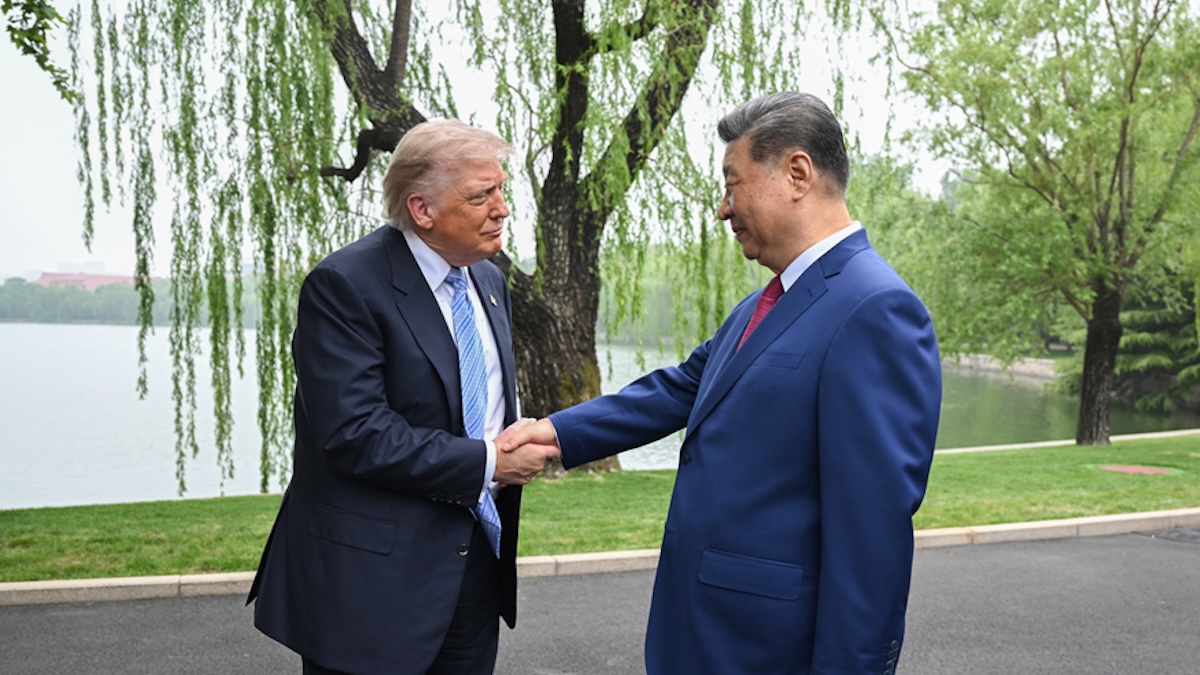
    The stakes are also personal for the reputations of both Trump and Chinese President Xi Jinping, who have already been engaged in a gradual, low-intensity confrontation that has rolled back Chinese influence in areas Washington considers critical to its national security. A key precedent came when Trump deployed commandos to Caracas, Venezuela, to arrest then-president Nicolas Maduro on drug trafficking charges. Maduro, who sold oil to China in exchange for military hardware, received no direct intervention from Beijing, a choice that made strategic sense for China at the time: Venezuela only supplied 4% of China’s total oil imports, and the Caribbean falls firmly within the U.S.’s traditional sphere of influence, where China lacks the military capability to challenge American actions.

    Iran is an entirely different proposition. For one, Iran meets 15% of China’s annual fossil fuel demand, all at prices well below the global market average. Beyond energy, Beijing has built a deep strategic partnership with Tehran to develop Iran’s vast rare earth mineral reserves – resources that have become one of the most globally sought-after commodities, due to their non-negotiable role in manufacturing advanced semiconductors. These chips power everything from consumer electronics and artificial intelligence systems to core components of modern military hardware, including the guidance systems for U.S. Tomahawk cruise missiles and the avionics and weapons controls for F-35 fighter jets and armed drones.

    China currently controls roughly 90% of the world’s refined rare earth production, and has long sought to expand its grip on upstream mineral reserves. In 2021, Beijing signed a landmark 25-year agreement to invest $400 billion in Iran’s economy, in exchange for guaranteed long-term access to both Iranian oil and rare earth deposits. Online energy publication OilPrice notes that by positioning itself as a rare earth hub for China, Iran has become far more than just a discounted energy supplier to Beijing. “This gives Xi a reason to view the country as more than a ‘sanctioned’ gas station,” the outlet wrote, adding that the U.S. offensive against Tehran poses a direct threat to this Sino-Iranian resource alliance.

    Beyond energy and minerals, Chinese firms have also played a central role in building and modernizing Iran’s domestic telecommunications and digital surveillance infrastructure. During widespread anti-government protests in Iran earlier this year, the Tehran regime used Chinese-supplied tools including facial recognition cameras to identify, detain and crack down on demonstrators, and deployed China’s “Great Firewall” censorship technology to shut down nationwide internet access to hide evidence of its repression. “Iran has not developed its censorship infrastructure in isolation,” the Washington-based Arab Gulf States Institute (AGSI) wrote in a January report. “The regime has received assistance from China, the world’s most experienced practitioner of internet control.” AGSI added that these Chinese-built systems allow governments to track online users, intercept communications, censor content, and isolate populations during periods of civil unrest.

    All of these Chinese strategic gains, as well as recent diplomatic wins in the region, are now at risk from the U.S.-led offensive. Beijing brokered the historic 2023 reconciliation between long-time regional rivals Iran and Saudi Arabia, welcomed Iran into the Shanghai Cooperation Organization, China’s leading regional security bloc, and extended its signature Belt and Road Initiative through Iran to open new trade routes connecting Chinese goods from Central Asia to the Indian Ocean.

    Since the start of the campaign, Beijing has initially taken a diplomatic, rule-based approach to the crisis. “The sovereignty, security, and territorial integrity of Iran and other regional countries must be respected,” China’s UN Ambassador Fu Cong stated. “China stands ready to work with the international community to advance peace efforts and help restore peace and stability in the Middle East at an early date.”

    That diplomatic tone shifted sharply on April 14, the day Trump’s Hormuz blockade took effect. In a defiant public statement, China’s Foreign Ministry made clear it had no intention of backing down: “Chinese ships continue to move in and out of the waters of the Strait of Hormuz. We have trade and energy agreements with Iran, which we will respect and abide by. We expect others not to interfere in our affairs. Iran controls the Strait of Hormuz, and has opened it to us.”

    A direct naval confrontation between two global nuclear superpowers has not occurred since the 1962 Cuban Missile Crisis, when then-U.S. President John F. Kennedy ordered a naval quarantine of Cuba to stop Soviet shipments of nuclear ballistic missiles. War was averted only when Soviet ships turned back, following a secret compromise that saw the U.S. agree to remove its nuclear missiles from NATO member Turkey.

    Now, analysts warn the Hormuz standoff could escalate to open conflict if China follows through on its promise to continue trading with Iran. “Chinese support for a U.S. adversary could directly result in American casualties,” warned Joe Webster, a geopolitical and energy analyst who authors the China-Russia Report blog. “What will be the U.S. response if Chinese military intelligence support for Iran results in the deaths of US airmen or sailors?” It is a question that hangs over the entire Middle East, with global consequences that remain impossible to predict.

  • Swiss travel retailer Avolta marks a new chapter in the Chinese market

    Swiss travel retailer Avolta marks a new chapter in the Chinese market

    Global travel retail and food and beverage leader Avolta, headquartered in Switzerland, has made its first exhibition appearance at the 2026 China International Consumer Products Expo (CICPE) held in Haikou, marking the start of a fresh, ambitious phase for the firm’s 16-year operation in the Chinese market.

    With a footprint spanning 70 countries, Avolta runs a diverse portfolio that includes duty-free shops, convenience retail outlets, and food and beverage locations around the world. In an exclusive interview with China Daily on the sidelines of the expo, Michael Wong, Avolta’s Managing Director for North Asia, highlighted that the CICPE offers an unmatched platform to demonstrate the company’s full global capabilities and deepen collaborative ties with domestic partners, particularly in China’s Hainan province.

    “We are pleased to be participating in this year’s expo for the first time as an exhibitor,” Wong stated. “It provides an important platform to present Avolta’s capabilities, strengthen relationships across the industry, and support closer connections between brands, partners, and markets.”

    Avolta’s journey in China dates back more than 16 years, with existing operations spread across major transportation hubs and cities including Shanghai Pudong International Airport, Shanghai Hongqiao International Airport, Chongqing, Shenzhen and Wuhan. Earlier this year, the firm marked a historic breakthrough when it secured the bid to launch new duty-free operations at Shanghai Pudong International Airport’s Terminal 1 and Satellite Terminal 1. This win is notable as it marks the first time in 26 years that an international operator has won such a large-scale duty-free tender in China’s key airport sector.

    Wong described the tender victory as a major milestone and the solid cornerstone for all of Avolta’s future business expansion across China. During the 2026 CICPE, the company took the opportunity to launch a key customer initiative: Club Avolta, its first global loyalty program. The program enables registered members to earn and redeem rewards across both retail and food and beverage outlets at more than 5,100 Avolta locations worldwide. To mark its expo debut, all new sign-ups from CICPE visitors receive complimentary automatic upgrades to gold membership, jumping directly from the standard entry-level silver tier.

    In addition to the loyalty program launch, Avolta also presented a carefully curated exhibition of top-selling products sourced from 12 of its key global markets, including Italy, France, Switzerland, and Japan, giving Chinese consumers and industry partners a first-hand look at the breadth of its global supply network.

    When discussing growth prospects in Hainan, Wong emphasized that Avolta sees strong, long-term potential in the region, driven by China’s Hainan Free Trade Port policy and the recent implementation of visa-free entry policies for international visitors that have already spurred a sharp rise in international tourist arrivals. The company is actively exploring collaborative opportunities across the island and stands ready to scale up its footprint the moment market conditions align for expansion.

    “We are very determined to grow in China in the long term, and we want to stay,” Wong said. “When the opportunity comes, we’re ready.”

    Beyond its core mission of bringing premium international brands to Chinese consumers and travelers, Avolta has also outlined a secondary strategic goal: supporting high-quality Chinese brands to access global markets through the company’s extensive international retail network, positioning itself as a two-way bridge connecting the Chinese market with global consumer markets.

    The 2026 China International Consumer Products Expo runs through Saturday in Haikou, Hainan, attracting hundreds of global brands and industry players from across the world seeking to tap into China’s growing consumer demand.

  • Hainan Expo: Why the world comes

    Hainan Expo: Why the world comes

    As one of China’s most anticipated high-profile consumer trade events of 2026, the China International Consumer Products Expo held in southern China’s Hainan Province has emerged as a powerful global gathering, attracting more than 3,400 brands spanning over 60 countries and regions around the world. For years, this annual expo has carved out a unique niche as a gateway for international brands to access China’s vast, rapidly evolving consumer market, and the 2026 iteration has reinforced its reputation as a can’t-miss event for global merchants looking to expand their footprint in Asia and beyond.

    The question on many industry observers’ minds this year is simple: what continues to make this Hainan-based expo such an irresistible draw for businesses across every consumer sector, from luxury goods to sustainable consumer tech, from artisanal food products to cutting-edge home goods? To unpack the appeal of the expo for global participants, China Daily sent correspondent Xia Ji to connect with international exhibitors on the ground, capturing unfiltered insights into what drives brands to commit time, resources, and exhibition space to the Hainan event year after year.

    Against a backdrop of shifting global trade dynamics and growing demand for access to China’s 1.4 billion consumers, the Hainan Expo has positioned itself as more than just a trade show. It serves as a platform for cross-border cultural exchange, partnership building, and trend forecasting, giving small and medium-sized international brands as well as multinational corporations the opportunity to connect directly with Chinese distributors, consumers, and industry leaders. This combination of market access, networking opportunities, and policy support for foreign businesses in Hainan’s free trade port framework has turned the expo into a magnet for global commerce, solidifying its status as a key annual event on the global trade calendar. The 2026 edition’s high participation rate, with more global brands joining than many previous iterations, signals sustained international confidence in China’s consumer market and the long-term value of the Hainan Expo as a trade catalyst.

  • Canada was once a dream destination for Indian students. Is that changing?

    Canada was once a dream destination for Indian students. Is that changing?

    For nearly a decade, Canada stood as the most sought-after study destination for millions of middle-class Indian students seeking international education and a path to permanent residency. Today, that long-standing trend has collapsed into a sharp, unprecedented decline, reshaping the global landscape of international student mobility. At overseas education consultancies across India’s capital New Delhi, where shelves once overflowed with Canadian university brochures, prospective students and their parents now pore over materials from Italian, German, and Australian institutions instead. What was once India’s top study abroad pick has been all but crossed off most application lists.\n\nShobhit Anand, who runs a New Delhi-based consultancy that supports students through admissions and visa processes, says that before 2023, the vast majority of his client inquiries were for Canadian programs. Today, his firm has recorded an almost 80% drop in Canadian study applications. “People don’t want to apply to Canada anymore. We are also seeing a very high visa rejection rate,” Anand explained. The scale of the shift is confirmed by a recent report from Canada’s auditor general, submitted to the country’s parliament last month: as of September 2025, Indian students make up just 8.1% of Canada’s new incoming international student population, down from a dominant 51.6% just two years earlier in 2023.\n\nMultiple overlapping factors have driven this sudden decline. Canada’s sweeping new policy changes, spiking living costs, and a 2023 diplomatic crisis that frayed bilateral ties (which have since partially recovered) have all combined to deter Indian applicants. For years, Canada’s appeal rested on a predictable, accessible pathway to migration: students could enroll in a two to three-year vocational program at a private college, find work post-graduation, and apply for permanent residency in roughly five years, a timeline that worked for generations of Indian students until 2023.\n\nThe turning point came in early 2024, when Ottawa introduced a two-year cap on international student admissions for undergraduate and diploma programs, limiting annual study permits to roughly 350,000 while leaving postgraduate programs unaffected. The policy was explicitly designed to curb over-reliance on student pathways for migration, which was dominated by Indian applicants. Beyond admission caps, Canada doubled the required Guaranteed Investment Certificate (GIC), the proof of funds required for student visas, from C$10,000 to more than C$20,000 in 2024. At the same time, national study permit rejection rates climbed from 38% in 2023 to 52% in 2024, according to data from ICEF Monitor, an organization tracking global student mobility.\n\n“For many families, securing that amount is difficult – and with the risk of visa rejection, they hesitate,” said Sushil Sukhwani, of Edwise Overseas Education consultancy. “That became a major barrier.” The once-popular Student Direct Stream (SDS), a fast-track visa processing scheme widely used by Indian applicants, was scrapped entirely by the end of 2024 after officials flagged widespread abuse, including fraudulent applications and non-genuine enrollment. The auditor general’s report noted that nearly all approved SDS applications came from India, and the scheme was “being targeted by non-genuine students seeking entry to Canada.” Tighter scrutiny of all Indian applications followed the program’s cancellation.\n\nEconomic conditions have added another layer of risk for prospective students. Rents have skyrocketed across major Canadian cities, and entry-level jobs have grown increasingly scarce as thousands of international students graduate each year. During the post-pandemic international student boom, many small private colleges expanded rapidly to capture revenue, often offering low-quality academic programs that left graduates ill-prepared for the Canadian job market. Anand, the Delhi-based consultant, recalled one former client, a 24-year-old student who moved to Canada two years ago: after graduating, the young man could only find unstable part-time work and could not cover his living expenses, eventually returning to India to job search. His story is far from unique.\n\nDeep Saini, president of Canada’s prestigious McGill University, points out that the decline has not been evenly felt. Indian students, he explained, generally fall into two groups: one academically driven group that applies to top global universities for quality education, and a second that views study as primarily a pathway to migration, often enrolling in small, low-cost private colleges. Canada’s restrictions targeted the second group, leaving elite institutions largely unaffected. McGill saw only a small dip in Indian applications after 2023, which Saini calls “collateral damage” from broader policy changes and diplomatic tensions. Today, Indian student numbers at the university are already returning to pre-decline levels.\n\nIn 2025, bilateral relations between India and Canada have started to improve: Canadian Prime Minister Mark Carney visited India earlier this year, leading a delegation of top Canadian university officials to rebuild educational ties, launch new partnerships and expand scholarship opportunities. But even with warming relations, the damage to Canada’s reputation as a accessible study destination for Indian students has been profound.\n\nFor 17-year-old prospective student Tanishq Khurana, who once planned to apply to Canada, the decision to study there is no longer a given. Khurana, who wants to pursue a bachelor’s degree in clinical psychology, paused his application after learning about rising visa rejections and admission caps. He ultimately decided to reapply, drawn by the fact that his sister and multiple cousins already live in Canada, and the country still offers a three-year post-graduation work permit that remains a major draw. But for many other students, the calculation has shifted entirely: what was once a guaranteed pathway to a new life abroad is now a risky bet. The once-unchallenged promise of a Canadian study permit – steady work, permanent residency, and a secure future overseas – no longer holds for most aspiring Indian students.

  • Russian artists perform in Zhangjiajie at cultural exchange event

    Russian artists perform in Zhangjiajie at cultural exchange event

    Against the dramatic backdrop of Zhangjiajie’s iconic quartz sandstone pillars, a cross-border cultural exchange initiative bringing together artistic communities from China, Russia and multiple Central Asian nations has launched at the Wulingyuan Scenic and Historic Interest Area, a UNESCO-listed World Heritage site in Hunan province. The four-day celebration of folk culture kicked off on Sunday, drawing hundreds of performers and curious audiences alike to the scenic banks of the Suoxi River.

    More than 300 participating artists from the three regions have gathered for the event, which is designed to deepen cultural ties and showcase shared appreciation for traditional folk art. The opening day highlights featured a vibrant performance by Russian artists clad in authentic traditional national costumes, who brought centuries-old folk customs to life through rousing song and rhythmic dance. Unlike formal stage-only performances, the interactive program encouraged artists to engage directly with visiting tourists and local residents, creating spontaneous moments of cultural connection that resonated across language barriers.

    Set in one of China’s most famous natural tourist destinations, the event pairs cultural exchange with scenic appreciation, offering attendees a unique experience that blends stunning natural landscapes with diverse cultural traditions. Organizers designed the gathering to strengthen people-to-people bonds between participating Eurasian nations, turning the world-famous scenic site into a bridge for cross-cultural friendship.

  • Flowers  present a colorful tapestry in Qingdao

    Flowers present a colorful tapestry in Qingdao

    As spring settles over eastern China’s Shandong province, a stunning floral display has turned a new rural destination into a must-visit spot for nature lovers across the region. The Linggui Lake Rural Organic Farm, located in Qingdao’s rapidly developing West Coast New Area, has officially opened its gates to the public this month, and its sprawling fields of moss phlox are stealing the show at the peak of their blooming season. The low-growing flowers have spread across rolling terrain, blanketing the ground in layers of breathtaking color that stretch as far as the eye can see. Bright white, blushing pink, and soft lavender purple blossoms weave together to create a living, textured tapestry that transforms the ordinary rural landscape into a postcard-perfect natural attraction. Local photos already capture the joyful atmosphere at the farm, with visitors stopping to pose for photos amid the sea of blooms, soaking in the warm spring air and the vivid natural scenery. For urban residents of Qingdao and neighboring cities, the new farm offers a refreshing weekend escape, connecting people to rural landscapes while supporting local agricultural tourism development in the region. The blooming moss phlox is expected to remain at its peak for the next two weeks, drawing hundreds of casual visitors and photography enthusiasts daily to the new Qingdao attraction.

  • Kuwait detaining journalist Ahmed Shihab-Elbin after social media posts

    Kuwait detaining journalist Ahmed Shihab-Elbin after social media posts

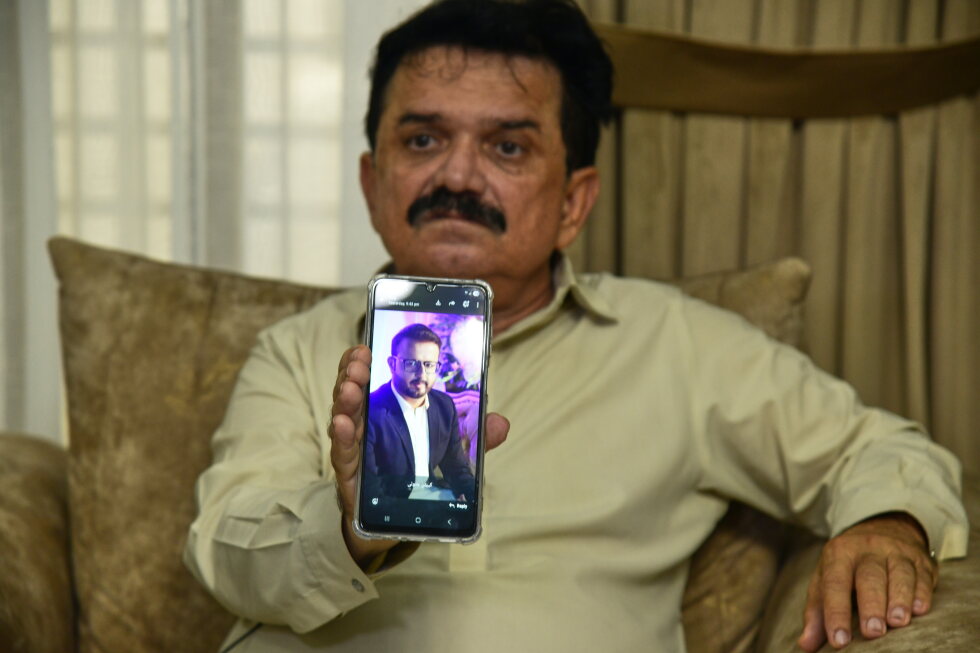
    More than 30 days have passed since award-winning international journalist Ahmed Shihab-Eldin was taken into custody by Kuwaiti authorities, rights campaigners have confirmed, in a case that has drawn renewed scrutiny of growing restrictions on press freedom across the Gulf region amid escalating Middle East tensions tied to the US-Israeli war on Iran.

    The 41-year-old, a dual American-Kuwaiti citizen, was apprehended on March 2 during a routine trip to Kuwait to visit family members. Since his arrest, he has been held in arbitrary detention, with his legal team granted only extremely limited access to meet with him, leaving his legal status uncertain more than a month on.

    While official charges have not been formally clarified by Kuwaiti officials, the Committee to Protect Journalists (CPJ) has confirmed that the arrest followed a series of social media posts Shihab-Eldin published related to the ongoing US-Israeli war on Iran. Among the shared content was publicly available footage of a United States fighter jet crashing at a US air base located within Kuwait’s borders. CPJ has stressed that all material the journalist shared was already accessible to the general public, and he did not publish any restricted or unapproved content.

    The press freedom organization notes that the most likely charges Kuwaiti authorities will bring against Shihab-Eldin are spreading false information, endangering national security, and misusing a personal mobile device—offenses that CPJ says are routinely weaponized by Kuwaiti authorities against independent reporters and critical voices.

    Shihab-Eldin’s decades-long journalistic career includes bylines at some of the world’s most prominent news outlets, including *The New York Times*, Al Jazeera English, and PBS. His work focusing on human rights and conflict in the Middle East has earned him multiple major industry awards, including a British Journalism Award and an Amnesty International Human Rights Defender Award.

    His detention is not an isolated incident, CPJ emphasizes, but part of a sweeping regional crackdown on online expression that has accelerated since the outbreak of the US-Israeli war on Iran. Like other Gulf states, Kuwait has enacted increasingly strict controls on digital speech amid rising regional tensions, in a move officials frame as an effort to limit unapproved reporting on attacks targeting the country’s infrastructure.

    On the same day of Shihab-Eldin’s arrest, Kuwait’s Ministry of Interior released an official public statement urging citizens to avoid “photographing or publishing any clips or information related to missiles or relevant locations,” and confirmed that multiple people had already been taken into custody on charges of “spreading false news.”

    Weeks after the arrest, Kuwait’s legislature introduced a new bill that would hand down maximum 10-year prison sentences to anyone found guilty of “disseminating news, publishing statements, or spreading false rumors related to military entities” with the alleged intent of eroding public confidence in state security institutions.

    Data from the Gulf Centre for Human Rights (GCHR) shows that dozens of people across the region have been arbitrarily detained since the war began, all for the act of “peacefully expressing their opinions on social media.” The rights organization reports that most of these detainees are held in unrecorded facilities run by state security forces for days at a time, with no access to contact their families or meet with legal representation.

    “Governments in the region are exploiting the current war to intensify their systematic repression, targeting and suppressing all public freedoms, including the right to free expression both online and offline,” the GCHR said in a statement.

    Rights group HuMena has confirmed that Shihab-Eldin is not the only high-profile detainee held in Kuwait in recent weeks; other prominent detainees include activists Farrah Alsaqqaf and Suad Al-Munayes.

    Sara Qudah, CPJ’s Middle East representative, called Shihab-Eldin’s detention “emblematic” of a accelerating trend across Gulf states, where “national security is used as a convenient pretext to crack down on independent journalism and fundamental freedom of speech.”

    This report was compiled based on original independent reporting from Middle East Eye, which provides unfiltered coverage of the Middle East, North Africa, and surrounding regions.

  • ‘Water ballet dancers’ get ready for spring courtship

    ‘Water ballet dancers’ get ready for spring courtship

    As spring unfolds across northeastern China, a beloved seasonal ritual has begun in the reed marshes of Changchun’s Yitong River South Creek Wetland Park. Four pairs of great crested grebes, scientific name Podiceps cristatus, have arrived at the protected wetland, marking the start of their annual courtship period, according to a report updated on April 14, 2026.

    Nicknamed “water ballet dancers” for the elegant, synchronized courtship displays they perform during mating season, these waterbirds are currently in the early “ambiguous phase” of their pairing. While they have not yet entered the peak of their passionate breeding rituals, their tentative, cautious interactions already draw the attention of birdwatchers and environmentalists alike, forming one of spring’s most vivid ecological landscapes along the Yitong River.

    Local wildlife observers note that the regular return of great crested grebes to the Changchun wetland each spring serves as a clear indicator of the region’s improving ecological health. Years of wetland conservation and restoration work along the Yitong River have created a stable, food-rich habitat that supports migratory waterbirds through their breeding cycle, turning the annual grebe courtship season into a popular natural attraction for local nature enthusiasts.

    Photographers have already begun documenting the grebes’ behaviors, with the first batch of photos capturing the birds’ soft, tentative interactions among the reeds, ahead of the more elaborate synchronized swimming and courtship dances that will emerge as the season progresses.

  • Former defense firm executive sentenced to 13 years for bribery

    Former defense firm executive sentenced to 13 years for bribery

    In a recent ruling issued on Tuesday, the Nanyang Intermediate People’s Court in Henan Province has sentenced Liu Weidong, former deputy general manager of state-owned defense contractor China South Industries Group Corp, to 13 years in federal prison and ordered a 4 million yuan ($586,800) fine over convictions of bribery. Alongside the custodial sentence and monetary penalty, the court also ruled that all of Liu’s illegal gains and related illicit assets must be fully confiscated and transferred to the national state treasury.

    Court investigators established that over a 26-year period spanning from 1999 to 2025, Liu exploited his senior executive positions at two major state-owned enterprises — including his roles as deputy general manager of Dongfeng Motor Corp and deputy general manager of China South Industries Group Corp — to secure improper advantages for connected business entities and individual applicants on matters ranging from corporate business operations to internal personnel promotions. In exchange for these favors, Liu accepted direct bribes totaling more than 41.39 million yuan, according to official court documents.

    The court confirmed that Liu’s actions clearly meet the statutory criteria for the crime of bribery, noting that the scale of illicit funds involved qualified as “extremely large”, which would typically warrant severe punitive measures. However, justices opted to apply a lenient sentencing adjustment after accounting for multiple mitigating circumstances: Liu fully confessed to all known charges, voluntarily disclosed additional bribery details that had not been uncovered by investigating authorities prior to his statement, and cooperated fully with the prosecution by turning over all illegal proceeds proactively.

    A review of public career records shows the 59-year-old, a native of Hubei Province, launched his professional career in the automotive sector after graduating from the Wuhan University of Technology in his home region. He spent decades rising through the ranks at Dongfeng Motor Corp, Hubei’s state-owned automotive manufacturing giant, and earned a promotion to deputy general manager of the firm in 2001.

    In May 2018, Liu transferred to China South Industries Group Corp, one of China’s leading national defense contracting conglomerates and a major player in the domestic automotive industry, to serve as its deputy general manager. The first crack in his decades-long career came in February 2025, when he was formally placed under investigation for suspected severe violations of Communist Party of China discipline and national law. By July 2025, he had been expelled from the Communist Party of China and removed from all public office positions. Prosecutors formally filed bribery charges against him that November, and the Nanyang Intermediate People’s Court held a public open hearing on the case at the start of 2026, leading to this week’s final sentencing ruling.

  • Italy suspends defence cooperation deal with Israel

    Italy suspends defence cooperation deal with Israel

    On a Tuesday appearance at a Verona wine industry fair, Italian Prime Minister Giorgia Meloni confirmed a sweeping policy shift: Rome has moved to suspend the automatic five-year renewal of its bilateral defence cooperation framework with Israel, a decision that marks a notable break from the Italian right-wing government’s previously close alignment with Tel Aviv.

    The agreement in question, which first entered into force in April 2016, is structured to auto-renew every five years unless one party intervenes to halt the process. It covers a broad range of military collaboration, including cross-border exchanges of military equipment, joint training programs, and cooperative research and development initiatives for defence technology. According to leading Italian national news agency Ansa, Italian Defence Minister Guido Crosetto has already formalized the suspension in an official letter sent to his Israeli counterpart, Israel Katz.

    A source familiar with the internal deliberations confirmed to Reuters that the decision was finalized during a high-level meeting on Monday, which included Meloni, Foreign Minister Antonio Tajani, Defence Minister Crosetto, and Deputy Prime Minister Matteo Salvini. The policy change comes amid a rapidly escalating series of diplomatic spats between the two nations, triggered by recent Israeli military actions targeting positions in Lebanon that have directly impacted Italian interests.

    Just one week prior, the Italian government officially condemned an incident where Israeli forces opened fire on a convoy transporting Italian UN peacekeepers deployed in southern Lebanon. While no peacekeepers were injured in the strike, one Italian military vehicle was significantly damaged, prompting Rome to summon Israel’s top diplomat in Rome to register a formal protest.

    The escalation continued this week, with Foreign Minister Tajani undertaking an official visit to Beirut on Monday, where he publicly delivered a sharp rebuke of Israeli military operations in Lebanon. “Lebanon is a brother country that we hold in our hearts. That is why today I came to Beirut to convey to President Aoun Italy’s solidarity following the unacceptable attacks by Israel against the civilian population,” Tajani stated during his trip. “The Government will do everything possible to achieve peace and put an end to the suffering of the Lebanese people. We must avoid at all costs another escalation like the one in Gaza.”

    In response to Tajani’s public comments, Israeli officials summoned Italy’s ambassador to Tel Aviv in a reciprocal act of diplomatic protest, further deepening the rift between the two longtime partners. Until recent weeks, Meloni’s right-wing administration had positioned itself as one of Israel’s staunchest allies within the European Union, making this suspension of core defence cooperation one of the most significant public breaks from that alignment to date.