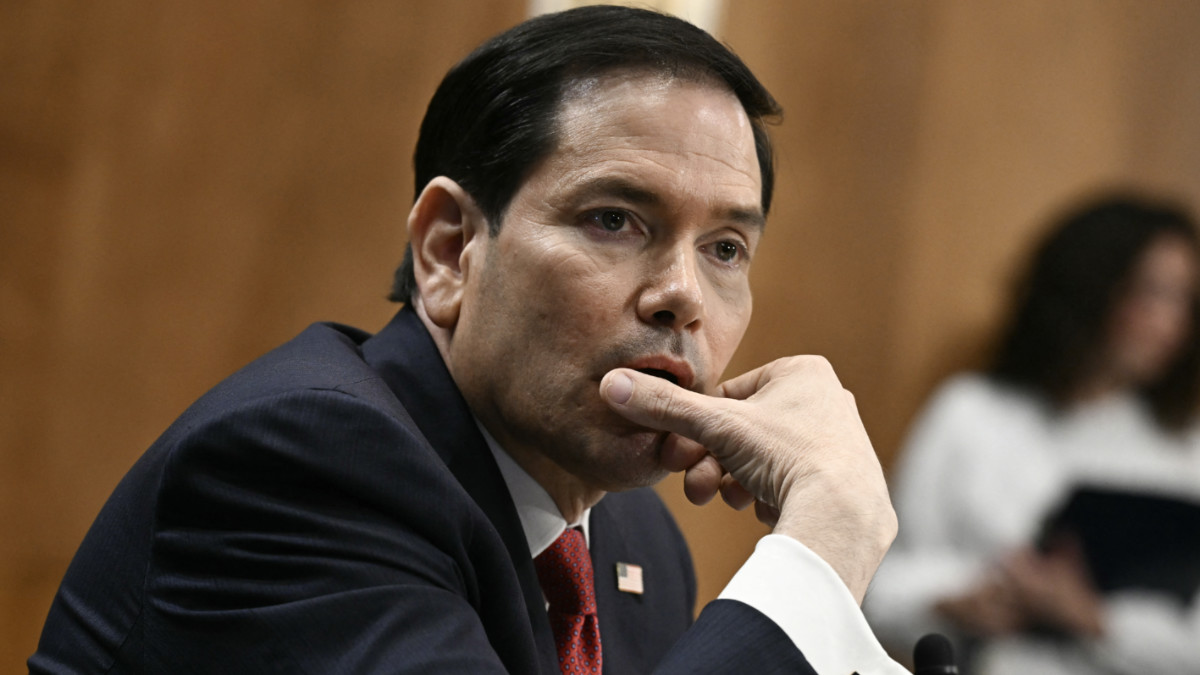
In remarks before the US Senate Foreign Relations Committee on Tuesday, Secretary of State Marco Rubio laid out an uncompromising new set of terms for any future agreement with Iran, tying any rollback of US economic sanctions exclusively to Tehran’s full surrender of its nuclear enrichment program. The hardline position directly rejects Iran’s longstanding demand that economic relief, including the unfreezing of billions of dollars in Iranian assets held abroad, be included as a core component of any phased ceasefire deal.
Rubio emphasized that the existing sanctions regime against Iran is directly tied to its nuclear activities, particularly its production of highly enriched uranium. “If they agree to give up those things, there will be sanctions relief,” he told committee members, adding that Tehran must commit to either accepting strict, long-term limitations on its enrichment work or abandoning the program entirely.
The top US diplomat noted that Iran has recently signaled a willingness to discuss elements of its nuclear program that it had previously refused to negotiate, though he declined to share specific details of any backchannel discussions. His account conflicts sharply with an official statement issued by Tehran just last Friday, which flatly denied that any nuclear negotiations are currently underway.
Rubio’s comments also make clear that the US is in no position to release the billions in frozen Iranian assets that Tehran has demanded as a prerequisite to extending a current ceasefire. Last week, Ali Bagheri Kani, deputy secretary of Iran’s Supreme National Security Council, reiterated that the release of these funds is a “legal right” of the Iranian people, and Iranian state media has made clear that any ceasefire agreement will not be finalized without concrete economic concessions from the West.
Beyond the nuclear file, Rubio also issued a firm rejection of Iran’s reported plans to impose tolls on commercial vessels transiting the Strait of Hormuz, a critical global chokepoint for oil and natural gas shipments. “They have to announce very clearly, ‘The straits are now open, we’re not charging a toll’”, Rubio said, adding that Washington also demands Iran stop firing on passing commercial vessels and assist in removing mines that US officials claim Iran has placed across large stretches of the waterway. Iran has not yet publicly responded to Rubio’s claims about mined waters.
Under the United Nations Convention on the Law of the Sea (UNCLOS), coastal states may only claim up to 12 nautical miles of territorial waters. At its narrowest point, the Strait of Hormuz is just 21 nautical miles wide, split between territorial waters controlled by Iran and Oman. International law explicitly bars coastal states bordering international straits from restricting transit or charging tolls on vessels passing through the waterway. Even so, legal experts interviewed by Middle East Eye note that Iran could find loopholes to impose charges – framing them as “piloting fees” or “service charges” – if it secures cooperation from Omani authorities.
The current diplomatic impasse comes against a backdrop of massive political upheaval in Iran following the outbreak of war. Early in the conflict, Israeli assassinations killed longtime Supreme Leader Ayatollah Ali Khamenei and senior Iranian officials who had previously led nuclear talks with Western powers, including former national security advisor Ali Larijani. The new supreme leader, Ayatollah Mojtaba Khamenei, was severely wounded in an Israeli strike that killed most of his family, and has not appeared in public since the conflict began. He currently communicates with Iranian leadership and negotiators through an indirect, secure messaging system, and has only addressed the Iranian public via written press statements. Rubio told senators that US intelligence assesses the new supreme leader is taking an increasingly active role in guiding Iran’s negotiating positions. “I think there are indications out there that he is increasingly engaging at some level,” Rubio said.
Earlier in the conflict, former US President Donald Trump noted that negotiations with Tehran were complicated by political uncertainty, saying Washington did not have a clear picture of who held decision-making power in the country amid the post-assassination leadership reshuffle.