标签: Asia

亚洲

  • Xi makes four-point proposal for Mideast peace and stability

    Xi makes four-point proposal for Mideast peace and stability

    Amid a persistently volatile security landscape in the Middle East, triggered by a February joint military strike on Iran by the United States and Israel that sent conflict spiraling across the region and threatened global energy and economic stability, Chinese President Xi Jinping has put forward a comprehensive four-point proposal to advance enduring peace and stability in the region. The proposal was delivered during a Tuesday meeting in Beijing with Sheikh Khaled bin Mohamed bin Zayed Al Nahyan, Crown Prince of Abu Dhabi, United Arab Emirates.

  • UN Secretary-General: US-Iran talks ‘highly probable’ to resume

    UN Secretary-General: US-Iran talks ‘highly probable’ to resume

    On Tuesday, United Nations Secretary-General António Guterres publicly addressed reporters, offering a cautious yet forward-leaning update on the long-stalled diplomatic process between the United States and Iran. Guterres stated that a resumption of suspended bilateral talks between the two nations is “highly probable”, marking the most prominent high-level international assessment of the improving diplomatic outlook for the conflict-ridden relationship in recent months.

    Noting the decades-long strategic divide and deep-rooted disagreements that have defined US-Iran relations for generations, Guterres also pushed back against expectations of a quick breakthrough. He emphasized that it would be fundamentally unrealistic to anticipate that this highly complex, decades-standing dispute could reach a full resolution during the very first round of renewed negotiations. The UN chief’s comments come amid months of quiet behind-the-scenes diplomatic outreach, as international actors have worked to de-escalate regional tensions and create a pathway back to formal dialogue between Washington and Tehran.

    The potential resumption of US-Iran talks carries major implications for global energy markets, regional security across the Middle East, and international non-proliferation efforts. Diplomats and analysts across the globe have been closely watching for signs of renewed dialogue after years of escalating tensions that at several points pushed the two nations close to open conflict.

  • Indian PM Modi’s party gets first chief minister in Bihar state

    Indian PM Modi’s party gets first chief minister in Bihar state

    In a historic political shift for India’s eastern state of Bihar, Samrat Choudhary of Prime Minister Narendra Modi’s Bharatiya Janata Party (BJP) has been officially sworn in as the state’s new chief minister, marking the first time the BJP has held the top executive post in the politically critical state.

    Choudhary, 57, previously served as deputy chief minister under outgoing chief minister Nitish Kumar, a veteran Bihar politician who stepped down from the role earlier this week. Kumar, 75, who led Bihar’s government for the vast majority of the past two decades, was elected to India’s national parliament’s Upper House last month. His resignation had long been anticipated amid reports of declining health, clearing the path for Choudhary’s ascension to the top post.

    A seasoned politician with a 30-year career spanning multiple parties, Choudhary comes from a prominent Bihar political family: his father Shakuni Choudhary held a legislative seat for more than 20 years starting in the mid-1980s, while his mother Parvati Devi, a social activist turned politician, also served one term as a legislator. Politically, Choudhary first cut his teeth with Bihar’s main opposition party Rashtriya Janata Dal (RJD), moved to Nitish Kumar’s Janata Dal (United) (JD(U)) in 2014, then joined the BJP in 2017, aligning with Kumar when the veteran politician realigned with the BJP that same year. After Kumar switched alliances again in 2022, Choudhary became one of his most outspoken critics, but the two mended ties when the BJP and JD(U) renewed their coalition in 2024, leading to Choudhary’s appointment as deputy chief minister and home minister — a powerful portfolio overseeing Bihar’s state police force.

    Choudhary’s rise carries significant political weight for the BJP in Bihar, a state of more than 74 million registered voters that remains India’s poorest, with millions of residents migrating across the country for work each year. As a prominent leader from a key Other Backward Class (OBC) caste grouping — a socially and economically disadvantaged community that makes up a large share of Bihar’s electorate, where caste remains a defining factor in regional politics — his elevation is widely viewed as a strategic move by the BJP to expand its social base ahead of upcoming elections.

    Senior BJP leader Ravi Shankar Prasad framed the transition as a historic milestone for the state, acknowledging Kumar’s decades of leadership while welcoming Choudhary’s tenure. “Bihar has changed and I must acknowledge that and give him [Kumar] due respect… Now Samrat Choudhary is set to become the chief minister. This is a big and historic day,” Prasad told reporters ahead of the swearing-in.

    Still, Choudhary steps into a role defined for 20 years by Kumar, a politician famous for shifting alliances to retain power, and faces no shortage of challenges. Within the ruling coalition, his political approach has drawn both backing and scrutiny: supporters argue his appointment will strengthen the BJP’s standing with key voter blocs and deliver long-term electoral gains, while critics question his alignment with the BJP’s traditional organizational structure and his readiness for the top job. Even with these hurdles, Choudhary has already made history as the first chief minister from the BJP in one of India’s most electorally important states.

  • Hopes rise for renewed talks as US military says Iran blockade is in force

    Hopes rise for renewed talks as US military says Iran blockade is in force

    On Wednesday, diplomatic optimism emerged for a resumption of negotiations between the United States and Iran, even as military escalation and retaliatory threats kept the seven-week-old regional conflict on a knife’s edge. Against a backdrop of a fully implemented U.S. naval blockade of Iranian ports and Tehran’s vow to strike targets across the conflict-battered Middle East, global markets reacted positively to signals that a new round of talks could soon get underway.

    Former U.S. President Donald Trump told the New York Post Tuesday that a second negotiating round could convene within 48 hours, with Islamabad, Pakistan tapped again as the host venue. Diplomatic efforts to finalize arrangements are currently moving forward through unofficial backchannel channels, Trump added. United Nations Secretary-General António Guterres echoed the positive signal, noting that following a meeting with Pakistan’s Foreign Minister Ishaq Dar, he assesses a restart of talks as “highly probable”.

    This upcoming round of talks follows a failed inaugural negotiating session hosted by Pakistan last weekend, which ended without any breakthrough to end the direct U.S.-Iran conflict. Senior White House officials previously identified Iran’s long-debated nuclear program as the core sticking point blocking a lasting agreement. Trump, speaking in pre-released excerpts of a Fox Business Network interview set to air Wednesday, argued that Iranian leadership is eager to reach a negotiated settlement. “I think they want to make a deal very badly,” Trump said, adding “I view it as very close to over.” A senior anonymous U.S. official, however, cautioned Tuesday that new discussions remain only in the planning phase, with no official schedule finalized yet.

    Pakistan, which has taken on the role of neutral mediator for the talks, remains committed to pushing for a peaceful resolution. Pakistani Finance Minister Muhammad Aurangzeb confirmed to the Associated Press that the country’s leadership “is not giving up” on its efforts to broker an end to hostilities between the two powers.

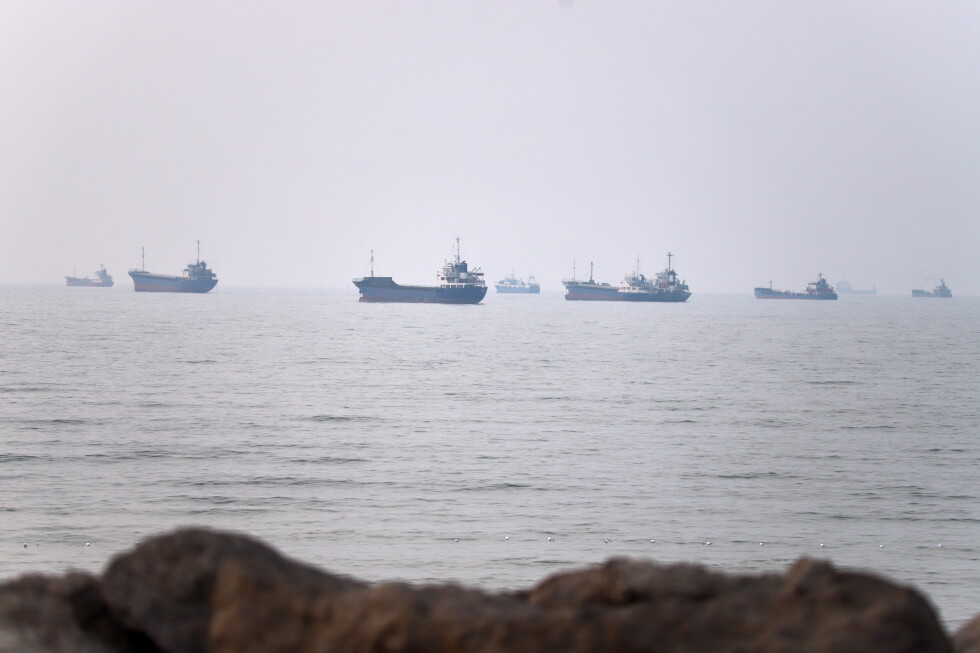
    Despite a fragile ceasefire that has largely held across front lines, tensions remain elevated around the strategically critical Strait of Hormuz, where the U.S. blockade is now fully operational. U.S. Central Command reported that in the first 24 hours of the blockade going into effect, no commercial ships successfully broke through the cordon. Six merchant tankers complied with U.S. military instructions to turn around and return to Iranian territorial waters, though one vessel briefly reversed course and transited the waterway before turning back.

    The blockade is designed to cut off a key source of revenue for Iran’s war effort: since the conflict began on February 28, Iran has exported millions of barrels of crude oil, mostly to Asian markets, much of it through unregulated “dark transits” that evade international sanctions and oversight. This illicit oil trade has generated critical cash flow to sustain Iran’s military and economic operations during the conflict.

    Even before the U.S. blockade, Iran’s effective closure of the Strait of Hormuz — which normally carries roughly 20% of all global oil shipments in peacetime — disrupted global energy markets, sending crude prices skyrocketing and driving up costs for gasoline, food, and essential goods across every continent. On Wednesday, news of potential new talks pushed oil prices downward, while U.S. equities rallied to near the record highs set in January, a signal that investors are betting on an end to the conflict that has upended global commerce and shaken the world economy. The fighting has already inflicted massive human and infrastructural damage across the region, with more than 5,000 fatalities recorded across Iran, Lebanon, Israel, and Gulf Arab states, including 13 killed U.S. service members.

    In a separate, landmark development out of Washington Tuesday, the first direct diplomatic meeting between Israeli and Lebanese ambassadors to the United States in decades concluded with productive outcomes, according to U.S. State Department officials. The rare talks came as the low-intensity conflict between Israel and Iran-backed Hezbollah militants along the Israel-Lebanon border enters its third month, with more than one million Lebanese civilians displaced from their homes since March.

    Israeli Ambassador Yechiel Leiter framed the discussion as a step toward shared goals, saying both nations are “on the same side of the equation” in “librating Lebanon” from Hezbollah’s militant influence. Lebanese Ambassador Nada Hamadeh Moawad described the meeting as “constructive” but stressed that the top priority remains an immediate end to the ongoing border conflict. Israel and Lebanon have maintained a formal state of war since Israel’s founding in 1948, and Lebanese public and political leadership remains deeply divided over any official diplomatic engagement with the Israeli government.

    As regional actors and global powers work to push for de-escalation, the showdown over the Strait of Hormuz remains the single biggest risk for a rapid reignition of hostilities that would deepen the conflict’s already devastating human toll and widespread economic damage across the globe.

  • Xi calls China-Russia ties ‘precious’ in current international context

    Xi calls China-Russia ties ‘precious’ in current international context

    Against a global backdrop marked by overlapping shifts and widespread instability, Chinese President Xi Jinping emphasized Wednesday that the steady, predictable nature of China-Russia relations stands out as uniquely valuable. Speaking during a bilateral meeting with Russian Foreign Minister Sergey Lavrov in Beijing, Xi noted that the enduring vitality and landmark importance of the two nations’ friendship treaty have grown even more prominent amid today’s turbulent international conditions.

    Xi called on the foreign ministries of both countries to fully carry out the agreements already reached between himself and Russian President Vladimir Putin, pushing for deeper strategic communication and tighter diplomatic coordination between the two sides. He also urged continued efforts to advance the comprehensive strategic partnership between Beijing and Moscow, expressing hope that the relationship will “gain greater elevation, move forward more steadily, and reach new milestones.”

    While Xi underscored the strategic importance of the bilateral partnership, he did not explicitly name the specific changes and chaotic developments he referenced. Global observers have noted growing uncertainty around the duration of ongoing conflict in Iran, with no clear timeline for a ceasefire or resolution in sight.

    Separately, in previously unreleased clips from an interview with Fox Business Network, former U.S. President Donald Trump claimed Tuesday that the Iran conflict was “close to over.” This is not the first time Trump has prematurely announced a U.S. victory in the conflict, even as on-the-ground conditions have remained far more complex and unsettled than his public statements suggest.

    In the years since Russia’s full-scale invasion of Ukraine in early 2022, the strategic partnership between China and Russia has deepened considerably. Trump’s unconventional approach to the ongoing war in Ukraine has introduced a new variable to great power dynamics, but analysts say it has not produced any fundamental shift in the core of the Beijing-Moscow relationship. When Putin traveled to China for an official visit in September, Xi greeted the Russian leader as an “old friend,” and Putin reciprocated by addressing Xi as “dear friend,” signaling the warm personal and diplomatic ties between the two heads of state.

    Lavrov arrived in Beijing on Tuesday for a two-day working visit, at the official invitation of Chinese Foreign Minister Wang Yi, setting the stage for further diplomatic coordination between the two countries’ top diplomatic bodies.

  • At least 250 people missing, including Rohingya and Bangladeshis, after boat sinks in Andaman Sea

    At least 250 people missing, including Rohingya and Bangladeshis, after boat sinks in Andaman Sea

    A devastating maritime disaster has left at least 250 people — a group including both Rohingya refugees and Bangladeshi nationals — unaccounted for after their overcrowded migrant vessel capsized in the Andaman Sea while attempting to reach Malaysia, United Nations refugee and migration agencies confirmed.

    Details of the incident remain fragmented in its immediate aftermath, but Bangladesh Coast Guard spokesperson Lieutenant Commander Sabbir Alam Suzan shared preliminary information with the Associated Press on Wednesday, confirming that nine passengers have been pulled from the water alive. The rescue, which took place April 9, was carried out by the crew of the M.T. Meghna Pride, a Bangladesh-flagged cargo ship that spotted the survivors adrift after the shipwreck. Among those rescued are three Rohingya refugees and six Bangladeshi citizens, eight men and one woman, all reported to be in stable condition after being transferred to local police in Teknaf, the departure point for the ill-fated voyage.

    Unlike coordinated official search efforts, this rescue was an unscheduled act of goodwill by the merchant vessel’s crew, a senior Bangladesh Coast Guard media official told the AP Wednesday on condition of anonymity per government protocol. The capsizing occurred outside Bangladesh’s territorial waters, so the Coast Guard had not launched an official search operation at the time of the rescue. As of Wednesday, the exact timeline of the sinking and the status of any expanded search operations for the hundreds of missing passengers remains unconfirmed.

    In their joint statement released Tuesday, the Office of the United Nations High Commissioner for Refugees (UNHCR) and the International Organization for Migration (IOM) outlined the known context of the disaster: the wooden trawler departed from Teknaf, located in Bangladesh’s southern Cox’s Bazar district, where the world’s largest refugee camp is based, carrying a large contingent of passengers bound for Malaysia. The vessel sank after extreme sea conditions — combined with dangerous overcrowding — left it unable to navigate, with strong winds and rough seas causing the boat to lose control and capsize.

    Shari Nijman, a UNHCR communications officer based in Cox’s Bazar, confirmed Wednesday that the agency had no additional updates to share beyond the initial joint statement.

    The two UN agencies emphasized that the tragedy is not an isolated incident, but a direct consequence of the years-long protracted displacement of the Rohingya people, for whom durable, long-term solutions remain out of reach. Decades of systemic persecution and ongoing violence in Myanmar’s Rakhine State have made safe, voluntary repatriation impossible for most of the more than 1 million Rohingya now sheltering in Bangladesh. Within Bangladesh’s overcrowded refugee camps, limited access to humanitarian aid, formal education, and legal employment leaves thousands of vulnerable people in desperate conditions, pushing many to accept dangerous offers from people smugglers who falsely promise steady work and improved living standards in Malaysia or other Southeast Asian nations.

    In the wake of the disaster, UNHCR and IOM issued an urgent call for the international community to increase financial support and show greater solidarity with Rohingya refugees and the government of Bangladesh, which has hosted the displaced population for more than six years.

  • South Korea jails American YouTuber for public nuisance

    South Korea jails American YouTuber for public nuisance

    A Seoul court has handed down a six-month prison sentence to 25-year-old American live-streamer Johnny Somali, legally named Ismael Ramsey Khalid, after he was convicted of multiple offenses including desecrating a memorial to World War Two comfort women and violating South Korean public order laws. The controversial content creator sparked widespread national outrage in late 2024 when he uploaded a viral clip showing himself kissing the iconic bronze statue and performing inappropriate lap dance movements on the monument during a visit to South Korea.

    Following the release of the clip, Seoul prosecutors formally charged Khalid with public nuisance in November 2024, and immediately imposed a travel ban barring him from leaving South Korea while the investigation proceeded. The conviction handed down on Wednesday adds additional counts of distribution of non-consensual sexual deepfake content, a charge that further amplified public anger over the streamer’s conduct.

    In its official ruling, the court emphasized that Khalid had repeatedly committed offenses targeting random members of the South Korean public, all as a deliberate strategy to generate views and profit from his YouTube channel, in open disregard of South Korean legal and social norms. Prosecutors had initially pushed for a harsher three-year prison term, but judges opted for the reduced six-month sentence after noting that no severe physical harm was inflicted on individual victims in this case. As an additional restriction, Khalid will be barred from working with any organizations serving minors or people with disabilities after his eventual release from custody.

    The monument targeted by Khalid is one of dozens of similar memorials erected across South Korea honoring the estimated 200,000 mostly Asian women forced into sexual slavery by the Imperial Japanese Army during World War Two. Roughly half of these women, widely referred to as “comfort women” in historical discourse, were from Korea, which was under Japanese colonial rule at the time. The seated young woman statue that has become the symbol of the comfort women movement has long been a flashpoint in diplomatic relations between Seoul and Tokyo, as South Korean activists and officials continue to push for full reparations and formal acknowledgement of Japan’s wartime atrocities.

    Khalid, a provocateur who has built a small following of around 5,000 subscribers on YouTube through controversial, boundary-pushing content, issued a public apology back in November 2024 claiming he “didn’t understand the significance of the statue.” That apology was widely met with skepticism from South Korean social media users, who pointed to his long pattern of provocative behavior as evidence the incident was a deliberate stunt for attention.

    Throughout the course of the legal proceedings, Khalid escalated tensions by openly challenging local South Koreans to physical confrontations, multiple clips shared on South Korean social media showed the streamer being punched and chased through public streets by angry locals. This incident was far from Khalid’s first run-in with law and public order across East Asia and the Middle East. Prior to his 2024 trip to South Korea, he was detained in 2024 at a Tel Aviv protest for making inappropriate sexual comments to a female police officer, before being released after questioning. In 2023, during a trip to Japan, he sparked public anger by making provocative comments about the 1945 atomic bombings of Hiroshima and Nagasaki, and was later fined 200,000 yen (equivalent to roughly $1,400) for disrupting business at a Tokyo restaurant by blaring loud music. His history of provocative content has also led to permanent bans from multiple major streaming platforms over the years.

  • Maika Hamano scores to give Japan 1-0 win over USWNT

    Maika Hamano scores to give Japan 1-0 win over USWNT

    SEATTLE – In an upsetting international friendly match that closed out the first leg of their three-game series in the Pacific Northwest, Japan’s women’s national team delivered a 1-0 defeat to the reigning power U.S. Women’s National Team (USWNT) on Tuesday, snapping the Americans’ 10-match undefeated winning run.

    The result marked the USWNT’s first loss since a 2-1 away defeat to Portugal back in October 23, 2025, and ended a 41-game streak of matches where the American side had avoided being held scoreless. The Tuesday defeat comes just three days after the USWNT claimed a tight 2-1 win over Japan in a Saturday meeting in San Jose, ending a prior losing run to the Japanese side that dated back to Japan’s 2-1 victory over the USWNT in the 2025 SheBelieves Cup final.

    The game’s only goal came in the 27th minute, when 21-year-old forward Maika Hamano outmaneuvered American defender Lilly Reale with a clever feint, then unleashed a curling left-footed strike that sailed over the outstretched glove of U.S. goalkeeper Phallon Tullis-Joyce to find the top right corner of the net.

    USWNT head coach Emma Hayes made the controversial call to drastically reshuffle her starting lineup from Saturday’s victory, opting to rest star starters Sophia Wilson and Trinity Rodman among other key players. All four rested players — Wilson, Rodman, center back Tierna Davidson, and defender Gisele Thompson — entered the match as second-half substitutes in the 65th minute as Hayes looked to spark an equalizing comeback.

    The substitution carried extra storylines for two veterans: Davidson made her first appearance for the national team since February 2025, after suffering a torn ACL during a club match with Gotham FC in March of that year that sidelined her for more than a year. For Wilson, the appearance marked her second consecutive cap for the USWNT following the birth of her daughter last fall, after she had been out of international action since October 2024.

    Tuesday’s historic match also carried off-pitch significance for Seattle sports: it was the first time the USWNT had played at Lumen Field since 2017, when the team declined to return due to longstanding concerns over the stadium’s old artificial turf. The venue recently installed a new natural grass surface in preparation for this summer’s FIFA Women’s World Cup, making the friendly the first USWNT match on the new playing surface.

    A total of 36,128 fans packed Lumen Field for the match, breaking the all-time attendance record for a standalone women’s soccer match in Seattle. The previous record of 34,130 was set in 2023 during Megan Rapinoe’s retirement match with the NWSL’s Seattle Reign.

    The two sides will now travel to Commerce City, Colorado, to play the third and final match of their friendly series this coming Friday, where the USWNT will look to rebound from Tuesday’s upset defeat.

  • IMF warns Trump’s Iran war could unleash global recession

    IMF warns Trump’s Iran war could unleash global recession

    As international financial leaders gather in Washington D.C. for the International Monetary Fund’s annual Spring Meetings, the institution has issued a stark warning: the ongoing US-Israeli military conflict in Iran threatens to derail global economic momentum, trigger a new energy crisis, and push vulnerable economies into deep recession. The grim update, included in the IMF’s latest *World Economic Outlook*, comes as independent analysts and policy experts warn the long-term financial cost of the conflict to US taxpayers alone could top $1 trillion, with disproportionate harm falling on low-income and vulnerable communities worldwide.

    Prior to the outbreak of hostilities, the IMF had upgraded its 2026 global growth forecast to 3.4%, buoyed by private sector adaptation to ongoing trade shifts, lower-than-expected US tariffs, targeted fiscal support, favorable financing conditions, and a productivity boom driven by emerging artificial intelligence technologies. That positive momentum has now come to a sudden halt, according to Pierre-Olivier Gourinchas, the IMF’s director of research. The conflict has already closed the Strait of Hormuz, a critical chokepoint through which roughly 20% of the world’s daily oil supplies pass, and damaged key energy infrastructure across the hydrocarbon-rich Middle East. If hostilities continue, the region’s central role in global energy markets makes a full-blown energy crisis increasingly likely.

    Even in the best-case scenario of a quick end to fighting, the IMF projects lasting damage to the global economy. Under a limited conflict framework, global growth is forecast to hit just 3.1% in 2026 and 3.2% in 2027, figures that fall below recent growth outcomes and sit well below pre-pandemic averages. Global inflation, which had been on a downward trajectory, is projected to tick back upward in 2026 before resuming its decline in 2027. The brunt of the impact will fall on emerging market and developing economies, particularly commodity-importing nations that already faced preexisting financial vulnerabilities. Downside risks dominate the forecast: a prolonged conflict, deepening geopolitical fragmentation, underperformance of AI-driven productivity gains, or renewed trade tensions could further weaken growth and roil global financial markets. High public debt levels and eroded policy space leave many nations with little buffer to absorb new shocks. The IMF urges policymakers to prioritize economic adaptability, policy credibility, and strengthened international cooperation to mitigate harm.

    The severity of the ultimate economic shock will depend on how long the conflict lasts and its geographic scale, as well as how quickly global energy production and shipping normalize once hostilities cease, the IMF notes. Impacts will vary sharply across regions: net energy-importing nations face the highest exposure, while low-income countries will see reduced tourism, slowing business activity, and falling remittances from migrant workers employed in the conflict region. Eric LeCompte, executive director of Jubilee USA Network and a United Nations finance expert, called the IMF’s new forecast deeply alarming, noting that the world’s poorest and most vulnerable populations will bear the worst of the crisis. “World leaders coming to Washington are receiving a very dark picture of the global economy,” LeCompte said. “The war is causing greater poverty and increases in our fuel and food costs.”

    Beyond macroeconomic disruptions, a leading Harvard public policy expert who specializes in calculating the true long-term costs of US military conflicts says the total price tag for American taxpayers will almost certainly reach at least $1 trillion once all indirect and long-term expenses are accounted for. Linda Bilmes, the Daniel Patrick Moynihan senior lecturer at Harvard Kennedy School who co-authored *The Three Trillion Dollar War: The True Cost of the Iraq Conflict* with Nobel Prize-winning economist Joseph Stiglitz, estimates that just the first several days of the US-Israeli assault cost US taxpayers a minimum of $16 billion, nearly $5 billion higher than the Pentagon’s official $11.3 billion estimate.

    Bilmes explains that the Pentagon understates short-term costs by valuing used munitions and equipment at their historical book value, rather than the much higher current cost to replace depleted stockpiles. She also points to multi-year, multibillion-dollar contracts the Trump administration has already signed with major defense contractors including Lockheed Martin that will add to long-term costs. Most significantly, the long-term costs of veterans’ care will create a decades-long financial burden. Roughly 55,000 deployed US troops have been exposed to toxins, burning fuel residues, and other environmental hazards linked to chronic long-term illness. Even if only one-third of these troops file for disability and medical benefits, Bilmes projects those costs alone will reach tens to hundreds of billions of dollars. “We are borrowing to finance this war at higher interest rates, on top of a much larger national debt base,” Bilmes explained. “The result is that the interest costs alone will add billions of dollars to the total cost of this war. And unlike the upfront costs, these are costs we are explicitly passing on to the next generation.” She added that she would not be surprised if the total cost has already surpassed the $1 trillion mark.

    The Washington Post reports the Trump administration is expected to request between $80 billion and $100 billion in emergency war funding from Congress, as part of a broader fiscal 2027 budget proposal that calls for $1.5 trillion in annual military spending. If the request is fully approved, Bilmes notes, total US military spending will rise to levels roughly 20% higher than the peak spending of World War II. Even if Congress rejects the full increase, she projects the conflict will lock in a permanent $100 billion annual increase to the baseline defense budget – a change that compounds to $1 trillion in additional spending over the next decade.

    Other independent economic analysts share the IMF’s warnings of severe global harm. A recent report from Oxford Economics analysts Ben May, Bridget Payne, and Paul Moroz found that an extended conflict in Iran could push the entire global economy into recession. In that scenario, Gulf economies would contract by more than 8% in 2026 before a gradual recovery, while advanced Asian economies heavily dependent on Gulf oil would face steep cost increases from more expensive energy imports and widespread supply chain disruptions. Europe would face a painful squeeze on natural gas and electricity prices, while the US – though buffered by its own domestic energy production – would still see a nearly 20% drop in equity markets that would weigh heavily on consumer spending.

    Domestically, US policy experts have highlighted the conflict’s toll on American household finances and social spending. Dean Baker, senior fellow at the Center for Economic Policy Research, emphasized that the massive military spending required by the conflict comes at the expense of critical domestic social programs. “To be clear, the main reason to oppose this pointless war is its impact on the people of Iran and elsewhere in the region. But it also has a huge economic cost that is seriously underappreciated,” Baker said. Trump’s proposal to spend 5% of US GDP – or $1.5 trillion annually – on the military works out to $12,000 per household annually, he noted. To offset this record military spending, the Trump administration has proposed $73 billion in cuts to non-defense domestic spending, on top of historic cuts to Medicaid and the Supplemental Nutrition Assistance Program that already serve tens of millions of low-income Americans. “It is striking to see that Congress might be willing to quickly cough up this money for military funding when it has refused far smaller sums that could have made a huge difference in the lives of tens of millions of people,” Baker added.

  • Iran may opt to abide by US blockade in hopes of a deal, experts say

    Iran may opt to abide by US blockade in hopes of a deal, experts say

    Washington’s maximum pressure campaign via a naval blockade of Iranian energy exports was designed as a short-term leverage tool to force Tehran into concessions at the negotiating table, but experts warn the gambit could backfire — with China positioned to quietly test the restrictions without triggering open military conflict, and energy markets already signaling growing confidence that a diplomatic breakthrough between the two rivals is within reach.

    In theory, cutting off Iran’s 1.5 million barrels per day of crude exports, much of which flows through the strategically critical Strait of Hormuz, should send global energy prices soaring. Yet since the US blockade officially took effect this Monday, Brent crude, the global benchmark for oil, has defied expectations and fallen sharply, dropping 4.3% to trade at $95.08 per barrel as of mid-week.

    Diplomats and industry analysts interviewed by Middle East Eye say the unexpected price dip stems from widespread optimism that both Washington and Tehran are committed to a two-week ceasefire and renewed negotiations, overshadowing immediate fears of disrupted energy supplies. US President Donald Trump announced Tuesday that talks between the two sides could resume as soon as within 48 hours in Islamabad, Pakistan, the site of earlier negotiations that ended without a final agreement.

    Aaron David Miller, a former US Middle East peace negotiator now with the Carnegie Endowment for International Peace, told MEE that the coming days will be a critical test of the blockade’s durability. “The test right now is whether in the next several days we see a return to kinetic activity on the part of the Iranians to challenge the US blockade or US kinetic action against Iran,” Miller said.

    The Trump administration has claimed the blockade is already successfully halting Iranian oil shipments, and initial analysis of global ship tracking data appears to back that assertion, according to maritime analysts. On Tuesday, two vessels linked to Iranian energy exports — the Panama-flagged *Elpis* and Chinese-owned *Rich Starry*, a regular carrier of Iranian methanol — drew international attention after crossing the Strait of Hormuz but idling in the Gulf of Oman rather than exiting toward global markets.

    Matthew Wright, principal freight analyst at energy analytics firm Kpler, explained that the exit from the Gulf of Oman is the key metric for tracking compliance, since US naval forces are positioned outside the Strait of Hormuz. “We haven’t seen any Iranian-linked vessel transiting the Strait of Hormuz and exiting the Gulf of Oman. That is what we are waiting on,” Wright said. Experts add that US warships have deliberately stayed outside the narrow strait and away from the Iranian mainland, recognizing they remain vulnerable to Tehran’s fleet of drones and short-range anti-ship missiles.

    As the largest buyer of Iranian oil, purchasing roughly 90% of Tehran’s total exports, China is the only global power with the capacity to undermine the US blockade. In the aftermath of the June 2025 US-Israeli war against Iran, Beijing has already supplied Tehran with air defense systems and drones, and The New York Times reported over the weekend that China may have also delivered shoulder-fired missiles to Iranian forces. Beijing has denied all reports of arming Iran, and issued a public statement Tuesday calling the US blockade “dangerous and irresponsible” while urging an immediate ceasefire and a return to normal shipping traffic through the Strait of Hormuz.

    Yun Sun, director of the China Program at the Stimson Center, told MEE that Beijing will avoid direct military confrontation with Washington over the blockade, even as it pursues quiet efforts to prop up the Iranian government. “The Chinese will not pick a fight with the US over Iran. They might do things behind the scenes to rebuild and rearm Iran, but not directly confront the US militarily,” Sun said. “The Strait of Hormuz is so far from China, and the geographical distance is a key barrier to any Chinese plan for effective military intervention.”

    Still, one senior Arab diplomat told MEE that the entire US blockade ultimately relies on China’s quiet willingness to comply, pointing to a recent precedent where Washington allowed a Russian oil tanker to reach Cuba despite long-standing US sanctions on the Caribbean nation. The diplomat added that Tehran is well-positioned to outlast the restrictions: Iran pre-positioned massive volumes of crude ahead of the blockade, boosting loadings at its key Kharg Island export terminal before the February 28 US-Israeli attack. Kpler data shows Iran currently holds roughly 38 million barrels of crude stored on tankers at sea, much of it already anchored near the Chinese coast, with enough storage capacity to continue production for weeks before being forced to shut down operations. Iran also has alternative trade routes, including access to the Caspian Sea and overland land borders that reduce its reliance on open sea lanes for imports, unlike Cuba, which the US has targeted with a similar energy blockade.

    Many foreign policy experts argue the US has based its blockade strategy on flawed timelines and miscalculations. Alan Eyre, a former senior State Department Iran expert, told MEE that the slow-acting restrictions will fail to pressure Tehran into making concessions within the timeframe the Trump administration needs for a diplomatic win ahead of any planned political milestones. “For any sort of time frame the US cares about to inflict pain on Iran’s economy, the blockade is just too slow-acting,” Eyre said. “It’s a short-term tool that will fail to move the Iranians at the negotiating table.” Eyre added that Iran already holds hundreds of millions of dollars in recent oil export revenue, giving it ample financial breathing room to wait out the standoff.

    Experts note that if Tehran chooses not to immediately challenge the blockade, it is likely because Iranian leadership believes a negotiated deal with Washington is achievable. Earlier talks in Islamabad broke up without an agreement after US Vice President JD Vance walked away over disputes about the future of Iran’s nuclear program, but multiple regional and US media outlets have reported that the two sides came surprisingly close to reaching a framework agreement. Eyre compared Vance’s walkout to traditional Middle Eastern bazaar haggling, noting that it is a common negotiating tactic rather than a sign that talks are dead. “Vance walking away is like negotiating for a rug at a market in the Middle East. You ask the price, say it’s too high and walk away. But then you come back the next day,” Eyre said.

    A key breakthrough in the earlier talks was a US concession offering Iran a 20-year moratorium on uranium enrichment, a significant shift from earlier US demands that Iran end all enrichment activities permanently. Iran has long maintained its right to enrich uranium for peaceful civilian energy purposes, and its late supreme leader Ayatollah Ali Khamenei issued a binding religious decree against developing nuclear weapons back in 2003, a position Tehran has repeatedly reaffirmed.

    Miller noted that the US shift to accepting a moratorium, or temporary pause, rather than a permanent end to enrichment is a major step forward that makes meaningful negotiation possible. “If the administration has conceded to using the word ‘moratorium’, which means ‘pause’ and not ‘permanent ending’ – that’s a significant concession, and you might actually have a negotiation,” Miller said.

    Despite the progress, several major sticking points remain to be resolved. These include Iran’s demand to charge transit tolls for commercial vessels passing through the Strait of Hormuz, the status of Iran’s existing stockpiles of enriched uranium, and the maximum level of enrichment that Washington will agree to allow Tehran to maintain. Experts add that Trump faces political pressure to secure a high-profile foreign policy win, and opening the strait to shipping is not enough to meet that goal. “I don’t think the Iranians will agree to a 20-year moratorium, but if they agree to a pause in single digits, that could open things up,” Miller said.