标签: Asia

亚洲

  • Grey-haired volunteers warm China’s countryside

    Grey-haired volunteers warm China’s countryside

    As pale pink dawn creeps over the rolling wheat fields of central Henan province on a mild spring morning, 79-year-old Meng Laifa wheels his well-worn tricycle out of his courtyard gate. Tucked in the rear cargo box are three trusted companions: a thick sharpening stone, a small hammer, and a plastic bottle of water. Eight kilometers down a winding country road lies Shanqian Xuzhuang village, the 271st stop for the senior volunteer association Meng has served with for years.

    This weekly trip is no casual errand to sell wares or visit relatives. It is a quiet promise Meng and his fellow volunteers have kept for more than a decade. Founded 12 years ago in Xiangcheng county by local resident Song Hongchang, the association began with just 15 members reaching out to isolated, homebound elders. Today, it has grown into a movement of more than 5,000 participants, over 80 percent of whom are seniors over 60 years old—former teachers, retired small business owners, and lifelong farmers who have turned their retirement years into a period of purposeful service.

    Calling themselves the “silver-haired corps”, the group operates on a simple yet innovative “old helping old” model that meets the most pressing unmet needs of rural China’s aging population. Healthy, more mobile seniors travel from village to village, delivering hot meals to doorsteps, trimming hair for homebound elders, sharpening tools, distributing free reading glasses, and most importantly, offering companionship to seniors who often live alone while their adult children work in distant cities.

    “We don’t think of this as one-sided help,” said one volunteer chopping vegetables for the group’s free communal lunch, a warm chuckle escaping her as she worked. “We gain just as much energy and joy from spending time with them as they gain from our help.” This reciprocal bond offers a vivid, grassroots example of how rural China is adapting to the challenges of an aging population, one small, caring act at a time.

    China is now home to more than 300 million people aged 60 and above, marking the country’s entry into a stage of moderate population aging. The strain of this shift is felt most acutely in rural areas, where formal elderly care services remain relatively scarce, and many working-age adults have migrated to urban centers for jobs. The old-helping-old model unlocks an underutilized community resource: active, healthy younger seniors who have abundant time, life experience, and a desire to contribute to their communities. As both current service providers and future beneficiaries of the network, they build a sustainable system of mutual support that fits the unique fabric of rural life.

    The road to building this network was not always smooth, Song recalled. In the early days, local residents were suspicious of the unsalaried group, with some accusing the volunteers of running a pyramid scheme. The organization also faced criticism when it failed to publish its financial accounts promptly, eroding initial trust. But with targeted support from local authorities, the association established a Party branch, brought transparent governance to its operations, and gradually won over community confidence.

    Today, the 15th of every month is designated a special “practice day”, where the senior volunteers are joined by young members of the Communist Youth League, lecturers from the local retired cadres bureau, and anti-fraud investigators from local police stations. This collaboration has created a powerful synergy between grassroots voluntary action and government support, expanding the scope and impact of the group’s work. All financial transactions—every donation received and every expense paid—are published daily for full public scrutiny, and every volunteer’s service hours are officially recorded to keep operations accountable. “What keeps us moving forward is consistent government backing and clear, solid rules,” Song explained.

    One of the association’s most meaningful initiatives grew from a simple, heartfelt encounter back in 2019. During a village visit, Song and his team met an elderly man whose bad teeth left him unable to chew solid food, who said his greatest wish was just to bite into a fresh apple. Sheng Hailiang, a volunteer dentist traveling with the group, stepped forward immediately: “Let me see what I can do.” Within days, Sheng connected with a dental supplier that agreed to craft a set of custom dentures for the man for free. The “Apple Project” was born—named for the elder’s simple wish, the initiative also carries a symbolic meaning of good health and blessing for every participant. To date, the program has provided free dentures for more than 60 low-income rural seniors.

    The association’s impact extends far beyond dental care. Its “Love Lunch Mobile Canteen” has traveled nearly 8,000 kilometers across scattered rural villages, serving more than 170,000 hot, nutritious meals to seniors who struggle to cook for themselves. Its reading glasses program has given hundreds of elderly rural residents their first ever pair of prescription glasses, allowing them to read books, newspapers, and handwritten letters from their children again.

    This grassroots old-helping-old model is not an isolated case. Across China, thousands of similar silver-haired volunteer groups are emerging across sectors: tens of thousands of retired teachers have returned to classrooms to support underserved rural education, while other senior volunteer teams take on community work from neighborhood dispute mediation to waste sorting and local mutual aid networks. The World Health Organization’s vision of “active aging”—which frames older adults not as a societal burden, but as a valuable social resource—is taking deep root across China’s countryside.

    By late afternoon, as the sun dips low and paints the village rooftops gold, the villagers head home after a day of connection and support. The volunteers pack up their tools, wash the last of the lunch dishes, and roll up the event banner. Tomorrow, they will prepare for their next stop: the 272nd village on their ongoing route of care. Meng lifts his sharpening stone back onto his tricycle, turns the crank, and sets off for home, golden sunlight stretching his shadow long across the quiet country road. Across the vast expanse of rural China, thousands of silver-haired volunteers just like Meng are bringing warmth, connection, and strength to the country’s aging society, one small act of service at a time.

  • Shanghai to transform into a city of flowers

    Shanghai to transform into a city of flowers

    Starting April 18 and running through May 10, 2026, Shanghai will undergo a dramatic citywide transformation for the 2026 Shanghai International Flower Show, turning the entire metropolis from its bustling downtown core to its outlying five new towns into an immersive open-air floral exhibition.

    Moving beyond the conventional format of confining flower shows to a single dedicated park space, event organizers have broken traditional geographic and conceptual boundaries to craft a holistic floral experience that integrates botanical displays into the daily urban fabric of Shanghai. Zhu Xinjun, deputy director of Shanghai’s Landscaping and City Appearance Administrative Bureau, outlined the ambitious multi-site layout, which centers on two primary core venues, 10 supporting secondary venues, and pop-up installations across dozens of major commercial districts throughout the city.

    One of the two flagship venues, the Shanghai Botanical Garden, will host a sprawling 40-hectare professional exhibition split into four specialized thematic zones. The venue will feature 41 distinct floral attractions showcasing more than 400 unique plant varieties, ranging from rare native Chinese species to exotic cultivars sourced from horticultural communities around the world.

    The second core venue, located in downtown Huangpu District, will complement the botanical garden’s collection with more than 40 custom-designed themed gardens and over 60 curated floral window displays that line the district’s busy commercial streets. International garden pavilions highlighting horticultural styles from across the globe and dedicated floral art galleries will also be installed throughout Huangpu’s shopping and business districts, bringing world-class floral design directly to pedestrians and shoppers.

  • Media freedom groups urge Kazakhstan’s president to drop charges against journalists

    Media freedom groups urge Kazakhstan’s president to drop charges against journalists

    Six leading international organizations focused on press freedom and human rights — including the Committee to Protect Journalists (CPJ) — have made a formal public appeal to Kazakhstan’s President Kassym-Jomart Tokayev, calling on him to dismiss pending criminal charges against four independent journalists currently held under house arrest and roll back restrictive media legislation that erodes free press in the Central Asian nation.

    In an official letter delivered to Tokayev on Monday, the coalition raised sharp alarms over what they characterize as an accelerating wave of journalist detentions and systematic harassment of Kazakhstan’s independent media ecosystem. The document spotlights the high-profile cases of four established independent reporters: Gulnara Bazhkenova, Amir Kasenov, Aset Matayev, and Botagoz Omarova. All four are currently confined to their homes as they await trial on unspecified criminal charges. The groups emphasized that mounting pressure and intimidation tactics have made independent reporting in the country increasingly unsustainable, writing that “a rising tide of harassment is rendering the work of independent Kazakh media increasingly difficult.”

    Beyond calling for the release of the four detained journalists and the withdrawal of all charges filed against reporters for their professional work, the coalition is pushing for major revisions to Kazakhstan’s laws around the dissemination of information, specifically urging the government to loosen overly broad restrictions on so-called “false information” that are frequently used to target critical independent voices.

    The letter also outlines a broader pattern of restrictive actions against independent media outlets operating in the country. The coalition notes that Kazakh authorities have withheld official accreditation from dozens of Radio Free Europe/Radio Liberty (RFE/RL) journalists for months, and have fully blocked the independent domestic news outlet ResPublika. The groups argue these moves “appeared to have little justification beyond a desire to obstruct these outlets’ reporting.”

    Additionally, the organizations document widespread censorship on digital platforms: dozens of prominent Kazakh journalists, independent outlets, and press freedom advocacy groups have reported that their social media accounts and published content have been blocked or removed in recent months, following what the groups describe as “spurious and apparently orchestrated complaints.”

    The coalition warned Tokayev that the cumulative effect of these crackdowns poses a direct threat to his stated reform agenda. “Mr. President, collectively these attacks on the press threaten to create a climate of fear and self-censorship that irreparably undermines the credibility of your reform agenda,” the letter reads.

    As of Tuesday, Tokayev’s office has declined to issue any comment on the appeal from the international groups.

    The appeal comes amid a major political shift in Kazakhstan, just one month after Tokayev’s proposed package of constitutional changes won overwhelming approval in a national referendum. The reforms have cemented the 72-year-old leader’s grip on power in Central Asia’s largest country.

    A former Soviet bureaucratic official and career Kazakh diplomat who previously held senior roles at the United Nations, Tokayev is currently bound by existing rules to a single seven-year presidential term set to expire in 2029. Independent political analysts widely speculate that the constitutional referendum was structured to allow Tokayev to reset his presidential term limits, clearing a path for him to stay in power beyond 2029.

    Since international sanctions were imposed on Russia following its full-scale invasion of Ukraine, Tokayev has carefully navigated a diplomatic balancing act between Moscow and Western powers, framing his constitutional overhaul as a necessary adjustment to enable faster, more decisive governance amid a rapidly shifting global geopolitical landscape.

  • US, Iran to hold peace talks in Islamabad later this week: sources

    US, Iran to hold peace talks in Islamabad later this week: sources

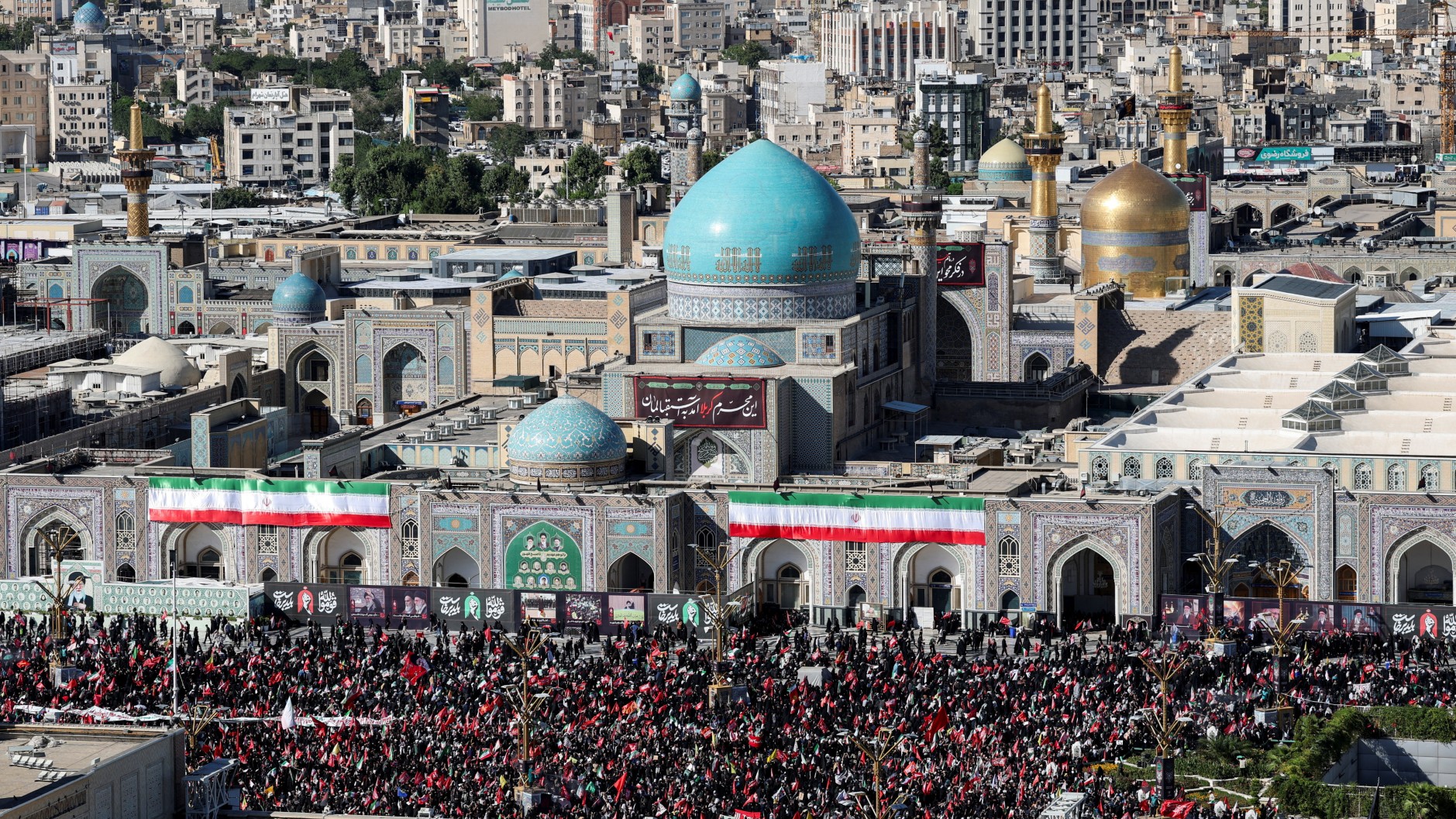
    After years of escalating tensions and intermittent diplomatic backchanneling, high-stakes peace negotiations between the United States and Iran are set to convene in Islamabad, Pakistan later this week, multiple anonymous sources confirmed in a report shared by Reuters on Tuesday. The development, first updated publicly by Xinhua News Agency on April 14, 2026, marks a rare step toward de-escalation between two long-standing adversarial powers that have been at odds over regional security, nuclear policy, and geopolitical influence for decades. Pakistan, a country that maintains diplomatic and economic ties with both Washington and Tehran, has stepped into the role of neutral host for the talks, leveraging its regional standing to facilitate face-to-face dialogue between the two negotiating teams. While details surrounding the specific agenda, key delegates, and expected outcomes of the closed-door discussions remain tightly under wraps, the confirmation of the meeting itself signals a potential shift away from the heightened confrontation that has defined US-Iran relations in recent years. Diplomatic observers note that hosting high-level talks between the two nations also underscores Pakistan’s growing role as a mediator in regional conflicts, balancing its own strategic partnerships to create space for peaceful negotiation. As of Tuesday, neither the US State Department nor Iranian foreign ministry officials have issued an official public statement confirming or denying the scheduling of the talks.

  • Israeli envoy to Italy calls magazine antisemitic over settler violence coverage

    Israeli envoy to Italy calls magazine antisemitic over settler violence coverage

    A heated diplomatic controversy has ignited across European and Middle Eastern media circles after Israel’s ambassador to Rome, Jonathan Peled, launched a scathing attack on a leading Italian current affairs magazine, labeling its recent cover highlighting systematic violence against Palestinian communities in the occupied West Bank as antisemitic and manipulative.

    The April 10 print edition of L’Espresso featured a striking image captured by award-winning Italian photojournalist Pietro Masturzo, paired with the blunt headline “Abuse.” The spread was paired with a months-long investigative project examining the rapid expansion of Israeli settler movements in the occupied territories and its devastating cumulative impact on Palestinian civilian life. The specific photograph at the center of the debate was taken on October 12, 2025, the opening day of the annual olive harvest in Idhna, a small Palestinian village located west of Hebron, as part of Masturzo’s long-form documentary project chronicling daily life under Israeli occupation.

    In a public post on X, Peled condemned the publication’s choice of cover, arguing that the image deliberately distorts the on-ground reality of Israeli security operations. He claimed the spread perpetuates harmful anti-Jewish stereotypes and fuels sectarian hatred, writing that “responsible journalism must be balanced and fair” when covering the Israeli-Palestinian conflict. Going further, the ambassador insinuated without providing any supporting evidence that the image could have been digitally altered to misrepresent events.

    Masturzo, the photographer behind the image, has pushed back forcefully against Peled’s claims, releasing a detailed contextual breakdown of how the photograph was captured. He explained that moments before he took the shot, a group of armed Israeli settlers – one of whom, the figure visible in the frame, was disguised in an Israeli army uniform – backed by active-duty Israeli soldiers with obscured faces, had entered the village to block local Palestinian farmers from accessing their olive groves for the annual harvest. The settler’s confrontational gesture captured in the frame, Masturzo added, was a deliberate act of dehumanization: the man mimicked the call a shepherd uses to gather livestock, speaking to the Palestinian farmers as if they were animals rather than people.

    Variations of the image and other photographs of the same confrontation have already appeared in multiple international outlets, confirming the authenticity of the reporting and the consistency of documentation of settler violence in the region. In an Instagram post defending the decision to publish the image, Masturzo emphasized that the frame captures a widespread reality that global media too often chooses to ignore. He noted that the project is not only intended to expose human rights violations against Palestinians but also to stand in solidarity with Palestinian photojournalists who risk their lives daily to document abuses against their communities.

    The investigative reporting inside the magazine, written by journalist Alae Al Said, draws on first-hand testimonies from Palestinian residents across the Jordan Valley, where settlers backed by Israeli military forces carry out near-daily attacks on civilian communities. One resident, a father of six, described how dozens of settlers stormed his village, destroying local infrastructure, assaulting civilians, demolishing residential structures, and stealing community livestock. In another high-profile case documented in the piece, settlers seized full control of a critical natural water spring that supplies multiple Palestinian villages, with one resident noting that “they’ve colonized all the water sources.”

    The reporting also calls out the international community for its inaction, specifically criticizing recent statements from U.S. Secretary of State Marco Rubio, who voiced vague “concern” over settler violence last month. The magazine dismisses such statements as empty rhetorical gestures that do nothing to hold Israel accountable for its policies in the occupied territories, concluding that the United States remains the primary global backer of the ongoing colonization of Palestinian land, allowing systematic violence to proceed slowly, silently, and relentlessly.

    Online, the controversy has drawn widespread backlash against Peled’s criticism, with thousands of social media users arguing that the image accurately reflects the daily reality of occupation that Palestinians have endured for decades. Many commentators have highlighted the power of the image to convey systemic dehumanization more effectively than longer written reports. One user noted that “With this one photograph you somehow told the story of contempt and impunity more effectively than thousands of existing images of brutal violence. It’s a reminder of the power that photography can still wield, despite everything.” Others have sarcastically echoed the ambassador’s claim, joking that simply documenting on-ground reality in the West Bank is now labeled antisemitic.

    The controversy comes amid a sharp escalation of violence across Palestinian territories since Israel launched its military campaign in Gaza in October 2023. Official data from the Palestinian Health Ministry puts the total number of Palestinians killed in Gaza at more than 72,329, with over 172,000 wounded. In the occupied West Bank alone, Israeli forces and settlers have killed at least 1,050 Palestinians since the war began, according to ministry data. The most recent fatal incident documented came just days ago, when Israeli soldiers beat a 68-year-old Palestinian woman to death during a military raid on her home in Jayyous, a town in the northern West Bank.

  • Xi urges enhancing China-Spain cooperation for more fruitful results

    Xi urges enhancing China-Spain cooperation for more fruitful results

    BEIJING — In a high-profile bilateral meeting held at the Great Hall of the People on April 14, 2026, Chinese President Xi Jinping welcomed visiting Spanish Prime Minister Pedro Sanchez, who is currently conducting an official visit to China, and outlined a clear vision for deepening collaboration across multiple priority sectors between the two nations. During the meeting, Xi emphasized that China and Spain should ramp up cooperative efforts in key areas that include cross-border trade, renewable new energy, and the fast-growing intelligent economy, while also stepping up people-to-people exchanges in culture, education, scientific research, and sports. Noting that the two countries share a solid foundation for bilateral ties and multiple overlapping development interests, Xi pointed out that both sides should fully capitalize on existing opportunities to pursue innovation-driven growth. He added that advancing the China-Spain comprehensive strategic partnership to deliver more substantial, tangible outcomes will ultimately translate into greater well-being and shared prosperity for the populations of both nations.

  • Xi says China, Spain should strengthen cooperation to oppose ‘law of jungle’

    Xi says China, Spain should strengthen cooperation to oppose ‘law of jungle’

    BEIJING, April 14, 2026 – In a high-profile diplomatic meeting with visiting Spanish Prime Minister Pedro Sanchez on Tuesday, Chinese President Xi Jinping has called for strengthened bilateral cooperation between China and Spain to push back against a global retreat toward the coercive “law of the jungle” that threatens international order.

    Sanchez is in Beijing for an official working visit, marking the latest high-level exchange between the two nations aimed at deepening diplomatic and economic ties amid shifting global dynamics. During the talks, Xi highlighted that the contemporary international system is facing unprecedented instability, with a growing confrontation between two competing approaches to global governance: one rooted in the rule of law, and another that prioritizes the brute “rule of power” favored by larger nations seeking unilateral advantage.

    Against this backdrop, Xi urged both China and Spain to stand together in upholding the principles of genuine multilateralism, an approach that centers equal participation from all nations regardless of size, rather than the hegemonic order that allows stronger powers to dictate terms to smaller states. The call aligns with China’s long-standing diplomatic position of advocating for a multipolar global order and rejecting unilateralism, power politics, and the aggressive expansion of influence that harkens back to the “law of the jungle” where might makes right.

    The meeting comes as many European and Asian nations face growing pressure to align with competing global blocs, making bilateral cooperation between major economies like China and Spain a critical factor for maintaining regional and global stability. Both sides are expected to continue discussions across trade, climate action, cultural exchange and other areas in the coming days of Sanchez’s visit, with a shared focus on preserving a rules-based international system that benefits all nations.

  • Three-time World Cup finalist the Netherlands faces Japan, Sweden and Tunisia in Group F

    Three-time World Cup finalist the Netherlands faces Japan, Sweden and Tunisia in Group F

    For decades, the Netherlands has stood as one of international men’s soccer’s most enduring nearly men. Three times the Oranje have marched all the way to the FIFA World Cup final, and three times they have fallen short of lifting the sport’s most prestigious trophy—back-to-back defeats in 1974 and 1978, followed by a heartbreaker in 2010. This year, the three-time runners-up get a new chance to rewrite their legacy, drawn into Group F alongside rising Asian powerhouse Japan, resurgent Sweden, and African hopeful Tunisia, all hungry to upend the pre-tournament projections.

    Pioneers of the revolutionary ‘total football’ framework that redefined the global game in the 1970s, the Netherlands has always produced sides celebrated for their dynamic, aesthetically pleasing style—yet that magic has consistently evaporated when the final whistle of the World Cup final blows. This cycle, the Dutch are led by head coach Ronald Koeman, who is in his second stint at the helm of the national team and is desperate to end his country’s decades-long title drought. Koeman already knows what it takes to win major honors with the Netherlands, having lifted the UEFA European Championship as a player in 1988, and he reached the UEFA Nations League final during his first tenure in charge back in 2019. Today, his squad draws heavily from English Premier League talent, including defensive anchor Virgil van Dijk, dynamic midfielders Ryan Gravenberch and Tijjani Reijnders, and dynamic attacker Cody Gakpo. While the current cohort is solid, analysts widely note it lacks the elite generational talent that defined some of the Netherlands’ most iconic squads of past tournaments. Even so, the Oranje enter Group F as heavy favorites to finish top of the table and advance to the knockout round—but they are not without potential pitfalls, the most notable being 2022’s giant-killers Japan.

    Japan is making its eighth consecutive World Cup appearance this year, targeting a third straight advancement out of the group stage. The Blue Samurai were also the first team outside of this year’s three co-host nations to secure their spot in the tournament, booking their qualification with three group matches still left to play. At the 2022 Qatar World Cup, Japan authored two of the biggest upsets in modern World Cup history, knocking off both Germany and Spain on their way to topping their group—a run that sent shockwaves through the global soccer community. Still, the nation has never advanced past the round of 16, leaving its squad hungry to break that new barrier this cycle. A majority of Japan’s current national team players compete in top European club competitions, including Bayern Munich defender Hiroki Ito and Brighton & Hove Albion dynamic winger Kaoru Mitoma, both of whom have built strong reputations for outperforming expectations against elite competition.

    For Sweden, the road to this year’s World Cup was far from straightforward. The side finished bottom of its direct qualifying group without recording a single win, and only secured a spot in the qualifying playoffs thanks to its strong performances in the 2024-2025 UEFA Nations League, granting it an unexpected second chance to qualify. Under new head coach Graham Potter, who stepped into the role looking to rebuild his managerial reputation following successive club exits from Chelsea and West Ham United, Sweden defied predictions to knock out both Ukraine and Poland in the playoffs to claim its spot in the 24-team field. The side boasts elite offensive talent that makes it a dangerous outlier in the group, including in-form Newcastle United striker Alexander Isak and Sporting Lisbon forward Viktor Gyökeres, two of the most clinically finishing strikers in European soccer. Additional key talent includes young midfield star Lucas Bergvall and Manchester United winger Anthony Elanga. Sweden has its own historic World Cup memories tied to co-host nation the United States: the side finished as runners-up in 1958, and reached the semi-finals the last time the U.S. hosted the tournament in 1994, giving the side a layer of historical confidence heading into this year’s competition.

    Completing Group F is Tunisia, making its seventh World Cup appearance and still chasing its first ever advancement out of the group stage. The North African side came heartbreakingly close to breaking that streak in Qatar four years ago, beating defending champion France 1-0 and holding Denmark to a draw, only to miss out on knockout qualification by a single point. Following a disappointing early exit from the 2023 African Cup of Nations at the round of 16, Tunisia hired former head coach Sabri Lamouchi to lead the side through this World Cup cycle. A rising young star to watch for the Carthage Eagles is 21-year-old Khalil Ayari, who earned a transfer to Paris Saint-Germain ahead of this season and has recently broken through into the senior national team, bringing new energy to Tunisia’s bid to make history.

    As Group F prepares to kick off, all eyes will be on the Netherlands as it chases the title that has eluded it for half a century—with three motivated opponents all ready to turn the group’s dynamics upside down.

  • Hi Five China: Life beyond retirement in Hainan

    Hi Five China: Life beyond retirement in Hainan

    Against the backdrop of China’s rapidly aging population, the southern island province of Hainan has carved out a new reputation as the nation’s leading destination for mobile retirees, drawn by its year-round mild climate and rapidly expanding elder-focused healthcare and wellness infrastructure. To investigate the shifting landscape of eldercare in China and examine how the sector is adapting to meet surging demand from an aging demographic, China Daily reporter Yan An joined a senior wellness travel group to experience life on the bustling island first-hand.

    What the reporter uncovered during her visit challenges common outdated stereotypes about retirement. Far from marking a quiet end to active, purposeful life, retirement in Hainan is increasingly framed as a fresh beginning — a new chapter where older adults can pursue personal growth, social connection, and self-fulfillment, all backed by a fast-growing, consumer-centric senior service industry that caters to the evolving needs of modern retirees.

    This trend reflects a broader national shift in how older Chinese approach retirement, as growing affluence and improved senior-focused infrastructure allow millions to choose active, location-independent post-work lifestyles rather than remaining in their lifelong hometowns. Hainan’s rise as a preferred retirement hub also signals growing opportunities for the eldercare and senior tourism sectors, as businesses and policymakers work to keep pace with the changing demands of China’s aging population.

  • Senior CPPCC official charged for bribery

    Senior CPPCC official charged for bribery

    In a formal announcement released on Tuesday, China’s top prosecuting body confirmed that Bi Jingquan, a former senior official of the country’s top political advisory body, has been officially indicted on bribery charges by prosecutors from Shandong Province. The case against Bi was first investigated and concluded by the National Commission of Supervision, China’s top anti-corruption watchdog, before being handed over to prosecuting organs for mandatory review and the filing of formal legal charges. Jurisdiction over the case was assigned to prosecutors based in Jinan, the capital city of Shandong Province, who have now submitted their official indictment to the Jinan Intermediate People’s Court to move the legal process forward. According to the indictment details, Bi is alleged to have abused authority across multiple senior positions he held throughout his decades-long career. These roles include former head of the National Medical Products Administration, former deputy head of the State Administration for Market Regulation, and former deputy head of the Committee on Economic Affairs of the National Committee of the Chinese People’s Political Consultative Conference (CPPCC), China’s top political advisory body. Prosecutors claim Bi exploited these positions to secure improper benefits for third parties in exchange for accepting large sums of money and high-value valuables, which meets the legal criteria for criminal bribery. Prosecutors emphasized that throughout the entire review and prosecution procedure, Bi was fully informed of all his legal rights as a defendant, and the legal arguments and defense positions submitted by Bi’s legal representation were formally reviewed and considered ahead of the indictment being filed. Bi, now 70 years old, is a native of Heilongjiang Province in northeast China. He joined the Communist Party of China in March 1978 and entered official public service in February 1982. Over his four-decade career, he held senior leadership roles across multiple key national regulatory and economic bodies, including the former national price bureau, the National Development and Reform Commission, the National Medical Products Administration, and the State Administration for Market Regulation. In August 2020, Bi took up his post at the Committee on Economic Affairs under the CPPCC National Committee, and later also held key positions at the China Center for International Economic Exchanges, a leading national economic think tank. The indictment marks a key step forward in the country’s ongoing anti-corruption campaign, which targets misconduct by public officials at all levels across government and political advisory bodies.