More than a year after Israel made global headlines as the first nation to formally recognize the breakaway Somali region of Somaliland as an independent state, the United States has issued a definitive policy stance that effectively shatters Somaliland’s lingering hopes for international sovereignty recognition. In a congressionally mandated report examining opportunities for expanded U.S. engagement with Somaliland, the U.S. State Department made clear that Somaliland is formally considered part of the Federal Republic of Somalia — a position that aligns with longstanding international consensus on the region’s status. The report also notes that within this territorial framework, Washington will maintain a positive, pragmatic working relationship with Hargeisa’s regional authorities and continue exploring new avenues for cooperation.
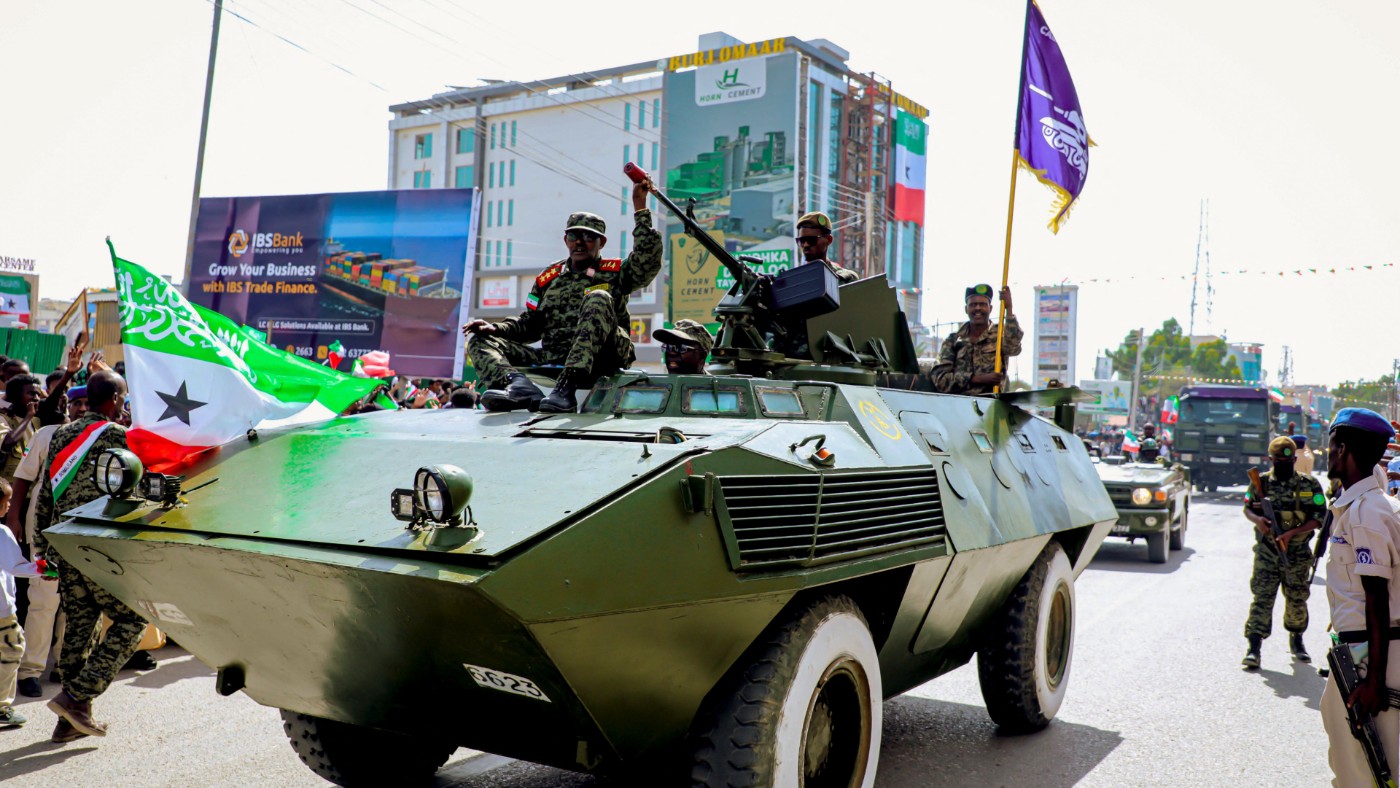
The diplomatic chain of events that led to this moment began in November 2023, when Somaliland President Abdirahman Abdullahi Mohamed held a closed-door meeting with Israeli Prime Minister Benjamin Netanyahu, Mossad Director David Barnea, and Foreign Minister Gideon Saar in Jerusalem. One month later, on December 26, 2023, Israel officially recognized Somaliland’s sovereignty, and Saar traveled to the breakaway region shortly after the announcement to cement bilateral ties. In reciprocation, Somaliland recognized Jerusalem as Israel’s capital and announced plans to open an embassy in the contested city, drawing vocal support from prominent pro-Israel figures in Western politics and media. Earlier this year, a delegation of high-profile Western backers including former Jewish Chronicle editor Jake Wallis Simons, Henry Jackson Society associate fellow Andrew Fox, and former UK Conservative Defence Secretary Gavin Williamson traveled to Hargeisa to attend Somaliland’s annual self-declared independence day celebrations, boosting the region’s global profile.
Somaliland’s leadership has held out high hopes that Israel’s recognition would open the floodgates for further international backing, with the United Arab Emirates, Ethiopia, India, Cyprus, and Georgia targeted as next potential recognizers. For months, lobbying efforts by former Trump administration officials Tibor Nagy and Peter Pham had raised optimism among Somaliland’s political circles that Washington might also shift its position to formal recognition. However, a congressional source familiar with internal discussions told Middle East Eye that the Trump administration never signaled any willingness to break with longstanding U.S. policy on the issue, even as Somaliland courted Washington with offers of access to valuable mineral resources including lithium and coltan, both critical to global technology and energy supply chains. Analysts add that former President Trump’s well-documented public hostility toward Somalia and Somali Americans — including racist remarks labeling Somalis as “low IQ” and “crooked,” and attacking Somali American U.S. Representative Ilhan Omar as “garbage” — made any policy shift unlikely from the start.
For Somaliland, the U.S. announcement marks a major setback to its decades-long push for independence. One anonymous Somali policy analyst who works with officials on both sides of the sovereignty dispute described the State Department report as a “consequential announcement that may effectively close the door on any lingering hopes of U.S. recognition.” The analyst noted that the decision aligns with Washington’s broader strategic ambitions across the entire territory of Somalia, arguing that “why settle for part of the cake when the whole cake remains within reach.”
Rooble Mohamed, a communications adviser for the Somaliland government, acknowledged the current reality of U.S. non-recognition, drawing a parallel to Washington’s informal relationship with Taiwan: the U.S. does not formally recognize Taiwan as a sovereign state, but maintains extensive unofficial ties and cooperation with Taipei, an arrangement Somaliland appears willing to accept for now. When asked about the risks of aligning with Israel amid global backlash over the ongoing military campaign in Gaza that has drawn widespread condemnation, Mohamed pushed back on criticism, noting “We are one of the Muslim countries of the world, I don’t think we are different. I think it is normal to have a relationship with Israel. It does not mean the Palestinians are our enemies.” He added that after decades of unrecognized statehood, formal sovereignty recognition remains Somaliland’s top priority, and the government sees no viable alternative to its current diplomatic outreach.
The strategic importance of Somaliland’s location on the Bab al-Mandab Strait, a critical chokepoint connecting the Red Sea and Indian Ocean that carries a third of the world’s global shipping trade, has grown dramatically in recent years amid rising Houthi activity in Yemen and escalating regional tensions with Iran. Even before the 2020 Abraham Accords normalized Israeli-UAE relations, Israeli military and intelligence operatives assisted the UAE in building a network of military bases across the Gulf of Aden to counter Iranian influence, with the key Somaliland port of Berbera serving as a central node in that network. While that network has been partially disrupted by a recent rift between the UAE and its former Yemen coalition partner Saudi Arabia, Berbera remains a key strategic asset for regional powers. Currently, UAE logistics giant DP World operates Berbera’s port, with a minority stake held by the UK government through its foreign investment arm, and Israeli and Somaliland officials are currently in talks to establish an Israeli military base at the site.
The U.S. State Department report explicitly acknowledges Somaliland’s strategic value, noting that its location “positions it as a potential partner on shared security interests, including freedom of commercial and military navigation from the Red Sea to the Indian Ocean.” The report also notes that Somaliland authorities have actively courted U.S. investment in natural resources and prioritized infrastructure development, trade, and economic growth, pointing to ongoing expansion of Berbera’s airport and seaport that will turn the site into a major logistics hub for landlocked Ethiopia, creating new commercial opportunities for U.S. firms. Even so, the report concludes that core challenges remain: the unresolved sovereignty dispute between Mogadishu and Hargeisa, and Somaliland’s refusal to cooperate with Somalia’s federal government, create persistent barriers to foreign investment, banking access, and expanded international trade.