标签: Asia

亚洲

  • Former defense firm executive sentenced to 13 years for bribery

    Former defense firm executive sentenced to 13 years for bribery

    In a recent ruling issued on Tuesday, the Nanyang Intermediate People’s Court in Henan Province has sentenced Liu Weidong, former deputy general manager of state-owned defense contractor China South Industries Group Corp, to 13 years in federal prison and ordered a 4 million yuan ($586,800) fine over convictions of bribery. Alongside the custodial sentence and monetary penalty, the court also ruled that all of Liu’s illegal gains and related illicit assets must be fully confiscated and transferred to the national state treasury.

    Court investigators established that over a 26-year period spanning from 1999 to 2025, Liu exploited his senior executive positions at two major state-owned enterprises — including his roles as deputy general manager of Dongfeng Motor Corp and deputy general manager of China South Industries Group Corp — to secure improper advantages for connected business entities and individual applicants on matters ranging from corporate business operations to internal personnel promotions. In exchange for these favors, Liu accepted direct bribes totaling more than 41.39 million yuan, according to official court documents.

    The court confirmed that Liu’s actions clearly meet the statutory criteria for the crime of bribery, noting that the scale of illicit funds involved qualified as “extremely large”, which would typically warrant severe punitive measures. However, justices opted to apply a lenient sentencing adjustment after accounting for multiple mitigating circumstances: Liu fully confessed to all known charges, voluntarily disclosed additional bribery details that had not been uncovered by investigating authorities prior to his statement, and cooperated fully with the prosecution by turning over all illegal proceeds proactively.

    A review of public career records shows the 59-year-old, a native of Hubei Province, launched his professional career in the automotive sector after graduating from the Wuhan University of Technology in his home region. He spent decades rising through the ranks at Dongfeng Motor Corp, Hubei’s state-owned automotive manufacturing giant, and earned a promotion to deputy general manager of the firm in 2001.

    In May 2018, Liu transferred to China South Industries Group Corp, one of China’s leading national defense contracting conglomerates and a major player in the domestic automotive industry, to serve as its deputy general manager. The first crack in his decades-long career came in February 2025, when he was formally placed under investigation for suspected severe violations of Communist Party of China discipline and national law. By July 2025, he had been expelled from the Communist Party of China and removed from all public office positions. Prosecutors formally filed bribery charges against him that November, and the Nanyang Intermediate People’s Court held a public open hearing on the case at the start of 2026, leading to this week’s final sentencing ruling.

  • Italy suspends defence cooperation deal with Israel

    Italy suspends defence cooperation deal with Israel

    On a Tuesday appearance at a Verona wine industry fair, Italian Prime Minister Giorgia Meloni confirmed a sweeping policy shift: Rome has moved to suspend the automatic five-year renewal of its bilateral defence cooperation framework with Israel, a decision that marks a notable break from the Italian right-wing government’s previously close alignment with Tel Aviv.

    The agreement in question, which first entered into force in April 2016, is structured to auto-renew every five years unless one party intervenes to halt the process. It covers a broad range of military collaboration, including cross-border exchanges of military equipment, joint training programs, and cooperative research and development initiatives for defence technology. According to leading Italian national news agency Ansa, Italian Defence Minister Guido Crosetto has already formalized the suspension in an official letter sent to his Israeli counterpart, Israel Katz.

    A source familiar with the internal deliberations confirmed to Reuters that the decision was finalized during a high-level meeting on Monday, which included Meloni, Foreign Minister Antonio Tajani, Defence Minister Crosetto, and Deputy Prime Minister Matteo Salvini. The policy change comes amid a rapidly escalating series of diplomatic spats between the two nations, triggered by recent Israeli military actions targeting positions in Lebanon that have directly impacted Italian interests.

    Just one week prior, the Italian government officially condemned an incident where Israeli forces opened fire on a convoy transporting Italian UN peacekeepers deployed in southern Lebanon. While no peacekeepers were injured in the strike, one Italian military vehicle was significantly damaged, prompting Rome to summon Israel’s top diplomat in Rome to register a formal protest.

    The escalation continued this week, with Foreign Minister Tajani undertaking an official visit to Beirut on Monday, where he publicly delivered a sharp rebuke of Israeli military operations in Lebanon. “Lebanon is a brother country that we hold in our hearts. That is why today I came to Beirut to convey to President Aoun Italy’s solidarity following the unacceptable attacks by Israel against the civilian population,” Tajani stated during his trip. “The Government will do everything possible to achieve peace and put an end to the suffering of the Lebanese people. We must avoid at all costs another escalation like the one in Gaza.”

    In response to Tajani’s public comments, Israeli officials summoned Italy’s ambassador to Tel Aviv in a reciprocal act of diplomatic protest, further deepening the rift between the two longtime partners. Until recent weeks, Meloni’s right-wing administration had positioned itself as one of Israel’s staunchest allies within the European Union, making this suspension of core defence cooperation one of the most significant public breaks from that alignment to date.

  • In Algeria, Pope calls on authorities ‘not to dominate, but serve the people’

    In Algeria, Pope calls on authorities ‘not to dominate, but serve the people’

    On a historic Monday that marked the first papal visit to Algeria in modern history, Pope Leo XIV wove together spiritual reflection and bold political messaging, blending calls for domestic reform with a global rebuke of exploitative power dynamics. The American-born pontiff, who traces his religious roots to the Augustinian Order founded on the teachings of the North African-born Christian thinker Saint Augustine, made history as the first leader of the Catholic Church to set foot on Algerian soil, the birthplace of his order’s namesake.

    The landmark day was not without shadow: two major events dominated headlines alongside the visit: a high-profile public clash with U.S. President Donald Trump over the pontiff’s opposition to the war on Iran, and a failed double suicide bombing just 50 kilometers outside the capital Algiers that marked the first major extremist attack in the country since 2012.

    Beginning his itinerary in the capital Algiers, where he was welcomed with full official honors, Pope Leo XIV first offered prayers at the iconic Martyrs’ Monument, a memorial honoring the thousands who died during Algeria’s 1954–1962 war of independence from French colonial rule. Standing at the site that carries deep national and diplomatic resonance, amid ongoing tensions that continue to strain Franco-Algerian diplomatic relations, he framed lasting peace as a project rooted in reconciliation. “Peace is only possible through forgiveness,” he told assembled guests. “The true struggle for liberation will only be definitively won when peace of hearts has been achieved.”

    Moving from the memorial to a formal address before Algeria’s top political leadership, including President Abdelmadjid Tebboune, and the international diplomatic corps, the pontiff turned his attention to domestic political reform. Three leading global non-governmental organizations, including Human Rights Watch, had publicly called on Pope Leo XIV in the days leading up to the visit to raise human rights concerns with Algerian officials, who have faced sustained accusations from rights defenders of cracking down on opposition since the 2019 Hirak pro-democracy movement that forced longtime authoritarian leader Abdelaziz Bouteflika from power. Rights groups document widespread arrests, detentions and convictions of activists, journalists and government critics in the years since the movement.

    In his address, Pope Leo XIV urged Algerian authorities to embrace greater political openness and empower a free civil society, particularly for the country’s large youth population. “The true strength of a country lies in the cooperation of everyone in achieving the common good. The authorities are called upon not to dominate, but to serve the people and their development,” he said. “I therefore urge those of you who hold authority in this country not to fear this prospect and to promote a vibrant, dynamic and free civil society, in which young people, in particular, are recognised as having the capacity to contribute to broadening the horizon of hope for all.”

    The pontiff also used the platform to deliver a veiled rebuke of global power politics, condemning “ongoing violations of international law and neo-colonial tendencies” in an implicit critique of Western foreign policy in the Middle East. The comment came amid an intensifying public feud with Trump, who has launched repeated attacks on Pope Leo XIV over his increasingly vocal opposition to the U.S.-Israeli war on Iran. On the Sunday before the visit, Trump publicly stated he was “not a fan of Pope Leo” and falsely claimed the pontiff supported nuclear proliferation. On Monday, the U.S. president doubled down, refusing to walk back his comments and labeling the pontiff “weak.”

    Speaking to reporters on his flight from Rome to Algiers, Pope Leo XIV pushed back on the conflict without escalating it, saying he had “no intention of entering into a debate” with Trump and was not “afraid” of his administration. “The Church has a moral duty to speak out very clearly against war,” he said. “I don’t think the message of the Gospel should be distorted as some are doing.”

    As the pontiff delivered his address in Algiers, news broke of a coordinated attack in Blida, a city located roughly 50 kilometers south of the capital. Two suicide bombers detonated their explosive devices, killing themselves: one outside the city’s central police station, and another roughly 500 meters from the first site. Four additional unexploded bombs targeting police and public spaces were successfully defused by security forces, and an unconfirmed number of civilians were injured in the incident. Algerian authorities had not issued an official statement on the attack as of Monday evening. Security analysts noted that the heavy security deployment around the pope’s visit in Algiers likely pushed attackers to shift their target to the neighboring city.

    Despite the unrest, the visit proceeded as scheduled, with Pope Leo XIV traveling to Annaba, the site of ancient Hippo where Saint Augustine served as bishop, for scheduled events on Tuesday. In his welcoming remarks on Monday, Tebboune expressed Algeria’s “immense pride” in hosting the pontiff on the land of Saint Augustine, whom he called “your spiritual father and one of the most luminous minds in the history of human thought.” Catholics make up less than 0.01% of Algeria’s population, where Sunni Islam is the official state religion, with most Catholic residents being European expatriates or sub-Saharan African students. Tebboune also praised the pope’s “courageous stance” against Israel’s military campaign in Gaza and the humanitarian suffering unfolding across the Gulf region.

    The Algeria stop is the first leg of Pope Leo XIV’s inaugural multi-nation trip to Africa, which will continue with visits to Cameroon, Angola and Equatorial Guinea before the pontiff returns to Rome on April 23.

  • New Mossad chief backs Gaza occupation and once ‘used’ a teenager in operation

    New Mossad chief backs Gaza occupation and once ‘used’ a teenager in operation

    Israel’s advisory committee for senior public appointments has given the green light to Roman Gofman, a close ally of Prime Minister Benjamin Netanyahu, to take the helm of the country’s iconic intelligence agency Mossad, capping a rapid military rise that has been overshadowed by bitter controversy over his past conduct, hardline political views, and allegations of power abuse. Gofman, 49, will assume a five-year term starting in June, succeeding outgoing director David Barnea, who has publicly opposed his appointment.

    Born in the Soviet Union’s Belarus, Gofman immigrated to Israel with his family in 1990 at age 14. Five years after arriving, he enlisted in the Israel Defense Forces’ armored corps, climbing steadily through the ranks to earn a promotion to major general in early 2024. His career has spanned combat deployments across southern Lebanon, the occupied West Bank, and the Gaza Strip, and he has long been associated with far-right ideological circles: as a young pre-military trainee, he studied at the Bnei David yeshiva in Eli, an illegal Israeli settlement in the occupied West Bank, an institution notorious for promoting extremist Jewish supremacist views. Gofman himself has publicly credited the yeshiva with shaping his core ideological beliefs about Israel.

    Gofman’s most high-profile military experience came during the October 7, 2023, Hamas-led attack on southern Israel, when he was wounded in a firefight with Palestinian fighters near his home in Ashdod. Surveillance footage captured him exchanging fire before sustaining a leg injury and pulling back, but he returned to duty shortly after recovering. Reflecting on the surprise attack, he argued that even the most formidable military forces face unexpected breaches, and that proactive initiative is the only way to prevent future surprises.

    As the Israeli military campaign in Gaza unfolded after October 7, Gofman emerged as one of the most outspoken hardliners in Israeli security circles. He drafted an official plan calling for the full reoccupation of the entire Gaza Strip, and has argued that Israel should maintain permanent control over the enclave at the end of the current conflict. He has previously criticized the Israeli military for what he frames as excessive caution in deploying ground forces across multiple fronts, from Gaza to Lebanon to Syria, and has publicly praised Orde Wingate, a British Mandate-era officer famous for developing brutal counterinsurgency tactics against Palestinian groups alongside early Zionist militias, framing decisive, reality-altering military action as the core of Israeli strategy. In a 2019 academic proposal, he even controversially suggested that Israel should sell nuclear warheads to Egypt, Saudi Arabia and Turkey to counter Iran’s nuclear program, a view far outside mainstream Israeli security policy.

    Netanyahu tapped Gofman to serve as his personal military secretary in April 2024, marking his entry into the prime minister’s inner circle. But his nomination to lead Mossad has sparked fierce opposition from across Israel’s political and security establishment, centered on two core sets of concerns: his lack of prior intelligence experience, and multiple allegations of professional and ethical misconduct during his military career.

    The most explosive controversy surrounds a 2022 intelligence operation, when Gofman commanded the 210th Bashan Regional Division on the Golan Heights. According to investigative reports, Gofman instructed military intelligence personnel to provide 17-year-old Israeli civilian Ori Elmakayes with classified information to publish on social media as part of a covert influence campaign targeting Iran, Hezbollah, and Hamas. After Elmakayes published the material, Israeli police arrested him on charges of leaking state secrets, and he spent 18 months in pre-trial detention.

    Gofman initially denied to military investigators that he knew of Elmakayes’ involvement, but the case against the teenager collapsed when evidence confirmed he had been acting on direct military orders approved by Gofman. Gofman has since denied authorizing the release of truly sensitive material and claims he did not know Elmakayes was a minor. Elmakayes, however, has slammed Gofman for throwing him aside to protect his own career.

    “Roman Gofman used me illegally and immediately afterwards disowned me, abandoned me and did not put an end to the ongoing nightmare I went through,” Elmakayes wrote on the social platform X following Sunday’s approval vote. “Someone who abandoned a 17-year-old boy will also abandon Mossad agents.”

    Committee chair Asher Grunis, a former president of Israel’s Supreme Court, was the most prominent official to oppose Gofman’s approval, issuing a scathing rebuke of his conduct in the Elmakayes case. “The use of a minor Israeli civilian constitutes an extremely serious flaw and raises a moral-ethical concern. It amounts to a breach of integrity,” Grunis argued, though he was outvoted by the committee’s three other pro-appointment members. Outgoing Mossad chief Barnea has also joined the opposition, labeling Gofman’s actions in the case as an abuse of power.

    Additional allegations of misconduct date back to Gofman’s tenure as a West Bank regional commander between 2015 and 2017, when he reportedly ordered the recruitment of Palestinian informants near Beit Ummar without following mandatory legal authorization processes; his directive was later overturned by military leadership.

    Beyond the personal misconduct claims, many current and former Israeli security and political figures argue Gofman’s appointment is part of a deliberate effort by Netanyahu to politicize Israel’s independent intelligence and security establishment by installing loyalists to top posts. Gofman has become a trusted confidant of Netanyahu over the past two years of repeated Israeli military campaigns across the region, and Israeli media reports confirm the prime minister has full confidence in him, even assigning him sensitive behind-the-scenes diplomatic missions, including unannounced visits to Russia to maintain ties with President Vladimir Putin. He also played a central role in secret Israeli-Syrian talks in January 2025.

    “Prime Minister Benjamin Netanyahu’s decision to appoint his military secretary, Major General Roman Gofman, as head of the Mossad is a continuation of his politicization and takeover of the intelligence community and the security establishment,” veteran military commentator Yossi Melman warned in December, noting that the appointment would mark another key institution brought under Netanyahu’s direct political control. Former Israeli army chief and opposition MP Gadi Eisenkot has echoed these criticisms, arguing top security posts are now being handed out as rewards for loyalty to the prime minister’s political agenda, rather than on the basis of professional merit. Former senior Mossad official Rami Eigra called the nomination politically motivated, warning it will likely erode the agency’s operational effectiveness and increase the risk of major failures.

    The battle over Gofman’s appointment is far from over. Elmakayes and multiple Israeli human rights and pro-democracy NGOs are preparing to petition the Supreme Court to block the nomination, according to reports from Haaretz. Some Israeli defense establishment insiders told Ma’ariv they believe the court could strike down the appointment, which would force Netanyahu to ask Barnea to extend his term for several weeks or months while a new candidate is selected.

  • Smotrich refers to Nazis as he brands Germany ‘hypocrites’ over Israeli settler criticism

    Smotrich refers to Nazis as he brands Germany ‘hypocrites’ over Israeli settler criticism

    A sharp diplomatic clash has erupted between a senior far-right Israeli cabinet minister and Germany’s chancellor ahead of Israel’s annual Holocaust Remembrance Day, centered on escalating Israeli settler activity and violence in the occupied West Bank. Israeli Minister Bezalel Smotrich, a prominent advocate for full Israeli annexation of the West Bank, launched a blistering attack on German Chancellor Friedrich Merz after Merz publicly raised concerns about rampant settler attacks and stated he had made clear to Israeli Prime Minister Benjamin Netanyahu in a recent phone call that any de facto annexation of the West Bank is unacceptable.

    Writing on the social platform X on April 13, 2026, just ahead of Holocaust Remembrance Day, Smotrich weaponized the memory of the Nazi Holocaust that killed six million European Jews to accuse Merz and Germany of rank hypocrisy. Instead of lecturing Israel on moral conduct, Smotrich argued, the German chancellor should “bow his head and apologise a thousand times on behalf of Germany” for the atrocities of the Holocaust. He doubled down on his criticism of European leadership, claiming “the days when Germans dictated to Jews where they were permitted or forbidden to live are over and shall not return. You will not force us into ghettos again, certainly not in our own land.” Smotrich, who has previously labeled Palestinians “the Nazis of our generation,” added that Israel’s presence in its historical and biblical homeland is a rebuke to all who have sought to destroy the Jewish people, and “we do not apologise for it for a single moment.”

    Merz’s comments reflected growing international alarm over the unprecedented acceleration of Israeli settlement expansion in the West Bank, a trend that has sharpened dramatically since the outbreak of the Israel-Gaza war in 2023. Data from the Israeli anti-settlement advocacy group Peace Now shows that the Israeli government approved 54 new and existing settlements in 2025 — a staggering all-time high that shattered the previous record of nine approvals set just one year earlier. Of these 54 expansions, 26 were retroactively legalized outposts that had originally been built without official government authorization. The group also recorded a 40% surge in new unauthorised outposts, reaching 86 in 2025, which works out to an average of one to two new outposts established every week across the territory.

    United Nations data further underscores the human cost of rising settler activity. A UN report released in mid-March 2026 documented that between November 2024 and October 2025 alone, more than 36,000 Palestinians were displaced from their homes in the West Bank amid consistent and escalating settler attacks. Over that same 12-month period, researchers recorded 1,732 separate incidents of settler violence that resulted in casualties or property damage — a 25% increase compared to the previous year.

    Smotrich has long been one of the most outspoken and hardline supporters of full Israeli annexation of the West Bank, and has publicly pushed for policies that would encourage Palestinians to leave the territory. In a February 2026 address to his Religious Zionism party and West Bank settlement leaders, Smotrich called for the full cancellation of the 1993 Oslo Accords, the framework that established the Palestinian Authority to govern Palestinian populated areas of the West Bank and Gaza. “Destroy the idea of an Arab terror state; finally, formally and practically cancel the cursed Oslo Accords and get on the path of sovereignty, while encouraging migration both from Gaza and from Judea and Samaria,” he stated, using the Israeli nationalist term for the West Bank. “There is no other long-term solution.”

  • China’s Beinao-1 brain-computer interface used in livestreamed surgery

    China’s Beinao-1 brain-computer interface used in livestreamed surgery

    On a Monday in April 2026, a landmark medical event unfolded in Beijing’s Fengtai District, bringing cutting-edge domestic neurotechnology into the global spotlight. Hundreds of neurological and medical experts from across the country tuned into a public livestream broadcast from Beijing Tiantan Hospital, where surgeons successfully deployed Beinao-1 — China’s independently developed high-performance semi-invasive implantable brain-computer interface (BCI) system — during a live surgical procedure.

    The livestream delivered crisp, high-definition footage of every critical stage of the operation, allowing the gathered observing experts to track and deliberate on key technical decisions in real time. Core points of discussion among the professional audience included the nuanced selection of surgical access routes tailored to the patient’s anatomy, the precise calibration of electrode implantation depth to maximize signal capture, and targeted strategies for debugging and stabilizing neural signal output after implantation.

    This public demonstration marks a major milestone for China’s domestic BCI development, showcasing the maturity of locally built neurotechnology that can be integrated into routine clinical surgical practice. Unlike fully invasive BCI systems that require penetrating deep brain tissue, or non-invasive options that often suffer from weak, distorted signal quality, Beinao-1’s semi-invasive design strikes a carefully balanced middle ground, lowering surgical risk while maintaining high-fidelity neural signal capture — a key advantage for widespread clinical adoption. The livestreamed procedure also created an unprecedented opportunity for cross-institutional knowledge sharing, allowing hundreds of experts nationwide to observe and engage with the implementation of a new domestic BCI system without travel, accelerating the dissemination of cutting-edge neurotech surgical techniques across China’s medical community.

  • ‘Pipe dream’: Turkey’s plan to redraw Middle East energy routes after Iran

    ‘Pipe dream’: Turkey’s plan to redraw Middle East energy routes after Iran

    Nearly a month into the Israel-Hamas conflict, Iran’s strategic control over the Strait of Hormuz has sent global energy markets into extreme volatility, prompting regional players to scramble for alternative supply routes to bypass the critical chokepoint. Turkey, a longstanding regional energy crossroads, is positioning the ongoing crisis as a pivotal opportunity to advance a slate of long-proposed energy infrastructure projects that would redirect Middle Eastern oil and gas to European and global markets away from the Strait of Hormuz.

    During a live interview with Anadolu Agency last week, Turkish Energy Minister Alparslan Bayraktar laid out his full vision for these alternative routes, highlighting multiple projects that have sat dormant for years for political and economic reasons. Top of his list is connecting Iraq’s oil-rich southern Basra region to the existing underutilized Iraq-Turkey pipeline, which currently carries 1.5 million barrels of crude per day from Iraq’s northern Kirkuk field to Turkey’s Mediterranean export terminal at Ceyhan. Bayraktar also revived plans for a massive overland gas pipeline that would link Qatar’s giant North Field to Turkey, transiting Saudi Arabia, Jordan and Syria, before sending supplies onward to European markets. He also pushed for progress on the long-discussed Trans-Caspian Gas Pipeline, which would carry 80 billion cubic meters annually of Turkmen natural gas across the Caspian Sea to Azerbaijan, then through Georgia to Turkey and European markets. Additional proposals include connecting Syrian oil fields to the existing Iraq-Turkey pipeline network and building a high-voltage electricity interconnector linking Saudi Arabia to Turkey via Jordan and Syria, aligning with a broader Saudi plan to connect Gulf power grids to Europe.

    Bayraktar emphasized that these projects would create stable alternative export routes for producers struggling with Hormuz-related disruptions, noting that the ongoing crisis has underscored the urgent need for diversified supply chains. “We are opening an alternative export route for you,” he said, adding that he hopes the current market volatility will push global and regional stakeholders to take the long-stalled proposals seriously. “But unfortunately, what we have been saying has not found a response up to now. Hopefully, this crisis will lead everyone into a process where they pause, think more seriously, and we can implement these projects.”

    Already, neighboring producer Saudi Arabia has leveraged its domestic East-West Pipeline to move crude through the Red Sea, bypassing the Strait of Hormuz entirely, while Iraq has begun exploring overland export options. The urgency for alternative routes grew after QatarEnergy declared force majeure on multiple long-term LNG supply contracts to customers across Europe and Asia last month, following Iranian targeting of Qatari energy facilities near the strait.

    However, energy experts have cast doubt on the feasibility of many of Turkey’s proposed projects, painting a mixed outlook that sees some schemes as relatively actionable while others face steep political, economic and security barriers. The Trans-Caspian Gas Pipeline, for example, is now more politically viable than it has been in decades following improved relations between Azerbaijan and Turkmenistan, but it still faces significant unresolved hurdles. The project requires a 300-kilometer subsea pipeline across the Caspian Sea, connecting the Turkmen port of Turkmenbashi to Azerbaijan’s capital Baku, where it could link to existing export infrastructure including the South Caucasus Pipeline and Trans-Anatolian Pipeline. Experts estimate the subsea segment alone would cost roughly $2 billion, and scaling the pipeline to a commercially viable 20-30 billion cubic meters per year would require billions more in upstream development, compression upgrades and downstream expansion. Securing financing has also proven difficult, as European markets are increasingly shifting to LNG imports, and the project lacks long-term purchase commitments that would de-risk investment. While Azerbaijan and Turkmenistan have improved ties, both have yet to formally ratify the 2018 Convention on the Legal Status of the Caspian Sea, which would clear legal barriers for the pipeline and reduce opportunities for Russia and Iran to block the project.

    The proposed Qatar-Turkey gas pipeline, first floated as early as 2009, faces even steeper challenges. After the fall of Bashar al-Assad’s regime, which blocked the project for years under Russian pressure, Turkey has pushed to revive it, but Qatar has repeatedly signaled it has no interest in moving forward. A Qatari foreign ministry statement in January 2025 confirmed the country remains committed to its existing LNG export model, which offers greater market flexibility than a fixed pipeline route. Justin Dargin, a senior fellow at the Doha-based Middle East Council on Global Affairs, noted that the project was originally estimated to cost $10-12 billion, but current inflation, security risks and political uncertainty would push the total price tag to $15 billion or more. The 1,500-kilometer pipeline crosses multiple national borders, requiring decades of sustained political alignment between Saudi Arabia, Jordan, Syria and Turkey – a high bar in the volatile current regional environment. It would also expose Qatar to political transit risks that the country has spent decades avoiding, while its existing LNG infrastructure allows it to sell to global spot markets and diversify its customer base. “A multi-country pipeline would expose Qatar to exactly the kind of political leverage it has spent decades minimising,” Dargin explained. He added that while Gulf producers are increasingly expanding domestic bypass capacity like Saudi Arabia’s East-West Pipeline and the UAE’s Habshan-Fujairah pipeline, the Qatar-Tur project would not operate within a single country, leaving it vulnerable to disruption from state and non-state actors aligned with Iran.

    Some of Turkey’s smaller proposals, however, are viewed as far more feasible. The plan to connect Syrian oil fields to the existing Iraq-Turkey pipeline, which currently has massive unused capacity, is seen as a relatively achievable near-term fix. Syria currently produces 100,000 to 120,000 barrels of crude per day, down from nearly 400,000 bpd before the 2011 civil war, so connecting existing output to the Turkey route would require relatively modest infrastructure investment. Wael Alzayat, executive director of the US-Syria Business Council, noted that while both Syrian and Turkish officials back the idea, obstacles remain: key oil producing areas are still controlled by the Syrian Democratic Forces, with no complete handover to the new Damascus government, and armed groups including PKK elements and remaining Islamic State cells pose ongoing security threats. Alzayat added that developing Syrian production to increase output would require a few billion dollars in outside investment, which Damascus cannot currently afford, but connecting existing fields to the pipeline is technically straightforward. “It is more feasible and realistic than a Qatar-Turkey pipeline crossing Syria,” he said.

    In Iraq, the proposal to extend the existing Iraq-Turkey pipeline from Kirkuk down to Basra has also gained new urgency amid the Hormuz crisis. The Iraqi government needs $6.3 billion in monthly oil revenue to cover public expenditures, and lost more than $5.5 billion in March alone, highlighting the urgent need for additional export capacity. Currently, Iraq exports only 200,000 barrels per day through the Kirkuk-Ceyhan route, far less than the 3.5 million barrels per day it needs to cover monthly costs. Iraqi energy expert Salam Jabbar Shahab noted that political willingness to move forward with the Basra extension has grown substantially since the Hormuz crisis began, as the route would open a new outlet for southern Iraqi crude to European and Asian markets that bypasses the strait entirely. The biggest barriers, he added, are financing and security: the project is estimated to cost between $6 billion and $10 billion, which Iraq cannot cover on its own and would require loans from international financial institutions, and the pipeline would run from southern to northern Iraq through multiple restive regions, leaving it vulnerable to attacks from armed groups and political bargaining amid Iraq’s fragmented political landscape. Still, Shahab noted that the current crisis has given Iraqi policymakers a strong pragmatic incentive to move the project forward quickly.

  • Calls for diplomacy grow amid Hormuz blockade

    Calls for diplomacy grow amid Hormuz blockade

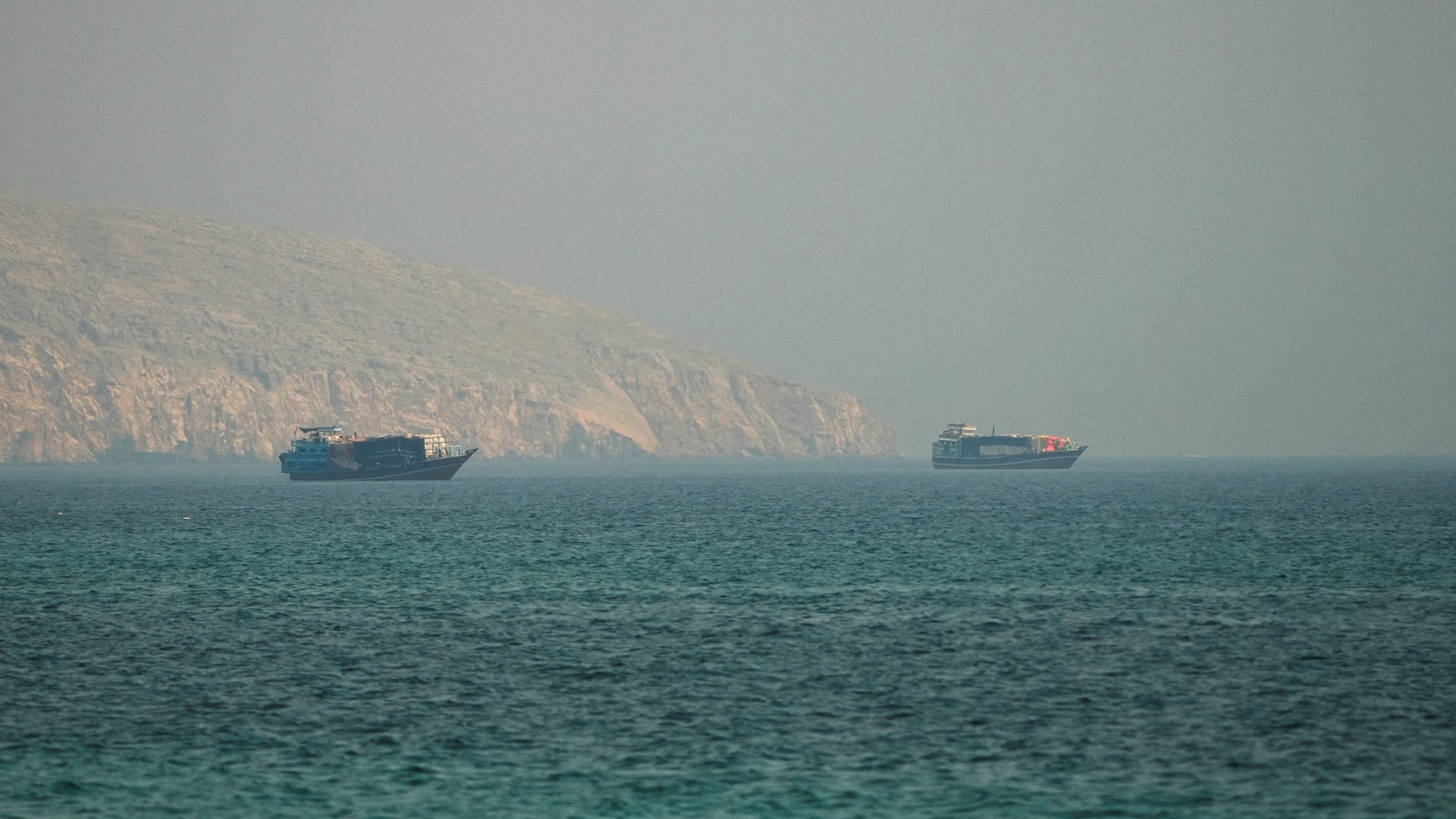
    Tensions in the strategic Strait of Hormuz have sparked urgent global calls for diplomatic de-escalation, as Pakistan leads intensive behind-the-scenes efforts to organize a second round of high-stakes negotiations between the United States and Iran. The push for renewed dialogue comes even after Washington implemented a controversial bilateral naval blockade of Iranian ports this week, a move Tehran has decried as state-sponsored piracy that risks igniting full-scale conflict across the Persian Gulf.

    The first round of negotiations, held in Islamabad over the weekend, ended without a breakthrough, leaving key gaps between the two longtime adversaries over the future of Iran’s nuclear program. But speaking to Fox News on Monday, US Vice President JD Vance, who led the American delegation, struck a surprisingly optimistic note, saying the talks had made significant progress and that Washington had laid out clear terms for potential compromises with Tehran. “I really think the ball is in the Iranian court, because we put a lot on the table,” Vance said. A second senior US administration official later confirmed that ongoing work to salvage a diplomatic agreement is still moving forward.

    The blockade, which officially entered into force on Monday, has already triggered sharp Iranian retaliatory threats, creating a dangerous new standoff that carries severe ramifications for the global economy. One of the world’s most critical chokepoints for global oil trade, any prolonged disruption around Hormuz could send energy prices soaring and tip the already fragile global economy into recession. On Tuesday, the International Energy Agency issued a stark warning: global crude oil demand is on track to see its steepest second-quarter decline since the onset of the COVID-19 pandemic in 2020, fueled in large part by uncertainty over the Gulf standoff.

    In a related development that underscores rising security risks in the region, the US Naval Institute’s news service USNI News reported Tuesday that the USS George H.W. Bush aircraft carrier strike group is rerouting its journey to the Arabian Sea along the African coast, deliberately avoiding the Red Sea and the Bab el-Mandeb Strait. The alternate path bypasses the key waterway that has seen repeated drone and missile attacks on American shipping by Yemen’s Houthi movement between 2024 and 2025.

    Tehran has fiercely pushed back against the US blockade, with an Iranian military spokesman condemning any US restrictions on international shipping through the Gulf as illegal acts of piracy. The spokesman issued a stark warning: if Iranian commercial ports come under sustained blockade, no shipping lanes or ports across the Persian Gulf and Gulf of Oman will remain safe from retaliation.

    The core sticking point in negotiations remains Iran’s nuclear program. US President Donald Trump has repeatedly stated that any final agreement must permanently end Iran’s ability to develop a nuclear weapon, while Iranian officials have consistently reaffirmed that their country’s nuclear activities are exclusively for peaceful civilian energy and medical purposes. Trump told reporters outside the Oval Office this week that Iranian officials had already reached out to signal they are eager to reach a negotiated settlement. “I can tell you that we’ve been called by the other side. They’d like to make a deal. Very badly, very badly,” Trump said.

    According to reports from The New York Times, during the Islamabad talks, US negotiators pushed for a 20-year full suspension of Iran’s uranium enrichment activities, while Iran countered with a proposal for a five-year freeze on its nuclear program — an offer US officials rejected out of hand.

    Pakistan, which has served as the neutral host for the talks between the two rivals, has ramped up its diplomatic outreach to bridge the remaining gaps. Pakistani Prime Minister Shehbaz Sharif confirmed Monday that “all-out efforts are underway” to reach a deal that would end hostilities and that the current fragile ceasefire between the two sides remains intact. Multiple anonymous diplomatic sources confirmed Tuesday that US and Iranian negotiating teams could return to Islamabad as early as this week to resume discussions, just days after their first round of talks — the highest-level engagement between the two nations since 1979 — ended without agreement. “Efforts are underway to bring both parties back to the negotiating table. Of course, we want them back in Islamabad, but the venue and date are not yet final,” one source told Agence France-Presse.

    Regional analysts say both sides are facing mounting pressure to step back from the brink of full-scale war. Mohamad Elmasry, a professor at the Doha Institute for Graduate Studies, noted that both Washington and Tehran appear to be searching for a face-saving “off-ramp from the war” that allows both sides to claim victory without further conflict. “This war has been extremely costly for the parties involved and far beyond,” he told Al Jazeera. “Iran has greater leverage than it did at the start of the war, but I have no doubt they would seek an end to hostilities.”

    Iranian President Masoud Pezeshkian has reaffirmed Tehran’s position that any future talks must proceed strictly within the framework of international law, according to Iran’s state-owned broadcaster IRIB. Russia, which has positioned itself as a potential mediator in the talks, confirmed Tuesday that its longstanding offer to take custody of Iran’s enriched uranium as part of a final nuclear deal remains on the table. “The offer still stands, but it has not yet been acted upon,” Kremlin spokesman Dmitry Peskov told Russian news agency RIA Novosti.

    Elsewhere in the Middle East, tensions remain high along the Lebanon-Israel border. Hezbollah leader Naim Qassem urged Lebanese officials on Tuesday to cancel a planned diplomatic meeting with Israeli representatives in Washington, reaffirming the group’s longstanding rejection of any direct negotiations with Israel. The call comes amid sustained Israeli airstrikes on southern Lebanon that have killed more than 2,000 people in the country since late February.

  • CAS Space launches 12th Kinetica 1 rocket

    CAS Space launches 12th Kinetica 1 rocket

    China’s leading commercial aerospace manufacturer CAS Space has marked another key milestone in its domestic commercial launch program, successfully conducting the 12th flight mission of its Kinetica 1 solid-fuel rocket series on April 14, 2026.

    Liftoff of the mission was timed for 12:03 p.m. Beijing Time, lifting off from the Jiuquan Satellite Launch Center located in the vast Gobi Desert of northwestern China. After a smooth ascent sequence, the rocket accurately inserted eight remote-sensing satellites into their pre-planned target orbits, completing all planned mission objectives. This launch also stands as China’s 24th orbital space launch mission carried out in 2026, underscoring the country’s steady, high-frequency pace of space activity this year.

    Since the Kinetica 1 program entered operational service, CAS Space has accumulated an impressive track record across its 12 missions. To date, the rocket model has enabled the company to deploy a total of 92 satellites for a wide range of commercial and institutional clients, with the aggregate mass of all deployed payloads exceeding 12 metric tons.

    As a workhorse solid-fuel launch vehicle designed for small-to-medium satellite deployment missions, the Kinetica 1 has well-defined specifications tailored to commercial market demands. The rocket measures 30 meters in total length, with a core diameter of 2.65 meters and a liftoff mass of 135 tons. It is capable of transporting a combined payload mass of up to 1.5 tons into a standard 500-kilometer sun-synchronous orbit, a common orbital plane used for most remote-sensing and Earth observation satellites.

    Beyond its technical capabilities, CAS Space has scaled up production and response capacity to meet growing commercial demand for launch services. Meng Xiangfu, deputy project manager for the Kinetica 1 program, noted that the company’s existing production lines support an annual output of more than 10 Kinetica 1 rockets. From the point a client submits a launch order to full mission preparation, the company can complete all pre-launch preparations in as little as six months, offering flexible, fast-turnaround services that align with the rapid growth of the global small satellite market.

  • Celebrating International Day at Wuxi school

    Celebrating International Day at Wuxi school

    On April 12, a vibrant cross-cultural celebration unfolded at Boston International School located in Xinwu District, Wuxi, Jiangsu Province, turning the campus’s central open plaza into a bustling, immersive miniature “global village” for the school’s yearly International Day gathering.

    Organized by the school’s community of students and faculty, the one-day event brought global diversity right to the school grounds, with more than 50 interactive booths curated to showcase cultural heritage from over 20 countries and regions across the world. Attendees wandered through the plaza, exploring traditional handcrafts unique to different cultures, joining lighthearted cultural games, and sampling a wide spread of authentic international cuisines. Every booth was filled with one-of-a-kind cultural artifacts and interactive experiences that highlighted the distinct traditions of the nations on display, wrapping the entire campus in an atmosphere of joyful cross-cultural exchange.

    The annual International Day has become a signature tradition at Boston International School, designed to foster global awareness, cultural empathy, and inclusive community among students from diverse backgrounds. By giving participants a hands-on opportunity to engage with global cultures outside of textbooks, the event creates a dynamic learning space that celebrates difference while building connections between students of all nationalities. This year’s gathering drew enthusiastic participation from both students and teaching staff, with many attendees noting that the immersive experience deepened their understanding of global cultural diversity and strengthened the school’s inclusive, interconnected community.