标签: Asia

亚洲

  • Maika Hamano scores to give Japan 1-0 win over USWNT

    Maika Hamano scores to give Japan 1-0 win over USWNT

    SEATTLE – In an upsetting international friendly match that closed out the first leg of their three-game series in the Pacific Northwest, Japan’s women’s national team delivered a 1-0 defeat to the reigning power U.S. Women’s National Team (USWNT) on Tuesday, snapping the Americans’ 10-match undefeated winning run.

    The result marked the USWNT’s first loss since a 2-1 away defeat to Portugal back in October 23, 2025, and ended a 41-game streak of matches where the American side had avoided being held scoreless. The Tuesday defeat comes just three days after the USWNT claimed a tight 2-1 win over Japan in a Saturday meeting in San Jose, ending a prior losing run to the Japanese side that dated back to Japan’s 2-1 victory over the USWNT in the 2025 SheBelieves Cup final.

    The game’s only goal came in the 27th minute, when 21-year-old forward Maika Hamano outmaneuvered American defender Lilly Reale with a clever feint, then unleashed a curling left-footed strike that sailed over the outstretched glove of U.S. goalkeeper Phallon Tullis-Joyce to find the top right corner of the net.

    USWNT head coach Emma Hayes made the controversial call to drastically reshuffle her starting lineup from Saturday’s victory, opting to rest star starters Sophia Wilson and Trinity Rodman among other key players. All four rested players — Wilson, Rodman, center back Tierna Davidson, and defender Gisele Thompson — entered the match as second-half substitutes in the 65th minute as Hayes looked to spark an equalizing comeback.

    The substitution carried extra storylines for two veterans: Davidson made her first appearance for the national team since February 2025, after suffering a torn ACL during a club match with Gotham FC in March of that year that sidelined her for more than a year. For Wilson, the appearance marked her second consecutive cap for the USWNT following the birth of her daughter last fall, after she had been out of international action since October 2024.

    Tuesday’s historic match also carried off-pitch significance for Seattle sports: it was the first time the USWNT had played at Lumen Field since 2017, when the team declined to return due to longstanding concerns over the stadium’s old artificial turf. The venue recently installed a new natural grass surface in preparation for this summer’s FIFA Women’s World Cup, making the friendly the first USWNT match on the new playing surface.

    A total of 36,128 fans packed Lumen Field for the match, breaking the all-time attendance record for a standalone women’s soccer match in Seattle. The previous record of 34,130 was set in 2023 during Megan Rapinoe’s retirement match with the NWSL’s Seattle Reign.

    The two sides will now travel to Commerce City, Colorado, to play the third and final match of their friendly series this coming Friday, where the USWNT will look to rebound from Tuesday’s upset defeat.

  • IMF warns Trump’s Iran war could unleash global recession

    IMF warns Trump’s Iran war could unleash global recession

    As international financial leaders gather in Washington D.C. for the International Monetary Fund’s annual Spring Meetings, the institution has issued a stark warning: the ongoing US-Israeli military conflict in Iran threatens to derail global economic momentum, trigger a new energy crisis, and push vulnerable economies into deep recession. The grim update, included in the IMF’s latest *World Economic Outlook*, comes as independent analysts and policy experts warn the long-term financial cost of the conflict to US taxpayers alone could top $1 trillion, with disproportionate harm falling on low-income and vulnerable communities worldwide.

    Prior to the outbreak of hostilities, the IMF had upgraded its 2026 global growth forecast to 3.4%, buoyed by private sector adaptation to ongoing trade shifts, lower-than-expected US tariffs, targeted fiscal support, favorable financing conditions, and a productivity boom driven by emerging artificial intelligence technologies. That positive momentum has now come to a sudden halt, according to Pierre-Olivier Gourinchas, the IMF’s director of research. The conflict has already closed the Strait of Hormuz, a critical chokepoint through which roughly 20% of the world’s daily oil supplies pass, and damaged key energy infrastructure across the hydrocarbon-rich Middle East. If hostilities continue, the region’s central role in global energy markets makes a full-blown energy crisis increasingly likely.

    Even in the best-case scenario of a quick end to fighting, the IMF projects lasting damage to the global economy. Under a limited conflict framework, global growth is forecast to hit just 3.1% in 2026 and 3.2% in 2027, figures that fall below recent growth outcomes and sit well below pre-pandemic averages. Global inflation, which had been on a downward trajectory, is projected to tick back upward in 2026 before resuming its decline in 2027. The brunt of the impact will fall on emerging market and developing economies, particularly commodity-importing nations that already faced preexisting financial vulnerabilities. Downside risks dominate the forecast: a prolonged conflict, deepening geopolitical fragmentation, underperformance of AI-driven productivity gains, or renewed trade tensions could further weaken growth and roil global financial markets. High public debt levels and eroded policy space leave many nations with little buffer to absorb new shocks. The IMF urges policymakers to prioritize economic adaptability, policy credibility, and strengthened international cooperation to mitigate harm.

    The severity of the ultimate economic shock will depend on how long the conflict lasts and its geographic scale, as well as how quickly global energy production and shipping normalize once hostilities cease, the IMF notes. Impacts will vary sharply across regions: net energy-importing nations face the highest exposure, while low-income countries will see reduced tourism, slowing business activity, and falling remittances from migrant workers employed in the conflict region. Eric LeCompte, executive director of Jubilee USA Network and a United Nations finance expert, called the IMF’s new forecast deeply alarming, noting that the world’s poorest and most vulnerable populations will bear the worst of the crisis. “World leaders coming to Washington are receiving a very dark picture of the global economy,” LeCompte said. “The war is causing greater poverty and increases in our fuel and food costs.”

    Beyond macroeconomic disruptions, a leading Harvard public policy expert who specializes in calculating the true long-term costs of US military conflicts says the total price tag for American taxpayers will almost certainly reach at least $1 trillion once all indirect and long-term expenses are accounted for. Linda Bilmes, the Daniel Patrick Moynihan senior lecturer at Harvard Kennedy School who co-authored *The Three Trillion Dollar War: The True Cost of the Iraq Conflict* with Nobel Prize-winning economist Joseph Stiglitz, estimates that just the first several days of the US-Israeli assault cost US taxpayers a minimum of $16 billion, nearly $5 billion higher than the Pentagon’s official $11.3 billion estimate.

    Bilmes explains that the Pentagon understates short-term costs by valuing used munitions and equipment at their historical book value, rather than the much higher current cost to replace depleted stockpiles. She also points to multi-year, multibillion-dollar contracts the Trump administration has already signed with major defense contractors including Lockheed Martin that will add to long-term costs. Most significantly, the long-term costs of veterans’ care will create a decades-long financial burden. Roughly 55,000 deployed US troops have been exposed to toxins, burning fuel residues, and other environmental hazards linked to chronic long-term illness. Even if only one-third of these troops file for disability and medical benefits, Bilmes projects those costs alone will reach tens to hundreds of billions of dollars. “We are borrowing to finance this war at higher interest rates, on top of a much larger national debt base,” Bilmes explained. “The result is that the interest costs alone will add billions of dollars to the total cost of this war. And unlike the upfront costs, these are costs we are explicitly passing on to the next generation.” She added that she would not be surprised if the total cost has already surpassed the $1 trillion mark.

    The Washington Post reports the Trump administration is expected to request between $80 billion and $100 billion in emergency war funding from Congress, as part of a broader fiscal 2027 budget proposal that calls for $1.5 trillion in annual military spending. If the request is fully approved, Bilmes notes, total US military spending will rise to levels roughly 20% higher than the peak spending of World War II. Even if Congress rejects the full increase, she projects the conflict will lock in a permanent $100 billion annual increase to the baseline defense budget – a change that compounds to $1 trillion in additional spending over the next decade.

    Other independent economic analysts share the IMF’s warnings of severe global harm. A recent report from Oxford Economics analysts Ben May, Bridget Payne, and Paul Moroz found that an extended conflict in Iran could push the entire global economy into recession. In that scenario, Gulf economies would contract by more than 8% in 2026 before a gradual recovery, while advanced Asian economies heavily dependent on Gulf oil would face steep cost increases from more expensive energy imports and widespread supply chain disruptions. Europe would face a painful squeeze on natural gas and electricity prices, while the US – though buffered by its own domestic energy production – would still see a nearly 20% drop in equity markets that would weigh heavily on consumer spending.

    Domestically, US policy experts have highlighted the conflict’s toll on American household finances and social spending. Dean Baker, senior fellow at the Center for Economic Policy Research, emphasized that the massive military spending required by the conflict comes at the expense of critical domestic social programs. “To be clear, the main reason to oppose this pointless war is its impact on the people of Iran and elsewhere in the region. But it also has a huge economic cost that is seriously underappreciated,” Baker said. Trump’s proposal to spend 5% of US GDP – or $1.5 trillion annually – on the military works out to $12,000 per household annually, he noted. To offset this record military spending, the Trump administration has proposed $73 billion in cuts to non-defense domestic spending, on top of historic cuts to Medicaid and the Supplemental Nutrition Assistance Program that already serve tens of millions of low-income Americans. “It is striking to see that Congress might be willing to quickly cough up this money for military funding when it has refused far smaller sums that could have made a huge difference in the lives of tens of millions of people,” Baker added.

  • Iran may opt to abide by US blockade in hopes of a deal, experts say

    Iran may opt to abide by US blockade in hopes of a deal, experts say

    Washington’s maximum pressure campaign via a naval blockade of Iranian energy exports was designed as a short-term leverage tool to force Tehran into concessions at the negotiating table, but experts warn the gambit could backfire — with China positioned to quietly test the restrictions without triggering open military conflict, and energy markets already signaling growing confidence that a diplomatic breakthrough between the two rivals is within reach.

    In theory, cutting off Iran’s 1.5 million barrels per day of crude exports, much of which flows through the strategically critical Strait of Hormuz, should send global energy prices soaring. Yet since the US blockade officially took effect this Monday, Brent crude, the global benchmark for oil, has defied expectations and fallen sharply, dropping 4.3% to trade at $95.08 per barrel as of mid-week.

    Diplomats and industry analysts interviewed by Middle East Eye say the unexpected price dip stems from widespread optimism that both Washington and Tehran are committed to a two-week ceasefire and renewed negotiations, overshadowing immediate fears of disrupted energy supplies. US President Donald Trump announced Tuesday that talks between the two sides could resume as soon as within 48 hours in Islamabad, Pakistan, the site of earlier negotiations that ended without a final agreement.

    Aaron David Miller, a former US Middle East peace negotiator now with the Carnegie Endowment for International Peace, told MEE that the coming days will be a critical test of the blockade’s durability. “The test right now is whether in the next several days we see a return to kinetic activity on the part of the Iranians to challenge the US blockade or US kinetic action against Iran,” Miller said.

    The Trump administration has claimed the blockade is already successfully halting Iranian oil shipments, and initial analysis of global ship tracking data appears to back that assertion, according to maritime analysts. On Tuesday, two vessels linked to Iranian energy exports — the Panama-flagged *Elpis* and Chinese-owned *Rich Starry*, a regular carrier of Iranian methanol — drew international attention after crossing the Strait of Hormuz but idling in the Gulf of Oman rather than exiting toward global markets.

    Matthew Wright, principal freight analyst at energy analytics firm Kpler, explained that the exit from the Gulf of Oman is the key metric for tracking compliance, since US naval forces are positioned outside the Strait of Hormuz. “We haven’t seen any Iranian-linked vessel transiting the Strait of Hormuz and exiting the Gulf of Oman. That is what we are waiting on,” Wright said. Experts add that US warships have deliberately stayed outside the narrow strait and away from the Iranian mainland, recognizing they remain vulnerable to Tehran’s fleet of drones and short-range anti-ship missiles.

    As the largest buyer of Iranian oil, purchasing roughly 90% of Tehran’s total exports, China is the only global power with the capacity to undermine the US blockade. In the aftermath of the June 2025 US-Israeli war against Iran, Beijing has already supplied Tehran with air defense systems and drones, and The New York Times reported over the weekend that China may have also delivered shoulder-fired missiles to Iranian forces. Beijing has denied all reports of arming Iran, and issued a public statement Tuesday calling the US blockade “dangerous and irresponsible” while urging an immediate ceasefire and a return to normal shipping traffic through the Strait of Hormuz.

    Yun Sun, director of the China Program at the Stimson Center, told MEE that Beijing will avoid direct military confrontation with Washington over the blockade, even as it pursues quiet efforts to prop up the Iranian government. “The Chinese will not pick a fight with the US over Iran. They might do things behind the scenes to rebuild and rearm Iran, but not directly confront the US militarily,” Sun said. “The Strait of Hormuz is so far from China, and the geographical distance is a key barrier to any Chinese plan for effective military intervention.”

    Still, one senior Arab diplomat told MEE that the entire US blockade ultimately relies on China’s quiet willingness to comply, pointing to a recent precedent where Washington allowed a Russian oil tanker to reach Cuba despite long-standing US sanctions on the Caribbean nation. The diplomat added that Tehran is well-positioned to outlast the restrictions: Iran pre-positioned massive volumes of crude ahead of the blockade, boosting loadings at its key Kharg Island export terminal before the February 28 US-Israeli attack. Kpler data shows Iran currently holds roughly 38 million barrels of crude stored on tankers at sea, much of it already anchored near the Chinese coast, with enough storage capacity to continue production for weeks before being forced to shut down operations. Iran also has alternative trade routes, including access to the Caspian Sea and overland land borders that reduce its reliance on open sea lanes for imports, unlike Cuba, which the US has targeted with a similar energy blockade.

    Many foreign policy experts argue the US has based its blockade strategy on flawed timelines and miscalculations. Alan Eyre, a former senior State Department Iran expert, told MEE that the slow-acting restrictions will fail to pressure Tehran into making concessions within the timeframe the Trump administration needs for a diplomatic win ahead of any planned political milestones. “For any sort of time frame the US cares about to inflict pain on Iran’s economy, the blockade is just too slow-acting,” Eyre said. “It’s a short-term tool that will fail to move the Iranians at the negotiating table.” Eyre added that Iran already holds hundreds of millions of dollars in recent oil export revenue, giving it ample financial breathing room to wait out the standoff.

    Experts note that if Tehran chooses not to immediately challenge the blockade, it is likely because Iranian leadership believes a negotiated deal with Washington is achievable. Earlier talks in Islamabad broke up without an agreement after US Vice President JD Vance walked away over disputes about the future of Iran’s nuclear program, but multiple regional and US media outlets have reported that the two sides came surprisingly close to reaching a framework agreement. Eyre compared Vance’s walkout to traditional Middle Eastern bazaar haggling, noting that it is a common negotiating tactic rather than a sign that talks are dead. “Vance walking away is like negotiating for a rug at a market in the Middle East. You ask the price, say it’s too high and walk away. But then you come back the next day,” Eyre said.

    A key breakthrough in the earlier talks was a US concession offering Iran a 20-year moratorium on uranium enrichment, a significant shift from earlier US demands that Iran end all enrichment activities permanently. Iran has long maintained its right to enrich uranium for peaceful civilian energy purposes, and its late supreme leader Ayatollah Ali Khamenei issued a binding religious decree against developing nuclear weapons back in 2003, a position Tehran has repeatedly reaffirmed.

    Miller noted that the US shift to accepting a moratorium, or temporary pause, rather than a permanent end to enrichment is a major step forward that makes meaningful negotiation possible. “If the administration has conceded to using the word ‘moratorium’, which means ‘pause’ and not ‘permanent ending’ – that’s a significant concession, and you might actually have a negotiation,” Miller said.

    Despite the progress, several major sticking points remain to be resolved. These include Iran’s demand to charge transit tolls for commercial vessels passing through the Strait of Hormuz, the status of Iran’s existing stockpiles of enriched uranium, and the maximum level of enrichment that Washington will agree to allow Tehran to maintain. Experts add that Trump faces political pressure to secure a high-profile foreign policy win, and opening the strait to shipping is not enough to meet that goal. “I don’t think the Iranians will agree to a 20-year moratorium, but if they agree to a pause in single digits, that could open things up,” Miller said.

  • Trump’s McDonald’s stunt with DoorDash grandma sparks backlash over US healthcare costs

    Trump’s McDonald’s stunt with DoorDash grandma sparks backlash over US healthcare costs

    What was meant to be a carefully crafted public relations win for the Trump administration has instead ignited a fierce national conversation about systemic gaps in the United States’ healthcare and gig economy systems. In April 2026, the White House orchestrated a viral event to mark the one-year anniversary of former President Donald Trump’s signature “No Tax on Tips” policy, bringing 58-year-old Arkansas gig worker Sharon Simmons to Washington D.C. to deliver McDonald’s fast food to the Oval Office.

    Simmons, a DoorDash driver from Fayetteville who took up the gig in 2022 to cover her husband’s stage-three cancer treatment costs, quickly became the face of a debate no PR team planned for. Trump himself joked about the staged nature of the moment as Simmons arrived, quipping to reporters, “This doesn’t look staged, does it?” DoorDash later confirmed the delivery was pre-planned as part of the anniversary celebration, and social media users quickly uncovered evidence of the coordinated collaboration between the company and the White House.

    According to Simmons’ own public comments, the elimination of federal taxes on tipped income saved her roughly $11,000 in the first year of the policy, a sum that directly helped cover her husband’s mounting medical bills. That statement was picked up by supporters of the policy, who framed the “No Tax on Tips” measure as a critical win for working Americans, putting much-needed extra take-home pay into the pockets of gig and hospitality workers who rely heavily on gratuities to make ends meet.

    But for critics, the viral moment was not a celebration of policy success—it was a damning indictment of long-standing structural failures in the U.S. healthcare system. As an independent contractor for DoorDash, Simmons does not qualify for employer-sponsored health insurance, paid medical leave, or other core benefits that traditionally protect workers from catastrophic medical costs. Since her husband’s 2025 cancer diagnosis, Simmons has completed more than 14,000 deliveries, leaning on the gig’s flexible hours to balance work and caregiving.

    Commentators and political opponents quickly pointed out that the image of a grandmother in her late 50s making thousands of fast food deliveries just to afford her spouse’s life-saving treatment perfectly encapsulates the crisis facing millions of uninsured and underinsured Americans. The Democratic-led Ways and Means Committee summed up this perspective in a social media post, arguing that Simmons should not be forced to rely on delivery tips to cover healthcare costs, blaming Republican policies for driving up medical expenses for U.S. households.

    Many online observers also criticized the ethics of staging the event, noting that Simmons was flown across the country to Washington to be used as a prop in a political photo op. Critics argued that the orchestrated nature of the moment undermined any claim that it was an authentic, spontaneous example of the policy’s benefits, instead turning a family’s medical hardship into political theater.

    While there was scattered praise for the policy’s tangible financial benefit for Simmons, much of the national discourse that followed the viral clip centered on the broader reality it exposed: millions of older Americans are forced to work well past traditional retirement age, not by choice, but to cover basic needs including life-saving healthcare that their incomes otherwise cannot support. What began as a lighthearted viral moment of fast food delivered to the Oval Office ultimately transformed into a high-profile flashpoint for ongoing debates over healthcare access, gig worker rights, and economic inequality in the United States.

  • 250 missing after migrant boat sinks in Indian Ocean

    250 missing after migrant boat sinks in Indian Ocean

    A devastating maritime disaster off the coast of Southeast Asia has left around 250 people, including dozens of children, unaccounted for after an overloaded migrant trawler sank in the Andaman Sea last week, United Nations agencies for refugees and migration confirmed in a joint statement. The vessel, which departed from southern Bangladesh with the final destination of Malaysia, capsized amid heavy wind and rough sea conditions, a disaster exacerbated by the extreme overcrowding on board, according to the agencies.

    The Bangladesh Coast Guard told AFP that one of its patrol vessels pulled nine survivors from the water on April 9, though the exact timing of the capsizing remains unconfirmed. One of the survivors, 40-year-old Rafiqul Islam, described his harrowing experience of drifting adrift for nearly 36 hours before rescue, saying he suffered severe burns after being exposed to oil that leaked from the sinking vessel. He told reporters that the prospect of securing stable employment in Malaysia was the key factor that convinced him to undertake the risky crossing.

    This tragedy comes amid a years-long humanitarian crisis that has forced hundreds of thousands of Rohingya, a predominantly Muslim ethnic minority from Myanmar, to flee their homes. Since a brutal military crackdown in 2017, more than 700,000 Rohingya have crossed the border into Bangladesh, where they are hosted in sprawling refugee camps. Rohingya people are constitutionally denied citizenship in Myanmar, a Buddhist-majority nation, leaving them effectively stateless with no access to basic rights or protection in their home country.

    While Bangladesh has provided refuge to the displaced population, dire living conditions in the overcrowded camps, combined with shrinking international humanitarian funding and ongoing violence in Myanmar’s Rakhine State, have eliminated most hope of a safe voluntary return home in the near future. These pressures have pushed growing numbers of refugees to attempt dangerous irregular sea crossings to neighboring Malaysia, which many see as a potential safe haven in the region.

    Irregular migrant vessels operating this route are almost always small, severely overcrowded, and lack basic necessities including clean drinking water, sanitation, and emergency safety equipment. The crossings are consistently deadly: many vessels never reach their destination, with passengers dying of exposure, dehydration, or shipwreck. Those who do complete the crossing are often detained and deported, while many others are turned away by authorities or coastal communities in Malaysia and Indonesia. Most recently in January 2025, Malaysian authorities turned away two boats carrying approximately 300 refugees after providing only limited emergency food and water.

    One Rohingya refugee based in Bangladesh’s Cox’s Bazar, the site of the world’s largest Rohingya refugee camp, previously explained to Reuters the desperate logic driving these journeys. “People are dying in the fighting, dying from hunger. So some think it’s better to die at sea than to die slowly here,” they said.

    In their joint statement, the UN High Commissioner for Refugees (UNHCR) and the International Organization for Migration (IOM) framed the Andaman Sea disaster as a tragic symptom of a larger unresolved crisis. “This tragic incident reflects the dire consequences of protracted displacement and the absence of durable solutions for the Rohingya,” the statement read. The agencies called on the international community to immediately increase and sustain funding to support Rohingya refugees and their host communities in Bangladesh, and renewed calls for urgent action to address the root causes of displacement inside Myanmar. As Bangladesh prepares to mark its new year, the agencies said the disaster is a stark reminder of the urgent need to create conditions that allow Rohingya refugees to return to their home country voluntarily, safely, and with dignity.

  • Ceasefire not included: Lebanon begins historic ‘exploratory’ talks with Israel

    Ceasefire not included: Lebanon begins historic ‘exploratory’ talks with Israel

    In a groundbreaking step that marks the first formal direct diplomatic engagement between Israel and Lebanon in over 30 years, the second Trump administration hosted top diplomatic representatives from both nations at a Washington meeting on Tuesday. But despite the historic opening of dialogue, the summit was hobbled by glaring limitations from its outset: a formal ceasefire to end weeks of deadly Israeli strikes on Lebanese soil was excluded from the official agenda, and the influential group Hezbollah, a core point of contention for both sides, had no seat at the negotiating table, leaving Lebanese delegates with drastically limited negotiating power.

    U.S. Secretary of State Marco Rubio framed the talks to reporters after the opening session, pushing back on questions about the absence of ceasefire discussions. “This is a lot more than just about that,” Rubio said. “This is about bringing a permanent end to 20 or 30 years of Hezbollah’s influence in this part of the world – not just the damage that it’s inflicted on Israel, but the damage that it’s inflicted on the Lebanese people.” The U.S. first formally designated Hezbollah as a foreign terrorist organization in 1997; despite this designation, the group, founded in 1982 to oppose Israeli occupation of Lebanese territory, remains the most powerful military actor in Lebanon and holds elected seats in the country’s parliament.

    Rubio acknowledged that the decades-long complexities of the conflict could not be untangled in a single session, but said the meeting laid critical groundwork for future progress. “All of the complexities of this matter are not going to be resolved in the next six hours. But we can begin to move forward to create the framework where something can happen – something very positive, something very permanent,” he remarked. In the end, the closed-door talks wrapped up after just two hours, far shorter than the projected timeline Rubio referenced earlier.

    The delegation roster reflected the low-key, exploratory nature of the summit: Lebanon sent its Washington ambassador Nada Hamadeh Moawad, while Israel was represented by its own U.S. ambassador Yechiel Leiter. Senior U.S. officials including U.S. Ambassador to Lebanon Michel Issa, U.S. Ambassador to the UN Mike Waltz, and State Department Counsellor Michael Needham, Rubio’s top aide, also joined the talks.

    In post-meeting comments to reporters, Leiter struck an optimistic tone, framing the gathering as a unifying step for both nations. “We discovered today that we’re on the same side of the equation,” he said. “That’s the most positive thing we could have come away with. We are both united in liberating Lebanon from an occupation power dominated by Iran called Hezbollah.”

    A later official statement from State Department Deputy Spokesperson Tommy Pigott offered a more measured framing of the day’s outcomes. Washington reaffirmed its longstanding position that Israel holds the right to defend itself, while Israel reiterated its demand for the complete disarmament of all non-state armed groups and the dismantling of all militant infrastructure across Lebanon. For its part, Lebanon’s delegation called on all parties to uphold the November 2024 ceasefire agreement brokered by the prior Biden administration – a deal that Israel has violated thousands of times, according to Lebanese accounts. The 2024 framework already lists Hezbollah’s disarmament as a core future step in the process.

    Hezbollah has repeatedly rejected any disarmament talks as long as Israel maintains what it calls a direct threat to Lebanese sovereignty, amid growing rhetoric from Israeli officials about expanding Israel’s northern border into Lebanese territory. Over the past six weeks alone, Israeli military operations in Lebanon have killed more than 2,000 Lebanese people, according to on-the-ground reports. The Lebanese national army, which the 2024 agreement tasks with disarming Hezbollah, lacks the advanced training and military equipment required to confront the Iran-backed group, which has decades of built-up military capacity.

    Even before the talks kicked off, Hezbollah’s leadership pushed for the summit to be scrapped entirely. “We reject negotiations with the usurping Israeli entity,” Hezbollah Secretary General Naim Qassem said in a statement on Monday. “These negotiations are futile and require a full Lebanese agreement and national consensus that does not exist right now.”

    In his official statement, Pigott outlined the U.S.’s broader strategic goals for the process: Washington aims to go beyond the parameters of the 2024 Biden-era ceasefire deal, and insists that any final hostilities agreement must be negotiated directly between the Lebanese and Israeli governments, with U.S. mediation, ruling out any separate negotiation tracks involving non-state actors. Notably, the word “ceasefire” did not appear anywhere in the U.S.’s official policy statement – it was only referenced by Lebanon’s ambassador, who called for an immediate end to fighting and urgent measures to address the severe humanitarian crisis unfolding across southern Lebanon. Analysts note that the U.S.’s refusal to endorse the term implies that Washington will continue to allow Israel to conduct military strikes in Lebanon it classifies as self-defense, even if informal hostilities pause.

    To incentivize continued negotiations, the U.S. held out the promise of major post-conflict support: Pigott said future negotiations “have the potential to unlock significant reconstruction assistance and economic recovery for Lebanon and expand investment opportunities for both countries.” He confirmed that all three sides reached agreement to launch a broader formal direct negotiation process at a time and location to be mutually agreed by all parties.

    Outside experts who spoke to Middle East Eye expressed widespread skepticism about the talks’ ability to shift the current trajectory of violence. Jeffrey Feltman, former U.S. Ambassador to Lebanon and a current fellow at the Brookings Institution, noted that neither side was willing to reject the U.S.-led process publicly, even as core demands remain irreconcilable. “Neither side wanted to be seen by the Americans as refusing to talk, even if the conditions felt wholly unrealistic,” Feltman explained. “One side can’t do what the Israelis want. The other side will refuse to do what the Lebanese want. The Israelis are not going to stop hitting Lebanon right now, whether these talks go on or not, and I don’t believe that President Trump will restrain Netanyahu in Lebanon any more than President Biden restrained Netanyahu in Gaza.”

    For Lebanon, participation in the talks carries a specific symbolic purpose: it allows the Lebanese government to assert its sovereign authority over the country’s foreign policy, even though it cannot represent the large segment of the Lebanese population that supports Hezbollah, particularly in southern Lebanon. Iran, which holds major influence over Hezbollah, is currently pushing to fold the Lebanese conflict into broader regional ceasefire talks with the U.S. and Israel, but the Lebanese government has pushed back against being framed as a mere proxy for Iranian interests.

    Steven Simon, a former National Security Council official in the Clinton administration and current fellow at the Quincy Institute for Responsible Statecraft, described Lebanon’s position as fraught. “They’re the meat in the sandwich, really, and they’re not captains of their own fate,” Simon said. He added that Iran is willing to prioritize its broader regional strategic goals over Hezbollah’s position if necessary: “Iran has a strong interest in folding the Lebanese conflict into the broader conflict… and if it’s necessary for Iran to shove Hezbollah under the bus, I think they’ll do that. It would just be a strategic necessity.”

    Simon also pointed out a fundamental contradiction in the U.S. and Israeli framework: continued Israeli military operations on Lebanese soil are actively eroding the legitimacy and credibility of the Lebanese government that both countries insist must disarm Hezbollah. “As long as Israeli combat operations are taking place on Lebanese soil, particularly given their intensity, the Israelis are weakening the credibility or the legitimacy of the Lebanese government on which they’re depending to disarm Hezbollah,” Simon said. “It’s counterproductive. It’s self-jamming.”

    Feltman added that while the talks broke a decades-long political taboo in Lebanon against direct official engagement with Israel, Lebanon’s top civilian leaders remain unable to enforce any deal that contradicts Hezbollah’s position. “When Hezbollah refuses to go along with that, there’s not much that [Prime Minister Nawaf Salam and President Joseph Aoun] have been able to do to force Hezbollah to comply,” he noted.

  • China and US can together shape global consumer trends, says business leader

    China and US can together shape global consumer trends, says business leader

    Against the backdrop of ongoing shifts in global trade and cross-border commercial relations, a leading U.S. business leader has articulated a forward-looking vision for collaborative growth between the world’s two largest economic powers, arguing that China and the United States hold unique combined influence to shape the future of global consumer markets. Speaking in an exclusive interview with China Daily on the sidelines of the ongoing China International Consumer Products Expo in Hainan, Sean Stein, president of the US-China Business Council, emphasized that the two countries’ dual status as the world’s largest economies and largest consumer markets gives them unparalleled sway over global industry trends, research and development (R&D) trajectories, and cross-border supply chains. That combined market power, Stein noted, opens up vast untapped potential for collaboration across consumer sectors spanning from premium cosmetics to cutting-edge life sciences — a potential that is on full public display at this year’s Hainan expo. “The US and China together play an incredibly big role in determining trends and what products roll out globally. What’s really interesting is seeing US and Chinese companies collaborate and take things global,” Stein said. He pointed to the successful expansion of Chinese lifestyle brand Pop Mart in San Francisco as a tangible example of this collaborative future in action, noting that the brand’s global success grew directly out of strategic international partnerships with established industry players. “I was incredibly happy to see Chinese brands doing well globally. Their success comes from international partnerships with established brands,” he said. “As the world’s two largest consumer markets, we should have the world’s largest consumer brands working together.” Stein also pushed back firmly against persistent speculation that U.S. firms are accelerating a full exit from the Chinese market, stressing that ongoing investment flows and long-term strategic commitments tell a far different story. “American companies are continuing to invest. American companies aren’t going anywhere,” he said. He added that the core value proposition China offers to international businesses has shifted dramatically over the past three decades: where 25 years ago firms entered the market primarily to access low-wage labor, today they are drawn to China’s growing pool of highly skilled workers and its unmatched ability to scale new products and technologies quickly for global markets. “Twenty-five years ago, no one came to China to do R&D. Now, what I’m seeing is that the best companies are coming and doing some of their most important R&D in China,” he said. Several exhibitors at this year’s expo illustrate that evolution firsthand. Beauty giant Estee Lauder now designs fully customized products specifically for Chinese consumers, a process that extends far beyond simple packaging changes to core product formulation and in-market R&D. Tapestry Inc., the parent company of luxury brands Coach and Kate Spade, has established a dedicated full-fledged R&D center in Dongguan, Guangdong province, where teams design new products locally for distribution to global consumers. This fundamental shift in how global firms engage with China has led Stein to redefine the country’s role in the global economy. “It’s not the China market anymore — it’s the China platform,” he said. “That platform includes consumers, the business-to-business market, partnerships with Chinese firms, R&D, supply chain, and supply chain resilience. All of those are part of it, and that’s only becoming more important.” To unlock the full potential of this collaborative platform, Stein argued that policymakers on both sides need to approach national security concerns in a deliberate, measured way to support more resilient and healthy bilateral trade relations. “We should rationalize security concerns and make it the right size, not over-blow it,” he said. His comments align with recent official statements from Chinese trade authorities: He Yadong, a spokesman for China’s Ministry of Commerce, noted last week at a Beijing press conference that China remains committed to maintaining open communication with the U.S. through existing economic and trade consultation mechanisms to address issues of mutual concern. Despite ongoing macroeconomic and geopolitical headwinds in bilateral relations, Stein said that progressive policy opening initiatives such as the Hainan expo have made China a more profitable and lower-risk destination for foreign direct investment, noting that new policy adjustments from Chinese regulators are continuously removing barriers to market entry. He offered a recent concrete example from Hainan: before new policy changes, a major U.S. firm that specializes in refurbishing pre-owned goods sourced from Southeast Asia and Japan was unable to operate this business model within China. Following the launch of Hainan’s island-wide special customs supervision regime in December 2025, the company has begun establishing a regional refurbishment and re-export base in the province. “That’s a big, encouraging change,” Stein said. The positive impact of Hainan’s policy opening is already visible across a range of foreign firms operating in the province. U.S. electric vehicle maker Tesla has reported a sharp surge in customer activity across its Hainan retail locations. A Tesla spokesperson told China Daily that Hainan’s unique ecological advantages and open policy environment make it “an ideal base for promoting green mobility worldwide”. Driven by new favorable customs policies and local government support incentives, Haikou-based Tesla stores have recorded a 20% month-on-month increase in in-store customer foot traffic, the spokesperson added. Joanne Crevoiserat, CEO of Tapestry Inc., echoed Stein’s optimistic outlook on the Chinese market, noting that Chinese consumers have set a high bar for global brands. “The Chinese consumer is very discerning. They expect high quality and innovation, and that’s why I love being part of this market,” she said. Delivering on those expectations by developing innovative, high-quality products locally for Chinese consumers doesn’t just benefit the company’s domestic performance, Crevoiserat explained — it also strengthens its competitive standing across global markets. Looking ahead, she added, Tapestry sees significant room for further expansion across China, extending beyond established core markets in first- and second-tier cities to fast-growing smaller urban centers across the country.

  • Iran war wreaks havoc on global economy and could spark recession, says IMF

    Iran war wreaks havoc on global economy and could spark recession, says IMF

    The simmering conflict that erupted after U.S. and Israeli attacks on Iran in late February has upended years of gradual economic recovery, casting a sudden, dark shadow over global growth prospects, the International Monetary Fund (IMF) has warned in its latest semiannual World Economic Outlook. The institution has cut nearly all of its 2026 growth projections, stressing that prolonged conflict in the energy-rich Middle East could push the global economy into a full recession, a scenario not seen since the immediate aftermath of the COVID-19 pandemic.

    Prior to the outbreak of hostilities, the global economy had been on a steady upward trajectory. The IMF notes that strengthening growth was fueled by a booming global tech sector, easing trade policy frictions between major economies, targeted fiscal stimulus in multiple large markets, and generally accommodative global financial conditions. That momentum has now been completely derailed by the conflict, according to IMF Chief Economist Pierre-Olivier Gourinchas.

    “The global outlook has abruptly darkened following the outbreak of war,” Gourinchas stated in the report. He highlighted the unique strategic importance of the Middle East to global energy security, warning that any prolonged closure of the Strait of Hormuz or widespread damage to regional oil and gas production infrastructure could spark an energy crisis of a scale never seen before in modern economic history.

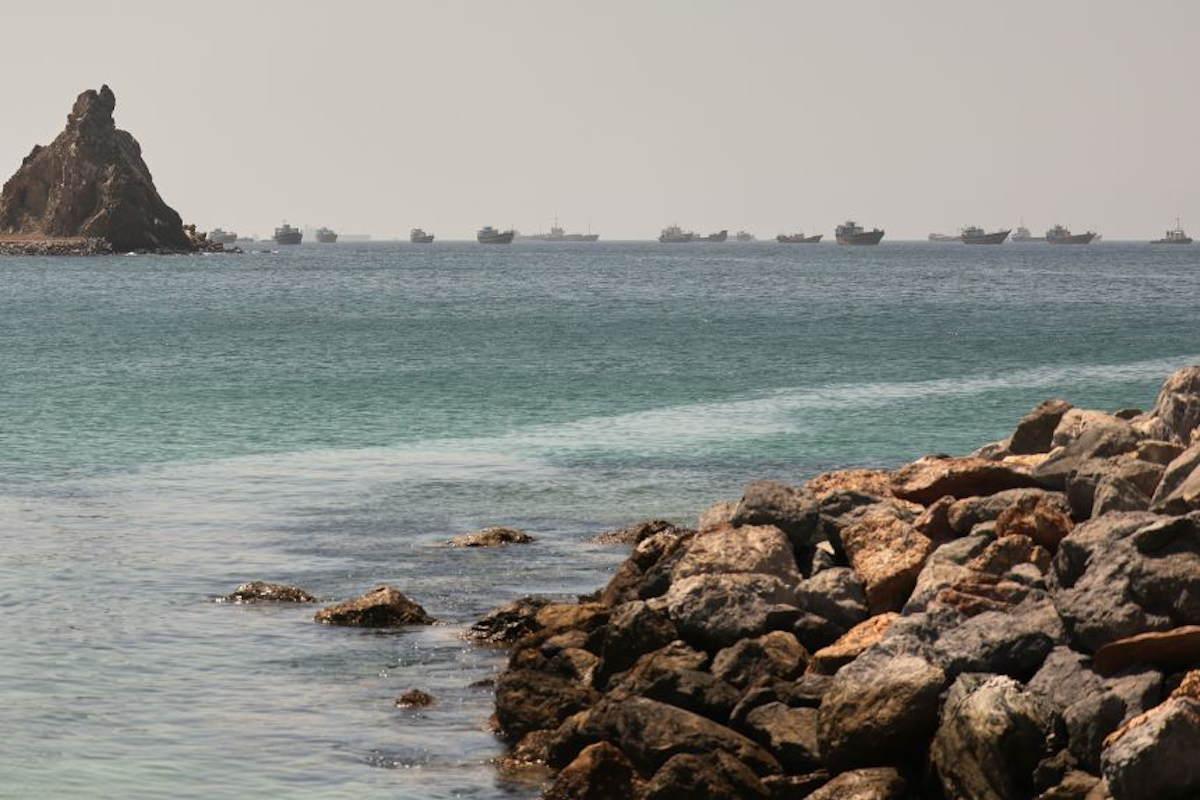
    The Strait of Hormuz, a narrow shipping lane that narrows to just 33 kilometers at its thinnest point between Oman’s Musandam Peninsula and Iran, is widely recognized as the world’s most critical energy chokepoint. Roughly 20% of total global crude oil production and one-third of the world’s liquefied natural gas (LNG) supplies pass through the waterway daily, making any disruption to traffic there a major shock to global energy markets.

    In its baseline projection for a short-lived conflict, the IMF now forecasts global gross domestic product (GDP) will grow by just 3.1% in 2026. That marks a 0.3 percentage point downgrade from the 3.4% growth prediction the institution released just three months ago, before the war began.

    Growth downgrades have hit every corner of the global economy, with some regions facing far steeper cuts than others. Among G7 advanced economies, the United Kingdom saw the sharpest downward revision, with its 2026 growth forecast cut by half a percentage point to just 0.8%. The U.S. saw a more modest 0.1 percentage point cut, bringing its projected growth to 2.3% for the year. Emerging market economies are also bracing for significant headwinds: sub-Saharan Africa’s growth forecast was lowered by 0.3 percentage points to 4.3%, while the Middle East and North Africa region suffered the steepest overall downgrade of 2.8 percentage points, dropping to just 1.1% growth. That sharp cut reflects direct damage to regional infrastructure and risks of prolonged disruption to the Strait of Hormuz.

    Inflation projections have also been revised sharply upward as energy prices soar in the wake of the conflict. The IMF now projects global inflation will hit 4.4% in 2026, up significantly from its earlier forecast of 3.7%. Since the conflict began, global crude oil prices have surged above $100 per barrel, while natural gas prices have jumped more than 80% compared to pre-war levels.

    The IMF has mapped a range of possible outcomes depending on how the conflict unfolds, from a relatively mild best-case scenario to a catastrophic worst-case scenario. In the most severe outcome, a protracted, long-running war would drag global growth down to just 2% and push global inflation to 6%. The IMF notes that global growth has fallen below the 2% threshold only four times since 1980, with the most recent instances being the 2008 global financial crisis and the 2020 COVID-19 pandemic – events widely classified as global recessions.

    Even the most optimistic scenario, in which the war ends quickly and the Strait of Hormuz returns to full operational capacity immediately, would still deliver a major shock to the global economy. Under this best-case outcome, the IMF still projects global oil prices will rise by 21.4% in 2026, while overall global energy commodity prices – which were previously forecast to fall this year – will instead rise by 19%.

    Gourinchas explained that this jump in commodity prices represents a classic negative supply shock that will ripple through every sector of the global economy. “Raising the cost of all energy-intensive goods and services – including fertilisers, chemicals, food, transportation, and heating – disrupting supply chains, feeding into headline inflation, and reducing purchasing power,” he said of the impact.

    One notable outlier in the revised forecasts is Russia, which the IMF identifies as the biggest relative beneficiary of the conflict. The institution now projects Russia’s economy will grow by 1.1% in 2026, which is 0.3 percentage points higher than its previous forecast, and slightly up from the 1% growth Russia recorded in 2025. The IMF attributes this upgrade to higher global oil prices boosting Russia’s export revenues, alongside temporary U.S. sanctions relief for some Russian oil shipments that has allowed Moscow to expand its market share.

    This report was originally covered by Middle East Eye, an independent publication specializing in unrivaled reporting and analysis on the Middle East, North Africa, and broader global affairs. For information on republishing this content and associated fees, interested parties can contact the organization via their official website.

  • Almost half of Sudan’s lifesaving kitchens have closed in last six months

    Almost half of Sudan’s lifesaving kitchens have closed in last six months

    Three years into Sudan’s brutal civil conflict, a new study from global humanitarian organization Islamic Relief has revealed a devastating collapse of the country’s grassroots food safety net: nearly half of all community-run lifesaving kitchens, known locally as takaaya, have shuttered their doors in just six months, driven by plummeting international support and economic spillover from the US-Israeli war on Iran.

    Takaaya, operated by local Sudanese mutual aid networks, have emerged as the last line of food assistance for millions of civilians trapped by ongoing fighting between the Sudanese Armed Forces (SAF) and the Rapid Support Forces (RSF) since the conflict erupted in April 2023. To assess the state of these critical operations, Islamic Relief conducted a large-scale survey of 844 takaaya across six Sudanese states, confirming that 354 kitchens – 42% of the total sampled – have ceased operations due to crippling shortages of funding and essential supplies.

    The collapse of the community kitchen network comes as Sudan grapples with what the UN calls the world’s largest hunger crisis. Data from the survey and humanitarian agencies confirms that 21 million Sudanese – 45% of the entire population – currently face acute food insecurity, a crisis amplified by mass population displacement, deliberate attacks on agricultural lands, and blockades of key trade routes. Over the past month alone, the US-Israeli war on Iran has upended global supply chains and sent costs soaring across Sudan: fuel prices have jumped by 187% in recent weeks, adding further unsustainable pressure on already strained aid operations.

    The humanitarian catastrophe is compounded by a growing humanitarian tracking crisis: the International Committee of the Red Cross (ICRC) announced this week that the number of people registered as missing in Sudan has surpassed 11,000, marking a 40% increase in just 12 months. To date, the conflict has displaced more than 11 million Sudanese, with many forced to flee multiple times as frontlines shift; 4 million of those displaced have sought refuge across international borders, and thousands more have been killed since fighting began.

    As the conflict enters its fourth year with no sign of de-escalation, international mediators are convening a high-level conference in Berlin on Wednesday – the third anniversary of the outbreak of war – hosted by Germany, the African Union, France, the European Union, the UK and the US. Notably, neither the SAF nor the RSF have been invited to the conference, and no official delegations from the two warring parties will attend. The two sides remain deadlocked, with the RSF and its allied factions controlling Darfur in western Sudan, and the SAF holding most of the rest of the country, each backed by competing regional and international patrons. The United Arab Emirates is the primary military and financial backer of the RSF, led by General Mohamed Hamdan Dagalo (known as Hemedti), with exclusive reporting from Middle East Eye last week confirming additional support from Ethiopia, operating from a military base in the country’s Benishangul-Gumuz region. The SAF, led by General Abdel Fattah al-Burhan, draws its core support from Egypt and Turkey, and has increasingly gained backing from Saudi Arabia, which is engaged in a regional rivalry with the UAE.

    Humanitarian organizations, aid groups and human rights advocates have issued urgent calls to the governments gathering in Berlin, demanding two key actions: ramp up immediate support for local Sudanese aid groups, and hold parties responsible for human rights abuses accountable. “It is imperative that attending states prioritize the needs of Sudanese civilians over geopolitical interests,” said a Human Rights Watch spokesperson, echoing calls from the British Red Cross and Sudanese Red Crescent for all warring parties to strictly adhere to international humanitarian law, amid ongoing attacks on civilian infrastructure, residential areas and humanitarian workers.

    Unlike large international aid operations, takaaya are rooted in local communities: most operate out of mosques, community centers or private family homes, and work hand-in-hand with Sudan’s Emergency Response Rooms (ERRs) – grassroots mutual aid networks that have led the country’s humanitarian response from the earliest days of the war, earning Nobel Peace Prize nominations in both 2024 and 2025.

    For the millions of Sudanese who rely on these kitchens, they are far more than a source of food: they are the only thing keeping many alive. Osama Abdulkafi Mubarak, a chef at a surviving takaaya, told Islamic Relief his kitchen feeds 200 to 250 families every single day. “We usually cook beans ‘foul’ for breakfast, and lentils, pasta and rice for lunch…. It depends on whatever is available on the day. It is very important, it is their main meal,” he said. Mubarak explained that the funding streams that supported kitchens early in the war have entirely dried up. “The main donors who used to pay for takaaya at the beginning of the war have stopped,” he said. “People were more enthusiastic to support. They were willing to help more, but now money is much less, and even people working on the takaaya are suffering because they also have a lot of other responsibilities, and life is tough. I personally think the situation is worse now, especially after this American, Israeli, Iranian war. The economic situation is worse. Overall, it’s worse than before.”

    Mohammed Sulaiman Hilal, a community kitchen beneficiary who relies on the service for daily food, called the takaaya irreplaceable for Sudanese civilians. “Without those community kitchens, life wouldn’t have been possible; people wouldn’t have been able to come back to their areas,” he said. “Most people don’t have jobs, life is stagnated, there is no source of income, most people are fully dependent on takaaya. Without takaaya’s presence there won’t be any humans left.”

    Grassroots aid groups in Sudan have long struggled to secure consistent international funding. While they received limited U.S. funding toward the end of Joe Biden’s presidency, all U.S. support was cut when USAID programs were eliminated under the second Trump administration, leaving groups almost entirely dependent on donations from the Sudanese diaspora and local community giving – streams that have now collapsed amid the country’s deep economic crisis. Rampant inflation has doubled the cost of producing a single meal, pushing most kitchens over the edge. In Khartoum, one volunteer reported that the cost of one meal has more than doubled in six months, jumping from $5 to nearly $12. In Port Sudan, volunteer Alaa saw her kitchen go from feeding 4,000 people a day to total suspension when funding ran out. “When we had to close that kitchen, it felt like abandoning my own family,” she said.

    Islamic Relief’s survey found stark regional variations in kitchen closures, reflecting the uneven impact of the conflict across the country. In North Darfur, where more than half of all children suffer from acute malnutrition, 57% of surveyed kitchens have closed. In Tawila, a destination for thousands of people who fled the RSF capture of el-Fasher, young volunteer-run kitchens are often forced to close for days between the rare incoming donations. Even in Port Sudan, one of the country’s relatively more stable cities under SAF control, six out of seven surveyed kitchens have closed. The only exception is North Kordofan, a site of recent active fighting, where almost all kitchens remain open, sustained by local volunteer efforts.

    Iftikhar Shaheen, global CEO of Islamic Relief, called the collapse of Sudan’s community kitchen network a collective failure of the international community. “The suffering in Sudan is a collective moral failure of the international community. Three years of war have created the world’s biggest hunger crisis, and these locally run kitchens have saved countless lives,” Shaheen said. “Their closure now is a death sentence for many vulnerable families. Heroic volunteers are doing everything they can to keep the kitchens open, but they need more support immediately.”

    The scale of underfunding extends to formal UN-led aid efforts: the 2026 UN humanitarian appeal for Sudan has received only 16% of its total requested funding, while last year’s appeal received less than 40% of the amount needed to meet civilian needs.

  • In Hormuz war of words, US illustrates threat with ‘drug boat’ hit

    In Hormuz war of words, US illustrates threat with ‘drug boat’ hit

    Rising geopolitical friction between the United States and Iran has reached a dangerous new flashpoint in the Strait of Hormuz, after former U.S. President Donald Trump announced a full naval blockade of the critical global waterway over the weekend, followed by stark threats to destroy any Iranian craft approaching the enforcement line. The escalation, which comes six weeks after the two nations launched an undeclared conflict in the region, has put major energy and trade supplies at risk and drawn pushback from global powers including China, while experts warn the standoff could freeze all maritime traffic through the strait entirely.

    Trump first outlined the blockade order on his Truth Social platform Sunday, framing the move as a response to Iran’s earlier partial closure of the strait, which Tehran implemented after the outbreak of hostilities. The U.S. leader accused Iran of engaging in “world extortion” by claiming potential unreported mines in the waterway and demanding tolls from passing vessels. “I have also instructed our Navy to seek and interdict every vessel in International Waters that has paid a toll to Iran. No one who pays an illegal toll will have safe passage on the high seas,” Trump wrote in his post, adding that U.S. forces would begin clearing mines laid by Iran and that any Iranian attack on U.S. personnel or civilian ships would be met with devastating force.

    On Monday, Trump doubled down on the aggressive posture, threatening that any Iranian vessels that “come anywhere close” to the U.S. blockade would be “immediately ELIMINATED” using the same lethal tactics his administration has deployed against suspected drug trafficking boats in international waters. He characterized the tactic as “quick and brutal,” and noted that 34 vessels passed through the strait on Sunday, the highest daily volume since Iran’s initial closure.

    Parallel to the U.S. escalation, Iran has issued its own firm warnings to Washington, vowing to respond with unforeseen military capabilities if conflict expands. A spokesperson for the Islamic Revolutionary Guard Corps (IRGC) told the IRGC-affiliated Tasnim News Agency that if hostilities continue, Tehran will unveil new warfare capacities that enemy forces have no knowledge of, and that these methods will be largely difficult for the U.S. to counter. Iranian Lt. Col. Ebrahim Zolfaqari clarified Iran’s position, stressing that vessels affiliated with the U.S.-led blockade have no right to transit the strait now and in the future, while neutral civilian ships can still pass in compliance with Iranian armed forces regulations. Zolfaqari also warned that if the security of Iranian ports is jeopardized, no ports across the Persian Gulf or Sea of Oman will remain safe.

    The escalating confrontation has already split global powers, with NATO members confirming on Monday they would not participate in Trump’s blockade. China, which maintains active trade and energy agreements with Tehran, has openly defied the U.S. order. Chinese Defense Minister Dong Jun confirmed that Chinese commercial and military vessels continue transiting Hormuz waters in accordance with bilateral agreements with Iran, saying “We will respect and honor them and expect others not to meddle in our affairs. Iran controls the Strait of Hormuz, and it is open for us.”

    Maritime analysts warn the dual, competing blockades from the U.S. and Iran could create an unprecedented logjam in one of the world’s most critical energy chokepoints. Salvatore Mercogliano, a maritime historian at Campbell University in North Carolina, told Al Jazeera that he expects U.S. naval forces to turn away exiting vessels while staying out of range of Iran’s coastal missiles and drones, resulting in two overlapping blockade operations. This scenario, Mercogliano noted, carries a serious risk of freezing all incoming and outgoing shipping through the strait entirely, a disruption that would send shockwaves through global energy and commodity markets.

    To back up his threat against Iranian vessels, Trump highlighted his administration’s ongoing campaign of lethal airstrikes against suspected drug trafficking boats in international waters, a policy that has already killed more than 170 people and drawn widespread condemnation from human rights groups and international legal experts as extrajudicial killing. On the same day Trump issued his Hormuz threat, U.S. Southern Command (SOUTHCOM) carried out a new strike on a vessel in the eastern Pacific, which the command claims was operated by groups linked to narco-trafficking. No publicly released evidence has been provided to support the accusation, and the strike killed at least two people. The attack came just days after separate April 11 strikes on two other Pacific boats that left at least five more dead.

    Following the latest strike, SOUTHCOM published unclassified footage of the bombing on social media, labeling it a “lethal kinetic strike on a vessel operated by Designated Terrorist Organizations”—a move that critics say is part of a pattern of publicizing lethal operations without justifying their legality. Brian Finucane, senior adviser to the U.S. Program at the International Crisis Group, pointed out that the Trump administration has been eager to post graphic footage of these strikes online but has refused to defend the legal standing of the attacks in international waters.

    United Nations experts and multiple human rights organizations have formally condemned the boat bombing campaign as extrajudicial killing and murder, arguing that officials who ordered and carried out the strikes should face prosecution for homicide. Investigative journalist Nick Turse of The Intercept reported hours before Monday’s strike that the Trump administration is actively pressuring the Inter-American Commission on Human Rights to shut down a potential inquiry into the illegal strikes across the Caribbean and Pacific. Last month, the commission held a public hearing where legal experts testified to the unlawful nature of the strikes. Angelo Guisado, senior staff attorney at the Center for Constitutional Rights, told the commission that “The administration’s desire to play imperial superpower in the region cannot be a reason to completely displace the foundations of international law.”

    As of Monday, the standoff in the Strait of Hormuz shows no signs of de-escalation, with both sides holding firm to their competing blockade claims and raising the risk of an accidental clash that could spiral into full-scale open conflict across the Middle East.