标签: Asia

亚洲

  • Thousands of Palestinians buried under rubble in Gaza ‘may never be identified’, says Red Cross

    Thousands of Palestinians buried under rubble in Gaza ‘may never be identified’, says Red Cross

    Two years into the ongoing Israeli military campaign in the Gaza Strip, a grave new humanitarian crisis is emerging, with the International Committee of the Red Cross (ICRC) issuing a stark warning that thousands of Palestinians buried under collapsed infrastructure may never receive formal identification, leaving grieving families without closure. The warning, first reported by The Guardian on Sunday, comes against a backdrop of cripplingly slow body recovery efforts and a catastrophic scale of destruction that has left the enclave unrecognizable.

    Pat Griffiths, ICRC spokesperson based in Jerusalem, explained to the outlet that the mounting delay in retrieving human remains directly amplifies the risk of permanent identification failure. “The longer it takes for human remains to be recovered, the more difficult it can be to identify them,” Griffiths said. “The longer the deceased lie beneath the rubble, the more likely they will be in advanced stages of decomposition – even skeletonised – when eventually recovered. Forensic experts lose access to circumstantial evidence that can be used to corroborate their identity.”

    The ICRC emphasized that critical identifying markers — including intact fingerprints, dental records, and personal belongings that can link remains to missing people — degrade rapidly as time passes. Gaza’s environmental conditions only worsen this challenge: high humidity in the coastal enclave and scavenging animal activity steadily erode what little forensic evidence remains, making the work of identification teams increasingly futile.

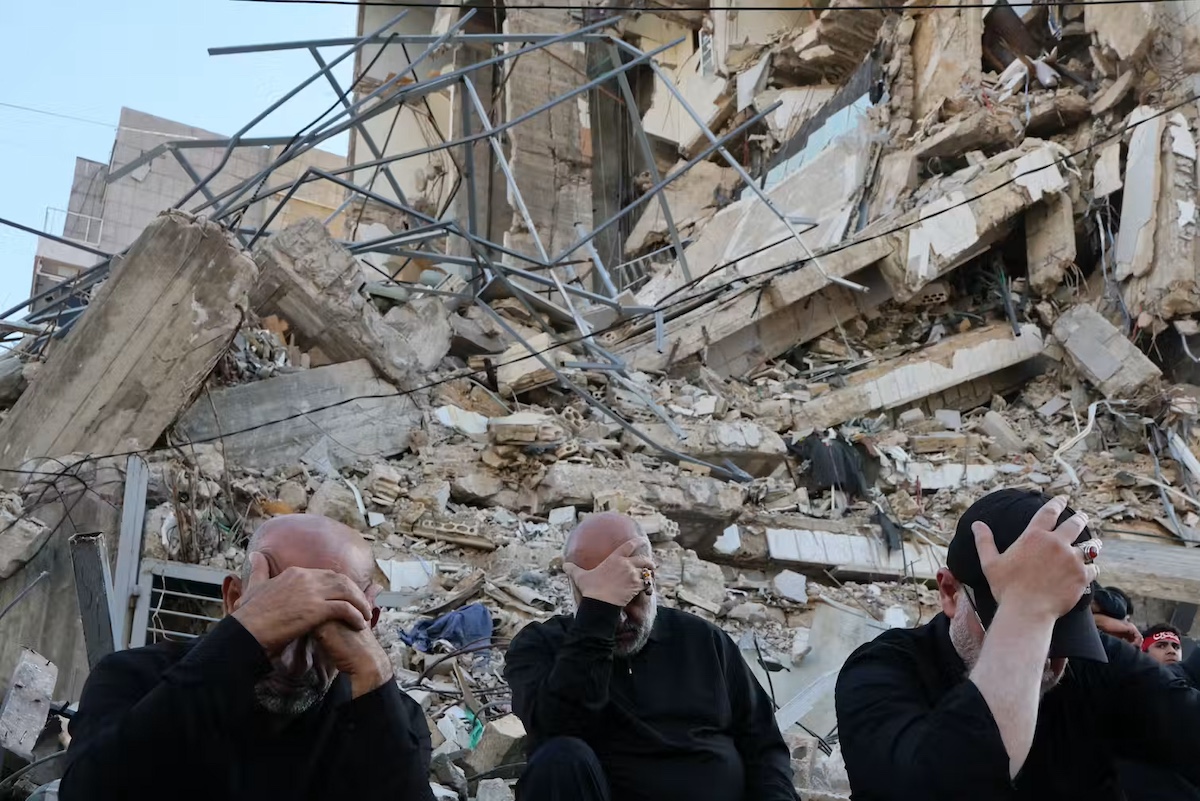
    Official UN data underscores the unprecedented scale of destruction Gaza has suffered after two years of conflict. Some 61.5 million tonnes of debris now cover the territory, with 75% of all Gaza’s residential and public buildings reduced to rubble. The United Nations Environment Programme has confirmed that this volume of wreckage is 20 times greater than the total debris generated by all conflicts in Gaza combined between 2008 and the start of the current campaign.

    Local Gaza residents add another layer of concern: they fear Israeli military bulldozers operating in areas under Israeli control are moving and disturbing remains still trapped under rubble, scattering evidence and making it even harder for families to locate their missing loved ones.

    Official casualty figures put the total number of people killed in Israeli attacks across the besieged enclave at nearly 73,000, a toll that has continued to climb even after a nominal ceasefire took effect in December. Back in February, the Palestinian Civil Defence reported that roughly 8,000 bodies remained trapped under rubble across Gaza, even after months of exhaustive recovery work by local teams. An additional 3,000 people are still listed as missing, with no clarity on whether they are alive, dead, or being held in Israeli detention.

    Since the ceasefire was implemented, recovery operations have been crippled by systemic shortages of essential heavy machinery. Rescue teams have been forced to rely on basic hand tools — shovels, pickaxes, wheelbarrows — and even bare hands to sift through millions of tonnes of wreckage, as repeated requests to Israel to allow excavators and other heavy recovery equipment into Gaza have been denied.

    Griffiths stressed that unimpeded access and proper resources are non-negotiable for the recovery effort to succeed. “Search and recovery teams need access to all sites where human remains are thought to be located,” she said. “We know that much of this machinery and equipment remains almost impossible to bring into Gaza right now. And it remains our call, and part of our ongoing direct dialogue with the relevant authorities, to allow the entry of these items and equipment into Gaza.”

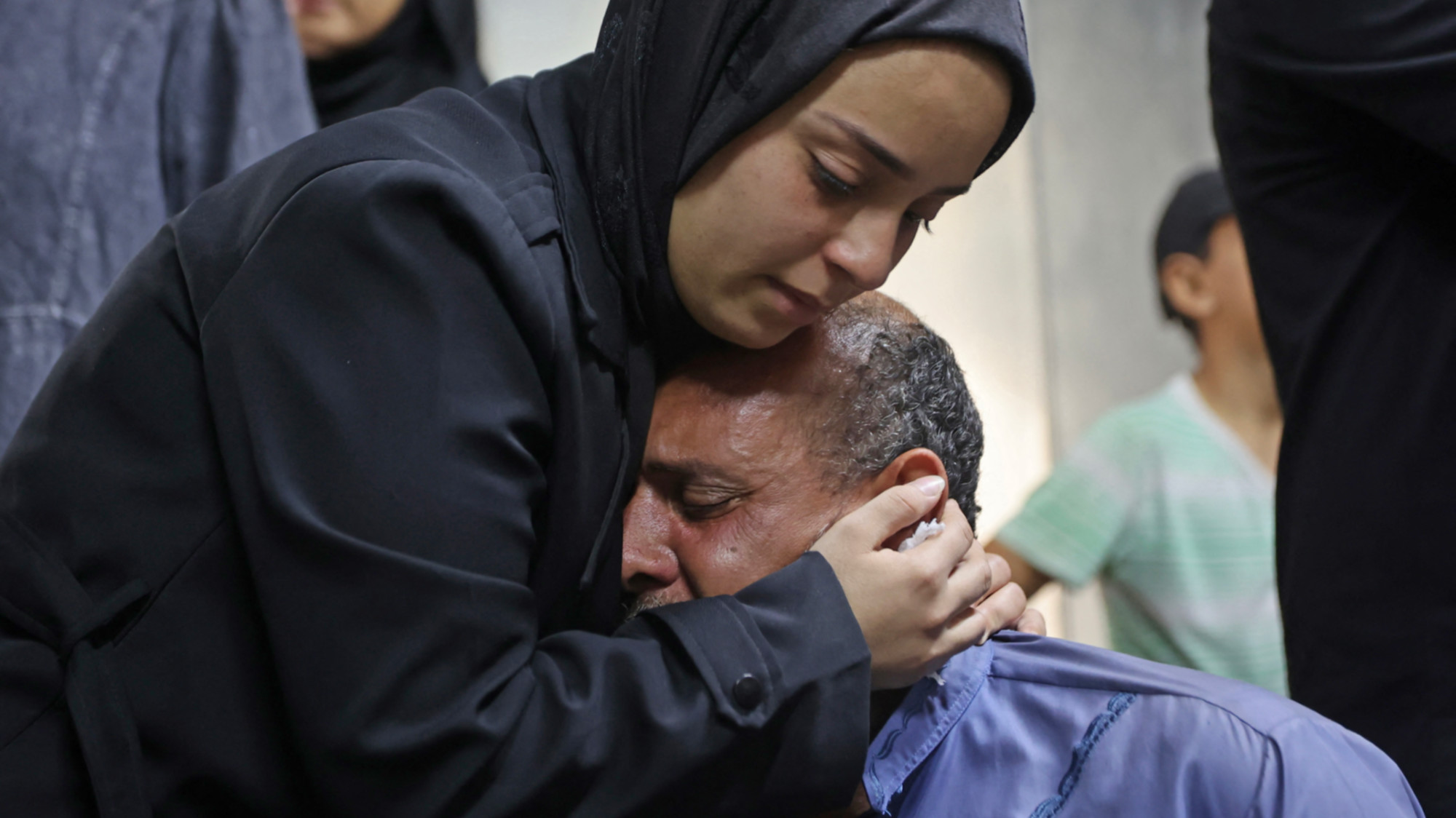
    For thousands of grieving Palestinian families, the growing risk of permanent unidentified burials adds another layer of unending trauma, as they face the prospect of never being able to properly bury and mourn their loved ones lost to the conflict.

  • Deepti Sharma rips through Pakistan as India opens its Women’s T20 World Cup quest with big win

    Deepti Sharma rips through Pakistan as India opens its Women’s T20 World Cup quest with big win

    The 2024 Women’s Twenty20 World Cup opened with two dramatic days of group-stage action in Birmingham, England, that delivered record-breaking performances and historic upsets at the sold-out Edgbaston Stadium on Sunday.

    In the headline matchup between long-time rivals India and Pakistan, India claimed a dominant 64-run victory, kicking off its long-running quest for a first-ever Women’s T20 World Cup title in style. Off-spinner Deepti Sharma produced one of the most devastating closing spells in tournament history, spinning through Pakistan’s final three wickets in just five deliveries to seal the win, finishing with career-defining figures of 5 wickets for just 10 runs. The result extended India’s unbeaten streak against Pakistan in T20 World Cup competition.

    India’s total of 170 for 6 came from a late-order turnaround that shocked even their own supporters. Opening batter Smriti Mandhana survived two dropped catches early in her innings — including one on 27 and another on 55, where a top-edged hit ricocheted off her helmet and forced a mandatory concussion check — before storming to a 38-ball 68. After Mandhana’s departure triggered a minor batting collapse that left India at 132 for 5 heading into the 19th over, young wicketkeeper-batter Richa Ghosh exploded into action, blasting 34 runs off just 17 deliveries. Ghosh and Sharma piled on 23 runs against World Cup debutant Tasmia Rubab in the 19th over, before Pakistan captain Fatima Sana conceded 15 runs in the final over, pushing India to its highest ever total against Pakistan in T20 World Cup history.

    Pakistan got off to a flying start in its chase, posting its highest ever powerplay score against India at 52 for 1, with opener Muneeba Ali surviving two dropped catches off Shreyanka Patil. But India turned the tide by the 10th over, when Sharma produced a spectacular direct hit from backward point to run out Ali for 41, breaking Pakistan’s momentum. When Sana fell in the following over to leave Pakistan at 77 for 5, the chase collapsed entirely. Shree Charani supported Sharma’s match-winning spell with 3 wickets for 21 runs, helping bowl Pakistan out for just 106. The five-wicket haul pushed Sharma to become the leading wicket-taker in the history of women’s T20 international cricket, marking her second five-wicket haul in a major ICC tournament just seven months after her player-of-the-match performance in India’s ODI World Cup final win over South Africa.

    The sell-out crowd of 18,814 at Edgbaston set a new attendance record for a Women’s T20 World Cup group-stage match, underscoring the growing global popularity of women’s cricket.

    In the second match of the day on the same Edgbaston pitch, Bangladesh pulled off the highest successful run chase in their Women’s T20 World Cup history, defeating the Netherlands by six wickets with five balls to spare. Chasing a target of 140 set by the Netherlands’ 139 for 8, 20-year-old opener Juairiya Ferdous laid the perfect foundation for Bangladesh with a blistering 50 off 33 balls. Ferdous survived two reprieves — a controversial third-umpire overturned catch on 7 and a dropped catch on 18 — before hammering two sixes over midwicket to put Bangladesh well on track for victory.

    Dutch spinners Silver Siegers, Heather Siegers and Caroline de Lange slowed Bangladesh’s progress after Ferdous’ departure, with de Lange picking up two wickets for 27 runs. But an unbroken 56-run partnership between Sharmin Akhter and Shorna Akter closed out the chase, securing Bangladesh their fourth win in seven Women’s T20 World Cup campaigns. For the Netherlands, captain Babette de Leede top-scored with a 45-ball 50 before being run out in the 17th over while attempting a second run, while Bangladesh medium-pacers Marufa Akter and Ritu Moni led the bowling attack with two wickets for 31 and one wicket for 17 respectively.

    The tournament continues Tuesday with matches between New Zealand and Sri Lanka, followed by hosts England facing Ireland.

  • Disabled oil tanker received dozens of warnings before US opened fire, AP source says

    Disabled oil tanker received dozens of warnings before US opened fire, AP source says

    A deadly confrontation in the Gulf of Oman has escalated tensions around U.S. sanctions enforcement against Iran, after American military forces disabled a tanker linked to Tehran’s illicit oil trade, leaving three Indian crew members dead and triggering a formal diplomatic protest from New Delhi.

    An anonymous U.S. official, speaking on condition of anonymity because they were not cleared to discuss the sensitive operation publicly, has provided new details about the hours-long standoff preceding the strike. According to the official, the Palau-flagged M/T Settebello — identified by Washington as part of Iran’s “shadow fleet” of vessels used to evade international oil sanctions and break the U.S. blockade on Iranian crude exports — ignored nearly 60 distinct verbal warnings from U.S. forces over the course of the standoff. Even after eight separate shows of force, including low-altitude flybys by military aircraft and the deployment of warning flares, the vessel’s crew refused to alter course or comply with orders. Two final, explicit warnings were issued before U.S. forces opened fire on Wednesday.

    Earlier official confirmations from the U.S. military note that a U.S. aircraft launched precision munitions directly into the tanker’s engine room to disable the vessel. Indian government officials have verified that three Indian nationals working aboard the Settebello were killed in the strike. The U.S. official added that American forces had maintained contact with the tanker repeatedly across the two weeks leading up to the incident, as the vessel made multiple attempts to breach the U.S. blockade.

    In an official statement released after the operation, U.S. Central Command clarified that the tanker’s crew was given a full 15-minute window to evacuate the engine room before the strike was carried out. “After being in place for more than 60 days, it should be clear by now that U.S. forces will strictly enforce the blockade,” the statement added.

    The incident has already sparked immediate diplomatic tension between Washington and New Delhi. India’s Ministry of Foreign Affairs confirmed it has lodged a “strong protest” with U.S. authorities over the deaths of its citizens. On Saturday, the U.S. State Department released a readout of a call between Secretary of State Marco Rubio and India’s top foreign affairs official, in which Rubio emphasized that “all commercial vessels should immediately comply with orders from U.S. forces as they seek to uphold peace and security in the Strait.”

  • UK and Japan agree £18bn investment deal

    UK and Japan agree £18bn investment deal

    In a high-profile diplomatic and economic meeting held in London on Sunday, UK Prime Minister Keir Starmer and his Japanese counterpart Sanae Takaichi have formalized a landmark multi-billion-pound bilateral investment pact that London officials frame as opening a new chapter of deepened cooperation between the two island nations.

    According to announcements from Downing Street, the agreement brings a total of up to £18 billion in planned Japanese investment across key UK sectors. Japanese private firms have committed more than £9 billion to UK infrastructure, real estate and financial services projects over the next five years, with an additional £9 billion earmarked for British offshore wind energy development. If fully realized, Downing Street projects the investments will generate tens of thousands of new jobs across the country.

    Alongside the core investment package, the two leaders confirmed ongoing collaboration on two major high-tech projects. The pair reaffirmed their shared commitment to the GCAP global combat air programme, a next-generation fighter jet initiative developed jointly by the UK, Japan and Italy. Additionally, a new technical partnership was announced: British engineering giant Rolls-Royce will join forces with Japan’s Atomic Energy Agency to advance cutting-edge next-generation nuclear technology, while a broader R&D agreement will connect UK software and research expertise with Japanese manufacturing capabilities to drive cross-border innovation.

    Major Japanese firms participating in the infrastructure and real estate commitments include Mitsubishi Estate, Mitsui Fudosan and Nomura Real Estate, according to Downing Street. After holding talks with Japanese business leaders alongside Takaichi, Starmer called the negotiations “very productive”, and said he was pleased to lock in the expanded bilateral partnership. For his part, Takaichi emphasized through a translator that the UK remains “an extremely important partner” for Japan in Europe and globally.

    The deal comes at a critical moment for the UK economy, which is already facing significant headwinds even before accounting for new geopolitical risks. While the UK registered 0.6% GDP growth in the first quarter of 2025, analysts broadly predict sluggish growth in the coming quarters. Last month, the International Monetary Fund warned that the ongoing conflict between the US-Israel alliance and Iran will hit the UK harder than any other advanced global economy. The Bank of England has also cautioned that the conflict could push UK inflation back up to as high as 6% in a worst-case scenario, putting renewed pressure on households and policymakers.

    A key question hanging over the investment package remains unresolved: Downing Street has not clarified what share of the announced £18 billion represents new, previously unannounced commitments versus existing investment plans that were already public. Political opposition has also weighed in on the deal. Andrew Griffith, shadow business and trade secretary for the opposition Conservative Party, said his party welcomes any agreement that brings new investment to the UK, but added that the current Labour government’s “tax hikes and employer red tape are doing huge damage, destroying jobs and putting more and more people onto welfare”.

    While Downing Street frames the agreement as a long-term boost to British jobs and sustainable economic growth, most economists continue to expect near-term economic strain for the UK regardless of the new investment, which will take years to roll out fully.

  • Two Chinas at North America’s World Cup

    Two Chinas at North America’s World Cup

    As the 2026 FIFA World Cup kicks off across North America this summer, a familiar pattern has repeated itself: China’s men’s national team is once again watching the tournament from the outside rather than competing inside it.

    This absence has long been reduced to a tired punchline: how can a nation of 1.4 billion people fail to field 11 world-class footballers? But this oversimplification erases the full context of China’s qualifying campaign. The team did not crash out in the opening stage of Asian qualifiers; instead, it narrowly advanced to the final third round of 2024 qualifying, keeping alive hopes of a first return to the World Cup finals since their solitary debut in 2002.

    Even with the tournament’s expansion to 48 teams and a new, larger allocation of spots for Asian nations, however, China’s run fell short. When their qualifying campaign wrapped, the same longstanding conclusion remained: China’s massive population, growing economic wealth, world-class sports infrastructure and lofty sporting ambitions have not yet combined to produce a consistently competitive men’s national World Cup side.

    What is less often discussed is the reality that there are not one, but two distinct Chinas present at this World Cup — and only one is missing. The absent China is the men’s national team, whose only World Cup appearance to date ended with a goalless group-stage exit in 2002, a record that remains unchanged 24 years later.

    The other China, by contrast, is impossible to miss across every corner of the tournament. It is woven into the event’s commercial framework, cutting-edge technology systems, global consumer branding, global merchandise supply chains, broadcast infrastructure and even its officiating team.

    Major Chinese brands including Lenovo, Hisense and Mengniu are not minor, peripheral players in the multi-billion-dollar World Cup economy. They are core components of the global machinery that makes the event possible, brings it to living rooms across the world and generates revenue from the world’s biggest sporting spectacle. Even Chinese referee Ma Ning has emerged as an unexpected symbol of Chinese participation: with no national team to cheer for, many Chinese football fans have embraced the official as a stand-in for national representation.

    This small, telling detail encapsulates the central paradox of China’s relationship with the modern World Cup: China is missing in the way football fans care about most, but omnipresent in almost every other layer of how the tournament operates. It remains peripheral on the match pitch, but central to all the systems that make the World Cup work off it.

    This paradox reveals a larger truth: it exposes the limits of a development model that has delivered spectacular success across nearly every other sector for China. The country has mastered the art of mobilizing massive capital, setting centralized national targets, and scaling large-scale infrastructure projects at unmatched speed. It built out a global-leading high-speed rail network, become a world leader in electric vehicle manufacturing, constructed world-class ports and solar panel supply chains, and dominated Olympic medal tables in a matter of decades, all at astonishing pace.

    But football defies this top-down, industrial logic. China did not underinvest in the sport — if anything, it over-engineered its development. A landmark national football reform plan released in 2016 promised to build tens of thousands of new pitches and get tens of millions of schoolchildren playing the game regularly. Top-flight Chinese Super League clubs spent hundreds of millions of dollars on high-profile foreign stars, chasing quick global prestige and rapid growth.

    For a short window, it looked like Chinese football would become the next disruptive force in the global game. Then, the fragile foundations of the model began to crack.

    Most top Chinese professional clubs were tied to real estate developers and local government prestige projects, rather than rooted in sustainable, community-focused sporting institutions. When China’s property sector entered a broad slowdown and the COVID-19 pandemic shut down sports for years, the fragility of the professional game was laid bare. Dozens of clubs folded, league finances deteriorated sharply, and high-profile corruption and match-fixing scandals eroded what little public confidence remained.

    The key lesson here is not that China is inherently incapable of producing a world-class football team. It is that football cannot be manufactured like a mass-produced industrial good.

    A vibrant football culture is not built simply by counting the number of new pitches constructed. It grows organically through generations of neighborhood rivalries, well-trained trusted youth coaches, deeply rooted local clubs, intergenerational family fandom, unstructured pickup play, and years of accumulated competitive game time for young talent. It requires enough structure to nurture emerging talent, but enough flexibility for spontaneous creativity to flourish.

    This is where China’s top-down model has struggled. The same system that can produce Olympic champion divers through years of disciplined repetition or elite gymnasts through early specialization cannot easily generate the on-pitch improvisation of a world-class midfielder, the instinctive finishing of a top striker, or the collective cohesive trust that 11 players need to perform under high pressure.

    Compounding this challenge is what analysts call the “academic cliff”: around early adolescence, just as young football talent is starting to mature and deepen, many Chinese children face intensifying pressure from college entrance exams, and most drift away from organized sport. For most Chinese families, pursuing football looks far less like a viable career path and far more like an unnecessary risk to a child’s academic future.

    This dynamic shrinks the available talent pool dramatically before young players can reach their full potential. It also explains why China’s football shortfall has never really been a mystery of population size. A large population does not automatically produce elite teams; football success depends on a robust, accessible development pipeline, not just a large national headcount.

    Today, the most encouraging signs for Chinese football are not coming from another wave of big-spending marquee signings by wealthy clubs. They are growing from the grassroots up.

    Amateur and community-led football has begun to draw growing public and institutional attention. Local amateur leagues, most notably the widely discussed “Suchao” (Village Super League) phenomenon in eastern Jiangsu province, have demonstrated that popular enthusiasm for football in China is far healthier at the social and community level than it is within the formal professional institutional structure. Teachers, software engineers, college students and delivery drivers competing in front of sold-out local crowds will not produce a World Cup-caliber striker overnight, but they are doing something more foundational: they are making football feel like a normal, accessible part of everyday life, which is the first building block of a sustainable national football culture.

    China’s deep commercial roots at this World Cup should not be seen as a consolation prize for its on-pitch absence. Instead, it can serve as a unique platform. Chinese brands that reap the benefits of the World Cup’s massive global visibility could invest in open-access youth leagues, international coaching exchange programs, data and analytics tools for lower-tier local clubs, and need-based scholarships that allow young players to pursue football alongside their academic studies.

    The end goal should not be another cycle of vanity projects and big-name signing sprees. It should be building a patient, organic ecosystem: sustained school-community partnerships, stable financially viable local clubs, improved coach training and education, transparent youth scouting systems, expanded recreational leagues for both boys and girls, and clear development pathways that reassure parents that sporting participation and academic mobility can coexist, rather than compete.

    This last point is non-negotiable. If football is consistently framed as a threat to academic success, China’s pool of young talent will remain artificially small. If it is framed as a complementary activity that builds discipline, teamwork, physical health and long-term opportunity, far more families will allow their children to stay in the game long enough to discover if they have the talent to compete at the highest level.

    So will China qualify for the 2030 World Cup? It is a possibility, but far from a guarantee. The expanded 48-team format makes qualification easier, but it cannot close the gap between China’s off-pitch commercial power and its on-pitch footballing depth. What China does not need is more loud, empty slogans about becoming a global football superpower.

    What it does need is more ordinary football: more children playing for fun, more parents trusting that the development pathway is safe and worthwhile, more local clubs surviving year to year, more coaches improving their craft, and more local community competitions that matter to the people who play and watch them.

    This broader lesson extends far beyond the world of sport. There are some forms of progress that can only grow when centralized authority creates space for local institutions, families and independent clubs to do what top-down national plans cannot. Football rewards patience, spontaneous improvisation and social trust. These are far harder to mandate than large capital investments, but they are exactly the ingredients the game requires to thrive.

    In the end, China’s absence from this summer’s World Cup is not just a failure of national sporting ambition. It is a mirror that reflects the strengths and limitations of China’s modern development model. Off the pitch, China is already a World Cup power: commercially sophisticated, technologically integrated, and symbolically present at the heart of the world’s biggest sporting event. On the pitch, the project remains unfinished.

    If China eventually earns its way back to football’s biggest global stage, it will not be because it found more money to spend. It will be because it learned how to cultivate the organic, patient culture that elite football actually requires. That would be a better story for China, a better story for Asian football, and a better story for the World Cup as a whole.

  • Patrick Beach takes over as Australia’s goalkeeper and stars in World Cup opener

    Patrick Beach takes over as Australia’s goalkeeper and stars in World Cup opener

    VANCOUVER, British Columbia — Going into Australia’s opening World Cup group stage clash with Turkey, all expectations pointed to veteran captain Mathew Ryan, a three-tournament veteran with 16 years of top-flight experience, getting the start between the posts. But in a shocking, bold call from head coach Tony Popovic, the job went to 22-year-old Patrick Beach, a rookie between the sticks set to play just his third senior international cap.

    Beach revealed the surprise selection came together quietly just 48 hours before kickoff: “A couple of days ago, the boss and our keeper coach pulled me aside and told me that I’d be playing. They had confidence in me, and that became the confidence I needed to get out there and do my job tonight.”

    Popovic’s unorthodox choice paid off almost immediately. By the 30th minute, Australia had already grabbed an unexpected 1-0 lead, and Beach stepped up to make the first of what would become a series of game-saving stops. Turkey’s Abdulkerim Bardakci unleased a blistering long-range strike that looked destined for the top corner, but the young keeper launched into a full-stretch dive, palming the ball off the post and clearing it from danger to preserve the lead.

    Beach continued his dominant form through the second half, turning in two more standout saves. He dove full length to deny Real Madrid star Arda Guler’s dangerous free-kick from outside the 18-yard box, then smothered a close-range effort from Kerem Akturkoglu near the penalty spot. By the final whistle, Beach had racked up eight total saves and kept a clean sheet, anchoring Australia to a stunning 2-0 upset victory.

    A native of Sydney, Beach has only played two seasons as a professional, both as the starting goalkeeper for A-League side Melbourne City, compared to Ryan’s 16 years at the top of the game. He had only featured once for the Socceroos in pre-World Cup friendlies – a 1-1 draw with Switzerland in the final warm-up match – and did not make an appearance in any of Australia’s other nine international friendly matches stretching back to June 2025.

    Speaking after the match, Beach reflected on staying grounded despite the electric atmosphere of a World Cup match played in front of 50,000 in-venue fans and millions watching around the globe: “You get out there, and you’re in front of 50,000 people, and how many (more) around the world. So there’s those [nerves], but at the end of the day you just keep it simple. It’s a game of football, and two teams just going at it.”

    Despite Turkey holding 72% of total possession and launching 30 attempts on goal, eight of which hit the target, the untested rookie never looked flustered. Beach admitted pre-match nerves were unavoidable, but credited his defensive unit and the unwavering faith of the coaching staff for helping him deliver under the brightest spotlight of his career so far.

    Popovic doubled down on his selection after the final whistle, telling reporters the call to start Beach over Ryan was the right one regardless of outcome: “It’s a team selected to perform well. Regardless of the result it was the right decision.”

    The upset victory lifts Australia to second place in Group D, trailing only the United States on goal difference. Beyond the standings, the result marks one of the most impressive opening matches for Australia at a World Cup in decades, and nearly all the praise for the historic win has centered on the performance of the young keeper.

    Popovic summed up Beach’s standout performance: “He looked very at ease on the big stage. He made the saves he had to make. The quality they have, and the wonderful free kicks he took — he was up to the task.”

  • Legal notice sent to London synagogue hosting Great Israeli Real Estate Event

    Legal notice sent to London synagogue hosting Great Israeli Real Estate Event

    Exclusive reporting from Middle East Eye (MEE) has uncovered growing legal and political controversy surrounding a controversial Israeli real estate event scheduled to take place this weekend at a northwest London synagogue, with the gathering tied directly to the marketing and sale of property in illegally occupied Palestinian territories.

    Earlier this week, MEE first published details exposing the event’s deep connections to Israeli settlements that are widely recognized as illegal under international law. While event organizers have refused to publicly disclose the venue, MEE has confirmed that the Great Israeli Estate Event is set to kick off at midday on June 14 at Edgware United Synagogue, located in the Edgware district of northwest London.

    In response to the planned gathering, the UK-based International Centre of Justice for Palestinians (ICJP) issued a formal legal notice to the synagogue Saturday evening, alerting venue leadership to what the group calls substantial legal and reputational risks tied to hosting the event. A copy of the letter, reviewed directly by MEE, makes clear that the event is explicitly marketed as a space to promote and sell property located both in Israel and the occupied Palestinian territories.

    The legal warning notes that UK government guidance already explicitly bars British businesses from participating in any economic or financial activity linked to Israeli settlements in the West Bank, and clearly outlines the material legal and commercial risks that come with engaging in such activity. Even as the letter acknowledges that the synagogue’s role is limited to providing event space, it emphasizes that hosting the gathering still amounts to facilitating the event’s work and granting unwarranted legitimacy to its illegal goals.

    Multiple participating firms named in event materials have documented ties to illegal settlement construction and development. Emanuel Vatari, CEO of the Emanuel Group – one of the event’s primary sponsors – published a full list of participating companies on his public Facebook page earlier this week. The roster includes Harey Zahav, an Israeli property developer that openly advertises residential units in Negohot, an illegal Israeli settlement located in the southern Hebron Hills of the occupied West Bank. Also listed is the Meshulam Levinstein Group, a diversified construction, engineering and real estate conglomerate that has built both residential and commercial projects in illegal settlements across the occupied West Bank and East Jerusalem, including a mixed housing and retail development in the Homat Shmuel settlement neighborhood of occupied East Jerusalem. Additional participants include Tivuch Shelly, a real estate agency that promotes property in the large West Bank settlement of Ma’ale Adunim, and Africa Israel Residences, a subsidiary of the Africa Israel Group that has led multiple development projects in illegal settlements across the West Bank and East Jerusalem.

    Political pushback against the event has mounted rapidly in recent days. London Mayor Sadiq Khan publicly confirmed his opposition to the gathering Friday, stating, “I share concerns about the Great Israeli Real Estate Event taking place in our city, which I oppose, and that’s why I’ve discussed this directly with the Met Police.” He added that Metropolitan Police officials have advised him that any credible allegations of criminal activity connected to the potentially unlawful property sales at the event will be fully assessed for potential investigation.

    Concurrent with the event, a public protest is organized by a coalition of activist groups including the Palestinian Youth Movement and the International Jewish Anti-Zionist Network, scheduled to take place at the intersection of Edgware Way and Broadhurst Avenue, just a short distance from the synagogue venue.

    Over 100 UK members of Parliament signed an open letter Friday to Foreign Secretary Yvette Cooper, calling for the event to be canceled immediately. The letter argues that allowing the gathering to proceed would not only contradict existing UK government guidance on settlement-linked economic activity, but would also violate the UK government’s own binding obligations under international law.

    In response to the growing outcry, a UK government spokesperson released a statement acknowledging the dispute, noting that “Expansion in the West Bank is wrong. We will be bringing forward updated guidance in the coming days, giving greater clarity to UK businesses on how to avoid ventures which support these illegal settlements.”

    MEE has reached out to Edgware United Synagogue to request a comment on the legal notice and planned event, and has not yet received a response as of publication.

  • Taiwan’s spy agency launches webpage for Chinese nationals to report tips

    Taiwan’s spy agency launches webpage for Chinese nationals to report tips

    Against a backdrop of persistently high tensions between Beijing and the self-governing island of Taiwan, Taiwan’s top intelligence body announced a new initiative on Sunday: a dedicated secure online platform designed to collect intelligence tips from Chinese nationals.

    The National Security Bureau of Taiwan confirmed in an official statement that the dedicated webpage will function as an encrypted, safe reporting channel, responding to what the agency describes as a growing flow of inquiries from Chinese citizens seeking to share varied types of intelligence-related information in recent months.

    In its explanation for the new program, the bureau pointed to shifting conditions within mainland China, noting that the world’s second-largest economy has grappled with mounting economic headwinds in recent years, while rigid political oversight remains in place. When combined with widening social and livelihood challenges across the country, these factors have driven rising public discontent, the statement added.

    Taiwanese officials also clarified that the policy draws its framework from similar practices already implemented by intelligence services in the United States, United Kingdom, and Israel. The move echoes a high-profile initiative launched by the U.S. Central Intelligence Agency last year, when the agency published Mandarin-language videos across major social media platforms to reach out to dissatisfied Chinese officials and invite them to share sensitive information with U.S. intelligence.

    The new channel comes as part of a longer-running tit-for-tat in information operations between the two sides of the Taiwan Strait. Months prior, Beijing launched its own online reporting platform, calling for the public to submit tips on so-called “Taiwan independence” separatist activities, with the stated goal of holding individuals promoting separation accountable under law.

    Cross-Strait relations have remained fraught for seven decades, dating back to the 1949 split that followed the end of China’s civil war. Beijing has consistently maintained that Taiwan is an inalienable part of Chinese territory, and has repeatedly stated it will not rule out the use of military force to bring the island under its control if formal unification never occurs. Tensions have spiked in recent weeks: Chinese authorities have carried out large-scale joint military exercises in waters and airspace adjacent to Taiwan, and just this week, Taiwan’s military conducted a live-fire drill where it test-fired rockets toward waters off the Chinese coast from U.S.-supplied mobile launch systems, a demonstration of its defensive capabilities to fend off a potential large-scale attack.

  • Australia spoils Turkey’s return to the World Cup with a 2-0 victory

    Australia spoils Turkey’s return to the World Cup with a 2-0 victory

    VANCOUVER, B.C. – June 14, 2026 – A night of long-awaited World Cup returns ended in disappointment for Turkey, as Australia’s dogged defensive performance and clinical finishing secured a shock 2-0 Group D victory on Saturday, cutting short Turkey’s celebrations of their first World Cup appearance in a generation.

    Turkey had waited 24 years to step back onto soccer’s biggest global stage, having last qualified for the 2002 tournament – where they stunned the world with a fourth-place semifinal run – before missing five consecutive editions. This year, they booked their spot with a playoff win over Kosovo, marking just their third World Cup appearance in history, after debuting in 1954. Most of Turkey’s young standout stars, including 21-year-old Real Madrid attacking midfielder Arda Güler, weren’t even alive the last time their country competed in the tournament.

    Heading into the match, Turkey captain Hakan Calhanoglu stirred up pre-game tension by claiming his side boasted greater quality and more talented talent than Australia. That comment proved to be exactly the spark the Socceroos needed, according to young goal scorer Nestory Irankunda.

    It took less than a half of play for Irankunda, a 20-year-old Watford player, to make history. Just 60 seconds after a first-half hydration break, the young winger broke through Turkey’s defense, evading three pursuing opponents to fire a low shot into the back of the net in the 27th minute. The goal made Irankunda the youngest goal scorer in Australian World Cup history, and he celebrated by punching the corner flag – a deliberate tribute to Australian soccer icon Tim Cahill.

    The story of the match, however, was surprise starting goalkeeper Patrick Beach. Socceroos coach Tony Popovic turned heads when he selected the relatively untested Beach over veteran goalkeeper Matthew Ryan for the starting spot, a decision that would pay off dividends for Australia. Through 90 minutes, Beach pulled off eight critical saves to keep a clean sheet, denying Turkey multiple high-quality chances. Shortly after Irankunda’s opener, he stopped a blistering long-range strike from Abdulkerim Bardakcı, and in the 57th minute, he pushed away a dangerous free kick from Güler to maintain Australia’s lead.

    Australia doubled their advantage in the 75th minute, when Connor Metcalfe seized on a turnover from Turkey midfielder Ismail Yüksek to slot home the second goal, putting the match out of Turkey’s reach. Despite dominating possession for the full 90 minutes – holding 72% of the ball and outshooting Australia 30 to 9 – Turkey could not break through Beach’s defense and find the back of the net.

    “Yeah, it was extra motivation,” Irankunda told reporters after the match. “Obviously we don’t like people to talk bad about us because we’re a great team. People underestimate us.” This tournament marks Australia’s sixth consecutive World Cup appearance, and their seventh overall, building on a 2022 run in Qatar that saw them advance out of the group stage before falling to eventual champion Argentina in the round of 16.

    Turkey coach Vincenzo Montella, who led his side to a surprise quarterfinal run at Euro 2024, accepted the result with grace after the final whistle. “I respect Australia very much. I was expecting that they would play in this way,” Montella said. “This is football. As for the critics, nobody has underestimated Australia, actually.” Rising 21-year-old Juventus star Kenan Yildiz, who did not start the match, came on as a halftime substitute for Turkey, but could not turn the tide of the result.

    Group D also features host nation United States and Paraguay, who kicked off their tournament on Friday in Los Angeles, with the Americans securing a 4-1 victory in their opening match. FIFA President Gianni Infantino was in attendance at Saturday’s match in Vancouver to watch the two sides compete. Both teams will return to the pitch for their next group stage matches in the coming days, as they vie for a spot in the 2026 World Cup knockout round.

  • Bangladesh wins toss and bats first in search of ODI series sweep against Australia

    Bangladesh wins toss and bats first in search of ODI series sweep against Australia

    On a critical Sunday in Mirpur, Bangladesh’s stand-in cricket captain Najmul Hossain Shanto called correctly at the toss, opting to set a batting target for Australia in the decisive third match of their one-day international series, with a landmark series sweep on the line.

    The host side enters the match already holding an unassailable 2-0 series lead, a position that has already secured Bangladesh its first-ever ODI series win over Australia across history. Both of Bangladesh’s opening victories came via the Duckworth-Lewis-Stern method, with an opening 86-run win followed by a hard-fought five-wicket triumph in the second fixture.

    However, Bangladesh will be without their regular captain Mehidy Hasan for the decider, after the skipper was struck in the head by a bouncer from Australian pace bowler Nathan Ellis during the second match. Speaking after the toss, Shanto reassured fans that Mehidy is in stable condition, but doctors ordered the captain to sit out the final game for continued medical monitoring.

    Bangladesh made two further adjustments to their match squad beyond the change of leadership: fast bowler Nahid Rana was rested for the decider, with experienced offspinner Mahedi Hasan brought into the side to replace him.

    For Australia, the tour has already been defined by disappointment, and the visitors are now chasing only a consolation win to end the series on a positive note. Head coach and selectors made two key changes to their starting lineup, recalling pace bowler Ben Dwarshuis and all-rounder Oliver Peake to the side. The pair will replace opening batsman Matthew Short and Nathan Ellis, the bowler who injured Mehidy Hasan in the previous match.

    Full starting lineups for the contest are as follows:
    Bangladesh: Tanzid Hasan, Soumya Sarkar, Najmul Hossain Shanto (captain), Litton Das, Towhid Hridoy, Mahedi Hasan, Mosaddek Hossain, Taskin Ahmed, Tanvir Islam, Mustafizur Rahman, Shoriful Islam.
    Australia: Cooper Connolly, Josh Inglis (captain), Matt Renshaw, Marnus Labuschagne, Alex Carey, Cameron Green, Oliver Peake, Xavier Bartlett, Ben Dwarshuis, Adam Zampa, Riley Meredith.