标签: Asia

亚洲

  • Sanyuesan Festival brings technology and culture together in Nanning

    Sanyuesan Festival brings technology and culture together in Nanning

    Southwest China’s Nanning, the capital of the Guangxi Zhuang Autonomous Region, played host to the grand opening of the 2026 Guangxi Sanyuesan Festival this Saturday, marking a fresh reimagining of one of China’s most beloved ethnic cultural celebrations through a dynamic fusion of traditional heritage and modern digital innovation.

    Observed on the third day of the third month in the traditional Chinese lunar calendar, Sanyuesan has been a core cultural observance for the Zhuang ethnic group for centuries, serving as a time for communal gathering, folk performances, and honoring ancestral traditions. For this year’s iteration, event organizers have pushed creative boundaries to reintroduce the centuries-old holiday to new generations, building a immersive folk celebration that marries long-held cultural customs with 21st-century technological advances.

    Three core themes anchor the 2026 festival: cutting-edge interactive technology experiences, cross-cultural exchange between China and the Association of Southeast Asian Nations (ASEAN), and a showcase of the one-of-a-kind natural and cultural charm that defines Guangxi. Unlike traditional iterations of the holiday that centered almost exclusively on folk performances and ritual gatherings, this year’s event integrates augmented reality installations, digital cultural exhibitions, and live-streamed interactive experiences that allow attendees both on-site and online to engage with Zhuang culture in entirely new ways. It also spotlights shared cultural ties between Guangxi and ASEAN member states, turning the regional ethnic festival into a platform for transnational cultural connection.

    The event has drawn widespread attention for its approach to cultural preservation, proving that centuries-old traditions can be refreshed for modern audiences without losing their core meaning. As the festival kicks off, attendees and cultural observers alike are eager to see how this blend of old and new will shape the future of ethnic cultural celebrations across China.

  • Chinese people at home and abroad bond together in ritual ceremony

    Chinese people at home and abroad bond together in ritual ceremony

    On Sunday, April 19, 2026, thousands of people of Chinese descent from across China and around the world gathered in Xinzheng, a city in central China’s Henan province that is widely recognized as the birthplace of the Yellow Emperor, the legendary common cultural ancestor of the Chinese nation, to take part in the annual traditional worship ceremony.

    Rooted in a historical tradition that stretches back more than 2,500 years to the Spring and Autumn Period (770–476 BC), this yearly ritual has been preserved and passed down through successive generations of Chinese communities, retaining its core cultural significance even as it adapts to modern times. Today, the ceremony stands as one of the most important shared cultural events for Chinese people worldwide, serving as a touchstone for collective cultural memory and identity.

    The 2026 iteration of the ceremony followed the nine standardized procedural steps that were officially formalized when the ritual was granted national intangible cultural heritage status by China’s cultural authorities. This standardization has helped protect the ritual’s traditional authenticity while making it accessible to participants from all backgrounds, whether they are long-time local residents or international visitors traveling to Xinzheng for the event.

    For attendees, the gathering is far more than a cultural observation: it is an opportunity to strengthen connections with shared heritage, reinforce a collective sense of cultural belonging, and foster bonds between Chinese communities across the globe. Many participants note that the annual ceremony creates a space for people with shared cultural roots to come together, regardless of their current place of residence, to honor the legacy of the Yellow Emperor and celebrate the shared cultural identity that unites all people of Chinese descent.

  • Mediators push US-Iran ceasefire extension as deal hopes fade

    Mediators push US-Iran ceasefire extension as deal hopes fade

    As a critical Wednesday deadline for a US-Iran ceasefire approaches, diplomatic mediators have begun pushing to extend the truce, after hopes of locking in a comprehensive peace agreement dimmed over the weekend, multiple anonymous senior regional sources told Middle East Eye.

    While negotiators had made incremental progress on core sticking points in the days leading up to the weekend, the shifting geopolitical context has widened unresolved gaps across key negotiation tracks, a senior Turkish official confirmed. The official noted that the complex, multifaceted talks have seen some modules move forward as scheduled, but irreconcilable differences remain on other critical components that cannot be bridged in the remaining timeline before the two-week ceasefire expires on Wednesday.

    Pakistani mediators, who have played a central role in facilitating the talks, are eager to extend the deadline to keep negotiations alive, and remain optimistic that a final resolution can be secured in the days following the original expiration. Turkish Foreign Minister Hakan Fidan has publicly backed the extension push, saying additional time is a non-negotiable requirement to reach a durable deal. Still, a senior Turkish security official warned that the risk of total negotiations collapse is tangible, and a breakdown could spark a far more brutal new round of open conflict between the two nations.

    Before the weekend shift in diplomatic momentum, negotiators had laid out a detailed draft framework covering the full scope of disputed issues. The draft includes provisions to transfer Iran’s stockpile of highly enriched uranium to Pakistan, implement a multi-year moratorium on domestic uranium enrichment, establish new transit rules for the Strait of Hormuz, require partial disarmament of Iran-aligned armed groups across the Middle East, and deliver immediate sanctions relief alongside the unfreezing of an estimated $100 billion in Iranian sovereign assets held abroad. Notably, Iran’s ballistic missile program is entirely excluded from the current draft agreement.

    One of the most contentious unresolved disputes centers on the length of the enrichment suspension. The U.S. originally demanded a 20-year moratorium, while conflicting reports place Iran’s current offer between a five-year and 12-year halt. After the initial moratorium period expires, the agreement would allow Iran to extend the pause in consultation with the International Atomic Energy Agency (IAEA). On the transfer of enriched uranium, however, sources indicate Tehran has come close to accepting the proposal: Pakistan originally suggested sending the stockpile to a neutral third country, a principle Iran agreed to, before Tehran put forward Pakistan itself as the storage destination, which Islamabad accepted.

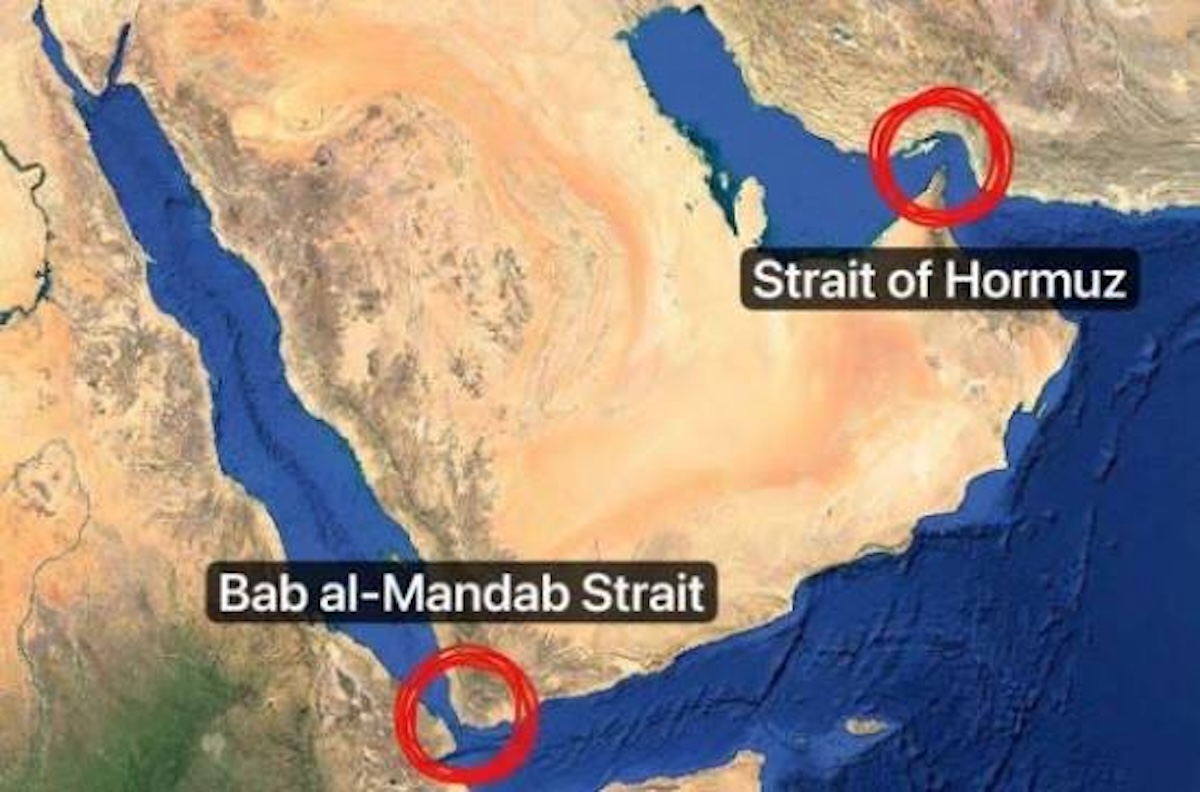
    The draft framework also lays out new rules for shipping through the Strait of Hormuz, a chokepoint for 20% of the world’s daily oil trade. Under the proposal, Iran would fully reopen the strait, collect a transit tariff to be split with Oman, and maintain exclusive control over transits, requiring individual approval for every passing vessel. Critically, the deal would ban military warships from transiting the strait, a provision that would block British and French plans to escort commercial tankers through the waterway.

    The weekend shift in momentum came after rising tensions in the Strait of Hormuz Saturday: Iran announced it was closing the waterway just two days after reopening it, citing the ongoing U.S. naval blockade, which Tehran says constitutes a direct violation of the existing ceasefire. The move was intended to demonstrate Iran’s continued sovereignty over its territorial waters and push back against the blockade, according to Iranian sources.

    On Sunday, U.S. President Donald Trump accused Iran of violating the ceasefire with the strait closure, but confirmed that U.S. negotiating teams would travel to Islamabad for a new round of talks Monday. In an interview with Fox News and a subsequent post on Truth Social, Trump issued an extreme warning, saying the U.S. would “blow up the whole country” if Iran refused to sign a deal, adding that “it’s time for the Iran killing machine to end” after 47 years of inaction by previous U.S. administrations. In response, Iran’s state-owned Tasnim news agency reported that Tehran has not yet committed to sending a negotiating delegation to Pakistan as long as the U.S. naval blockade remains in place.

    On the issue of regional armed groups aligned with Iran, the draft requires the partial disbandment of Iraq’s Popular Mobilisation Forces (PMF) and Lebanon’s Hezbollah, and could open a path to a non-aggression pact or even full peace deal between Lebanon and Israel. The proposal would require Iranian-aligned PMF factions to withdraw from border regions near Kuwait and Jordan, and cap the total number of PMF fighters at 15,000, down from the group’s current estimated 238,000 total members. For Hezbollah, the agreement would require the group to dismantle all offensive weapons targeting Israel, while allowing it to retain small arms for self-defense.

    Multiple sources have cast major doubt on the feasibility of the Hezbollah disarmament provision. One senior Lebanese source noted that Hezbollah emerged as a resistance movement in response to Israeli invasion, and that the Lebanese military lacks the capacity to defend the country from Israeli incursion, meaning the group will never agree to give up its offensive capabilities. Iran has also pushed back on the provision, flatly denying that it exercises control over either Hezbollah or the PMF, and insisting both groups make their own decisions independent of Tehran.

    Additional layers of uncertainty hang over the negotiations beyond core policy disputes. Reports are conflicting over whether Iran’s top leadership has signed off on the draft framework: one source says Supreme Leader Mojtaba Khamenei has approved the text, but other sources claim Khamenei remains severely injured from the attack that killed his predecessor, Ayatollah Ali Khamenei, having lost a leg and suffered serious facial trauma that leaves him unable to communicate. There is also no consensus on how any final agreement would be structured or announced, with negotiators only agreeing to separate “packets of agreements on different files” so far.

    Beyond Iran’s internal divides, the deal also faces major external threats from key regional actors. Israeli Prime Minister Benjamin Netanyahu has already been pressured by the Trump administration to pause Israel’s offensive in southern Lebanon, but the current draft falls far short of Israel’s core war aims: it allows Iran to retain its regime, keep its ballistic missile program, and only suspend rather than permanently end uranium enrichment. With Israel facing an election year, Netanyahu’s popularity has already suffered from a ceasefire that does not deliver a definitive victory, and senior sources confirm he will reject the current framework. There are also widespread doubts that Israel’s intelligence service Mossad will abandon its decades-long goal of forcing regime change in Iran.

    Three Gulf Arab states that suffered major damage to their energy infrastructure and urban centers during the recent conflict also stand opposed to the draft. After initially lobbying against a U.S.-led attack on Iran, the United Arab Emirates, Kuwait, and Bahrain have since pushed Trump to continue military operations to eliminate Iran’s military and nuclear capabilities, with some evidence indicating the UAE and Bahrain even participated in recent drone strikes on Iranian targets. For these states, the current draft would be seen as a betrayal of their security interests by the U.S.

  • Iranian president reaffirms stance on nuclear rights

    Iranian president reaffirms stance on nuclear rights

    TEHRAN – In a firm public statement carried by the Iranian Students News Agency on Sunday, Iranian President Masoud Pezeshkian doubled down on his country’s long-held position, rejecting United States attempts to block Tehran from accessing its legally recognized nuclear rights. Pezeshkian specifically pushed back against recent remarks by US President Donald Trump, who has claimed Iran should not be permitted to exercise its sovereign rights to nuclear development, calling the argument fundamentally unreasonable.

    Pushing for clarity on the US position, Pezeshkian noted that Washington has yet to outline any specific violation or offense that would justify stripping Iran of the nuclear rights it is entitled to under international frameworks. Beyond the nuclear issue, the Iranian president added that the country remains committed to working toward ending ongoing regional conflicts, with the goal of reaching a resolution that preserves Iran’s national dignity.

    The statement comes amid long-running international tensions over Iran’s nuclear program, with successive US administrations imposing sanctions and diplomatic pressure to curb Tehran’s activities. Pezeshkian’s remarks mark the latest formal reaffirmation of Iran’s consistent stance that it retains full sovereign right to peaceful nuclear development for civilian energy and medical purposes.

  • Pakistan tightens security ahead of expected US-Iran talks

    Pakistan tightens security ahead of expected US-Iran talks

    As the second round of long-awaited negotiations between the United States and Iran draws near, Pakistan has rolled out one of its largest security deployments in recent years, locking down key urban centers to ensure the safety of the upcoming diplomatic talks.

    Authorities in the South Asian nation have issued a high-level security alert for Islamabad, the national capital, and its adjacent garrison city Rawalpindi, the two primary hubs set to host the diplomatic event. Unnamed police sources familiar with the security plan confirm that around 20,000 regular police officers have been assigned to security duties across the so-called twin cities, with additional backup from hundreds of elite commandos including specially trained sniper units to counter potential threats.

    To reinforce the security perimeter, specialized rapid response units have also been put on high standby. Additional teams from the Punjab Highway Patrol, the Dolphin Force counter-terror unit, and the Quick Response Unit are positioned at key checkpoints and transit routes, while the integrated Safe City surveillance network and rooftop sniper outposts maintain continuous 24-hour monitoring of all public and sensitive areas across the region.

    This is not the first time Pakistan has rolled out such stringent security measures for US-Iran diplomatic engagement. Similar extensive security arrangements were implemented ahead of the first round of talks, which were launched to de-escalate rising tensions and hostilities that have disrupted stability across the Middle East in recent months.

    Security officials confirmed that advance delegations from the United States, including dedicated US security personnel, have already begun arriving in the country to coordinate logistics and security protocols ahead of the talks. As part of the finalized security plan, Pakistani authorities have enacted sweeping movement restrictions: all public and commercial transport services have been suspended across both Islamabad and Rawalpindi, and most access points to the capital’s high-security Red Zone, which houses key government buildings and foreign diplomatic missions, have been permanently sealed off for the duration of the event.

    Major five-star hotels frequently used to host high-profile international delegations, including the iconic Islamabad Serena Hotel and Islamabad Marriott Hotel, have been requisitioned by the government to accommodate negotiating teams and accompanying delegates. Hotel management has requested all existing non-official guests to vacate their rooms ahead of the talks. Additionally, all public hostels and private guest houses across the capital have been ordered to suspend operations until further official notice.

  • China sees drop in common cancer incidence amid all-round prevention, control efforts

    China sees drop in common cancer incidence amid all-round prevention, control efforts

    BEIJING – Latest official data from China’s National Cancer Center confirms meaningful public health progress: the country has recorded consistent drops in the incidence and mortality rates of multiple prevalent cancers, while the overall five-year survival rate for people living with cancer has climbed steadily in recent years.

    The figures, unveiled Friday during China’s annual national cancer prevention awareness campaign (held this year from April 15 to 21), show esophageal cancer incidence and mortality falling by roughly 4.5% year-over-year on average. Annual average declines of around 2% have also been registered in death rates for both lung cancer and nasopharyngeal cancer, according to the updated data.

    “China has achieved steady progress in cancer prevention and control, bringing more confidence and hope to patients and their families,” noted He Jie, director of the National Cancer Center. He added that China’s overall national cancer incidence now aligns with the global average.

    These encouraging outcomes follow a multi-pronged, prevention-first strategy China has rolled out over the past several years to strengthen the country’s anti-cancer defenses. Global research confirms that more than 40% of all cancer cases can be avoided through effective primary prevention, which centers on adopting healthier daily habits and limiting exposure to known carcinogens – a focus that has been central to China’s public health strategy.

    In 2023, Chinese health authorities released official guidelines for the high-quality development of national cancer prevention and control. The policy document prioritizes raising public cancer awareness and reducing modifiable cancer risk factors, and sets a national target to reach an 80% public awareness rate for core cancer prevention knowledge by 2030.

    To advance this target, China’s National Health Commission (NHC) recently released a set of 15 simple, actionable recommendations for a cancer-conscious healthy lifestyle. The guide has earned the nickname “the national cancer prevention manual” among Chinese social media users for its accessible, practical advice.

    Beyond public education, China has built out a extensive multi-tiered cancer prevention and monitoring network that expands access to early cancer screening across the country. Today, cancer registry sites cover 98.6% of all counties and districts nationwide. Screening programs for cervical and breast cancer – two of the most common cancers affecting women globally – now reach 98% of Chinese county-level administrative regions, and the early diagnosis rate for major cancers in priority regions has surpassed 55%.

    Wider access to early screening directly enables earlier intervention, which creates a clear path to better long-term outcomes for people with malignant tumors, explained Liu Jixian, head of the Department of Thoracic Surgery at Peking University Shenzhen Hospital. He noted that most patients diagnosed with early-stage cancer can achieve clinical cure through modern, diversified, comprehensive treatment protocols.

    Innovation in diagnostic and treatment technologies has also been a key driver of progress in China’s fight against cancer. A domestic-developed CAR-T therapy, for example, is set to open new treatment pathways for people living with advanced gastric cancer – a disease with high prevalence in China and limited effective options for patients who do not respond to standard second-line treatments.

    According to Zhang Jingdong, deputy director of Liaoning Cancer Hospital and Institute, the therapy marks a major targeted breakthrough for this patient population. This homegrown therapy is just one example of the rapidly growing innovation capacity of China’s pharmaceutical sector: China currently accounts for roughly one-third of all innovative cancer and general drugs in development worldwide, and outbound licensing deals for Chinese innovative drugs exceeded $130 billion in 2025 alone.

    The pace of innovative drug development in China continues to accelerate. Data from the National Medical Products Administration shows that 14 new innovative drugs have already received market approval in 2026, the majority of which are indicated for cancer treatment.

    Alongside breakthroughs in pharmaceutical development, artificial intelligence is playing an expanding role in catching cancer at its earliest, most treatable stages. DAMO PANDA, an AI diagnostic system developed by Alibaba’s DAMO Academy, has delivered promising results in early detection of pancreatic cancer – one of the deadliest forms of the disease, with very low early diagnosis rates historically. The technology is already deployed in both large urban hospitals and remote, underserved regions of China.

    Looking ahead, NHC official Liu Wen pledged continued expanded support for scientific research into key challenges in cancer prevention and control, to speed the development of new life-saving technologies and therapies. Liu added that further integration of digital and smart health technologies will help break down longstanding regional barriers to care, ensuring more standardized and equitable cancer treatment access across all parts of China.

  • Drone footage shows huge Malaysian coastal village fire

    Drone footage shows huge Malaysian coastal village fire

    A devastating large-scale fire has swept through a coastal village in Malaysia’s Sabah state, leaving a trail of destruction that has upended the lives of thousands of local residents. Aerial drone footage captured the full scale of the disaster, showing raging flames tearing through tightly packed residential structures and leaving entire neighborhoods reduced to ash and charred debris. According to official early assessments, the blaze destroyed approximately 1,000 homes, leaving most of the village’s inhabitants with nowhere to go. Local emergency management agencies have mobilized response teams to the affected area, establishing temporary evacuation centers to host the displaced residents, who lost all of their personal belongings and housing in the fast-moving fire. Rescue teams are currently working to assess the full extent of the damage, check for any unaccounted-for residents, and deliver critical emergency supplies including food, clean water, medical care, and temporary shelter to those affected. The cause of the fire is still under investigation by local authorities, who are working to determine whether it was accidental or sparked by other factors. The disaster has drawn attention to the vulnerability of low-lying coastal settlements in Sabah, many of which have narrow access routes that can slow emergency response efforts during large-scale events.

  • Fujian to transform itself into a world-renowned tourist destination

    Fujian to transform itself into a world-renowned tourist destination

    East China’s Fujian province has launched an ambitious strategic roadmap to leverage its unparalleled cultural and natural heritage to establish itself as a world-renowned international tourism hub, as the region records dramatic double-digit growth in inbound travel.

    The comprehensive plan, officially named *The Goals, Vision, and Actions to Build Fujian into a World-Renowned Tourist Destination*, was publicly announced at the Fujian Provincial Conference on Cultural and Tourism Economic Development, which took place from April 17 to 19 in Zhangzhou, a coastal city in southern Fujian. The plan lays out a clear long-term target: by 2035, Fujian will earn recognition as a leading international and Asian tourism magnet, drawing high-spending visitors who extend their stays across the province and cementing the region’s global brand reputation.

    According to the official document, the upgraded tourism sector, backed by world-class public infrastructure and iconic cultural heritage assets, is expected to drive robust economic innovation, generate large numbers of new jobs, and improve overall quality of life for Fujian’s local residents.

    Jamie Mayaki, director of the Department of International Development and Cooperation at the United Nations World Tourism Organization (UNWTO), has voiced strong support for the initiative, noting that Fujian holds one-of-a-kind competitive advantages for this transformative tourism development push.

    Mayaki pointed out that Fujian is home to five UNESCO World Heritage Sites — including the ecologically diverse Mount Wuyi, the distinctive traditional fortified Hakka villages known as Fujian Tulou, and the car-free cultural island of Gulangyu — alongside 10 entries on UNESCO’s Intangible Cultural Heritage Lists. Both counts rank among the highest of any Chinese province, a rare distinction that few regions globally can match.

    Mayaki also highlighted the region’s globally influential centuries-old tea culture, noting that Fujian, one of China’s most prominent tea-producing regions, is the birthplace of four of the world’s most beloved tea varieties: oolong, black, white, and jasmine tea. “This represents a valuable asset for the development of Fujian’s cultural and tourism industries and deserves to be further explored and fully leveraged,” he added.

    To advance Fujian’s goals, UNWTO will provide targeted support for the province’s initiative. This includes developing tailored marketing strategies for key source markets such as South Korea, Western Europe, and the global diaspora of Fujian origin. The organization will also back Fujian in hosting high-profile international tourism conferences and supporting local communities to apply for the UNWTO “Best Tourism Villages” initiative, which recognizes outstanding rural tourism destinations that prioritize sustainability and cultural preservation.

    Fujian’s strategic policy push comes on the heels of remarkable recent growth in the province’s inbound tourism sector. In 2025, the province received 5.55 million inbound visitors, marking a 51.2% year-on-year surge, while total international tourism spending jumped 63.2% to reach $6.56 billion. This strong upward trajectory provides a solid foundation for the province’s long-term transformation into a global tourism leader.

  • Chinese language education drives cross-cultural exchange

    Chinese language education drives cross-cultural exchange

    On the occasion of International Chinese Language Day 2026, industry experts and educational leaders gathered in Tianjin for a celebratory event, where they highlighted the growing global footprint of Chinese language education and its transformative role in fostering cross-cultural connection and opening new professional opportunities for international learners.

    During the event, international participants got a hands-on chance to experience China’s centuries-old intangible cultural heritage, turning the celebration into an immersive cultural exchange rather than just a ceremonial gathering. As more people around the world choose to study Chinese, the language has evolved far beyond a communication tool to become a foundational link connecting young people across China and the rest of the world, experts noted.

    Zhong Yinghua, president of the International Society for Chinese Language Teaching, emphasized that Chinese language proficiency acts as a critical key to unlocking access to an authentic, multidimensional portrait of modern China and the long-held philosophical wisdom of Eastern culture. ‘Too often, global audiences only see fragmented, one-sided narratives about China,’ Zhong explained. ‘Learning the language gives learners direct access to primary sources, local conversations and cultural contexts that allow them to build their own understanding of the country.’

    He also highlighted the outsized impact of the well-known ‘Chinese Bridge’ competition series, a global program for Chinese language learners. Far more than a simple academic contest, Zhong noted, the initiative serves as a dynamic people-to-people exchange platform that places international students in immersive, real-world social environments across China. Through these on-the-ground experiences, participants gain nuanced, first-hand insight into contemporary Chinese society and culture that cannot be gained from textbooks alone.

    Beyond cultural exchange, education leaders also pointed to the tangible professional benefits that Chinese language proficiency brings to international learners. As China continues to deepen economic and people-to-people ties with countries across the globe, demand for Chinese-speaking professionals has risen sharply across industries ranging from international trade and diplomacy to tourism and global education. For many young international students, adding Chinese to their skill set directly expands their career options and makes them more competitive in a globalized job market.

    The Tianjin event, which brought together educators, students and cultural leaders from multiple countries, underscores the growing recognition of Chinese language education as a cornerstone of global cultural dialogue. As participation continues to grow year over year, the language is increasingly serving its role as a bridge of understanding between China and the world.

  • USS Rushmore conducts blockade operations in Arabian Sea: US Central Command

    USS Rushmore conducts blockade operations in Arabian Sea: US Central Command

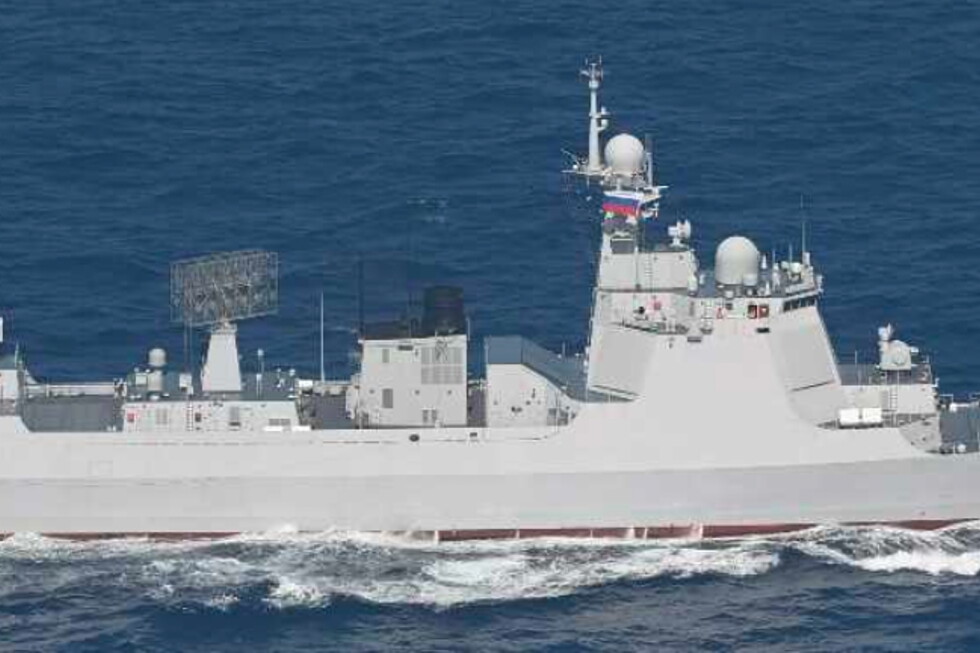
    Fresh geopolitical friction has erupted across key strategic waterways in the Middle East, as the United States has deployed multiple major naval vessels to carry out blockade operations in the Arabian Sea, prompting an immediate countermeasure from Iran that closes off the vital Strait of Hormuz. The US Central Command made the official announcement of the deployment on Saturday, confirming that dock landing ship USS Rushmore is leading the ongoing blockade operations in the Arabian Sea.

    Earlier the same day, the command posted on social media that the guided-missile destroyer USS Pinckney is conducting routine patrols across regional waters to back up the blockade mission, while the amphibious transport dock ship USS New Orleans has been assigned to monitor commercial shipping traffic moving through the area.

    This American military move comes hours after Iran’s Islamic Revolutionary Guard Corps (IRGC) Navy made its own announcement: the Strait of Hormuz, one of the world’s most critical chokepoints for global oil and commercial shipping, has been fully blocked to traffic starting Saturday evening. Iranian officials have made clear the waterway will remain closed until the United States fully withdraws its ongoing naval blockade from the region.

    Just one day before the latest escalation, on Friday, both Washington and Tehran had confirmed that the Strait of Hormuz was fully open and accessible to all commercial vessels moving through the area. Despite that mutual confirmation, former US President Donald Trump stated on his social platform Truth Social that the US naval blockade would “remain in full force.” That statement directly triggered Iran’s warning, in which Tehran pledged to permanently close the strategic waterway if the US blockade is not lifted.