# A Year After Deadly US Air Strike on Yemeni Migrant Detention Center: Grief and Unmet Demands for Justice for Ethiopian Victims
For tens of thousands of young Ethiopians trapped between persistent poverty at home and limited legal pathways to work abroad, the dangerous smuggling route across the Red Sea to Yemen is often seen as the only shot at a better future. Many set out with little more than a dream: to earn enough to lift their families out of hardship, build a stable life, and return home with dignity. For dozens of these young men, that dream ended abruptly on April 28, 2025, when a United States air strike hit a migrant detention facility in Saada, a Houthi-held region of northwest Yemen, leaving at least 68 people dead and dozens more permanently injured.
All of those killed were Ethiopian men, most in their early 20s, who had already endured years of peril and uncertainty before the strike. Among them was 20-something Hiwot Mehari, who grew up in the war-ravaged Tsirae district of Ethiopia’s Tigray region. Born into crushing poverty with almost no access to economic opportunity in his hometown, Mehari made the fateful choice to take the smuggling route out of Ethiopia, crossing the Red Sea to Yemen with plans to eventually reach Saudi Arabia for work. He spent two years in Rago, the lawless, violence-plagued border region between Yemen and Saudi Arabia, before being captured by Saudi border security and detained in the Saada facility.
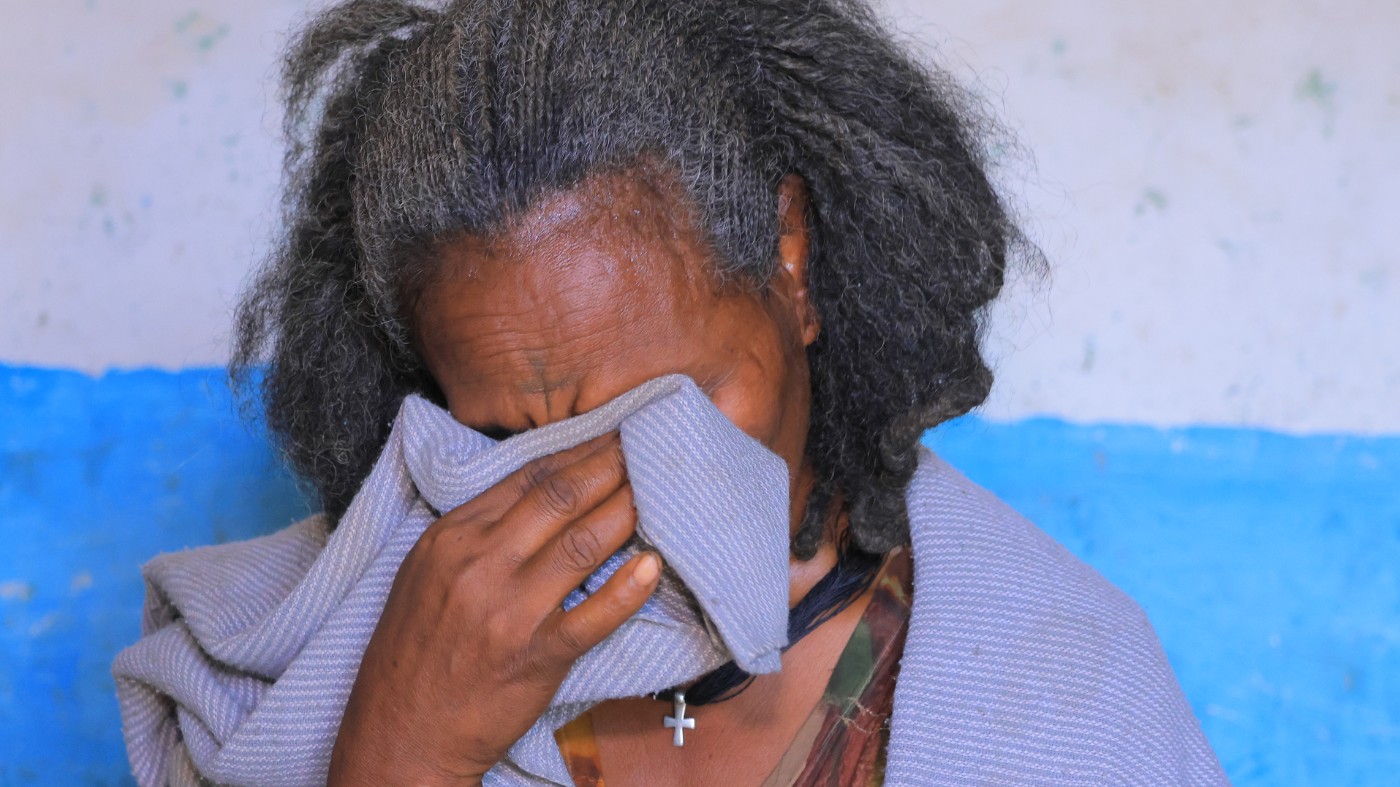
Just 24 hours before the strike, Mehari spoke to his parents, telling them confidently, “They will release us soon and we will reunite.” The next day at noon, a neighbor delivered the devastating news to his family at their Tigray home. Mehari’s father, Mehari Akeza, says he still cannot process the loss of his son, who he waits for still. “I still can’t accept that my son is gone. I sometimes keep telling myself he will come back, and I wait for his call. How could I believe it? I wasn’t even able to properly bury my son,” Akeza told Middle East Eye in an interview, sitting alongside his heartbroken wife. His son’s mother, Mebrat Gebre, summed up the family’s agony with a question that remains unanswered: “America killed my son, my pride, why? I have never heard of a government killing prisoners for no reason.”
Mehari’s family is far from alone in their grief. The tragedy has mirrored the pain of hundreds of other Ethiopian families who have lost young relatives to the risks of irregular migration, a crisis that continues to drive thousands of young Ethiopians toward the Gulf each month despite its dangers. Another victim of the strike, 22-year-old Tsiruy Hailu, had left Ethiopia for Yemen in 2022 to fulfill his dream of supporting his family after his father died when he was a child. As the eldest of four children, Hailu had become the family’s sole breadwinner after his father’s death. “My soul is broken, he was my all,” his mother Berhan Akeza, 47, told reporters. “He wasn’t only my son, but also the one who carried the burden of the family after his father’s death 12 years ago.” Akeza’s pain was deepened after she saw graphic footage of the destroyed detention center, showing bodies crushed under rubble. Having already survived the Tigray war, which saw United Arab Emirates drone strikes kill countless civilians, she says the trauma of her son’s death haunts her constantly: “I saw the horrific footage on someone’s mobile phone. Sometimes, I picture my son lying with his body dismembered. I can imagine how drones kill a human being.”
Beyond the dozens killed, the strike left dozens more survivors facing permanent disability, lifelong trauma, and shattered futures. Middle East Eye spoke to three severely injured survivors, two still stranded in Yemen and one who has returned to Ethiopia, all dependent on others for basic care. Twenty-seven-year-old Haben Tuemzgi, who migrated to Yemen seven years ago hoping to save enough to open a business back home, suffered catastrophic injuries to both his legs and hands, with shrapnel still embedded in his bones that continues to cause worsening pain due to a lack of adequate medical care in Yemen. Speaking from Aden via WhatsApp, Tuemzgi described his existence as a limbo between life and death: “I am like a man between death and life. Sometimes I wish I had died instead of living like this. When I left my home, I had two legs and now I have to go back on a stretcher. Trump’s America has made all my dreams evaporate into thin air. What else can I do, I am poor. Who can sue the world’s most powerful?”
Twenty-five-year-old Haile Wolday, another survivor, lives with constant pain from wounds to his leg and hand, saying he sees no path forward. “I have no future to see. I came here to make money and feed my family but now people are feeding me,” he said. A third survivor, who returned home to Tigray’s Gulomekeda district and requested anonymity, suffers from severe injuries to his leg and eye that require ongoing treatment he cannot afford. “I was a man with a big dream before America turned my life upside down,” he said. “I never thought that I could be a burden to my family.”
More than a year after the strike, no progress has been made toward holding anyone accountable, providing answers to grieving families, or delivering compensation to victims and their relatives, according to Amnesty International. “One year on, US officials have failed to hold anyone accountable or even to clarify the status or outcome of the investigations they had announced a year earlier,” Erika Guevara Rosas of Amnesty International said in April. “Families of those killed in the attack on the detention centre in Yemen are still being denied basic information about what happened, [and] remain without justice for their loved ones.” The US State Department has not responded to requests for comment on the strike.
For the families of the victims, who live in remote rural areas of northern Ethiopia that are still recovering from years of brutal war, the silence from global powers has only deepened their pain. “The world seems to have forgotten our children’s death. We want compensation,” said Hiwot Mehari’s father Mehari Akeza. Girmachew Adugna, an Ethiopian migration scholar specializing in the Horn of Africa, says the demands of grieving families are clear: “The families of Ethiopian migrants who were killed in the strike deserve justice, including a transparent investigation, accountability and appropriate compensation where warranted.” He added that Ethiopia’s current migration framework fails young men who are pushed toward dangerous irregular routes: “Existing bilateral labour agreements largely provide opportunities for domestic work for women, leaving many young men with few legal migration options. Ethiopia’s labour migration strategy should place greater emphasis on protecting the rights, safety and wellbeing of migrant workers from when they depart to when they return.”
The strike has drawn attention to the growing irregular migration crisis in the Horn of Africa. In recent years, the Ethiopian government has sought to crack down on unregulated migration and signed bilateral agreements with Gulf states to improve working conditions for Ethiopian laborers, with the country’s labor and skills ministry reporting that more than 500,000 workers were legally dispatched abroad in 2025, and the government facilitates the repatriation of thousands of vulnerable migrants each year with the support of humanitarian groups. Still, the combination of limited decent work opportunities at home, post-conflict economic collapse in regions like Tigray, and a lack of legal migration pathways for young men continues to push thousands to take the dangerous route through Yemen. Data from the International Organisation for Migration shows that irregular migration to Yemen is rising: in June 2025 alone, more than 13,300 migrants entered Yemen, 95 percent of them from Ethiopia. Many of these migrants end up detained, abused, or killed before they ever reach their destination. For the families of the 68 young men killed in the Saada strike, the wait for justice and answers will continue, as the world’s most powerful nation remains unaccountable for their deaths.