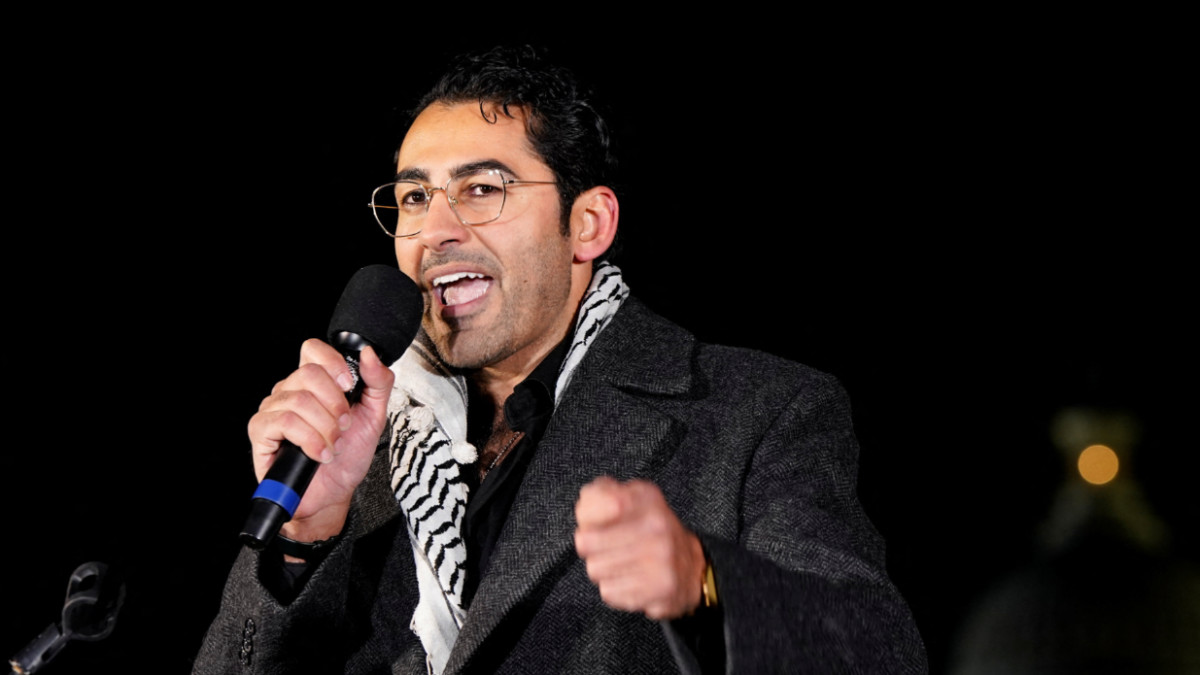
On Tuesday, a federal appeals court in the United States reversed a lower court’s 2025 order that had required the Trump administration to release Palestinian-American permanent resident Mohsen Mahdawi from immigration detention, delivering a significant blow to free speech advocates and supporters of Palestinian rights.
While the ruling does not explicitly mandate that law enforcement re-arrest Mahdawi, legal analysts warn it establishes a troubling precedent that will narrow pathways for Green Card holders to secure release from immigration detention when challenging their incarceration through claims of violated First Amendment rights.
Mahdawi, 35, was a graduate student pursuing a master’s degree at Columbia University’s School of International and Public Affairs when he was taken into custody by U.S. Immigration and Customs Enforcement (ICE) agents. His detention came directly after he joined campus protests condemning Israel’s military campaign in Gaza, which the original reporting describes as genocide. The activist, who holds U.S. permanent resident status, was apprehended by ICE in mid-April of last year, while he was attending a routine interview to process his application for U.S. citizenship in Vermont.
Following his detention, Vermont-based U.S. District Judge Geoffrey Crawford granted Mahdawi release on bond, ruling that as a permanent legal resident, he was entitled to the same First Amendment free speech protections extended to U.S. citizens. But the Manhattan-headquartered Second U.S. Circuit Court of Appeals overturned that ruling this week, holding that Crawford lacked legal jurisdiction over the matter — arguing the case should have been adjudicated exclusively in immigration court.
A Palestinian born in a refugee camp in the Israeli-occupied West Bank, Mahdawi relocated to the U.S. a decade ago. In 2023, he co-founded Columbia University’s Palestinian Student Union alongside Mahmoud Khalil, a high-profile leader in the national pro-Palestinian student movement who has also been targeted by the Trump administration. Tuesday’s appeals court decision aligns with a nearly identical ruling issued by another U.S. appeals court earlier this year, which also found the lower court judge that granted Khalil release from detention lacked jurisdiction to hear his case. Like Mahdawi, Khalil is also a Green Card holder.
Notably, neither case has resulted in a formal ruling on the substance of the two activists’ First Amendment claims. But taken together, the dual jurisdiction rulings create a new legal barrier that will make it far more difficult for non-citizens held in immigration detention to challenge their imprisonment on the grounds that their detention violates their constitutional free speech rights.
In July, Khalil filed a federal lawsuit against senior Trump administration officials, as well as conservative think tank the Heritage Foundation and pro-Israel advocacy groups Betar and Canary Mission. The suit seeks financial damages for what it alleges is an unlawful conspiracy targeting pro-Palestinian activists. It claims Khalil’s targeting was motivated by explicit anti-Palestinian bias, and that private anti-Palestinian organizations colluded with senior administration officials to target Khalil and other advocates for Palestinian human rights.