An international incident sparked widespread public outrage after a Mexican man made a widely recognized anti-Asian racist gesture during a World Cup match between South Korea and the Czech Republic, held in Guadalajara, Mexico last Thursday. The perpetrator, Ulises Fernando Bernal Miramontes, who served as president of the College of Geomatics and Topographic Surveying Engineers of Jalisco (CITGEJ), has since issued a public apology and been removed from his leadership position over the offensive act. The incident was captured by popular South Korean content creator Yoon Su-jin, better known online by her alias Ino Cat, who boasts 6.6 million YouTube subscribers and more than 2 million TikTok followers. Yoon posted the clip to her Instagram, documenting the moment Bernal, seated directly behind her in the stadium stands, pulled the corners of his eyes into a slanted shape — a gesture long understood as a demeaning, racist mockery of East Asian people — before laughing at the action. In her caption accompanying the viral video, Yoon wrote: “You traveled across the world for the World Cup… and experienced racism…” The clip quickly spread across major social media platforms, amassing more than 65,000 comments and at least 120,000 shares or reposts within days. The overwhelming majority of reactions condemned Bernal’s behavior, with many commenters expressing disgust at the casual, unapologetic racism on display. One widely liked comment read: “Ugh so terrible. And then he laughs like he cracked the best joke.” Notably, dozens of commenters identifying themselves as Mexican also issued collective apologies on behalf of their compatriot, stressing that Bernal’s offensive actions do not represent the views or behavior of the broader Mexican population. In the wake of the viral backlash, leadership of CITGEJ confirmed to the New York Post that Bernal had been removed from his post as organization president. Two days after the incident, on Sunday, Bernal released a formal public apology addressing the widespread circulation of the clip and the heated public reaction it sparked. “For that reason, I believe it is important to offer a public apology,” he wrote in the statement. “I sincerely regret everything this situation has caused. I have taken time to reflect on what happened and I understand the responsibility I have in this moment.” Bernal declined to attempt to justify his action or debate varying interpretations of the gesture, adding: “Throughout my personal and professional life, I have always tried to treat others with respect, and I will continue working to ensure that my actions consistently reflect those values.” The match itself ended with South Korea staging a second-half comeback to secure a 2-1 victory over the Czech Republic.
标签: Asia
亚洲
-

Why Delhi feels hotter than what temperatures show
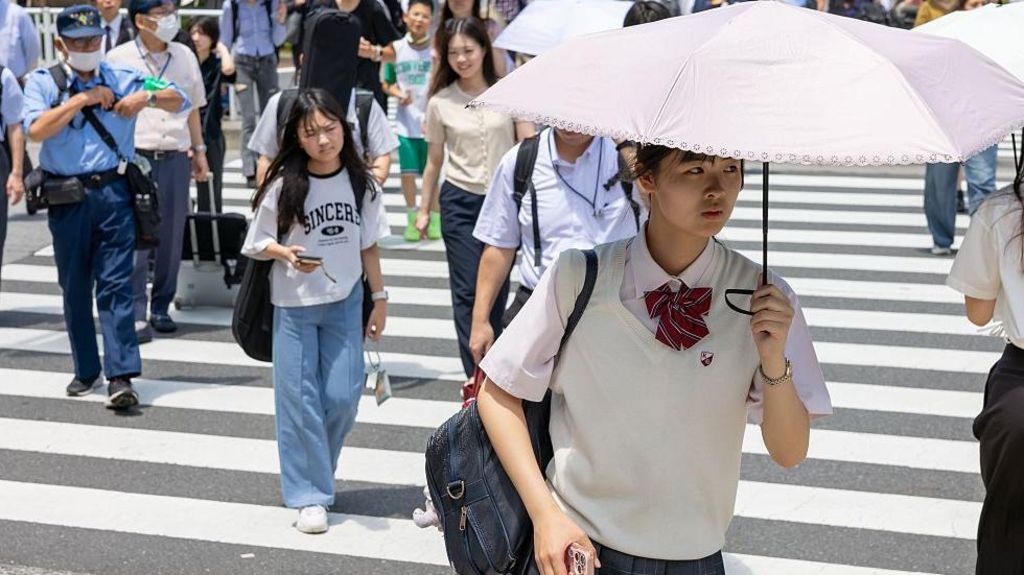
For weeks, New Delhi, India’s bustling capital, has been trapped in the grip of an unrelenting severe heatwave, with official daily air temperatures regularly climbing past the 40-degree Celsius mark. Weather forecasts routinely note that “real feel” temperatures run even higher, but a new on-the-ground investigation by Greenpeace India has laid bare just how stark the gap between official readings and the dangerous heat experienced by street-side workers and low-income residents actually is.
On the Tuesday the survey was conducted, the Indian Meteorological Department (IMD) logged an official maximum air temperature of 43.5C across the capital. But when Greenpeace researchers deployed a high-resolution thermal camera to measure surface temperatures across crowded streetscapes, the readings told a far more alarming story: in sun-exposed spots, surface temperatures hit as high as 64C, more than 20 degrees above the official air measurement.
It is important to note the difference between the two metrics: IMD’s official data measures ambient air temperature under standardized shaded conditions, while thermal imaging captures the temperature of solid exposed surfaces. On intense heat days, asphalt roads, concrete infrastructure, idling vehicles, and open ground absorb solar radiation far more intensely than the surrounding air, pushing their temperatures far higher than official air readings. These extreme surface temperatures amplify heat absorption by the human body through radiant heat, making urban areas feel vastly hotter than official forecasts suggest—especially in areas with almost no tree cover or shade.
The Greenpeace team’s first measurement stop came at midday at the IIT flyover, one of south Delhi’s busiest traffic intersections, where hundreds of thousands of vehicles pass daily and peak-hour waits can stretch to 10 minutes. When researcher Nibedita Saha pointed the camera at shaded areas under the flyover, the reading hit 42C. But when she shifted focus to idling motorcyclists waiting under direct sun at the stop line, the reading spiked to 64C. The open pavement where the team stood registered 61C—yet just 10 feet away under the cover of a single tree, the temperature dropped sharply to 39.8C.
“Consistent exposure to such extreme heat can trigger serious, life-threatening health complications,” Saha explained, noting the transformative impact of even one tree. “We felt immediate relief just moving that short distance. That’s how much difference a single tree can make.”
Medical experts warn that the gap between official temperatures and actual on-the-ground heat creates severe public health risks. Dr. A Fathahudeen, a leading pulmonologist, explains that the human body maintains a core temperature of 37C, and prolonged exposure to high surrounding heat can push this core temperature higher. “When core temperature exceeds 40C, the body stops functioning normally,” he said. “The most common issue is heat exhaustion, marked by extreme sweating, headaches, and fatigue. In more severe cases, people experience confusion, disorientation, and even seizures. Without urgent medical intervention, patients can develop multi-organ failure and die.”
To reduce risk during heatwaves, Dr. Fathahudeen advises the public to drink water regularly even when not thirsty, wear loose light-colored clothing, and use sun protection like umbrellas. He also called on the Indian government to enforce mandatory restrictions banning outdoor labor between 10:30 a.m. and 3 p.m., when heat is at its peak.
But for Delhi’s millions of low-income workers who rely on daily street-side work to survive, following this guidance is not a viable option. When the Greenpeace team traveled to Old Delhi’s iconic Red Fort to speak with street vendors, they found hundreds of people still working through the brutal heat, driven by the need to earn enough to feed their families.
“What choice do poor people like me have?” asked Sanjana Ben, a dry fruit vendor who sells her goods from the pavement. She sat on a thin cloth cushion on the scorching ground, with stacks of dry fruit laid out in front of her. The thermal camera recorded a temperature of nearly 40C on her face, but the ground just inches from her body hit 51.4C, and nearby open pavement registered 57C.
“Sometimes my head starts spinning and my vision blurs,” Sanjana Ben told the reporting team. “When the ground feels too hot, I stand up for a minute, but I can’t stand all day, so I have to sit back down.”
Nearby footwear vendor Mohammad Mahfouz Alam described the unrelenting nature of the heat, which seeps up from the ground and beats down from the sun with no escape. “There’s no relief day or night,” he said. “I feel sluggish all day, my legs ache, and I get home completely exhausted. Even after I bathe, I can’t sleep—the fan just blows hot air, and I toss and turn all night.”
Alam added that Delhi’s weather has grown far more erratic over the years, a shift that hits street-dependent workers the hardest. “Seasons aren’t predictable anymore—summer, winter, monsoon all come and go when they shouldn’t, and it hits us worst of all,” he said. Gesturing to the tree behind his stall, he added, “If this tree wasn’t here, I couldn’t work here at all. The day it’s cut down, that’s the end of me working this spot.” When the thermal camera scanned Alam’s surroundings, it registered 58.65C on nearby open pavement, and 44.8C on his shoulder.
A short walk from the Red Fort stalls lies Chandni Chowk, Delhi’s historic bustling shopping district, where a main pedestrian promenade was built years ago with stone seating areas for visitors to rest. But with no shade covering the open promenade, the seats go unused: the thermal camera registered 56.9C on the concrete pillar where a young toy vendor was sitting.
By the time the team traveled to Sundar Nagri, a lower-middle-class neighborhood in east Delhi’s Seelampur area, it was past 5 p.m. and the sun had begun to weaken. Even so, sun-exposed concrete surfaces were still scorching: a public bench at the neighborhood entrance registered 51.6C.
In this crowded neighborhood, small concrete homes are packed tightly along narrow lanes barely wide enough for one person to pass. For two weeks, 19-year-old Abhishek has kept a “Garmi Khata”, or heat register, for a Greenpeace research project, documenting how the extreme heat has disrupted his family’s health, sleep, income, and daily routines. When the team visited, the thermal camera registered 42C just outside Abhishek’s home. Walking up a narrow flight of stairs to the family’s two-room home, the team found almost no reprieve indoors: temperatures of dishes and kitchen surfaces on the wall hovered around 40C, barely lower than the outdoor reading.
The home has no window or ventilation to let trapped hot air escape, and only a small ceiling fan that circulates the same stale hot air through the rooms. “When it’s this hot, I feel nauseous all the time,” said Abhishek’s sister Kajal. “You can’t stand being outside, but you can’t stand being inside either.”
Abhishek read a recent entry from his register, which detailed how the heat has upended the family’s daily life: “This week’s heat has changed all our routines. Everyone gets home late, and no one can sleep properly,” he wrote. “In the mornings, we turn off the fan to cook, and the heat becomes unbearable. My sister can barely get her chores done, and my mother is more tired than I’ve ever seen her.”
For Abhishek, the worst part of the heatwave is the sweltering nights. “I cut my hair short, I get up multiple times a night to wash my face, I even sleep without a shirt, and I still can’t sleep,” he said. “Outside, at least there’s a little breeze. Inside, it feels like standing right next to a burning oven.”
-

What to know about the G7 summit Trump is attending in France
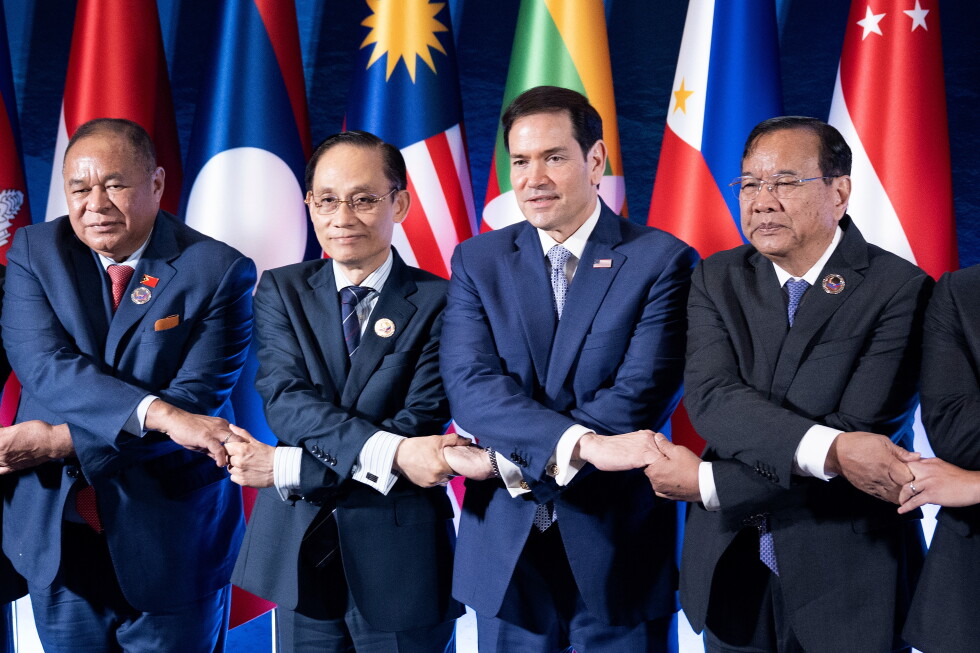
Fresh off celebrating his 80th birthday, U.S. President Donald Trump has traveled to the scenic Alpine spa town of Evian-les-Bains, France, for the annual summit of the G7 group of major world democracies, where simmering tensions with U.S. allies over conflicts, trade, and geopolitics are set to take center stage.
The entire narrative of the three-day gathering, running from Monday to Wednesday, shifted dramatically just hours before Trump departed Washington: he announced a landmark agreement to end the recent U.S.-Iran conflict, a development that has already altered expectations for negotiations between leaders. Only days earlier, the ceasefire between Washington and Tehran hung in the balance, with offensive military operations resuming after a brief pause, leading analysts to predict heated clashes and an early exit by Trump from the heavily secured summit zone. French President Emmanuel Macron, this year’s host, has sealed off the lakeside town to protect visiting leaders and invited guests, creating a tightly controlled security bubble for the talks.
The G7, founded in 1975 as a forum for leading industrialized democracies to coordinate responses to global economic crises, counts Canada, France, Germany, Italy, Japan, the United Kingdom, and the United States as its core members. Over its 50-plus year history, the bloc has maintained an unbroken record of full attendance by all sitting leaders, and has limited membership exclusively to democratic nations — a policy that allowed Russia to join as a G8 member in 1998 following the collapse of the Soviet Union, but resulted in Russia’s expulsion in 2014 after its illegal annexation of Ukraine’s Crimea peninsula, and has continued to exclude China, which is ruled by the Chinese Communist Party. France took over the rotating G7 presidency from Canada last year, and will hand the role to the United States in 2027.
Macron has structured the summit agenda to place the most divisive topics in the opening 24 hours, starting with the new Iran ceasefire deal and the ongoing war in Ukraine, which has slipped down the list of the Trump White House’s foreign policy priorities in recent months.
Ukrainian President Volodymyr Volodymyr Zelenskyy, an invited guest, will lead Tuesday morning’s dedicated session on Ukraine, where he will have a critical opportunity to lay out tangible progress made by Ukrainian forces against Russia’s full-scale invasion. Maria Snegovaya, a Russia expert at the Washington-based Center for Strategic and International Studies, notes that Zelenskyy comes into this meeting with a far stronger hand than he had during a tense Oval Office meeting with Trump and Vice President JD Vance last year. If Zelenskyy can successfully convince Trump that Russian President Vladimir Putin cannot secure a military victory in Ukraine, experts say he may be able to persuade the U.S. president to back pushing Putin into formal peace negotiations. Snegovaya adds that the Trump administration tends to view nations more favorably when they hold tangible leverage on the ground, a shift that works in Zelenskyy’s favor this time around.
Discussions over the new Iran agreement, set for a Tuesday lunch focused on Middle East policy, remain unpredictable. The formal ceasefire deal is scheduled to be signed this Friday, with 60 days of technical negotiations to work out core details. G7 allies that Trump criticized for refusing to join the U.S.-Israel offensive against Iran earlier this year are already breathing a sigh of relief: if the deal reopens the strategic Strait of Hormuz, the world’s most critical chokepoint for global energy exports, it will restore free flow of Persian Gulf oil and gas to global markets, easing pressure on already strained energy prices across Europe.
France and the United Kingdom have already prepared plans to clear potential mines from the Strait of Hormuz and provide escorted safe passage for commercial tankers, and are ready to launch the mission once a permanent ceasefire is confirmed. G7 leaders will also discuss expanding alternative energy export routes out of the Persian Gulf, including pathways through Egypt. The leaders of Egypt, Qatar, and the United Arab Emirates have been invited to join these talks, and Trump will hold separate one-on-one meetings with each of these regional leaders during the summit.
On Wednesday, the summit will shift to economic discussions, where China — though not a G7 member — is expected to be a top focus. G7 nations have grown increasingly concerned that China is flooding global export markets with heavily subsidized goods, undercutting domestic industries across the bloc and leading to widespread job losses. With an economy larger than all G7 members except the United States, China’s trade practices have emerged as a shared point of contention for the bloc in recent years.
Other items on the packed agenda include regulatory and policy talks on artificial intelligence, with a specific focus on protecting children and young people from online harms, as well as discussions over new economic development aid packages for low-income nations. Alongside Zelenskyy and the regional Middle Eastern leaders, Indian Prime Minister Narendra Modi, Brazilian President Luiz Inácio Lula da Silva, South Korean President Yoon Suk Yeol, and Kenyan President William Ruto will also take part in select portions of the summit.
John Kirton, a leading G7 scholar at the University of Toronto, explains that the informal, closed-door structure of G7 summits has long been key to their impact. “Many of the great G7 summit initiatives have come from leaders’ spontaneous collaboration, created by them on the spot, based on free, unrestricted dialogue about the values, shared memories and even common interests like sports that they share,” Kirton notes. But this year, long-running friction between Trump and key European allies has been amplified by Trump’s decision to launch the Iran offensive alongside Israel in February without any prior consultation with allies, making the tone of this first post-offensive gathering uncertain. Many analysts had predicted sharp confrontations ahead of the ceasefire announcement, but the last-minute deal has opened the door for a more cooperative tone — even as core disagreements on multiple critical issues remain.
-

Pro-Israel supporters attack protesters at controversial London real estate event
On a Sunday in West London, tensions over Israeli settlement expansion boiled over into violent clashes outside a real estate event marketing occupied Palestinian land, leaving multiple people arrested and drawing widespread condemnation of the gathering from political and human rights figures across the United Kingdom.
The controversial gathering, dubbed the ‘Great Israeli Real Estate Event’, was held inside Edgware United Synagogue and organized by Israeli real estate firm My Home in Israel. It was designed to promote the sale of residential and commercial properties located in illegal Israeli settlements built on the occupied West Bank, territory that Palestinians claim as the core of their future sovereign state. Under international law, all Israeli settlements established in the West Bank after the 1967 Six-Day War are classified as illegal, a position reaffirmed repeatedly by United Nations resolutions and global human rights bodies.
Hundreds of demonstrators from both pro-Palestine and pro-Israel factions gathered outside the venue to stake out opposing positions on the event. Reporters on the ground from Middle East Eye, the independent outlet that first broke detailed coverage of the clashes, documented at least one physical assault: a pro-Israel supporter was filmed throwing multiple punches at a pro-Palestine activist who stood behind a metal safety railing, before uniformed officers intervened and escorted the attacker away.
Heated rhetoric permeated the standoff. Pro-Israel counter-protesters were repeatedly recorded chanting the aggressive slogan ‘There is no Palestine, we flattened it’, and even young children in the pro-Israel crowd were heard hurling misogynistic slurs at pro-Palestine campaigners. Many pro-Palestine demonstrators, including Jewish anti-Zionist activists, framed the event as nothing less than state-sanctioned theft of Palestinian land.
Oscar Leyens, a long-time Jewish pro-Palestine activist and member of the International Jewish Anti-Zionist Network, called the gathering an affront to Jewish values of anti-oppression. ‘I’m a true practising and very proud Jew who sees what’s going on between Israel and the Palestinians as an abomination of Judaism,’ Leyens told Middle East Eye. ‘This event is land theft. They are trading land to explicitly only a Jewish population in order to organise settlers to move to their apartheid state. This is a disgrace to Jewish history of resistance against fascism and racism. They are the fascists, they are the racists, and we will not stand for a moment while they trade in Palestinian land.’
Andrey Khrzhanovskiy, a journalist who has spent years documenting Israeli settler violence against Palestinian communities in the West Bank, said the violent clashes outside the London synagogue mirrored the aggression he had witnessed firsthand in occupied Palestinian territory. ‘We are surrounded by a bunch of Zionists who are counter-protesting and attacking people. A bunch of Palestinian activists were attacked by the Zionists and then got arrested,’ he said. ‘This is very reminiscent of everything that I’ve seen in the West Bank… I feel like I’ve been here before.’
By the end of the day of demonstrations, London’s Metropolitan Police Service announced that 15 people had been taken into custody in connection with the unrest. Of those arrested, seven identified as pro-Israel supporters, six as pro-Palestine demonstrators, and the affiliation of two remaining detainees remained unclear as of initial police statements.
The event itself drew fierce political and legal pushback in the UK days before it even began. Just two days prior to the gathering, more than 100 British Members of Parliament signed an open letter to UK Foreign Secretary Yvette Cooper urging authorities to cancel the event entirely. The letter argued that allowing the promotion and sale of settlement property directly contradicted existing UK government guidance that warns businesses against engaging in any settlement-related economic activity, and would violate the UK’s own obligations under international law.
London Mayor Sadiq Khan also publicly came out against the gathering, confirming he had raised his concerns directly with Metropolitan Police leadership. ‘I share concerns about the Great Israeli Real Estate Event taking place in our city, which I oppose, and that’s why I’ve discussed this directly with the Met Police,’ Khan said. ‘I’m informed that any allegations of criminality relating to the potentially unlawful sale of property at the event would be assessed by the Met with a view to investigation.’
The list of participating organizations, released publicly on Facebook by Emanuel Vatari, CEO of event sponsor Emanuel Group, confirms that multiple Israeli firms with deep ties to settlement construction took part in the event. Among them were Harey Zahav, a development firm that openly lists properties for sale in Negohot, an illegal settlement in the southern Hebron Hills, and the Meshulam Levinstein Group, a diversified construction and real estate conglomerate that has built both residential and commercial projects in illegal settlements across the West Bank and occupied East Jerusalem, including a large housing and retail development in the East Jerusalem settlement neighborhood of Homat Shmuel. Additional participants included Tivuch Shelly, an agency that advertises homes in the large West Bank settlement of Ma’ale Adunim, and Africa Israel Residences, a subsidiary of the Africa Israel Group that has developed multiple settlement projects across occupied Palestinian territory.
The International Centre of Justice for Palestinians (ICJP), a UK-based legal advocacy organization, delivered a formal legal notice to Edgware United Synagogue on the day before the event, putting venue leadership on notice of significant legal and reputational risks for hosting the gathering. The ICJP letter, reviewed by Middle East Eye, noted that the event was explicitly marketed as a platform for the sale of property in the occupied Palestinian territories, and that UK government guidelines clearly warn businesses away from such activity due to its legal and ethical risks under international law.
-

‘Reminiscent of the West Bank’: Pro-Israel activists attack protesters at London settlement event
A tense demonstration outside a London venue hosting an Israeli real estate event tied to illegal settlements in occupied Palestine devolved into violence on Sunday, as pro-Israel counter-protesters assaulted anti-apartheid activists opposing the controversial gathering. The event, branded the “Great Israeli Real Estate Event”, was held at Edgware United Synagogue in north London, drawing immediate condemnation from human rights organizations and political figures who argue it normalizes the displacement of Palestinian people and the expansion of unlawful Israeli settlements.
Anti-apartheid and pro-Palestine demonstrators assembled outside the synagogue to highlight the event’s core purpose: marketing and selling property built on occupied Palestinian land that the international community universally recognizes as illegally occupied. Public records of participating companies, published by the event’s sponsor earlier in the week, confirmed that at least four participating entities either explicitly advertise real estate in illegal Israeli settlements or are directly involved in settlement construction in the occupied West Bank.
Andrey Khrzhanovskiy, a journalist and long-standing activist working to document Israeli settler violence in the West Bank, was on site during the confrontation. He told independent outlet Middle East Eye that the aggression from pro-Israel counter-protesters mirrored exactly the violence he had witnessed first-hand in occupied Palestinian territories. “We are surrounded by a bunch of Zionists who are counter-protesting and attacking people — a bunch of Palestinian activists were attacked by the Zionists and then got arrested,” Khrzhanovskiy explained. “This is very reminiscent of everything that I’ve seen in the West Bank… I feel like I’ve been here before.”
Disturbing footage of the confrontation, circulated widely across social media platforms, captured extreme rhetoric from pro-Israel counter-protesters. The crowd chanted “There is no Palestine, we flattened it”, while even children in the counter-protest were recorded shouting misogynistic slurs at pro-Palestine and anti-apartheid demonstrators. Online footage also shows anti-Zionist activists entering the event space to disrupt the proceedings and publicly denounce the trade of illegally seized Palestinian land.
Criticism of the event extended far beyond the protest line. More than 100 sitting British Members of Parliament have joined human rights groups in calling on the UK government to block the gathering over its explicit ties to illegal settlement expansion. For many Jewish activists opposing Israeli apartheid, the event held at a British synagogue represents a profound betrayal of Jewish values and history. Paul, one of the Jewish pro-Palestine activists speaking to Middle East Eye from the protest, emphasized that the occupation and displacement of Palestinians violates core tenets of his faith.
“I’m a true practising and very proud Jew who sees what’s going on between Israel and the Palestinians as an abomination of Judaism,” Paul said. “This event is land theft. They are trading land to explicitly only a Jewish population in order to organise settlers to move to their apartheid state. And in the International Jewish Anti-Zionist Network, we say this is a disgrace to Jewish history of resistance against fascism and racism. They are the fascists, they are the racists, and we will not stand for a moment while they trade in Palestinian land.”
Amnesty International UK has echoed these criticisms, framing events like this London gathering as “apartheid and annexation with a sales pitch”. Ahead of the event, legal advocacy group The International Centre of Justice for Palestinians delivered an official legal notice to Edgware United Synagogue, formally warning leadership of the “serious legal and reputational concerns regarding the event” hosted on their property.
Maya Saad, a Middle East Eye reporter covering the protest on the ground, confirmed that cross-party political opposition and widespread rights advocacy had failed to convince the UK government to intervene to cancel the event, leaving protesters to challenge the gathering directly outside the venue. The confrontation marks the latest high-profile flashpoint in growing global tensions over Israeli settlement expansion and apartheid policies toward Palestinians, as grassroots movements push for stronger governmental action to hold Israel accountable for violations of international law.
-

Somaliland president meets Israeli counterpart in first Jerusalem visit
In a moment that marks a pivotal shift in regional geopolitics, Abdirahman Mohamed Abdullahi — popularly known by his nickname Cirro and serving as the president of the self-declared independent state of Somaliland — arrived in Israel on Sunday, making history as the first Somaliland head of state to conduct an official state visit to the Jewish nation. The trip comes roughly six months after Israel made a groundbreaking move to recognize Somaliland as an independent sovereign state, a step no other United Nations member state had previously taken.
Taking to the social platform X to share his first impressions after landing, Cirro expressed deep gratitude for the reception he received from Israeli President Isaac Herzog. He called the journey a once-in-a-generation milestone for the relationship between the breakaway East African territory and Tel Aviv. “For thirty-five years, the people of Somaliland have built a peaceful, democratic, and resilient nation. We asked the world: Do you see us? Israel answered first,” Cirro wrote in his public post, which was paired with an on-the-ground photo from his arrival. “Today, history is being written, and Somaliland stands ready to forge a shared future founded on friendship, cooperation, and mutual respect.”
According to reporting from Israeli daily newspaper Maariv, the two-day visit will see Cirro hold additional high-level meetings with Israeli Prime Minister Benjamin Netanyahu and Foreign Minister Gideon Saar, beyond his initial talks with Herzog. Israeli President Herzog struck a collaborative tone in his response to the visit, noting that both sides aim to expand joint work across multiple priority sectors. “We both seek security and stability in the region and in the Horn of Africa. We both see the importance of protecting maritime freedom,” Herzog stated.
To understand the full context of this historic encounter, it is necessary to outline Somaliland’s decades-long path to international recognition. The autonomous region in northern Somalia declared its separation from the rest of Somalia in 1991, following the collapse of the Siad Barre regime. To date, however, the United Nations, the African Union, and nearly every sovereign government across the globe still formally recognize the territory as an integral part of Somalia, leaving Somaliland’s independence bid isolated on the global stage.
That changed this past December, when Israel became the first UN member state to formally grant recognition to Somaliland as an independent country. Regional analysts have widely framed the move as a calculated step to advance Israeli geopolitical interests in the Horn of Africa and the Red Sea region. The territory sits just 30 kilometers south of the Bab el-Mandeb Strait, the critical narrow waterway that links the Gulf of Aden to the Red Sea — one of the world’s most vital shipping lanes for global trade.
A permanent Israeli foothold in Somaliland would place Israeli military and intelligence assets within very close proximity to Yemen’s Houthi movement, which has launched repeated attacks on commercial shipping in the Red Sea since late 2023. The Houthis have stated their attacks are a retaliation for Israel’s military campaign in Gaza against Hamas. For Israel, establishing a presence in Somaliland also advances a broader goal of countering the expanding influence of Iran and its regional allied network across the Red Sea and Horn of Africa, analysts add.
Israel’s alignment with Somaliland also deepens its existing close security and political partnership with the United Arab Emirates, which has long backed Somaliland’s bid for international standing. Back in 2017, the Somaliland government approved a UAE bid to construct a military base at the strategic Port of Berbera, a move Hargeisa hoped would bolster its case for global recognition. Since Israel granted recognition to Somaliland earlier this year, senior Somaliland officials have confirmed they have held discussions about hosting an Israeli military base on their territory — a reversal of earlier denials of any such plans from Hargeisa’s foreign ministry.
For Somaliland, the new partnership with Israel carries tangible potential benefits beyond the long-sought win of international recognition. In comments given to Reuters back in February, Cirro revealed that Somaliland expects to finalize a bilateral trade agreement with Israel in the near future, and has offered Israel exploration and extraction rights to its untapped mineral deposits as part of the broader deal. The breakaway region has also identified growing security cooperation with Israel as a key priority: after the United Nations partially lifted its long-standing arms embargo on Somalia in 2023, Somaliland has cited new growing security threats to its territory and has sought to strengthen its own military capabilities.
-

Can Tunisia finally break through at the World Cup?
The old adage holds that consistency paves the way for long-term success, but for Tunisia’s national men’s football team, decades of reliable qualification have turned into a heavy burden of unmet expectation ahead of the 2026 FIFA World Cup.
For nearly 30 years, the Carthage Eagles have outperformed most of their North African and regional rivals in major tournament qualifications. Since 1998, they have booked their spot at twice as many World Cup finals as any neighboring nation, and hold an unmatched continental record: 17 consecutive Africa Cup of Nations (AFCON) qualifications dating back to 1994. This streak of steady performance earned them the nickname “the Germans of Africa” among football observers.
Yet for all their routine qualification success, Tunisia has failed to carve out the iconic, memorable legacy that smaller, less consistent teams from the region have built. Algeria captured global admiration for its deep run at the 2014 World Cup, while Morocco made history by reaching the semi-finals in 2022. Even Saudi Arabia, which has suffered multiple lopsided defeats at World Cup tournaments, boasts one of the biggest upsets in the competition’s history: a 2-1 victory over eventual champion Argentina at the 2022 Qatar World Cup.
Tunisian fans have long craved a similarly unforgettable milestone, but once-steady hope has gradually shifted to cynicism. Simply reaching the World Cup — a feat that eludes dozens of capable football nations every cycle — is no longer celebrated as an achievement on its own. For a side that has delivered consistent results for decades, fans expect more than just early-round exits, and frustration has grown over the team’s pragmatic, often uninspiring style of play.
“If this team wins a game, it will never be by more than one goal. Given how they play, the maximum we can hope for is two points from three group stage matches,” veteran Tunisian journalist Maher Mezahi noted, echoing the sentiment of many disappointed supporters. One African football journalist added to Middle East Eye earlier this month: “A young football fan watching the World Cup at home will never pick Tunisia as their second favorite team. They have no breakout star players catching the global eye, and they don’t play attractive, exciting football.”
It is important to contextualize Tunisia’s achievements, however. The core of the nation’s decades-long consistency has been an unshakable team spirit, a trait that has proven critical in the grueling, physically and mentally draining African qualification cycle. Away matches in African qualifying are notoriously hostile, and success often comes down to a squad’s ability to stay united under extreme pressure. That is a challenge that more star-studded sides have failed to overcome this cycle: both Cameroon and Nigeria, packed with globally recognized talent, missed out on the 2026 World Cup largely due to internal disarray and poor cohesion. Tunisia, by contrast, sealed its qualification without conceding a single goal.
This unyielding determination has a name among fans and analysts: grinta. Borrowed from Italian, the term is widely used across the Mediterranean to describe courage, grit and unrelenting fighting spirit — qualities that have defined Tunisian football for generations.
What many local supporters overlook is the steep structural disadvantage Tunisia faces compared to its regional rivals. With a total population of just over 12 million, the nation has a far smaller talent pool than neighbors Morocco (37 million) and Algeria (45 million), both of which also have much larger European diasporas to draw elite talent from. Wealthier rivals like Saudi Arabia and other Gulf nations have far deeper financial resources to invest in football development, while the World Bank classifies Tunisia as a lower-middle-income country.
Two decades of persistent economic stagnation have forced Tunisian football to operate with tight budget constraints, forcing smart, frugal investment to stay competitive. Top-flight Tunisian clubs rarely offer large contracts to players, and foreign managers have become increasingly rare: as of 2026, only two of the 16 clubs in Tunisia’s top division employ a foreign manager.
These financial limitations have also pushed clubs to prioritize youth talent development over buying established stars, a strategy that has turned Tunisian football into a respected talent incubator for overlooked players across the African continent. For example, Baghdad Bounedjah, Algeria’s all-time leading men’s international goalscorer, was ignored by clubs in his home country before signing with Tunisian side Etoile du Sahel in 2013. Just one year later, he earned a call-up to the Algerian national team, and moved to Qatari side Al Sadd for a $3.8 million transfer in 2016. In recent years, Tunisia has expanded its talent export market to Europe, with promising young players moving abroad earlier in their careers — a trend born of economic necessity, as government funding for football has declined and revenue from television rights and merchandising remains limited.
In the wake of Morocco’s historic 2022 World Cup run, Tunisian fans are more eager than ever to see their side reach the World Cup knockout stage for the first time in the nation’s history. Many local analysts hold out cautious optimism for the 2026 tournament. “I am naturally an optimistic person when it comes to our chances,” said the founder of ActuFootTunisie, a leading local outlet covering Tunisian football. “Tunisia is capable of finishing second in the group, but we have to stay realistic. A third-place finish that earns a spot as one of the best third-placed teams is achievable. It would be a first for our country and a fantastic result for us.”
This year, however, the traditional grit and cohesion of the squad is facing an unprecedented test, after new manager Sabri Lamouchi launched a complete overhaul of the national squad. Only five players from Tunisia’s 2022 World Cup squad retained their spots for 2026, and several senior stars — including former captains Ferjani Sassi, Ali Maaloul and Yassine Meriah — were left off the roster entirely.
One of the most controversial new additions is Germany-born midfielder Rani Khedira, who previously rejected overtures from the Tunisian Football Federation (FTF), telling German media in 2015, “There was never any thought of playing for Tunisia.” Khedira’s selection over fan favorites Aissa Laidouni and Mohamed Ali Ben Romdhane has angered many supporters. The ActuFootTunisie founder notes that the decision is frustrating, given that other candidates played every minute of the qualifying campaign, and Khedira’s last-minute call-up can come off as opportunistic. “But now that he’s here, he represents our country, he’s Tunisian, so we support him,” he added, noting that the rest of the squad selection is strong. “It’s a good group with lots of young players, unlike previous squads that relied too much on veteran players. This group has real potential.”
The 2026 squad reflects this youth focus: 12 of the 26 players were born in the 21st century, including teenager Khalil Ayari, who had only been a professional for 18 months before moving from Stade Tunisien to Paris Saint-Germain ahead of the 2025-26 season.
The squad renewal came after a string of underwhelming results that made clear the old approach was no longer working. Tunisia turned in poor performances at two major tournaments in the lead-up to 2026: at the 2025 FIFA Arab Cup in Qatar, the side opened with a 1-0 loss to Syria, then blew a 2-0 lead to draw 2-2 with Palestine, crashing out in the group stage. The Carthage Eagles did reach the knockout round of the 2025 AFCON a month later, but turned in unconvincing performances and were outclassed by top African sides. After Tunisia’s Round of 16 elimination at the hands of Mali, star midfielder Hannibal Mejbri did not mince words about the state of the nation’s football program.
“We are behind in our football development, that’s the plain truth — we lag behind in so many areas,” said the Premier League star. “All of the leaders of Tunisian football need to sit down together and ask the hard questions, honestly.”
The FTF’s response to that call for change came in January 2026, when the body hired Lamouchi, a former French international of Tunisian descent, to lead the national side. The hire was widely seen as an effort to appease fans who had grown frustrated with six straight local managers holding the job since 2018. When Lamouchi was introduced to the press, he promised sweeping change, and the heavily reshuffled 26-man squad delivers on that promise.
Even with the promised renewal, the squad selection has not been without controversy. A recent investigative report claimed that some of Lamouchi’s selections were forced by FTF executives, who mandated a quota of players from Tunisia’s biggest clubs to secure more FIFA compensation. FIFA pays participating clubs $10,950 per player per day for releasing their players for the World Cup, with total compensation for the 2022 tournament exceeding $209 million globally.
The claims are a serious black mark for the new FTF leadership, coming on the heels of a major corruption scandal that brought down the federation’s previous regime. Former FTF president Wadie Jary was arrested in 2023, and is currently serving a four-year prison sentence after being convicted of corruption and match-fixing. Many members of the new leadership — including current FTF president Moez Nasri and vice president Hussein Jenayah — were close allies of Jary during his tenure.
As Tunisia prepares to travel to the 2026 World Cup in North America, questions far outnumber answers regarding the inner workings of the FTF, the long-term financial health of Tunisian football, and whether a heavily reshuffled squad can retain the grinta that carried the team to qualification for decades. This is Lamouchi’s first major tournament as Tunisia’s manager, and only five veterans remain from the 2022 squad that had no shortage of the famous fighting spirit, even with its other flaws.
Only time will tell whether a new manager and a youth-focused squad overhaul can deliver Tunisia’s first-ever trip to the World Cup knockout stage. But for critics like Mezahi, the outlook is not positive. “If this team wins a game, it won’t be by more than one goal,” he said. “And given their style of play, the ceiling might be just two points from three group games.”
-

Israeli strike on Beirut kills three
On a tense Sunday in the Middle East, an Israeli drone strike on an apartment building in Beirut’s southern Ghobeiry neighborhood of the Dahieh district killed at least three civilians and left 15 others injured, sending shockwaves through already fragile regional peace negotiations and drawing sharp condemnation alongside explicit threats of retaliation from top Iranian government and military officials.
Lebanese media confirmed the targeted structure was a municipally owned apartment building in the densely populated Dahieh area, a district that has long been a stronghold of the Lebanese militant group Hezbollah. The attack marked the latest escalation in a cycle of cross-border violence that has gripped the Israel-Lebanon border for months, coming just hours after three unmanned aerial vehicles launched from Lebanese territory struck northern Israel earlier the same day. In response to that initial incursion, senior Israeli cabinet members immediately called for forceful, aggressive retaliation targeting Beirut directly.
Israeli Prime Minister Benjamin Netanyahu and Defense Minister Israel Katz issued a joint statement confirming the Sunday strike was a deliberate targeting of Hezbollah assets in Dahieh, carried out in direct response to the earlier drone fire on Israeli territory. This latest attack fits a consistent pattern of Israeli military activity that has persisted since a temporary ceasefire went into effect across the region on April 16: Israel has conducted daily bombardment operations across southern Lebanon, while its ground forces have progressively expanded their occupation of southern Lebanese villages and carried out widespread demolitions of local residential and civilian infrastructure.
Early Sunday, the Israeli military had already issued a broad evacuation order urging residents of at least 30 towns and villages across Lebanon’s Nabatieh and Sidon districts, located north of the Litani River, to leave their homes immediately ahead of planned military operations. The timing of the Beirut strike carries particularly high stakes, as it comes at a critical moment when Washington and Tehran appeared to be on the cusp of finalizing a landmark US-Iran agreement designed to de-escalate the broader regional war. As recently as this weekend, both US and Pakistani leaders publicly predicted the deal could be finalized and signed as early as Sunday.
Just last week, a separate Israeli strike on the Dahieh district already triggered a full exchange of cross-border fire between Israeli and Iranian forces, bringing regional tensions dangerously close to a full-scale conflict that would have collapsed the ongoing negotiation process entirely. Iran has long listed a full cessation of Israeli hostilities in Lebanon and a complete withdrawal of Israeli occupying forces from all southern Lebanese territory as non-negotiable conditions for any final wider agreement with the United States. On Friday, Iranian Foreign Minister Abbas Araghchi reaffirmed that the imminent deal would explicitly include commitments to end all hostilities in Lebanon and enforce the full withdrawal of Israeli troops from the south.
Sunday’s strike has thrown these plans into complete disarray. Mohammad Baqer Ghalibaf, Iran’s chief nuclear and negotiation negotiator, argued that the attack exposed a critical failure on the part of the United States: either Washington lacks the political will to uphold its own commitments to the emerging deal, or it does not have the capability to rein in its Israeli ally to meet the agreed terms. In a public post on the social platform X, Ghalibaf warned that the current path toward negotiation would become completely unworkable if the US cannot deliver on the obligations it has put forward.
Senior Iranian military leadership has further raised the threat of direct retaliation. Brigadier General Mohammad Jafar Asadi, deputy commander of Iran’s supreme military command, told Iranian state media that what he labeled Israeli “crimes” in Lebanon would not remain unanswered, signaling that Tehran is prepared to take direct military action in response to the strike.
Adding another layer of complication to the negotiation process, Israeli Defense Minister Katz has already explicitly rejected the core Iranian condition for the deal: he confirmed earlier this week that Israel has no intention of withdrawing its forces from the areas of southern Lebanon it currently occupies. This stance puts Washington in an impossible position, as it tries to reconcile its unwavering military and political support for Israel with its diplomatic goal of reaching a de-escalation agreement with Iran to prevent a wider regional war.
-

England loses another pacer for 2nd test vs NZ with Robinson injured after Stokes, Atkinson dropped
Just days before England hosts New Zealand for the second Test match of their bilateral series at London’s iconic Oval ground, the home side has suffered another major blow to their fast bowling unit, with seamer Ollie Robinson ruled out of the clash by a lingering knee injury. The announcement of Robinson’s withdrawal came Sunday, marking the third high-profile absence from England’s squad this week.
Robinson was one of the standout performers in the series opener at Lord’s last week, where England secured a hard-fought 115-run victory over the Black Caps. The right-armer picked up an impressive combined match figures of 7 wickets for just 77 runs, forming a devastating opening bowling partnership with fellow pacer Gus Atkinson. Atkinson, meanwhile, tore through New Zealand’s second innings to claim 5 wickets for 30 runs, closing out the win for the home side.
But Atkinson will not feature at The Oval, after he and England captain Ben Stokes were dropped from the 2nd Test squad earlier this week amid an ongoing internal investigation into a post-victory nightclub incident. The pair were on an authorized night out following the Lord’s win when the incident occurred, which the England and Wales Cricket Board (ECB) has described as a breach of the team’s internal protocols. Multiple reports indicate the altercation started when a player from English professional rugby union side Saracens struck a member of England cricket’s security detail during the night out.
For Robinson, the knee injury will not force him to leave the squad entirely. The fast bowler will remain with the group to begin immediate rehabilitation work on his injury, with the aim of being fit for the third and final Test of the series, which kicks off on June 25 at Trent Bridge in Nottingham. To cover Robinson’s absence for the Oval Test, the ECB has called up uncapped pace bowler Henry Crocombe to the senior squad for the first time. Crocombe has impressed for Sussex in domestic red-ball cricket over the past two seasons, earning his first international call-up as injury cover.
This latest wave of off-field and on-field disruption has thrown fresh scrutiny on the culture and professionalism of England’s men’s Test side, coming just months after the team’s humbling defeat in the 2023 Ashes series against Australia. Following that disappointing tour, reports confirmed that the ECB imposed a mandatory midnight curfew on all players and staff during home and away series to enforce greater off-field discipline.
With Stokes sidelined for the second Test due to the investigation, former England captain Joe Root will step in to lead the side at the Oval. Root, who remains one of the team’s core performers with both bat and ball, has captained England in more than 60 Test matches previously, giving him extensive experience leading the side at the highest level.
-

UEFA head Čeferin criticized for allegedly saying expanded World Cup creates uninteresting matches
A cross-regional backlash has erupted against UEFA President Aleksander Čeferin following reported comments dismissing matches involving lower-ranked teams at the newly expanded 48-team FIFA World Cup as “completely uninteresting”, drawing joint condemnation from governing bodies across Africa, Asia and the Caribbean.
The criticism, organized and released by South Africa’s national soccer federation, brings together six associations — Cape Verde, Congo, Curaçao, Haiti, Jordan and Uzbekistan — in a show of solidarity with 10 other African federations including Algeria, Egypt, Ghana, Morocco, Senegal and Tunisia. The joint statement pushes back against Čeferin’s reported remarks, which were first published by Slovenian outlets Zurnal 24 and Dosi following a conference in Ljubljana a week before the condemnation.
While Čeferin also reportedly acknowledged that the 2026 format expansion opens the door for smaller nations to experience the thrill of the world’s biggest soccer tournament, his take on the quality of matches involving debutants and long-absent sides struck a nerve across global soccer communities. For many of the nations signing onto the statement, the current 48-team tournament marks a historic milestone: Cape Verde, Curaçao, Jordan and Uzbekistan are making their first-ever World Cup appearances, while Congo and Haiti are returning to the global stage for the first time since 1974.
“Football does not belong to a select group of nations. Its strength comes from its universality,” the statement reads. It goes on to emphasize that for emerging soccer nations, qualifying for the World Cup is far more than a simple sporting entry: it is a generational moment that can inspire young players, accelerate grassroots and professional soccer development across the region, and leave lifelong, meaningful memories for entire populations.
The statement adds: “To suggest that these matches are somehow less important is deeply disappointing and fails to recognize the efforts, sacrifices and aspirations of players, coaches, clubs, football leaders and supporters across the world. For Cape Verde, Curaçao, Jordan and Uzbekistan, qualification for the FIFA World Cup represents a historic achievement and the realization of a dream shared by generations. For nations such as Congo and Haiti, returning to football’s biggest stage after a long absence carries a special meaning for millions of supporters who have waited years, and in some cases decades, for this moment.”
Notably, the joint statement does not directly name Čeferin or explicitly quote his reported comments. As of Sunday, neither UEFA nor the signatory federations have issued immediate responses to requests for additional comment on the controversy. The condemnation comes the same day that Curaçao, one of the debutant signatory nations, played its first ever World Cup group stage match against Germany, falling 7-1 after notching the underdog side’s first-ever World Cup goal.