标签: Asia

亚洲

  • Trump says US negotiators will be in Pakistan on Monday for talks with Iran

    Trump says US negotiators will be in Pakistan on Monday for talks with Iran

    Eight weeks into open conflict between the United States, Israel and Iran, fragile hopes for diplomatic de-escalation have emerged alongside fresh threats of renewed violence, as Washington prepares to send a negotiation team to Islamabad for new talks with Iranian officials just days before a bilateral ceasefire is set to expire. The planned meeting, announced by former U.S. President Donald Trump on social media, comes as tensions remain locked over the strategic Strait of Hormuz, where Iran has blocked all commercial transits in response to a ongoing U.S. naval blockade of Iranian ports, a standoff that threatens to roil global energy markets and drag the entire Middle East back into full-scale war.

    The pathway to negotiations was laid out over the weekend, when Pakistani mediators confirmed that advance U.S. security teams have already arrived in the Pakistani capital to finalize arrangements for the second round of face-to-face talks. Iran’s top leadership confirmed Saturday that it had received new U.S. proposals via Pakistani military envoys and remained open to diplomatic dialogue, even as it held firm to its position that the strait will remain closed to all commercial traffic for as long as the U.S. blockade cuts off Iran’s own access to global shipping.

    “It is impossible for others to pass through the Strait of Hormuz while we cannot,” Iranian Parliament Speaker and chief nuclear negotiator Mohammed Bagher Qalibaf stated in remarks broadcast on Iranian state television Saturday evening. In line with that position, Iran reversed an earlier announcement that it would reopen the waterway following the start of a 10-day truce between Israel and Iran-backed Hezbollah in Lebanon, after Trump reaffirmed that the U.S. blockade would remain in full effect until a comprehensive final deal is reached with Tehran.

    After a brief resumption of transit attempts Saturday, two India-flagged merchant vessels came under fire while attempting to cross the strait, forcing both to turn back and leaving the waterway at a complete standstill, just as it was before the ceasefire took hold. The UK Maritime Trade Operations, which monitors Gulf commercial shipping, confirmed that Revolutionary Guard gunboats fired on an oil tanker, and a projectile struck a nearby container vessel, damaging cargo. India’s foreign ministry responded by summoning Iran’s ambassador to New Delhi to protest the attack, which came only days after Iran had allowed multiple India-bound ships to pass through the strait.

    In his announcement of the upcoming talks, Trump doubled down on pressure against Tehran, accusing Iran of violating the existing ceasefire with the attacks on commercial shipping and issuing an extreme threat to Iran’s civilian infrastructure if Tehran rejects the U.S.’s final proposal. “If they don’t [take the deal], the United States is going to knock out every single Power Plant, and every single Bridge, in Iran,” Trump wrote. He did not name which U.S. officials would travel to Islamabad for the talks, and the White House and the office of Vice President JD Vance, who led the first round of U.S.-Iran negotiations, have not responded to requests for comment as of Sunday morning.

    Iranian officials have pushed back against U.S. pressure, framing the American blockade as a reckless violation of the existing ceasefire that puts the entire diplomatic process at risk. “Americans are risking the international community, risking the global economy through these, I can say, miscalculations,” Iranian Deputy Foreign Minister Saeed Khatibzadeh told the Associated Press, adding that the U.S. is “risking the whole ceasefire package.”

    Iran’s Supreme National Security Council, which has operated as the country’s top de facto decision-making body throughout the conflict, reiterated Saturday that Iran will maintain full control over all transits through the strait until the U.S. blockade is lifted and the war is formally ended. The council also rejected a core U.S. proposal that would require Tehran to hand over its existing stockpile of 440 kilograms of enriched uranium, with Khatibzadeh calling the demand “a nonstarter” while noting that Iran remains open to addressing international concerns over its nuclear program through diplomacy.

    Qalibaf emphasized Saturday that Iran remains committed to the diplomatic process despite the wide gap between the two sides’ positions and deep-seated distrust of U.S. intentions. “There will be no retreat in the field of diplomacy,” he said, adding that Iran continues to seek a peaceful resolution to the conflict.

    The conflict between the U.S., Israel and Iran began on February 28, when military operations were launched amid ongoing negotiations over Iran’s nuclear program. For Tehran, the closure of the Strait of Hormuz — through which roughly 20% of the world’s daily oil trade passes — has emerged as its most powerful leverage point, capable of disrupting the global economy and raising political pressure on the U.S. administration. For Washington, the naval blockade serves to cut off Iran’s key export revenue, squeezing its already fragile economy to force concessions at the negotiating table.

    As of the weekend, the ongoing conflict has killed more than 3,000 people in Iran, over 2,290 in Lebanon, 23 in Israel, and more than a dozen across Gulf Arab states. Fifteen Israeli soldiers deployed to Lebanon and 13 U.S. service members stationed across the Middle East have also been killed. Pakistani Foreign Minister Ishaq Dar confirmed Saturday that his government is working aggressively to bridge remaining gaps between the two sides, with mediation efforts already in their final stages ahead of the planned talks.

    It remains unclear whether either side has shifted its core positions on the key unresolved issues that derailed the first round of negotiations, including the future of Iran’s nuclear enrichment program, Iran’s support for regional militant proxies, and long-term sovereignty over the Strait of Hormuz. With the existing ceasefire set to expire later this week, the outcome of the Islamabad talks will likely determine whether the region can step back from the brink of full-scale war or slip back into open conflict.

  • Hezbollah leader vows to retaliate against Israeli ceasefire violations, seeks fresh start with Lebanese govt

    Hezbollah leader vows to retaliate against Israeli ceasefire violations, seeks fresh start with Lebanese govt

    BEIRUT, April 19, 2026 – Days after a 10-day ceasefire between Israel and Hezbollah went into effect, the group’s leader Naim Qassem has issued a firm warning that any Israeli violations of the truce in southern Lebanon will be met with immediate retaliation, while also opening the door to a new era of cooperation with Lebanon’s national government.

    The ceasefire, brokered following an announcement by former U.S. President Donald Trump, took effect at 2100 GMT on Thursday, bringing a temporary halt to weeks of open hostilities between the two sides. But within 48 hours of the truce coming into force, reports emerged of multiple actions by the Israel Defense Forces (IDF) that raise questions about Israel’s commitment to the pause in fighting.

    In a public statement released Saturday, Qassem stressed that a ceasefire cannot be a one-sided arrangement. “There is no ceasefire from one side only,” he said, noting that Hezbollah’s fighters stand ready to “respond to violations of aggression accordingly.”

    Qassem laid out five non-negotiable core conditions for a durable long-term peace, starting with a permanent end to all hostilities across Lebanese territory. He also called for a full withdrawal of Israeli forces from all occupied areas of southern Lebanon, the release of all detainees held by Israel, the safe return of thousands of displaced Lebanese residents who fled their homes amid the recent escalation, and large-scale reconstruction of damaged infrastructure backed by Arab and international partners. Rejecting claims that Hezbollah had been weakened by the conflict, Qassem reaffirmed the group’s commitment to advancing Lebanon’s full liberation and national sovereignty.

    On the domestic front, Qassem struck a conciliatory tone, saying Hezbollah is ready to turn “a new page” in its relationship with Lebanon’s official state institutions. He stressed the group’s willingness to work alongside the Lebanese government to reinforce national unity and protect the country’s territorial independence amid ongoing external pressure.

    Even as diplomatic efforts to cement the ceasefire move forward, the IDF confirmed Saturday that it had carried out airstrikes on militants it said approached the “Yellow Line,” the de facto border marking the northern edge of an Israeli-declared “security zone” inside southern Lebanon. Beyond the strike, local eyewitnesses and a Lebanese security source confirmed Saturday that Israeli engineering units, protected by a Merkava main battle tank, had begun earthmoving works to build a new permanent military outpost on Rbaa al-Teben hill, roughly 1.5 kilometers inside Lebanese territory from the official demarcation line with Israel. The site, which includes existing olive groves and vineyards owned by local Lebanese farmers, is located southwest of the southern Lebanese border village of Kfarchouba. Works include ground leveling, excavation, and construction of defensive earthen berms, with the new outpost set to be administratively linked to Israel’s existing deployment near Kfarchouba.

    The new construction comes amid widespread concerns in Lebanon that Israel is using the 10-day ceasefire to solidify its territorial gains inside southern Lebanon rather than withdrawing, as called for in preliminary truce discussions. The escalation of Israeli infrastructure work along the border has already heightened tensions, with Hezbollah’s warning marking the first formal response to the reported breaches since the ceasefire took effect.

  • Iran’s IRGC says Strait of Hormuz blocked, demands end to US naval blockade

    Iran’s IRGC says Strait of Hormuz blocked, demands end to US naval blockade

    Escalating regional tensions have boiled over into a new standoff in one of the world’s most critical maritime chokepoints, as Iran’s Islamic Revolution Guards Corps (IRGC) Navy announced it has blocked all passage through the Strait of Hormuz, with the closure remaining in place until the United States withdraws its ongoing naval blockade of Iranian waters. The shutdown went into effect Saturday evening, the IRGC confirmed in an official statement published by its media wing Sepah News.

    The action came in direct response to what the IRGC calls a clear breach of a two-week ceasefire agreement that entered force on April 8. Under the terms of that truce, the U.S. was expected to end its naval blockade targeting Iranian commercial vessels and national ports. That commitment never materialized, leaving Iran to follow through on its warnings of retaliatory action, the statement added.

    In its advisory to global maritime operators, the IRGC urged all vessel crews and shipowners to monitor official updates through its dedicated communication channel and VHF Channel 16, the global standard for maritime safety and emergency communications. The IRGC also dismissed any statements from U.S. President Donald Trump regarding navigation rights in the strait and surrounding Gulf waters as entirely lacking credibility. The corps issued a stark warning: all vessels currently anchored in the Persian Gulf or Gulf of Oman are prohibited from moving, and any ship attempting to approach the blocked strait will be considered to be collaborating with the enemy, and will be met with defensive targeting.

    This latest escalation builds on months of growing friction over control of the strategic waterway. Iran first ramped up access controls on February 28, shortly after the United States and Israel carried out joint airstrikes on Iranian sovereign territory. At that time, Tehran banned any passage for vessels owned by or affiliated with the two countries. Following the collapse of bilateral peace talks hosted in Islamabad, Pakistan, Washington responded by imposing its own naval blockade on the strait.

    Just days before the closure, Iranian Foreign Minister Seyed Abbas Araghchi reaffirmed that the strait would stay fully open to non-military commercial shipping for the duration of the ceasefire with the U.S., aligning Iran’s position with the truce agreement reached between Lebanon and Israeli forces. But the U.S. refused to match Iran’s public commitment. On Friday, President Trump confirmed that the American naval blockade would remain in full effect, noting the restriction would only be lifted once Washington secured a new comprehensive deal with Tehran. One day later, on Saturday, Trump doubled down, accusing Iran of attempting to use the strategic strait as leverage for blackmail against the United States.

    The Strait of Hormuz remains the most critical oil transit chokepoint in the world, with roughly 20% of the globe’s daily oil consumption passing through the narrow waterway. Any prolonged closure is expected to send shockwaves through global energy markets and raise the risk of open military conflict between Iran and the United States.

  • Chernobyl’s radioactive landscape is testament to nature’s resilience and survival spirit

    Chernobyl’s radioactive landscape is testament to nature’s resilience and survival spirit

    Deep within the radioactive contamination of Ukraine’s Chernobyl Exclusion Zone, where humans have not been allowed to settle for nearly four decades, one of the planet’s most remarkable ecological recoveries is unfolding. On ground poisoned by the worst nuclear disaster in human history, rare and once-endangered wildlife roams free, turning a symbol of human catastrophe into an accidental wild refuge—now facing a new, man-made threat from Russia’s full-scale invasion of Ukraine.

    The disaster that created this strange landscape dates back to April 26, 1986, when a catastrophic explosion at the Chernobyl Nuclear Power Plant blew a plume of radioactive fallout across much of Europe. The disaster forced the immediate evacuation of every town and village across a 2,600-square-kilometer exclusion zone spanning Ukraine and neighboring Belarus, displacing more than 100,000 people. To this day, the zone remains too radioactive for permanent human habitation, unfit for settlement for generations to come. But in the absence of people, nature has reclaimed the land.

    Wolves now traverse the vast unoccupied terrain that humans abandoned. Brown bears, absent from the region for more than a century, have returned to repopulate their historic range. Populations of lynx, moose, red deer, and even free-roaming dog packs have rebounded dramatically, creating an ecosystem that mirrors the wild European landscapes of centuries past. The most notable success story, however, centers on Przewalski’s horse, a rare wild breed native to the steppes of Mongolia that once hovered on the edge of total extinction.

    Distinct from all domestic horse breeds, Przewalski’s horses carry 33 pairs of chromosomes—one more than their domesticated relatives— and are the last truly wild horse species walking the planet today. Known as takhi, meaning “spirit,” in their native Mongolia, the species was first formally documented by 19th-century Russian explorer Nikolai Przhevalsky, from whom it takes its common name. As the species declined to near-extinction across its original Asian range, conservationists launched an experimental reintroduction in the Chernobyl exclusion zone in 1998, releasing a small founding population into the radioactive landscape.

    Four decades on, that experiment has yielded what leading zone ecologist Denys Vyshnevskyi calls a “small miracle”: a self-sustaining, free-roaming population of the rare horses has taken root and grown. Hidden motion-activated camera traps, which Vyshnevskyi spends hours installing across dense, overgrown terrain, have revealed the horses adapting to their new home in unexpected ways: they seek shelter from harsh winters and biting insects in crumbling Soviet-era barns and abandoned human homes, even bedding down inside the derelict structures. While many of the original introduced animals died off in the first years, the remaining population has adapted, forming small, stable social groups: one mature stallion, multiple mares, and their young, alongside separate all-male bands of younger horses.

    Scientists have not recorded widespread wildlife die-offs tied to the zone’s persistent background radiation, though subtle biological impacts have been documented: some frog species have evolved darker pigmentation to protect against radiation damage, while bird populations in the most contaminated areas show higher rates of cataract development. Even so, ecologists broadly agree that the absence of human activity, from industrial development to hunting and agriculture, has created a net benefit for wildlife that far outweighs the costs of low-level radiation exposure. “Nature recovers relatively quickly and effectively,” Vyshnevskyi explained, noting that the exclusion zone now looks much like European landscapes did centuries before widespread industrialization and human settlement. The transformation is visible to the naked eye: tree saplings push through the foundations of abandoned apartment blocks, crumbling roads have been reclaimed by forest, and faded Soviet road signs stand weathered beside overgrown cemeteries dotted with leaning wooden crosses.

    For conservation science, the Chernobyl recovery offers an unprecedented natural experiment. “For those of us in conservation and ecology, it’s kind of a wonder,” Vyshnevskyi said. “This land was once heavily used—agriculture, cities, infrastructure. But nature has effectively performed a factory reset.”

    That accidental wonder is now under severe threat from the 2022 Russian invasion of Ukraine. When Russian troops advanced toward Kyiv in the early weeks of the war, fighting swept directly through the Chernobyl exclusion zone, with soldiers digging fortifications and military positions directly into contaminated soil. Military activity has sparked widespread wildfires across the zone’s forests, sparked by downed drones and artillery strikes. Oleksandr Polischuk, who leads a local firefighting unit in the zone, says crews often must travel dozens of kilometers across unpaved, dangerous terrain to reach blazes. The fires pose an additional hidden risk: they can stir up trapped radioactive particles and release them back into the atmosphere, spreading contamination across wider areas.

    Harsh wartime winters and damage to Ukraine’s power grid have also taken a heavy toll, stripping protected area management teams of critical resources. Scientists have recorded sharp increases in fallen trees and dead wildlife, casualties of both extreme cold and hastily built military fortifications that fragment habitat and disrupt animal movement. Today, the exclusion zone is no longer just a quiet accidental wildlife refuge: it is a heavily militarized corridor, crisscrossed with concrete barriers, barbed wire, and unmarked minefields. Personnel who monitor the wildlife and maintain the zone rotate in and out constantly to limit their radiation exposure, just as they navigate the constant risks of a war that has settled across the contaminated landscape.

    The paradox of Chernobyl remains, decades after the disaster: it will almost certainly remain off-limits to permanent human settlement for generations. It is a landscape defined by one of humanity’s worst mistakes, too dangerous for people to call home. Yet in that absence, it has become a haven for life—one that ecologists are working desperately to protect even amid the chaos of a new man-made conflict.

  • A humanoid robot sprints to victory in Beijing, beating the human half-marathon world record

    A humanoid robot sprints to victory in Beijing, beating the human half-marathon world record

    On a race day in Beijing’s Beijing Economic-Technological Development Area (Beijing E-Town), a milestone event unfolded Sunday that underscores China’s rapid advancement in humanoid robotics: an autonomous humanoid built by Chinese consumer electronics firm Honor claimed the top spot at the world’s second annual robot-only half-marathon, clocking a finish time that outpaces the official human world record for the 21-kilometer distance.

    The winning Honor robot crossed the finish line in 5 hours? No, 50 minutes and 26 seconds, according to an official post from Beijing E-Town on China’s super-app WeChat. That time beats the current human men’s half-marathon world record of 57 minutes 31 seconds set by Uganda’s Jacob Kiplimo at the 2025 Lisbon Half Marathon in March by nearly seven full minutes. A separate remotely operated Honor robot finished even faster at 48 minutes 19 seconds, but under the competition’s weighted scoring framework that prioritizes autonomous navigation, the autonomously running unit was awarded the official championship. Two additional autonomous Honor robots took second and third place, finishing in 51 minutes and 53 minutes respectively.

    This dramatic improvement from the 2024 inaugural race is impossible to ignore: last year’s winning robot crossed the line after 2 hours 40 minutes and 42 seconds, a time that is more than double the 2025 winner’s result. Even with the clear progress, the competition was not without small missteps that highlight the technology is still maturing: one robot collapsed immediately at the starting line, while another collided with a course barrier along the route. Organizers noted that roughly 40 percent of all competing robots completed the course fully autonomously, with the rest operating via remote control.

    Du Xiaodi, a test development engineer leading Honor’s robot project, explained the design choices that enabled the standout performance. The team modeled the robot’s proportions off elite human long-distance runners, outfitting it with 95-centimeter legs, and integrated an in-house developed high-performance liquid-cooling system to manage heat output during extended operation. Du added that the core technologies refined through this racing project have broader practical potential: innovations like structural reliability testing and liquid-cooling systems can be adapted for future industrial use cases, even as full commercialization of general-purpose humanoid robots remains years away.

    Spectators at the joint human-robot race event expressed astonishment at how far the technology has come in just 12 months. Sun Zhigang, who attended the 2024 race and returned this year with his son, called the progress “enormous”, noting that a robot beating the human world record was something he never expected to see so soon. Another attendee, Wang Wen, who attended with his family, observed that the humanoid racers had already overtaken human runners as the main attraction of the day. “The robots’ speed far exceeds that of humans, this may signal the arrival of a new era of robotics,” he said. Beyond the race itself, event organizers even deployed a humanoid robot to work as a traffic marshal, directing participants using a combination of arm gestures and pre-programmed audio cues.

    The breakthrough performance comes as humanoid robotics has become a core priority of China’s national technology development strategy. The country’s recently released 14th Five-Year Plan (2026-2030) identifies accelerating the research, development, and real-world deployment of humanoid robots as a key target, part of Beijing’s broader push to lead global innovation in frontier technology sectors amid ongoing tech competition with the United States.

    Industry data already reflects China’s growing clout in the general-purpose embodied intelligent robot space. A 2025 global assessment from London-based technology research firm Omdia ranked three Chinese robotics firms — AGIBOT, Unitree Robotics, and UBTech Robotics — as the only first-tier global vendors based on shipment volume. All three companies shipped more than 1,000 units of general-purpose intelligent robots in 2024, with AGIBOT and Unitree Robotics each shipping more than 5,000 units, confirming China’s position as a major mass producer of advanced robotic systems.

    The race result is being seen widely as a visible public demonstration of how quickly Chinese humanoid robot capabilities are advancing, moving beyond lab demonstrations to real-world dynamic navigation and sustained operation that challenges even the limits of top human athletic performance.

  • Iran shuts down Strait of Hormuz again, accusing US of ‘piracy’

    Iran shuts down Strait of Hormuz again, accusing US of ‘piracy’

    A fragile two-week ceasefire between the United States and Iran has been pushed to the edge of total collapse, after Tehran announced it would reimpose strict travel restrictions on the Strait of Hormuz on Saturday, reversing a one-day opening of the critical global waterway. The reversal came in direct response to Washington’s refusal to lift its ongoing naval blockade of Iranian ports and vessels, which Iranian officials say violates the core terms of the temporary truce set to expire this Wednesday.

    The Strait of Hormuz, the strategic chokepoint through which roughly 20 percent of the world’s total oil supplies transits each year, has been Iran’s most impactful leverage against Western commercial and political interests since the United States and Israel launched their joint military campaign against Iran in February. Keeping the waterway open to unimpeded commercial traffic was the central pillar of the ceasefire agreement that took effect two weeks prior.

    The cascade of escalating tensions began days earlier, when Iran declared the strait “fully open” for navigation on Friday, a reciprocal gesture following a newly announced ceasefire between Israel and Lebanese armed groups. That bilateral truce has already crumbled amid repeated violations by Israeli forces, which have continued shelling residential areas in southern Lebanon and demolishing civilian homes even as displaced families attempt to return to their communities.

    Iranian officials justified their decision to reinstate transit restrictions by pointing to the Trump administration’s failure to uphold its end of the ceasefire deal. Since Washington launched its naval blockade of Iranian shipping over the prior weekend, US Central Command confirmed via a social media post Saturday that American military forces have already turned away at least 23 commercial vessels near the strait since the blockade went into effect on April 13.

    Contradicting Iranian accounts of the agreement, US President Donald Trump claimed Friday that Iran had agreed to reopen the strait with no preconditions, while insisting that the American blockade would “remain in full force” until a broader permanent deal is reached to curb Iran’s nuclear program. Iranian Deputy Foreign Minister Saeed Khatibzadeh pushed back on that characterization hours later during a public panel Saturday, stating bluntly, “That is not the term we agreed on.”

    Shortly after Khatibzadeh’s remarks, Iran’s military headquarters released an official formal statement confirming the new transit restrictions. “The Islamic Republic of Iran, following previous agreements met in the negotiations conducted in good faith, agreed to manage the passage of a limited number of oil and commercial ships through the Strait of Hormuz,” the statement read. “Unfortunately, the Americans, with their repeated breaches of trust that are part of their history, continue their acts of piracy and maritime theft under the pretext of a so-called blockade. This strategic waterway is under strict management and control by the armed forces. As long as the United States does not end [its blockade] and allow complete freedom of movement for vessels from Iran to their destinations and back, the situation in the Strait of Hormuz will remain under strict control and will remain as it was before.”

    Hours after the announcement, gunboats operated by Iran’s Islamic Revolutionary Guard Corps (IRGC) opened fire on an oil transiting the strait, though no injuries were reported in the incident. Al Jazeera correspondent Ali Hashem summed up the diplomatic fallout, noting that talks between Washington and Tehran have been brought “back to square one.”

    With less than three days remaining before the ceasefire is set to expire, the gap between the two sides appears nearly unbridgeable. Trump continues to demand that Iran allow the US to remove all of its domestically produced enriched uranium, a demand Iranian leaders have repeatedly labeled a non-starter that violates national sovereignty.

    The human cost of the ongoing conflict has already been staggering. According to the US-based Human Rights Activist News Agency, more than 1,700 Iranian civilians have been killed in US and Israeli strikes since the war began. The United Nations Refugee Agency estimates that over 3 million Iranians have been displaced from their homes since the start of military operations.

    Trump has already signaled he has no intention of extending the truce if a deal is not reached by Wednesday’s deadline. “The blockade is going to remain. If an agreement is not reached by Wednesday, unfortunately, we’ll have to start dropping bombs again,” he said Friday. Responding to Iran’s decision to reclose the strait, Trump added that Iran “got a little cute” with the move, but insisted “Iran can’t blackmail us.”

    Despite Trump’s tough rhetoric, closing the Strait of Hormuz has proven to be one of Iran’s most effective tools of pressure against the US. The disruption to global oil supplies has already pushed US gasoline prices above $4 per gallon, sending inflationary ripples across the entire Western economy. The rising energy costs have further dragged down Trump’s already weak approval ratings just months before the US midterm congressional elections.

    Military analysts note that the asymmetric leverage gives Iran a distinct upper hand in the standoff. Jennifer Parker, an adjunct fellow in naval studies at the University of New South Wales, explained that the US blockade cannot inflict the same level of economic damage on Iran that Iran can inflict on global markets through closing the strait. “It is not the US blockade on Iranian ports that is impacting the majority of shipping going through that strait. It is the attacks the Iranian navy and IRGC have undertaken on civilian ships,” she told Al Jazeera. “To solve the problem in the Strait of Hormuz, there either needs to be an agreement for Iran to stop attacking vessels, or a forcible military intervention that stops them from attacking vessels, and then general reassurance across the strait that it is clear of mines and that if the IRGC start trying to attack merchant ships, they will be defended…. We are a long way from all of that.”

    For many Iranian observers, the Trump administration’s inconsistent statements and refusal to abide by ceasefire terms have convinced Tehran that Washington can never be a reliable negotiating partner. Mostafa Khoshcheshm, an Iranian political science professor, noted that Trump’s erratic behavior has erased any remaining trust between the two sides. “Trump’s contradictory statements surrounding the ceasefire have convinced Tehran that the United States is not a trustworthy partner for any kind of deal,” he said. “As Trump continues to behave erratically, Iran will continue the war. Iran believes it has the upper hand and that this must be established in any future confrontation.”

  • North Korea launches ballistic missiles toward sea

    North Korea launches ballistic missiles toward sea

    Fresh tensions have risen on the Korean Peninsula following a new series of ballistic missile launches carried out by North Korea into adjacent waters on Sunday, according to announcements from the country’s neighboring nations, marking the latest in a string of weapons development tests Pyongyang has conducted throughout 2024.

    South Korea’s top military body, the Joint Chiefs of Staff, confirmed that the firing operations originated in the eastern coastal district of Sinpo early Sunday morning. In response to the provocation, South Korea has upgraded its intelligence surveillance posture and maintains constant, close information sharing with key security allies the United States and Japan to monitor further developments.

    South Korea’s presidential administration also confirmed that the country’s National Security Council would convene an emergency session to assess the threat posed by the launches and coordinate a formal government response.

    Japan’s Defense Ministry independently verified the tests, adding its assessment that the projectiles fell into waters off North Korea’s eastern coastline. Japanese officials lodged a formal strong protest with Pyongyang over the incident, noting that Sunday’s launches undermine stability across the region and the broader international community, and run counter to long-standing United Nations Security Council resolutions that prohibit all ballistic missile activity by North Korea.

    The latest test comes just one week after Pyongyang announced that leader Kim Jong Un personally oversaw a separate round of missile tests conducted from a North Korean naval destroyer. Following that exercise, Kim emphasized that North Korea would continue advancing its military capabilities, stating the country remained committed to the “limitless expansion” of its nuclear deterrent forces. He also issued new, undisclosed directives to refine North Korea’s nuclear strike capacity and rapid military response systems.

    In a separate development last week, International Atomic Energy Agency Director General Rafael Grossi confirmed that the UN nuclear watchdog has recorded a marked, rapid acceleration in operational activity at all of North Korea’s known nuclear facilities, adding another layer of concern to the international community’s growing scrutiny of Pyongyang’s weapons programs.

  • Britain’s youngest F1 driver on his debut season so far – and learning to skateboard

    Britain’s youngest F1 driver on his debut season so far – and learning to skateboard

    At 18 years old, Arvid Lindblad has already etched his name into Formula 1 history as Britain’s youngest driver to compete at the sport’s highest level. Just three races into his highly anticipated debut season, however, an unforeseen gap in the 2026 calendar has handed the Racing Bulls rookie an unexpected month-long break from the grid, forcing the teen to pause what has already been a whirlwind introduction to elite motorsport.

    Lindblad kicked off his F1 journey with a standout performance at last month’s Australian Grand Prix in Melbourne, where he immediately delivered points to his team by crossing the finish line in eighth place. Back-to-back races in Shanghai and Tokyo followed, before the scheduled rounds in Bahrain and Jeddah, Saudi Arabia were called off over escalating conflict in the Middle East. The cancellation means Lindblad was meant to hit 200mph around Jeddah’s iconic street circuit this past weekend, a date that now sits empty on his racing schedule.

    With weeks of unplanned free time on his hands, the teen has used the break to slow down, reflect on his opening performances, and embrace ordinary teenage experiences he has rarely had time for. He has reconnected with friends, and even picked up an entirely new hobby: learning to skateboard. When asked about his progress, Lindblad joked that he can now ride comfortably and navigate small ramps, and has set a goal to nail a kickflip by the end of the year. Still, he admits that even with an enjoyable break, racing remains his core passion, and he is counting down the days to get back behind the wheel.

    For the 18-year-old, the reality of being a full-time Formula 1 driver has not fully sunk in yet. “This is something I’ve been working towards my whole life,” he told BBC Newsbeat in an exclusive interview. “So the fact it’s come true is extremely special, extremely cool.”

    Lindblad’s next shot at racing will come in a fortnight at the Miami Grand Prix, a round he says he is eagerly anticipating. Beyond that, he has his sights set on his first home Grand Prix at Silverstone in July, an event that will hold deep personal meaning for the Surrey-born driver. “My whole family will be there. I think racing at home, there’s no real feeling like it,” he said.

    The rookie driver has also opened up about the multicultural heritage that has shaped his identity, which he proudly displays on the back of his racing helmet with three national flags: England, Sweden, and India. Though raised in Virginia Water, Surrey, Lindblad’s father is Swedish, while his mother comes from an Indian background. “I’ve really been surrounded by all three cultures. It’s shaped me into the person and driver I am today,” he explained.

    That Indian connection has left Lindblad with a long-term dream: to compete in a Formula 1 Grand Prix on Indian soil. The country last hosted an F1 race at Uttar Pradesh’s Buddh International Circuit in 2013, before the event was scrapped following a tax dispute with local authorities, with F1 officials at the time citing “very political” reasons for the cancellation. Earlier this month, an Indian government minister claimed a 2027 Grand Prix would go ahead, but F1 bosses quickly debunked the announcement, confirming no race will be held in India next year. Still, Lindblad says a future Indian Grand Prix would mean the world to him. “I race under the British flag so having one home race is pretty cool, if there were to be a second one that’d be really special as well,” he said. “I don’t know the ins and outs of it, or how realistic it is, but it would mean a lot to me.”

    As a new face on the 2026 grid, Lindblad has yet to check one major rookie rite of passage off his list: filming his intro segment for Netflix’s hit F1 documentary series *Drive to Survive*. The show launched when Lindblad was just 10 years old, at the start of his own karting journey, so the opportunity to step in front of its cameras is one he is eagerly looking forward to. “I’ve watched loads of those clips and to be able to sit in that chair will be really cool at some point,” he said.

    Off the track, Lindblad says team chemistry at Racing Bulls is strong, with a positive dynamic alongside teammate Liam Lawson. He has also built a close connection with four-time reigning world champion Max Verstappen, who has become a valued mentor for the young rookie. “His journey to F1 was quite similar to mine, we both came in at a young age and rose through the ranks quite quickly,” Lindblad explained. “He’s been really good on that side if I needed some advice or had a question.”

    For now, though, the teen is just enjoying the unexpected break while gearing up for his return to racing – and it’s clear his skateboarding hobby won’t be replacing the thrill of the F1 cockpit any time soon. “I’ve enjoyed the break but racing is my passion,” he said. “It’s probably what makes me happiest.”

  • The South Korean authors rising above a tide of hate to become bestsellers

    The South Korean authors rising above a tide of hate to become bestsellers

    Against a backdrop of rising anti-feminist pushback across South Korea, a growing cohort of female writers and storytellers are building a grassroots, community-centered movement to claim space for women’s unfiltered voices—a shift that author Eunyu describes as a “slow-but-sure revolution.”

    When Seen Aromi’s 2024 memoir celebrating the joys of intentional singlehood hit bookstores, it quickly climbed to the top of bestseller lists. *So What if I Love My Single Life!* resonated across generations and relationship statuses: women from all walks of life drew comfort from Seen’s unapologetic rejection of unsolicited social pressure, and many found validation in choosing a life centered on their own priorities. But the book’s runaway success also sparked a tidal wave of online vitriol, largely from male readers who attacked Seen, predicted she would die alone, labeled her selfish, and even accused her of betraying the nation for rejecting traditional marital and maternal norms.

    Gender-based discrimination, harassment, and sexual violence remain pervasive systemic challenges in South Korea, where the term “feminism” has become deeply polarizing, often wielded as a damning accusation that triggers online witch hunts and professional or social censure. As young men have led a widespread backlash against gender equality advocacy, openly embracing female independence has become increasingly risky. Yet even in this charged climate, women have carved out a growing, vibrant niche in the country’s literary landscape to share their lived experiences.

    The movement reached a historic milestone this year, when women took home top honors in all six categories of South Korea’s most prestigious literary honor, the Yi Sang Awards—a first in the prize’s history. Beyond institutional recognition, community-focused spaces for women writers and readers, called guelbang, have sprung up across the country. These reading and writing rooms offer women dedicated time and space to gather, connect, and grow as a collective. Even beyond the 2024 Nobel Prize in Literature won by iconic South Korean author Han Kang, which cemented Korean women’s writing on the global stage, women’s voices were long sidelined in the country’s mainstream literary scene. The 2016 South Korean MeToo movement, Eunyu notes, was a critical turning point that encouraged ordinary women to speak up about their experiences. Eunyu, who launched her own writing space back in 2011, says that even as backlash against feminist-aligned work grew, more women stepped forward to lead writing workshops and reading sessions, making these community spaces accessible to women who had never before shared their stories. “Many of the women who joined as attendees have gone on to become writers in their own right,” Eunyu explains. “I’ve seen countless instances of attendees digesting their pain, restoring their sense of self and confidence through the act of writing. While these shifts are deeply personal, when they unfold in a community they can often inspire a chain of reaction. In that sense, what we’re witnessing here is a slow-but-sure revolution.”

    Seen’s story of intentional singlehood represents a radical break from South Korea’s long-held social norms: at 39, she purchased a home in the countryside, bucking the national trend of concentrating population in the greater Seoul area, and chose to forgo marriage and children at a time when the government is scrambling to reverse one of the world’s lowest birth rates. She embraces the quiet joy of her self-designed life, from harvesting fresh vegetables for homemade salads to writing in a home decorated entirely to her taste. “I’m not claiming that everyone should abandon marriage or look down on married people in any way,” Seen clarifies. “I simply wrote about how making my own choices, prioritising my desires, has led me to truly enjoy my life. I felt that people were really waiting to hear stories like mine.” Readers have echoed that sentiment: “As someone who’s been questioning whether marriage is really right for me, this book made me tune into my inner voice,” one online reviewer wrote. Another commented, “My life might have been different if I’d read this book before I married. Back then, I never realised that marriage was optional.” The memoir’s success has earned Seen a six-figure international translation deal with Penguin Random House, placing her work in front of a global audience.

    Seen is far from alone in this breakthrough. Buoyed by swelling global interest in Korean culture, sales of translated Korean books more than doubled in 2024 compared to the previous year, opening new international doors for South Korean women writers. The resulting body of work is richly varied, spanning genres from thriller to sci-fi to memoir to historical fantasy: Gu Byeong-mo’s *The Old Woman With the Knife* follows a legendary 60s-year-old assassin navigating retirement and loneliness; Kim Cho-yeop’s sci-fi anthology *If We Cannot Go at the Speed of Light* tells the story of a stranded scientist dedicating her life to reuniting with her family light-years away; singer and author Lang Lee unpacks intergenerational trauma from the Korean War to domestic violence that haunted the women of her family after her sister’s suicide; and Esther Park’s *The Legend of Lady Byeoksa* reimagines the story of a cross-dressing Joseon-era demon slayer and her doomed love, echoing the popularity of hit K-culture projects like *Demon Hunters*.

    As South Korea’s public discourse around gender has grown increasingly hostile, the literary world has emerged as a critical outlet for conversations that can no longer safely happen in mainstream public spaces. In recent years, high-profile anti-feminist campaigns have targeted public figures ranging from A-list actors Gong Yoo and Bae Suzy to K-pop idols. Male fans have even burned merchandise from female artists after discovering they read feminist books or carried phone cases with pro-women messaging. In response, many South Koreans, both women and men, have embraced what they call “stealthy feminism” to avoid professional and social retaliation. For countless women, guelbang and other women-centered literary gatherings offer a much-needed escape from the suffocating pressure to self-censor.

    On a recent Saturday afternoon, 50 women lined up outside a repurposed old church on a quiet street in Daejeon, 160 kilometers south of Seoul, to attend a talk by feminist author Ha Mina. Attendees traveled from across the country, and one even brought her toddler daughter along. Ha, who leads the community writing workshops, explains that in a country defined by cutthroat competition and relentless social pressure, these gatherings offer something transformative: “We listen to each other’s stories here — and that experience can be transformative, especially amid Korea’s cut-throat competition and the immense pressure to succeed. But these workshops are a safe space for women to make mistakes and grow, perhaps for the first time in their lives.” Ha, an aspiring writer early in her career, recalls that toxic, predatory behavior was rampant in writing workshops led by male writers and poets. It was only when she joined a class led by a female mentor that she found her voice. Her first critically acclaimed book, *Crazy, Freaky, Arrogant and Brilliant Women*, draws on interviews with 30 young South Korean women to explore the link between widespread female depression and restrictive social expectations and gendered violence. Making these stories public, Ha says, was a deeply healing act: “I stopped having suicidal thoughts after publishing this book. Isn’t that incredible?”

    Beyond the push for systemic change, what unites most of the women drawn to this movement is a simple desire: a room of their own, a space where they can speak freely without fear of judgment or retaliation. “I don’t need to censor myself, whether we are talking about our experience of sexual violence, discrimination, or our desires and sexuality,” says 28-year-old Kim Gahyun, who traveled to Daejeon for Ha Mina’s talk. Meeting other women from varied backgrounds has shifted her perspective: “Womanhood is not a singular experience and we can’t be boxed into the same category.”

    That celebration of diversity resonates deeply with 36-year-old Choi Suwon: “It’s not just women, people of all sorts of minority backgrounds bring their unique stories to the table, and we listen to each other no matter how far they are from ‘the norm.’ Writing and sharing my stories in these spaces make me feel a deep sense of liberation.” For 29-year-old Lee Hae, who traveled two hours by bullet train from Daegu to attend author Lee Sulla’s “book concert” in Seoul, the gatherings are a much-needed personal joy. “I love reading Lee’s and other contemporary women writers’ works, because I can really empathise with these stories,” she says.

    Lee Sulla, whose subversive debut novel *In The Age of Filiarchy* was named the most popular work by a contemporary Korean writer in a 2023 poll by one of the country’s largest booksellers, reimagines traditional family dynamics in her bestseller. The novel’s protagonist, a successful independent publisher, becomes the head of her family, reversing generations of patriarchal structure: she hires her mother, Bokhee, as a paid chef and assistant, and her father as a paid driver and housekeeper. For the first time, Bokhee receives fair compensation for her lifelong domestic labor, while her father, stripped of his traditional patriarchal authority, finds contentment in his quiet daily routine of cleaning, caring for the family cats, and driving his daughter around the city. Lee’s understated, warm, humorous writing has made the book a nationwide hit, and she notes that even older men attend her talks. But it is her gentle reimagining of gender and family that has captured the hearts of so many women. “What I depict are not grand, ground-shaking events, only small shifts in the dynamics of a family,” Lee says. “But these can be potent enough to create a completely new order.”

  • ‘I am going crazy’: Families of missing Gaza children endure agonising uncertainty

    ‘I am going crazy’: Families of missing Gaza children endure agonising uncertainty

    It was supposed to be a simple, ordinary trip to gather cooking fuel for the family evening meal. For 14-year-old Anas al-Sayed, that June 2025 outing in northern Gaza would turn into a missing person case that has left his family trapped in a nightmare of unknowing that has stretched on for 10 months.

    Anas left the damaged, makeshift refuge his family occupied in Gaza City’s Shati refugee camp at around 4 p.m. on June 24, accompanied by his 12-year-old cousin, who also needed firewood for his own household, his mother Naima al-Sayed recalled in an interview with Middle East Eye. The pair traveled to a stretch of land located close to an Israeli military outpost. What should have been a quick foray soon turned to chaos when Israeli artillery opened direct fire on the two boys, forcing them to flee in separate directions to seek safety.

    “My nephew ran west toward the sea, while my son turned east, deeper into territory closer to Israeli forces,” Naima, 49, explained. The cousin managed to take cover behind large boulders, calling out for Anas repeatedly, but got no response. By roughly 10 p.m., the young boy returned to the family alone, with no clue what had become of Anas.

    Panicked, Anas’s father immediately set out to search for the teen, but was turned back by an Israeli quadcopter that appeared overhead and opened fire on the area. He returned home with a warning that the zone was far too dangerous to enter. “I didn’t sleep a wink that night. I counted every minute until the sun came up,” Naima said. At dawn, she set out on foot, walking for hours, asking every person she encountered if they had seen her son. Rumors swirled: some said Anas had been detained, others claimed he had been killed. That same day, the family made three trips to al-Shifa Hospital to cross-reference his name with incoming bodies, but found no trace. Anas had vanished without a clear explanation.

    Anas’s case is not an isolated tragedy. According to the Palestinian Centre for the Missing and Forcibly Disappeared (PCMFD), roughly 2,900 Palestinian children have been reported missing across the war-ravaged Gaza Strip since Israel launched its military campaign in October 2023. Overall, the group estimates that nearly 8,000 Palestinians of all ages remain unaccounted for across the enclave.

    Of the 2,900 missing children, PCMFD data suggests around 2,700 are likely killed, their bodies still trapped beneath the thousands of tons of collapsed rubble that litter Gaza following months of intensive airstrikes and ground operations. Another 200 children have simply disappeared without a trace across different areas of the Strip. “These children are either detained and forcibly disappeared by the Israeli military during operations, or killed in targeted strikes that left their remains in dangerous, inaccessible areas including aid distribution sites and zones under direct Israeli military control,” explained Mona Abunada, PCMFD’s media coordinator. “Families don’t even get the closure of knowing whether their child is dead or alive. Many have told us they would accept any answer — they just can’t bear this endless uncertainty.”

    Since the start of Israel’s ground invasion in October 2023, Israeli forces have detained thousands of Palestinians from their homes, at military checkpoints, and in areas near force deployments. Israeli authorities have consistently refused to release information about people in their custody, including minor detainees, and have rejected repeated requests from the International Committee of the Red Cross (ICRC) for access to detention facilities and details on detainee whereabouts.

    Ten months after Anas went missing, his family has reached out to multiple international humanitarian organizations, including the ICRC, for help tracing the teen, but none have been able to confirm where he is or what has happened to him. The family has combed through every list of released detainees, searching for Anas’s name. “I check the ages first. I look for 15 now, because he would have turned 15 by now,” Naima said. They have shown Anas’s photo to every recently released detainee they can meet, but no one has been able to confirm they saw him in custody.

    Patrick Griffiths, an ICRC spokesperson for Israel and the occupied Palestinian territories, confirmed the organization’s inability to assist desperate families. “We have had no access to Israeli detention facilities since October 2023, and we have not received any notification of people being detained,” Griffiths told Middle East Eye. “That creates an information black hole — we can’t share any details with families who are waiting for news of their loved ones.”

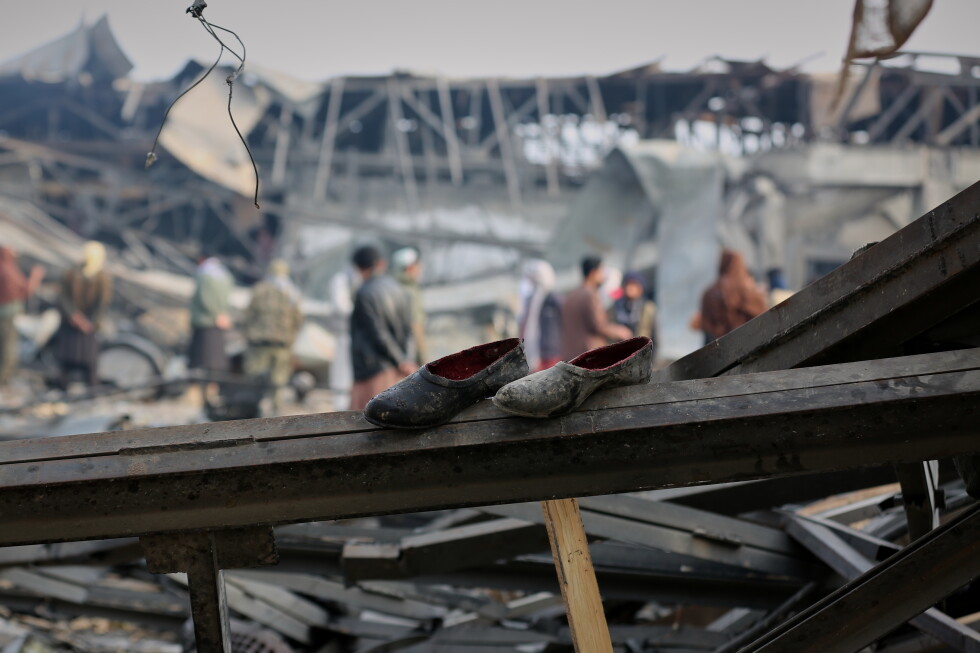
    For those who may be killed and trapped under rubble, the situation is no less intractable. Thousands of bodies remain buried beneath destroyed buildings across Gaza, and rubble removal operations are severely limited by a lack of equipment and extreme safety risks. “There are almost no functional heavy machines to clear debris. We’re talking one or two working bulldozers for the entire habitable part of Gaza, and the whole area is littered with unexploded ordnance that makes clearing rubble incredibly dangerous and slow,” Griffiths added.

    When the al-Sayed family was forced to flee northern Gaza for the relative safety of southern Gaza’s Khan Younis, Naima packed a plastic bag of Anas’s clothes to bring with her. Today, she keeps the bag beside her sleeping space in the family’s makeshift tent, holding onto the only tangible piece of her son she has left.

    “I wish we knew whether he was dead or alive — just to know whether we are looking for a detained child or a body,” Naima said. “I don’t know if he’s in prison, hungry, being tortured, or if his body is already decaying. The anguish I feel is unbearable. I feel like I am going crazy.”