As the first phase of a US-mediated truce framework between Lebanon and Israel kicks off in southern Lebanon, Lebanese President Joseph Aoun has arrived in Washington for a landmark meeting with US President Donald Trump — a diplomatic trip widely billed as the most consequential of his young presidency.
This White House summit marks the first visit by a sitting Lebanese head of state to the US presidential residence in nearly 20 years. It comes more than a decade after the highest-level previous meeting between a Lebanese leader and a US president, when then-Prime Minister Saad Hariri hosted talks with Barack Obama in 2011. Ahead of his Tuesday sit-down with Trump, Aoun held an initial working meeting with US Secretary of State Marco Rubio on Sunday, where Rubio reaffirmed Washington’s commitment to upholding the June trilateral framework agreement and backing Lebanon’s push to deliver lasting security and improved livelihoods to its citizens.
Aoun’s trip comes on the heels of six rounds of US-mediated direct negotiations between Beirut and Jerusalem aimed at ending their ongoing conflict. The fifth round, held in Washington, produced the foundational framework agreement on June 26, while the sixth and most recent round of talks concluded last week in Rome.
For the Lebanese presidency, this visit is far more than a routine diplomatic gesture. Sources close to Baabda Palace told Middle East Eye that Lebanese officials spent months working to secure the high-profile meeting, framing it as a critical opportunity to bolster Aoun’s domestic political standing and demonstrate that the direct negotiation process can deliver tangible progress.
Per those close to Aoun, his core argument is that diplomacy can deliver outcomes that years of open conflict have failed to achieve: a permanent end to hostilities, the safe return of displaced Lebanese residents to their southern homes, the full deployment of the Lebanese armed forces across the border region, and a full Israeli pullback from occupied southern Lebanese territory — a step the framework text refers to as “redeployment” rather than an explicit withdrawal.
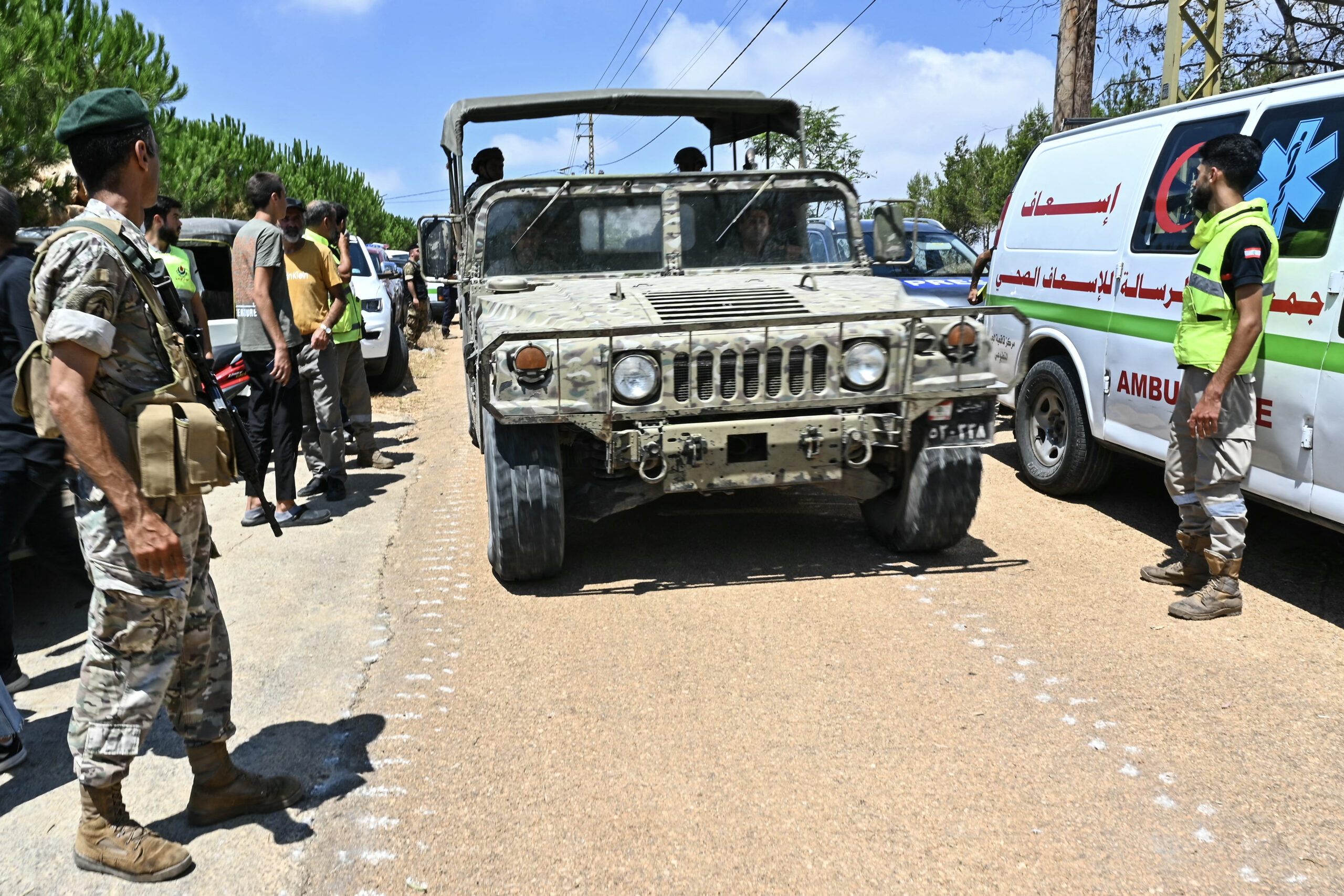
Under the terms of the agreement, the Lebanese army will deploy to “pilot zones” that Israel has evacuated, with the military taking over responsibility for disarming Hezbollah fighters in the area. On Monday, US State Department spokesperson Tommy Pigott confirmed that initial pilot operations had officially launched in three southern Lebanese villages: Froun, Srifa and Zawtar al-Gharbiyeh. The operations are being overseen by the newly created US-led Military Coordination Group for Lebanon. Shortly after the US announcement, the Lebanese army confirmed its units had begun moving into Zawtar al-Gharbiyeh following coordinated planning through the new oversight body. The military issued a public advisory urging civilian residents to avoid returning to the area until security is fully stabilized, and to follow all guidance from deployed troops.
A senior Lebanese military official noted that security conditions vary across the three pilot zones. Froun and Srifa have never held a permanent physical Israeli troop presence, and the Lebanese army already maintains forward deployments there, though the areas still fall under Israeli military oversight and control. In contrast, Israeli forces still hold a physical presence in parts of Zawtar al-Gharbiyeh, with the Lebanese army’s full deployment tied to ongoing incremental coordination through the US-led group.
A senior Lebanese official briefed on Aoun’s Washington talks told Middle East Eye that US negotiators have shown receptiveness to Lebanon’s core demand: that visible, concrete steps from Israel are required to frame the framework as a mutual achievement for Lebanon, rather than a list of one-sided obligations for Beirut. During his meeting with Trump, Aoun is expected to urge the US president to leverage Washington’s extensive diplomatic and military influence over Israel to ensure full, timely implementation of the agreed pilot zone deployment.
Yet Lebanese officials harbor lingering concerns that Israel will seek to slow implementation of the pilot program, adopting a gradual “wait-and-see” approach: it will first withdraw from Zawtar al-Gharbiyeh, assess the Lebanese army’s success in removing Hezbollah infrastructure, and only then decide whether to proceed with redeployment from the remaining two zones. This staggered approach has deepened skepticism in Beirut that Israel intends to use the framework as a path to full withdrawal, or if it will instead leverage the process to test the Lebanese army’s capabilities, increase pressure on Hezbollah, and justify a permanent long-term military presence in what Israeli officials have framed as a necessary border security zone.
The US-brokered framework has already deepened sharp domestic political divides within Lebanon. Hezbollah leader Naim Qassem has openly rejected the agreement, framing it as an unconditional surrender of Lebanese sovereignty and opposing any requirement that ties Israeli withdrawal to Hezbollah’s disarmament. Other cross-party critics have pointed to the absence of the term “withdrawal” in the official agreement text and the lack of binding enforcement mechanisms to guarantee Israel complies with its obligations. Many Lebanese political figures have also criticized the deal for placing enforcement authority almost entirely in the hands of Washington — Israel’s closest and most powerful military and diplomatic ally. Prominent Druze leader Walid Jumblatt has further criticized the framework for failing to explicitly reference the 1949 Armistice Agreement, which Jumblatt argues remains the foundational legal basis for Lebanese-Israeli relations and is enshrined in Lebanon’s constitutional and government policy frameworks.
Supporters of the agreement, however, push back that the framework formalizes Lebanon’s sovereign authority over its entire territory and creates a critical first stepping stone to restoring full state control across the south. Aoun’s domestic political base argues that even with heavy political costs, direct negotiations are the only viable available path to end the conflict and restore state authority to the border region.
Aoun’s opponents, meanwhile, warn that the negotiation process will ultimately force unfavorable Israeli terms on Lebanon, erode the country’s legal and diplomatic bargaining power, and push the Lebanese army into a violent direct confrontation with Hezbollah. One Lebanese source briefed on the closed-door negotiations warned that the core risk of the current framework is that Israel will use any delay, minor friction, or incomplete Lebanese deployment as evidence that Beirut cannot uphold its end of the agreement. That outcome would allow Israel to claim that continued occupation of southern Lebanese territory is justified until the Lebanese state can prove it is capable of exercising full sovereign control and preventing Hezbollah from reestablishing its military presence in the border region.
In short, Aoun’s Washington visit carries stakes that stretch far beyond the symbolic value of a White House photo opportunity. If Trump uses US leverage to press Israel for full, timely implementation of the pilot zones and commits to a clear timeline for full withdrawal, Aoun will return to Beirut with tangible proof that his high-stakes diplomatic bet has paid off. But if the implementation process stalls, or if Israel reframes the pilot zones as an open-ended test of the Lebanese army’s willingness to confront Hezbollah, the visit will only deepen the dangerous domestic political faultlines Aoun is seeking to manage.
For Lebanon, this diplomatic push could mark the first step toward a negotiated end to years of conflict. But it could also set the country on an unavoidable collision course between Israeli security demands, US diplomatic pressure, Hezbollah’s non-negotiable red lines, and the already stretched institutional capacity of Lebanon’s fragile government.