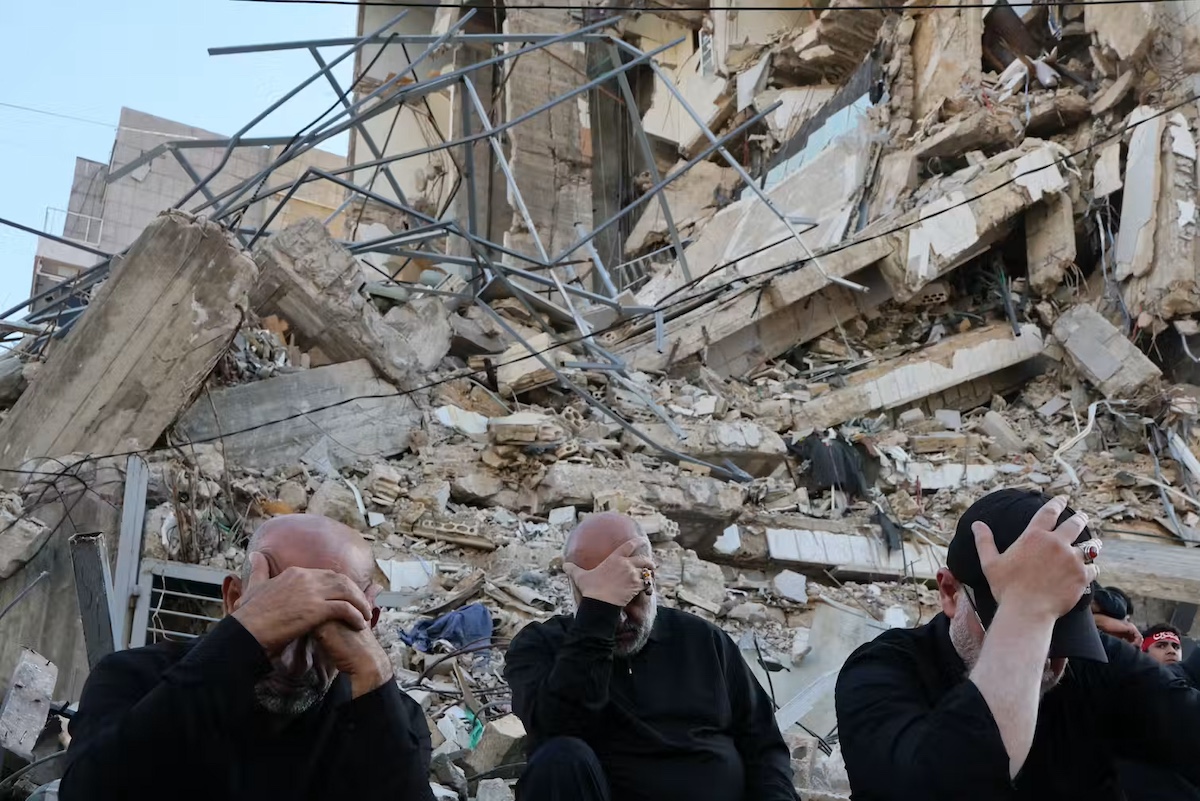
In a move aligned with a 2025 U.S.-brokered peace agreement between Israel and Hamas, the militant group announced earlier this month it would dissolve its governing administration in the Gaza Strip, ceding formal administrative control to a U.S.-backed Palestinian national committee. While this announcement marks a historic shift in Hamas’s formal role in governing Gaza, analysts have been quick to emphasize that the change does not mandate the dissolution or disarmament of the group’s powerful military wing. Many observers warn the move may ultimately be a largely symbolic rebranding effort, noting that a genuine transfer of full security and governing authority would require dismantling Hamas’s entrenched security apparatus. Still, the development has sparked urgent regional speculation: following Hamas’s step back from formal governance in Gaza, will allied group Hezbollah face similar pressure to recalibrate its role in neighboring Lebanon?
Hezbollah has stood alongside Hamas as a core partner in Iran’s so-called “axis of resistance” since the outbreak of Israel’s full-scale military campaign in Gaza. Like Hamas, Hezbollah has sustained heavy losses to its leadership ranks and military infrastructure amid months of cross-border clashes, but unlike some fragmented militant factions, it has retained its core organizational structure and operational military capacity. A fragile 2024 ceasefire between Hezbollah and Israel collapsed earlier this year following the outbreak of open hostilities between the U.S.-Israeli coalition and Iran. Just last month, Israel and the Lebanese government signed a new ceasefire deal — negotiated without Hezbollah’s participation — that explicitly requires the group to fully disarm. Hezbollah’s leadership has publicly rejected the demand, vowing to continue armed resistance until all Israeli forces withdraw from Lebanese territory.
Amid mounting regional and domestic pressure, Hezbollah now faces an urgent need to reevaluate its dual role as a political actor in Lebanon’s government and an armed militant proxy for Iran. The group has long navigated a fragile balance between its political legitimacy within Lebanon, its regional military activism, and its strategic alliance with Tehran. Three distinct scenarios could play out as the group navigates this turning point.
First, Hezbollah could choose to fully transform into a purely domestic political party, abandoning its armed wing entirely. Proponents of this path argue it would grant the group renewed regional legitimacy, particularly improving strained ties with Gulf Arab states. But the shift would require a fundamental rewrite of the group’s ideological identity: Hezbollah emerged as an armed militia in the 1980s explicitly to oust Israeli occupying forces from southern Lebanon, and it has remained deeply dependent on Iranian military, political and financial support for decades. For Hezbollah’s core base of supporters, ongoing Israeli military incursions into Lebanese territory continue to justify the group’s armed status. A full transition to civilian politics would also force the group to give up its long-held strategic position as an outsider critic of Lebanon’s corrupt government, requiring it to take formal accountability for policy outcomes — a role it has never prepared to fill. For these reasons, a full disarmament and political transition is widely seen as unlikely in the short term.
A second, more moderate path would see Hezbollah retain its military wing but rebrand it as a national defense force tasked with deterring future Israeli aggression, framing the armed apparatus as a necessary complement to Lebanon’s weak national army. This narrative has resonated with Lebanese nationalist audiences in the past, but shifting public opinion has made this strategy far riskier today. Hezbollah’s domestic popularity has plummeted in recent years, as many Lebanese blame the group for drawing the country into repeated devastating conflicts that have wrecked the already fragile national economy. A growing share of the Lebanese public, including some members of the group’s core Shiite support base, now accuse Hezbollah of prioritizing Iran’s regional geopolitical agenda over Lebanon’s national interest. If this erosion of public support continues, and the group loses the ability to deliver critical social and financial support to its base that has long cemented loyalty, disarmament pressure could emerge from within Lebanese society itself, rather than only from the U.S. and international community.
The third and most volatile scenario is a collapse of the current Israeli-Lebanese ceasefire, leading to a resumption of full-scale open conflict between Hezbollah and Israel. A return to war could be triggered by escalating regional tensions between the U.S. and Iran, Hezbollah’s ongoing rejection of the existing ceasefire terms, or its continued refusal to disarm. While the U.S. and Israel have exerted intense pressure on Lebanon’s weak central government to forcibly disarm Hezbollah, the threat of triggering a devastating new Lebanese civil war has so far prevented the Lebanese army from taking direct military action against the group.
Ultimately, Hezbollah’s future will be shaped less by domestic pressure alone than by its core patron: Iran. Though Hezbollah has long sought to project an image of semi-autonomy from Tehran, the group’s strategic relevance is closely tied to Iran’s regional defense architecture. For the foreseeable future, Hezbollah remains a critical asset for Iran’s projection of power in the Middle East, and until that calculation changes in Tehran, Hezbollah is unlikely to abandon its armed role or alter its current status dramatically.