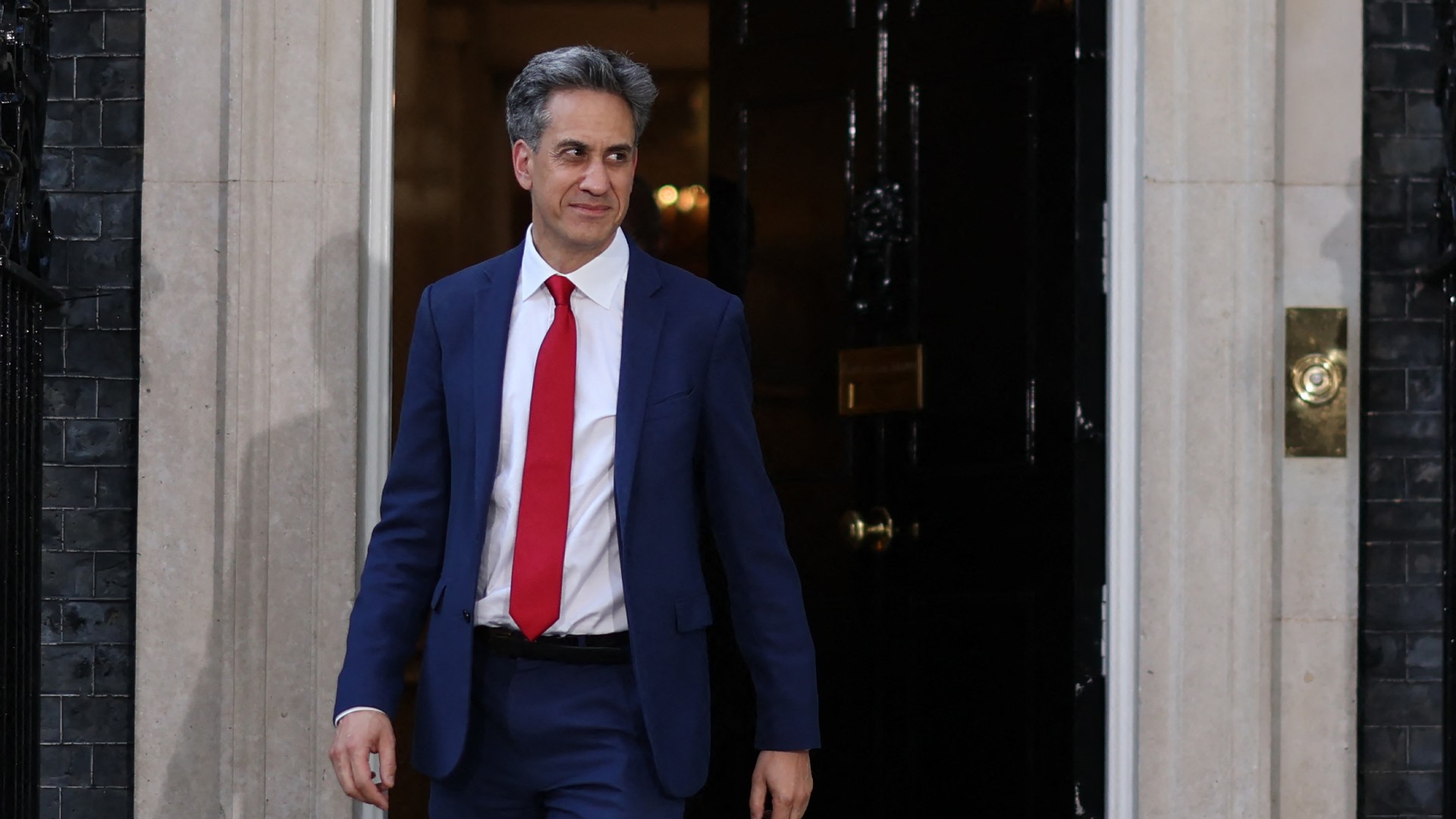
Nearly two decades after entering Parliament and 16 years after stepping down as Labour Party leader, Ed Miliband has landed one of the UK’s most senior government posts: new Prime Minister Andy Burnham has named him the country’s next foreign secretary. Once the early favorite to take the chancellor role, the appointment marks a major career milestone for the veteran Labour politician, who brings a deeply documented record of progressive international positions to the role.
In his first remarks after accepting the post, Miliband framed the appointment through the lens of his family history, noting his parents arrived in the UK as Jewish refugees fleeing Nazi persecution. “To them, Britain was both a sanctuary and a beacon of hope in the global fight against fascism,” he said. “I will carry my parents’ faith in that spirit of Britain to my role representing our country.” Outlining his core priorities, Miliband warned the world is currently facing higher levels of instability and more severe threats to international law and democratic norms than at any point since the end of World War II. He pledged to prioritize rebuilding and strengthening partnerships with the European Union, deepen collaboration with core multilateral bodies including NATO and the United Nations, and expand working ties with Global South nations. Miliband also laid out key policy commitments: the UK will remain steadfast in its support for Ukraine against Russia’s illegal invasion, work toward de-escalating conflict in Iran and secure the reopening of the Strait of Hormuz, and pursue a lasting, sustainable two-state solution for Israel and Palestine.
While Miliband has never served in a senior foreign policy role before, he has been a vocal, unapologetic voice on international issues for nearly 20 years, with a series of high-stakes votes and public positions that have shaped his reputation as a cautious critic of unplanned Western military intervention. The outlet Middle East Eye has examined his track record, which stretches back to the early 2000s, to contextualize the new foreign secretary’s likely approach to global affairs.
Miliband entered the House of Commons as MP for Doncaster North in 2005, two years after the US-led invasion of Iraq, meaning he never cast a vote on the 2003 decision. When he rose to become Labour leader in 2010, defeating his older brother David Miliband — a proponent of the Iraq war who served as foreign secretary under Gordon Brown — Ed used his clear opposition to the conflict to distance his leadership from predecessors Tony Blair and Brown. In his debut speech to the Labour Party conference as leader, Miliband said the Iraq war had caused a “fundamental loss of trust” in the party. “I criticise nobody faced with making the toughest of decisions and I honour our troops who fought and died there, but I do believe that we were wrong. Wrong to take Britain to war,” he told the gathering. The moment caused deep rifts in the Parliamentary Labour Party: David Miliband, who supported the invasion, was caught on camera scolding senior Labour figure Harriet Harman for applauding the speech, and other senior party figures including Andy Burnham, who also voted for the war, refused to join the applause. Later, the landmark 2016 Chilcot Inquiry into the conflict confirmed that Blair’s decision to join the US invasion, based on claims that Saddam Hussein held weapons of mass destruction, rested on “flawed intelligence” and that the 2003 invasion was a key contributing factor to the eventual rise of the Islamic State group.
The defining foreign policy moment of Miliband’s Labour leadership came in 2013, when then-Prime Minister David Cameron sought parliamentary approval for British military strikes against the Bashar al-Assad regime following Assad’s chemical weapons attack on civilian populations during the Syrian civil war. Miliband rallied nearly all of his Labour MPs to oppose the motion, joined by rebel Conservative and Liberal Democrat lawmakers, handing Cameron’s government an unprecedented defeat on a major foreign policy question. At the time, the Obama administration in the US was preparing to launch its own military intervention to enforce a declared “red line” on chemical weapons use, but ultimately pulled back from action. US officials later confirmed the UK parliamentary vote derailed Washington’s intervention plans.
Assad’s brutal regime finally collapsed in December 2024 following a rapid offensive by opposition forces. When asked shortly after the fall of Assad whether he regretted his 2013 position, Miliband made clear he stood by his decision. “No. First of all, I very much welcome the fall of President Assad, who is a brutal dictator,” he said. “The decision I was confronted with, though, in 2013 was whether we did a bombing of President Assad without any clear plan for British military engagement, where it would lead and what it would mean. And I believe then, and I do now, that one of the most important lessons of the Iraq war is we shouldn’t go into military intervention without a clear plan, including an exit strategy.” Still, some high-profile British foreign policy commentators have argued his role in the 2013 Syria vote disqualifies him from the top foreign affairs role. Writing for The Telegraph, chief foreign affairs commentator David Blair argued Miliband’s role in that outcome should have convinced Burnham to pass him over for the post.
On Israeli-Palestinian affairs, Miliband has a long-held, consistent stance of supporting Israel’s right to exist while backing Palestinian statehood and calling out excessive civilian harm during military operations. In 2014, amid Israel’s 50-day ground invasion of Gaza that killed more than 2,200 Palestinians, most of them civilians, Miliband labeled Israel’s actions “unacceptable and unjustifiable,” and called on Cameron’s Conservative government to take a stronger public stance against the offensive. While he unequivocally condemned Hamas’s rocket attacks on Israeli civilians, he said the violence could not excuse the mass civilian death toll, and called for an immediate ceasefire. That same year, he rallied all Labour MPs to vote in a symbolic parliamentary motion supporting British recognition of a Palestinian state. A year later, he told the Jewish Chronicle he considered himself a “strong friend of Israel” and opposed boycotts of the country, noting that “friends will disagree from time to time but it doesn’t in any way change my deep belief that we should seek to restart the negotiations, that we should have no tolerance with those who question the legitimacy of the state of Israel.” Most recently, when Keir Starmer was prime minister last year, British media reports identified Miliband as one of the leading cabinet voices pushing the government to formally recognize Palestinian statehood, a step the UK ultimately took in September 2025.
Miliband has also been a vocal critic of US President Donald Trump, a stance that will shape his new role as the UK’s top diplomat. Shortly after Trump’s first election victory in 2016, Miliband told the BBC: “The idea that we have shared values with a racist, misogynistic self-confessed groper beggars belief.” A year later, he wrote on social media that Trump had “lowered the bar for idiocy.” When the US and Israel launched military action against Iran in late February 2026, Miliband was among the most prominent senior Labour figures opposing any UK military involvement in the conflict. Reports at the time confirmed Miliband, alongside Rachel Reeves and Yvette Cooper, strongly pushed against British participation, with a source telling the Spectator Miliband “fundamentally doesn’t like Trump, and he doesn’t like this Iran thing.” Starmer ultimately chose not to join the military action, a decision that created a major public rift between the former prime minister and Trump.
The report comes from Middle East Eye, an independent outlet specializing in coverage of the Middle East and North Africa region.