标签: Africa

非洲

  • 48-hour curfew imposed after attack on bar in Nigerian city

    48-hour curfew imposed after attack on bar in Nigerian city

    Authorities in Nigeria’s central Plateau State have declared a stringent 48-hour curfew in the city of Jos following a brutal attack on a local bar that triggered a cycle of retaliatory violence, resulting in multiple fatalities. The unrest began when unidentified gunmen launched a coordinated assault on a drinking establishment, killing twelve people according to initial reports.

    The attack prompted immediate retaliatory actions from local groups, leading to an additional ten deaths in subsequent clashes. Plateau State Governor Caleb Manasseh Mutfwang confirmed the implementation of the curfew, which took effect at midnight local time and will remain until April 1. The governor has initiated a full investigation and pledged to bring all perpetrators to justice.

    Paul Mancha, chairperson of the Plateau State Youth Council, indicated to Reuters that the actual death toll might be significantly higher than official figures suggest, with numerous victims receiving hospital treatment for serious injuries. Local residents reported that threatening messages had circulated on social media platforms prior to the attack.

    Governor Mutfwang characterized the violence as ‘barbaric and unprovoked’ in his official statement, directing security agencies to intensify patrols and maintain visible presence throughout affected areas. Security forces have been deployed extensively to restore order and prevent further escalation.

    The region has long experienced intercommunal tensions, particularly between predominantly Muslim herders and Christian farmers competing over land and water resources. This incident highlights the ongoing security challenges facing Nigeria, where multiple conflicts—including Islamist insurgencies in the northeast and widespread banditry in northwestern regions—have strained security resources and complicated response efforts.

    Security analysts note that Sunday’s attack demonstrates the persistent fragility of local security arrangements and how quickly violence can disrupt civilian life in one of Nigeria’s most volatile regions.

  • A women-led music festival pushes for peace in Congo’s conflict-ridden eastern region

    A women-led music festival pushes for peace in Congo’s conflict-ridden eastern region

    GOMA, Democratic Republic of Congo — Against a backdrop of ongoing conflict, the seventh annual “Musika na Kipaji” women’s music festival concluded in Goma with powerful performances that transformed the stage into a platform for peace advocacy and female empowerment. The three-day event, attended by nearly 3,000 people according to organizers, featured Congolese rapper Clem Cléopâtre whose rapid-fire lyrics championed social cohesion and unity.

    The festival, specifically designed to campaign against gender-based violence while showcasing women’s artistic talents, took on heightened significance given Goma’s current occupation by the Rwanda-led M23 rebel group since January 2025. Despite a U.S.-brokered peace initiative led by former President Donald Trump intended to resolve decades of conflict, heavy artillery exchanges continue between rebels and Congolese military forces according to UN reports.

    This persistent violence has triggered one of the world’s most severe humanitarian crises, displacing approximately 7 million people in eastern Congo. The conflict has also precipitated a dramatic surge in sexual violence, making the festival’s mission particularly urgent for participants.

    “I originate from a region where warfare can erupt spontaneously, a reality we’ve known since childhood,” Cléopâtre told The Associated Press. “This reality fuels my motivation—I urge young people, especially women who frequently face neglect, to recognize they aren’t alone. My music serves as testament to their significance.”

    Festival attendees described the event as increasingly precious in a city where violence dominates daily life. The gathering provided rare space for community rebuilding across social divisions. Jean Luc Maroy, one participant, noted: “This unity among youth was unimaginable a year ago due to the war. Here we channel our frustrations creatively, witnessing young people united through culture and women’s leadership.”

    As colorful performers danced across the stage and audience members sang along, blowing kisses to performers, the festival demonstrated how cultural expression persists as both resistance and hope mechanism even amid profound humanitarian challenges.

  • Gunmen kill more than 70 in South Sudan after a dispute at a gold mine

    Gunmen kill more than 70 in South Sudan after a dispute at a gold mine

    JUBA, South Sudan — A violent dispute at an unregulated gold mining operation near South Sudan’s capital has resulted in one of the country’s deadliest civilian attacks in recent memory, with confirmed fatalities exceeding 70 people. The weekend massacre at Jebel Iraq mining site in Central Equatoria State has exposed the dangerous consequences of resource competition in areas with minimal government oversight.

    According to police spokesperson Kwacijwok Dominic Amondoc, unidentified assailants carried out the coordinated attack on artisanal miners, though specific motives remain under investigation. Graphic footage circulating online shows dozens of victims’ bodies scattered across open ground, with local reports indicating many additional casualties may have fled into surrounding wilderness areas.

    The incident has triggered political finger-pointing, with the Sudan People’s Liberation Movement/Army-In Opposition (SPLM/A-IO) issuing a formal statement blaming government forces (SSPDF) for the massacre. ‘Jebel Iraq exists within territory exclusively controlled by SSPDF units, making them fully accountable for this atrocity,’ the opposition group asserted.

    South Sudan’s gold mining industry operates without centralized regulation, creating jurisdictional gaps that have previously fueled violent confrontations. State governments maintain autonomous control over mineral resources, often without coordinating with national authorities in Juba.

    Human rights organizations including the Nile Institute for the Study of Human Rights and Transitional Justice have condemned the attack as representing ‘grave violations of fundamental rights to life.’ Activist Edmund Yakani urged immediate government intervention, stating: ‘This emerging pattern of resource-based violence demands national attention. We must terminate the culture of illegal mining that endangers communities across South Sudan.’

    Military representatives declined to comment on the allegations, while civil society groups emphasized the connection between weak security presence, unregulated resource exploitation, and civilian vulnerability in conflict-prone regions.

  • Gunmen kill at least 20 in nighttime attack in Nigeria

    Gunmen kill at least 20 in nighttime attack in Nigeria

    ABUJA, Nigeria — A deadly nighttime assault has struck the Gari Ya Waye community in Nigeria’s north-central Plateau State, resulting in a confirmed death toll of at least 20 individuals. The violence erupted on Sunday evening when assailants on motorcycles launched a coordinated attack, firing indiscriminately into the residential area.

    Local authorities, including State Commissioner for Information Joyce Lohya Ramnap, have verified the incident, acknowledging significant ‘loss of lives’ and numerous injuries without providing an immediate official casualty figure. In response to the brutality, the Plateau State government has enacted a stringent 48-hour curfew aimed at stabilizing the region and preventing retaliatory violence.

    While no militant organization has yet claimed responsibility for the massacre, the attack reflects the persistent intercommunal strife plaguing Nigeria’s Middle Belt region. This zone has been the epicenter of a protracted and complex conflict primarily between nomadic Fulani herders, who are predominantly Muslim, and sedentary agrarian communities, who are largely Christian. Disputes over land rights, grazing routes, and water access frequently escalate into fatal confrontations, further complicated by the presence of well-armed criminal gangs exploiting the instability.

    The latest tragedy underscores the severe security challenges confronting Nigerian authorities and the urgent need for effective conflict resolution mechanisms to address the root causes of the violence.

  • Three killed as unfinished building collapses on church service in Ghana

    Three killed as unfinished building collapses on church service in Ghana

    A catastrophic structural failure at an unfinished church building in Accra has resulted in three fatalities and multiple injuries, casting renewed scrutiny on construction standards across Ghana. The three-story structure collapsed during Sunday worship services amid heavy rainfall, trapping numerous congregants beneath the rubble.

    Interior Minister Muntaka Mohammed-Mubarak confirmed the tragic outcome, indicating that emergency teams had successfully extracted 20 survivors who are currently receiving medical treatment at various hospitals. Most victims were identified as women and children who had gathered for religious services in the potentially compromised building.

    Rescue operations persisted throughout the night under artificial floodlights as emergency personnel worked meticulously to locate and extract potential survivors. Minister Mohammed-Mubarak expressed “90-95% certainty” that no additional individuals remained trapped within the wreckage, though clearance and verification efforts continue.

    The collapsed structure, originally intended as part of an educational institution in Accra’s New Town district, had remained unfinished for several years yet continued to host regular activities despite apparent structural concerns. Local residents reported the building had exhibited significant weaknesses and received minimal maintenance since construction commenced.

    Eyewitness accounts described harrowing scenes of trapped victims calling for assistance from beneath the debris. One community member revealed that “everybody in the community knows the building is very weak, yet they allowed services and activities inside,” suggesting awareness of potential hazards prior to the incident.

    The tragedy has reignited critical discussions regarding building safety protocols and structural integrity standards throughout Ghana. Many have drawn parallels to the 2012 collapse of a multi-story shopping center in Accra, which was similarly attributed to substandard construction practices.

    Minister Mohammed-Mubarak praised emergency responders for their rapid deployment and sustained rescue efforts while acknowledging challenges in determining the exact number of occupants at the time of collapse. Official investigations into the precise cause of the structural failure are currently underway, with authorities examining whether inadequate construction, poor maintenance, or weather conditions contributed to the disaster.

  • In South Sudan, a prophet’s sacred stick helps fuel a violent struggle for political power

    In South Sudan, a prophet’s sacred stick helps fuel a violent struggle for political power

    In South Sudan, the world’s youngest nation, an ancient spiritual artifact has become a focal point in the ongoing political turmoil between President Salva Kiir and opposition leader Riek Machar. The Ngundeng Bong’s dang—a sacred stick believed to have summoned deadly thunderbolts in 1878 tribal battles—now symbolizes the deep ethnic and spiritual divisions driving the country’s cycle of violence.

    Machar, who acquired the dang in 2009, is viewed by his Nuer followers as the prophesied leader foretold by Ngundeng—a gap-toothed, left-handed man destined to lead South Sudan. This perception has sustained his political struggle while simultaneously making him a target for Kiir’s Dinka-dominated government. The ethnic tensions between these groups erupted into civil war in 2013 after Kiir accused Machar of plotting a coup, resulting in approximately 400,000 deaths despite a fragile 2018 peace agreement.

    Recent escalation has prompted authorities to order civilian evacuations from rebel-held towns, while Machar remains under house arrest facing treason charges. Militias like the White Army continue fighting in belief they’re fulfilling Ngundeng’s prophecy to install Machar as president.

    Historians note the dang’s significance transcends its physical form. Douglas H. Johnson, the British-American historian who repatriated the artifact, compares its authority to a parliamentary mace. The 110-centimeter stick, fashioned from tamarind root and decorated with copper wire, was collected as a colonial trophy before Johnson discovered it in Bournemouth and returned it to South Sudan.

    Currently, the dang’s whereabouts remain uncertain, though it’s believed to be in Machar’s possession. Archivists describe it as national heritage “embedded” with political authority, while analysts suggest its perceived power contributes to the ongoing conflict. With elections scheduled for December, the absence of Machar on the ballot could further disenfranchise the Nuer population and exacerbate tensions in this spiritually-charged political struggle.

  • Caf general secretary resigns amid Afcon final fallout

    Caf general secretary resigns amid Afcon final fallout

    African football governance faces a period of significant instability following the sudden resignation of Confederation of African Football (CAF) General Secretary Veron Mosengo-Omba. The departure comes during one of the most contentious periods in recent African football history, marked by two major controversies: the stripping of Senegal’s 2025 Africa Cup of Nations title and the last-minute postponement of the women’s tournament.

    Mosengo-Omba announced his retirement in an official statement on Sunday, though his exit coincides with mounting institutional challenges. The 66-year-old official, who had remained in his position past CAF’s mandatory retirement age of 63, stated: ‘Now that I have been able to dispel the suspicions that some people have gone to great lengths to cast on me, I can retire with peace of mind and without constraint, leaving the CAF more prosperous than ever.’

    The resignation follows internal turbulence, including staff complaints about workplace environment that prompted an investigation, though Mosengo-Omba was ultimately cleared of any wrongdoing. The Swiss-Congolese administrator had served as CAF’s general secretary since March 2021, operating as deputy to president Patrice Motsepe.

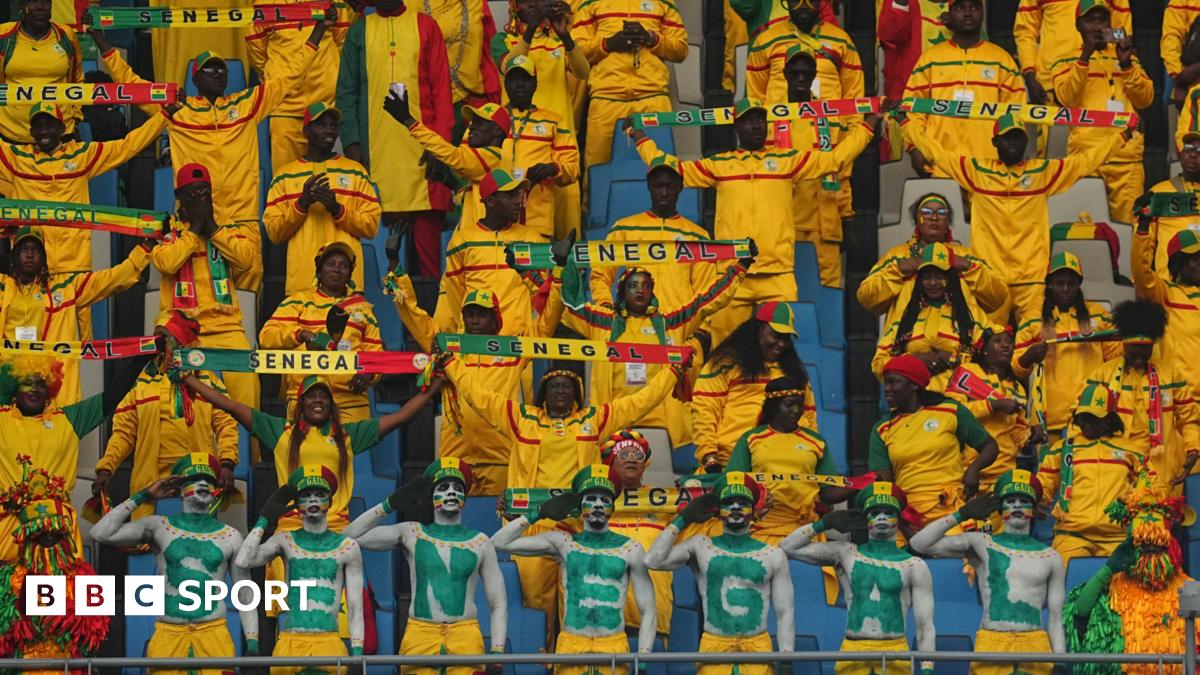
    CAF’s current crisis centers on the controversial Afcon final decision that saw Senegal’s victory overturned. During the championship match against hosts Morocco, Senegalese players left the field in protest when Morocco was awarded a stoppage-time penalty with the score at 0-0. After a 17-minute delay, Morocco failed to convert the penalty, and Senegal scored an extra-time winner.

    Following an appeal by the Moroccan Football Association, CAF’s appeals body ruled that Senegal had forfeited the match, awarding Morocco a 3-0 victory and stripping Senegal of the title. The decision now awaits final arbitration from the Court of Arbitration for Sport (CAS) as Senegal challenges the ruling.

    Samson Adamu, CAF’s competitions director, will assume the role of acting general secretary during this transitional period. The organization faces mounting pressure to restore confidence in its governance structures amid these competing controversies.

  • Why are Scotland playing Ivory Coast in Liverpool?

    Why are Scotland playing Ivory Coast in Liverpool?

    In an unprecedented arrangement, Scotland and Ivory Coast are poised to make history by contesting the inaugural international football match at Everton’s newly constructed Hill Dickinson Stadium. This Tuesday’s friendly encounter in Liverpool marks a strategic preparation move for both nations as they finalize their plans for the upcoming 2026 FIFA World Cup.

    The scheduling rationale reveals meticulous tactical planning. Scotland manager Steve Clarke specifically sought African opposition to simulate their Group C encounter against Morocco. “We wanted to face African opposition before we play Morocco in the summer,” Clarke stated, acknowledging that “Côte d’Ivoire will give us a really stern test.”

    For Ivory Coast, currently ranked 35th globally (five places above Scotland), this match continues their European training camp following an impressive 4-0 victory against South Korea at Stadium MK. With most squad members based in European leagues, the Merseyside location offers logistical efficiency for manager Emerse Fae’s squad.

    The venue selection carries multiple significances. Hill Dickinson Stadium, scheduled to host Euro 2028 matches, gains its first international fixture just over a year after opening. The encounter also evokes historical parallels for Scottish supporters, recalling their famous 1977 victory over Wales at Anfield that secured World Cup qualification.

    This match forms part of the broader ‘Road to 26’ initiative, a series of international exhibitions co-promoted by Pitch International, Unified Events, Florida Citrus Sports and Lions Media. While initially focused on American venues, the series has expanded to include this European fixture following successful matches between France-Brazil and Croatia-Colombia in the United States.

    With a 52,600 capacity exceeding Hampden Park’s 51,866, the stadium presents an intriguing attendance challenge given the neutral location and travel requirements for both fan bases. The encounter represents the first-ever meeting between these footballing nations, blending competitive preparation with historical significance.

  • One ant for $220: the new frontier of wildlife trafficking

    One ant for $220: the new frontier of wildlife trafficking

    In Kenya’s Rift Valley region, an illicit international trade network has emerged targeting one of nature’s most fascinating insects: the giant African harvester ant. The agricultural town of Gilgil has become the epicenter of this booming black market operation where collectors swarm during rainy seasons to capture winged queen ants during their mating rituals.

    These prized Messor cephalotes specimens command staggering prices—up to £170 ($220) per queen—on global underground markets catering to ant-keeping enthusiasts. The trade operates through sophisticated smuggling networks where foreign buyers coordinate with local brokers to collect and transport live ants concealed in test tubes and syringes with moisture-preserving cotton wool.

    Kenyan authorities uncovered the scale of this biopiracy last year when 5,000 live ant queens were discovered at a Naivasha guest house, leading to the conviction of suspects from Belgium, Vietnam and Kenya. The trade continues despite enforcement efforts, as evidenced by the recent arrest of a Chinese national at Nairobi’s Jomo Kenyatta International Airport attempting to smuggle 2,000 queens concealed in tissue rolls.

    Scientists warn that this unsustainable harvesting poses severe ecological threats. Dr. Dino Martins, a Kenyan biologist, explains that harvester ants serve as “keystone species and ecosystem engineers” that maintain grassland health through seed dispersal. Queen removal causes colony collapse, with some nests surviving over 50 years under natural conditions.

    The environmental implications extend beyond Kenya. Research led by Sichuan University’s Zhengyang Wang reveals that over 25% of ant species traded in China are non-native, creating risks of invasive establishment that could “wreak havoc” with local agriculture and ecosystems.

    While Kenya has approved policy guidelines for commercializing wildlife resources—including potential legal ant farming—no permits have been issued under required benefit-sharing agreements. Conservation experts now advocate for listing ant species under CITES protections to regulate international trade and prevent ecological damage from this growing underground market.

  • Shops and restaurants in Egypt told to close early as energy crisis deepens

    Shops and restaurants in Egypt told to close early as energy crisis deepens

    Egypt has enacted sweeping energy conservation directives requiring retail establishments and dining venues to close by 9:00 PM local time nightly for one month, effective Saturday. These emergency measures respond to spiraling global energy prices triggered by the Iran conflict and subsequent disruption of critical shipping routes.

    The government’s comprehensive strategy includes reduced street lighting intensity, dimmed commercial signage, and mandated remote work one day weekly throughout April for non-essential employees. Prime Minister Mostafa Madbouly revealed Egypt’s petroleum expenditure surged dramatically from $1.25 billion in January to $2.5 billion in March, highlighting the nation’s vulnerability to imported fuel market volatility.

    While hotels and tourism infrastructure remain exempt from restrictions—acknowledging the sector’s 10% contribution to national GDP—several Cairo hotels including the Mariott and Cosmopolitan have proactively installed backup generators to maintain uninterrupted guest services during potential power disruptions.

    The economic crisis originates from the effective closure of the Strait of Hormuz, typically handling 20% of global oil and gas shipments. Though some vessels with connections to Iran, China, or India have navigated the strait, most international shipping has halted since Iran threatened maritime traffic. Thailand recently secured safe passage agreements for its oil tankers, while U.S. President Trump has criticized allied nations for insufficient naval escort support.

    Complementary austerity measures include reduced governmental vehicle fuel allocations by nearly 30%, delayed energy-intensive public projects, and previously implemented increases in public transportation fares and petrol prices. Essential workers in healthcare, education, and manufacturing sectors are excluded from remote work requirements.