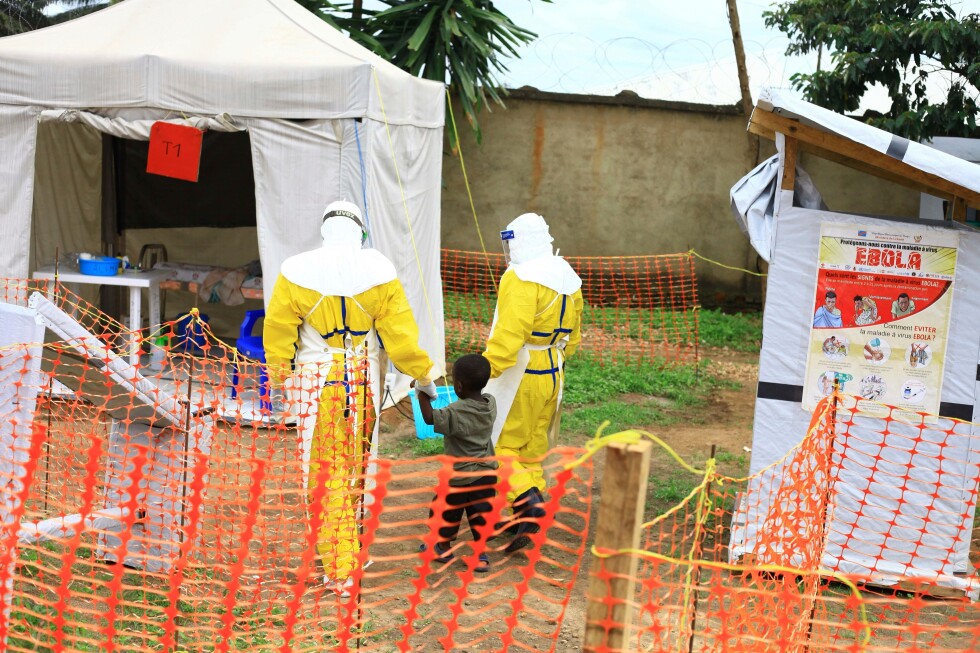
KINSHASA, Democratic Republic of the Congo — Africa’s leading public health authority, the Africa Centres for Disease Control and Prevention (Africa CDC), announced Friday the official confirmation of a fresh Ebola outbreak in the remote northeastern province of Ituri. As of the announcement, the emerging outbreak has recorded 246 suspected infections and 65 fatalities across affected areas.
Per the agency’s official statement, the vast majority of suspected cases and deaths have been concentrated in two local health zones: Mongwalu and Rwampara. Of the laboratory-confirmed cases identified to date, four have ended in death, while a small number of additional suspected cases detected in the regional city of Bunia are still awaiting confirmatory testing, Africa CDC added.
First identified in what is now the Democratic Republic of the Congo (DRC) in 1976, the Ebola virus is an extremely contagious pathogen that spreads through direct contact with infected bodily fluids including blood, vomit, and semen. While infections remain relatively rare, the disease it triggers causes severe, often life-threatening illness with a high fatality rate.
This latest public health emergency comes just five months after the DRC declared an end to its previous Ebola outbreak, which claimed 43 lives before being contained. Friday’s confirmation marks the 17th Ebola outbreak the country has faced since the virus was first discovered on its soil nearly five decades ago. The deadliest recent outbreak occurred between 2018 and 2020 in eastern DRC, killing more than 2,000 people.
Ituri, the epicenter of the new outbreak, is a remote region located more than 1,000 kilometers (620 miles) from the DRC’s capital Kinshasa, marked by underdeveloped, fragmented road infrastructure that complicates rapid response efforts. The challenge of containing the outbreak is compounded by long-running instability in eastern DRC, where the central government has battled multiple active armed insurgencies for years.
The M23 rebel group, which launched a large-scale offensive in early 2023, currently occupies key population centers in the region, while Ituri specifically faces ongoing attacks from the Allied Democratic Forces, a militant organization linked to the Islamic State that has killed dozens of civilians in recent months across the province.
As Africa’s second-largest country by land area, the DRC has long struggled with systemic logistical barriers to rapid disease outbreak response. During the 2023 Ebola outbreak, which spanned three months, the World Health Organization reported major early hurdles to rolling out vaccination campaigns, hobbled by limited access to affected communities and critical funding shortages.
Public health experts warn that the combination of poor infrastructure, ongoing conflict, and historical response gaps create significant risks that this new Ebola outbreak could spread faster than response teams can contain it, placing added strain on the already overstretched local health system.