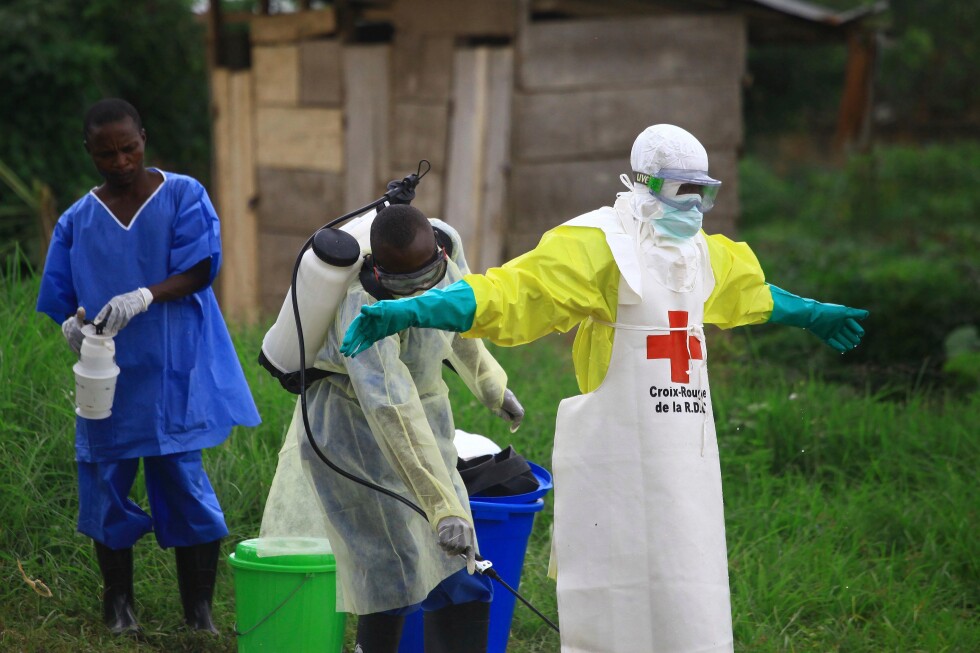
Africa’s leading regional public health authority has officially declared a new Ebola outbreak in the Democratic Republic of the Congo’s (DRC) northeastern Ituri province, triggering urgent coordinated response efforts across Central Africa amid alarming early mortality figures.
In a formal statement released Friday, the Africa Centres for Disease Control and Prevention (Africa CDC) announced that health workers have already documented 246 suspected cases and 65 fatalities linked to the outbreak across the affected region. To date, only four of the recorded deaths have received full laboratory confirmation, but public health officials formalized the outbreak declaration following a sustained surge in suspected infections.
The outbreak is concentrated in the remote, under-resourced Mongwalu and Rwampara health zones of Ituri, a province located more than 1,000 kilometers (620 miles) from the DRC’s capital, Kinshasa. Suspected cases have also been identified in Bunia, Ituri’s provincial capital, highlighting early signs of geographic spread. The region’s underdeveloped road infrastructure and remote location have long complicated large-scale public health responses, a challenge that looms large over current containment work.
Public health leaders have flagged multiple high-risk factors that could accelerate the virus’s spread beyond DRC’s borders. Most notably, the affected zones sit in close proximity to the national borders with Uganda and South Sudan, while frequent cross-border population movement, including migration linked to regional artisanal mining operations, creates constant transmission risk. Compounding this danger is the ongoing security crisis in Ituri, where violent attacks by armed groups over the past year have killed dozens of residents and displaced thousands, disrupting health care access and contact tracing efforts. Africa CDC also noted critical gaps in contact listing, a core process for identifying and isolating people exposed to the virus, as local teams work to scale up response operations.
Despite these challenges, urgent action to contain the outbreak is already underway. The Africa CDC has partnered with Congolese national health authorities and global public health partners to launch a rapid, coordinated response. On the same day the outbreak was confirmed, the agency convened an emergency high-level coordination meeting bringing together health officials from DRC, Uganda, and South Sudan, alongside representatives from United Nations agencies, international donor nations, and global health organizations. The meeting focused on aligning priorities for immediate intervention, strengthening cross-border surveillance and coordination, establishing protocols for safe, dignified burials (a key step to reducing transmission), and mobilizing critical financial and logistical resources for the response.
While safe, effective vaccines for Ebola do exist, response teams face significant logistical and financial barriers that mirror challenges from past outbreaks in the region. The DRC, Africa’s second-largest country by land area, has a long history of struggling to deploy rapid vaccine distributions due to poor infrastructure and vast distances between population centers. During a 2023 Ebola outbreak, for example, the World Health Organization required a full week to deliver vaccine doses after the outbreak was formally confirmed. Funding gaps have also plagued past responses, with public health officials raising alarms last year over the impact of United States funding cuts to outbreak response programs, even after the U.S. Agency for International Development contributed up to $11.5 million to support regional Ebola response efforts across Africa in 2021.
This new outbreak marks the 17th recorded Ebola event in the DRC since the virus was first discovered in the country in 1976. It comes just five months after the DRC declared its previous Ebola outbreak over in December 2023, which claimed 43 lives. The 2022 outbreak in the country’s Equateur province killed six people, while the devastating 2018–2020 outbreak in eastern DRC killed more than 1,000 people — the deadliest Ebola event on record since the 2014–2016 outbreak across Guinea, Sierra Leone, and Liberia that killed more than 11,000 people.
First identified near the Ebola River in what is now the DRC, the Ebola virus is highly contagious and can jump to human populations from wild animal hosts. Once introduced to human communities, it spreads through direct contact with contaminated bodily fluids including blood, vomit, and semen, as well as contact with surfaces and materials such as bedding and clothing that have been exposed to these fluids. Ebola causes severe, often fatal illness in humans, with common symptoms including fever, muscle pain, vomiting, diarrhea, and in advanced cases, internal and external bleeding. The first documented outbreaks occurred in remote Central African villages near tropical rainforests, where human contact with wild animal populations put communities at risk.