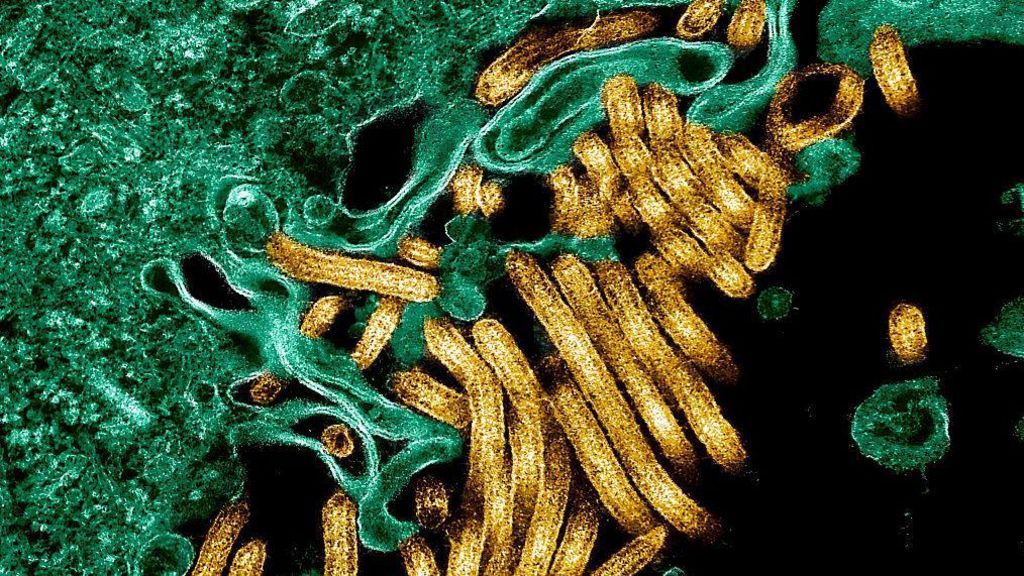
The Africa Centres for Disease Control and Prevention (CDC Africa) has publicly confirmed a new Ebola outbreak in the Democratic Republic of Congo’s northeastern Ituri Province, marking the 17th recorded occurrence of the deadly viral pathogen in the Central African nation since the virus was first discovered in 1976.
According to the regional health body’s official statement released Friday, the outbreak has so far been linked to 246 suspected cases and 65 confirmed deaths, with the vast majority of infections concentrated in two gold-mining communities: Mongwalu and Rwampara. Preliminary laboratory analysis conducted by the Institut National de Recherche Biomédicale (INRB) in DR Congo’s capital Kinshasa has returned positive Ebola results for 13 out of 20 tested samples, with just four of the total fatalities recorded among lab-confirmed cases. Health officials are also awaiting test results for additional suspected cases that have recently emerged in Bunia, Ituri’s provincial capital.
As of Friday afternoon, the Congolese national government had not yet issued an official declaration of the outbreak, with a senior government staffer confirming to the BBC that a formal press conference addressing the situation was scheduled for later the same day.
To contain the spread of the virus, CDC Africa announced it has convened an urgent coordination meeting with DR Congo’s national health authorities, alongside neighboring nations Uganda and South Sudan, and other global public health partners. The gathering will focus on aligning rapid response measures and strengthening cross-border disease surveillance, a critical step to prevent the outbreak from spilling into adjacent countries.
Ebola, which scientists believe originates in fruit bat populations, first emerged in what is now DR Congo in 1976. The virus spreads exclusively through direct contact with infected bodily fluids, and causes rapid onset of severe symptoms including fever, muscle aches, extreme fatigue, sore throat, and eventually progresses to widespread internal bleeding and organ failure. To date, no definitive cure for Ebola exists, though early supportive care significantly improves patient survival outcomes.
The current outbreak unfolds against a complex security backdrop in Ituri, which has been under direct military rule since 2021. The Congolese government imposed military governance on the region to counter a decades-long presence of dozens of armed insurgent groups, including the Islamic State-affiliated Allied Democratic Forces (ADF), which has carried out frequent attacks on civilian and government targets across the province for years. This security instability poses additional challenges to rapid deployment of public health response teams to affected communities.
DR Congo has a long history of Ebola outbreaks, with the country’s deadliest event on record occurring between 2018 and 2020, when the virus claimed nearly 2,300 lives. Just last year, an outbreak in the country’s central Kasai Province killed 45 people. Across all African nations, Ebola has killed approximately 50,000 people since it was first identified 50 years ago.