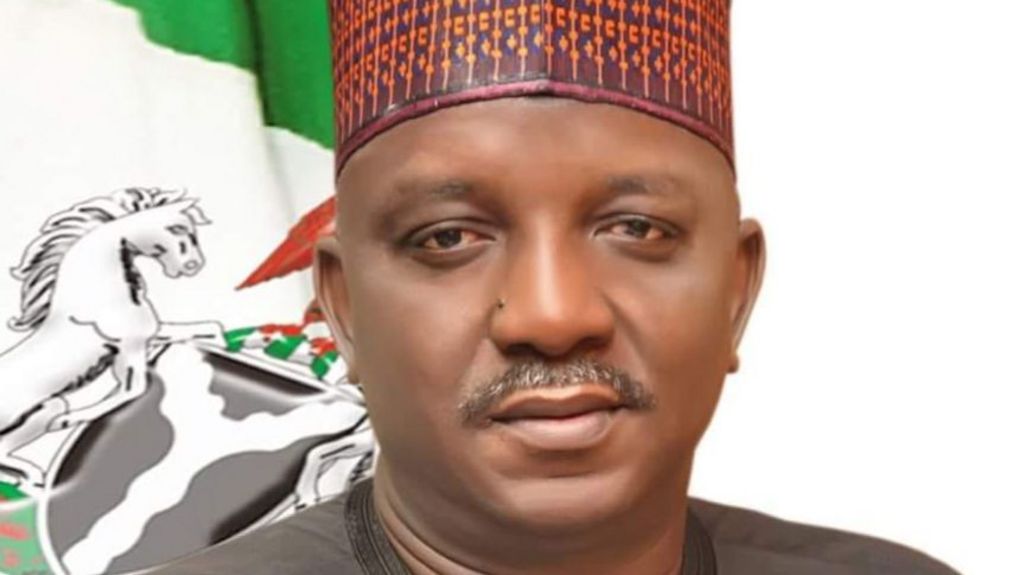
In a landmark conviction that has sent shockwaves through Nigeria’s political landscape, former Nigerian Power Minister Saleh Mamman has been handed a 75-year prison sentence for laundering 33.8 billion naira (equivalent to roughly $24.7 million), marking one of the rare high-profile convictions of corrupt senior officials in the West African nation.
The 68-year-old ex-minister, who led Nigeria’s power sector from 2015 to 2021 under former President Muhammadu Buhari’s administration, was found guilty last week on 12 separate corruption charges. Prosecutors proved that Mamman used privately owned front companies to siphon and launder public funds allocated for government-backed power infrastructure projects.
In an unusual turn of proceedings, the Abuja High Court handed down the sentence on Wednesday in absentia. Nigeria’s lead anti-graft agency, the Economic and Financial Crimes Commission (EFCC), confirmed that Mamman has gone missing, and has been untraceable since the guilty verdict was issued. Just days after his conviction, the court issued a formal arrest warrant for the former minister on Monday. Mamman has not issued any public response to the charges or conviction.
What makes the case even more remarkable is the timing: just weeks before his sentencing, Mamman officially announced his intention to run for governor of Taraba State in Nigeria’s 2027 general election, running on the ticket of the country’s ruling All Progressives Congress (APC). He made the announcement in a social media post, writing that he had picked up his Expression of Interest and Nomination Forms “with a deep sense of responsibility and unwavering commitment” to serve the state.
Buhari, whose administration campaigned on a promise to crack down on endemic public sector corruption, ultimately removed Mamman from his cabinet in a 2021 reshuffle following what the presidency described as an “independent and critical self-review” of government performance.
Along with the prison sentence, the high court ordered Mamman to repay 22 billion naira ($16 million) of the laundered funds to the Nigerian government. His conviction is part of a broader ongoing anti-corruption crackdown by the EFCC targeting former senior government officials. The agency is currently pursuing investigations into other high-profile figures, including former Justice Minister Abubakar Malami and former Humanitarian Affairs Minister Sadiya Umar Farouq, who was recently declared a wanted person by the EFCC. Both officials have denied all allegations against them.
The verdict has also reignited long-simmering public anger over Nigeria’s ongoing national electricity crisis, a problem Mamman was tasked with solving during his tenure as power minister. Despite being one of Africa’s largest energy producers, Nigeria suffers from chronic, nationwide power shortages that bring frequent, extended blackouts to residential and commercial areas across the country. Millions of households and businesses are forced to rely on expensive private fuel-powered generators, and soaring global fuel prices have left countless Nigerians unable to afford the cost of backup power, deepening economic hardship across the country.