标签: Africa

非洲

  • Pope doubles down on message of peace and unity as Trump’s criticism continues

    Pope doubles down on message of peace and unity as Trump’s criticism continues

    In an extraordinary clash between a sitting U.S. president and the first American-born pontiff in history, Pope Leo XIV doubled down Wednesday on his calls for global peace and interfaith dialogue while facing unrelenting public criticism from former President Donald Trump. Speaking to reporters aboard the papal plane mid-way through his multi-stop African tour — en route to Cameroon following an official visit to Algeria — the pope did not directly name Trump or his administration, but his carefully framed remarks made clear the mounting attacks had not gone unheard. Leo did not take questions from the assembled press, instead centering his comments on the legacy of St. Augustine of Hippo, the 4th and 5th century theological giant who has long been a core inspiration for Leo’s religious order and personal spirituality.

    St. Augustine served as bishop of Hippo, the modern-day Algerian coastal city of Annaba, for more than 30 years. During his stop there on Tuesday, Leo retraced the saint’s roots, framing St. Augustine’s teachings as a critical anchor for the modern world. “His writings, his teaching, his spirituality, his invitation to search for God and to search for truth is something that is very much needed today, a message that is very real for all of us today as believers in Jesus Christ, but for all people,” Leo told reporters. The pope added that by visiting Hippo, he sought to share St. Augustine’s core vision of unity across divides: “unity among all peoples and respect for all people in spite of the differences.”

    Leo highlighted a particularly striking example of interfaith cooperation he witnessed in Algeria, a nation where more than 90% of the population identifies as Muslim. Despite the religious majority, Algerians widely honor St. Augustine as one of their most iconic native sons, a shared respect Leo says builds critical bridges between Christian and Muslim communities. He also recalled his quiet visit to the Great Mosque of Algiers, where he offered silent prayer as a gesture of goodwill. “I think the visit to the mosque was significant to say that although we have different beliefs, we have different ways of worshiping, we have different ways of living, we can live together in peace,” Leo said. “And so I think that to promote that kind of image is something which the world needs to hear today.”

    The pope also praised Algeria’s official welcome, marking the first papal visit to the nation in history. As the pontiff’s ITA Airways charter entered Algerian airspace, the military provided a full airborne escort, a gesture of respect Leo called a sign of “the goodness, of the generosity, of the respect that the Algerian people and the Algerian government have wished to show to the Holy See and to myself.”

    The sustained public conflict between Trump and Pope Leo began after the pontiff publicly amplified condemnation of the ongoing war between Israel and Iran, saying God does not bless those who launch airstrikes, and calling Trump’s public threat to “annihilate Iranian civilization” “truly unacceptable.” Since that initial disagreement, Trump has launched repeated public broadsides against Leo. This week alone, the former president has accused the pontiff of being soft on crime, overly aligned with left-wing political positions, and even claimed that Leo owed his election as pope to Trump’s political influence. Over Tuesday night, Trump doubled down, posting “Not good!!!” on social media in response to resurfaced pre-papacy comments Leo made criticizing Trump. He also demanded: “Will someone please tell Pope Leo that Iran has killed at least 42,000 innocent, completely unarmed, protesters in the last two months, and that for Iran to have a Nuclear Bomb is absolutely unacceptable.”

    Adding a separate layer of controversy, Trump recently shared then removed an AI-generated image that depicted him in a Christ-like figure, a move that drew widespread condemnation from across the political spectrum — even from many of his own supporters. U.S. Vice President JD Vance, a recent convert to Catholicism, also waded into the conflict, advising the pope to “be careful” when speaking on theological matters.

  • Nigerian with ‘natural explosiveness’ aiming for NFL spot

    Nigerian with ‘natural explosiveness’ aiming for NFL spot

    In less than two weeks, a 21-year-old Nigerian athlete’s quiet life of part-time personal training and humble rural roots could be transformed into a multi-million-dollar professional sports career. Uar Bernard, who grew up one of eight children in the 2,500-person village of Ungwa Uku in northern Nigeria, is gearing up to travel to Pittsburgh this month as part of the NFL’s International Player Pathway (IPP) cohort, hoping to hear his name called at the 2025 NFL Draft held April 23 to 25.

    What makes Bernard’s journey to the draft so extraordinary is not just his unlikely origin story, but the once-in-a-generation physical tools that have caught the attention of NFL scouts and coaches across the globe. Standing at 6-foot-4-and-a-half and tipping the scales at 138 kilograms (304 pounds), Bernard combines elite size with world-class athleticism: he clocked a 4.63-second 40-yard dash, posted a vertical jump of nearly one meter, and boasts 11-inch hands and 35.8-inch arms – measurements that align with the most sought-after defensive line prospects in every draft class.

    Osi Umenyiora, a two-time Super Bowl champion and lead ambassador for NFL Africa, has called Bernard one of the most talented raw athletes the IPP programme has ever evaluated. “There are very few people globally with his combination of size, speed and natural explosiveness,” Umenyiora told BBC Sport Africa. “In terms of pure physical talent, Uar sits right near the top among the athletes we’ve assessed through the programme.” That praise is echoed by a coach who worked with Bernard during the IPP’s 10-week development camp, who told *The Athletic* he is “the most explosive athlete” he has ever coached in his decades in the sport.

    Bernard’s path to American football is unconventional even for IPP prospects: he never participated in organised organised competitive sports during his childhood, only picking up football and basketball at his school in his mid-teens. Growing up, his sporting idols were Brazilian soccer legend Ronaldinho and NBA greats Hakeem Olajuwon and Michael Jordan, all of whom still motivate him today. It was not until 2023 that a Lagos-based coach spotted Bernard’s rare athleticism during a local rec league game and invited him to a three-day talent identification camp in Abuja, marking his first introduction to the sport.

    “He saw my resilience, physical dominance, size and strength, and believed those qualities would translate really well to American football,” Bernard explained. After that initial camp, he received invites to additional regional combines across Nigeria in 2024, followed by scouting events in Egypt, where Umenyiora first got an up-close look at the young prospect. Impressed by his raw tools, Umenyiora’s team put Bernard on a 12-month development plan to refine his physique and learn the basics of the sport, and he earned a spot in the national IPP cohort after a standout performance at a Cairo talent showcase in late 2024.

    As the sport continues its slow, steady growth across the African continent, Umenyiora acknowledges that systemic barriers still block many talented young athletes from reaching professional opportunities. “The biggest challenge is access to proper training and infrastructure,” the former New York Giants defensive end said. “Many young athletes with exceptional natural ability simply don’t have the facilities, resources, or structured pathways that are available elsewhere in the world.” But as NFL Africa expands its footprint – launching its first continental events in 2022 – the programme is steadily closing that opportunity gap, growing participation and building clear development pipelines for rising African talent.

    Over 10 weeks of intensive training at Florida’s X3 Performance and Physical Therapy Centre, Bernard has worked overtime to turn his raw physical talent into technical skill, learning the nuances of the sport from scratch. “The biggest adjustment has been learning the fundamental techniques and the detailed basics of American football,” he said. “Everything was new at first, but my development has been progressing really smoothly.” His target position is defensive line, a role he says fits his strengths perfectly: “I enjoy the intensity and the pressure we apply at the line of scrimmage. It allows me to use my physicality and explosiveness on every play.”

    Throughout his training in the United States, Bernard has stayed grounded, speaking to his mother daily back in Nigeria; his father passed away when he was 16, and he now works part-time to help support his large family. A draft pick would not only fulfill his lifelong sporting dream, but also come with a minimum annual salary exceeding $2 million – a life-changing sum for the former village athlete. If selected, Bernard will become the latest African prospect to make the jump to the NFL via the IPP, which has placed 22 international athletes on league rosters since its launch in 2017, including fellow Nigerians CJ Okoye and Haggai Ndubuisi.

    Despite only picking up the sport three years ago, Bernard already has clear long-term goals for his NFL career. “By 25, I hope to be known as one of the most improved and technically refined defensive linemen in the NFL, continuing to grow and make a real impact,” he said. For the young Nigerian, the 2025 NFL Draft is not just a chance at a pro contract – it’s an opportunity to open doors for countless other talented African athletes waiting for their own shot.

  • China’s zero-tariff policy hailed as game changer for African economies

    China’s zero-tariff policy hailed as game changer for African economies

    Starting May 1, 2026, China will implement full zero-tariff treatment for all imports from 53 African countries that maintain diplomatic ties with Beijing — a policy shift that economic analysts, regional leaders, and policymakers across Africa and beyond are praising as a transformative step that will deepen mutually beneficial China-Africa cooperation and unlock sustained continental growth. The landmark policy was first officially announced by Chinese authorities during the 39th African Union Summit held in Addis Ababa, Ethiopia, in February 2026, marking a new milestone in a trade partnership that has already positioned China as Africa’s largest trading partner for 16 consecutive years.

    Nicholas Mainza, national secretary of the Economics Association of Zambia (EAZ) and Zambia’s 2025 Economist of the Year, framed the initiative as a tangible reflection of China’s longstanding dedication to equitable South-South cooperation and reciprocal trade development. By eliminating tariff barriers, African goods will gain enhanced competitiveness in the world’s second-largest consumer market, opening new pathways for export-driven economic expansion across the continent, Mainza explained.

    “To grow cross-border trade volumes, you have to create meaningful incentives for producers. Zero tariffs cut through trade barriers and make our goods far more competitive in the Chinese market,” Mainza said. “Greater export volumes to China translate into more foreign exchange earnings, which strengthen national reserves and fund critical domestic development priorities, from large-scale infrastructure projects to domestic industrialization drives.”

    Mainza noted that Zambia, whose economy has long relied on raw copper exports, stands to gain significant benefits if the country uses the new policy framework to diversify its export portfolio into value-added manufactured goods and processed agricultural products. For China, the policy also delivers strategic advantages, he added, securing reliable access to the commodities and production inputs that power China’s vast industrial base. This reciprocal arrangement confirms that the China-Africa economic partnership is balanced, mutually beneficial, and strategically aligned for long-term growth, he emphasized.

    Placing the policy in the context of shifting global trade dynamics, Mainza observed that at a time when many major economies are turning inward and adopting increasingly restrictive protectionist measures, China is choosing to open its markets wider to developing nations. “In a global landscape where more countries are raising tariff walls, China is embracing greater trade openness,” he said. “This approach strikes a deep chord with developing economies that are focused on growing through trade, rather than relying on conditional aid.”

    While Zambia’s existing deepening cooperation with China across mining, manufacturing, information and communications technology, and agro-processing puts the country in a strong position to capitalize on the new policy, Mainza stressed that local producers will need to meet Chinese market quality and safety standards to fully capitalize on the opportunity. He added that African nations across the continent must invest in upgrading domestic productivity, improving cross-border logistics networks, and strengthening regulatory compliance to maximize the policy’s benefits. “Zero tariffs create the opportunity, but national preparedness will determine how much each country gains,” Mainza said. “The core priority is boosting domestic competitiveness and trade readiness across the continent.”

    This initiative is a key part of the maturing China-Africa partnership, which is now anchored in deepening trade collaboration, infrastructure development, and industrial capacity building, Mainza explained. “This is not about creating dependency; it is about expanding trade flows and building long-term productive capacity. If implemented and managed strategically, the zero-tariff policy can make a meaningful contribution to Africa’s long-term economic transformation,” he said.

    Chinese Foreign Minister Wang Yi reaffirmed the policy’s goals during a press conference held on the sidelines of China’s annual top legislative and political advisory sessions, which concluded in Beijing on March 12. Wang explained that the full tariff elimination is designed to boost bilateral trade, deliver shared prosperity for people on both sides, and give African economies full access to the massive consumer opportunities of the Chinese market. He added that China remains firmly committed to advancing trade and investment liberalization and facilitation, maintaining the stability and smooth operation of global industrial and supply chains, upholding the multilateral trading system centered on the World Trade Organization, and defending a fair, open global economic and trade order.

    Regional leaders across Africa have echoed widespread praise for the policy. Grace Mutembo, Zambia’s high commissioner to South Africa, welcomed the zero-tariff framework as a once-in-a-generation opportunity to expand African export volumes to China. “This is a tremendous opportunity for African countries, and Zambia in particular, as we work to expand our export base,” Mutembo said. “China is one of our key target markets for our growing range of goods.” She added that Zambia and other African nations are already working to boost value addition in key sectors including agriculture and mining before exporting products to the Chinese market.

    Charles Onunaiju, director of the Center for China Studies in Nigeria, described China’s zero-tariff access for African exports as a true “game changer” for Nigeria, noting that it creates a rare, practical opening to drive broad-based economic transformation across the country. “Nigeria must seize this zero-tariff opportunity as low-hanging fruit that can transform our economy and help address persistent insecurity by creating new jobs and growth,” Onunaiju said in an interview with Nigerian broadcaster Arise News.

    Onunaiju noted that China’s 1.4 billion-person consumer market gives African economies like Nigeria unprecedented export potential, noting that even a small increase in market share could deliver outsized economic benefits. “If we can capture just 1 percent of China’s total market demand, that would be fundamentally transformative, especially for our efforts to diversify the Nigerian economy away from overreliance on crude oil exports,” he said.

    A Nairobi-based independent think tank, the HORN International Institute for Strategic Studies, noted that the new policy marks a major evolution in the China-Africa economic relationship. For the past two decades, the narrative of China-Africa engagement has largely centered on the Belt and Road Initiative, which has been defined by large-scale infrastructure loans, port development, and cross-border railway projects. Expanding this preferential trade treatment to all 53 African nations with diplomatic ties to China — including bringing major middle-income economies such as South Africa, Kenya, Nigeria, Egypt, and Morocco into the zero-tariff framework for the first time — represents an unprecedented economic concession that shifts the relationship into a new phase of trade-focused collaboration.

    The institute’s analysis added that Beijing is clearly positioning itself as the reliable long-term economic partner of choice for the Global South, stepping into the gap created by rising protectionist policies from Western economies. Projections for the 2026 fiscal year estimate that China will forgo approximately $1.4 billion in annual tariff revenue to implement the policy and support Africa’s economic integration into global markets.

    “The implementation of China’s zero-tariff policy for Africa starting in May 2026 is a defining moment in modern global geoeconomics,” the institute’s report stated. “It challenges the Western model of highly conditional trade access and provides a continent facing significant economic headwinds with a direct, unobstructed pipeline to the world’s second-largest economy.”

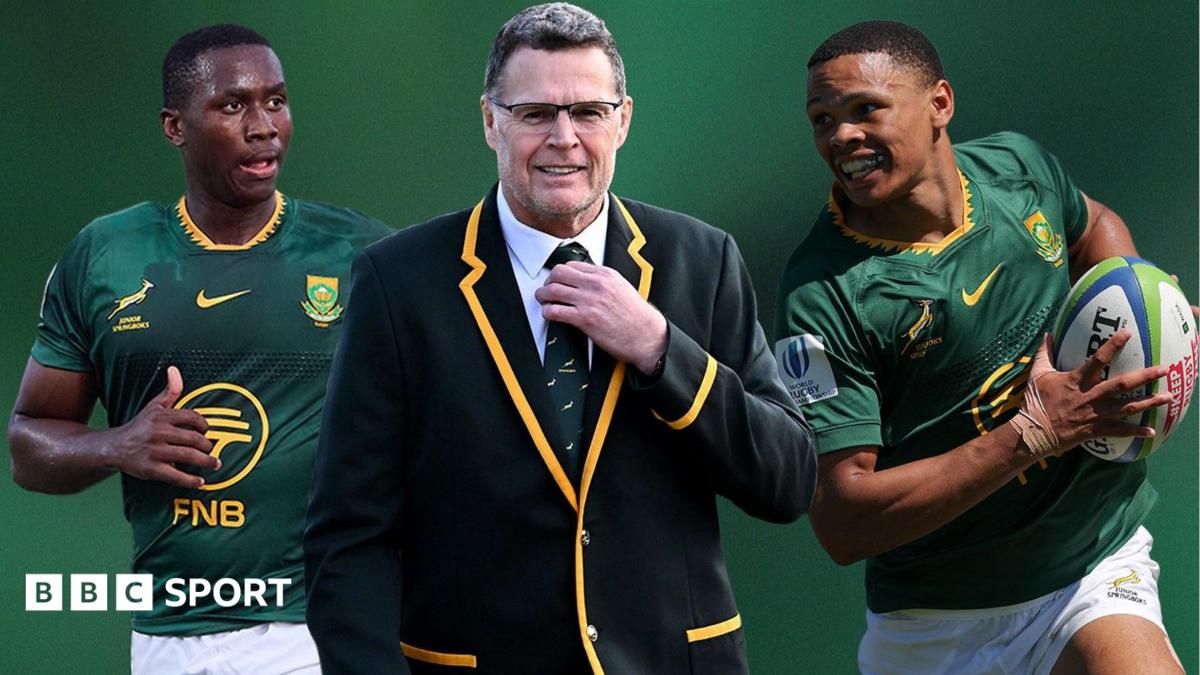
  • Veteran negotiator Roelf Meyer appointed as South Africa’s ambassador to the US

    Veteran negotiator Roelf Meyer appointed as South Africa’s ambassador to the US

    In a calculated move aimed at defusing months of escalating diplomatic friction between Pretoria and Washington, South African President Cyril Ramaphosa has named veteran politician Roelf Meyer as the nation’s next ambassador to the United States, presidential spokesperson Vincent Magwenya confirmed to the Associated Press.

    Meyer brings a uniquely storied political background to the high-stakes posting. A white Afrikaner himself, he first held cabinet office as defense minister between 1991 and 1992 under F.W. de Klerk’s white minority National Party government. He went on to serve as the lead white government negotiator in the landmark talks that dismantled apartheid, paving the way for Nelson Mandela’s 1994 historic election as South Africa’s first Black democratic head of state. After the transition, Meyer joined Mandela’s post-apartheid cabinet as minister of constitutional development from 1994 to 1996, giving him decades of cross-party and cross-community negotiation experience.

    The appointment comes at a moment of severe strain in bilateral ties, one that has left Ramaphosa needing a nominee that could win acceptance from the outgoing Trump administration. Relations collapsed after former South African ambassador Ebrahim Rasool was expelled by the White House in response to public criticism of Donald Trump’s policies toward the country.

    Trump has openly targeted South Africa’s governing administration for months: he cut all U.S. financial assistance to the nation over unsubstantiated claims that the South African government was enabling a so-called “white genocide” of the Afrikaner minority, and launched a special program to grant migration access and asylum to white South Africans who claim persecution at home.

    Meyer’s nomination follows just one week after Ramaphosa accepted Leo Brent Bozell III, Trump’s pick for U.S. ambassador to South Africa, who took office under an immediate cloud of tension. In March, the South African foreign ministry summoned Bozell, a prominent conservative American activist, after he publicly criticized Pretoria’s diplomatic relations with Iran and attacked the country’s affirmative action policies, which he claimed prioritize Black South Africans over other racial groups.

    Beyond disputes over domestic South African policy and migration, the two countries are also deeply divided over Pretoria’s decision to bring a genocide case against Israel before the International Court of Justice over its military campaign in Gaza. The rift has spilled into multilateral forums: Trump boycotted the 2025 G20 Leaders Summit hosted by South Africa, and has extended the snub by declining to invite South Africa to the upcoming G20 meetings hosted by the U.S. in Miami this December.

    Many regional diplomacy analysts see Meyer as a pragmatic choice to repair fractured ties. John Stremlau, an expert on U.S.-Africa relations at the University of the Witwatersrand, described Meyer as “the right person, at the right time” for the posting. “He is an excellent and experienced negotiator who not only negotiated in South Africa, but has brokered agreements elsewhere in various other places under very difficult circumstances,” Stremlau noted. His core task, Stremlau added, will be to stabilize the sharply frayed relationship between the two nations. Even so, the analyst warned that the path forward would not be easy, pointing to Trump’s existing executive orders that laid out what Stremlau called a “racist agenda against South Africa’s Black majority” through the aid cut and targeted asylum program for Afrikaners.

  • Humanitarian aid needs soar in Sudan

    Humanitarian aid needs soar in Sudan

    As Sudan prepares to mark the third anniversary of a brutal civil conflict that erupted between the Sudanese Armed Forces and the Rapid Support Forces paramilitary group on April 15, 2023, the nation is sinking deeper into one of the most catastrophic humanitarian emergencies the world has seen in decades. Aid organizations are sounding the alarm that the staggering scale of unmet need among vulnerable Sudanese communities has far outpaced the current international relief response.

    New data from the International Rescue Committee underscores the severity of the crisis: over the past three years of continuous fighting, more than 12 million Sudanese people have been forced to flee their homes, and a full 34 million people — roughly two-thirds of the country’s entire population — now require life-saving humanitarian assistance to survive. This officially ranks Sudan’s crisis as the largest single humanitarian catastrophe on the global stage today.

    Testimonies from conflict survivors and on-the-ground reports from aid groups paint a grim picture of daily life across vast swathes of Sudan. Displaced families repeatedly forced to flee new outbreaks of violence struggle to access basic necessities including nutritious food, clean drinking water, and life-sustaining medical care, with critical public infrastructure destroyed by ongoing fighting.

    “The humanitarian situation in Darfur, and in Sudan in general, is extremely dire,” explained Ali Almohammed, emergency health manager for Doctors Without Borders (Médecins Sans Frontières, MSF). Almohammed characterized the crisis as defined by the total collapse of civilian protection systems, mass forced displacement, the near-total destruction of functional health services, and a catastrophic level of unmet medical and humanitarian needs that has left millions without support.

    Women and children, he added, remain the most vulnerable groups caught up in the conflict, facing exponentially elevated risks of preventable disease, acute malnutrition, targeted violence, and total lack of access to essential life-saving care as fighting drags on with no end in sight. A March 30 report from MSF further highlights that danger persists for vulnerable communities even after they flee active front lines. Women and girls face persistent insecurity across every space they occupy — on travel routes, in local markets, when collecting food or tending to farms, and even inside overcrowded displacement camps, even when fighting has moved to other regions.

    “Every day, when people go to the market, there are four or five cases of rape. When we go to the farm, this happens,” a 40-year-old woman from Sudan’s Jebel Marra region stated in testimony included in the MSF report.

    MSF officials note that survivors of gender-based violence urgently require targeted support, including confidential clinical care, injury treatment, emergency contraception, prevention and treatment for sexually transmitted infections, dedicated child protection services, and clear, functional referral pathways to connect survivors with ongoing support.

    As the conflict enters its fourth year, Almohammed says humanitarian organizations across Sudan are urgently calling for expanded international backing to scale up life-saving assistance and reestablish basic protection for civilians caught in the crossfire. Without immediate, concerted international action, aid leaders warn, Sudan’s humanitarian crisis will only continue to deepen, pushing millions more into life-threatening vulnerability in the months ahead.

  • Mandarin opens doors for Kenyan youth

    Mandarin opens doors for Kenyan youth

    Nairobi, Kenya – Ahead of the 17th annual United Nations Chinese Language Day, observed globally on April 20, a growing cohort of young Kenyans are embracing Mandarin studies, framing the language as a transformative pathway to expanded education, employment, and cross-cultural connection amid deepening bilateral relations between Kenya and China.

    For 20-year-old John Waigua, a second-year education student at Kenyatta University who also studies Mandarin at the institution’s Confucius Institute, a last-minute teaching gap turned into a life-altering perspective shift. When the school’s permanent Mandarin instructor resigned unexpectedly during Waigua’s university holiday internship, he stepped in to cover the role – and the experience revealed just how much demand exists for Mandarin speakers across the country. That firsthand insight reshaped his long-term goals: he now aims to become a certified Mandarin educator and eventually pursue a scholarship to advance his studies in China.

    Waigna’s journey is far from unique. Across Kenyan universities, growing numbers of young people are integrating Mandarin studies into their academic plans, drawn by both academic relevance and clear professional advantages. Rebecca Bukachi, an architecture student studying Mandarin at the University of Nairobi’s Confucius Institute, notes that Chinese firms lead many of Kenya’s largest infrastructure and construction projects. For her, learning Mandarin is not an extracurricular hobby – it is a direct investment in her future career, aligning perfectly with her architectural training. Damaris Gathoni, another Kenyatta University student, echoes that sentiment: as Chinese businesses and cultural exchanges become increasingly embedded in Kenya’s economy and society, the ability to speak Mandarin opens doors to interactions and opportunities that would otherwise remain out of reach.

    Educators confirm that this growing interest has translated to a rapid surge in demand for Mandarin courses. Leonard Chacha Mwita, director of the Confucius Institute at Kenyatta University, says the institute now receives daily inquiries from prospective students and their parents eager to enroll. He attributes the boom to three key drivers: expanding trade ties between China and Kenya, growing educational exchange opportunities between the two countries, and shifting global economic dynamics that have put China at the center of many young Africans’ professional outlooks. “People are traveling to China for trade, for education, and suddenly everyone recognizes that Mandarin is the language that opens those doors,” Mwita explained. “This rising enthusiasm isn’t just about language – it’s a reflection of how much stronger our cultural and educational bonds with China have become.”

    The growing embrace of Mandarin in Kenya was highlighted at a pre-UN Chinese Language Day cultural event held earlier this week at the UN Office at Nairobi, where attendees tried traditional Chinese calligraphy rubbing and other cultural activities. Zainab Hawa Bangura, director-general of the UN Office at Nairobi – the only UN headquarters located in the Global South – emphasized that linguistic diversity is a core pillar of inclusive global cooperation. As one of the UN’s six official languages, Mandarin plays a critical role in strengthening cross-border dialogue and mutual understanding, she said, adding that “here in Nairobi, we see firsthand how linguistic diversity strengthens dialogue, fosters mutual understanding, and enhances cooperation to tackle complex shared global challenges.”

    Chinese Ambassador to Kenya Guo Haiyan echoed those remarks, noting that rising interest in Mandarin among Kenyan youth speaks to the language’s growing practical value across education, skills development, and cultural exchange. “I am pleased to see that in Africa, and in Kenya in particular, the Chinese language is becoming a ‘golden key’ to unlocking new opportunities,” she said. Guo added that beyond basic communication, more young Kenyans are using Mandarin to build technical skills and engage more deeply with Chinese culture, supported by institutions ranging from Confucius Institutes to Luban Workshops, which focus on vocational training. This year, 2026, has been designated the China-Africa Year of People-to-People Exchanges, and people-to-people connections will remain a central pillar of advancing bilateral cooperation between China and African nations, Guo noted.

    As Kenya’s youth continue to turn to Mandarin to expand their horizons, the trend underscores how deepening ties between China and Kenya are creating tangible new opportunities for the next generation of East African leaders.

  • The human cost of the war in Sudan, three years on

    The human cost of the war in Sudan, three years on

    It has now been three full years since violent conflict first erupted across Sudan in 2023, and the accumulated human cost of the ongoing crisis has reached a scale that can only be described as staggering, according to senior BBC correspondent Barbara Plett Usher. What began as a clash between rival military factions quickly spiraled into a full-scale civil conflict that has upended the lives of millions of Sudanese people, leaving a trail of destruction that extends far beyond the front lines of battle. Unlike statistics that often reduce human suffering to numbers on a page, the toll of this war is measured in broken families, displaced communities, and lost futures that will shape the nation for generations to come.

    In the three years since hostilities began, millions of Sudanese have been forced to flee their homes, with hundreds of thousands seeking refuge in neighboring countries such as Chad, South Sudan, and Egypt. Inside the country, critical infrastructure including hospitals, schools, and water treatment facilities have been repeatedly targeted or destroyed, leaving countless communities without access to basic life-saving services. Food insecurity has reached catastrophic levels in large swathes of the country, with the United Nations warning that millions of children and vulnerable adults face acute malnutrition and even starvation as aid organizations struggle to deliver assistance to hard-to-reach areas.

    Civilian casualties continue to mount, with thousands of non-combatants killed and many more injured in cross-fire, airstrikes, and targeted attacks on residential areas. Healthcare workers, aid volunteers, and journalists documenting the crisis have also been targeted, making it even harder to capture the full extent of the human suffering unfolding across the country. As the international community has largely turned its attention to other global conflicts, the people of Sudan have been left largely abandoned to bear the brunt of a war that shows no immediate signs of ending. Plett Usher’s reporting underscores the urgent need for renewed global diplomatic efforts to broker a ceasefire and open up unimpeded access for humanitarian aid, before the human toll grows even more catastrophic in the months ahead.

  • South Africa names apartheid-era politician as new ambassador to the US

    South Africa names apartheid-era politician as new ambassador to the US

    After more than a year of vacancy at the highest diplomatic post between Pretoria and Washington, South Africa has filled its ambassadorial slot to the United States with a figure whose legacy is deeply tied to the country’s historic transition from racial segregation to democracy. The office of South African President Cyril Ramaphosa confirmed on Wednesday that 78-year-old Roelf Meyer, a former senior official in the final apartheid-era national government, will take up the role immediately.

    The position has sat empty since last year, when former ambassador Ebrahim Rasool was expelled from Washington after publicly criticizing then-President Donald Trump, accusing him of dog-whistle politics that centered and amplified white victimhood. The expulsion exacerbated tensions between the two nations, a rift that deepened dramatically following Trump’s return to the US presidency earlier this year.

    Meyer’s selection carries profound historical weight, as he and Ramaphosa once stood on opposite sides of the table during the 1990s negotiations that dismantled South Africa’s system of white-minority apartheid rule. At the time, Meyer served as the chief negotiator for the National Party – the political organization that first implemented apartheid in 1948 – while Ramaphosa led negotiations for Nelson Mandela’s African National Congress (ANC), the anti-apartheid movement that would go on to lead post-transition South Africa.

    Following the successful conclusion of negotiations and the country’s first multiracial democratic elections in 1994, Meyer remained in government as a member of the landmark unity administration formed by President Mandela. His long track record of bridging deep political and racial divides to deliver historic democratic change is widely seen as a key factor behind his appointment to the sensitive US posting at a time of particularly fraught bilateral relations.

    Ramaphosa’s spokesperson Vincent Magwenya officially verified the appointment in a statement to the BBC, confirming that the nomination would go into effect without delay. “I can confirm that President Cyril Ramaphosa has appointed Meyer as South Africa’s ambassador to the US,” Magwenya said.

  • Kenya fuel prices rise sharply despite reduction in tax due to Iran war

    Kenya fuel prices rise sharply despite reduction in tax due to Iran war

    Against the backdrop of escalating geopolitical tensions in the Middle East that have roiled global energy markets, Kenya has implemented one of its sharpest ever increases in petroleum prices, even after the government rolled out a temporary fuel tax cut to soften consumer impact. The East African nation’s Energy and Petroleum Regulatory Authority (Epra) announced the new price adjustments in its monthly review, raising diesel costs by a historic 40 Kenya shillings to hit 206 shillings (approximately $1.60) per litre. Petrol prices saw a 28-shilling uptick, bringing it to the same 206-shilling per litre benchmark. These new rates will remain in effect until the next scheduled pricing review on 14 May.

    Regulators attribute the massive price jump to skyrocketing global crude oil costs and elevated shipping expenses, impacts that outstripped the government’s recent reduction in value-added tax on fuel from 16% to 13%. The tax cut is a temporary measure set to expire in July, part of a broader continent-wide trend of African nations rolling out short-term relief to buffer consumers from global price volatility. Even before the new pricing took effect, reports of widespread fuel shortages had emerged across multiple regions of Kenya. While the Kenyan government maintains that national fuel stockpiles remain adequate, it has accused independent fuel suppliers of deliberately hoarding inventories to exacerbate supply gaps and drive up profits.

    The shortage reports have been further complicated by an ongoing national controversy surrounding a controversial, off-contract fuel import shipment that arrived last month. The consignment, arranged outside of official government-to-government supply agreements, was purchased at a far higher cost than standard market rates and has been flagged for potential substandard quality. Public anger has boiled over amid circulating reports that the questionable fuel was already blended into official government storage stocks and released into the domestic market, spurring widespread demands for transparent accountability from senior energy sector leaders.

    Government officials initially stated that they had canceled the controversial shipment over quality and cost concerns, and issued an official ban prohibiting any domestic marketers from distributing the fuel. However, the scandal has already triggered significant political upheaval: multiple senior energy officials have been arrested, and others have resigned from their posts, with a formal investigation into the affair still ongoing. In its latest statement Wednesday, Epra moved to clarify that the cost of the disputed consignment was not factored into the calculation of the new round of fuel price increases.

    The root cause of Kenya’s domestic fuel price shock traces back to the ongoing regional conflict between the United States, Israel and Iran that erupted on 28 February, which has upended global energy supply chains. Although a conditional two-week ceasefire was agreed to last Wednesday – a deal that includes a provision to reopen the Strait of Hormuz, the world’s most critical chokepoint for global oil and gas maritime shipments – persistent fears remain that the global energy crisis will worsen in the coming weeks. Commercial shipments through the strategic strait have remained largely halted since the conflict began, creating massive supply bottlenecks that have driven up crude prices worldwide.

    In response to the unfolding crisis, governments across the globe and across Africa have implemented a range of emergency policy measures to shield consumers from sudden price hikes. Beyond Kenya’s VAT cut, South Africa announced a one-month reduction to its national fuel levy two weeks ago to cap retail pump prices. Several other African nations including Zambia, Namibia and Ghana have rolled out similar tax relief measures, while harder-hit economies have taken more drastic steps: South Sudan has implemented mandatory electricity rationing to cut domestic energy consumption, and Ethiopia has reallocated limited fuel supplies to prioritize critical economic sectors. As the ceasefire holds for the moment, markets and consumers across Africa are closely watching developments in the Middle East to see if energy prices will stabilize in the weeks ahead.

  • Pope heads to Cameroon as separatists announce 3-day pause in fighting

    Pope heads to Cameroon as separatists announce 3-day pause in fighting

    In the opening leg of his four-nation African tour following a stop in Algiers, Algeria, Pope Leo XIV — the first American pope in history — is set to arrive in Yaoundé, Cameroon’s capital, on Wednesday for a high-stakes visit focused on advancing peace, confronting systemic corruption, and clarifying the ethical obligations of political leadership. This trip puts the Vatican at the center of one of central Africa’s longest-running crises, pitting the Church’s commitment to democratic governance against the entrenched authoritarian rule of 93-year-old President Paul Biya, who has held uninterrupted power since 1982 and secured a disputed eighth term in national elections last October.

    The disputed election result has remained a flashpoint of national tension since October 2023. Biya’s main challenger, Issa Tchiroma Bakary, has publicly rejected the official outcome, claiming he won the vote and urging Cameroonians to refuse to recognize Biya’s new term. Even ahead of the pope’s arrival, Vatican officials have made clear that Catholic social doctrine stands in opposition to the authoritarian style of leadership Biya has cultivated over his four decades in power. Just days before the visit, Pope Leo outlined his broader vision for ethical governance in a message to the Pontifical Academy of Social Sciences, dated April 1, that did not name Biya or Cameroon explicitly but carried clear resonance for the trip. In the address, the pope argued that authentic democracy acts as a critical guardrail against the abuse of political power, and that democratic systems only remain healthy when rooted in moral principle and a universal commitment to human dignity. Without that foundational commitment, he warned, democracy risks devolving into either majoritarian tyranny or a thin facade that masks unchecked control by narrow economic and technological elites.

    Upon his arrival in Yaoundé, the pope’s first official engagement will be a face-to-face meeting with Biya at the presidential palace. Following that audience, Leo will address a gathering of government officials, civil service leaders, and foreign diplomats, before traveling to a local orphanage operated by a Catholic congregation of nuns. With roughly 29 percent of Cameroon’s population identifying as Catholic, the visit carries deep cultural and spiritual weight for the country, alongside its political implications.

    The centerpiece of Pope Leo’s time in Cameroon will be a landmark peace gathering scheduled for Thursday in Bamenda, the capital of the country’s Northwest Region, which has borne the brunt of nearly a decade of separatist violence. The conflict erupted in 2017, when English-speaking separatist factions launched an armed rebellion to split from Cameroon’s French-speaking majority and form an independent state, Ambazonia. According to data from the International Crisis Group, the years of fighting have left more than 6,000 people dead and forced over 600,000 residents from their homes.

    In a gesture of goodwill timed to the pope’s visit, separatist groups have announced a temporary ceasefire. The Unity Alliance, a coalition of multiple separatist factions, confirmed the three-day pause in hostilities in a statement released Monday evening, noting that the truce reflects the profound spiritual importance of Pope Leo’s trip and is intended to ensure safe passage for civilians, pilgrims, and visiting dignitaries throughout the visit.

    Following the peace meeting in Bamenda, the pope’s second major public event will be an open-air Mass on Friday in Cameroon’s largest coastal city, Douala, where event organizers are projecting an attendance of roughly 600,000 worshippers and attendees. After wrapping up his time in Cameroon on Friday, Pope Leo will travel on Saturday to Angola for the third leg of his African tour, which will conclude the following week in Equatorial Guinea.

    This Associated Press religion coverage is produced through a collaboration with The Conversation US, with financial support from Lilly Endowment Inc. The AP retains sole editorial responsibility for all content.