In a calculated move aimed at defusing months of escalating diplomatic friction between Pretoria and Washington, South African President Cyril Ramaphosa has named veteran politician Roelf Meyer as the nation’s next ambassador to the United States, presidential spokesperson Vincent Magwenya confirmed to the Associated Press.
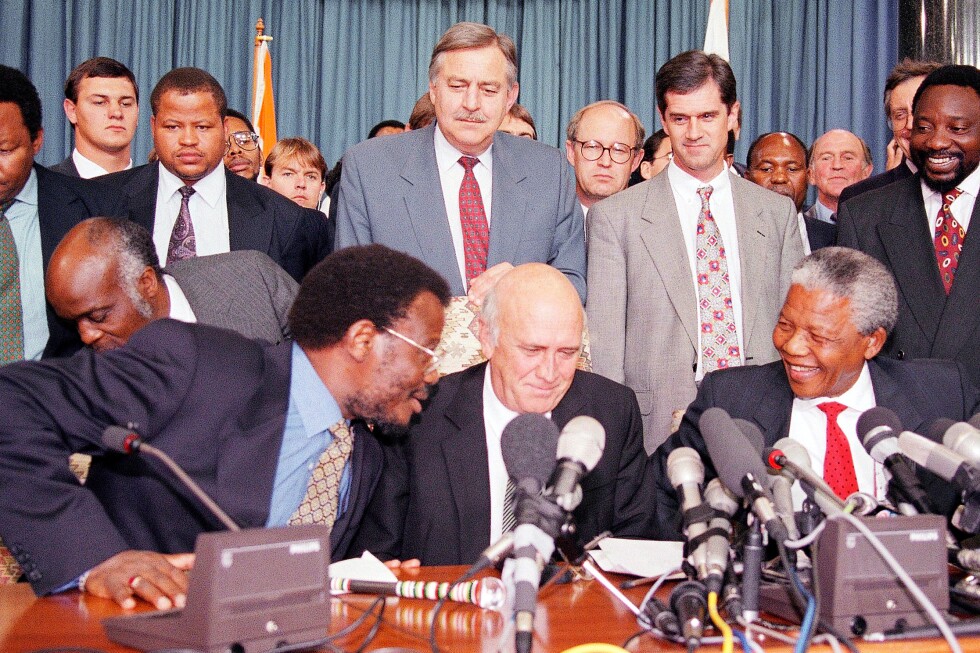
Meyer brings a uniquely storied political background to the high-stakes posting. A white Afrikaner himself, he first held cabinet office as defense minister between 1991 and 1992 under F.W. de Klerk’s white minority National Party government. He went on to serve as the lead white government negotiator in the landmark talks that dismantled apartheid, paving the way for Nelson Mandela’s 1994 historic election as South Africa’s first Black democratic head of state. After the transition, Meyer joined Mandela’s post-apartheid cabinet as minister of constitutional development from 1994 to 1996, giving him decades of cross-party and cross-community negotiation experience.
The appointment comes at a moment of severe strain in bilateral ties, one that has left Ramaphosa needing a nominee that could win acceptance from the outgoing Trump administration. Relations collapsed after former South African ambassador Ebrahim Rasool was expelled by the White House in response to public criticism of Donald Trump’s policies toward the country.
Trump has openly targeted South Africa’s governing administration for months: he cut all U.S. financial assistance to the nation over unsubstantiated claims that the South African government was enabling a so-called “white genocide” of the Afrikaner minority, and launched a special program to grant migration access and asylum to white South Africans who claim persecution at home.
Meyer’s nomination follows just one week after Ramaphosa accepted Leo Brent Bozell III, Trump’s pick for U.S. ambassador to South Africa, who took office under an immediate cloud of tension. In March, the South African foreign ministry summoned Bozell, a prominent conservative American activist, after he publicly criticized Pretoria’s diplomatic relations with Iran and attacked the country’s affirmative action policies, which he claimed prioritize Black South Africans over other racial groups.
Beyond disputes over domestic South African policy and migration, the two countries are also deeply divided over Pretoria’s decision to bring a genocide case against Israel before the International Court of Justice over its military campaign in Gaza. The rift has spilled into multilateral forums: Trump boycotted the 2025 G20 Leaders Summit hosted by South Africa, and has extended the snub by declining to invite South Africa to the upcoming G20 meetings hosted by the U.S. in Miami this December.
Many regional diplomacy analysts see Meyer as a pragmatic choice to repair fractured ties. John Stremlau, an expert on U.S.-Africa relations at the University of the Witwatersrand, described Meyer as “the right person, at the right time” for the posting. “He is an excellent and experienced negotiator who not only negotiated in South Africa, but has brokered agreements elsewhere in various other places under very difficult circumstances,” Stremlau noted. His core task, Stremlau added, will be to stabilize the sharply frayed relationship between the two nations. Even so, the analyst warned that the path forward would not be easy, pointing to Trump’s existing executive orders that laid out what Stremlau called a “racist agenda against South Africa’s Black majority” through the aid cut and targeted asylum program for Afrikaners.