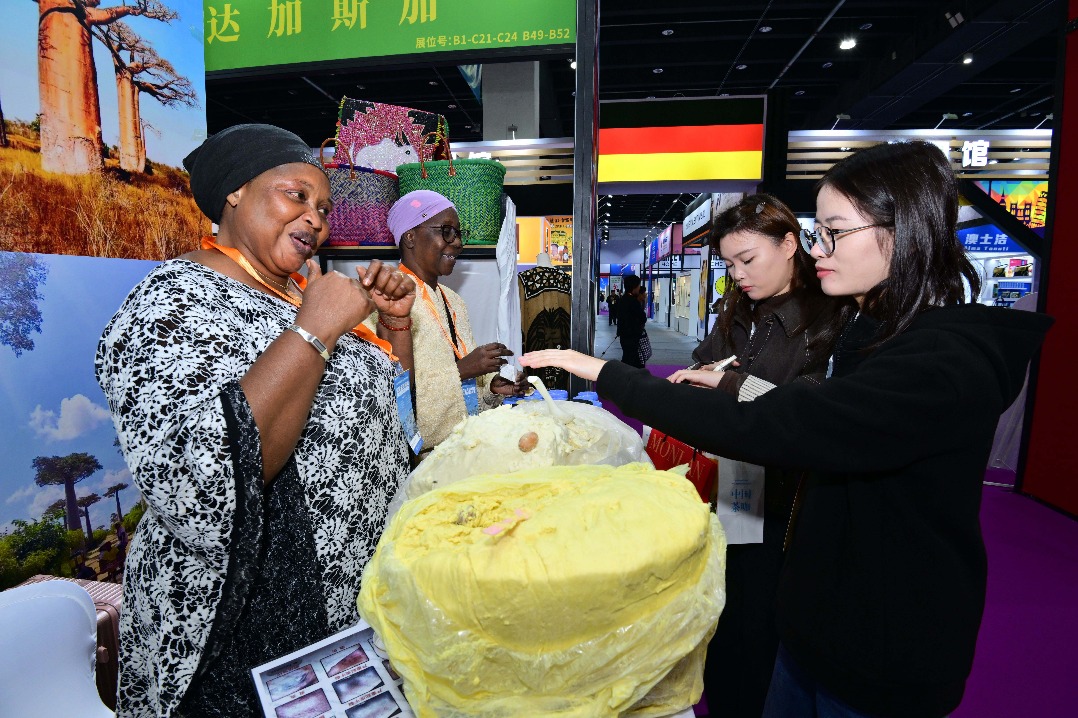
Starting May 1, 2026, China will implement full zero-tariff treatment for all imports from 53 African countries that maintain diplomatic ties with Beijing — a policy shift that economic analysts, regional leaders, and policymakers across Africa and beyond are praising as a transformative step that will deepen mutually beneficial China-Africa cooperation and unlock sustained continental growth. The landmark policy was first officially announced by Chinese authorities during the 39th African Union Summit held in Addis Ababa, Ethiopia, in February 2026, marking a new milestone in a trade partnership that has already positioned China as Africa’s largest trading partner for 16 consecutive years.
Nicholas Mainza, national secretary of the Economics Association of Zambia (EAZ) and Zambia’s 2025 Economist of the Year, framed the initiative as a tangible reflection of China’s longstanding dedication to equitable South-South cooperation and reciprocal trade development. By eliminating tariff barriers, African goods will gain enhanced competitiveness in the world’s second-largest consumer market, opening new pathways for export-driven economic expansion across the continent, Mainza explained.
“To grow cross-border trade volumes, you have to create meaningful incentives for producers. Zero tariffs cut through trade barriers and make our goods far more competitive in the Chinese market,” Mainza said. “Greater export volumes to China translate into more foreign exchange earnings, which strengthen national reserves and fund critical domestic development priorities, from large-scale infrastructure projects to domestic industrialization drives.”
Mainza noted that Zambia, whose economy has long relied on raw copper exports, stands to gain significant benefits if the country uses the new policy framework to diversify its export portfolio into value-added manufactured goods and processed agricultural products. For China, the policy also delivers strategic advantages, he added, securing reliable access to the commodities and production inputs that power China’s vast industrial base. This reciprocal arrangement confirms that the China-Africa economic partnership is balanced, mutually beneficial, and strategically aligned for long-term growth, he emphasized.
Placing the policy in the context of shifting global trade dynamics, Mainza observed that at a time when many major economies are turning inward and adopting increasingly restrictive protectionist measures, China is choosing to open its markets wider to developing nations. “In a global landscape where more countries are raising tariff walls, China is embracing greater trade openness,” he said. “This approach strikes a deep chord with developing economies that are focused on growing through trade, rather than relying on conditional aid.”
While Zambia’s existing deepening cooperation with China across mining, manufacturing, information and communications technology, and agro-processing puts the country in a strong position to capitalize on the new policy, Mainza stressed that local producers will need to meet Chinese market quality and safety standards to fully capitalize on the opportunity. He added that African nations across the continent must invest in upgrading domestic productivity, improving cross-border logistics networks, and strengthening regulatory compliance to maximize the policy’s benefits. “Zero tariffs create the opportunity, but national preparedness will determine how much each country gains,” Mainza said. “The core priority is boosting domestic competitiveness and trade readiness across the continent.”
This initiative is a key part of the maturing China-Africa partnership, which is now anchored in deepening trade collaboration, infrastructure development, and industrial capacity building, Mainza explained. “This is not about creating dependency; it is about expanding trade flows and building long-term productive capacity. If implemented and managed strategically, the zero-tariff policy can make a meaningful contribution to Africa’s long-term economic transformation,” he said.
Chinese Foreign Minister Wang Yi reaffirmed the policy’s goals during a press conference held on the sidelines of China’s annual top legislative and political advisory sessions, which concluded in Beijing on March 12. Wang explained that the full tariff elimination is designed to boost bilateral trade, deliver shared prosperity for people on both sides, and give African economies full access to the massive consumer opportunities of the Chinese market. He added that China remains firmly committed to advancing trade and investment liberalization and facilitation, maintaining the stability and smooth operation of global industrial and supply chains, upholding the multilateral trading system centered on the World Trade Organization, and defending a fair, open global economic and trade order.
Regional leaders across Africa have echoed widespread praise for the policy. Grace Mutembo, Zambia’s high commissioner to South Africa, welcomed the zero-tariff framework as a once-in-a-generation opportunity to expand African export volumes to China. “This is a tremendous opportunity for African countries, and Zambia in particular, as we work to expand our export base,” Mutembo said. “China is one of our key target markets for our growing range of goods.” She added that Zambia and other African nations are already working to boost value addition in key sectors including agriculture and mining before exporting products to the Chinese market.
Charles Onunaiju, director of the Center for China Studies in Nigeria, described China’s zero-tariff access for African exports as a true “game changer” for Nigeria, noting that it creates a rare, practical opening to drive broad-based economic transformation across the country. “Nigeria must seize this zero-tariff opportunity as low-hanging fruit that can transform our economy and help address persistent insecurity by creating new jobs and growth,” Onunaiju said in an interview with Nigerian broadcaster Arise News.
Onunaiju noted that China’s 1.4 billion-person consumer market gives African economies like Nigeria unprecedented export potential, noting that even a small increase in market share could deliver outsized economic benefits. “If we can capture just 1 percent of China’s total market demand, that would be fundamentally transformative, especially for our efforts to diversify the Nigerian economy away from overreliance on crude oil exports,” he said.
A Nairobi-based independent think tank, the HORN International Institute for Strategic Studies, noted that the new policy marks a major evolution in the China-Africa economic relationship. For the past two decades, the narrative of China-Africa engagement has largely centered on the Belt and Road Initiative, which has been defined by large-scale infrastructure loans, port development, and cross-border railway projects. Expanding this preferential trade treatment to all 53 African nations with diplomatic ties to China — including bringing major middle-income economies such as South Africa, Kenya, Nigeria, Egypt, and Morocco into the zero-tariff framework for the first time — represents an unprecedented economic concession that shifts the relationship into a new phase of trade-focused collaboration.
The institute’s analysis added that Beijing is clearly positioning itself as the reliable long-term economic partner of choice for the Global South, stepping into the gap created by rising protectionist policies from Western economies. Projections for the 2026 fiscal year estimate that China will forgo approximately $1.4 billion in annual tariff revenue to implement the policy and support Africa’s economic integration into global markets.
“The implementation of China’s zero-tariff policy for Africa starting in May 2026 is a defining moment in modern global geoeconomics,” the institute’s report stated. “It challenges the Western model of highly conditional trade access and provides a continent facing significant economic headwinds with a direct, unobstructed pipeline to the world’s second-largest economy.”