标签: Africa

非洲

  • Pope criticises ‘tyrants’ who spend billions on wars, days after Trump spat

    Pope criticises ‘tyrants’ who spend billions on wars, days after Trump spat

    In an extraordinary departure from typical diplomatic Vatican rhetoric, Pope Leo has issued a blistering rebuke of global leaders who pour billions of dollars into military conflicts, arguing that the entire global order is currently being exploited and destabilized by a small group of authoritarian rulers. The unusually harsh comments came during the pontiff’s tour of Cameroon’s Northwest region, an area that has been torn apart by a nearly 10-year-long separatist insurgency that has claimed thousands of lives and displaced hundreds of thousands of residents.

    Standing before crowds gathered at a cathedral in Bamenda, the heart of Cameroon’s conflict zone, Pope Leo called out actors who fuel the region’s ongoing violence, noting that external and local groups that extract natural resources from the affected land often funnel a large share of their profits into weapons, prolonging a never-ending cycle of violence and collapse. “Those who rob your land of its resources generally invest much of the profit in weapons, thus perpetuating an endless cycle of destabilisation and death,” he told the assembled audience of community members, clergy and displaced residents.

    The pontiff expanded his critique beyond Cameroon’s local conflict to the global stage, condemning the misplaced global priorities that prioritize destruction over human development. “The masters of war pretend not to know that it takes only a moment to destroy, yet often a lifetime is not enough to rebuild,” he said. He added that it is a moral travesty that leaders “turn a blind eye to the fact that billions of dollars are spent on killing and devastation, yet the resources needed for healing, education and restoration are nowhere to be found.” He also called out actors who “manipulate the very name of God” to justify their violent, self-serving actions.

    Pope Leo’s comments come just days after a high-profile public conflict with former U.S. President Donald Trump, sparked by the pontiff’s vocal opposition to the joint U.S.-Israeli military operation in Iran. Pope Leo had previously raised alarm over Trump’s stark threat that “a whole civilisation will die” if Iran refused to meet U.S. demands to end the war and reopen the strategically critical Strait of Hormuz. This is not the first public disagreement between the two men: since his election as the first U.S.-born pope in history last year, Pope Leo has repeatedly criticized the Trump administration’s hardline approach to immigration policy, prompting a sharp rebuke from Trump on his TruthSocial platform, where the former president wrote “Leo should get his act together as Pope.”

    The Cameroon visit is a key stop on Pope Leo’s multi-country African tour, which will include 11 stops across four nations. This marks only his second major international visit since taking office last year, a schedule that underscores the growing strategic and demographic importance of the Catholic Church in Africa. Recent 2024 demographic data shows that Africa is home to roughly 288 million Catholics, accounting for more than one-fifth of the entire global Catholic population – a share that continues to grow steadily year over year.

  • What to know about Cameroon’s separatist violence that the pope seeks to end

    What to know about Cameroon’s separatist violence that the pope seeks to end

    BAMENDA, CAMEROON – On Thursday, Pope Leo XIV touched down in Bamenda, the northwestern hub of Cameroon, to convene a landmark peace gathering in a region scarred by nearly 10 years of separatist violence that has left thousands dead and hundreds of thousands displaced. The summit forms a core part of the pontiff’s four-nation African tour, designed to center grassroots interfaith efforts that have long worked to de-escalate tensions and support conflict survivors navigating deep psychological trauma.

  • Gabon’s former prime minister, a critic of the junta, has been arrested

    Gabon’s former prime minister, a critic of the junta, has been arrested

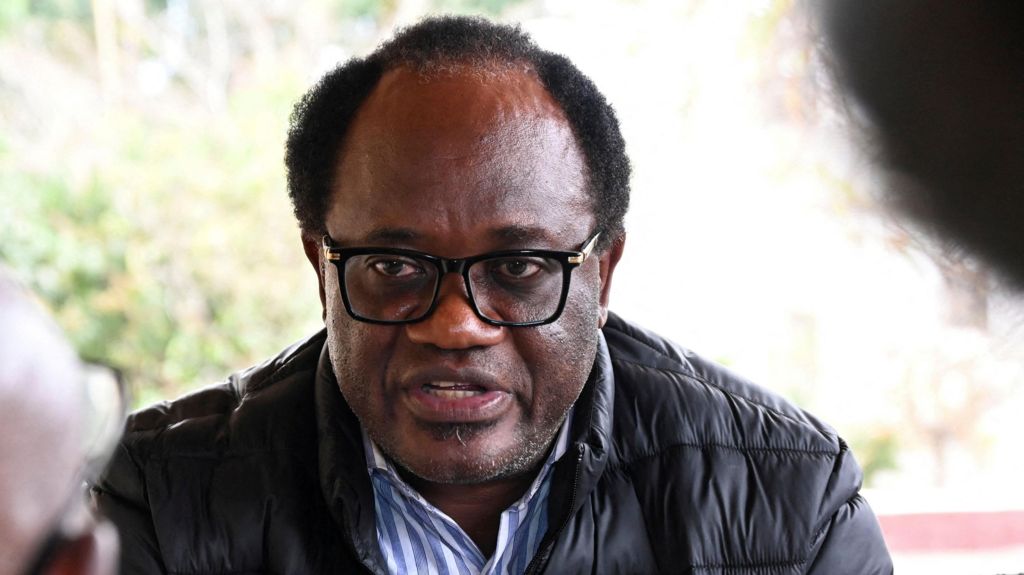
    LIBREVILLE, Gabon — A major political development has shaken Gabon’s post-coup democratic landscape, as the country’s top opposition leader and former prime minister Alain-Claude Bilie-By-Nze has been taken into custody by state security forces. The opposition grouping Ensemble pour le Gabon (EPG), which Bilie-By-Nze leads, confirmed the arrest in an official public statement released to media outlets on Thursday.

    Per details shared by EPG, the arrest operation was carried out at the 58-year-old politician’s private residence on Wednesday by officers from the General Directorate of Investigations (DGR), Gabon’s national intelligence agency. The party has issued harsh condemnation of the detention, characterizing it as arbitrary, unnecessarily violent, and a clear violation of the core legal principles that underpin a functional rule of law.

    The official justification cited for the arrest ties to an unresolved 5 million Central African franc debt, equivalent to roughly $8,999, that dates back to 2008. At that time, Bilie-By-Nze served as one of the lead organizers of the National Cultural Festival, a state-run event created to highlight and celebrate Gabon’s rich cultural heritage. The outstanding sum stems from an unpaid bill to a private service provider that has continued to pursue the debt for more than 15 years.

    This arrest carries added political weight given Bilie-By-Nze’s prominent career in Gabonese politics. He most recently held the position of prime minister under former president Ali Bongo Ondimba, who was removed from power in a military coup that took place in August 2023. Following the coup, the transitional junta oversaw new presidential elections in 2024, the first national election since the overthrow of the Bongo administration. In that vote, Bilie-By-Nze emerged as the top challenger to junta leader Brice Oligui Nguema, ultimately finishing second in the final results.

    In its statement, EPG has called on Gabon’s current transitional authorities to uphold their responsibilities. The party is pushing state leaders to respect the commitments to democratic governance that Gabon has made both domestically and on the international stage, and to guarantee a peaceful, inclusive framework for political dialogue and democratic process moving forward.

  • Blunt-speaking Pope tells Cameroon to root out corruption to find peace

    Blunt-speaking Pope tells Cameroon to root out corruption to find peace

    On the second stop of his landmark 11-day tour across Africa, Pope Leo XIV delivered a blunt, unflinching address to Cameroon’s leadership at Yaoundé’s presidential palace, calling on the government to dismantle systemic corruption as a foundational step toward lasting peace and justice. His remarks, delivered in the presence of 93-year-old President Paul Biya — the world’s oldest sitting head of state, who secured a contested eighth term in office last year — marked a rare public rebuke of an administration long dogged by allegations of graft, poor governance, and ineffective security management.

    “In order for peace and justice to prevail, the chains of corruption – which disfigure authority and strip it of its credibility – must be broken,” the 70-year-old pontiff told the assembled crowd. He expanded on the theme, adding, “Hearts must be set free from an idolatrous thirst for profit.” According to reporting from the Associated Press, Cameroon’s state television cut its live broadcast of portions of the Pope’s speech, with no clarity on whether the interruption stemmed from technical issues or intentional editing. Biya sat through the entire address without visible reaction, multiple observers confirmed.

    Following his meeting with Cameroon’s government, Pope Leo traveled north to Bamenda, the epicenter of a nearly decade-long separatist insurgency in Cameroon’s English-speaking North-West and South-West regions. The conflict, which erupted in 2017 when Anglophone separatists launched their push for an independent state, has killed at least 6,000 people and displaced hundreds of thousands more. Separatist leaders had pre-emptively declared a temporary “safe travel passage” to allow the papal visit to proceed, and throngs of excited local residents lined city streets to greet the pontiff upon his arrival.

    During his remarks ahead of a planned peace Mass at Bamenda’s airport, Pope Leo waded into the long-running conflict, noting that while security must remain a priority for the state, it must always be exercised in full respect for fundamental human rights. The separatist movement grew out of decades of grievances over what the Anglophone minority describes as systemic marginalization by Cameroon’s French-speaking majority government.

    Beyond his calls for anti-corruption action and peace, Pope Leo used his address to center marginalized groups in Cameroon’s future. He emphasized that young people represent the country’s greatest hope, arguing that investment in their education, professional training, and entrepreneurial ventures is critical to curbing brain drain and addressing deep-rooted social inequality. He also highlighted the underrecognized role of women, who are often disproportionately harmed by conflict and injustice but serve as persistent, unsung architects of peace, calling for their full inclusion in all national decision-making processes. Biya, who was re-elected in October, has made public promises to prioritize young people and women, and expectations remain high for a looming cabinet reshuffle to deliver on those pledges.

    Local church leaders have framed the papal visit as a rare moment of hope for a region shattered by years of violence. “I can confidently say now is the time for peace,” Archbishop Andrew Nkea of Bamenda told worshippers ahead of the Mass, adding that the visit would bring comfort to thousands whose lives have been upended by the conflict.

    This tour is the first papal visit to Africa under Pope Leo XIV, with peace as its overarching central theme. The pontiff launched his trip in Algeria, marking the first ever papal visit to the majority-Muslim North African nation — which is also the birthplace of St. Augustine, the theological figure whose teachings shape Pope Leo’s own spiritual background as the first pope from his religious order. During his two days in Algeria, the Pope visited Algiers’ Great Mosque, a moment he called a powerful demonstration that people of differing faiths and backgrounds can coexist peacefully. After wrapping up his time in Cameroon, Pope Leo will travel on to visit Angola and Equatorial Guinea to conclude the 11-day tour.

  • Chinese man jailed for one year by Kenyan court over ant trafficking

    Chinese man jailed for one year by Kenyan court over ant trafficking

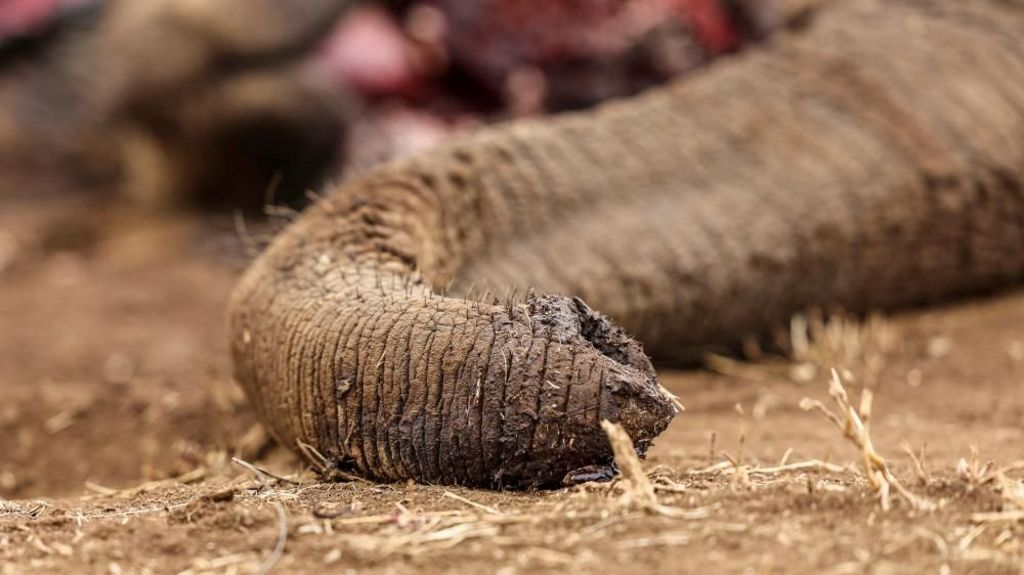
    In a high-profile wildlife trafficking case that highlights Kenya’s ongoing crackdown on unregulated insect trade, a Kenyan court has handed down a one-year prison sentence to a Chinese national convicted of unlawfully holding hundreds of live native ants, the latest conviction in the east African nation’s campaign against underreported trafficking of lesser-known wildlife species.

    Zhang Kequn, who entered a guilty plea to the charge of holding protected wildlife without a valid government license, was also ordered to pay a fine of 1 million Kenyan shillings, equal to roughly $7,700, according to court documents released Wednesday. His co-accused, Kenyan national Charles Mwangi, has maintained a not guilty plea to the same charge and was released on cash bail as the case against him proceeds.

    Prosecutors laid out the details of the trafficking operation during court proceedings, confirming that Zhang sourced the live ants directly from Mwangi. The pair completed two separate transactions: the first batch of 600 ants cost Zhang 60,000 Kenyan shillings ($463), while a second shipment of 700 ants came at a price of 70,000 Kenyan shillings ($540). Authorities first took the two suspects into custody on March 10, when a search turned out a total of 2,248 live ants. Most of the insects – 1,948 garden ants – were stored in custom-made transportation tubes, while an additional 300 ants were hidden in tissue rolls. Investigators confirmed that neither suspect held the mandatory permits required under Kenya’s strict wildlife conservation legislation to collect, hold, or trade native wildlife species, including native ant populations.

    This conviction is not an isolated incident. Just last year, Kenyan authorities charged two Belgian teenagers with similar wildlife trafficking offenses after seizing 5,000 ants stored in test tubes from their possession. That case drew international attention to a growing, underreported trend: traffickers target smaller, lesser-known Kenyan wildlife species for international markets, where the ants are valued both as exotic pets and unusual delicacies among collectors and consumers in Europe and Asia. At the time of that seizure, Kenyan officials estimated the value of the trafficked ant shipment at 1 million Kenyan shillings ($7,700), matching the fine issued to Zhang in this week’s ruling. Kenya has a long-standing reputation for aggressive enforcement of wildlife protection laws, targeting poaching and trafficking of all protected species – from iconic large mammals to overlooked native insects that make up a critical part of the country’s unique biodiversity.

  • South African politician Julius Malema jailed for 5 years for firing rifle shots at rally

    South African politician Julius Malema jailed for 5 years for firing rifle shots at rally

    JOHANNESBURG – In a landmark ruling that has sent shockwaves through South Africa’s political landscape, prominent opposition leader Julius Malema has been sentenced to five years in prison following his conviction on firearms-related charges stemming from a 2018 political rally incident. The conviction, handed down in October, found the leader of the left-wing Economic Freedom Fighters (EFF) guilty on five separate counts, ranging from unlawful possession of a firearm and ammunition to discharging a weapon in a densely populated area and reckless endangerment of public safety. The incident, captured on camera and widely shared across social media platforms, also saw Malema’s personal bodyguard Anton Snyman standing trial alongside him – though Snyman was ultimately acquitted of all charges. When delivering the sentence, Magistrate Twanet Olivier emphasized that the severity of the sentence reflected the gravity of Malema’s actions, in the context of a nation grappling with persistent gun violence. In her remarks from the bench, Olivier noted that communities across South Africa face regular losses of innocent life from stray gunfire, with children often falling victim to random shots while playing in residential streets and yards. This incident was no different, she argued, even though the shots had been characterized by the defense as celebratory fire. Throughout the legal process, Malema has repeatedly maintained that the charges against him were politically motivated. The case was brought by Afriforum, a lobby group representing the white Afrikaner minority that has had a long-running, bitter conflict with the firebrand opposition leader. Malema has claimed the group orchestrated the prosecution to target him for his political stances. However, Olivier rejected any implication of bias in the ruling, stressing that both the guilty verdict and the sentence were based exclusively on Malema’s conduct on the day of the rally, not any political considerations. Malema, whose EFF holds the position of South Africa’s fourth-largest political party, is one of the country’s most polarizing public figures. His political platform is defined by radical policy proposals, including calls for the expropriation of white-owned land without compensation and the full nationalization of South Africa’s mining and banking sectors. His controversial public profile extends beyond South Africa’s borders: last year, a video of Malema singing a contentious anti-apartheid song, which some have interpreted as inciting violence against Afrikaners, was featured by former U.S. President Donald Trump during a high-stakes meeting with South African President Cyril Ramaphosa, drawing international attention to the figure. As news of the sentence breaks, South Africans now face questions over the future of the EFF and the impact of the ruling on national political dynamics ahead of upcoming electoral cycles.

  • Wanted activist arrested in South Africa over support for Benin coup plot

    Wanted activist arrested in South Africa over support for Benin coup plot

    In a coordinated sting operation carried out at a Pretoria shopping center earlier this week, South African law enforcement has detained high-profile French-born Beninese activist Kemi Seba, who was wanted internationally for charges tied to an alleged failed coup attempt in his home country of Benin. Alongside Seba, 45, officials also took his 18-year-old son and a third individual accused of acting as a paid smuggler into custody, as the group was reportedly plotting an escape route to Europe via neighboring Zimbabwe.

    Seba, whose full legal name is Stellio Gilles Robert Capo Chichi, has built a large international following as a vocal Pan-Africanist, known above all for his vehement opposition to long-standing French political and cultural influence across the African continent. He currently leads the Pan-Africanist Emergency NGO, an organization focused on advancing African sovereignty and cross-continental solidarity, and counts 1.5 million followers across his social media platforms.

    The arrest stems from charges filed by Beninese authorities, who accuse Seba of inciting rebellion after he openly supported a December 2025 attempted coup against Benin’s sitting government. The mutiny, carried out by rogue soldiers, was quickly defeated within hours with security support from Nigeria and France, but Seba released a public video calling the attempted overthrow a “day of liberation” for Benin, a former French colony. That statement prompted Benin to issue an international arrest warrant for the activist. Preliminary investigations from South African police also confirmed Seba is wanted on additional criminal charges related to crimes against the state in his native France.

    The smuggling facilitator detained alongside Seba and his son had reportedly been paid 250,000 South African rand, equal to roughly $15,000, to help the group cross the Limpopo River into Zimbabwe, from where they planned to travel onward to Europe, according to an official statement released by South African police this Thursday. All three detainees appeared in court on Wednesday and remain in police custody ahead of a next hearing scheduled for 20 April, with formal extradition proceedings already underway.

    Seba’s history of political activism has long been marked by controversy. He has been convicted multiple times in France on charges of inciting racial hatred, and has repeatedly faced accusations of anti-Semitism. In 2024, France stripped him of his citizenship, a move he responded to by publicly burning his French passport and declaring he had been “freed from the burden of French nationality.”

    He has also been repeatedly accused by Western officials of spreading Russian propaganda across the African continent. Thomas Gassilloud, who chaired France’s National Assembly defence committee in 2024, labeled Seba a mouthpiece for Russian interests, claiming he served a foreign power that actively fuels anti-French sentiment across West Africa. Later that same year, the ruling military junta in Niger granted Seba a diplomatic passport naming him a special adviser to junta leader Abdourahamane Tchiani. Like neighboring military-led governments in Mali and Burkina Faso, Niger’s junta cut military counterterrorism cooperation with France after seizing power and has aligned itself closely with Russia instead.

    As of this report, Seba has not issued any public comment responding to the charges against him.

  • Calls intensify for urgent action to end Sudan war

    Calls intensify for urgent action to end Sudan war

    As Sudan’s devastating civil conflict enters its fourth year this week, humanitarian organizations from across the globe are ramping up calls for immediate, coordinated diplomatic intervention to end the fighting, warning that ongoing violence threatens to push one of the world’s worst displacement crises to even more catastrophic levels. Since fighting first broke out in April 2023, the conflict has already displaced an estimated 14 million people, according to senior officials from the United Nations High Commissioner for Refugees (UNHCR).

    Of that staggering total, 9 million people remain internally displaced within Sudan’s borders, while an additional 4.5 million have fled across the country’s borders to seek safety in neighboring nations including Egypt, Chad and others. Mamadou Dian Balde, UNHCR’s regional director for Eastern and Southern Africa, laid out the core demands of displaced Sudanese people in a public statement this week: an immediate end to hostilities, and urgent, scaled-up support to ease widespread suffering while diplomatic efforts progress.

    “Every corner of Sudan’s society has been upended by this war,” Balde explained, noting that students, working professionals, small business owners and ordinary families have been forced to abandon their homes with almost no advance warning, leaving behind nearly all their possessions and livelihoods. Beyond the immediate human cost, he warned that a lack of decisive international engagement risks creating broader regional instability, and could push growing numbers of displaced people to seek safety far beyond Africa’s borders, including in Europe and the Gulf Cooperation Council states.

    Alongside the displacement crisis, children and women are bearing the brunt of the conflict, aid groups warn. Development NGO Plan International released a new assessment Wednesday estimating that 12 million Sudanese people — nearly a quarter of the country’s entire pre-war population — face heightened risk of gender-based violence, including widespread rape and sexual assault. The organization confirmed that repeated targeted attacks on healthcare facilities across the country have gutted medical systems’ ability to care for survivors, leaving most without access to life-saving emergency care, mental health support or legal recourse to hold perpetrators accountable.

    The conflict has also collapsed Sudan’s entire education system, leaving more than 14 million children — the majority of them girls — unable to attend classes, with no clear timeline for when schools will be able to reopen safely. “This conflict has not just destroyed buildings and infrastructure — it has destroyed entire communities and shattered the futures of generations of young Sudanese,” said Mohamed Kamal, Plan International’s country director for Sudan. “If the global community fails to act now, we will be living with these consequences for decades to come.”

    Across the country, an estimated 30 million people require immediate life-saving humanitarian assistance, but the international response has been severely hampered by a crippling funding shortfall. In February, a coalition of humanitarian agencies launched a coordinated regional response plan covering seven host countries, asking for $1.6 billion to fund food aid, emergency shelter, clean water access and education support for displaced Sudanese communities. As of this month, that appeal is only 10 percent funded, far less than the amount needed to address the full scale of the crisis, Balde confirmed.

    “Without immediate, sustained financial support, countless lives — and the entire futures of girls and young women across Sudan — will be lost,” Kamal added.

    The International Rescue Committee (IRC) has sounded the alarm over the full human cost of the conflict, confirming that more than 150,000 people have been killed since fighting began in 2023. Today, Sudan accounts for 10 percent of all unmet global humanitarian needs, the organization said.

    UNICEF has also highlighted the catastrophic toll the conflict has taken on children, who have faced unrelenting violence and displacement for three years. “For three years, children across Sudan have been killed, injured and displaced at staggering levels,” said Catherine Russell, UNICEF’s executive director. “Their homes, their schools and their hospitals continue to come under attack. There is no justification for violence against children. It reflects a collective failure by all parties to this conflict to uphold and protect the most basic human rights of the youngest and most vulnerable Sudanese.”

  • South African opposition figure Malema sentenced to five years in prison

    South African opposition figure Malema sentenced to five years in prison

    In a landmark ruling that sends major ripples through South Africa’s political landscape, prominent opposition figure and Economic Freedom Fighters (EFF) leader Julius Malema has been sentenced to five years behind bars following a guilty verdict on charges of illegal firearm possession and unlawful weapon discharge in a public area.

    Malema, who also serves as a sitting member of South Africa’s parliament, showed no visible reaction as the magistrate delivered the sentence in court, where he appeared dressed in a dark formal suit paired with his party’s signature red tie. His legal team has already confirmed they will immediately launch an appeal against the conviction and sentence in a bid to block his immediate incarceration.

    The charges against Malema stem from a 2018 incident captured on video during the EFF’s fifth-anniversary rally held in South Africa’s Eastern Cape province. The footage clearly showed Malema firing multiple shots into the air with a semi-automatic rifle. Last year, he was formally convicted on five total criminal charges related to the episode, including unlawful possession of both a firearm and ammunition, intentional discharge of a weapon in a public space, and reckless endangerment of bystanders.

    Under South African electoral law, any sentence exceeding 12 months in length automatically disqualifies a person from holding a seat in parliament. However, this disqualification will not take effect until all legal appeal processes have been fully exhausted, leaving Malema’s parliamentary status in limbo for the coming months. This is a developing breaking news story, with additional details expected to emerge as the appeal process moves forward.

  • Pope heads to epicenter of Cameroon’s separatist conflict to preach message of peace

    Pope heads to epicenter of Cameroon’s separatist conflict to preach message of peace

    YAOUNDE, Cameroon – In a high-stakes visit focused on reconciliation and accountability, Pope Leo XIV has arrived in Cameroon as part of his groundbreaking four-nation tour of Africa, marking the first papal visit to the continent by the first American pope. His journey centers on Bamenda, the heart of a long-simmering separatist conflict in Cameroon’s Anglophone northwest that humanitarian organizations have labeled one of the globe’s most underreported and neglected humanitarian crises.

    The 93-year-old pontiff is scheduled to lead an interfaith peace gathering Thursday in Bamenda, a city located just kilometers from Cameroon’s western border with Nigeria. The dialogue will bring together leaders from across Cameroon’s religious and traditional communities, including a Mankon traditional ruler, a Presbyterian Church moderator, a Muslim imam, and a Catholic nun. The gathering is designed to amplify the work of local interfaith movements that have spent years working to end the violence and support thousands of civilians left traumatized by the conflict. Following the peace meeting, Pope Leo will celebrate an open-air Mass for local residents.

    The conflict, which stretches back to 2017 when separatists launched an armed rebellion for an independent Anglophone state called Ambazonia, has deep roots in Cameroon’s colonial history. After World War I, the former German colony of Cameroon was split into two territories administered by Britain and France. In a 1961 United Nations-supervised referendum, the two British-administered Anglophone regions voted to unite with the independent French-speaking Republic of Cameroon. Separatist leaders argue that for decades, the Anglophone minority has faced systematic political and economic marginalization at the hands of the country’s French-speaking majority. The ongoing conflict has killed more than 6,000 people and forced more than 600,000 residents to flee their homes, per data from the International Crisis Group, even as global media and diplomatic attention has largely overlooked the crisis.

    In a notable gesture ahead of the pope’s visit, separatist military factions announced a three-day ceasefire to facilitate safe passage for the papal delegation and local worshippers. Lucas Asu, spokesperson for the separatist Unity Alliance, framed the pause in fighting as a demonstration of the movement’s commitment to humanitarian principle even amid active conflict. “This pause reflects a deliberate commitment to responsibility, restraint and respect for human dignity, even in the context of ongoing conflict,” Asu said, adding that the pope’s visit should remain a spiritual rather than political event, and should not be interpreted as an endorsement of Cameroon’s sitting government.

    Upon his arrival in Cameroon Wednesday, the first stop of his leg in the country, Pope Leo delivered a blunt address to the nation’s leadership, calling for an end to systemic graft in the resource-rich nation. He directly urged that “the chains of corruption” be broken, in a public rebuke to long-ruling President Paul Biya. At 93, Biya is the world’s oldest sitting head of state, having held uninterrupted power since 1982. He secured a disputed seventh term in 2018 and claimed victory in last year’s contested election that extended his rule to an eighth term, a result that opposition leaders rejected as fraudulent.

    While the frequency of deadly attacks has dropped in recent years, the conflict remains far from resolved. International-mediated peace negotiations between the Cameroonian government and separatist factions have stalled, with both sides repeatedly accusing the other of negotiating in bad faith. This visit marks a rare moment of global attention on a crisis that has spent years off the international agenda, with hopes among local peacebuilders that the papal spotlight will reinvigorate efforts toward a lasting negotiated settlement.

    This Associated Press religion coverage is produced through AP’s collaboration with The Conversation US, with funding from Lilly Endowment Inc. AP retains sole editorial responsibility for all content.