标签: Africa

非洲

  • US weighs plan to send Afghans who helped with war effort from Qatar to a third country

    US weighs plan to send Afghans who helped with war effort from Qatar to a third country

    More than a year after former U.S. President Donald Trump halted his predecessor’s Afghan refugee resettlement program as part of sweeping immigration restrictions, controversial negotiations have emerged to relocate roughly 1,100 vulnerable Afghan evacuees stuck at a U.S. military base in Qatar to the Democratic Republic of Congo, multiple sources confirm.

    The group trapped at Camp As-Sayliyah in Doha includes Afghans who served alongside U.S. forces as interpreters and Special Operations support staff, as well as immediate family members of more than 150 currently serving American military personnel. They have been in limbo at the Qatari base for a full year, after the Trump administration’s executive order paused the resettlement pathway that thousands of vetted evacuees had already waited years to access. While the Doha base was originally planned only as a temporary transit hub for refugees bound for the U.S., it has become a long-term holding facility for this group.

    The #AfghanEvac coalition, a prominent advocacy organization working to support Afghan resettlement, has confirmed that Congo is under consideration as a third-country resettlement destination. Shawn VanDiver, a U.S. Navy veteran and leader of the coalition, said Wednesday that U.S. officials had informed advocacy groups of ongoing bilateral discussions between Washington and Kinshasa about accepting the stranded refugees. The U.S. State Department has acknowledged it is exploring options for voluntary third-country resettlement but declined to confirm which countries are involved in the talks.

    Critics warn that the proposal offers evacuees no genuine choice: the only alternatives on the table are resettlement in Congo or forced return to Taliban-controlled Afghanistan, where Afghans who assisted the U.S. during the 20-year war face near-certain reprisal and death. “You cannot call a choice voluntary when the two options are Congo and the Taliban, civil war or an oppressor who wants to kill you,” VanDiver stated during a virtual press briefing. “That is not a choice. That is a confession extracted under duress.”

    Multiple former U.S. officials and refugee advocates have raised urgent alarms about the safety risks of sending vulnerable Afghan allies to Congo. The United Nations has classified eastern Congo as facing one of the world’s most severe ongoing humanitarian crises, after decades of persistent conflict between government forces and armed rebel groups backed by neighboring Rwanda. Over 70% of Congo’s humanitarian aid was previously supplied by the U.S., and aid workers have documented preventable deaths in conflict zones following Trump administration cuts to American aid and trade support. Congo has also previously participated in controversial, multi-million dollar deals with the Trump administration to accept third-country deportees from the U.S. — a practice that has drawn widespread international criticism.

    Sean Jamshidi, an Afghan American U.S. military veteran who has served deployed in Congo, shared the deep concerns shared by many evacuee family members. His own brother is among the group stranded in Doha, and could be relocated to the African country. “I saw the security situation and what it looked like there. I saw the displacement camps… I stood in places where the United Nations has counted the dead,” Jamshidi said. “I’m telling you, as someone who has been in uniform, the Democratic Republic of the Congo is not a place you send vetted Afghan allies and their children to live.”

    For the evacuees trapped at the Doha base, uncertainty remains the only constant. Negina Khalili, an Afghan former prosecutor who fled Afghanistan during the 2021 U.S. withdrawal, has waited for updates on her father, brother, and stepmother since they arrived at the base in January 2025, just days before Trump suspended the resettlement program. When news broke that Congo was a potential destination, her family already expressed profound fear. “They are not giving them any information or updates regarding which countries they will go to,” Khalili told the Associated Press. “They were so stressed and worried about it and said that Congo is not a safe place either. They don’t know if it’s a temporary location for them there or a permanent location. They are worried.” Khalili added that U.S. officials at the camp have already begun offering refugees financial incentives to voluntarily return to Afghanistan.

    Congolese authorities have not yet issued a public response to requests for comment on the ongoing negotiations. The reporting was contributed by AP correspondents Amiri in New York, Asadu in Abuja, Nigeria, and AP writer Matthew Lee.

  • Kenya launches BIOFIN to unlock $150 billion for nature conservation

    Kenya launches BIOFIN to unlock $150 billion for nature conservation

    In a landmark step to align environmental protection with long-term economic growth, the Kenyan government has partnered with the United Nations Development Programme (UNDP) to roll out the Biodiversity Finance Initiative (BIOFIN), an ambitious framework designed to mobilize between $100 billion and $150 billion in nature-focused investment over the next 10 years. Against a backdrop of widening gaps in conservation funding across the globe, the initiative re-frames biodiversity protection as a core economic pillar rather than a secondary environmental concern, creating a centralized national platform to bring diverse stakeholders together to scale up conservation investment.

    The collaborative platform unites a broad cross-section of actors, from Kenya’s National Treasury and Nairobi Securities Exchange to commercial banks, local and international conservation groups, and global development partners. This multi-stakeholder design is intended to break down silos between public policy, private finance and on-the-ground conservation work, creating a coordinated pathway to expand investment that delivers both ecological and economic benefits.

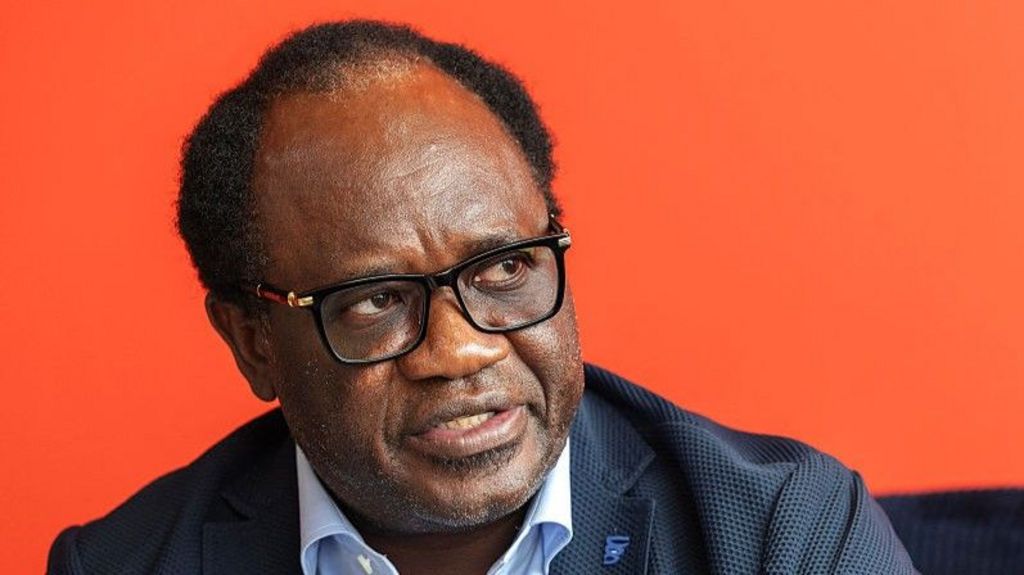
    Festus Ng’eno, Principal Secretary for Kenya’s State Department for Environment and Climate Change, framed BIOFIN as a practical, evidence-driven solution to the pressing biodiversity finance gap. He emphasized that while Kenya’s unparalleled natural capital forms the backbone of the national economy and sustains livelihoods for millions of Kenyans, this critical resource is facing growing pressure from multiple fronts: accelerating climate change, widespread land degradation, rising pollution, and unsustainable natural resource extraction.

    “That is why we must treat biodiversity conservation not just as an environmental issue, but as a key economic and development priority,” Ng’eno stated at the official launch. “Financing biodiversity should not be viewed as a cost, but as a strategic investment in economic resilience, climate adaptation and sustainable development. Let us move beyond dialogue and focus on implementation.”

    Chris Kiptoo, Principal Secretary at Kenya’s National Treasury, reinforced this framing, outlining the Treasury’s commitment to building a inclusive biodiversity finance architecture that protects fragile ecosystems while advancing economic empowerment for marginalized groups including women, young people, Indigenous peoples, and local host communities. Kiptoo noted that relying exclusively on public funding can never close the massive biodiversity finance gap, making cross-sector and cross-border partnership and private capital mobilization non-negotiable.

    He pushed back against the common narrative that conservation spending competes with other pressing public priorities. “It is an investment in economic resilience, fiscal sustainability, and intergenerational equity, fully consistent with the objectives of Medium-Term Plans IV and Kenya’s ongoing public finance reforms,” Kiptoo explained. He added that BIOFIN directly complements existing government initiatives, most notably the Financing Locally Led Climate Action Program, which already works to expand climate and nature investment at the county and community level.

    “Through the program, Kenya is already demonstrating how well targeted public finance can empower local actors, build resilience, and deliver measurable outcomes on the ground,” Kiptoo said. “BIOFIN builds on this foundation by providing a national framework to scale, coordinate, and sustain such investments over the long term.”

    UNDP Resident Representative in Kenya Jean-Luc Stalon noted that BIOFIN is a proven global model: more than 40 participating countries have already mobilized over $2.7 billion for biodiversity protection through the initiative, proving that investing in nature is far from a luxury — it is a strategic development choice for countries operating amid tight resource constraints.

    “Today’s launch signals Kenya’s intention to be part of that leadership,” Stalon said. “Success, however, will depend on what follows: strong institutional alignment, openness to innovative financing models, and sustained public private collaboration.” He emphasized that BIOFIN is not a traditional short-term conservation project, but a systemic financial framework designed to turn global climate and biodiversity commitments into tangible on-the-ground action.

    Led locally by program manager Christine Mwangi through UNDP Kenya, BIOFIN Kenya will deliver targeted support across three core areas: advancing policy reform aligned with biodiversity goals, developing a pipeline of investable conservation projects, and improving biodiversity budget tracking at both national and county levels. The initiative will also pilot a range of innovative financing instruments, including green bonds, blended finance structures, and ecosystem-based revenue mechanisms, building on the progress already made through ongoing government programs like the Financing Locally-Led Climate Action Programme.

  • Pope Leo criticises Equatorial Guinea prisons as he winds up Africa tour

    Pope Leo criticises Equatorial Guinea prisons as he winds up Africa tour

    On the final leg of his four-nation African pilgrimage, Pope Francis (correction: Pope Leo as referenced) has delivered a pointed rebuke of systemic injustice in Equatorial Guinea, calling out inhumane prison conditions, endemic corruption, and extreme wealth gaps that have left millions in poverty despite the small nation’s vast oil reserves.

    The Pope’s public address came during a heavily attended open-air Mass in the city of Mongomo on Wednesday, where an estimated crowd of 100,000 gathered to greet him — including long-ruling President Teodoro Obiang Nguema Mbasogo, who seized power in a 1979 coup and currently holds the title of the world’s longest-serving incumbent head of state.

    Opening his remarks with a call for compassion for marginalized groups, Pope Leo drew direct attention to the grim reality of incarceration in the country, ahead of a scheduled visit to Bata Prison, the notoriously overcrowded and abusive correctional facility in Equatorial Guinea’s economic capital. “My thoughts go to the poorest, to families experiencing difficulty and to prisoners who are often forced to live in troubling hygienic and sanitary conditions,” he told the gathered crowd.

    Human rights watchdog Amnesty International has documented widespread abuse inside Bata Prison for years, reporting that inmates are subjected to routine brutal beatings as disciplinary punishment, and that dozens of detainees have been held incommunicado, leaving their families with no information about whether their loved ones are alive or dead.

    Beyond prison conditions, the Pope used the high-profile visit to challenge deep-rooted inequality in the oil-rich nation, where decades of rule under Obiang have been marred by accusations of systemic corruption, widespread human rights abuses, and the diversion of national resource wealth to a tiny ruling elite. He urged Equatoguinean leaders and citizens alike to prioritize collective prosperity over private gain, saying: “The Creator has endowed you with great natural wealth. I urge you to work together so that it may be a blessing for all.”

    Pope Leo specifically called for the country’s massive oil revenues to be invested in lifting up the broader population, rather than enriching a small circle of connected elites — a direct reference to longstanding accusations that Obiang’s government has siphoned off public funds for the personal gain of ruling family members. In 2020, Obiang’s son, current Vice President Teodoro Nguema Obiang Mangue, was convicted by a French court of embezzling hundreds of millions of dollars in public funds to fund a lavish lifestyle in Paris, resulting in fines and the seizure of his French assets. Obiang’s government has repeatedly denied all allegations of corruption.

    Global corruption watchdog Transparency International currently ranks Equatorial Guinea among the most corrupt countries in the world, while World Bank data confirms that despite the country’s high per-capita GDP driven by oil exports, more than half of its population lives in extreme poverty. Political opposition is effectively banned, independent journalism is nonexistent, as all domestic broadcast media is controlled directly by the state or allies of the ruling regime. In a clear call for greater political openness, Pope Leo added: “May there be greater room for freedom and may the dignity of the human person always be safeguarded.”

    The Mass came one day after Pope Leo held a closed-door private meeting with President Obiang, ahead of his scheduled visit to Bata Prison on Wednesday evening, the final full day of his 4-country tour that also included stops in Algeria, Cameroon, and Angola. Throughout the tour, the Pope has spoken bluntly about historical and ongoing exploitation of the African continent, condemning neocolonial extraction of African mineral resources and blasting authoritarian leaders who divert billions of public funds into war instead of supporting vulnerable populations.

    This outspoken tone has already drawn international pushback: shortly before departing for the African trip, Pope Leo criticized former U.S. President Donald Trump over aggressive rhetoric threatening military action against Iran, prompting Trump to respond that the pontiff was “bad for foreign policy.”

  • Some who fled abuses in Equatorial Guinea fear pope’s visit might legitimize longtime ruler

    Some who fled abuses in Equatorial Guinea fear pope’s visit might legitimize longtime ruler

    LAGOS, Nigeria — For exiled Equatorial Guineans who fled systemic political repression, Pope Leo XIV’s high-profile visit to their West-Central African homeland is not a cause for celebration — it is a public relations opportunity that longtime authoritarian ruler Teodoro Obiang Nguema Mbasogo will weaponize to whitewash his regime’s global image.

    Guti Bae Tongala, a 59-year-old former cook from the remote Annobon Island who sought asylum in Spain in 2002 after escaping what he describes as targeted abuse of minority communities by the government, is among the critics speaking out against the trip. The visit marks the final stop on Pope Leo’s four-nation African tour, following stops in Algeria, Cameroon, and Angola. Vatican data shows Equatorial Guinea boasts one of the highest Catholic population shares on the continent, with roughly 75% of citizens identifying as Catholic, a legacy of decades of Spanish colonial rule.

    During his time in the country, Pope Leo has publicly condemned the neocolonial extraction of Africa’s mineral resources, decried global political leaders’ “lust for power”, and publicly called on Equatorial Guinea’s government to advance greater justice and close the stark economic divide between the country’s tiny ruling elite and its majority disadvantaged population. But exiled dissidents and human rights activists argue these calls for reform will ultimately work to Obiang’s advantage.

    Obiang, Africa’s longest-serving sitting head of state who has held uninterrupted power since seizing control in a 1979 coup, stands accused by global rights organizations of running one of the world’s most repressive regimes. For exiles like Tongala, the papal visit is a perfect gift for a leader eager to gain international legitimacy. “Obiang knows very well that the pope’s visit comes like a ring on his finger,” Tongala told the Associated Press in an interview from Spain. “Obiang will use the pope’s presence to clean up his image.”

    Tutu Alicante, executive director of U.S.-based human rights organization EG Justice, notes that papal outreach is just the latest in Obiang’s long-running strategy to polish his global standing through high-profile international events. The Equatorial Guinean leader has already hosted two editions of the continent’s top football tournament, the Africa Cup of Nations, in 2012 and 2015, in a similar push to gain global acceptance.

    Though Equatorial Guinea is legally a secular state, the Catholic Church remains deeply embedded in the nation’s political and social fabric, a holdover from Spanish colonial rule. Churches run much of the country’s educational and healthcare infrastructure for its population of nearly 1.9 million, and all major state events — from presidential inaugurations to Independence Day celebrations — open with a Catholic Mass. In 2011, Obiang was even inaugurated for another term at the sprawling neo-Gothic Basilica of Immaculate Conception in his hometown of Mongomo, a structure modeled after Vatican City’s St. Peter’s Basilica that ranks as the second-largest religious building in all of Africa, second only to the Basilica of Our Lady of Peace in Côte d’Ivoire.

    Alicante argues that the relationship between church hierarchy and the Obiang regime is deeply intertwined. “The church leaders are very much interconnected intrinsically with the government,” he explained. “Part of it is the fear the government has instilled in everyone, including the church, and part of it is the monetary gains that the church derives from this government.” Neither local Catholic officials nor the Equatorial Guinean government responded to AP requests for comment on allegations of ongoing human rights abuses in the country.

    Vatican representatives, however, defend the church’s approach to engaging with controversial political regimes. The Rev. Fortunatus Nwachukwu, second-in-command at the Vatican’s missionary evangelization office, told the AP that the church must navigate fraught civic spaces rather than withdraw or enter outright conflict. “Should the church go to war against the government? Surely no,” Nwachukwu said. “Should the church swallow everything as if it were normal? No. The church has to continue preaching justice, always in defense of life, human dignity and the common good.”

    The Catholic Church’s relationship with political power in Equatorial Guinea has long been complicated. Former ruler Francisco Macias Nguema — Obiang’s uncle, whom he overthrew in 1979 — brutally persecuted Catholics, shuttered houses of worship, and banned the church entirely in 1978 in a push to sever remaining ties to former colonial power Spain. After seizing power, Obiang immediately reversed the ban, transitioned to civilian rule in 1982, and hosted Pope St. John Paul II on a visit the same year. He has remained in power ever since, winning six consecutive widely disputed elections marred by allegations of fraud and voter intimidation.

    Global rights and economic data back up dissidents’ claims of systemic inequality and abuse. The World Bank estimates that more than half of Equatorial Guinea’s population lives in poverty, despite the country’s vast oil and mineral wealth, which rights groups say is almost exclusively siphoned off to enrich Obiang’s extended family. One of the president’s sons, current Vice President Teodoro Nguema Obiang Mangue, was convicted of money laundering and embezzlement by French courts and sanctioned by the United Kingdom for similar corrupt activities. A second son, Carmelo Ovono Obiang, was opened for investigation by Spain’s High Court in 2024 over allegations he ordered the kidnapping and torture of two opposition leaders holding Spanish citizenship. A 2024 Amnesty International report documented widespread, routine arbitrary arrests, torture, and other cruel treatment of political dissidents across the country.

    In 2023, the AP confirmed that the Obiang government imposed a months-long total internet shutdown on Annobon Island to suppress protests against abusive practices by a state-linked construction company. The country has also been accused of accepting millions of dollars in under-the-table payments from the U.S. to accept deported migrants who are not citizens of Equatorial Guinea, in a controversial deal that has drawn widespread global criticism.

    Many exiled Equatorial Guineans are calling on Pope Leo to use his global platform to explicitly condemn the Obiang regime’s ongoing human rights violations. “I would like the pope to speak out in defense of the Christians who live in Equatorial Guinea and who have to endure the abuses of human rights that occur day by day at the orders of Obiang Nguema,” said Jorge Awal, a 27-year-old exiled Equatorial Guinean now working in Spain’s private sector.

    This reporting is part of the Associated Press’ ongoing religion coverage, supported through a collaboration with The Conversation US via funding from the Lilly Endowment Inc. The AP retains full editorial control over all content.

  • Alleged coup plotters in Nigeria plead not guilty to treason and terrorism

    Alleged coup plotters in Nigeria plead not guilty to treason and terrorism

    ABUJA, Nigeria — In a high-stakes legal proceeding that underscores the stability of Nigeria’s democratic system, six individuals charged with conspiring to overthrow President Bola Tinubu appeared in federal court this Wednesday to face multiple counts of treason and terrorism. All six defendants formally entered not guilty pleas across all 13 criminal charges, which were officially made public a day earlier on Tuesday. The accused have been held in the custody of Nigeria’s secret police for several months following their arrest after the coup plot was uncovered. Among the six detainees are a retired army major general and an active-duty police inspector, revealing the alleged plot’s connections to current and former Nigerian security personnel. Authorities also named a seventh co-conspirator: Timipre Sylva, the former governor of Bayelsa State, who faces allegations of aiding the group by concealing their plans. As of Wednesday’s court session, Sylva remains at large and has not been taken into custody. Following the initial arraignment, the presiding judge adjourned proceedings until April 27, when the court is scheduled to review and hear arguments on bail applications filed by the defense teams for the six detained suspects. The official charge sheet details that the defendants “conspired with one another to levy war against the state to overawe the president of the Federal Republic of Nigeria,” laying out the core of the treason allegations against the group. Nigerian federal authorities first publicly announced they had foiled the attempted coup back in January, when officials confirmed that a number of military personnel would face trial for their alleged involvement. If the plot had succeeded, it would have brought an end to nearly 30 years of uninterrupted democratic governance in Nigeria, Africa’s most populous nation, which transitioned back to democratic rule back in 1999 after decades of military dictatorship.

  • French-Algerian author Kamel Daoud says Algeria sentenced him to 3 years for award-winning novel

    French-Algerian author Kamel Daoud says Algeria sentenced him to 3 years for award-winning novel

    In a high-profile ruling that has reignited debates over free expression in Algeria, exiled French-Algerian writer Kamel Daoud announced Wednesday that an Algerian court has sentenced him to three years in prison and imposed a $38,000 fine over his 2024 Goncourt Prize-winning novel *Houris*. Daoud, who resides permanently in France, shared the news of Tuesday’s conviction via the social platform X, revealing the legal penalty handed down by a court in the coastal Algerian city of Oran.

    Daoud’s acclaimed work centers on the forgotten victims of Algeria’s brutal 1990s internal conflict, widely known as the “Black Decade.” The decade-long violence erupted in 1991, when the military-backed Algerian government canceled the second round of national legislative elections after an Islamist party won a clear majority in the first round. The ensuing insurgency and government crackdown killed an estimated 200,000 people over 10 years of conflict.

    The conviction was rooted in the 2005 Charter for Peace and National Reconciliation, a national policy approved via public referendum that granted blanket amnesty to both Islamist insurgents and state security forces involved in the civil war. Daoud sharply criticized the law and its application in his case, noting that the charter effectively criminalizes any open public discussion of the civil war and its legacy. “Ten years of war, nearly 200,000 dead according to estimates, thousands of terrorists granted amnesty … and only one guilty party: a writer,” Daoud said in his statement.

    This is not the only legal pressure facing Daoud. Since May 2025, Algerian authorities have issued two international arrest warrants for the author, and they are also moving to revoke his Algerian citizenship. The case is not an isolated incident: another prominent French-Algerian critic of the Algerian government, author Boualem Sansal, faced similar legal repercussions in recent years. Sansal, whose work critiques political Islam, French colonialism, and current Algerian leadership, was convicted of undermining national unity and insulting public institutions, receiving a five-year prison sentence under Algeria’s anti-terrorism legislation. After serving one year in prison, he was granted a humanitarian pardon following a diplomatic appeal from Germany’s president, and returned to his residence in France in 2024.

    The conviction has drawn new attention to longstanding concerns about restrictions on free speech and historical memory in Algeria, as writers and activists continue to push for open discussion of the legacy of the Black Decade decades after the conflict ended.

  • ‘I cried so hard’ – the Kenyan WNBA star who beat US visa heartbreak

    ‘I cried so hard’ – the Kenyan WNBA star who beat US visa heartbreak

    Against all odds, 21-year-old Kenyan basketball prodigy Madina Okot has etched her name into history as the highest-drafted Kenyan player in WNBA history, earning a first-round 13th overall selection by the Atlanta Dream in the April 13 draft held in New York. What makes her fairytale ascent even more extraordinary is that she has reached the pinnacle of women’s professional basketball just six years after picking up a basketball for the very first time.

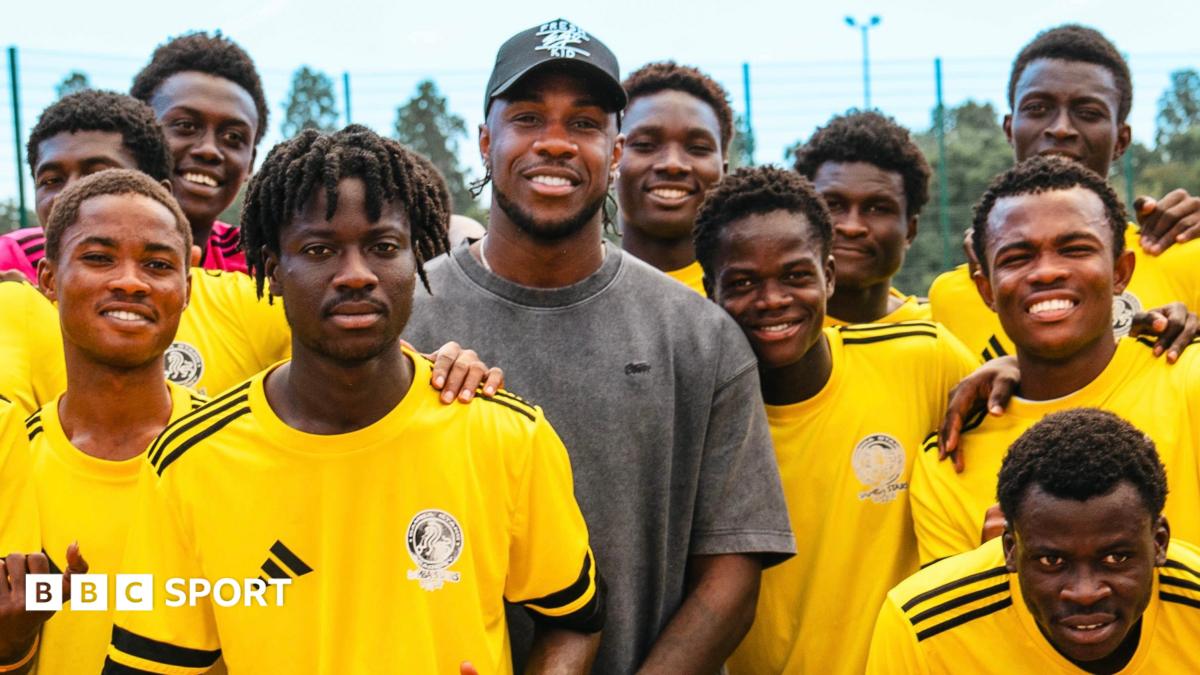
    Okot’s journey to the WNBA started in humble surroundings, in the western Kenyan town of Mumias, where she grew up as the fifth of eight children. She first found athletic success on the volleyball court at Kakamega County’s Bishop Sulumeti High School, before a life-changing opportunity in 2020 pulled her toward basketball: an invitation to join Kaya Tiwi Secondary, a renowned coastal basketball academy near Mombasa that has spawned many of Kenya’s top basketball talents. “I was almost scared to try basketball at first,” Okot shared in an interview with BBC Sport Africa. “But the second I started playing, I fell in love with the game instantly.”

    Her raw, unpolished talent quickly caught the attention of national selectors, and she worked her way up through Kenya’s youth national team ranks. A breakout performance at the 2022 Birmingham Commonwealth Games 3×3 basketball tournament put her on the radar of U.S. college scouts, opening the door for a move stateside. But that next step would test Okot’s mental resilience like never before: she faced four consecutive visa rejections when applying to study and play at Troy University in Alabama and later Eastern Michigan University, a stretch that left her on the brink of walking away from her dream.

    “It was unbelievably tough. There were so many moments I felt like just giving up,” Okot recalled. “After the second, third, and fourth rejections, I cried so hard. I walked out of the interview with a security guard escorting me to my taxi, and I just felt completely defeated.” It was unwavering support from her family and her own quiet determination that kept her going. In a moment that feels straight out of a Hollywood script, Okot finally received her visa approval on her birthday in August 2024. “That was without a doubt the best birthday gift I have ever received,” she said, grinning. “I’m so grateful to my parents and everyone who kept telling me to keep trying.”

    Fifth time lucky, Okot finally made it to the U.S., first joining Mississippi State for the 2024-25 season before transferring to the University of South Carolina last April. This past collegiate season, she dominated the paint, leading her conference in rebounds with an average of 10.6 per game, and was a key anchor for the Gamecocks as they fought their way to the NCAA national championship final in Phoenix earlier this month, where they fell to UCLA in front of nearly 16,000 fans.

    Now, Okot is preparing to make her professional debut with the Atlanta Dream when the new WNBA season tips off on May 8, where she will share the court with star players including two-time All-Star Angel Reese. “I’ve watched Angel play since I was in high school,” Okot said. “I know she’ll be like a big sister to me, and I can’t wait to learn everything from her. My main goal right now is just to keep growing my game and absorb as much as I can from the more experienced players on the team.” She will also have the support of another African player on the roster: Malian center Sika Kone, who is entering her fourth WNBA season.

    Standing 6-foot-6, Okot brings elite size, physicality, and strong defensive instincts to the professional league, and she is under no illusions about the steep learning curve that comes with competing at the sport’s highest level. But beyond her on-court contributions, Okot is acutely aware of the role she can play as a trailblazer for young female athletes across the African continent. “It’s such a huge honor to get to represent everyone back home,” she said. “I just want to show young African women that we belong on every single stage. If you put in the work and keep believing, your dream can come true.”

    Okot is the third Kenyan player ever to be drafted into the WNBA, following Josephine Owino’s third-round selection in 2009 and Olivia Nelson-Ododa’s second-round pick in 2022, making her the highest-ranked draft pick from the East African nation to date. Off the court, the soft-spoken 21-year-old still holds tight to her Kenyan roots: she loves the traditional East African staple ugali, favors the colors pink and white, listens to gospel music, and still can’t quite believe her journey from a small-town volleyball player to a WNBA first-round pick.

    Her breakthrough comes at a time of global growth for women’s sport, but barriers around access to resources and opportunities still remain disproportionately high for female athletes in Africa. For Okot, that makes her story even more important as a message of hope for young girls starting out with limited resources. “You don’t need perfect facilities to start chasing your dream,” she said. “Just stay focused and never stop chasing. I want to be the kind of player that young girls look at and think, ‘If she can do it, I can too.’ Opportunities come when you put in the work — there’s always someone watching, and that’s how dreams come true.”

  • Russia says its Africa Corps has freed Russian and Ukrainian citizens abducted in Niger

    Russia says its Africa Corps has freed Russian and Ukrainian citizens abducted in Niger

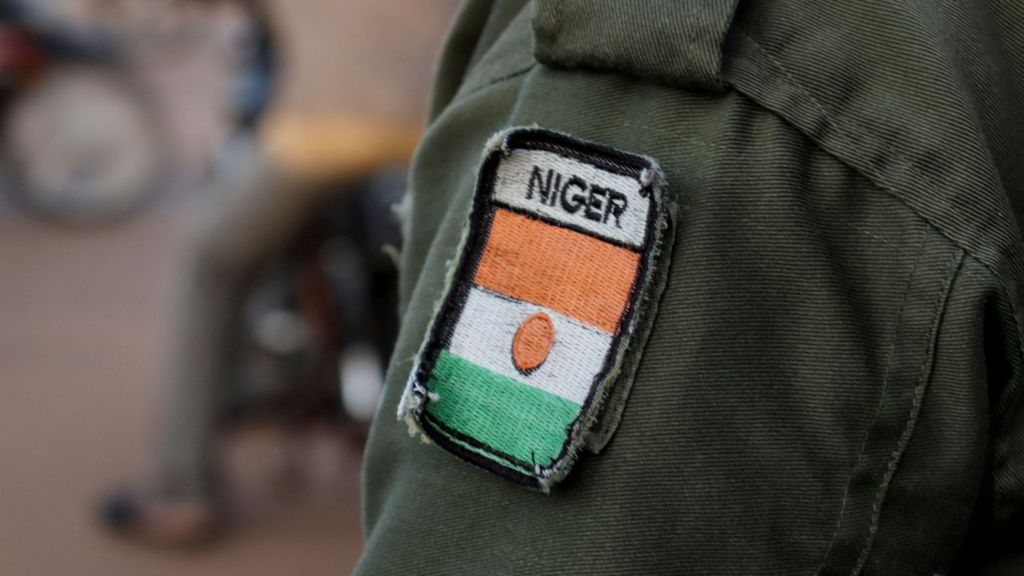
    LAGOS, NIGERIA – In a targeted special operation carried out on the continent, Russia’s Africa Corps has successfully liberated two foreign nationals who were held captive for months by an al-Qaida-linked armed faction in the Sahel, the Russian Defense Ministry announced publicly this Tuesday.

    The two freed individuals have been formally identified as Oleg Gret, a Russian national working for a Russian geological exploration firm, and Yuri Yurov, a Ukrainian citizen. Both hostages had first appeared in a video released by Jamaat Nusrat al-Islam wal-Muslimin (JNIM), the terrorist group that seized them in an abduction operation in Niger back in July 2024.

    According to the official statement issued by the Russian Defense Ministry, the rescue mission was executed within the borders of the neighboring Republic of Mali, where the hostages were being held after their abduction. “As a result of a special operation conducted by the Africa Corps in the Republic of Mali, employees of a Russian geological exploration company captured in July 2024 in Niger by the terrorist group Jamaat Nusrat al-Islam wal-Muslimin were freed,” the statement reads.

    The abduction marked a notable security setback for Russia’s expanding influence across the Sahel, a region where Moscow has steadily displaced long-standing Western and European partners in recent years. Russia has strategically capitalized on widespread local discontent with France, the region’s former colonial power, and growing public anxiety over rising insurgent attacks from extremist groups to grow its military and political footprint across the Sahel.

    The Africa Corps, a Russian state-aligned paramilitary formation, was established to take over Moscow’s continental military operations after the restructuring of the infamous Wagner Group, the private mercenary force that previously led Russia’s engagements across Africa.

    Following the successful rescue, the Russian Defense Ministry confirmed that the two freed hostages will be flown to Moscow aboard a Russian military transport plane, where they will receive specialized medical treatment and psychological rehabilitation to address the trauma of their months in captivity.

  • China, Africa pledge stronger relationship

    China, Africa pledge stronger relationship

    Against a global backdrop of surging unilateralism and rising protectionist barriers, China and African nations have reaffirmed their longstanding, close diplomatic and economic partnership, making formal pledges to deepen cross-sector cooperation and uphold collective solidarity rooted in the principle of mutual respect. The landmark commitment was announced during the inaugural China-Africa Entrepreneurs Summit, held Tuesday at the African Union headquarters in Addis Ababa, Ethiopia, a gathering that brought together business leaders, policymakers and diplomatic representatives from both sides to chart a new course for bilateral collaboration.”China and Africa form a community of shared future, bonded by consistent mutual support,” stated Jiang Feng, head of China’s mission to the African Union and representative to the United Nations Economic Commission for Africa, during his opening address. “China has never wavered in viewing Africa as a sincere friend and a most reliable cooperative partner.”Jiang noted that 2026 marks the opening year of China’s 15th Five-Year Plan, a development blueprint that prioritizes further expansion of high-standard opening-up policies. This policy direction, he emphasized, creates unprecedented conditions for deeper collaboration between Chinese and African private and public sector enterprises. The decades-long economic partnership between the two sides has already reached historic milestones: China has held the position of Africa’s largest trading partner for 17 consecutive years, with bilateral trade volume hitting a new record high of $348 billion in 2025, marking an nearly 18 percent year-on-year increase. Beyond trade, Chinese firms lead as the largest foreign investors and primary infrastructure contractors across dozens of African nations, delivering critical projects in transportation, energy and communications that have expanded connectivity across the continent.With Africa holding untapped development potential and China boasting a complete, competitive industrial chain with strong growth momentum, Jiang pointed out that cooperation opportunities span an incredibly broad range of sectors, including agriculture, manufacturing, renewable energy, the digital economy, mineral development and financial services. He encouraged enterprises from both sides to leverage existing trade and investment facilitation frameworks, most notably China’s expanding zero-tariff policy, to unlock new collaborative opportunities.As a key measure to remove barriers for African exporters accessing the world’s second-largest consumer market, China will implement full zero-tariff treatment on all product categories from the 53 African countries that maintain diplomatic relations with Beijing, a policy set to take effect on May 1. “This policy will pave the way for turning the vast Chinese market into a transformative growth opportunity for high-quality African exports,” Jiang added.Ethiopian President Taye Atske Selassie, who also addressed the opening session, commended China’s longstanding critical role in supporting development and economic transformation across Ethiopia and the entire African continent. He called for expanding cooperation beyond traditional trade and investment to include joint technological research and development that drives local innovation.Speaking to the challenging global context, Selassie noted that the summit convenes at a moment of growing geoeconomic uncertainty, shaped by unrestrained competition for strategic minerals driven by narrow self-interest that often disregards Africa’s long-term sustainable development goals. “Against this reality, China and Africa are demonstrating an exemplary commitment to revitalizing collective, mutually beneficial strategic cooperation,” he said.The Ethiopian president also welcomed China’s new full zero-tariff policy, noting it will accelerate the continent’s export-led growth strategy. “This initiative benefits not only China and Africa; it will make an immense contribution to global trade at a time when the global economy faces severe supply chain disruptions and fragmentation,” he added.AU Commission Chairperson Mahmoud Ali Youssouf reaffirmed the African Union’s unwavering commitment to deepening comprehensive cooperation with China, urging African nations to draw on China’s decades of experience in rapid development and industrialization to advance their own economic agendas.”Africa must learn from the success of China’s development experience,” Youssouf said, adding that modern technological advances now create a unique opening to accelerate the continent’s economic transformation. “It is in this respect that the Chinese development miracle should guide our forward steps.”Amid widespread global economic uncertainty, Youssouf emphasized that consolidating China-Africa cooperation is more essential than ever, and extended the AU’s gratitude to the Chinese government for rolling out the expanded zero-tariff treatment. He also called on Chinese enterprises to increase investment across African markets and partner with local stakeholders to build integrated regional value and supply chains, fostering a mutually beneficial win-win partnership.Song Shangzhe, deputy director-general of the China International Import Expo Bureau, noted that the CIIE has long served as a key gateway for African goods to access Chinese consumers, and the bureau will continue supporting African enterprises to enter the Chinese market and expand their export volumes.”The CIIE embodies China’s sincere commitment to open its market to Africa and the entire world,” Song said. “Over the eight years since its launch, the expo has showcased high-quality African products, driven booming China-Africa economic and trade cooperation, and helped African enterprises tap into the enormous consumer demand of the Chinese market.”

  • Phone tracking shows how Colombian mercenaries backed Sudan’s RSF – report

    Phone tracking shows how Colombian mercenaries backed Sudan’s RSF – report

    Three years into Sudan’s devastating civil war between the regular national army and the powerful Rapid Support Forces (RSF) paramilitary group, a groundbreaking new investigation has delivered the first definitive proof of direct United Arab Emirates (UAE) backing for the RSF through a network of Colombian mercenaries. A new report by the Conflict Insights Group (CIG), an independent security analysis organization, ties this mercenary network directly to the RSF’s brutal 2025 capture of the strategic North Darfur capital el-Fasher — a turning point in the conflict that triggered some of its worst atrocities.

    CIG director Justin Lynch emphasized that while the organization has long tracked growing evidence of extensive Emirati military support to the RSF, this investigation marks the first time that link has been proven beyond doubt. “We are making public what governments have long known — that there is a direct, operational link between Abu Dhabi and the RSF’s war effort,” Lynch said in the report’s introduction.

    To build its case, CIG combined multiple open-source intelligence methods, most notably tracking more than 50 mobile phones belonging to Colombian mercenary operatives active across Sudan between April 2025 and January 2026. The tracking relied on commercially available location technology originally built for targeted advertising, supplemented by flight logs, satellite imagery, social media content, and peer-reviewed academic research. The team traced mercenary movements through a clear logistical and training pipeline originating in Colombia and routed through UAE-controlled facilities.

    One of the most striking pieces of evidence comes from the devices themselves, which were overwhelmingly configured to Spanish, Colombia’s official language. Investigators traced one device from Colombia to Abu Dhabi’s Zayed International Airport, then to a dedicated Emirati military training facility in Ghayathi, where four other Spanish-language devices were also detected. Two of these devices later traveled to Sudan’s South Darfur state, with one moving on to Nyala, the RSF’s de facto capital in the region. While in Nyala — already identified by analysts as a key hub for RSF drone operations and Colombian mercenary activity — the device connected to public Wi-Fi networks explicitly named “ANTIAEREO” (Spanish for “anti-aircraft”) and “AirDefense.” In total, CIG documented more than 40 Spanish-language devices linked to mercenaries across the Nyala area.

    In another high-profile case, CIG tracked a Colombian mercenary’s device directly to el-Fasher during the final weeks of the RSF’s 18-month siege, which ended with the group seizing the city in October 2025. While operating inside el-Fasher, the device connected to a Wi-Fi network named “ATACADOR” — Spanish for “attacker.” Multiple other Colombian-linked devices were also detected in the city during the takeover, the report confirms.

    The mercenary network operates under the banner of the Desert Wolves brigade, with fighters serving as drone pilots, artillery operators, and combat instructors for the RSF. Multiple devices linked to brigade members connected to Wi-Fi networks named “DRONES” and “LOBOS DEL DISIERTO” — a Spanish spelling of “Desert Wolves.” According to Colombian digital outlet La Silla Vacía, the brigade is led by retired Colombian army Colonel Alvaro Quijano, who is based in the UAE and already subject to U.S. and UK sanctions for his role recruiting Colombians to fight in Sudan. The CIG report confirms the Desert Wolves are employed and funded by a UAE-based company with documented direct ties to senior Emirati government officials, matching evidence obtained by La Silla Vacía.

    Beyond Sudan, CIG also detected Spanish-language mercenary devices at two key regional logistics hubs tied to the UAE: a port in Somalia and a town in southeastern Libya that analysts have long identified as a key transit point for weapons flowing to the RSF, allegedly facilitated by the Emirates.

    The capture of el-Fasher stands as one of the bloodiest episodes of Sudan’s three-year civil war, which has already spawned the world’s worst active humanitarian crisis. Tens of thousands of people have been killed across the country, and more than 10 million have been forced to flee their homes. After the fall of el-Fasher, International Criminal Court prosecutors categorized the accompanying mass violence as war crimes and crimes against humanity, while United Nations investigators found the atrocities bore the “hallmarks of genocide.”

    “The scale of atrocities and the prolonged siege of el-Fasher would not have been possible without the specialized drone operations that these Colombian mercenaries provided to the RSF,” Lynch said, noting the mercenary network also directly supported the siege operation. The CIG report concludes that both the UAE and the Colombian mercenary network share responsibility for the war crimes committed in el-Fasher.

    The UAE has long rejected all claims that it provides military backing to the RSF, describing previous allegations as “false and unfounded” and condemning el-Fasher atrocities in the strongest terms. The BBC has requested comment from the Emirati government on the CIG’s new findings, and no response has been issued as of publication.

    Colombian President Gustavo Petro has previously condemned the recruitment of Colombian citizens to fight in Sudan, calling the mercenaries “spectres of death” and framing the recruitment network as a form of human trafficking. Estimates place the total number of Colombian mercenaries fighting for the RSF in the low hundreds. U.S. authorities have already imposed sanctions twice on Colombian nationals and linked firms for mercenary recruitment activity in Sudan — most recently just last week — and have confirmed Colombian fighters supported the RSF’s el-Fasher capture, but have not yet drawn a direct official link to the UAE.

    Independent analysts have long agreed that sustained foreign military and financial support for both the RSF and Sudan’s regular army has been the single most critical factor allowing the civil war to continue and expand over the past three years.