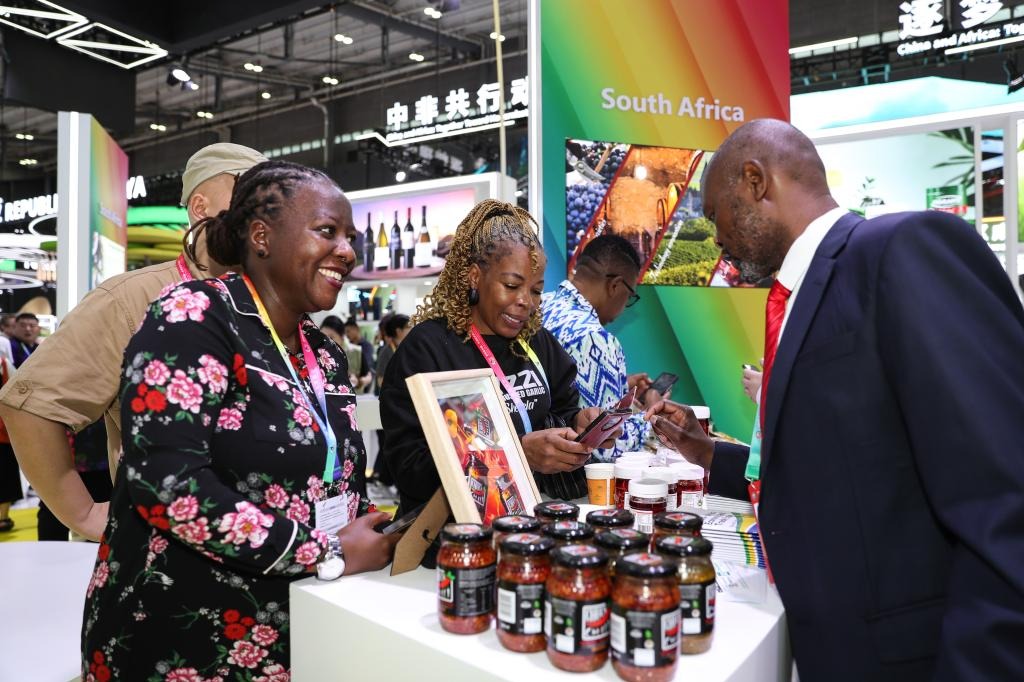
Against a global backdrop of surging unilateralism and rising protectionist barriers, China and African nations have reaffirmed their longstanding, close diplomatic and economic partnership, making formal pledges to deepen cross-sector cooperation and uphold collective solidarity rooted in the principle of mutual respect. The landmark commitment was announced during the inaugural China-Africa Entrepreneurs Summit, held Tuesday at the African Union headquarters in Addis Ababa, Ethiopia, a gathering that brought together business leaders, policymakers and diplomatic representatives from both sides to chart a new course for bilateral collaboration.”China and Africa form a community of shared future, bonded by consistent mutual support,” stated Jiang Feng, head of China’s mission to the African Union and representative to the United Nations Economic Commission for Africa, during his opening address. “China has never wavered in viewing Africa as a sincere friend and a most reliable cooperative partner.”Jiang noted that 2026 marks the opening year of China’s 15th Five-Year Plan, a development blueprint that prioritizes further expansion of high-standard opening-up policies. This policy direction, he emphasized, creates unprecedented conditions for deeper collaboration between Chinese and African private and public sector enterprises. The decades-long economic partnership between the two sides has already reached historic milestones: China has held the position of Africa’s largest trading partner for 17 consecutive years, with bilateral trade volume hitting a new record high of $348 billion in 2025, marking an nearly 18 percent year-on-year increase. Beyond trade, Chinese firms lead as the largest foreign investors and primary infrastructure contractors across dozens of African nations, delivering critical projects in transportation, energy and communications that have expanded connectivity across the continent.With Africa holding untapped development potential and China boasting a complete, competitive industrial chain with strong growth momentum, Jiang pointed out that cooperation opportunities span an incredibly broad range of sectors, including agriculture, manufacturing, renewable energy, the digital economy, mineral development and financial services. He encouraged enterprises from both sides to leverage existing trade and investment facilitation frameworks, most notably China’s expanding zero-tariff policy, to unlock new collaborative opportunities.As a key measure to remove barriers for African exporters accessing the world’s second-largest consumer market, China will implement full zero-tariff treatment on all product categories from the 53 African countries that maintain diplomatic relations with Beijing, a policy set to take effect on May 1. “This policy will pave the way for turning the vast Chinese market into a transformative growth opportunity for high-quality African exports,” Jiang added.Ethiopian President Taye Atske Selassie, who also addressed the opening session, commended China’s longstanding critical role in supporting development and economic transformation across Ethiopia and the entire African continent. He called for expanding cooperation beyond traditional trade and investment to include joint technological research and development that drives local innovation.Speaking to the challenging global context, Selassie noted that the summit convenes at a moment of growing geoeconomic uncertainty, shaped by unrestrained competition for strategic minerals driven by narrow self-interest that often disregards Africa’s long-term sustainable development goals. “Against this reality, China and Africa are demonstrating an exemplary commitment to revitalizing collective, mutually beneficial strategic cooperation,” he said.The Ethiopian president also welcomed China’s new full zero-tariff policy, noting it will accelerate the continent’s export-led growth strategy. “This initiative benefits not only China and Africa; it will make an immense contribution to global trade at a time when the global economy faces severe supply chain disruptions and fragmentation,” he added.AU Commission Chairperson Mahmoud Ali Youssouf reaffirmed the African Union’s unwavering commitment to deepening comprehensive cooperation with China, urging African nations to draw on China’s decades of experience in rapid development and industrialization to advance their own economic agendas.”Africa must learn from the success of China’s development experience,” Youssouf said, adding that modern technological advances now create a unique opening to accelerate the continent’s economic transformation. “It is in this respect that the Chinese development miracle should guide our forward steps.”Amid widespread global economic uncertainty, Youssouf emphasized that consolidating China-Africa cooperation is more essential than ever, and extended the AU’s gratitude to the Chinese government for rolling out the expanded zero-tariff treatment. He also called on Chinese enterprises to increase investment across African markets and partner with local stakeholders to build integrated regional value and supply chains, fostering a mutually beneficial win-win partnership.Song Shangzhe, deputy director-general of the China International Import Expo Bureau, noted that the CIIE has long served as a key gateway for African goods to access Chinese consumers, and the bureau will continue supporting African enterprises to enter the Chinese market and expand their export volumes.”The CIIE embodies China’s sincere commitment to open its market to Africa and the entire world,” Song said. “Over the eight years since its launch, the expo has showcased high-quality African products, driven booming China-Africa economic and trade cooperation, and helped African enterprises tap into the enormous consumer demand of the Chinese market.”