标签: Africa

非洲

  • Nigeria charges 6 with treason over alleged coup plot

    Nigeria charges 6 with treason over alleged coup plot

    ABUJA, NIGERIA – In a major security development that has underscored rising political instability across West Africa, Nigerian federal authorities have filed terrorism and treason charges against six individuals, among them a retired army major general and an active-duty police inspector, over an alleged conspiracy to topple democratically elected President Bola Tinubu. Details of the charges are laid out in an official charge sheet reviewed by the Associated Press on Tuesday.

    All six accused individuals are currently in government custody, while a seventh suspect – Timpre Sylva, a former governor of Nigeria’s Bayelsa State – remains at large. Sylva is specifically accused of aiding the conspirators by concealing details of their planned coup from authorities. The 13-count formal charge alleges that the co-conspirators “conspired with one another to levy war against the state to overawe the president of the Federal Republic.”

    This case marks the formal prosecution of a plot authorities first said they foiled back in January, when the government initially announced that multiple military officers would face trial. The conspiracy traces back to late 2025, when security forces first took 16 military officers into custody over what military leadership at the time described only as “acts of indiscipline and breaches of service regulations.” That vague initial characterization fueled widespread public speculation of a secret coup plot, a rumor the Nigerian government initially denied before confirming the foiled attempt earlier this year.

    As Africa’s most populous country, Nigeria has a fraught political history of military takeovers, with five successful coups recorded across the 20th century. However, the nation has maintained uninterrupted civilian democratic rule since its transition to democracy in 1999, making an attempted coup against the sitting government a major break from decades of stability.

    The alleged plot against Tinubu’s administration fits into a growing regional trend: West and Central Africa have seen a sharp surge in both successful military takeovers and attempted coups in recent years, with the most recent disrupted plots uncovered in Benin and Guinea-Bissau just last year. Regional security and political analysts note that this wave of attempted putsches follows a consistent pattern: they emerge in nations grappling with disputed election outcomes, constitutional crises, widespread unaddressed security failures, and deep-seated youth discontent over economic stagnation and lack of opportunity.

  • Chad will deploy 1,500 troops to Haiti to help combat gang violence

    Chad will deploy 1,500 troops to Haiti to help combat gang violence

    N’DJAMENA, Chad – Amid spiraling gang-driven instability in Haiti, the Central African nation of Chad has formally announced plans to deploy 1,500 troops to the Caribbean country, joining the United Nations-endorsed multinational security mission tasked with quelling rampant organized violence, according to a formal correspondence from Chadian President Mahamat Déby Itno addressed to the national legislature.

    The president’s letter, delivered to sitting lawmakers on Monday, outlined that the deployment will be structured as two full battalions, each composed of 750 military personnel. The mission is scheduled to kick off this month and will run for an initial 12-month mandate, a response to an official request extended by the United Nations to boost the struggling anti-gang operation.

    Notably, a forward contingent of 400 Chadian soldiers has already been deployed to Haiti for the mission. President Déby emphasized that the deployment represents a point of national honor for Chad and its professional defense and security forces, who are stepping in to address a pressing global security crisis.

    This new contribution from Chad comes against a years-long backdrop of catastrophic insecurity that has crippled Haiti’s governing institutions. Last year, the UN Security Council greenlit an expansion of the Kenya-led multinational operation, officially dubbed the Gang Suppression Force, boosting its authorized troop strength from an initial 2,500 personnel to 5,500. The resolution also granted the expanded force new authority that its predecessor lacked: the power to arrest suspected gang members, a critical upgrade for targeting organized criminal groups.

    The original 2023 mission, led primarily by Kenyan police, was severely undermined from its launch by persistent shortfalls in both personnel and funding, leaving it unable to reverse the gang’s rapid territorial gains. Today, powerful and well-armed violent gangs control up to 90 percent of Port-au-Prince, Haiti’s capital, along with large swathes of the country’s central agricultural region.

    The crisis has already claimed countless lives and destabilized the country at the highest levels: in 2021, a team of armed assassins killed former Haitian President Jovenel Moïse in a brazen attack inside his private residence. Just last month, the security situation deteriorated further when one of Haiti’s most powerful criminal groups, the Gran Grif gang, launched a fresh large-scale assault on the central town of Petite-Rivière de l’Artibonite. Local human rights organizations confirm the attack left at least 30 people dead and dozens more unaccounted for, underscoring the urgent need for expanded international support to restore order.

  • South Africa’s police boss charged in connection with controversial health contract

    South Africa’s police boss charged in connection with controversial health contract

    South Africa’s top law enforcement leader is facing formal legal action over allegations of dereliction of duty connected to a tainted public health contract at the center of a sweeping national corruption probe. General Fannie Masemola, 62, the nation’s acting national police commissioner, appeared before Pretoria Magistrate’s Court this week to answer to four counts of violating South Africa’s Public Finance Management Act, regulations that set clear accountability standards for officials managing state funds.

    The charges stem from a controversial 21-million-U.S.-dollar tender awarded in 2024 to Medicare24 Tshwane District, a company owned by high-profile businessman Vusimuzi “Cat” Matlala. The contract was intended to deliver critical health services to South Africa’s police force, but it was scrapped just 12 months later in May 2025 after red flags emerged over improper awarding practices. To date, 16 other individuals, including multiple senior police officials and Matlala himself, have been linked to the scheme. All of the co-accused face corruption charges, with prosecutors alleging they colluded with Matlala to manipulate the tender process. Unlike his co-defendants, Masemola has not been charged with corruption – only with failing to fulfill his statutory duties as the police service’s designated accounting officer under Section 38 of the Public Finance Management Act.

    Following his brief preliminary court appearance, Masemola spoke publicly to reporters to reject all allegations against him. “I know that I’m not guilty, I’m not wrong, but the [law] must take its course,” he stated. None of the accused, including Masemola, have been required to enter formal pleas at this stage of the proceedings. The case has been adjourned until 13 May, when all 17 defendants will appear together in court to move the process forward.

    The scandal unfolded after evidence of bid rigging and improper influence was presented to the Madlanga Commission, a national public inquiry launched by President Cyril Ramaphosa in September 2024 specifically to investigate widespread allegations of systemic corruption within South Africa’s police service. Masemola’s inclusion in the criminal case marks a historic milestone: he is the third sitting national police chief to face a criminal investigation in South Africa since 2010.

    The first, Jackie Selebi, the country’s longest-serving police chief, was convicted in 2010 of accepting bribes from Italian drug trafficker Glen Agliotti in exchange for ignoring Agliotti’s illegal operations. Selebi was sentenced to 15 years in prison for his crimes. A second former chief, Khomotso Phahlane, was first charged with corruption in 2017. While those initial charges were dropped the following year, Phahlane was re-arrested on identical corruption charges in 2019, which he continues to deny. His case remains active in the court system.

    The charges against Masemola come as the Ramaphosa administration faces growing public pressure to root out systemic corruption across all levels of government, a persistent challenge that has eroded public trust in state institutions for decades. This latest development in the police corruption inquiry signals that the national push for accountability is extending to the very top of the country’s law enforcement hierarchy.

  • Pope’s visit to Equatorial Guinea is a diplomatic challenge as he closes his Africa trip

    Pope’s visit to Equatorial Guinea is a diplomatic challenge as he closes his Africa trip

    After wrapping up earlier stops across four African nations, Pope Leo XIV touched down in Equatorial Guinea on Tuesday for the closing leg of his first papal visit to the continent — a stop widely framed as the most diplomatically sensitive challenge of his early tenure leading the global Catholic Church.

    Nestled on Central Africa’s west coast, this former Spanish colony has been under the uninterrupted rule of 83-year-old President Teodoro Obiang Nguema Mbasogo since he seized power in a 1979 coup. Today, Obiang stands as Africa’s longest-serving incumbent head of state, and his administration has faced decades of global scrutiny over systemic authoritarian rule and widespread graft.

    Equatorial Guinea’s economic trajectory shifted dramatically in the mid-1990s, when large offshore oil reserves were discovered. Data from the African Development Bank shows oil now makes up nearly half the country’s total gross domestic product and accounts for more than 90% of its export revenue. Despite this resource wealth, however, more than half of Equatorial Guinea’s 1.9 million residents live below the poverty line. Human rights organizations including Human Rights Watch, as well as ongoing court proceedings in France and Spain, have documented how the vast majority of oil revenues have been siphoned off to enrich Obiang’s ruling family rather than lifting living standards for the general population.

    From the start of his maiden African pilgrimage, Pope Leo has made clear he has no intention of softening his rhetoric on global inequality and graft. His earlier stop in Cameroon offered a clear preview of what observers can expect during his time in Equatorial Guinea. Last week in Cameroon’s capital Yaounde, the pope met with 93-year-old President Paul Biya — the world’s oldest sitting head of state, who has held power since 1982 and faces identical accusations of authoritarianism. Standing beside Biya in the presidential palace during his arrival address, Leo did not hold back.

    “In order for peace and justice to prevail, the chains of corruption — which disfigure authority and strip it of its credibility — must be broken,” the pope stated. “Hearts must be set free from an idolatrous thirst for profit.”

    While Equatorial Guinea is officially designated a secular state, it is one of the most overwhelmingly Catholic nations in Africa, with roughly 75% of its population identifying as Catholic, and the Church holds a central role in the country’s political and social fabric. Tutu Alicante, a U.S.-based human rights activist who leads the advocacy group EG Justice, explains that Church leadership is deeply intertwined with Obiang’s government. “Part of it is the fear the government has instilled in everyone, including the church, and part of it is the monetary gains that the church derives from this government,” Alicante noted.

    The Vatican’s approach to engaging with the regime is nuanced, explained the Rev. Fortunatus Nwachukwu, the second-highest ranking official in the Holy See’s missionary evangelization department. “Should the church go to war against the government? Surely no. Should the church swallow everything as if it were normal? No. The church has to continue preaching justice, always in defense of life, human dignity and the common good,” he said.

    Beyond systemic corruption, Equatorial Guinea’s government regularly faces allegations of routine harassment, arbitrary arrest and intimidation targeting political opposition figures, dissident critics and independent journalists. On Transparency International’s annual Corruption Perceptions Index, the country has consistently ranked among the bottom 10 out of all nations surveyed. Samuel Kaninda, Transparency International’s regional advisor for Africa, acknowledged that the Obiang administration has taken tentative steps in recent years to address public anger over graft, including passing a national anti-corruption law and moving to establish a dedicated anti-corruption commission. However, Kaninda stressed that these reforms will only deliver tangible change if the commission is granted full independence to investigate corrupt officials and the national judiciary operates free from political interference.

    Kaninda said he holds cautious optimism about the papal visit, noting that even when authoritarian leaders attempt to frame papal trips as an endorsement of their rule, history shows these visits ultimately benefit ordinary citizens. “The risk is there, but at the same time, we see more of the opportunity to shed more light on a lot more that is happening there,” he said, adding that the high-profile visit could lift hopes among Equatorial Guinea’s population and draw global attention to the country’s unaddressed human rights and governance failures.

    For many local residents, the visit has already delivered tangible, small-scale benefits: Equatorial Guinean seamstress Tumi Carine says she has seen a surge in orders for garments printed with Pope Leo’s image. “The coming of the pope brought us many customers,” Carine said. “We are really grateful for the coming of the pope, so, we are really happy.”

    This is the first papal visit to Equatorial Guinea since Pope St. John Paul II traveled to the country in 1982. Pope Leo faces a packed schedule during his two-day trip: after arriving and holding an initial meeting with Obiang, he will deliver addresses to government leaders and diplomatic representatives, followed by a speech at the country’s national university. He will also celebrate multiple public Masses, visit a psychiatric hospital and a local prison, and meet with young people and their families. Before departing on Thursday, he will travel to the city of Bata to lay prayers at a memorial for the more than 100 people killed in a 2021 explosion at a nearby military barracks, which investigators blamed on grossly negligent handling of dynamite stored in a facility located close to residential neighborhoods.

  • Korir defends Boston Marathon title with course record

    Korir defends Boston Marathon title with course record

    The 130th edition of the Boston Marathon delivered historic drama and unforgettable performances on Monday, as Kenya’s long-distance running elite once again dominated the world-famous race, with John Korir breaking a 14-year course record to claim his second consecutive men’s title and compatriot Sharon Lokedi holding off challengers to defend her women’s crown.

    Korir, 29, delivered a masterclass in pacing and endurance to cross the finish line in 2 hours 1 minute 52 seconds, an astonishing 1 minute 10 seconds improvement on the previous Boston course mark set by fellow Kenyan Geoffrey Mutai back in 2011. This stunning result already ranks as the fifth fastest marathon time ever recorded globally, capping a remarkable winning streak for the athlete that includes victories at the 2024 Chicago Marathon and the December 2024 Valencia Marathon.

    For Korir, the triumph was even sweeter after a chaotic 2024 race, where he fell early in the route before battling back to claim victory. This year, he faced no such disruptions. “This year was a breeze for me because I had no problems at the start or at the finish,” he told reporters after the race. “It felt like a race back home with all the people cheering. It was in my mind to set the course record and I thank God that he fulfilled my wishes.”

    On the women’s side, Lokedi matched Korir’s back-to-back feat, finishing with a time of 2 hours 18 minutes 51 seconds. While she fell short of breaking her own 2024 Boston course record of 2:17:22, the 2022 New York Marathon champion held off a tight challenge from fellow Kenyan Loice Chemnung, crossing the finish line 44 seconds ahead of her second-place compatriot.

    Lokedi credited mental grit and a sweet moment with a young spectator for carrying her to the finish line. “I just kept telling myself ‘Be patient, be humble, you can do this’,” she said. “And then I saw a little girl who said ‘You got this, ladies!’ And it was so cute, and that was what I needed.”

    The race also made headlines for a remarkable display of athleticism from British runner Calli Hauger-Thackery, who completed the full 26.2-mile course at 22 weeks pregnant, finishing in 2:43:58. This is not the first high-profile marathon finish for the 33-year-old during pregnancy: she won the Honolulu Marathon four weeks into her current pregnancy, followed by a win at the Houston Marathon just one month later.

  • Black beauty queen who represented South Africa at Miss World during apartheid dies aged 76

    Black beauty queen who represented South Africa at Miss World during apartheid dies aged 76

    South African entertainment and cultural pioneer Cynthia Shange, who made history as the first Black woman to represent South Africa at the global Miss World pageant during the apartheid era, has passed away at the age of 76. Her daughter, prominent media personality Nonhle Thema, announced the news of her mother’s death in a heartfelt social media post shared Monday, asking the public for privacy and prayers for her family as they grieve.

    According to local South African media reports, Shange died early Monday morning at a local hospital following a prolonged illness. Alongside the announcement, Thema shared a celebration of life graphic featuring a warm, smiling portrait of Shange, paying tribute to her mother’s gentle character and enduring legacy. “A graceful and compassionate soul whose presence brought warmth, dignity, and kindness to all those who knew her,” the tribute read. “We honour her journey, her strength, and the love she shared so generously.” Funeral arrangements are still being finalized and will be released to the public at a later date.

    Born Cynthia Philisiwe Shange on July 27, 1949, Shange rose to national and international prominence in the early 1970s, when she broke through racial barriers to compete on the world stage. Under the brutal segregationist system of apartheid, Black women were barred from competing in the official, state-sanctioned Miss South Africa pageant, so independent Black organizers created parallel competitions including Miss Africa South. Shange claimed the Miss Africa South title in 1972, earning the right to compete alongside the official white South African representative at that year’s Miss World competition held in London. She finished in fifth place, marking a historic milestone as the first Black woman to represent South Africa at the global contest. While Pearl Gladys Jansen had competed as Miss Africa South two years prior in 1970, Jansen was classified as “coloured” (mixed racial descent) under apartheid’s strict racial hierarchy, making Shange the first Black woman to claim the spot.

    Beyond her trailblazing work in pageantry, Shange built a decades-long, respected career as a film and television actress, becoming a foundational figure in South Africa’s emerging Black film industry. One of her most notable roles came in *Udeliwe*, widely recognized as one of the first Black-led feature films produced in South Africa. She also earned widespread acclaim for her performance in the hit historical drama series *Shaka Zulu*. In recognition of her decades of contributions to South African performing arts, Shange was honored with a Lifetime Achievement Award at the 2024 KZN Simon Mabhunu Sabela Awards just months before her passing.

    Tributes have begun to pour in from across South Africa’s entertainment industry, honoring Shange not only for her professional achievements but for her role in opening doors for future generations of Black South African women in arts and public life.

  • More than 200 rescued from IS-linked group in DR Congo

    More than 200 rescued from IS-linked group in DR Congo

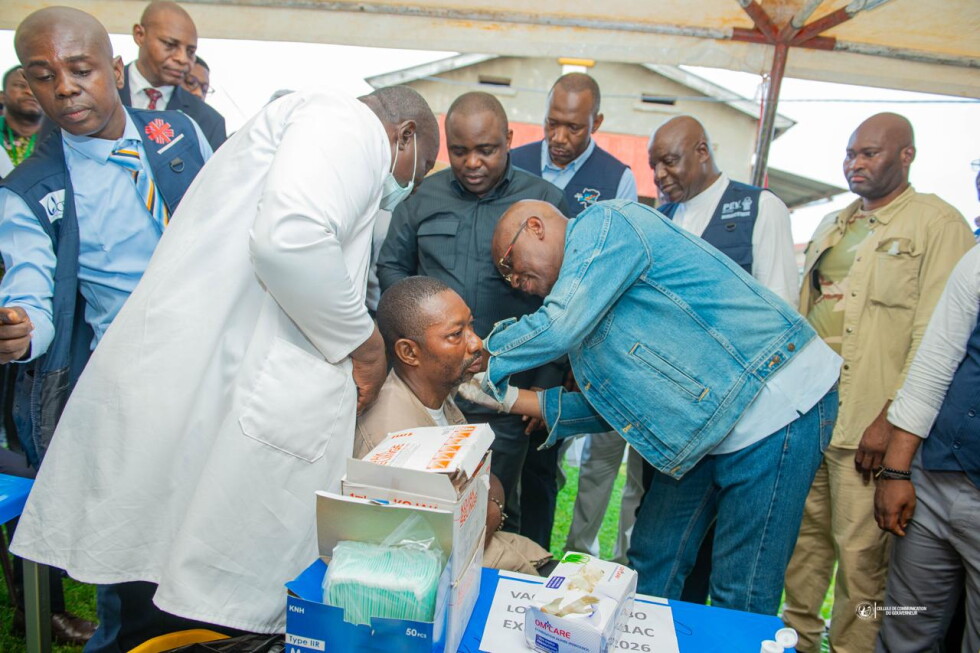
    A joint military mission carried out by Ugandan and Congolese forces has secured the release of more than 200 civilian captives held by the Islamic State-linked Allied Democratic Forces (ADF) in eastern Democratic Republic of the Congo, Uganda’s military has confirmed.

    The operation targeted a fortified militant encampment controlled by the ADF, an insurgent group with roots tracing back to 1990s Uganda, formed by dissidents opposed to the Ugandan government’s treatment of Muslim communities. After being driven out of Uganda by national forces decades ago, the remaining ADF fighters re-established their base across the border in eastern DRC, where they have built a brutal reputation for widespread violence, kidnappings, and killings. Among the freed hostages were multiple children, including a 14-year-old girl, according to an official statement from Uganda’s military.

    While details of when and where the captives were abducted remain undisclosed, survivors reported being held in appalling conditions, including persistent food shortages, forced labor, and harsh punishment for any disobedience. Many of the rescued civilians were found in fragile health, with widespread reports of malaria, respiratory complications, and extreme exhaustion among the group.

    “You are not under detention. You are victims of abduction, and we shall ensure you are handed over to the relevant authorities so you can reunite with your families,” Maj Gen Stephen Mugerwa, commander of the joint Uganda-DRC mission, told the freed captives, per the official statement.

    The raid on the ADF camp also left multiple militant fighters dead and resulted in the seizure of a large weapons cache, the military confirmed. No details have been released about potential casualties among the joint Ugandan and Congolese force.

    The ADF has operated out of remote areas of eastern DRC for more than 20 years. Group leader Musa Seka Baluku first pledged allegiance to the Islamic State in 2016, and IS formally recognized the ADF’s activity in the region in 2019. After years of limited overt operations inside Uganda, the group has been linked to a string of high-profile attacks in the country in recent years, including 2021 suicide bombings in the capital Kampala and a 2023 attack on a school in western Uganda.

    In eastern DRC, however, the ADF’s campaign of violence against civilians has reached staggering levels. A 2024 analysis by BBC Monitoring found the group responsible for more than half of all civilian deaths in the conflict-plagued eastern region. Late last year, a senior researcher with global human rights group Amnesty International described the frequency of ADF abductions and killings as “alarming,” noting that women and girls captured by the group are systematically exploited as sexual slaves.

    “Men, women and children told me how they ran for their lives as fighters armed with blades and guns descended on their villages. Released hostages talked of agonizing spells – sometimes months and years – spent in captivity, practically starved and forced to do various tasks in ADF camps,” Rawya Rageh, Amnesty International’s researcher, reported.

    Uganda first deployed its troops to eastern DRC in 2021 to target ADF strongholds as part of the joint offensive with Congolese forces, a campaign launched to eliminate the militant group from its regional bases. Despite repeated military operations, the ADF has continued to carry out frequent attacks on civilian and military targets across the region, leaving thousands displaced and dead.

  • A top paramilitary commander defects to Sudan’s military as war enters 4th year

    A top paramilitary commander defects to Sudan’s military as war enters 4th year

    As Sudan’s devastating civil conflict stretches into its fourth year of brutal fighting, a high-ranking commander from the country’s powerful Rapid Support Forces (RSF) has announced his defection to the national army, a shift that Sudan’s top military leadership has framed as an opening for reconciliation and national rebuilding.

    Army chief and Sovereign Council chair Gen. Abdel-Fattah Burhan formally welcomed Maj. Gen. al-Nour Ahmed Adam — widely known by the alias al-Qubba — in a meeting held Sunday in Sudan’s Northern province, which shares a border with Egypt. The country’s ruling transitional body publicly shared video footage of the meeting across its social media channels, confirming the defection that was first reported earlier this month. Local Sudanese media outlets have confirmed that Adam fled RSF-held territory in the Darfur region alongside dozens of armed fighters and military equipment to cross into government-controlled areas.

    According to independent regional publication *Sudan Tribune*, the commander’s departure stemmed from internal leadership disputes within the RSF. Tensions boiled over after the paramilitary group captured el-Fasher in October 2024 — the last remaining army stronghold in the entire Darfur region — but failed to appoint Adam to the top military commander post for North Darfur province, a position he had reportedly expected. The RSF has so far declined to issue any public statement addressing Adam’s defection.

    Burhan emphasized in an official statement following the meeting that Sudan’s military remains open to reconciliation for combatants willing to lay down their weapons and join efforts to rebuild the war-torn nation. “Doors are open to all those who lay down arms and join the path of national reconstruction,” Burhan said.

    Adam’s defection marks one of the most high-profile departures from the RSF’s ranks since full-scale conflict erupted in April 2023. He is not the first senior RSF commander to switch allegiances in the past year: earlier in 2024, Abu Aqla Kaikel, leader of the Sudan Shield Forces, also left the RSF after the Sudanese Army retook control of the strategic central province of Gezira, a key agricultural and population hub.

    The current conflict grew out of a years-long unresolved power struggle between the Sudanese Army, led by Burhan, and the RSF, a paramilitary force that evolved from the country’s former janjaweed militias tied to decades of conflict in Darfur. Fighting first broke out in the capital Khartoum before spreading across the vast northeast African nation, triggering one of the world’s worst humanitarian crises in modern history.

    Data from the Armed Conflict Location & Event Data Project (ACLED), a U.S.-based conflict monitoring organization, records at least 59,000 confirmed deaths from the war to date. The group has repeatedly warned that the actual death toll is almost certainly far higher, as widespread insecurity, collapsed healthcare infrastructure, and limited access to conflict zones make accurate casualty reporting nearly impossible.

  • Nigerian wins global prize for trying to save bats in a country that shuns them

    Nigerian wins global prize for trying to save bats in a country that shuns them

    In a historic milestone for both African conservation and gender representation in environmental leadership, Nigerian ecologist Iroro Tanshi has been awarded the 2026 Goldman Environmental Prize — one of the world’s most prestigious honors for grassroots environmental advocates — for her groundbreaking work protecting endangered bats and curbing destructive human-caused wildfires in southern Nigeria. This year’s award marks the first time in the prize’s 37-year history that all six recipients are women, a shift that underscores the growing impact of female-led conservation across the globe.

    Tanshi’s journey to the prize began with a moment of excitement quickly overshadowed by crisis: just days after she and her team rediscovered the elusive short-tailed roundleaf bat in Afi Mountain Wildlife Sanctuary, a protected 24,700-acre reserve in southeastern Nigeria, a large wildfire tore through the species’ only known habitat. The rediscovery, which marked the first confirmed sighting of the bat in nearly 50 years, was set to be a landmark moment for bat biology, but the uncontrolled blaze threatened to wipe the species out before it could be formally protected.

    “Seeing that bat for the first time after half a century should have been huge, headline-making news,” Tanshi shared in an interview with the BBC’s *Focus on Africa* podcast. “But we immediately faced a serious, urgent problem: the wildfire that was swallowing their home.”

    In Nigeria, widespread cultural stigma has long framed bats as connected to witchcraft, making public support for their protection an uphill battle. Rather than pushing conservation as a distant, disconnected goal, Tanshi centered her campaign on a shared community priority: addressing the damage that unregulated wildfires cause to both local farms and forest ecosystems. This community-centered approach won broad buy-in, turning local residents into core partners in bat and habitat protection.

    Tanshi, currently a postdoctoral researcher specializing in chiropterology (bat research) at the University of Washington in the United States, identified human-caused wildfires — most often set by farmers clearing land for cultivation — as the single greatest threat to the endangered short-tailed roundleaf bat. The 2021 fire that pushed her to launch her campaign burned uncontrolled for three straight weeks, only extinguished by seasonal rainfall. “We couldn’t put it out; all we could do was watch it burn day after day,” she recalled.

    Under Tanshi’s leadership, local community fire brigades were trained and organized to monitor, prevent, and respond to wildfires across the sanctuary and its surrounding areas. According to Goldman Environmental Prize organizers, the initiative has successfully prevented all major wildfire outbreaks in the region between 2022 and May 2025, a major win for both wildlife and local agricultural livelihoods that suffer from unregulated fire spread.

    Beyond fire management, Tanshi’s work has prioritized shifting harmful cultural perceptions of bats through sustained community outreach. She and her team use multiple accessible media platforms to educate local residents — with a particular focus on schoolchildren — on the critical ecological roles bats play, from seed dispersal to plant pollination. Highlighting tangible local benefits, Tanshi often notes that the shea trees that produce the globally traded shea butter, used in food and cosmetics worldwide, rely on bats to disperse their seeds.

    “We don’t avoid the hard conversations about the myths people believe,” Tanshi explained. “Instead, we show people that bats are integral to the ecosystems and the resources they depend on every day. Once you see how many critical roles they play, it’s impossible to ignore how important they are to protect.”

    Reflecting on receiving the award, Tanshi called the honor “incredible”, saying it serves as a powerful confirmation that local, community-led conservation work has global impact. “There are very few things in this world that signal to you that the work you’re doing has global relevance than an honor like this,” she said.

    The 2026 all-women cohort of Goldman Environmental Prize winners highlights the outsized, often underrecognized contribution of women environmental leaders working at the grassroots to protect vulnerable ecosystems and endangered species across the world.

  • Did Pope Leo find his voice in Africa? Or did America and the world finally hear him

    Did Pope Leo find his voice in Africa? Or did America and the world finally hear him

    LUANDA, Angola — During his landmark multi-nation tour across Africa, Pope Leo XIV has emerged with a forceful rebuke of long-standing oppression holding the continent back, but his blunt words have ignited a transatlantic firestorm tied to the ongoing U.S.-Israeli war in Iran and escalating tensions with the Trump administration.

    The pontiff, a reserved Midwestern Augustinian, drew global attention for denouncing the “handful of tyrants” and “chains of corruption” that have kept African nations trapped in instability for centuries. While many observers framed this address as a direct rebuke of former President Donald Trump and Vice President JD Vance’s inflammatory rhetoric around the Iran conflict – particularly after Trump’s unprecedented social media attacks and Vance’s claims of American theological superiority – Vatican insiders insist the message was crafted long before the current controversy flared.

    Cardinal Michael Czerny, a senior Vatican official and close aide to Pope Leo, told the Associated Press that the pope’s homilies and public remarks during the Africa trip were developed well in advance, tailored specifically to local contexts and the lived experiences of African Catholic communities. “If they seem relevant to the current wars, controversy, this reminds us of Jesus saying, ‘Whoever has ears to hear, let them hear!’” Czerny said, adding in a colloquial addendum: “Or in popular idiom, ‘If the shoe fits, wear it!’”

    Pope Leo himself pushed back against the narrative of a public feud with Trump during his flight from Cameroon to Angola on April 18, arguing that his criticism of tyrannical rule and religiously justified war had been misinterpreted. He clarified that his remarks were intended specifically to address the long-running separatist conflict in western Cameroon, and broader systemic harms across Africa, not the U.S. president or the Iran conflict.

    Yet analysis from leading Vatican observers suggests the pontiff is walking a careful line between addressing local African issues and making clear his long-held opposition to Trump’s approach to the Iran war. Long before arriving in Africa, Pope Leo had already publicly broken with Trump over the conflict. Two weeks prior to the Africa tour, during an appearance at his Castel Gandolfo country residence, the pope called Trump’s threat to annihilate Iranian civilization “truly unacceptable,” and issued an unprecedented call for Catholic faithful across the world to pressure their elected representatives to end the war.

    Massimo Faggioli, a theology professor at Trinity College Dublin, described that public appeal to voters as “the Vatican’s nuclear option.” Never before in modern history has a pope directly urged American citizens to pressure their lawmakers over an ongoing conflict – not even during the 1962 Cuban Missile Crisis, when Catholic U.S. President John F. Kennedy stood on the brink of nuclear war with the Soviet Union. At that time, Pope John XXIII issued a public plea for peace and worked behind the scenes through diplomatic channels to de-escalate tensions, but never called on American voters to take sides between their president and the church. Faggioli noted that the current unprecedented approach stems from genuine Vatican alarm that Trump is prepared to escalate the Iran war into a catastrophic conflict.

    Faggioli added that Pope Leo’s attempt to distance himself from interpretations linking his Africa remarks to Trump was a deliberate de-escalation tactic: the Vatican aims to preserve diplomatic space to push for a ceasefire, and avoid an open public clash that would undermine that goal. He also noted that the ongoing tension between the American pope and American political leaders will create lasting complications for Catholic politicians seeking national office on both sides of the aisle, from Republican JD Vance to Democratic California Governor Gavin Newsom, as long as Pope Leo leads the church.

    Kathleen Sprows Cummings, director of the Global Catholic Research Initiative at the University of Notre Dame, observed that many American Catholics are unaccustomed to seeing the Vatican frame foreign policy as a core moral issue, having grown accustomed to church leadership focusing primarily on social issues like abortion, gender and sexuality. When Vance argues the pope should “stick to morality,” Cummings points out that war and peace have been central moral questions for the faith for millennia.

    Vatican officials emphasize that Pope Leo has not shifted his stance or adopted a new, more confrontational approach – the shift is in the context, not the man. Rev. Antonio Spadaro, secretary of the Vatican’s culture department, said the pontiff is simply continuing the long-standing papal tradition of preaching the Gospel’s call to peace. The reaction, he said, originated from Washington, not the Vatican.

    “It’s very dangerous to imagine that the pope is fighting with Trump, because it means demeaning the pope to a level of contrast, one against the other, which Trump may want but that the pope has no intention of doing,” Spadaro said. From his perspective working alongside Pope Leo, the pontiff remains the same steady, direct leader he has always been – it is the chaotic global political backdrop that makes his calm, unflinching words stand out so sharply today.

    Amid the transatlantic political firestorm, the core purpose of Pope Leo’s four-nation Africa tour has not been overshadowed for the millions of African Catholics who have turned out to greet the first American pope in history. The polyglot pontiff has adapted his messaging to local communities, delivering speeches, homilies and prayers in French for Algerian audiences, English and French for Cameroonians, Portuguese for Angolans, and will switch to Spanish for his upcoming stop in Equatorial Guinea.

    Thirty-thousand pilgrims gathered at Angola’s iconic Shrine of Mama Muxima on Sunday to join Pope Leo for a rosary prayer. Lucineia Francisco, one of the pilgrims in attendance, left her children at home to make the spiritual journey alone. “My kids were crying to come, but I said no,” she explained from the crowded pilgrimage field. “This is a spiritual journey that I’m really going to face on my own.”