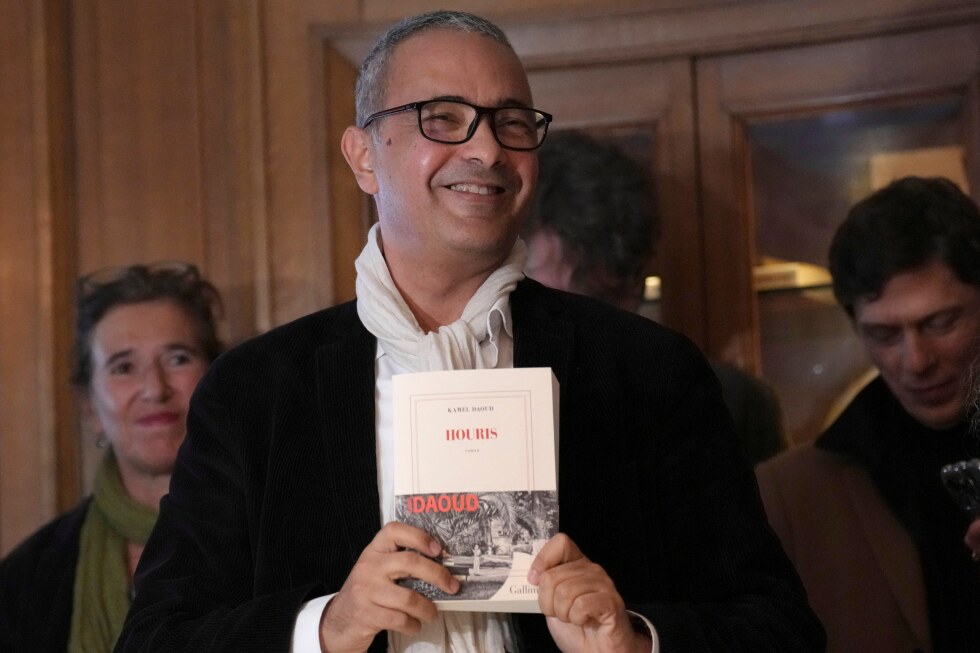
In a high-profile ruling that has reignited debates over free expression in Algeria, exiled French-Algerian writer Kamel Daoud announced Wednesday that an Algerian court has sentenced him to three years in prison and imposed a $38,000 fine over his 2024 Goncourt Prize-winning novel *Houris*. Daoud, who resides permanently in France, shared the news of Tuesday’s conviction via the social platform X, revealing the legal penalty handed down by a court in the coastal Algerian city of Oran.
Daoud’s acclaimed work centers on the forgotten victims of Algeria’s brutal 1990s internal conflict, widely known as the “Black Decade.” The decade-long violence erupted in 1991, when the military-backed Algerian government canceled the second round of national legislative elections after an Islamist party won a clear majority in the first round. The ensuing insurgency and government crackdown killed an estimated 200,000 people over 10 years of conflict.
The conviction was rooted in the 2005 Charter for Peace and National Reconciliation, a national policy approved via public referendum that granted blanket amnesty to both Islamist insurgents and state security forces involved in the civil war. Daoud sharply criticized the law and its application in his case, noting that the charter effectively criminalizes any open public discussion of the civil war and its legacy. “Ten years of war, nearly 200,000 dead according to estimates, thousands of terrorists granted amnesty … and only one guilty party: a writer,” Daoud said in his statement.
This is not the only legal pressure facing Daoud. Since May 2025, Algerian authorities have issued two international arrest warrants for the author, and they are also moving to revoke his Algerian citizenship. The case is not an isolated incident: another prominent French-Algerian critic of the Algerian government, author Boualem Sansal, faced similar legal repercussions in recent years. Sansal, whose work critiques political Islam, French colonialism, and current Algerian leadership, was convicted of undermining national unity and insulting public institutions, receiving a five-year prison sentence under Algeria’s anti-terrorism legislation. After serving one year in prison, he was granted a humanitarian pardon following a diplomatic appeal from Germany’s president, and returned to his residence in France in 2024.
The conviction has drawn new attention to longstanding concerns about restrictions on free speech and historical memory in Algeria, as writers and activists continue to push for open discussion of the legacy of the Black Decade decades after the conflict ended.