标签: Africa

非洲

  • How Sheila the three-wheeler dodged danger on a record 14,000-mile journey to tip of South Africa

    How Sheila the three-wheeler dodged danger on a record 14,000-mile journey to tip of South Africa

    For most adventure seekers, a cross-continental road trip requires a sturdy, four-wheeled vehicle built to handle punishing terrain and extreme conditions. But for British car enthusiast Ollie Jenks and his Canadian friend Seth Scott, the appeal of their latest challenge lay in its sheer absurdity. What started as a wild proposal from Scott quickly became a once-in-a-lifetime expedition that would push the pair, and their vintage three-wheeled car, to the absolute limit.

    The pair’s bold plan? Drive a half-century-old British-built Reliant Robin — a tiny three-wheeled vehicle originally designed for 1970s local grocery runs — from London all the way to Cape Town, South Africa. The 14,000-mile route would cut through 22 countries, traversing tropical jungles, rugged mountain ranges and scorching deserts along the way, all in pursuit of a new world record for the longest journey ever completed in a three-wheeled vehicle. For Jenks, the ridiculousness of the idea was exactly what made it impossible to turn down. “It was so ridiculous I couldn’t say no,” Jenks recalled of Scott’s initial pitch.

    The Reliant Robin holds a unique cult status in British culture. Though production of the model ended in the early 2000s, it remains a beloved icon, largely thanks to its famous role as the Trotter brothers’ beat-up yellow van in the hit UK sitcom *Only Fools and Horses*. Even so, the small, underpowered vehicle is widely considered one of the least suitable cars for a multi-thousand-mile transcontinental expedition — and that was exactly the point for Jenks and Scott.

    Dubbed “Sheila,” the silver Reliant they selected for the trip was one of the last models ever produced, acquired specifically for the adventure. When the pair set off in October, they brought little more than a spare can of fuel, a handful of essential supplies strapped to Sheila’s tiny roof, and a healthy dose of blind optimism that they would somehow reach South Africa. In a blunt assessment of the vehicle’s capabilities, Jenks noted: “No power steering, no air con, and it doesn’t do well up hills or down them. It is the most unsuitable car for probably any journey. We made friends with the designer of this car, and he’s scared to take it any more than 20 miles.”

    Undeterred by warnings from even the car’s own designer, Jenks and Scott pressed ahead with the four-and-a-half month expedition, which cost an estimated $40,000 to $50,000, funded through a mix of sponsor support and crowdfunding. The pair documented every step of the journey on their Instagram page, fittingly titled “14,000 miles, 3 wheels, 0 common sense,” which quickly attracted a following of nearly 100,000 people tracking their progress.

    The journey was far from smooth. The pair arrived in Benin in the middle of an attempted coup d’état, passed through northern Nigeria just as the U.S. launched airstrikes against Islamic State targets in the region, and required a 300-mile military escort through a separatist conflict zone in Cameroon. “Imagine this car in a military convoy,” Jenks joked.

    Beyond political and security hazards, the pair faced constant danger on the road, including a heart-stopping moment when an overtaking bus nearly crushed Sheila against a Congolese cliff face. True to the Reliant’s reputation for unreliability, the vehicle suffered countless breakdowns across the continent’s rough, unpaved roads. Wheel springs needed replacing within the first two weeks of the trip. The gearbox failed in Ghana, leaving the pair stuck with only fourth gear for hundreds of miles. Clutch and distributor issues plagued the vehicle in Cameroon, before the expedition nearly ended entirely when Sheila’s engine blew out.

    Against all odds, the kindness of local strangers and global Reliant Robin enthusiasts kept the dream alive. A local contact arranged for a new gearbox to be shipped to Ghana, while UK-based Reliant fans sourced and sent a replacement engine to Cameroon. On multiple occasions, locals helped tow the broken-down car to garages, often on improvised vehicles like cattle trucks. Mechanics across Africa spent hours welding, hammering and repairing Sheila to keep her running, many shaking their heads at the sheer madness of the pair’s mission.

    For all the hardship and setbacks, the journey also delivered the breathtaking moments the pair had dreamed of. Sheila crawled across towering mountain passes and vast arid deserts, traversing terrain no Reliant Robin had ever reached. The three-wheeler even joined a safari, rolling alongside galloping giraffes, passing endangered rhinos, and posing for photos beside a massive African elephant.

    More than 120 days after setting off, Sheila rattled into Cape Town last month, her engine having overheated in the Namibian Desert and running on borrowed power for the final 1,000 miles of the trip. For onlooker Graeme Hurst, a South African car enthusiast who followed the expedition on Instagram and traveled to see the pair arrive, the journey is a modern underdog story. “I see the farcical kind of comical nature of it … but also the sheer admiration. I mean, they have utter tenacity,” Hurst said.

    In Cape Town, Sheila was given a temporary spot in a luxury car showroom, where she drew more attention than the gleaming Porsches and Mercedes parked around her, her broken side window, petrol-stained windshield, bent rims and countless dents and scratches a testament to her incredible journey. For now, Sheila will rest in South Africa for a full, well-deserved servicing before her final voyage: she will be driven to Kenya, shipped to Turkey, and eventually transported back to the UK, where she will take up permanent residence at the London Transport Museum.

    After arriving in Cape Town, Jenks said he felt a deep sense of triumph, mixed with overwhelming relief to finally escape the car’s tiny two-seat cabin. “It was like driving a motorized coffin,” he joked.

  • Mauritania lawmakers are charged with insulting president over racial bias claims

    Mauritania lawmakers are charged with insulting president over racial bias claims

    In the capital city of Nouakchott, Mauritania, a high-stakes political conflict has erupted after two female opposition parliamentarians were formally hit with multiple criminal charges, stemming from public accusations that President Mohamed Ould Ghazouani holds discriminatory views against Black Mauritanians and people born to former slave families.

    According to the country’s top prosecutor, the charges, formally filed Monday, extend far beyond the initial allegation of insulting the head of state. The two lawmakers — Marieme Cheikh Dieng and Ghamou Achour — also face accusations of inciting sectarian violence, undermining national state symbols, and organizing unlawful gatherings through social media platforms that are alleged to threaten domestic public security.

    The pair had been held in police custody for more than 10 days following their critical social media posts targeting Ghazouani. Both politicians are affiliated with the Initiative for the Resurgence of the Abolitionist Movement (IRA), an anti-slavery coalition that holds unregistered political status and ran its candidates in alliance with the formally registered Sawab party to secure their parliamentary seats.

    The issue of slavery and systemic discrimination against descendants of enslaved people remains one of the most divisive and sensitive political topics in Mauritania, decades after the practice was formally outlawed by the state. Biram Dah Abeid, founder and leader of the IRA coalition, has condemned the prosecutions as a targeted political witch hunt, noting that both lawmakers themselves are descendants of former slaves. He argues the charges are a deliberate attempt to silence opposition voices that challenge the government’s ongoing failure to address systemic inequality.

    Prosecutors have argued that the severity of the charges strips the two elected officials of their constitutionally protected parliamentary immunity, clearing the way for the criminal case to move forward. But legal representatives for Dieng and Achour have rejected this legal reasoning outright, claiming the entire prosecution is nothing more than a political reprisal to settle partisan scores with government opponents.

  • French ambassador calls for South Africa to be at G20 after Trump bars country

    French ambassador calls for South Africa to be at G20 after Trump bars country

    Diplomatic friction between the United States and South Africa has escalated into a cross-bloc controversy ahead of the 2025 G20 summit hosted by the U.S., with France publicly backing South Africa’s right to participate as a full, voting member of the bloc.

    In a press briefing held in Johannesburg on Tuesday, French Ambassador to South Africa David Martinon made clear Paris’s official position: as a founding G20 member, France recognizes South Africa as a fully fledged member of the bloc, and thus it deserves a seat at all G20 proceedings, including this December’s summit scheduled at Trump National Doral Miami, U.S. President Donald Trump’s golf resort in south Florida.

    The dispute traces back to 2024, when Trump announced he would not extend an invitation to South Africa — the only African nation with permanent G20 membership — for the upcoming U.S.-hosted summit. The exclusion comes amid already strained bilateral relations between Washington and Johannesburg, sparked by the Trump administration’s unsubstantiated criticism of South Africa’s Black-led government, which it has labeled anti-white and anti-American. Trump has repeatedly pushed baseless claims that South Africa is orchestrating a coordinated campaign of violence against its white minority farming population, claims that have been thoroughly debunked by independent fact-checkers and South African officials.

    South African authorities have confirmed that beyond the main December summit, they have already been blocked from participating in the routine working-level G20 meetings held throughout the year leading up to the top-level leadership gathering. The South African government has described Washington’s exclusion as a punitive measure rooted entirely in false and misleading information.

    This is not the first rift between the two nations tied to G20 governance. Last year, when South Africa made history as the first African country to host the G20 summit, the U.S. boycotted the event. tensions boiled over during the traditional host handover ceremony ahead of the 2025 summit: the U.S. sent low-ranking embassy officials to accept the handover from South African President Cyril Ramaphosa, a move that South African officials deemed a deliberate insult, and they refused to proceed with the ceremony under those terms.

    Trump’s proposed exclusion of South Africa has already drawn pushback from across the G20 bloc, which operates on the core principle of consensus-based decision-making. Multiple member states have argued that no single country holds the authority to bar a full, standing member from official summit proceedings.

    The controversy also spilled over into preparations for the upcoming June G7 summit, which France is hosting this year in the alpine resort town of Évian-les-Bains. Last month, Ramaphosa’s spokesperson initially claimed that a personal 2024 invitation to Ramaphosa to attend the G7 as a guest had been rescinded by French officials, who cited pressure from the Trump administration to block South Africa’s participation. Ramaphosa later walked back his spokesperson’s comments, stating he was not aware of any U.S. pressure, a move widely interpreted as a diplomatic effort to de-escalate rising tensions.

    Addressing the G7 dispute on Tuesday, Martinon reiterated France’s official account: no invitation was ever retracted under U.S. pressure. Instead, France opted for a more streamlined guest list for the 2025 summit, extending guest invitations to the leaders of India, Brazil, Kenya and South Korea rather than adding additional non-member attendees. Quoting Ramaphosa’s own recent remarks, Martinon noted that South Africa is not a formal G7 member, so it cannot be uninvited from a forum it does not officially belong to.

    As the only African permanent member of the G20, South Africa’s exclusion would mark an unprecedented break with the bloc’s founding norms of inclusive representation, raising questions about the future of consensus governance in the grouping ahead of the December summit.

  • Midtjylland’s Djabi seriously injured in stabbing

    Midtjylland’s Djabi seriously injured in stabbing

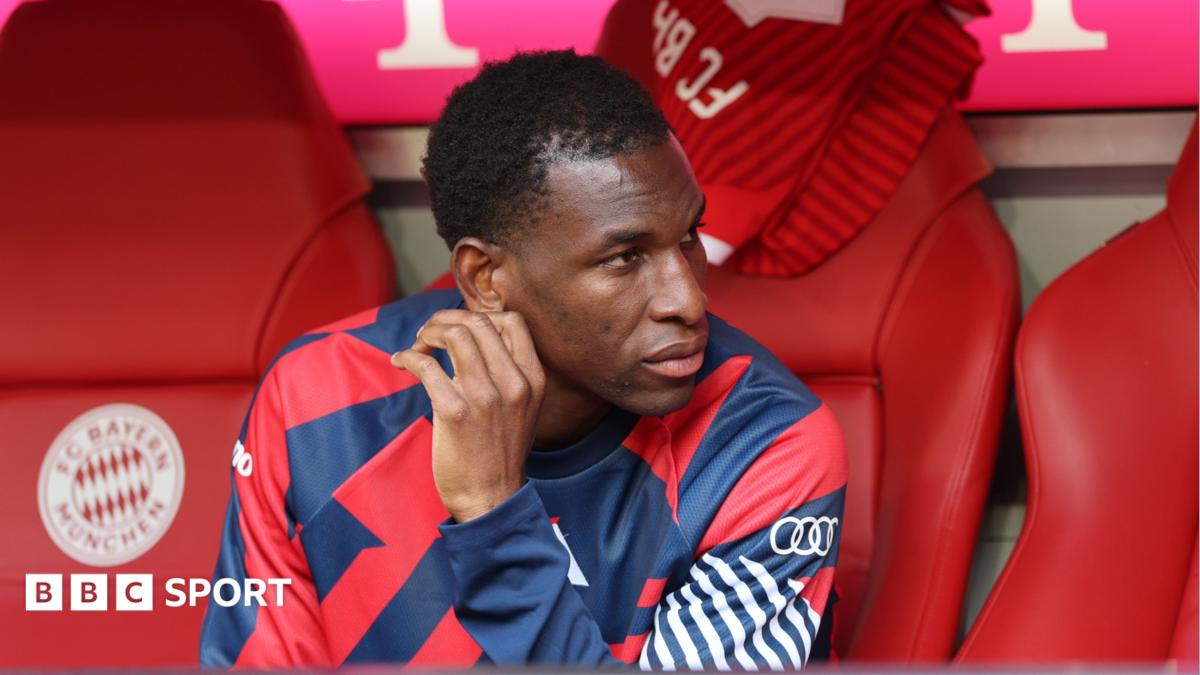
    A 19-year-old rising football talent, Alamara Djabi, who plies his trade as a midfielder for Danish top-flight side FC Midtjylland, is now in stable condition following a life-threatening stabbing attack in central Denmark, law enforcement and club officials have confirmed.

    The violent incident unfolded in the early hours of Sunday on the streets of Herning, the small central Danish city that serves as home base for Midtjylland, one of the most successful clubs in Danish domestic football in recent years. Local police have launched a full investigation into the attack, and have named a 20-year-old suspect who remains at large as of the latest updates.

    Djabi, a young prospect from Guinea-Bissau, joined Midtjylland in 2023 after rising through the youth ranks at Portuguese powerhouse Benfica. The teenager spent the 2024-2025 season on loan at Portuguese second division club CD Mafra, where he earned seven first-team appearances to build his professional experience. He returned to Midtjylland ahead of the current campaign, and has already featured once in Europa League qualifying for the side, adding to his two total senior appearances for the Danish club.

    Immediately after the attack, Djabi was rushed to hospital in critical condition and underwent urgent emergency surgery to treat his injuries. Club officials released an official statement updating the public on his status, revealing that the young midfielder has since undergone a second procedure. “Thanks to the incredible professional work of first responders and the hospital care team that has treated him, his condition is now classified as stable,” the statement read. “He has woken from an induced coma, and is progressing as well as can be expected given the circumstances.”

    Police investigators have yet to determine a clear motive for the attack, but preliminary assessments point to a personal dispute between Djabi and the suspect as the likely trigger. “It is still unclear what the motive for the stabbing is, but the police’s immediate assumption is that there was a disagreement between the 19-year-old and the perpetrator,” a police spokesperson said in an update to reporters.

    The attack comes as Midtjylland, a four-time winner of the Danish Superliga that most recently claimed the league title in 2024, competes for the top spot in this season’s championship. The club currently sits second in the table, just two points behind league leaders AGF with multiple matches still to play this campaign.

  • Libya fueled war in Sudan with Colombian mercenaries and equipment, UN report finds

    Libya fueled war in Sudan with Colombian mercenaries and equipment, UN report finds

    Three years after Sudan’s brutal civil conflict first erupted, a newly released United Nations investigation has uncovered a cross-border network that funnels foreign fighters, weaponry, and critical supplies to the Rapid Support Forces (RSF), the paramilitary group fighting Sudan’s official government military, with an armed faction in Libya acting as a key facilitator.

    The findings, published Sunday by the UN Panel of Experts on Libya, cover the monitoring period from October 2024 to February 2026, and detail how Libya’s Subul al-Salam Battalion has coordinated the movement of recruits—including a contingent of former Colombian military personnel turned mercenaries—along with weapons and fuel across the Libya-Sudan border to bolster RSF operations. The battalion is an integrated component of the self-declared Libyan National Army (LNA), led by influential commander Gen. Khalifa Hifter, who holds de facto control over eastern and southern territories of war-battered Libya.

    UN experts confirm the battalion’s operations are concentrated in the southern Libyan border town of Kufra, a strategic hub that shares boundaries with Sudan, Chad, and Egypt. Kufra’s key infrastructure, including a local airport that falls under the battalion’s full control, has allowed the group to smoothly transfer fighters and military cargo from Libya into RSF-held territory in Sudan. The investigation further mapped out the tangible benefits the RSF has gained from this Libyan support network: the paramilitary now operates a permanent rear base approximately 75 kilometers, or 46.6 miles, southwest of Kufra, and leverages the town’s existing airbase as a transit hub for incoming Colombian fighters and a modification site for military vehicles imported into Sudan via Libyan smuggling routes.

    According to the report’s documentation, the battalion’s direct operational support extended to RSF battlefield advances in June 2025. Facilitation included deploying local ground units, providing armed escorts for foreign fighters traversing Libyan territory, and securing steady supplies of fuel and vehicle spare parts. This backing directly enabled the RSF’s seizure of the Uwaynat border region, a strategically critical tri-point where the territories of Sudan, Egypt, and Libya converge. At the same time, the UN notes that the cross-border activity has severely eroded what remains of border security in southern Libya, creating new instability in an already fragile region.

    As of publication, neither the Subul al-Salam Battalion nor RSF spokespersons have responded to requests for comment on the report’s findings. The RSF previously announced it had taken full control of the Uwaynat triangle in June, shortly after Sudan’s national military confirmed it had evacuated the area as part of what it described as defensive restructuring to repel ongoing RSF offensives. Sudan’s military has long leveled accusations that Hifter’s LNA is directly complicit in aiding RSF attacks—a claim Hifter has repeatedly denied.

    International human rights organizations have previously documented that both Hifter’s Libyan forces and the RSF receive covert military and financial support from the United Arab Emirates, an allegation Abu Dhabi has continuously rejected. In recent months, Sudan’s national military has moved to disrupt the Libya-based RSF supply line, launching targeted airstrikes in November against convoys of vehicles and groups of foreign fighters assembled inside Libyan territory ahead of deployment to Sudan, the UN report confirms.

    The cross-border mercenary network is the latest development in a Sudanese conflict that has already spiraled into one of the world’s worst humanitarian catastrophes. The war erupted on April 15, 2023, when long-simmering power tensions between Sudan’s military leadership and the RSF boiled over into open combat, first breaking out in the capital Khartoum before spreading across the vast country. The conflict has pushed millions of Sudanese into famine, displaced millions more, and created the largest single humanitarian crisis on the globe. According to data from the Armed Conflict Location & Event Data Project, a U.S.-based independent conflict monitoring organization, the war has killed no fewer than 59,000 people to date. The organization stresses that this official toll is almost certainly a significant undercount, given widespread reporting restrictions and access constraints across war zones.

    Already, the United States has imposed targeted economic sanctions on Colombian companies and private individuals linked to the scheme of recruiting and deploying former Colombian military officers to fight alongside the RSF in Sudan.

  • Nigeria charges six people with treason over Independence Day coup plot

    Nigeria charges six people with treason over Independence Day coup plot

    A high-stakes treason case has taken shape in Nigeria, where six individuals—including a retired senior military officer and an active-duty law enforcement official—have been formally charged with plotting to overthrow democratically elected President Bola Tinubu in a 2025 attempted coup. The charges were brought by Nigeria’s Attorney General before the Federal High Court in Abuja, the nation’s capital, with all six defendants scheduled to make their first appearance before Justice Joyce Abdulmalik this Wednesday.

    A seventh prominent figure named in the court documents, Timipre Sylva—a former state governor and one-time Nigerian oil minister—remains at large and has not yet been taken into custody in connection with the plot.

    Rumors of an impending coup against Tinubu’s administration first emerged publicly in October 2025, when the Nigerian government unexpectedly called off a large-scale military parade planned to mark the country’s 65th Independence Anniversary. Officials initially cited unspecified security threats to justify the abrupt cancellation, but public speculation almost immediately connected the move to a brewing insurrection against the sitting government. At the time, Nigeria’s military leadership issued a public denial of any coup plot threat, but just three months later in January 2026, the armed forces announced that 16 officers would face trial before a military tribunal for their alleged roles in the attempt to oust the president. To date, it remains unclear whether the new charges filed in the Federal High Court— which include additional counts of terrorism and money laundering alongside the core treason charges—are supplementary to the ongoing military prosecutions or represent a separate legal proceeding.

    The full roster of defendants named in the Attorney General’s case is as follows: retired Major General Mohammed Ibrahim Gana; retired Navy Captain Erasmus Ochegobia Victor; Ahmed Ibrahim, a serving police inspector; Zekeri Umoru, an electrician employed at the Presidential Villa in Abuja; civilian Bukar Kashim Goni; and Abdulkadir Sani, an Islamic cleric. None of the six defendants have yet issued any public comment in response to the allegations against them.

    According to official court documents, the six accused “conspired with one another to levy war against the state to overawe” President Tinubu and his administration. Court papers identify the alleged overall leader of the coup plot as Colonel Mohammed Alhassan Ma’aji, who was already taken into custody along with other undisclosed accomplices earlier this year. Prosecutors further allege that all six defendants had advance knowledge of Colonel Ma’aji’s “treasonable act” but deliberately concealed this information from Nigerian law enforcement and security authorities. Additional charges include the deliberate suppression of critical intelligence, with prosecutors arguing the defendants acted with the explicit intent of destabilizing the Nigerian state by withholding information that could have prevented planned terrorist activity tied to the coup.

    Financial allegations also form a core pillar of the prosecution’s case: prosecutors claim that illicit funds were exchanged among the co-conspirators to finance terrorist operations connected to the overthrow attempt.

    Under Nigerian criminal law, treason is classified as one of the most severe criminal offenses, carrying harsh maximum penalties that include life imprisonment. This high-stakes case unfolds against a backdrop of Nigerian democratic stability: the country has maintained unbroken civilian rule since 1999, when military rule formally ended. In public statements repeatedly issued over the years, Nigeria’s armed forces have consistently emphasized their unwavering loyalty to civilian-led governance and reaffirmed their institutional commitment to upholding the country’s democratic framework.

  • Taiwan president cancels trip to Eswatini and accuses China of pressuring African countries

    Taiwan president cancels trip to Eswatini and accuses China of pressuring African countries

    In a development that underscores ongoing cross-strait tensions, Taiwanese President Lai Ching-te has scrapped a scheduled visit to Africa this week, after three sovereign nations pulled their approval for his plane to cross their airspace amid mounting pressure from Beijing, the Taiwanese presidential office announced Tuesday.

    The presidential office released an official statement clarifying that the unanticipated withdrawal of overflight permissions from Seychelles, Mauritius, and Madagascar was directly driven by intense pressure from Chinese authorities, including explicit threats of economic coercion against the three nations. The move blocked the planned travel route for Lai’s trip, leaving no viable alternative path that would allow the visit to proceed as scheduled.

    Lai’s itinerary was centered on a official visit to Eswatini, the only African country that currently maintains formal diplomatic relations with Taipei. The trip was scheduled to run from April 22 to 26, with the goal of strengthening bilateral ties between Taiwan and its last remaining African diplomatic partner.

    The broader geopolitical context of this incident is rooted in China’s long-standing position on Taiwan: Beijing claims the self-governing island democracy as an integral part of its territory, asserting that it will eventually take back control, by military force if the situation requires it. As part of this policy, China requires all nations that maintain formal diplomatic relations with Beijing to cut off any official ties with Taipei, and refuses to recognize Taiwan’s sovereignty on the global stage.

    Over the course of the last several years, Beijing has ramped up a coordinated diplomatic campaign to win over Taiwan’s remaining diplomatic partners, persuading a string of countries to switch their formal recognition from Taipei to Beijing. Today, only 12 countries around the world maintain official diplomatic relations with Taiwan, the vast majority of which are small island and developing nations scattered across Latin America, the Caribbean, and the Pacific region. This incident marks the latest escalation in Beijing’s ongoing efforts to isolate Taiwan diplomatically on the global stage.

  • Arrests in Nigeria after abduction of local monarch ‘held for ransom’

    Arrests in Nigeria after abduction of local monarch ‘held for ransom’

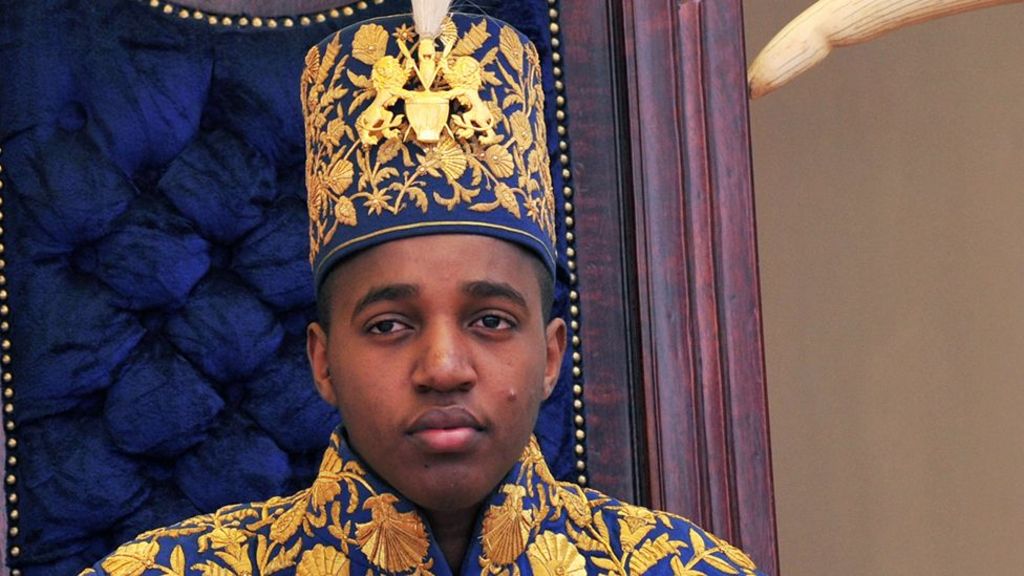
    A high-stakes abduction of a Nigerian traditional ruler has triggered a major security operation in Kwara State, with law enforcement officers taking 42 suspected illegal miners into custody as part of the sprawling investigation. The incident unfolded on a Saturday evening in the Olayinka community, located in Ifelodun Local Government Area of the north-central Nigerian state, when a team of around 10 heavily armed assailants stormed the palace of Oba Salman Olatunji Aweda, the community’s reigning monarch.

    According to Kwara State Police Commissioner Adekimi Ojo, the attack came just moments after a group of miners operating in the local area had held a meeting with the traditional ruler and left a cash payment with him. Details of the business arrangement between the miners and the monarch remain unconfirmed by official sources, but Ojo confirmed that the gunmen broke into the palace, located the ruler in his private quarters, and demanded he hand over the cash the miners had delivered earlier that day. Though Oba Aweda complied with the demand, the attackers still abducted him alongside his brother. The brother was later abandoned when he grew too exhausted to keep up with the gunmen while traveling barefoot into the nearby forest, leaving him tied to a tree before he was eventually discovered. The assailants successfully fled into the dense woodland with the monarch still in their custody.

    Local residents have confirmed that the kidnappers have since reached out to the community to demand a $300,000 ransom for the ruler’s safe release, though state authorities have yet to officially confirm the exact ransom figure.

    This abduction has amplified already growing concerns over escalating insecurity across Kwara State, where attacks on rural communities have spiked in recent months. For years, violent criminal gangs known locally as bandits have carried out systematic kidnappings for ransom and indiscriminate killings across Nigeria’s northwestern region. In recent times, these gangs have expanded their operational footprint into other parts of the country, including Kwara, triggering the formation of informal vigilante groups tasked with protecting vulnerable rural communities that lack consistent state security presence.

    Beyond bandit activity, the jihadist insurgent faction Mahmuda has also stepped up operations in rural areas of the state. In a high-profile attack earlier this year, the group launched a bold assault on a local Muslim community, killing at least 75 people and targeting the family of a traditional ruler after he banned the group from preaching in the area.

    Currently, Nigerian security forces are conducting extensive search operations across the forested terrain surrounding the Olayinka community to locate the kidnapped monarch and apprehend his abductors. Local government officials are coordinating closely with both state security agencies and local vigilante groups to secure a safe release for Oba Aweda. In recent attacks across Kwara, armed groups have repeatedly exploited the state’s porous border forests to evade capture by security forces, posing a persistent challenge to counter-insurgency and anti-kidnapping operations. Attacks on key infrastructure including rural highways and farms, as well as targeted abductions of traditional leaders, have become increasingly common in the region as insecurity worsens.

  • Pope Leo pays tribute to Pope Francis on the anniversary of his death

    Pope Leo pays tribute to Pope Francis on the anniversary of his death

    Flying from Angola to Equatorial Guinea on the final stop of his four-nation African pilgrimage, Pope Leo XIV paused mid-journey on Tuesday to pay heartfelt tribute to his predecessor Pope Francis, marking one year since Francis’ death last Easter Monday.

    Speaking to journalists aboard the papal plane in fluent Italian — as the aircraft passed over the Central African Republic, the same nation where Francis opened his landmark 2015 Holy Year of Mercy — Leo reflected on the core themes that defined Francis’ decade-long papacy. He highlighted Francis’ persistent calls for human fraternity, radical respect for all people, and unwavering commitment to walking alongside the marginalized.

    “We thank the Lord for the great gift of Francis’ life, given to the church and the entire world,” Leo told reporters, recalling specific memorable homilies that shaped Francis’ public witness. He specifically cited Francis’ first post-election Sunday noon prayer and a moving Mass held two days before his 2013 inauguration, where Francis preached a heartfelt sermon on God’s boundless mercy centered on the biblical story of an adulterous woman.

    “So many times what he did was live truly being close to the poorest, the smallest, the sick, children, the elderly,” Leo said. “He gave so much to the church with his life, with his witness, with his word and with his gestures.” He closed his tribute with a plea for prayer, saying “Let us pray that he is still enjoying the mercy of the Lord.”

    Francis died at 88 last year, just weeks after he made a final public appearance: riding through St. Peter’s Square in the popemobile to deliver an Easter blessing to gathered crowds, just days after completing a five-week hospital stay for double pneumonia. His passing triggered a conclave just a few weeks later, where Robert Prevost — now known as Pope Leo XIV — was elected to succeed him. As newly uncovered details from a recently released commemorative book confirm, Francis actively paved the way for that outcome.

    The first anniversary of Francis’ death is being marked with formal commemorations across Rome, including a special evening Mass scheduled at the St. Mary Major basilica, where Francis is buried, and the launch of multiple books collecting recollections of his papacy. One of the most revealing volumes, *Padre* (Father), written by Vatican Media reporter Salvatore Cernuzio — who developed close personal access to Francis during his papacy — offers direct confirmation of Francis’ high regard for Leo long before his election.

    In the book, Cernuzio recounts a 2023 conversation, after Francis announced he would name Prevost a cardinal that year. When asked about the then-Cardinal Prevost, Francis told the reporter simply: “Him? He’s a saint.” Cernuzio notes that when Francis used that term to describe someone, he typically meant the person possessed the rare ability to navigate conflict, tension and complex institutional challenges with calm, while building unity across communities.

    That comment adds substantial credibility to the long-held hypothesis that Francis identified Prevost as a potential successor years in advance and intentionally groomed him for the role. Their relationship stretches back decades, to when Prevost served as the global head of the Order of St. Augustine and the future Francis was still Archbishop Jorge Mario Bergoglio of Buenos Aires. Even a small early disagreement — when Prevost declined to assign an Augustinian priest to a role Bergoglio requested — did not dampen Francis’ esteem.

    After Prevost completed his second term leading the Augustinian order, Francis appointed him bishop of the challenging diocese of Chiclayo, Peru, where Prevost had already spent 20 years working as a missionary. Prevost quickly rose through the ranks of the Peruvian Bishops’ Conference, before Francis called him to Rome in 2023 to lead the Dicastery for Bishops, one of the Vatican’s most powerful departments. The role gave Prevost invaluable experience navigating Vatican bureaucracy and built critical relationships with the college of cardinals that would ultimately elect him pope.

    That backing and preparation allowed Prevost to overcome a longstanding unwritten taboo within the Catholic Church against electing an American pope, a restriction rooted in concerns over the United States’ global geopolitical power. Speaking to parishioners in his home state of Illinois earlier this year, Prevost recounted that after that early disagreement decades ago, he naively assumed Francis would forget him and never appoint him to a senior church role. Instead, Francis not only made him a bishop, but spent years laying the groundwork for Prevost to take his place as leader of the world’s 1.3 billion Catholics.

  • South Africa police chief Fannie Masemola in court over alleged $21 million unlawful contract

    South Africa police chief Fannie Masemola in court over alleged $21 million unlawful contract

    PRETORIA – In a major development rocking South Africa’s national law enforcement apparatus, national police commissioner Fannie Masemola has made his first formal court appearance in connection to a sprawling corruption investigation that has already swept up more than a dozen other high-ranking police officials.

    Masemola, who has retained his post as the head of South Africa’s police service despite the charges, faces four separate violations of the country’s Public Finance Management Act. The legislation governs how government agencies award public contracts, and the charges stem from an allegedly tainted 360 million South African rand, equivalent to roughly $21 million, contract for health and wellness services for active police officers.

    The top law enforcement official was summoned to court earlier this month and made his initial arraignment on Tuesday. He has not yet entered a plea to the charges brought by national prosecutors. If convicted on all counts, Masemola could face a maximum sentence of five years in prison, in addition to substantial financial penalties.

    Prosecutors allege that the service contract was awarded through improper channels, and multiple senior officers are accused of accepting bribes from the bidding firm that ultimately secured the deal. Full details of Masemola’s specific role have not been publicly disclosed as the investigation remains ongoing, but the charges are tied to his formal duties as the police service’s top accounting officer, responsible for overseeing all public spending. The controversial contract has already been terminated by police leadership.

    The corrupt contract is one of the core cases being examined by a public commission of inquiry launched by South African President Cyril Ramaphosa last year. The inquiry was convened to investigate widespread accusations of systemic corruption across the national police service. A separate parallel investigation into the allegations has also been conducted by the country’s parliamentary body.

    Prosecutors announced in court Tuesday that Masemola’s case will be consolidated with the cases of 16 other co-accused individuals, which includes the 12 senior police officers already arrested and charged. Among those already in the case are one major-general and multiple brigadiers, some of the highest ranking positions in the South African Police Service. All of the previously charged defendants have been released on bail awaiting trial.

    Alongside the police officers, a prominent businessman with alleged ties to organized organized crime stands accused. His company was the successful bidder for the contract at the center of the scandal. The businessman, Vusi “Cat” Matlala, has already testified before the inquiry about purported connections between senior police leadership and criminal kingpins. He is currently being held in a maximum-security prison on separate charges including attempted murder that are unrelated to the corruption case.

    Speaking to journalists following his court appearance, Masemola pushed back against growing public and political calls for him to resign from his post. He emphasized that the decision to remove him rests solely with President Ramaphosa, and confirmed that he will continue carrying out his regular official duties. A spokesperson for the presidency stated Tuesday that Ramaphosa has been formally briefed on the charges against Masemola, and will handle the situation consistent with South Africa’s existing legal framework. The case has been adjourned and is scheduled to resume in court on May 13.