博客

  • Argentines out in force as New Yorkers bid farewell to World Cup carnival

    Argentines out in force as New Yorkers bid farewell to World Cup carnival

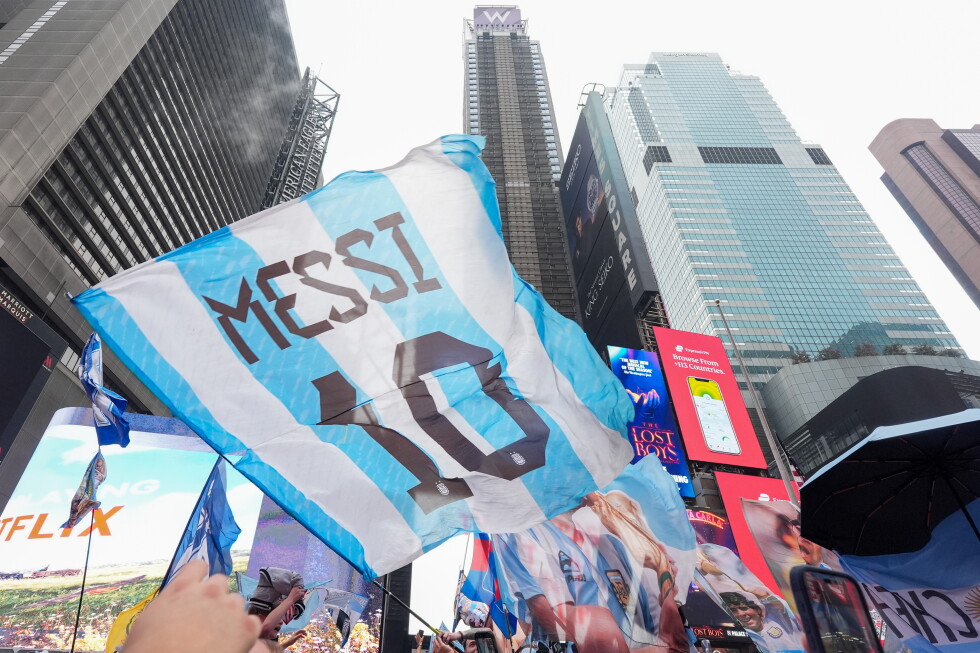
    In the days leading up to one of the most anticipated FIFA World Cup finals in recent hosting history, thousands of boisterous Argentine supporters have turned the heart of New York City back into a vibrant World Cup carnival, breathing new life into flagging local excitement ahead of Sunday’s blockbuster showdown with Spain at MetLife Stadium.

    Local enthusiasm for the co-hosted tournament had slumped sharply after the United States men’s national team was eliminated from competition by Belgium on July 6. Compounding that dip in interest were a series of disruptive external challenges: a deadly Legionnaires’ disease outbreak, extreme volatile weather including fierce storms, widespread flooding, and poor air quality driven by smoke drifting from Canadian wildfires. Even the structure of the tournament contributed to waning buzz: as nations with large diaspora communities in New York, such as Mexico and Egypt, were knocked out round after round, casual local engagement faded steadily. Many native New Yorkers also left the city for summer weekend getaways ahead of the final, and the historic sky-high ticket prices for the match have put attendance out of reach for most fans. Secondary ticketing platform TickPick reports the average final ticket resells for $11,325, making it the most expensive single sporting event in U.S. history.

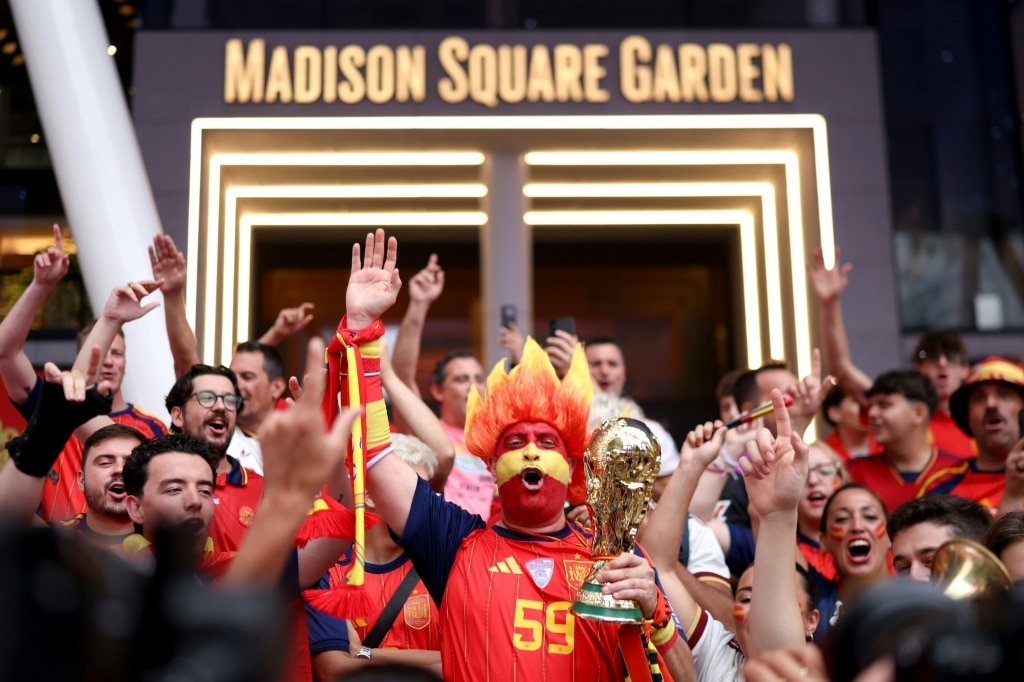
    Despite these headwinds, the sea of blue and white striped Argentine jerseys that have flooded Manhattan’s tourist hubs, Penn Station, and the city’s unofficial World Cup gathering spot at Times Square have rekindled the global soccer spectacle’s energy in the Big Apple. Even two four-legged fans got in on the action, decked out in Argentina’s iconic national kit. Across midtown, Spanish supporters gathered in their own pockets around Madison Square Garden, one fan clutching a replica World Cup trophy in anticipation of kickoff.

    Florencia Luzinin, a 30-year-old Argentine dentist who traveled to be part of the final buildup, summed up the emotion surrounding the match for many fans, noting this is widely expected to be Lionel Messi’s final World Cup appearance. “I’m very nervous because I love Argentina. It’s the final. It’s probably the last of Messi. So maybe it’s our day. I don’t know. We came across a few Spaniards but I don’t look at them,” she said.

    Alessandra Pichler, a 27-year-old Spanish supporter, predicted a 3-1 win for her side and praised the U.S. hosting effort. “I think the US has done a great job hosting all the games I’ve been to. I’ve been very impressed,” she added.

    Chip Parham, a New York-based film festival organizer who was gearing up to watch the match, said the drop-off in local interest after the U.S. exit followed a familiar pattern for international sporting events held on American soil. “I think that a reaction for people to lose interest in the World Cup when their country is eliminated is the same as any sporting event. In any city there is a decline in interest for any sporting event that doesn’t feature a local team. With the exception of the Super Bowl,” he explained.

    Howie Ray, a 42-year-old New Yorker who shifted his support to England after the U.S. elimination, echoed that observation, noting that even with both finalists in place, local engagement remained muted outside of concentrated fan pockets in Midtown. “It’s been slightly overshadowed. I think there was fatigue after all the games of the group stage and then the US getting eliminated. Spain and Argentina also have relatively small immigrant populations in the city,” Ray said. “A lot of my friends have felt disconnected the entire tournament due to the tickets being unaffordable.”

    For the thousands of fans who cannot secure or afford tickets to the 82,500-capacity MetLife Stadium in East Rutherford, New Jersey, a wide range of alternative watch party options have popped up across the city. Global Citizen is hosting an all-star live concert in Central Park that will run simultaneously with the final, while the American Museum of Natural History is offering fans the unique chance to watch Messi’s bid for a fourth Argentine World Cup title alongside the institution’s iconic dinosaur exhibits.

    Even with tepid widespread engagement outside of Midtown, the 2026 co-hosted World Cup has left a measurable mark on New York’s sporting landscape. New York City Comptroller Mark Levine confirmed that Gotham FC, the city’s professional women’s soccer team, recently drew the largest crowd ever recorded for a women’s sporting event in New York history, a bump organizers attribute to broader World Cup-fueled interest in soccer. New York Mayor Zohran Mamdani also made headlines ahead of the final for watching England’s quarterfinal exit to Argentina with incarcerated people at the city’s Rikers Island jail facility.

    Ahead of kickoff, city officials reaffirmed their commitment to making the World Cup accessible to all New Yorkers. “We said from the beginning that the World Cup belongs to New Yorkers. This summer, we proved it,” Mamdani said. As of Saturday, air quality at MetLife Stadium had returned to normal, clearing the final hurdle for Sunday’s historic showdown.


  • Health officials identify source of US explosive diarrhoea outbreak

    Health officials identify source of US explosive diarrhoea outbreak

    A rapidly expanding foodborne illness outbreak across the United States has taken a new turn, after federal health officials announced an additional sample of iceberg lettuce from major agricultural supplier Taylor Farms has tested positive for the parasite responsible for thousands of infections.

    The U.S. Food and Drug Administration (FDA) confirmed that the contaminated sample, collected during targeted import surveillance as part of the ongoing outbreak investigation, was traced to a production lot not included in the voluntary product removal Taylor Farms announced last Friday. The California-based agriculture firm, which counts major fast-food chain Taco Bell among its high-profile customers, has already committed to sweeping market action: pulling all iceberg lettuce sourced from central Mexico from retail and foodservice locations across the country.

    Public health experts have stressed a key distinction between the current voluntary withdrawal and a formal mandatory recall: a recall requires companies to actively notify customers and retrieve all affected products from commercial channels, a broader and far more costly regulatory process that carries stricter compliance requirements. Right now, Taylor Farms is working urgently to trace the newly identified positive lot to determine if any of the lettuce remains on store shelves or in consumers’ homes.

    As of the latest updates, no fatalities linked to the cyclospora outbreak have been recorded, but the Centers for Disease Control and Prevention (CDC) reports that at least 94 people have required hospital care for severe symptoms of infection. The outbreak was first detected in mid-May, and public health officials note that symptoms of the parasitic illness can take up to 14 days to emerge, meaning new cases are still being added to official counts. Infected individuals typically experience prolonged watery diarrhea, unexpected rapid weight loss, and loss of appetite.

    The CDC has issued a clear public warning advising consumers in five U.S. states—Indiana, Kentucky, Michigan, Ohio, and West Virginia—to avoid eating any shredded iceberg lettuce served at Taco Bell locations. The fast-food chain has already announced it has completed removing all potentially affected Taylor Farms lettuce from its restaurant locations across the affected regions.

    In an official statement released amid the investigation, Taylor Farms said it has “stopped receiving product from the implicated lot, suspended distribution of the iceberg lettuce from Central Mexico, notified [its] customers and [is] continuing to work with the FDA, CDC, and state authorities” to contain the outbreak.

    The current market withdrawal covers products distributed across 27 U.S. states. Beyond Taco Bell, the affected products include Marketside-branded iceberg lettuce sold at Walmart locations across 15 states, the FDA confirmed.

  • Jonas Vingegaard out of Tour de France after crash on Stage 15

    Jonas Vingegaard out of Tour de France after crash on Stage 15

    The 2024 Tour de France has suffered a stunning upset ahead of its closing stretch, as two-time defending champion Jonas Vingegaard was forced to abandon the race following a high-profile crash with just 20 kilometers remaining in Sunday’s grueling 15th stage, held at France’s Plateau de Solaizon.

    Vingegaard, riding for the Visma–Lease a Bike squad, entered the mountainous 15th stage sitting just behind UAE Team Emirates leader Tadej Pogacar in the general classification, setting up a tense showdown on the stage’s challenging finishing climb. The incident occurred when Vingegaard and a small group of other riders fell close to a roadside curb in the final kilometers of the route.

    After the crash, the 29-year-old Danish rider was able to move under his own power but visibly limped to waiting medical staff, leaving the course with his right arm stabilized in a sling before being taken away in an ambulance.

    A generational talent in professional road cycling, Vingegaard cemented his legacy as one of the sport’s great all-rounders by claiming back-to-back Tour de France titles in 2022 and 2023. He is also one of only eight male riders in the history of professional cycling to have secured overall victory at all three of the sport’s Grand Tour events: the Tour de France, Giro d’Italia, and Vuelta a España.

    His early exit reshapes the dynamic of the 2024 Tour, clearing a major path for Pogacar to secure a fourth overall title, and leaves millions of cycling fans shocked by the abrupt end to Vingegaard’s bid for a third consecutive yellow jersey.

  • The World Cup winner will earn $51 million under expanded purse

    The World Cup winner will earn $51 million under expanded purse

    When the final whistle blows on the 2026 FIFA World Cup final this Sunday, the new champion will not only lift soccer’s most coveted golden trophy and claim eternal glory in their nation’s sports history — they will also take home the largest winner’s payout in the tournament’s history, alongside a first-ever set of championship rings for the squad.

    For the 2026 edition, expanded from 32 to 48 competing nations and co-hosted across the United States, Canada and Mexico, FIFA has set an all-time total prize pool of $871 million, marking a $100 million increase from the initial payout plan announced last year. The top-up came in April after European national federations lobbied for additional funding, arguing that the three-host format created extraordinary travel and accommodation costs that would leave most teams out of pocket without deeper tournament runs.

    This year’s champion will walk away with $51 million in prize money, a substantial jump from the $42 million awarded to 2022 Qatar World Cup winner Argentina. The runner-up will take home $34 million, while third-place England will earn $30 million and fourth-place France will collect $28 million. Payouts scale down based on tournament progression: quarterfinalists (5th to 8th place) earn $20 million each, Round of 16 exits (9th to 16th) get $16 million, Round of 32 eliminations (17th to 32nd) receive $12 million, and even teams eliminated in the group stage (33rd to 48th) leave with $10 million in prize money.

    Every participating federation also receives an additional $2.5 million upfront to cover pre-tournament training and preparation costs, bringing the minimum total payout for any qualifying nation to $12.5 million. This structured upfront payment was adopted to resolve longstanding pre-tournament tensions, where players frequently went public with claims that their national federations had failed to pay promised bonuses ahead of the competition.

    The push for increased prize money gained traction after top European federations pointed out the stark gap between World Cup payouts and rewards for elite club competition. French Football Federation president Philippe Diallo had repeatedly raised the issue with FIFA President Gianni Infantino for months, noting that the 2025 Club World Cup winner — a tournament also hosted in the United States — took home $115 million, more than double the 2026 World Cup champion’s payout. To put the disparity in even sharper perspective: the entire $51 million winner’s check is less than the $ reportedly transfer fee English Premier League side Brighton paid last week to sign 19-year-old Croatian defender Luka Vušković, who spent nearly the entire 2026 World Cup on Croatia’s bench.

    Beyond prize money, FIFA is required under tournament regulations to cover core logistical costs for all participating delegations. The governing body pays for business-class return flights for each federation, as well as board and lodging for a 50-person delegation starting five nights before the team’s first match and extending one night after elimination. FIFA also covers domestic travel within host countries for the 50-person group, plus provides a dedicated fleet of vehicles that includes an equipment truck. National federations are responsible for covering delegation insurance, extra accommodation for additional staff, and any incidental hotel costs.

    Off the field, the iconic gold World Cup trophy remains the ultimate honor for the champion. The original trophy is kept permanently by FIFA, so the winning federation receives a gold-plated full-size replica to keep permanently, alongside the new championship rings being awarded for the first time this edition.

    Importantly, all prize money is paid directly to national federations, not individual players, and each federation sets its own policy for distributing the funds. A notable example is the United States Soccer Federation, which approved a landmark equal pay agreement in 2022, making it the first soccer governing body in the world to guarantee equal compensation and equal prize sharing for its men’s and women’s national teams. Under the terms of that deal, USSF retains 20% of any prize money earned by the men’s team, and the remaining 80% is split evenly between the men’s and women’s national programs.

  • 5.5 magnitude earthquake hits Peru’s Andes region and kills at least 5 people

    5.5 magnitude earthquake hits Peru’s Andes region and kills at least 5 people

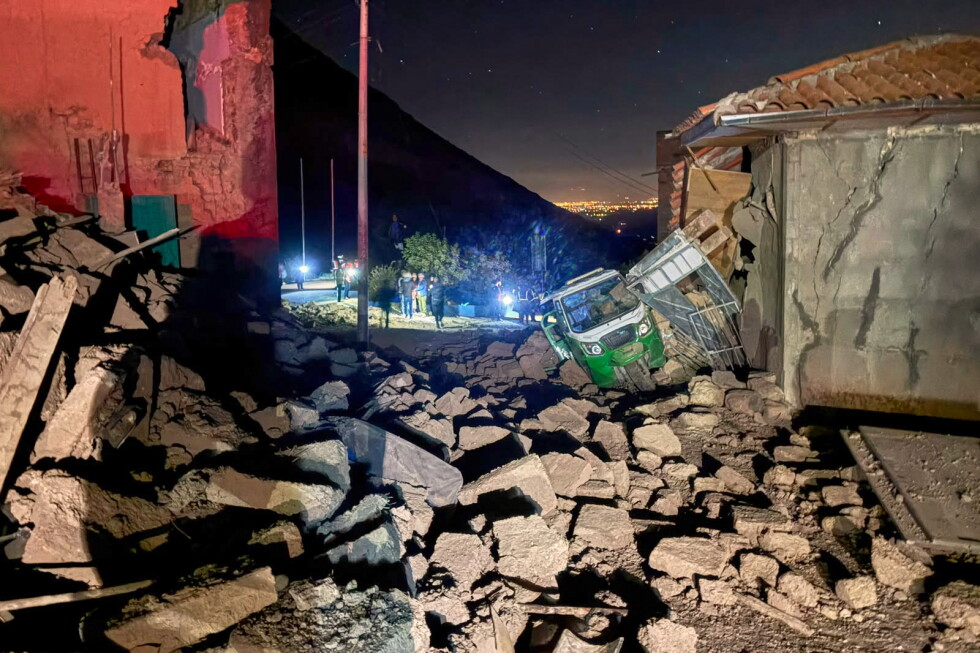
    A destructive 5.5-magnitude earthquake has rocked the Andean highlands of central Peru, leaving at least five people dead and triggering widespread displacement and infrastructure damage, Peruvian national authorities confirmed Sunday. Over 20 residents were treated for quake-related injuries, and roughly 300 people have been forced to leave their damaged or destroyed homes in the aftermath of the disaster.

    According to data from the U.S. Geological Survey (USGS), the seismic event hit at 9:24 p.m. local time Saturday. Its epicenter was positioned just 2 kilometers (1.24 miles) west-southwest of Sicaya, a small city in Peru’s Huancayo province, and the quake originated at a relatively shallow depth of 10 kilometers (6.21 miles) below the Earth’s surface.

    In an official update, Peru’s National Civil Defense Institute stated that the full scope of the disaster remains unclear, as the total number of people unaccounted for has not yet been confirmed. Multiple structures across the affected region have either completely collapsed or sustained critical structural damage, among them a historic local church and adjacent convent.

    Luis Vásquez, director of the regional civil defense office, explained to reporters that the widespread heavy damage can be partially attributed to common building practices in the Andean region. Many local homes and structures are constructed with traditional rustic adobe, a material that offers far less resistance to seismic shaking than modern engineered building materials, amplifying the disaster’s impact.

    Peru sits along the Pacific Ocean’s geologically active “Ring of Fire,” a zone where constant tectonic plate movement makes major and minor earthquakes a frequent hazard for the country’s population. The 2007 Pisco region earthquake, which measured magnitude 7.9, killed close to 600 people and stands as one of the deadliest seismic events to hit the South American nation in recent decades.

    Footage aired by local Peruvian media outlets has captured the acute distress of residents in one of the hardest-hit communities, the low-lying agricultural zone of Chongo Bajo. Locals can be seen gathered outside their heavily damaged homes, huddled together under blankets to stay warm after being forced to evacuate, with some livestock also reported trapped under collapsed rubble.

    Hermenegilda Guamalato, a displaced resident, shared her experience with local radio after relocating to neighboring Huayucachi province to find emergency shelter. “My home has been destroyed,” she explained, adding that she was now searching for safe, stable accommodation alongside her three children.

    Response teams continue to assess the full extent of casualties and damage across the affected region as of Sunday, with emergency shelter and basic supplies being mobilized for displaced residents.

  • Red and yellow sweep Madrid before World Cup final

    Red and yellow sweep Madrid before World Cup final

    Hours before the kickoff of the 2026 FIFA World Cup final between Spain and Argentina in New Jersey, the Spanish capital of Madrid has been transformed into a sea of the nation’s iconic red and yellow, with widespread excitement and national pride sweeping every corner of the city ahead of what is set to be one of the most tightly contested football matches in recent memory.

    Sixteen years after the Spanish men’s national team claimed its first ever World Cup trophy in South Africa, millions of fans across Madrid have gathered in public squares, neighborhood bars, and dedicated public viewing sites, all holding their breath to see La Roja lift the trophy for a second time. From street-level public transit to major mobile network providers, every corner of the capital has embraced football fever to show support for the young Spanish squad.

    Municipal buses running through Madrid’s busiest core routes now display Spanish flags on their front ends, turning a daily transit network that carries more than one million passengers into a moving, rolling celebration of the national team. Even the capital’s subway system has joined the excitement: one entire train car has been wrapped in the team’s signature bright red, decorated with oversized portraits of head coach Luis de la Fuente and standout players, including teenage breakout star Lamine Yamal, winger Nico Williams and midfield star Pedri. Fans frequently pause their commutes to snap photos of the customized train as it pulls into stations across the network.

    Two large outdoor fan zones have been constructed to accommodate thousands of supporters eager to watch the match on giant projection screens, while a third viewing space has been set up inside Madrid’s iconic air-conditioned Movistar Arena, the city’s primary indoor venue for major concerts and elite sporting events. Local street vendors have reported record brisk sales of official and unofficial team shirts and national flags, while bars across the city have decorated both their outdoor terraces and indoor spaces in red and yellow to welcome packed crowds of fans.
    Major national retailers including El Corte Ingles, Carrefour, Leroy Merlin and Ikea have gone a step further, announcing they would close all of their Spanish locations early to allow all their employees to head out and watch the match with friends and family. Even the country’s mobile telecommunications networks have joined the show of support: millions of Spanish users have noticed their carrier’s standard name on their device screens has been replaced with football-themed messages of national support. Telefonica customers now see “ConLaSeleccion” – meaning “With the National Team” – displayed on their devices, while other leading providers have rolled out their own custom pro-team messages.

    For many fans, confidence in the young Spanish side runs high ahead of the match. Javier Fernandez, a 23-year-old supporter wrapped head-to-toe in a Spanish flag, shared his optimism with Agence France-Presse ahead of heading to a local bar to watch the game with his friends. “I think we’ve had an excellent tournament and we’re going to prove it against Argentina,” he said.

    But not all fans are counting on an easy win for La Roja. Mercedes Rojas, a 50-year-old teacher who traveled from Toledo to Madrid with her husband to watch the match on one of the capital’s giant public screens, acknowledged the strength of the opposing Argentine squad. “Argentina are very good opponents,” she explained. “At this stage, having reached the final, both teams deserve to win.” If Spain does claim victory, Rojas says she plans to keep her celebration simple: “with a small beer and a tortilla.”

  • Sydney Water workers ‘freaking out’ as payroll blunder causes chaos

    Sydney Water workers ‘freaking out’ as payroll blunder causes chaos

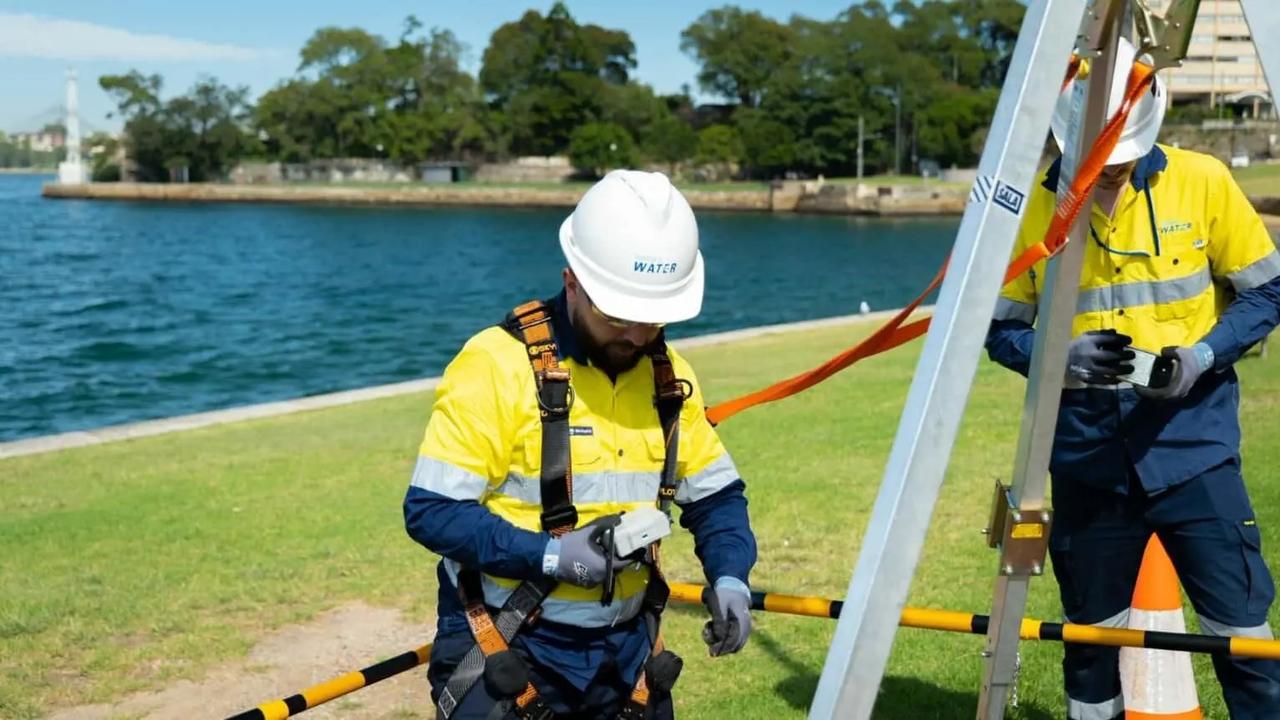
    A major payroll error at one of Australia’s biggest public utility providers has thrown hundreds of workers into financial uncertainty, triggering widespread anxiety and prompting the Australian Services Union (ASU) to take legal action before the Fair Work Commission.

    In early July, Sydney Water, a state-owned utility serving millions of residents in New South Wales, completed a long-planned transition of its employee payroll services to a new cloud-based platform called Dayforce. Even before the full rollout, union representatives had raised red flags about the platform’s ability to accommodate the complex scheduling needs of Sydney Water’s 24/7 operational workforce, warnings that company leadership reportedly ignored during the testing phase.

    The first pay cycle under the new system was scheduled for the previous Tuesday, when the utility’s fortnightly-paid staff were set to receive their wages. But almost immediately after processing, problems emerged: hundreds of workers found they had been underpaid, overpaid, paid days behind schedule, or received no wages at all. Additional issues quickly came to light, including incorrect superannuation contribution calculations and systemic glitches that prevented staff from logging approved rostered days off correctly.

    For workers already navigating the sky-high cost of living in Sydney, consistently ranked one of the most expensive cities in the world, the pay disruption has been devastating. One anonymous Sydney Water production worker described overwhelming collective anxiety across the workforce in an interview, noting that many employees live paycheck to paycheck and depend on timely, full pay to cover essential living costs. “We’re all freaking out with worry, there is mass-level anxiety,” the worker said, sharing that he had spoken to colleagues in tears at 2 a.m., terrified they would miss alimony payments, rent or mortgage deadlines, and even struggle to put food on the table for their children.

    Workers also reported that the company provided little to no training on how to navigate the new Dayforce app before launch, and that communication from senior leadership about the error was extremely limited, with no formal, full acknowledgment of the scope of the problem until the following Friday. The worker added that many staff feel no company leader has taken responsibility for the botched rollout.

    Angus McFarland, ASU’s New South Wales branch secretary, reiterated that the union had explicitly warned Sydney Water that the untested software could not handle the complexities of its shift-based, round-the-clock workforce. “Hundreds of workers at Sydney Water have been short-changed or received their pay late, because (Sydney Water) refused to acknowledge problems flagged during the testing of the new payroll system,” McFarland said. “After this payroll disaster, no one is confident the problems are resolved.”

    In response to the crisis, the ASU filed an official application with the Fair Work Commission, calling on the industrial relations body to order Sydney Water to either fully fix the flawed system immediately or revert to its legacy payroll platform until the transition can be completed without further disruption to workers’ pay.

    In a formal internal email to staff, a copy of which was obtained by NewsWire, Sydney Water publicly acknowledged that the transition “had not gone as we planned” and issued a direct apology for the added stress the error has caused. “This has created uncertainty about pay outcomes, and additional stress at a time when you rightly expect confidence and clarity,” the email read. While the company noted that it had already dedicated significant resources to addressing emerging issues, it also warned staff that fully resolving all problems would “take some time” as the team works to stabilize and optimize the Dayforce platform.

    In a subsequent statement to media, a Sydney Water spokesperson explained the company moved to replace its old payroll system because the legacy infrastructure no longer met its operational requirements. The spokesperson reaffirmed the company’s apology to affected workers, noting that “being paid correctly and on time is a fundamental expectation” and that the company’s top priority is resolving the issues as quickly as possible and supporting impacted employees. “As with many large-scale technology transitions, issues have emerged as the system has been embedded,” the spokesperson said. “We are aware of payroll processing issues affecting some employees and are working directly with those impacted to rectify them as a matter of urgency. We acknowledge the concerns raised by the ASU and are committed to working constructively with employees and unions.”

  • Ryan Fox wins the British Open with birdie on the final hole

    Ryan Fox wins the British Open with birdie on the final hole

    On a sun-battered, tension-filled Sunday at Royal Birkdale in Southport, England, 39-year-old New Zealand golfer Ryan Fox etched his name into golf history, surviving a chaotic back-nine rollercoaster to sink a career-defining 12-foot birdie putt on the 18th hole and claim his first-ever major championship at the British Open.

    The final round was defined by shifting momentum, with five different golfers holding a share of the lead at various stages. American contender Cameron Young sat atop the leaderboard for nearly two full hours without hitting a single stroke, having carded a blistering 6-under 64 in his morning round more than 120 minutes before the final groups teed off the back nine.

    Fox, the son of a former All Blacks rugby player, refused to let a late pair of bogeys derail his bid for the Claret Jug. He pulled even with Young at the top of the leaderboard with a birdie on the par-4 16th, then delivered a stunning closing birdie on Royal Birkdale’s toughest finishing hole to secure victory. The win made him just the third golfer from New Zealand to claim a major men’s championship.

    Finishing the round at 2-under par for a 68, Fox threw his powerful arms into the air in elation immediately after the ball dropped into the cup. Within moments, he was on a call with his family back home, telling them with a shaky, excited voice: “You asked me to bring a trophy home, and I am, aren’t I?” His name will now be added to the base of the iconic silver Claret Jug, joining New Zealand golf legend Bob Charles, who won the event at Royal Lytham & St Annes in 1963.

    For Young, the dramatic finish added another chapter of near-misses in major championship play. The American already finished one stroke shy of victory at the 2022 British Open at St Andrews, and he held a third-round lead at the Masters Tournament before Rory McIlroy overtook him on Sunday.

    Fifth-ranked Sam Burns, the 54-hole leader entering the final round, saw his chances fade over the closing holes. Burns had only planned to compete in the 2025 Open after his wife gave birth to the couple’s first daughter earlier than expected, forcing him to rearrange his tournament schedule at the last minute. He held a two-shot lead heading into the back nine but failed to record a single birdie over his final 12 holes, ultimately finishing two strokes off Fox’s winning pace.

    Defending champion Scottie Scheffler stayed in contention through most of the day, but two costly bad bounces sapped his momentum. A late lucky break gave him an unlikely birdie to stay in the hunt, but he failed to convert a birdie opportunity on the 18th, closing with a 67 to tie for fourth. He shared that spot with local favorite Tommy Fleetwood, the Southport-born golfer who fell back early in the round but sent the thousands of fans lining Royal Birkdale’s dunes into a frenzy with back-to-back closing birdies for a 68.

    In a surprising turn of events, fan-favorite contender Bryson DeChambeau was largely absent from the final-round drama. After losing his tee shot on the 11th hole, he carded a triple bogey that knocked him far down the leaderboard, and he did not record a birdie until he was well out of contention. A two-shot penalty assessed to him on Friday for improving his swing path never ended up impacting the final outcome, as he shot a 1-over 72 to tie for 14th place.

    Sunday’s victory marks Fox’s 10th career win across global professional golf tours. Prior to this major triumph, his most prestigious title came at the 2023 BMW PGA Championship at Wentworth. At 39 years old, Fox is the oldest golfer to win his first major championship since Henrik Stenson won the 2016 British Open at Royal Troon at age 40.

  • US launches strikes to ‘punish’ Iran after troops killed

    US launches strikes to ‘punish’ Iran after troops killed

    Fresh large-scale military clashes have erupted across the Middle East just one month after a preliminary ceasefire agreement was reached, plunging the region back into escalating conflict following the deaths of two United States service members in a cross-border attack.

    The cycle of violence reignited Friday, when US Central Command (CENTCOM) confirmed that two American troops were killed and a third remains missing during Iranian drone and ballistic missile strikes targeting US positions in Jordan. These fatalities push the total number of confirmed US military deaths to 16 since the United States and Israel launched open hostilities against Iranian targets on February 28.

    In response to the Jordan attack, the US launched its eighth consecutive night of airstrikes against Iranian positions on Sunday, with operations explicitly targeting units of the Islamic Revolutionary Guard Corps (IRGC) that Washington blames for the troop deaths. A US Central Command statement confirmed the strikes were ordered to “swiftly punish” IRGC forces for the attack on American personnel.

    Tensions escalated further on Sunday when Iran’s Atomic Energy Organization accused the US of launching an illegal attack on an under-construction nuclear power plant in southwestern Iran. The agency said American forces struck the Darkhovin facility with multiple projectiles, marking an unprecedented escalation that puts critical Iranian nuclear infrastructure in the crosshairs.

    Tehran moved quickly to retaliate for the US airstrikes, confirming it launched drone attacks against two US military bases stationed in Kuwait. Iranian military officials said the strikes hit an ammunition depot at Camp Udairi and damaged Patriot radar and air surveillance systems at Ali Al Salem Air Base. The retaliatory action came in response to more than a week of intensifying US-led strikes that Tehran says have hit civilian and military infrastructure across Iran, including airports, railway stations and critical bridges.

    Clashes spilled over into neighboring countries over the weekend. Air raid sirens sounded across Jordan, where Israeli and Jordanian defense forces intercepted an Iranian missile bound for the Red Sea port city of Aqaba. The US embassy in Amman had previously issued an urgent warning to American citizens of a specific, credible threat targeting Aqaba’s port and airport infrastructure. In Kuwait, the national electricity ministry reported a second consecutive day of attacks on a combined power and desalination plant, which sparked a large blaze at the facility. Bahrain’s military also announced it had intercepted and destroyed a wave of Iranian drones, accusing Tehran of deliberately targeting civilian population centers.

    The current round of hostilities is centered on the Strait of Hormuz, the strategic global chokepoint through which roughly 20% of the world’s oil supplies pass. Fighting first reignited after Iran launched attacks on commercial shipping transiting the waterway, before Tehran closed the strait entirely following the outbreak of open war. Control of the strait has become Tehran’s key leverage in negotiations with Washington, which reimposed a full blockade of Iranian ports earlier this week. On Sunday, IRGC forces announced they had intercepted two of four commercial ships that attempted to violate the closure of the strait, claiming the vessels were acting with American support to disrupt Iranian control of the waterway. The other two ships abandoned their transit attempt after the interception, per IRGC statements.

    The rising violence has officially killed the preliminary ceasefire deal signed just one month ago, which was designed to end the open hostilities between the two sides. International mediation efforts have so far failed to pull Tehran and Washington back from the brink of full-scale war.

    Iran’s top leadership has issued firm vows to escalate retaliation in the coming days if US strikes continue. Supreme Leader Mojtaba Khamenei, who assumed power after his father was killed in the opening US-Israeli strikes in February, pledged Saturday to deliver an “unforgettable lesson” to American forces. Senior military advisor Major General Mohsen Rezaei warned Tehran would resume full-scale offensive operations if US attacks continue, while top Iranian military commander Ali Abdollahi reiterated Sunday that any further American aggression will be met with a “decisive and devastating response.”

    Local populations across Gulf states are already bracing for prolonged conflict. Kuwaiti authorities confirmed Iranian strikes have hit critical civilian infrastructure, and residents have begun stockpiling essential goods amid fears of disrupted supply chains. “The demand for water and canned goods has increased since this morning amid fears that services or supply chains will be affected,” 61-year-old Kuwait City resident Hassan Rayan told reporters.

    As of Sunday, Iranian health officials confirmed 50 civilians and combatants have been killed and more than 500 injured since the latest round of fighting broke out, with casualty numbers expected to rise as airstrikes continue across the region.

  • Grandmother, 82, wins law change so she can enjoy Happy Hour at care home

    Grandmother, 82, wins law change so she can enjoy Happy Hour at care home

    For 82-year-old grandmother-of-five Anita Le Brun, a crisp glass of pinot grigio at 5 p.m. with family and friends at the lakehouse is more than a simple drink—it is a cherished lifelong tradition. When she moved into Minnesota’s Amira Choice Champlin assisted living facility, that tradition nearly came to an abrupt end due to a little-noticed state regulation that blocked care facilities from serving alcohol to residents without an official alcohol license.

    The discovery of the ban came last year, after local regulators cited Amira Choice for breaking rules when it served champagne to mark a facility renovation in April 2025. While residents were already allowed to keep and consume alcohol in their private rooms, and could bring their own drinks to community events, the facility could not serve alcohol from its own stock without a license. For senior care providers, the cost and bureaucratic requirements of obtaining such a license were prohibitively expensive and burdensome.

    A well-loved social butterfly among her fellow residents, Le Brun stepped forward to become the public face of a campaign to rewrite the outdated state rule. Over months of organizing, she prepared her testimony by practicing her remarks in front of a mirror and running through her talking points with her daughters over the phone. She ultimately testified twice before Minnesota’s state legislature, arguing that entering assisted living should not strip seniors of the personal freedoms they enjoyed their entire lives.

    “Just because we are older and live in assisted living doesn’t mean that we should have fewer freedoms than anyone else,” Le Brun told the state Senate committee. “My friends and I love happy hour, just like many of you do. Over a shared drink, we get to reminisce about parts of our life, military service, raising a family, the loss of a friend, and celebrating the golden phase of our lives.”

    This week, that campaign crossed the finish line: Governor Tim Walz traveled to Le Brun’s assisted living facility for a ceremonial bill signing, where the pair shared a celebratory toast to the new law, widely nicknamed the “Grandparents’ Happy Hour” bill. The legislation, which went into effect this month, eliminates the license requirement for nursing homes and assisted living facilities across Minnesota that want to serve alcohol to residents and their guests at special events and regular social gatherings. Facilities only need to notify the state in advance of their plans, and the facility already limits residents to two drinks per event to mitigate known fall risks for older adults.

    “Growing older shouldn’t mean giving up the traditions and freedoms you’ve enjoyed your whole life,” Governor Walz said at the signing ceremony. “This law cuts unnecessary red tape so senior living communities can spend less time worrying about paperwork and more time creating opportunities for residents to celebrate birthdays, anniversaries, Happy Hours, and everyday moments together.”

    The movement for regulatory change has drawn national attention from senior advocates and care providers. Just last month, 96-year-old TikTok star Lillian Droniak—better known to her 15.1 million followers as “Grandma Droniak”—made headlines after she shared a warning letter from her Connecticut assisted living facility that banned her from hosting room parties where she served alcohol to other residents. According to her grandson Kevin Droniak, Lillian praised the new Minnesota rule, saying simply, “Let them drink!”

    Alcohol regulations for senior care facilities are set on a state-by-state basis across the U.S., and many facilities already host regular happy hours to encourage social connection among residents. Erin Huppert of LeadingAge Minnesota, the non-profit advocacy group that supported Le Brun’s campaign, said the change is about more than cutting administrative costs—it is about respecting autonomy for seniors. “This is their home,” Huppert said. “They should be allowed to take part in legal consumption of alcohol, just like they could if they lived in a single-family home in the community of their choice.”

    Huppert added that senior care providers across Minnesota are already moving to take advantage of the new rule, and at Amira Choice, residents and staff are already planning a large celebratory party next month to mark the change. Facility spokesperson Sara Luehmann called Le Brun a “resident superstar” for her months of work to make the new law a reality, and Le Brun says she is proud to have delivered a win that all her neighbors can enjoy. “I’m very proud, because everybody’s so excited about it,” Le Brun said, noting that fellow residents long viewed the old restriction as “ridiculous.”