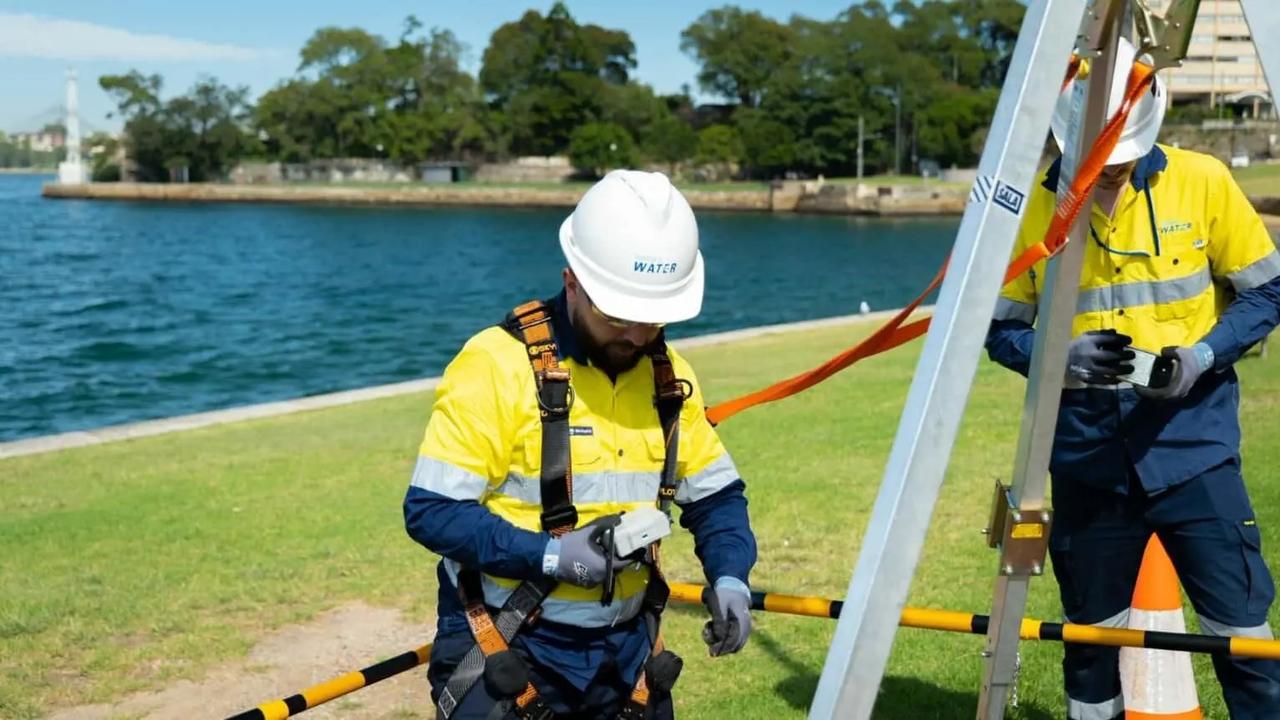
A major payroll error at one of Australia’s biggest public utility providers has thrown hundreds of workers into financial uncertainty, triggering widespread anxiety and prompting the Australian Services Union (ASU) to take legal action before the Fair Work Commission.
In early July, Sydney Water, a state-owned utility serving millions of residents in New South Wales, completed a long-planned transition of its employee payroll services to a new cloud-based platform called Dayforce. Even before the full rollout, union representatives had raised red flags about the platform’s ability to accommodate the complex scheduling needs of Sydney Water’s 24/7 operational workforce, warnings that company leadership reportedly ignored during the testing phase.
The first pay cycle under the new system was scheduled for the previous Tuesday, when the utility’s fortnightly-paid staff were set to receive their wages. But almost immediately after processing, problems emerged: hundreds of workers found they had been underpaid, overpaid, paid days behind schedule, or received no wages at all. Additional issues quickly came to light, including incorrect superannuation contribution calculations and systemic glitches that prevented staff from logging approved rostered days off correctly.
For workers already navigating the sky-high cost of living in Sydney, consistently ranked one of the most expensive cities in the world, the pay disruption has been devastating. One anonymous Sydney Water production worker described overwhelming collective anxiety across the workforce in an interview, noting that many employees live paycheck to paycheck and depend on timely, full pay to cover essential living costs. “We’re all freaking out with worry, there is mass-level anxiety,” the worker said, sharing that he had spoken to colleagues in tears at 2 a.m., terrified they would miss alimony payments, rent or mortgage deadlines, and even struggle to put food on the table for their children.
Workers also reported that the company provided little to no training on how to navigate the new Dayforce app before launch, and that communication from senior leadership about the error was extremely limited, with no formal, full acknowledgment of the scope of the problem until the following Friday. The worker added that many staff feel no company leader has taken responsibility for the botched rollout.
Angus McFarland, ASU’s New South Wales branch secretary, reiterated that the union had explicitly warned Sydney Water that the untested software could not handle the complexities of its shift-based, round-the-clock workforce. “Hundreds of workers at Sydney Water have been short-changed or received their pay late, because (Sydney Water) refused to acknowledge problems flagged during the testing of the new payroll system,” McFarland said. “After this payroll disaster, no one is confident the problems are resolved.”
In response to the crisis, the ASU filed an official application with the Fair Work Commission, calling on the industrial relations body to order Sydney Water to either fully fix the flawed system immediately or revert to its legacy payroll platform until the transition can be completed without further disruption to workers’ pay.
In a formal internal email to staff, a copy of which was obtained by NewsWire, Sydney Water publicly acknowledged that the transition “had not gone as we planned” and issued a direct apology for the added stress the error has caused. “This has created uncertainty about pay outcomes, and additional stress at a time when you rightly expect confidence and clarity,” the email read. While the company noted that it had already dedicated significant resources to addressing emerging issues, it also warned staff that fully resolving all problems would “take some time” as the team works to stabilize and optimize the Dayforce platform.
In a subsequent statement to media, a Sydney Water spokesperson explained the company moved to replace its old payroll system because the legacy infrastructure no longer met its operational requirements. The spokesperson reaffirmed the company’s apology to affected workers, noting that “being paid correctly and on time is a fundamental expectation” and that the company’s top priority is resolving the issues as quickly as possible and supporting impacted employees. “As with many large-scale technology transitions, issues have emerged as the system has been embedded,” the spokesperson said. “We are aware of payroll processing issues affecting some employees and are working directly with those impacted to rectify them as a matter of urgency. We acknowledge the concerns raised by the ASU and are committed to working constructively with employees and unions.”