博客

  • New Zealand beats West Indies in a 1-wicket thriller to clinch ODI cricket series

    New Zealand beats West Indies in a 1-wicket thriller to clinch ODI cricket series

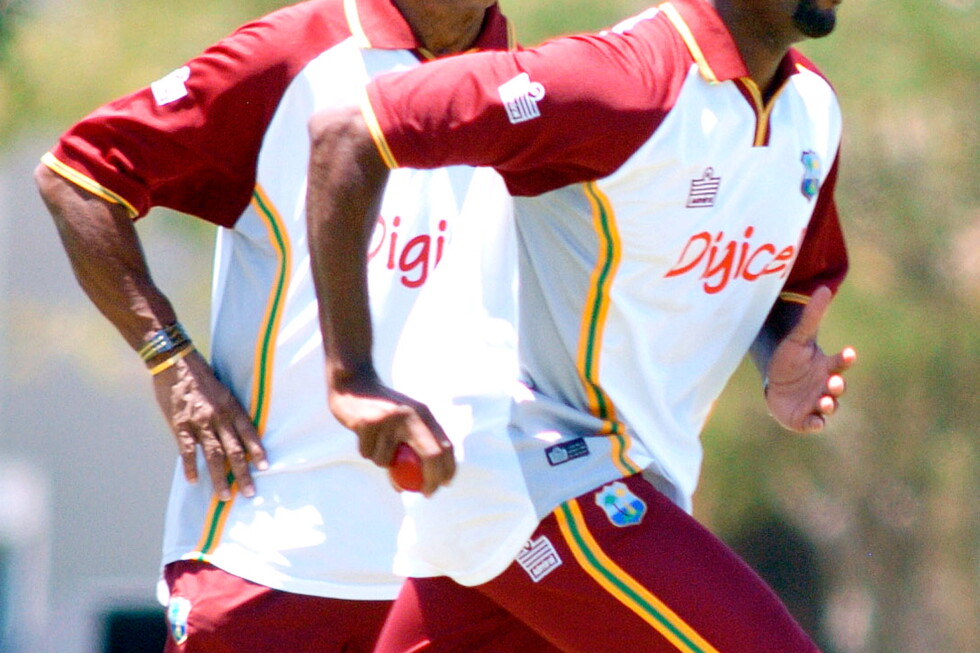
    BRIDGETOWN, Barbados – A dramatic final-over finish at Kensington Oval on Sunday delivered New Zealand a heart-stopping one-wicket victory over the West Indies in the fourth ODI of their five-match series, locking in an unassailable 3-1 series lead for the tourists ahead of Tuesday’s final fixture.

    The match was played under the shadow of mourning, just days after the passing of West Indian cricket icon Garry Sobers at the age of 89 in his hometown Bridgetown. Widely regarded as the greatest all-rounder in the history of international cricket – with more than 8,000 Test runs and 200 Test wickets to his name – Sobers cut his teeth at Kensington Oval, where the venue’s main pavilion bears his name. To honor his legacy, both teams wore black armbands, official flags were flown at half-mast across the ground, two seats were left vacant in the Sobers Pavilion, and a minute’s silence was held before the first ball. West Indies had entered the match with a fierce determination to seal a series-leveling win as a fitting tribute to their legendary compatriot.

    Play opened with New Zealand winning the toss and electing to bowl first, extending a curious trend that has seen the team bowling first claim victory in all four matches of the series so far. Batting conditions proved challenging from the first over, and West Indies collapsed to 81-6 before a resilient 81-run seventh-wicket partnership between wicketkeeper Amir Jangoo and spinner Gudakesh Motie dragged the hosts to a modest final total of 188 all out. Jangoo notched his first half-century of the series with a 71-ball 51, while Motie contributed a valuable 41 to the innings. For New Zealand, young pace bowler Matthew Fisher enjoyed a dream ODI debut with the ball, claiming 3 wickets for 40 runs including the prized scalp of West Indies captain Shai Hope, who fell to a searing cross-seamer that jagged sharply back into the top of off stump.

    New Zealand’s chase got off to a disastrous start, with the tourists slipping to 6-2 inside the first six overs. A steady 65-run fifth-wicket stand between batsman Mark Chapman and all-rounder Michael Bracewell pulled New Zealand back into control, with Chapman hitting a fluent 80 to put the visitors on the brink of victory. When Chapman was dismissed, New Zealand stood at 142-5, requiring just 47 more runs with almost 25 overs remaining – a target that looked well within their reach for a comfortable win.

    What followed was a breathtaking collapse that put West Indies on the cusp of a fairytale tribute win. A short rain break disrupted New Zealand’s rhythm, and Motie ripped through the tourists’ lower order, claiming Bracewell with his first delivery after the restart before quickly dismissing Nathan Smith, Jacob Duffy and Matthew Fisher. Motie finished the innings with outstanding figures of 5 wickets for 47 runs, while fast bowler Alzarri Joseph kept the pressure on with economical line and length that yielded just 23 runs from his allocation.

    New Zealand’s final pair of captain Mitchell Santner and No. 11 batter Jayden Lennox entered the match with the Black Caps needing just 8 runs to win. Santner inched the team within three runs of victory before a dropped catch off his own batting left the door open for a dramatic finish. When Santner left Lennox to face a full over from fast bowler Vitel Lawes, the last batter survived two separate reviews for caught behind and leg before wicket, turning aside confident West Indies appeals to stay at the crease.

    Lennox’s survival allowed Santner to hit the winning run from the very first ball of the 45th over, finishing the innings unbeaten on 34 and sealing the nervy win with 35 overs still to spare. Speaking after the match, Santner described the closing stages as chaotic.

    “It was pretty chaotic, especially the ending,” Santner said. “You try to chip off the total as much as you can. Even partnerships of 10 or 15 at that stage was going a long way. It probably shouldn’t have got that close but it was nice to get over the line.”

    West Indies captain Shai Hope praised his team’s fighting performance despite the narrow loss, noting that the tense match was a treat for neutral fans. “It’s been a really good cricket game for the onlookers,” Hope said. “If you watch a game like this as a neutral you’re going to be really happy to see play like this. It was one that could have gone to either side. I must commend our guys for the fight they showed.”

    After the match, New Zealand hold an unassailable 3-1 lead in the five-match series, having lost the opening fixture by seven wickets before claiming wins by five wickets in Game 2, six wickets in Game 3, and Sunday’s one-wicket thriller. The fifth and final match of the series will be held at Kensington Oval in Bridgetown this Tuesday.
  • Messi denied dream farewell as abject Argentina lose World Cup final

    Messi denied dream farewell as abject Argentina lose World Cup final

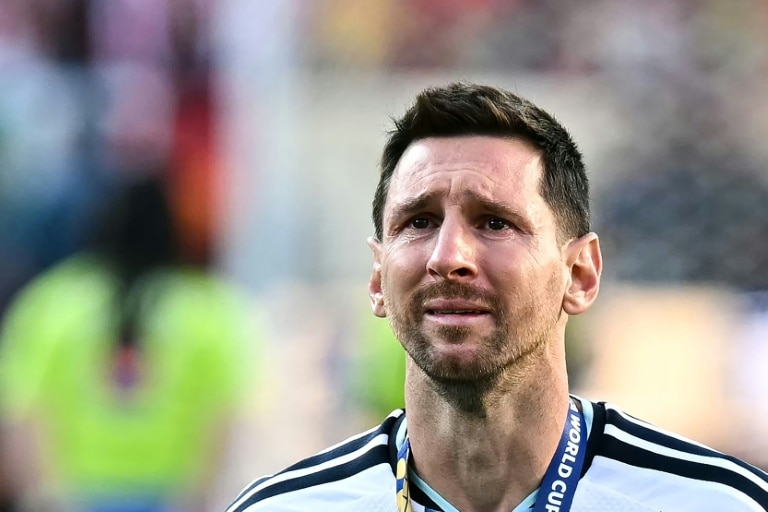
    For soccer icon Lionel Messi, Sunday’s 2026 World Cup final was supposed to be the perfect coda to a legendary career: a second consecutive world title with Argentina that would silence any remaining debate over his status as the greatest men’s soccer player of all time. Instead, the 39-year-old left the pitch at MetLife Stadium in tears after a lopsided 1-0 extra-time defeat to Spain, bringing an underwhelming end to what had been billed as his final World Cup campaign.

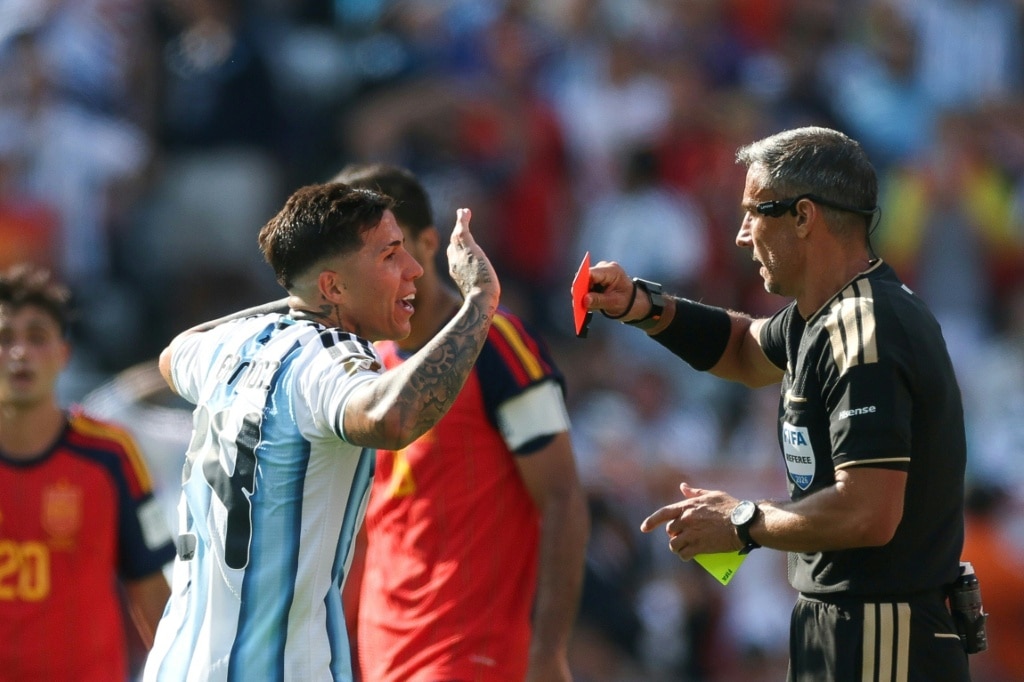
    Messi carried Argentina through the tournament, dragging the defending champions back to the final with a standout performance that included eight tournament goals, headlined by a dramatic late comeback against England in the semi-finals that included two assists from the captain. But from kickoff, the 2026 final never went Argentina’s way. Things turned for the worse when star midfielder Enzo Fernandez was shown a red card in first-half stoppage time, leaving the South American side down to 10 men for the entirety of the second half and extra time.

    The undermanned Argentine side failed to mount any meaningful offensive pressure against a dominant Spanish side, struggling to string together coherent attacks and relying heavily on cynical fouling to disrupt Spain’s rhythm. The match stayed scoreless until the 106th minute, when Ferran Torres broke the deadlock to put Spain ahead, a lead they would not relinquish. For Messi, the match was particularly quiet: he recorded just 54 total touches on the ball, nearly half of which came in extra time, and never came close to scoring the goal that would have tied Kylian Mbappe’s all-time men’s World Cup scoring record of 22 goals.

    Down a player, coach Lionel Scaloni opted to leave Messi on the pitch as a lone striker rather than bring on fresh-legged forward Lautaro Martinez, a decision that left many questioning whether the aging captain ultimately became a liability for his already stretched team. The defeat means Argentina failed to become the first men’s national team to defend a World Cup title since Brazil in 1962, a milestone that would have capped Messi’s international legacy perfectly.

    Even in defeat, the 2026 final gave Messi a historic milestone to add to his collection. His appearance in Sunday’s match marked his third World Cup final appearance, tying the all-time record held by Brazilian great Cafu. Only Pele has won three World Cup titles, though he did not feature in the 1962 final due to injury, while Diego Maradona and Messi have both appeared in two winning and two losing finals. Critics of Messi’s GOAT status will likely point to this latest defeat, his second World Cup final loss following a 1-1 defeat to Germany in 2014.

    A full-circle subtext hung over the match, as Sunday’s final was hosted at the same MetLife Stadium where a heartbroken Messi announced his first retirement from international soccer back in 2016. That same year, after losing a third major final with Argentina (a Copa America Centenario penalty shootout defeat to Chile that ended with Messi missing a decisive spot-kick), he told reporters “For me the national team is over.” What followed was one of the most remarkable late-career revivals in sports history: Messi led Argentina to back-to-back Copa America titles in 2021 and 2024, sandwiched around the iconic 2022 World Cup victory in Qatar that cemented his international legacy.

    When the 2026 North American World Cup was announced, the tournament was framed as a victory lap for Messi, who opened his campaign with a hat-trick against Algeria and remained consistent in front of goal all tournament. He retires from World Cup play with a record 34 matches across six shared-record World Cup tournaments, and more than 200 senior caps for Argentina. With the 2030 World Cup set to take place when Messi will be in his early 40s, Sunday’s final is almost certainly the last World Cup appearance of his career. While he remains under contract with MLS side Inter Miami through 2028, leaving the door open for continued international play, this underwhelming defeat is widely seen as the quiet end to one of the greatest international careers in soccer history. It was a glorious run, but for Messi and Argentina, Sunday’s final was ultimately a step too far.

  • JD Vance announces birth of baby boy with wife Usha

    JD Vance announces birth of baby boy with wife Usha

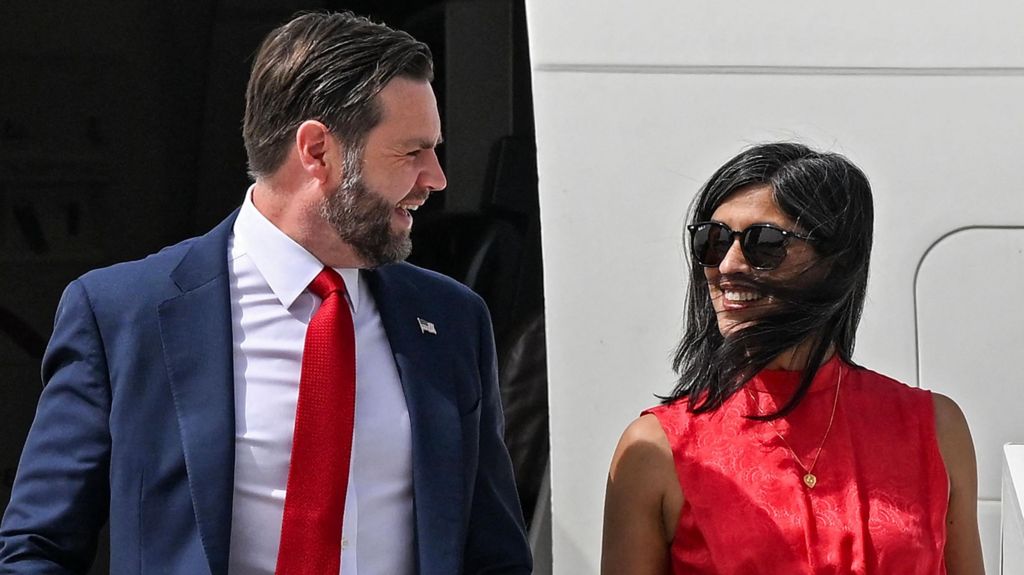
    In a joyful personal announcement shared via social media, sitting United States Vice President JD Vance has revealed that he and his wife Usha Vance have welcomed their fourth child, a baby boy named Alec Neel Vance. According to Vance’s official statement, the newborn arrived on Sunday morning, and both mother and child are currently in good health and high spirits.

    “Usha and the baby are happy and healthy, and our kids are overjoyed to meet their little brother,” Vance wrote in his post. He also extended a special note of gratitude to the military medical team and support staff at Washington D.C.’s Walter Reed Medical Center, who provided care throughout the birth process.

    News agency the Associated Press notes this occasion carries unique historical significance: Alec’s birth marks the first time a sitting vice president has welcomed a new child while in office in more than 150 years, a milestone that sets Vance’s family apart in modern U.S. political history.

    Alec joins the Vance family’s three older children: 9-year-old Ewan, 6-year-old Vivek, and 4-year-old Mirabel. The couple first crossed paths in 2010 while they were both students at Yale Law School, where they bonded over participation in a discussion group focused on social shifts in the United States.

    Usha Vance, born Usha Chilukuri, has a unique multicultural background: she was raised in working-class suburban San Diego, California, to parents who immigrated to the U.S. from Andhra Pradesh, India. Her father works as a mechanical engineer, while her mother is a molecular biologist. Last year, the entire Vance family traveled to India on an official visit, where they were photographed publicly as a family of five ahead of Alec’s arrival.

    Beyond this personal milestone, the birth aligns with a key policy priority Vance has championed throughout his time in the Trump administration. The vice president has emerged as one of the most prominent voices in the administration advocating for policy measures to encourage higher birth rates across the United States, framing falling fertility rates as a critical long-term challenge for the country’s economic and social future.

  • Spain down Argentina to win World Cup, shatter Messi dream

    Spain down Argentina to win World Cup, shatter Messi dream

    In a tense, physically fraught World Cup final at East Rutherford’s MetLife Stadium, Ferran Torres’ 106th-minute strike delivered Spain a historic 1-0 extra-time victory over defending champions Argentina, crushing Lionel Messi’s long-awaited hope of a second World Cup title in what is widely expected to be his final appearance on the sport’s biggest global stage.

    A capacity crowd of 80,663 spectators, including former U.S. President Donald Trump, packed into the venue to watch the 39-year-old Argentine maestro attempt to cap his decorated career with one last major triumph. But Spain seized control of the match from the opening minutes, leaving Messi largely ineffective against a well-drilled Spanish side, while Argentina’s campaign was marred by repeated rough challenges and disciplinary issues.

    The game was marked by persistent niggly fouls from the South American side from kickoff. As early as the 15th minute, Alexis Mac Allinger caught Spain’s Dani Olmo on the ankle with a high studs-up challenge that only earned a free kick, no yellow card from Slovenian referee Slavko Vincic. Minutes later, Spain’s Alex Baena escaped sanction after catching Messi with an elbow to the back. Nicolas Tagliafico also avoided a caution for a clumsy, raking challenge that left Spain’s teen star Lamine Yamal with a calf injury, before Lisandro Martinez eventually picked up a yellow card for a cynical foul on Mikel Oyarzabal. The Arsenal defender was forced off shortly after with an apparent injury, replaced by veteran Nicolas Otamendi.

    The first half remained goalless, with Spain dominating possession and probing for openings but failing to convert their chances. A controversial 27-minute extended half-time show featuring global music superstars Madonna, Shakira and Justin Bieber did nothing to disrupt Spain’s momentum. The second half saw Spain ramp up the pressure, leaving Argentina pinned deep in their own half in full defensive siege mode.

    Spain manager Luis de la Fuente turned to his bench to inject fresh attacking energy, bringing on Pedri and Ferran Torres for Fabian Ruiz and Oyarzabal. The substitutions immediately opened up more chances: Yamal’s clipped cross found Torres, whose downward header was pushed away by Argentina goalkeeper Emi Martinez; long-range strikes from Pedri and Pau Cubarsi forced awkward saves from Martinez, who somehow kept Argentina level through regulation time. Later substitutions Nico Williams and Mikel Merino added even more attacking thrust, but Argentina held on to force extra time, despite Enzo Fernandez picking up a yellow card for dissent in the 82nd minute. In the final moments of regulation, Fernandez was sent off for a brutal challenge on Cubarsi in stoppage time, leaving Argentina to play the entirety of extra time with 10 men.

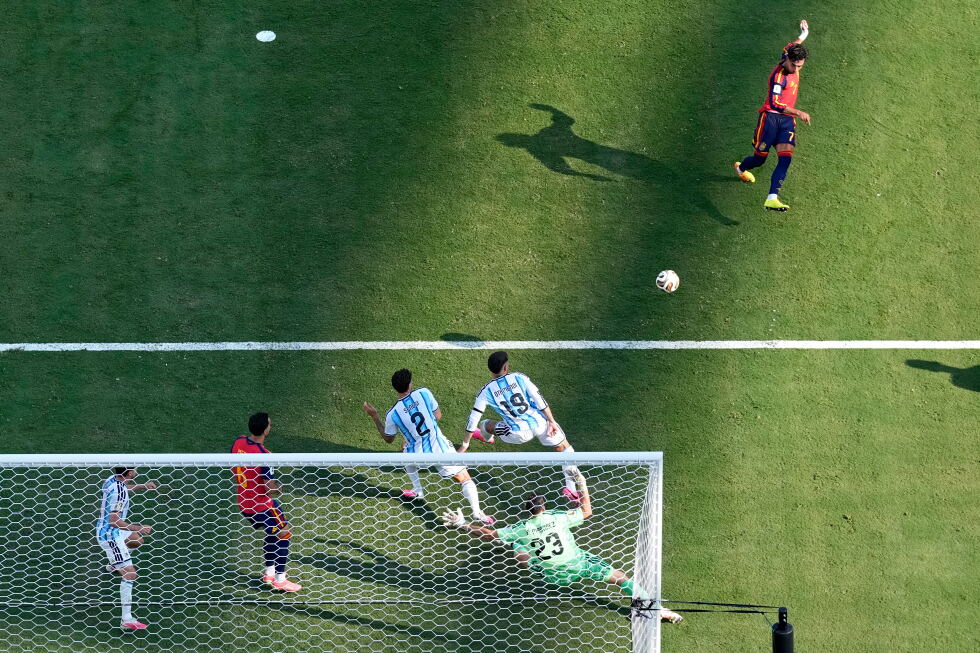
    Spain’s dominance continued in extra time. Williams saw a glancing header turned away by a brilliant one-handed save from Martinez, and minutes later he slid a low finish into the back of the net only for the goal to be ruled out for a marginal foul on Otamendi. The Spanish side did not let the controversial call derail them, however. A lofted cross from Pedro Porro to the back post found Williams, who nodded the ball into the path of Torres. The Barcelona striker crashed home a thumping finish to break the deadlock, sealing Spain’s second World Cup title following their maiden triumph in 2010.

    Argentina launched one desperate late attack to force penalties, but Spain held firm to secure the win. Speaking after the match, Torres deflected praise for the winning goal, emphasizing the achievement belonged to the entire nation. “Ultimately, the goal belongs to 47 million people — not just me or the 26 players,” the match-winner said. “At the end of the day, all finals are tough; when you’re up against Messi, there’s a certain nervousness, but we always believed in our football and in ourselves.”

    For Argentina, the defeat brings an end to their title defense and likely marks the close of Messi’s iconic World Cup career, leaving the soccer legend without the fairytale farewell he and millions of fans around the world had hoped for.

  • How Ferran Torres scored the World Cup-winning goal for Spain to beat Argentina

    How Ferran Torres scored the World Cup-winning goal for Spain to beat Argentina

    In a dramatic, tension-filled World Cup final decided in extra time at East Rutherford, New Jersey, Ferran Torres delivered the championship-winning goal for Spain, capping off a team-built attacking sequence that combined contributions from both starting stars and impact substitutes to down the defending champions Argentina 1-0.

    The game-defining play unfolded mere moments after the second half of extra time kicked off, with Argentina already facing an uphill battle after midfielder Enzo Fernandez received a red card in the 113th minute of regulation that left the side down to 10 men for the closing stages of the match.

    Teenage standout Lamine Yamal, who had already created two of Spain’s clearest scoring opportunities earlier in the contest, collected a well-placed pass from Martín Zubimendi on the right wing. Zubimendi had received the ball after a calm build-up from the Spanish backline, where Marc Cucurella shifted possession to Eric García before moving it upfield to the midfield creator. Yamal quickly slid a pass to fullback Pedro Porro, who had recorded more touches than nearly any other player on the pitch throughout the final.

    Porro’s driven right-footed cross into the 18-yard box looked set to drift out of bounds over the far goal line, but second-half substitute Nico Williams — who entered the match in the 75th minute — rose to meet the ball and nod it neatly back into the path of Torres. Torres, another substitute brought on just after the 60th minute, struck a perfect first-time left-footed finish that beat two covering Argentine defenders and goalkeeper Emiliano Martínez to put Spain ahead 1-0 in the 106th minute. At the time of the goal, Spain had outshot Argentina 20 to zero, a staggering dominance of possession and attacking threat throughout the match.

    Reflecting on the historic moment after the final whistle, Torres, who plays his club football for Barcelona, emphasized the unity of the entire nation behind the squad. “I think at the end of the day, it was a goal scored by 47 million people,” Torres said, referencing the approximate population of Spain. “I feel very happy. I was heavily criticized during the World Cup, but I think it was written in destiny. I always trusted I would get that chance to contribute, and God gives opportunities to those who believe and deserve them.”

    The Barcelona forward celebrated wildly, tearing down the corner flag near the stands as his jubilant teammates swarmed him to celebrate the go-ahead goal. Torres came close to doubling Spain’s lead just minutes later, but his second effort was ruled out for offside. Over the remaining minutes of extra time, Argentina threw everything into attacking from set pieces, earning multiple corner opportunities that the Spanish defense successfully weathered to hold onto their narrow lead.

    When the final whistle blew, Spain confirmed its second World Cup title, ending the defending champion Argentina’s tournament run and etching a new chapter in Spanish football history.

  • In pictures: Joyous fans gather across the US and Canada to watch World Cup final

    In pictures: Joyous fans gather across the US and Canada to watch World Cup final

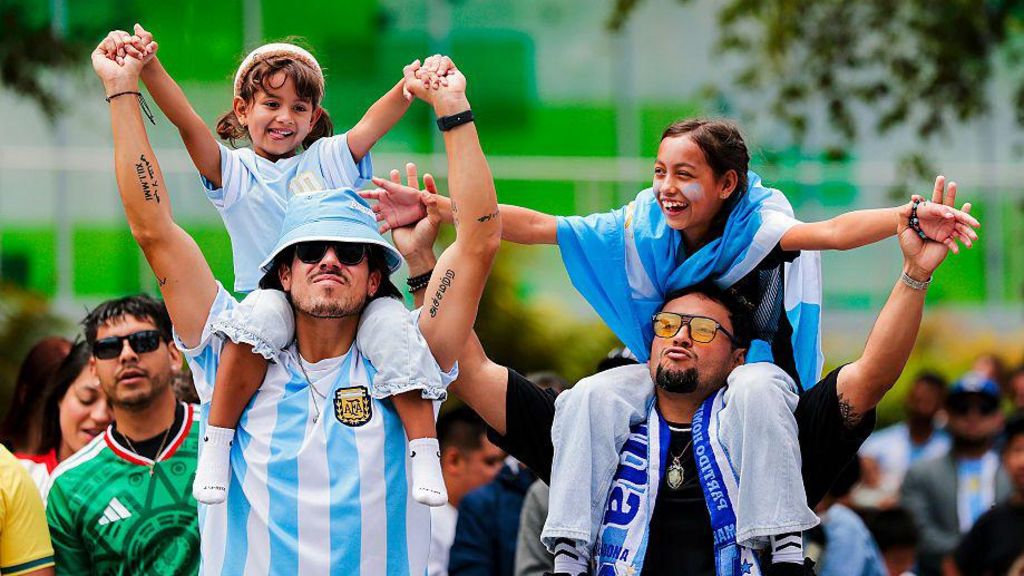
    The 2026 FIFA World Cup, co-hosted by the United States, Canada and Mexico, reached its thrilling climax on Saturday with a highly anticipated final showdown between Spain and Argentina. Though none of the three host nations advanced to the tournament’s final match, football passion did not dim across the region – thousands of fans from both competing camps gathered in public viewing spaces, fan zones and private events from coast to coast to cheer on their teams.

  • Spain beat Argentina to win World Cup

    Spain beat Argentina to win World Cup

    One of the most tightly contested World Cup finals in recent memory delivered a historic result Sunday, as Ferran Torres’ second extra-time goal gave Spain a hard-fought 1-0 victory over 10-player Argentina, securing La Roja’s second ever World Cup title at MetLife Stadium.

    As European champions heading into the showpiece match, Spain controlled large swathes of play for nearly 120 minutes, dictating tempo through their signature short-passing possession style. But they ran into a brick wall of veteran, streetwise defending from the reigning champions Argentina, who packed their defensive block and repeatedly frustrated Spain’s attacking advances for most of regulation.

    Standing out as Argentina’s unsung hero through 90 minutes was goalkeeper Emiliano Martinez, who pulled off a string of spectacular reflex saves to keep Spain off the scoreboard and preserve a scoreless deadlock heading into stoppage time. That balance of the match shifted dramatically, however, when Argentina midfielder Enzo Fernandez was shown a red card in second-half stoppage time, sent off after picking up a second yellow card for a reckless sliding tackle on Spanish defender Pau Cubarsi.

    Down a player for the extra 30 minutes, Argentina dropped even deeper into a defensive formation, clinging to the goalless draw to force a penalty shootout. Spain continued to probe the backline, probing for gaps in the tired Argentine defense, and finally found the breakthrough they had chased for nearly two hours. Early in the second half of extra time, Nico Williams delivered a perfectly weighted knock-back into the path of substitute Ferran Torres, who slotted a crisp, clinical finish beyond Martinez’s reach to open the scoring.

    The result capped off a dominant defensive campaign for Spain led by manager Luis de la Fuente: across seven matches en route to the title, La Roja conceded only a single goal, using their fluid, high-possession system to smother opposing attacks and grind out results. For Argentina, the loss ended a dramatic knockout-stage run that had captured global attention: Lionel Messi’s side clawed their way back from a near-elimination against Egypt to reach the semi-finals, then fought back from an early one-goal deficit to defeat England and book their spot in the final.

  • India’s Cockroach protesters set to march to parliament

    India’s Cockroach protesters set to march to parliament

    A mass protest movement demanding sweeping education reforms in India is moving forward with a scheduled march to the country’s parliament on Monday, after authorities forcibly removed a prominent hunger-striking activist from the demonstration site over the weekend, spurring escalating tensions between protesters and the ruling government.

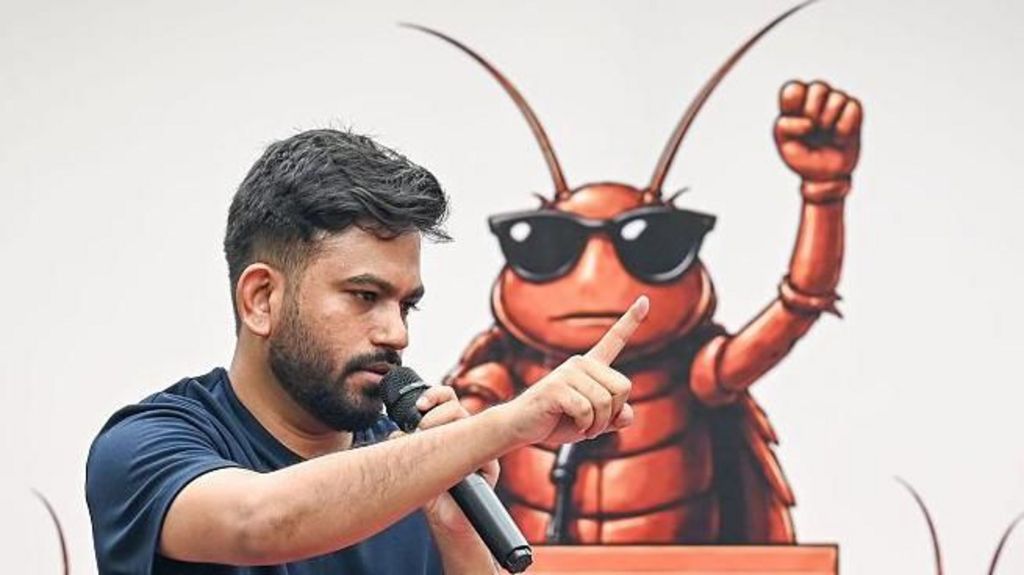
    The movement is led by the Cockroach Janta Party (CJP), a grassroots group that first launched as a satirical online movement in May to push back against widespread exam paper leaks and systemic irregularities in India’s education system. Founded by Abhijeet Dipke, the group has rapidly gained a massive national following, with thousands of protesters – who refer to themselves as “cockroaches” – having maintained a continuous month-long sit-in at Delhi’s historic Jantar Mantar observatory.

    The demonstration gained national attention after well-known activist and educator Sonam Wangchuk joined the cause, launching a 21-day hunger strike in solidarity with the CJP. Through the scorching Delhi summer heat, Wangchuk sustained himself only on salt and water, losing more than 9 kilograms and suffering severe physical pain. Despite his declining health, he vowed to join the planned parliament march, even joking to supporters that if he died during the fast, his ghost would still join the protest.

    That vow was cut short on Saturday morning, when dozens of local police and paramilitary forces raided Wangchuk’s stage at the protest site. Officers covered the activist with bedsheets to shield the removal from public view, pushed back crowd members who attempted to intervene, and transported him via ambulance to Delhi’s government-run Safdarjung Hospital for medical care. Wangchuk has refused to end his hunger strike even in hospital care, according to his wife Gitanjali Angmo. In an update Sunday, Angmo outlined a clear condition for ending the fast: sitting political leaders must meet with Wangchuk at the hospital and commit to making education accountability a top priority during the upcoming parliamentary session.

    The forced removal did not derail the protest, however. CJP founder Dipke reaffirmed Sunday that the planned march to parliament will proceed as scheduled on July 20, and launched an indefinite hunger strike of his own Saturday to replace Wangchuk at the protest site. “If they think that taking Wangchuk away will end this movement, they are mistaken,” Dipke said in a statement. “We will remain here, and will march to parliament on 20 July.” Thousands of people from across the country have already confirmed they will join the march in solidarity with the reform movement.

    The CJP’s protests were sparked by a string of high-profile exam cancellations tied to confirmed paper leaks. In May, a critical national medical entrance exam – taken by nearly 2.28 million aspirants – was scrapped after a leak was confirmed. A retest was held June 21, but according to family reports, more than 20 affected candidates have died by suicide in the wake of the disruption to their academic and career plans.

    Protesters initially put forward two core demands: the cancellation of compromised exams and the resignation of India’s Education Minister Dharmendra Pradhan, who they argue must take moral accountability for the systemic failures that allowed the leaks to occur. Pradhan has previously dismissed the CJP and its supporters as “the B-team of disruptive elements,” and Prime Minister Narendra Modi’s central government has refused to open any dialogue with the movement. Following Saturday’s forced removal of Wangchuk, the CJP escalated its demands, now calling for Prime Minister Modi’s resignation. Dipke called the government’s action a “despicable act” that merits the prime minister stepping down.

    Opposition political parties have widely condemned the government’s handling of the protest, describing the forced removal of Wangchuk as “shocking coercive state violence” and “an assault on democracy.” In recent days, growing pressure from opposition leaders and civil society groups has pushed the government to engage with the protest, with many public figures visiting the Jantar Mantar sit-in to affirm that the protesters’ demands for education reform are legitimate and require a government response.

    Heavy security deployments, including scores of police and paramilitary personnel, are already in place across central Delhi ahead of Monday’s planned march, as the country braces for a major showdown between the reform movement and the ruling government.

  • Watch: Torrential rain hits New York and New Jersey triggering flash floods

    Watch: Torrential rain hits New York and New Jersey triggering flash floods

    A catastrophic extreme weather event has struck the densely populated northeastern United States, as record-breaking torrential rainstorms swept through New York and New Jersey this week, triggering immediate and dangerous flash flooding that upended daily life for millions of residents.

    Footage captured from hard-hit areas shows raging floodwaters surging through the region’s iconic urban infrastructure, with cascades of murky water pouring directly into underground subway stations that serve as the lifeline of New York City’s transit system. Above ground, major city streets have been transformed into rushing, shallow rivers, forcing pedestrians and motorists alike to abandon their travel plans.

    Visual records from the scene show residents wading through waist-deep floodwaters in heavily impacted neighborhoods, as local emergency management teams have deployed rapid response units to evacuate people trapped in low-lying areas and stranded vehicles. The sudden onset of the flash floods has caught many communities off guard, with weather officials having issued urgent warnings for residents to avoid non-essential travel and move to higher ground where possible.

    The extreme rainfall, which climate scientists link to a growing pattern of more intense precipitation events in the Northeast caused by rising global temperatures, has already disrupted transit services, closed dozens of roads, and raised concerns about infrastructure damage across the two states.

  • Madonna, Shakira, Bieber and The Muppets light up World Cup half-time show

    Madonna, Shakira, Bieber and The Muppets light up World Cup half-time show

    For the first time in the history of soccer’s biggest tournament, the 2026 World Cup final between Spain and Argentina featured a blockbuster Super Bowl-style halftime show on Sunday, bringing together A-list music superstars, soccer legends, screen actors and beloved children’s entertainment characters to deliver a 12-minute spectacle focused on charitable action. Curated by Coldplay frontman Chris Martin, the event united dozens of big names for a good cause, drawing a projected global audience of billions while honoring the legacy of one of the sport’s greatest icons.

    The show kicked off with a dramatic entrance: pop icon Madonna was carried through the underground tunnels of New Jersey’s MetLife Stadium on a dune buggy, driven by two Brazilian soccer legends, Ronaldo and Ronaldinho. She followed her opening performance of her hit *Music* with a transition to a cross-border collaborative performance of the White Stripes’ rock anthem *Seven Nation Army* — a track that has become a staple chant in soccer stadiums across the world. Conducted by renowned maestro Gustavo Dudamel, the ensemble featured musicians from the United States, Venezuela, and Iran, including the New York Philharmonic, Venezuela’s Simon Bolivar Symphony Orchestra, and celebrated Iranian violinist Bijan Mortazavi.

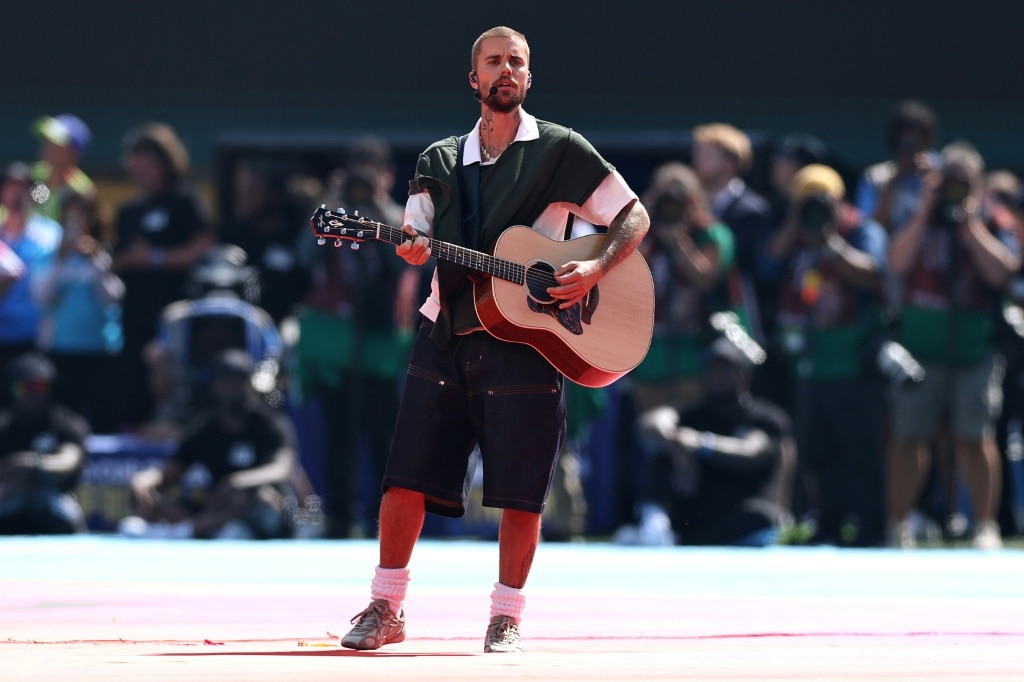
    Next, viral footage of Norway fans’ iconic “Viking row” celebration from the 2026 tournament led into a performance of global K-pop sensation BTS’s smash hit *Dynamite*, reworked with custom soccer-themed lyrics. The surprise continued when *Ted Lasso* lead actor Jason Sudeikis and his co-star Brendan Hunt, who plays Coach Beard, took the stage to introduce Canadian pop megastar Justin Bieber. Bieber delivered an emotionally charged, World Cup-adapted version of *Everything Hallelujah* before Colombian star Shakira and Nigerian artist Burna Boy raised the energy with the tournament’s official anthem *Dai Dai*, accompanied by a troupe of Ugandan dancers.

    A moving interlude paid tribute to Brazilian soccer legend Pelé, who passed away in late 2022 just months after the previous World Cup. Giant stadium screens broadcast archival footage of Pelé addressing a crowd at the old Giants Stadium — the same New Jersey site where MetLife Stadium now stands — from his 1977 final professional match, giving audiences a moment to honor his enduring legacy in the sport.

    The 12-minute performance closed with a joyful collaborative number that brought together Coldplay, viral New York elementary school group PS22 Chorus, and iconic puppet characters from *Sesame Street* and *The Muppets*. This brought the total halftime break, including player warm-up time, to 27 minutes, a length that drew some pre-event criticism from observers concerned that the extended pause would disrupt player rhythm and impact on-pitch performance. For context, the 12-minute show is actually slightly shorter than the typical 13 to 14 minute runtime of most recent Super Bowl halftime performances, making the break far from unprecedented in major televised sporting events.

    Organizers framed the event as the most significant collective gathering of artists for a charitable cause since the iconic 1985 Live Aid concert, and predicted it would become the most-watched live music broadcast in history, with FIFA President Gianni Infantino estimating a global viewership of around 2 billion people. The entire show was organized to raise funds and awareness for the FIFA Global Citizen Education Fund, the driving force behind the event, which works to expand access to education and sports programming for children from underprivileged communities around the world.

    The fund has set a total fundraising goal of $100 million, and had already surpassed the $60 million mark ahead of the halftime show. Funding comes from multiple sources: a $1 donation from every ticket sold for the 2026 World Cup, corporate contributions, government donations from participating nations, and gifts from private donors. To date, FIFA has announced grants for 58 community organizations across the globe, with programming expected to reach more than 400,000 children in nations ranging from Ghana and South Africa to France and the United Kingdom.

    The star power extended beyond the halftime show itself, with a pre-match closing ceremony that featured additional A-list performances. Rapper Post Malone headlined the pre-match event, while Hollywood star Tom Cruise delivered a unifying monologue on soccer’s power to bring the world together — though his speech was largely drowned out by cheering, singing fans in the packed stadium. Additional performers included Robbie Williams, Nicole Scherzinger, and Jennifer Hudson, rounding out a historic day of music paired with soccer’s biggest match.