博客

  • They sing, they stomp, they dance. World Cup fans from Argentina, Spain spent cash at the final

    They sing, they stomp, they dance. World Cup fans from Argentina, Spain spent cash at the final

    East Rutherford, New Jersey — On the eve of one of the most anticipated World Cup finals in modern history, the buzz inside MetLife Stadium had less to do with celebrity opening remarks and far more to do with the thousands of passionate fans who crossed continents and emptied their savings to be there. When Hollywood star Tom Cruise stepped out to deliver a pre-match speech framing soccer as a unifying global force, his words were completely drowned out by the roar of tens of thousands of Argentine and Spanish supporters. Their joyful singing, rhythmic clapping, and thunderous drum beats drowned out every syllable, a fitting reminder that the soul of the World Cup belongs not to celebrity guests, but to the fans who show up for their teams.

    For most of these supporters, the draw was clear: this was almost certainly Lionel Messi’s final appearance on the World Cup stage, and no price tag was too high to share in what could be the final chapter of the greatest career in modern soccer. “Money comes back,” explained Manuel Lopez Maccotta, an Argentine fan who traveled all the way from Buenos Aires to New Jersey for the match. “This is once in a lifetime. You’re seeing the best player in the world in his last World Cup. Money is worthless compared to this.”

    Maccotta, a 28-year-old software company founder, paid nearly $10,000 alone for his final match ticket, a sum that made the stadium’s widely noted $18 beer look like a trivial expense in comparison. His travel partner, Santiago Burcaco, a real estate professional, got a relative bargain at $5,000 for his seat — a price he locked in when he purchased his ticket before Argentina even secured its spot in the final. In total, Maccotta estimates he spent roughly $35,000 to follow the Argentina national team through the entirety of the World Cup tournament, a journey that already included a standout highlight in Argentina’s quarterfinal win over England. His trip to New Jersey almost fell apart entirely: a 14-hour delay from Miami caused by severe thunderstorms left him landing at JFK Airport just after 4:50 a.m. on match day, but he still made it to the stadium in time for kickoff. “It’s the last Messi World Cup,” he said. “My country. Hopefully we go back-to-back. We have to share the feeling. It’s once in a lifetime.”

    This final carries historic stakes for both sides. Argentina enters the match vying to become the first men’s national team to win back-to-back World Cup titles since Pele led Brazil to victories in 1958 and 1962. For Messi, a win would cap what he has publicly signaled is his final World Cup run with a fairy-tale ending, cementing his legacy as the greatest player of all generation. His iconic No. 10 jersey could be spotted on thousands of fans throughout the stadium, a visible tribute to the loyalty and passion he has inspired in supporters across the globe.

    For Spain, the match offers a chance to claim the country’s second World Cup title following its 2010 victory, and solidify its reputation as the dominant global men’s soccer power of the current era. Spanish supporters filled their sections of the stadium with bright red-and-yellow afro wigs printed with the national flag, many only removing the headpieces to pour cool water over their heads to beat the unseasonably warm sunny day.

    Curro Sanchez, a 42-year-old fan from Madrid, paid $8,000 for his ticket, even after convincing only one friend to join him on the trip after 10 other loved ones turned him down over the high cost and scheduling conflicts. He even had a high-stakes argument with his wife over the trip before she ultimately agreed to let him go. “Had a big, big, big fight with my wife,” Sanchez said. “At the end of the day, she understood.” Sanchez landed in New York just one day before the match and plans to stay in Manhattan through Thursday to soak in the once-in-a-lifetime experience.

    Ticket prices for the final skyrocketed in the weeks leading up to the match, climbing as high as five figures before dipping slightly in the hours before kickoff, still well out of reach for all but the most well-resourced fans. On FIFA’s official resale platform, prices dropped as low as $18? No, as low as $2,334.50 in the hours before the match. That still left base-priced tickets available through FIFA on the morning of the match for $10,990. While some fans scrimped and saved for months to afford their spots, the majority of fans inside MetLife Stadium had the financial means to make the transcontinental trip: Maccotta and Burcaco are a case in point, running successful businesses in their home country.

    In the lead-up to kickoff, even celebrity sightings added to the buzz: Modern Family star Sofía Vergara drew a crowd of fans waiting for photos in one stadium concourse just 45 minutes before the opening kickoff. Organizers handed out “Join The Celebration” signs to fans instructing them to “clap along using your clapper!” when the music started, a guide that fans joked was just as useless as asking Messi to give basic soccer lessons. Fans from both nations had been hyped up from the moment they joined long security lines to enter the stadium, singing and chanting nonstop in their native languages, setting a high bar for scheduled halftime performers including Madonna and Shakira. Notably, the presence of former U.S. President Donald Trump in attendance did not appear to slow security processing for ordinary fans.

    The festive energy that filled MetLife Stadium on match day had already spilled out into New York City over the weekend, as thousands of Argentine and Spanish fans packed Times Square, breaking out into spontaneous chants, songs, and street celebrations — the same joyful revelry that has defined host city atmospheres across the North American World Cup. Many fans credit Messi’s legacy for the all-consuming passion and unwavering loyalty of Argentina’s global fanbase, while Spain’s supporters have proven every bit as dedicated to their side’s push for a second world title.
  • Iran accuses US of violating international law after strike on nuclear plant

    Iran accuses US of violating international law after strike on nuclear plant

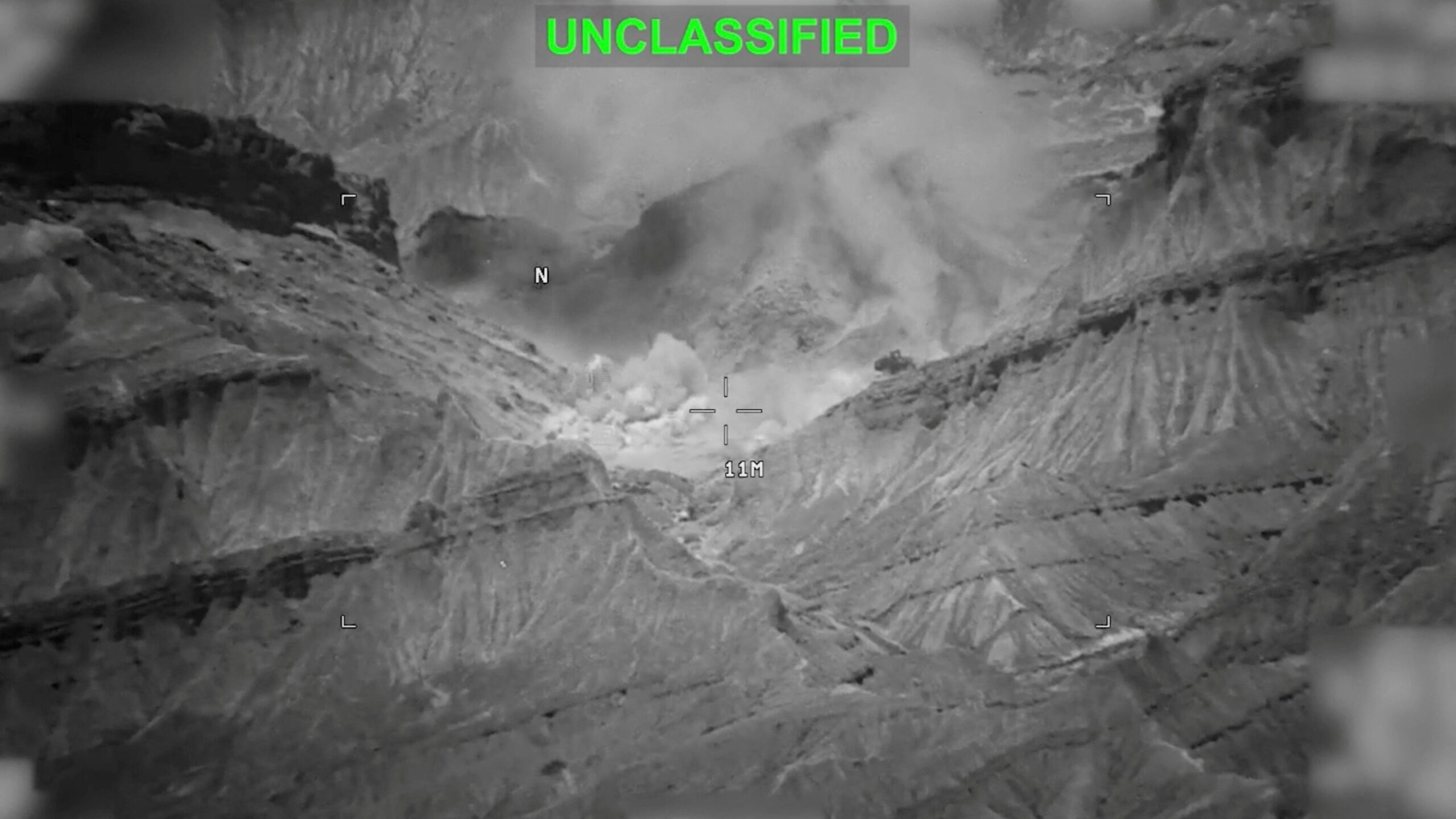
    Tensions between the United States and Iran have surged to their highest level in months after a US air strike targeted the under-construction Darkhovin Nuclear Power Plant in southwestern Iran, marking a sharp escalation following the collapse of a one-month-old interim ceasefire last week.

    In an official statement released after the attack, the Atomic Energy Organisation of Iran (AEOI) issued a fierce condemnation of the United States, framing the strike as an assault on a core symbol of Iranian national pride and the country’s decades-long push for technological self-reliance in the nuclear sector. “The terrorist and criminal US regime, whose very identity is rooted in bullying and open disregard for international law, has committed an aggressive, barbaric act that violates every norm of global governance,” the statement read. While the AEOI confirmed the strike targeted the nuclear construction site, it has not released any details on the scale of damage incurred, but reaffirmed that the attack constitutes a clear breach of international law.

    Located in Khuzestan Province along the banks of the Karun River, the Darkhovin facility sits roughly 70 kilometers south of Ahvaz and 100 kilometers north of the Persian Gulf. Construction on the plant’s new reactor only began in 2022, and the project remains in its earliest phase of development. The International Atomic Energy Agency (IAEA), the United Nations’ nuclear oversight body, confirmed that no nuclear material was present at the site during its most recent inspection, meaning the attack does not pose any public radiological hazard. The agency announced it is currently investigating credible reports of the overnight strike. IAEA Director General Rafael Grossi repeated his longstanding call for global powers to exercise strict military restraint around all nuclear-related facilities, regardless of their operational status.

    The strike on the nuclear site came as part of a broader wave of US air operations ordered directly by US President Donald Trump, which launched at 6 p.m. ET (10 p.m. GMT) Saturday, according to US Central Command (Centcom). In its official statement, Centcom said the strikes were ordered to achieve two core goals: to erode Iran’s capacity to disrupt commercial shipping in the strategically critical Strait of Hormuz, and to deliver immediate retaliation for a recent attack by the Islamic Revolutionary Guard Corps (IRGC) that targeted American service members stationed in Jordan. After completing the first wave of attacks, Centcom confirmed it had targeted multiple Iranian military assets, including coastal surveillance outposts and air defense systems along Iran’s southern coast.

    Local Iranian media outlets have offered conflicting initial reports on casualties and non-nuclear damage. Iran’s state-aligned Mehr News Agency reported that one strike near the southern city of Sirik caused no reported casualties and no damage to major civilian infrastructure. Semi-official Tasnim News Agency also confirmed a second strike near Shadegan, a city located close to Iran’s border with Iraq.

    The renewed full-scale hostilities follow the collapse of an interim ceasefire agreement that was signed roughly one month prior, ending a brief period of de-escalation and raising urgent fears across the global community that the two sides will return to open, all-out war. Earlier on Saturday, Iranian officials confirmed the country had formally withdrawn from a bilateral memorandum of understanding with the Trump administration, in response to the resumption of US bombardments across Iranian territory.

    The current round of conflict traces back to February 28, when joint strikes by the United States and Israel were launched against targets across Iran, with the stated goal of disabling Iran’s nuclear and ballistic missile programs and weakening the network of regional proxies aligned with the Iranian government. That opening wave of strikes included an air attack that killed Ali Khamenei, Iran’s long-serving former supreme leader. The current supreme leader, Mojtaba Khamenei, who succeeded his father, has not appeared in public since the first day of the war, a point that has fueled widespread speculation about his status.

    In a written statement carried by all major Iranian state media outlets Saturday evening, Mojtaba Khamenei issued a sharp rebuke of the Trump administration, arguing that the latest strikes prove any agreement signed by the US president is completely lacking in credibility and value. “Donald Trump’s signature is utterly worthless and devoid of credibility,” the statement read, warning that the United States will face “even heavier costs and further humiliation” in response to its aggression.

    Beyond the immediate human and security risks, the escalating conflict has already triggered major ripple effects across the global economy: it has severely disrupted regional energy supplies, stoked new fears of sustained global inflation, and intensified the high-stakes competition for control over the Strait of Hormuz, the chokepoint through which roughly 20% of the world’s global oil supplies pass every day.

  • US soldier killed and one injured after Iranian attack in Iraq

    US soldier killed and one injured after Iranian attack in Iraq

    An eight-day cycle of escalating reciprocal strikes between the United States and Iran has sent shockwaves across the Middle East, driving up casualty counts, drawing sharp international condemnation, and reigniting fears of a full-scale regional conflict after a short-lived preliminary ceasefire collapsed earlier this month.

    The latest violence unfolded quickly over the weekend, following a Friday attack on a US military base in Jordan that left two American soldiers dead and one service member unaccounted for. On Saturday, a third US service member was killed while conducting a controlled detonation of unexploded ordnance from a downed Iranian attack drone in northern Iraq, US Central Command (Centcom) confirmed. A second service member was wounded in the same operation. Centcom also announced that search teams had recovered unidentified remains at the Jordan attack site, with formal identification processes still ongoing.

    Verified footage obtained from inside the Jordanian air base confirms that at least one Iranian projectile struck the facility, showing clear signs of multiple impact sites and a large explosion. In a subsequent incident, Jordan’s military intercepted three Iranian missiles launched toward the kingdom, while a fourth crashed in an unpopulated remote area. The strike came after US intelligence warnings that the Jordanian port of Aqaba faced imminent targeting. Jordanian authorities swiftly summoned Iran’s acting head of mission in Amman to issue a formal protest, demanding an immediate end to what the foreign ministry described as “unjustified and blatant Iranian attacks,” and emphasizing that Jordanian national security is an inviolable red line.

    Across the border in Israel, the Israel Defense Forces confirmed it launched several interceptors to destroy incoming missile debris headed toward Israeli territory, preventing impacts in populated areas. Fragments from one interceptor landed near the southern border city of Eilat, but no injuries or damage were reported.

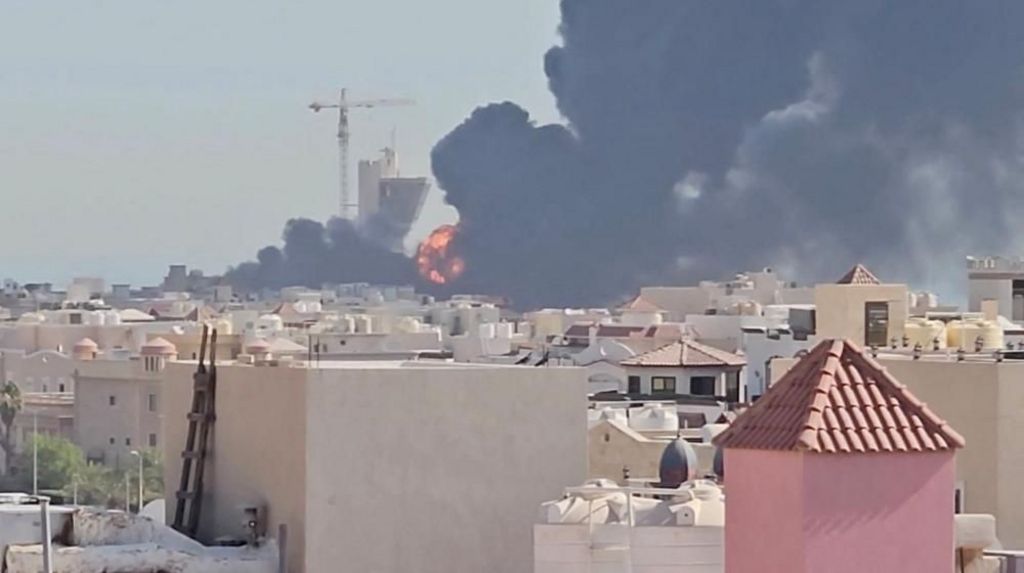
    The conflict has spread to other Gulf states in recent days. In Kuwait, local officials confirmed that an electricity and water plant that was hit by an Iranian strike on Saturday was targeted a second time, sparking a large fire that left critical infrastructure damaged. The Gulf Cooperation Council (GCC), a regional alliance comprising Bahrain, Kuwait, Oman, Qatar, Saudi Arabia and the United Arab Emirates, condemned Iran for targeting civilian facilities, calling the attacks a clear violation of international law.

    Overnight attacks on Sunday targeted sites inside Iran, with Iranian state media confirming that an under-construction nuclear power plant in the southwestern city of Darkhoveyn and locations on Qeshm Island were hit. The International Atomic Energy Agency (IAEA), the United Nations’ nuclear oversight body, issued an urgent call for all parties to exercise maximum restraint, noting that the Darkhoveyn facility is still in early construction phases and held no nuclear material during the watchdog’s most recent inspection.

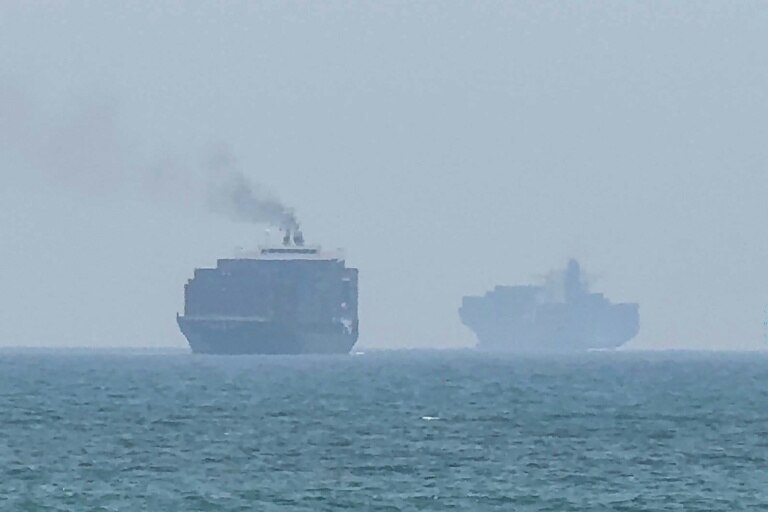
    Tensions have also flared around the Strait of Hormuz, one of the world’s most critical energy chokepoints. After Washington reimposed a full blockade on Iranian ports following the ceasefire’s collapse, Tehran announced it was closing the strait to commercial shipping linked to US and allied interests. The Islamic Revolutionary Guard Corps (IRGC), Iran’s elite military force, claimed two commercial vessels that ignored Iranian warnings about using unauthorized transit routes were involved in a “maritime accident” this week, and issued a blunt warning that all vessels “influenced by the United States” that use “unsafe routes” will “certainly face accidents” going forward. The US says its latest strikes against Iranian targets are intended to degrade Tehran’s ability to threaten commercial shipping in the strait and punish IRGC forces it blames for the Jordan base attack.

    Casualty figures on both sides continue to climb. The total US death toll from the conflict that began in late February now stands at 17, after a missing American Navy pilot was formally declared dead earlier this week. Iran’s health ministry reports that at least 50 Iranians have been killed and more than 500 injured in US strikes carried out over the past three weeks.

    Both sides have traded accusations over targeting civilian infrastructure, a breach of international humanitarian law that prohibits deliberate attacks on non-military sites. Iran accuses the US of striking civilian bridges, a commercial airport and a train station in recent strikes. Washington has repeatedly denied the claims, asserting that all of its operations target exclusively military objectives, including military logistics infrastructure. Under international law, civilian objects can lose their protected status if they are used to directly support an adversary’s military campaign.

    The current escalation comes after a preliminary ceasefire agreement between Washington and Tehran reached in June fell apart in less than a month. US President Donald Trump officially declared the deal “over” on July 8. In a written statement released late Saturday, Iran’s Supreme Leader Mojtaba Khamenei blamed repeated US violations of the agreement for its collapse, arguing that the breakdown exposed a core reality: “the signature of the US president is utterly worthless and devoid of credibility.”

  • World Cup final kicks-off with star-studded opening

    World Cup final kicks-off with star-studded opening

    The most anticipated moment of the 2026 FIFA World Cup has arrived, as the tournament’s closing ceremony kicked off in spectacular fashion on Sunday at New York New Jersey Stadium, drawing a sellout crowd of more than 80,000 fans, celebrities and global dignitaries ahead of the final match between Spain and Argentina.

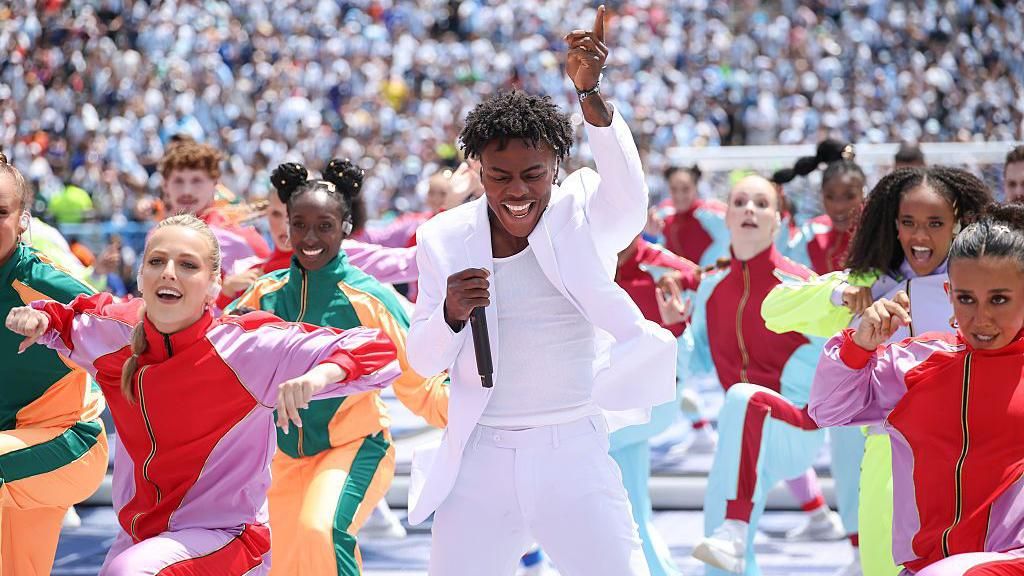
    The ceremony opened with an energetic performance from popular streaming personality IShowSpeed, who took the center pitch alongside a cohort of drummers and dancers clad in bright, eye-catching tracksuits that set a lively tone for the afternoon. Multi-platinum rapper and singer Post Malone followed up the opening set with a crowd-pleasing performance of his chart-topping hit *Wow.*

    Before the final match kicked off, Academy and Grammy Award-winning singer and actor Jennifer Hudson delivered a powerful rendition of the United States national anthem, backed by a full live band that earned a roar of applause from the packed stands. The A-list pre-match entertainment lineup continued with collaborative performances from British pop icon Robbie Williams, Italian superstar Laura Pausini, and former Pussycat Dolls lead Nicole Scherzinger. Following the opening set of performances, Hollywood A-lister Tom Cruise took the stage to officially introduce the final match to the global audience.

    “From every corner of the globe, we have witnessed greatness, and we have shared in moments of joy,” Cruise told the gathered crowd. “Football is a language spoken without words, a force that unites people.”

    In comments ahead of the event, Pausini shared her excitement with the BBC, saying she felt overwhelming pride to share the stage with Williams and Scherzinger. “When Robbie [Williams] invited me to sing with him, I felt goosebumps everywhere because Robbie’s one of my favorite singer, songwriter, and performer,” she explained.

    The star power does not end when the first half of the final concludes: an extended half-time show curated by Coldplay frontman Chris Martin will feature a stacked lineup of global music superstars, including Madonna, Justin Bieber, Shakira, Burna Boy and K-pop phenomenon BTS, with a portion of event proceeds going to the FIFA Global Citizen Education Fund, an initiative aiming to raise $100 million to support access to education for children across the world. FIFA confirmed the star-studded half-time performance will run 11 minutes as part of an extended 20 to 25 minute half-time break, modeled after the high-production spectacle of the NFL’s Super Bowl half-time show.

    Madonna, the best-selling female recording artist of all time, is fresh off the release of her latest studio album *Confessions II*, which debuted at the top of the Billboard 200 album chart earlier this month. For Justin Bieber, the performance marks another high-profile stop on his return to public performance: the pop star canceled his 2022 Justice World Tour due to ongoing health issues, and made his big comeback earlier this year with a standout set at the Coachella Valley Music and Arts Festival, his largest live show in four years.

    Colombian global icon Shakira and Nigerian superstar Burna Boy will take the stage together for their performance, reuniting after opening the 2026 World Cup alongside one another in Mexico City last month. Their collaborative single *Dai Dai* has become a global chart hit throughout the tournament, and been played repeatedly in host stadiums across the competition. For BTS, the World Cup half-time slot comes as the group completes a highly anticipated comeback following a three-year hiatus spent completing mandatory military service in South Korea. The group is currently in the middle of an 85-date global stadium tour, making the World Cup final one of the biggest stops on their itinerary. Other performers featured in the closing ceremony included Swae Lee, who delivered a solo set early in the event.

    Among the high-profile guests in attendance at the closing ceremony and final were former U.S. President Donald Trump and First Lady Melania Trump, who arrived at the stadium via Marine One, which flew over the venue ahead of kick-off to the match.

  • New Zealander Fox birdies last hole to win British Open

    New Zealander Fox birdies last hole to win British Open

    In a moment of high drama at Royal Birkdale on Sunday, 39-year-old New Zealand golfer Ryan Fox etched his name into golfing history, clinching the 154th British Open with a clutch birdie on the 18th hole to claim his first career major championship at 10 under par.

    Ranked 56th in the world entering the tournament, Fox’s road to the Claret Jug was far from straightforward. After opening the first two rounds at level par, he sat in 52nd place and far outside most experts’ predictions of a winner. But a stunning Saturday round saw the Kiwi tie the all-time record for the lowest single-round score in men’s major championships, carding a 62 that catapulted him into contention heading into the final round.

    As overnight leader Sam Burns of the U.S. and other top contenders collapsed under the intense pressure of championship Sunday, Fox stayed steady. He notched birdies on holes 13, 14, 16, and the decisive 18th, holding off a late charge from American Cameron Young to secure a one-stroke victory — the biggest win of his professional career by a wide margin.

    “I don’t really know what to think at the moment,” Fox told reporters immediately after his win. “I spoke to my kids last night and they said ‘bring back a trophy’. I think this is a pretty cool one to bring back for them.”

    Fox makes history as just the third New Zealander ever to win a men’s major championship, following Bob Charles’ 1964 British Open victory and Michael Campbell’s 2005 U.S. Open win. The son of former All Blacks rugby international Grant Fox, Fox’s underdog run capped a day defined by collapsing frontrunners and last-minute twists.

    Overnight leader Sam Burns held a two-shot advantage heading into Sunday, but three consecutive bogeys on holes four through six erased his lead early, and he ultimately finished third at eight under par, falling short of his first major title. South Korea’s Kim Si-woo climbed within striking distance of his own first major with nine holes remaining, but imploded on the back nine with a four-over-par finish that knocked him out of contention.

    Cameron Young, who began the day seven shots off the lead after a four-over back nine on Saturday, mounted a stunning late charge that nearly stole the title. The world number four shot a 29 on the front nine to climb into contention, carded additional birdies on the par-fives 14 and 17 to reach 10 under par alongside Fox heading into the final hole. But a wayward tee shot landed Young in a sand trap, and his second shot crashed into the bunker face, resulting in a costly bogey that left him one shot short of the playoff spot.

    Defending champion Scottie Scheffler, the world’s top-ranked golfer, also mounted a early comeback charge but ultimately fell short, finishing tied for fourth at seven under par. Scheffler cut his six-shot opening deficit in half with three birdies in his first five holes, but bogeys on 13, 15, and 18 kept him from adding a fifth major title to his career in 2026.

    Local favorite Tommy Fleetwood joined Scheffler in a tie for fourth, briefly giving British fans hopes of ending the country’s 34-year wait for a homegrown British Open champion. The world number nine climbed to within one shot of the lead after shooting three under par through eight holes, but three consecutive bogeys pushed him back before a late birdie-birdie finish lifted him into the top four.

    Former major winner Rory McIlroy never mounted a serious contention for his seventh major title, finishing the tournament at one under par after a final-round 71. “Any time I got a little bit of momentum out there, I seemed to make a bogey,” said the world number two. “Just one of those weeks I couldn’t get it going.” American Bryson DeChambeau, who received a two-shot penalty after his second round on Friday, finished at four under par, with the penalty ultimately not affecting the final championship outcome.

  • ICC’s Khan probe ‘reduced to political referendum’, Palestinian rights groups warn

    ICC’s Khan probe ‘reduced to political referendum’, Palestinian rights groups warn

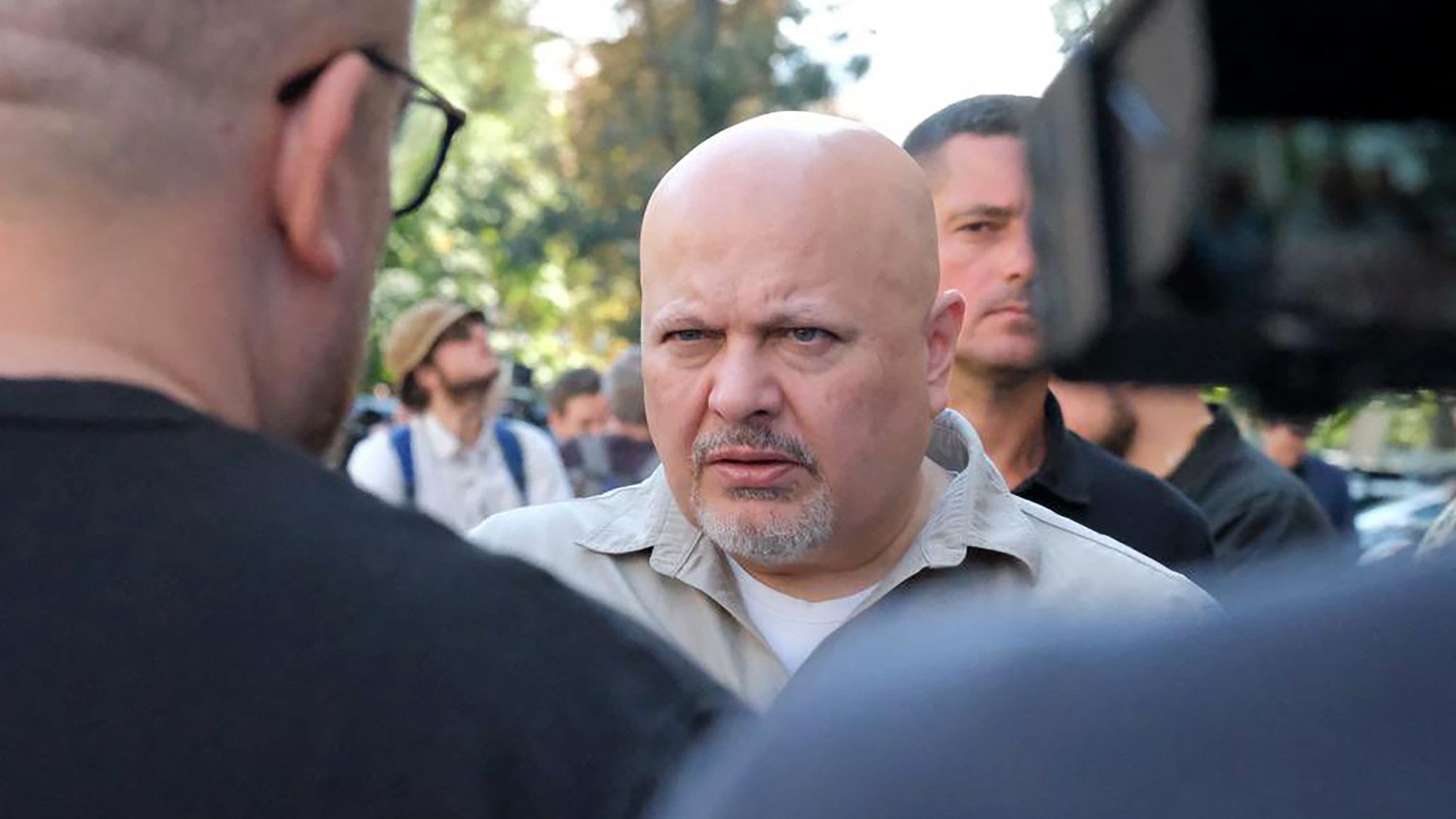
    A coalition of leading Palestinian human rights organizations has issued a stark warning about deep procedural flaws and growing political interference in the disciplinary process against suspended International Criminal Court (ICC) Chief Prosecutor Karim Khan, just days before the court’s 125-member Assembly of States Parties (ASP) votes on whether to remove him from office. In a joint public statement released Friday by the Palestinian Human Rights Organizations Council (PHROC) — an umbrella group counting Al-Haq, Al Mezan Center for Human Rights, the Palestinian Centre for Human Rights and Addameer among its members — the coalition stressed it is not taking sides on the merits of the misconduct allegations against Khan or the prosecutor’s defense. Instead, it is sounding the alarm that systemic failures in the proceeding violate fundamental human rights protections and mark a dangerous departure from the rule of law that threatens the ICC’s core institutional independence.

    The coalition argues the disciplinary process has devolved into a political referendum driven by the competing national interests of individual ASP member states. “It is impossible to extricate such national interests from the political impact of the Chief Prosecutor’s decisions made in the various situations currently before the ICC,” the statement reads, noting that this political capture opens the door to widespread overreach that risks eroding the court’s credibility as an impartial arbiter of international justice.

    The controversial proceeding stems from unproven allegations of sexual misconduct leveled against Khan in April 2024, a claim Khan has repeatedly and vehemently denied. The ASP’s executive governing body, the Bureau, suspended Khan from his post on June 8 after a majority of its 21 members voted to label his actions “serious misconduct.” PHROC’s criticism centers heavily on the Bureau’s rejection of the findings of an independent three-judge panel the Bureau itself appointed to review a United Nations investigation into the claims. In a unanimous March ruling, the panel concluded the evidence presented did not meet the ICC’s strict “beyond a reasonable doubt” standard to prove misconduct, noting the probe produced only conflicting testimonies and largely hearsay-based evidence. No independent legal body, PHROC emphasizes, has formally found the facts of the investigation amount to serious misconduct or a major breach of the prosecutor’s official duties — yet the Bureau’s contrary finding deliberately side-stepped the panel’s binding legal conclusions.

    PHROC also pushes back against the Bureau’s unsubstantiated claim that Khan engaged in an inappropriate sexual relationship with the complainant, enabled by an asymmetric power dynamic. The coalition notes that neither Khan nor the accuser has ever corroborated this framing, and the Bureau’s ruling failed to establish the non-consensual sexual misconduct that formed the core of the original complaint. “The Bureau, as a political body composed of diplomats, does not have the independence, impartiality or legal expertise to make assessments on the legal characterisation of conduct, nor did it enjoy the same timeframe as the ad hoc Panel to independently examine the two reports and 5,000-pages of evidence,” the statement adds.

    Further drawing condemnation is the Bureau’s last-minute rushed change to voting procedures, which PHROC says was designed to lower the bar for Khan’s removal. Previously, the process required a two-thirds majority vote to first confirm serious misconduct, followed by a separate vote requiring 63 member state votes to remove the prosecutor. The Bureau rewrote the rules to combine these steps into a single vote, eliminating the higher two-thirds threshold for a misconduct finding. According to PHROC, this procedural change dismantles critical checks and balances on the Bureau’s political decision-making, clearing a path for removal that would have otherwise been impossible to achieve.

    The coalition directly ties the push to oust Khan to a broader, coordinated campaign by the United States, its allies, and Israel to undermine the ICC’s ongoing investigation into war crimes committed during Israel’s military campaign in Gaza. Following Khan’s May 2024 decision to request arrest warrants for Israeli Prime Minister Benjamin Netanyahu and former Defense Minister Yoav Gallant on war crimes charges, the U.S. imposed retaliatory sanctions on the prosecutor, later expanding the measures to target two ICC deputy prosecutors, eight ICC judges, the United Nations special rapporteur on Palestine, and multiple Palestinian rights groups that provided evidence for the Gaza investigation.

    PHROC traces this pattern of interference back years, noting that several current Bureau member states challenged the ICC’s jurisdiction over the Palestinian territories in 2020, and the United Kingdom launched a formal legal challenge to Khan’s 2024 arrest warrants for Netanyahu and Gallant. Most recently, Israel cited leaked details from the misconduct investigation in a November 2025 court filing asking that Khan be disqualified from leading the Gaza war crimes probe.

    The coalition warns there is a clear and present danger that Israel and its political allies have already compromised the disciplinary process through political interference in bodies like the Bureau. “There is a very serious risk that State Parties will again prioritise their national interests and support for Israeli impunity over any genuine care or concern for either the interests of the complainant, the Prosecutor, or for the integrity of the Court,” the statement reads. The ongoing process, which launched in late 2024, has failed all parties involved, PHROC concludes, and stands to cause irreversible, far-reaching damage to both the ICC and the global project of international criminal justice. The ASP is scheduled to hold its special vote on Khan’s removal at United Nations headquarters in New York on July 24.

  • US completes eighth night of strikes as Iran retaliates across Gulf

    US completes eighth night of strikes as Iran retaliates across Gulf

    On Sunday, the United States concluded its eighth straight night of military strikes targeting Iranian territory across the country’s southern regions, hitting both designated military sites and civilian infrastructure, according to multiple on-the-ground and official reports.

    Al Jazeera’s on-the-ground reporting noted that this latest round of airstrikes was marked by lower intensity compared to the three waves of attacks carried out in the preceding three nights. In an official statement, US Central Command (Centcom) confirmed that American military forces successfully engaged multiple key Iranian assets, including coastal military surveillance outposts, air defense installations, maritime operational capabilities, and storage depots holding missiles and drones.

    The command added that the strikes also specifically targeted units of the Islamic Revolutionary Guard Corps (IRGC), which the US holds responsible for a fatal attack that killed two American service members in Jordan on July 17.

    Local Iranian media documented multiple explosions across five locations in two southern provinces: Qeshm Island, Bandar Abbas, Hajiabad, Sirik in Hormozgan Province, and Shadegan in Khuzestan Province. Iran’s Tasnim News Agency reported that at least six blasts were heard across Qeshm Island before emergency civil defense teams were dispatched to the area to survey damage and respond to any emergencies.

    Major-General Ali Abdullahi, commander of Iran’s Khatam al-Anbiya Central Headquarters, issued a stark warning in response to the strikes, emphasizing that any further acts of American aggression will be met with a firm and devastating retaliatory response. Abdullahi accused Washington of seeking to sow internal division within Iran, and pledged that Iran would impose far heavier costs on the United States for its military campaign than it had in previous rounds of conflict.

    Alongside its defensive warnings, Iran immediately launched retaliatory actions targeting Gulf states that host US military forces. Iranian officials confirmed that they carried out a large-scale drone assault on what they described as two key US military facilities in Kuwait: an ammunition storage depot at Camp Al Adiri and air defense systems at Ali Al Salem Air Base. In response, Kuwait’s military announced that its air defense units were actively intercepting incoming hostile drones and missiles.

    Simultaneously, Bahrain triggered air raid sirens for the sixth time within a multi-hour window, urging all residents to immediately move to designated emergency shelters. In another development, the IRGC announced that its air defense units intercepted and destroyed an American MQ-9 reconnaissance drone over the southwestern city of Ahvaz. Separately, Iraqi Kurdish leadership condemned recent Iranian missile strikes targeting the Kurdistan Region as a clear violation of Iraqi national sovereignty.

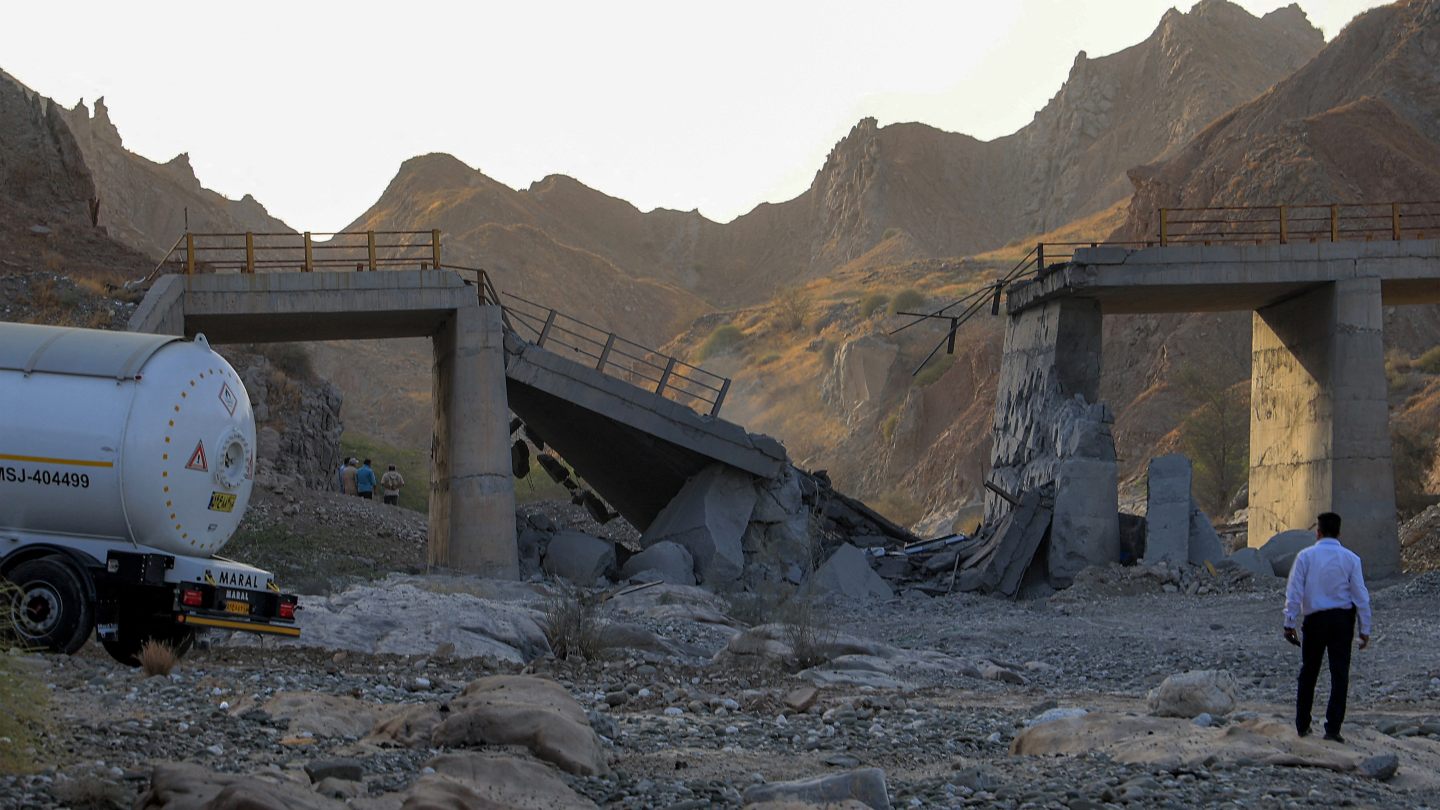
    Iranian officials confirmed that the ongoing US airstrikes have caused widespread damage to civilian infrastructure across southern Iran. Local media reports confirm that critical public assets including bridges, highways, railway lines, road tunnels, and regional airports have been hit by strikes, disrupting civilian travel, commercial freight movement, and the delivery of humanitarian aid to affected areas. Multiple hospitals have been forced to evacuate patients due to damage or safety risks, and scheduled school examinations across affected regions have been postponed indefinitely.

    Iranian officials argue that the US campaign aims to cut off Iran’s southern provinces and weaken the IRGC’s control over the Strait of Hormuz, a critical global chokepoint for oil maritime trade. They have reiterated that the IRGC will not cede control of the strategic waterway under any circumstances.

    The escalating conflict has also amplified urgent concerns over water security across the entire Gulf region. On Saturday, Kuwait issued its second public accusation against Iran for targeting a major power and desalination plant, a critical piece of infrastructure for the arid nation. Local residents interviewed by AFP confirmed that they have already begun stockpiling bottled water and non-perishable canned food, amid widespread fears that ongoing conflict will disrupt critical supply chains.

    The Gulf Cooperation Council region holds approximately 60 percent of the world’s total desalination capacity, making these facilities irreplaceable for maintaining drinking water supplies in one of the most water-scarce regions on the globe. Earlier, Iranian officials reported that previous US strikes destroyed a desalination facility in Hormozgan Province, cutting off drinking water access for roughly 10,000 residents across 20 local villages.

    In response to the rapidly escalating tensions across the Middle East, the US Department of State has issued a global advisory urging all American citizens around the world to exercise heightened caution due to the rising risk of spillover conflict.

  • US-Iran strikes: latest developments

    US-Iran strikes: latest developments

    A wave of reciprocal military strikes between the United States and Iran escalated across the Middle East throughout Sunday, triggering responses from regional allies and urgent calls for de-escalation from global watchdog bodies. The flare-up stems from a deadly drone attack on a US base in Jordan last Friday that claimed the lives of two American service members, a strike Washington directly attributes to Iranian-backed militant groups.

    On the diplomatic front, US Secretary of State Marco Rubio hosted Lebanese President Joseph Aoun in Washington DC this week. A State Department spokesperson confirmed that Rubio praised Aoun for his administration’s ongoing work to restore full Lebanese government sovereignty across the country, disarm the Iran-aligned militant group Hezbollah, dismantle Hezbollah’s terrorist networks, and advance cross-border stability with neighboring Israel.

    The International Atomic Energy Agency (IAEA), the United Nations’ leading nuclear oversight body, stepped in to issue a call for maximum restraint from all parties after Iranian officials confirmed a US strike targeted an under-construction nuclear power plant in Darkhovin, a site in southwestern Iran. IAEA Director General Rafael Grossi clarified in a public statement posted to X that no nuclear fuel or radioactive material had yet been placed at the facility, and the attack does not currently create any public radiological hazard for the surrounding region.

    Tensions spilled further as Israeli authorities issued a stark warning to Tehran Sunday, following a joint interception operation with Jordanian forces that took down an Iranian missile targeting the Jordanian Red Sea port city of Aqaba. Israeli Defense Minister Israel Katz reiterated that his country would not tolerate unprovoked attacks, stating that any direct Iranian missile strike on Israeli territory would be met with an overwhelming, full-scale military response. While Israeli military confirmed the joint interception of an incoming projectile near the Israeli resort city of Eilat, adjacent to Aqaba, Jordanian military officials later adjusted the account, confirming they had downed three Iranian missiles aimed at Jordanian sovereign territory, though they did not specify exact impact or launch sites.

    Two Gulf Arab states have also come forward to accuse Iran of targeted attacks on critical civilian infrastructure over the past 48 hours. Kuwaiti authorities confirmed that an Iranian strike hit a combined power and water treatment plant, sparking a large fire at the facility. This marks the third attack on Kuwaiti energy and water infrastructure in as many days, with officials adding that an oil storage facility was also struck Saturday. Bahrain similarly confirmed that Iranian forces targeted civilian infrastructure within its borders over the weekend.

    In a separate development in the strategically vital Strait of Hormuz, Iran’s Islamic Revolutionary Guard Corps announced it had intercepted commercial vessels that attempted to transit the waterway without obtaining prior authorization from Iranian authorities. The Guards confirmed two of the four vessels experienced incidents during the interception and were detained, while the remaining two abandoned their planned transit through the strait, a critical chokepoint through which roughly 20% of the world’s daily oil supplies pass.

    US Central Command (CENTCOM), the US military command overseeing operations in the Middle East, confirmed that its latest round of strikes against Iranian targets serves two core purposes: first, to deliver punitive action against Tehran for the fatal Jordan base attack that killed two US soldiers and left a third unaccounted for, and second, to weaken Iran’s capacity to disrupt and threaten international commercial shipping passing through the Strait of Hormuz.

  • Argentines out in force as New Yorkers bid farewell to World Cup carnival

    Argentines out in force as New Yorkers bid farewell to World Cup carnival

    In the days leading up to one of the most anticipated FIFA World Cup finals in recent hosting history, thousands of boisterous Argentine supporters have turned the heart of New York City back into a vibrant World Cup carnival, breathing new life into flagging local excitement ahead of Sunday’s blockbuster showdown with Spain at MetLife Stadium.

    Local enthusiasm for the co-hosted tournament had slumped sharply after the United States men’s national team was eliminated from competition by Belgium on July 6. Compounding that dip in interest were a series of disruptive external challenges: a deadly Legionnaires’ disease outbreak, extreme volatile weather including fierce storms, widespread flooding, and poor air quality driven by smoke drifting from Canadian wildfires. Even the structure of the tournament contributed to waning buzz: as nations with large diaspora communities in New York, such as Mexico and Egypt, were knocked out round after round, casual local engagement faded steadily. Many native New Yorkers also left the city for summer weekend getaways ahead of the final, and the historic sky-high ticket prices for the match have put attendance out of reach for most fans. Secondary ticketing platform TickPick reports the average final ticket resells for $11,325, making it the most expensive single sporting event in U.S. history.

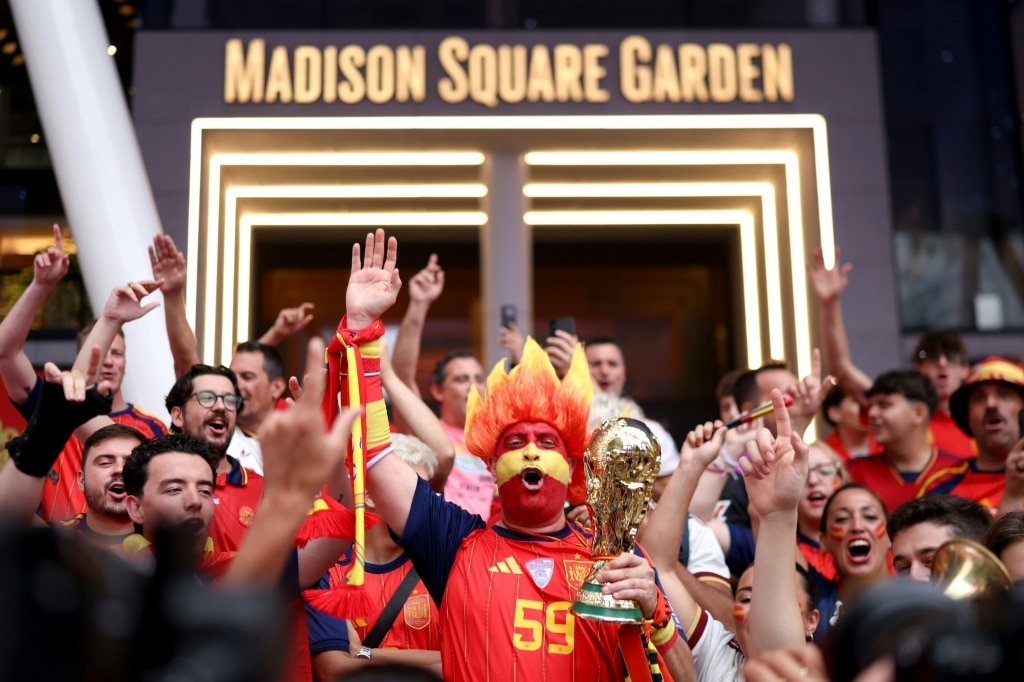
    Despite these headwinds, the sea of blue and white striped Argentine jerseys that have flooded Manhattan’s tourist hubs, Penn Station, and the city’s unofficial World Cup gathering spot at Times Square have rekindled the global soccer spectacle’s energy in the Big Apple. Even two four-legged fans got in on the action, decked out in Argentina’s iconic national kit. Across midtown, Spanish supporters gathered in their own pockets around Madison Square Garden, one fan clutching a replica World Cup trophy in anticipation of kickoff.

    Florencia Luzinin, a 30-year-old Argentine dentist who traveled to be part of the final buildup, summed up the emotion surrounding the match for many fans, noting this is widely expected to be Lionel Messi’s final World Cup appearance. “I’m very nervous because I love Argentina. It’s the final. It’s probably the last of Messi. So maybe it’s our day. I don’t know. We came across a few Spaniards but I don’t look at them,” she said.

    Alessandra Pichler, a 27-year-old Spanish supporter, predicted a 3-1 win for her side and praised the U.S. hosting effort. “I think the US has done a great job hosting all the games I’ve been to. I’ve been very impressed,” she added.

    Chip Parham, a New York-based film festival organizer who was gearing up to watch the match, said the drop-off in local interest after the U.S. exit followed a familiar pattern for international sporting events held on American soil. “I think that a reaction for people to lose interest in the World Cup when their country is eliminated is the same as any sporting event. In any city there is a decline in interest for any sporting event that doesn’t feature a local team. With the exception of the Super Bowl,” he explained.

    Howie Ray, a 42-year-old New Yorker who shifted his support to England after the U.S. elimination, echoed that observation, noting that even with both finalists in place, local engagement remained muted outside of concentrated fan pockets in Midtown. “It’s been slightly overshadowed. I think there was fatigue after all the games of the group stage and then the US getting eliminated. Spain and Argentina also have relatively small immigrant populations in the city,” Ray said. “A lot of my friends have felt disconnected the entire tournament due to the tickets being unaffordable.”

    For the thousands of fans who cannot secure or afford tickets to the 82,500-capacity MetLife Stadium in East Rutherford, New Jersey, a wide range of alternative watch party options have popped up across the city. Global Citizen is hosting an all-star live concert in Central Park that will run simultaneously with the final, while the American Museum of Natural History is offering fans the unique chance to watch Messi’s bid for a fourth Argentine World Cup title alongside the institution’s iconic dinosaur exhibits.

    Even with tepid widespread engagement outside of Midtown, the 2026 co-hosted World Cup has left a measurable mark on New York’s sporting landscape. New York City Comptroller Mark Levine confirmed that Gotham FC, the city’s professional women’s soccer team, recently drew the largest crowd ever recorded for a women’s sporting event in New York history, a bump organizers attribute to broader World Cup-fueled interest in soccer. New York Mayor Zohran Mamdani also made headlines ahead of the final for watching England’s quarterfinal exit to Argentina with incarcerated people at the city’s Rikers Island jail facility.

    Ahead of kickoff, city officials reaffirmed their commitment to making the World Cup accessible to all New Yorkers. “We said from the beginning that the World Cup belongs to New Yorkers. This summer, we proved it,” Mamdani said. As of Saturday, air quality at MetLife Stadium had returned to normal, clearing the final hurdle for Sunday’s historic showdown.

  • Health officials identify source of US explosive diarrhoea outbreak

    Health officials identify source of US explosive diarrhoea outbreak

    A rapidly expanding foodborne illness outbreak across the United States has taken a new turn, after federal health officials announced an additional sample of iceberg lettuce from major agricultural supplier Taylor Farms has tested positive for the parasite responsible for thousands of infections.

    The U.S. Food and Drug Administration (FDA) confirmed that the contaminated sample, collected during targeted import surveillance as part of the ongoing outbreak investigation, was traced to a production lot not included in the voluntary product removal Taylor Farms announced last Friday. The California-based agriculture firm, which counts major fast-food chain Taco Bell among its high-profile customers, has already committed to sweeping market action: pulling all iceberg lettuce sourced from central Mexico from retail and foodservice locations across the country.

    Public health experts have stressed a key distinction between the current voluntary withdrawal and a formal mandatory recall: a recall requires companies to actively notify customers and retrieve all affected products from commercial channels, a broader and far more costly regulatory process that carries stricter compliance requirements. Right now, Taylor Farms is working urgently to trace the newly identified positive lot to determine if any of the lettuce remains on store shelves or in consumers’ homes.

    As of the latest updates, no fatalities linked to the cyclospora outbreak have been recorded, but the Centers for Disease Control and Prevention (CDC) reports that at least 94 people have required hospital care for severe symptoms of infection. The outbreak was first detected in mid-May, and public health officials note that symptoms of the parasitic illness can take up to 14 days to emerge, meaning new cases are still being added to official counts. Infected individuals typically experience prolonged watery diarrhea, unexpected rapid weight loss, and loss of appetite.

    The CDC has issued a clear public warning advising consumers in five U.S. states—Indiana, Kentucky, Michigan, Ohio, and West Virginia—to avoid eating any shredded iceberg lettuce served at Taco Bell locations. The fast-food chain has already announced it has completed removing all potentially affected Taylor Farms lettuce from its restaurant locations across the affected regions.

    In an official statement released amid the investigation, Taylor Farms said it has “stopped receiving product from the implicated lot, suspended distribution of the iceberg lettuce from Central Mexico, notified [its] customers and [is] continuing to work with the FDA, CDC, and state authorities” to contain the outbreak.

    The current market withdrawal covers products distributed across 27 U.S. states. Beyond Taco Bell, the affected products include Marketside-branded iceberg lettuce sold at Walmart locations across 15 states, the FDA confirmed.