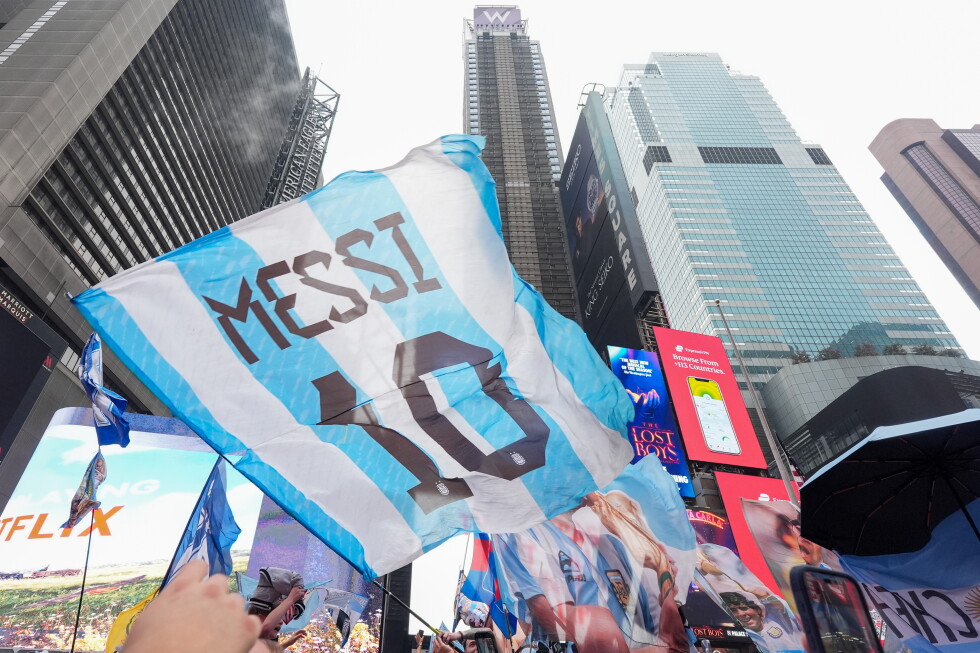
When the final whistle blows on the 2026 FIFA World Cup final this Sunday, the new champion will not only lift soccer’s most coveted golden trophy and claim eternal glory in their nation’s sports history — they will also take home the largest winner’s payout in the tournament’s history, alongside a first-ever set of championship rings for the squad.
For the 2026 edition, expanded from 32 to 48 competing nations and co-hosted across the United States, Canada and Mexico, FIFA has set an all-time total prize pool of $871 million, marking a $100 million increase from the initial payout plan announced last year. The top-up came in April after European national federations lobbied for additional funding, arguing that the three-host format created extraordinary travel and accommodation costs that would leave most teams out of pocket without deeper tournament runs.
This year’s champion will walk away with $51 million in prize money, a substantial jump from the $42 million awarded to 2022 Qatar World Cup winner Argentina. The runner-up will take home $34 million, while third-place England will earn $30 million and fourth-place France will collect $28 million. Payouts scale down based on tournament progression: quarterfinalists (5th to 8th place) earn $20 million each, Round of 16 exits (9th to 16th) get $16 million, Round of 32 eliminations (17th to 32nd) receive $12 million, and even teams eliminated in the group stage (33rd to 48th) leave with $10 million in prize money.
Every participating federation also receives an additional $2.5 million upfront to cover pre-tournament training and preparation costs, bringing the minimum total payout for any qualifying nation to $12.5 million. This structured upfront payment was adopted to resolve longstanding pre-tournament tensions, where players frequently went public with claims that their national federations had failed to pay promised bonuses ahead of the competition.
The push for increased prize money gained traction after top European federations pointed out the stark gap between World Cup payouts and rewards for elite club competition. French Football Federation president Philippe Diallo had repeatedly raised the issue with FIFA President Gianni Infantino for months, noting that the 2025 Club World Cup winner — a tournament also hosted in the United States — took home $115 million, more than double the 2026 World Cup champion’s payout. To put the disparity in even sharper perspective: the entire $51 million winner’s check is less than the $ reportedly transfer fee English Premier League side Brighton paid last week to sign 19-year-old Croatian defender Luka Vušković, who spent nearly the entire 2026 World Cup on Croatia’s bench.
Beyond prize money, FIFA is required under tournament regulations to cover core logistical costs for all participating delegations. The governing body pays for business-class return flights for each federation, as well as board and lodging for a 50-person delegation starting five nights before the team’s first match and extending one night after elimination. FIFA also covers domestic travel within host countries for the 50-person group, plus provides a dedicated fleet of vehicles that includes an equipment truck. National federations are responsible for covering delegation insurance, extra accommodation for additional staff, and any incidental hotel costs.
Off the field, the iconic gold World Cup trophy remains the ultimate honor for the champion. The original trophy is kept permanently by FIFA, so the winning federation receives a gold-plated full-size replica to keep permanently, alongside the new championship rings being awarded for the first time this edition.
Importantly, all prize money is paid directly to national federations, not individual players, and each federation sets its own policy for distributing the funds. A notable example is the United States Soccer Federation, which approved a landmark equal pay agreement in 2022, making it the first soccer governing body in the world to guarantee equal compensation and equal prize sharing for its men’s and women’s national teams. Under the terms of that deal, USSF retains 20% of any prize money earned by the men’s team, and the remaining 80% is split evenly between the men’s and women’s national programs.