博客

  • Tour de France rivals Pogacar, Vingegaard given night-time doping controls

    Tour de France rivals Pogacar, Vingegaard given night-time doping controls

    The 2024 Tour de France was thrown into a small but sharp controversy just hours before one of its most grueling mountain stages, when the race’s two leading overall contenders were pulled from their hotel beds for out-of-competition anti-doping testing in the dead of night.

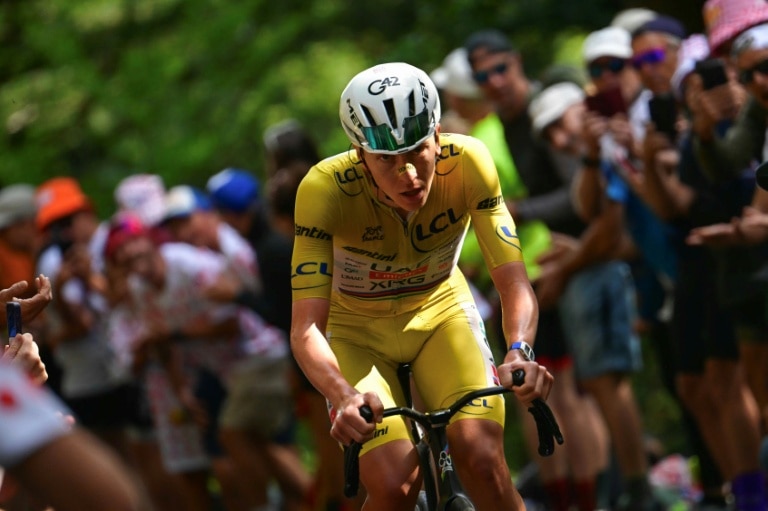
    Race leader Tadej Pogacar, the four-time Tour champion from Slovenia, and his closest challenger, two-time winner Jonas Vingegaard of Denmark, both confirmed the surprise visits from International Testing Agency (ITA) officials ahead of Sunday’s 15th stage. The 183.9-kilometer route, which winds from the Jura region to the high-altitude finish at Plateau de Solaison in the Alps, features four rated climbs and finishes with an 11-kilometer ascent averaging 9% gradient—one of the toughest tests riders will face in this year’s race.

    Le Parisien first reported that both riders were specifically targeted for the unannounced overnight tests at their team hotels. Pogacar, who has held the overall leader’s yellow jersey for more than 10 days (requiring post-stage testing after each of those days of racing), told reporters that inspectors arrived at his room at 5 a.m., leaving him with just four hours of sleep before the stage start.

    “It was a big shock to only get four hours of sleep,” Pogacar said. “I couldn’t fall back asleep after they left, so I spent the morning chilling out, listening to old Eminem tracks and making coffee—ended up over-caffeinated. I was ready to race when the start came, but there’s nothing nice about being woken up mid-dream.” He added that random out-of-competition morning tests are common during the Tour, but this was the first time officials had conducted testing in the middle of the night this year.

    Vingegaard’s test came even earlier, with inspectors knocking at his door at 2 a.m., cutting his sleep short ahead of the high-stakes mountain stage. “The ITA didn’t let me get much sleep last night. I was sleeping really well until that knock,” Vingegaard told reporters. “Don’t get me wrong—it’s good that they test, we all support anti-doping work. But when it disrupts your sleep and can impact your performance out on the road, that doesn’t make sense. It has to be equal for all riders, but getting woken up at two in the morning is never pleasant.” The entire testing process took 40 minutes, Vingegaard said, and while he felt physically able to race, it was far from an ideal preparation.

    Richard Plugge, managing director of Vingegaard’s Visma-Lease a Bike team, told Dutch cycling outlet Wielerflits that multiple teams had riders targeted for night-time testing, though he did not share further details. Plugge acknowledged that rigorous anti-doping oversight is critical to maintaining the sport’s integrity, but admitted the timing of the tests was “unpleasant” for fatigued riders.

    Not all team members took the disruption as calmly as the two overall contenders. Matteo Jorgenson, Vingegaard’s American teammate, slammed the timing as a major snub to rider welfare. “I was told to keep my mouth shut about this, but this is a complete lack of respect for the riders,” Jorgenson told reporters. “Recovery is everything for us, especially between two of the hardest mountain stages of the entire Tour. To get woken up at 2 a.m. right before one of them? That makes me absolutely furious.”

    Heading into the 15th stage, Pogacar holds a commanding 4.5-minute overall lead over Vingegaard, with five other riders sitting within 1 minute 20 seconds of the Dane in the general classification. Both top contenders took the start on Sunday despite the disrupted night of sleep, as the race continues its push toward the Paris finish.
  • A ferry carrying 133 people capsizes off Guyana’s coast, leaving dozens missing

    A ferry carrying 133 people capsizes off Guyana’s coast, leaving dozens missing

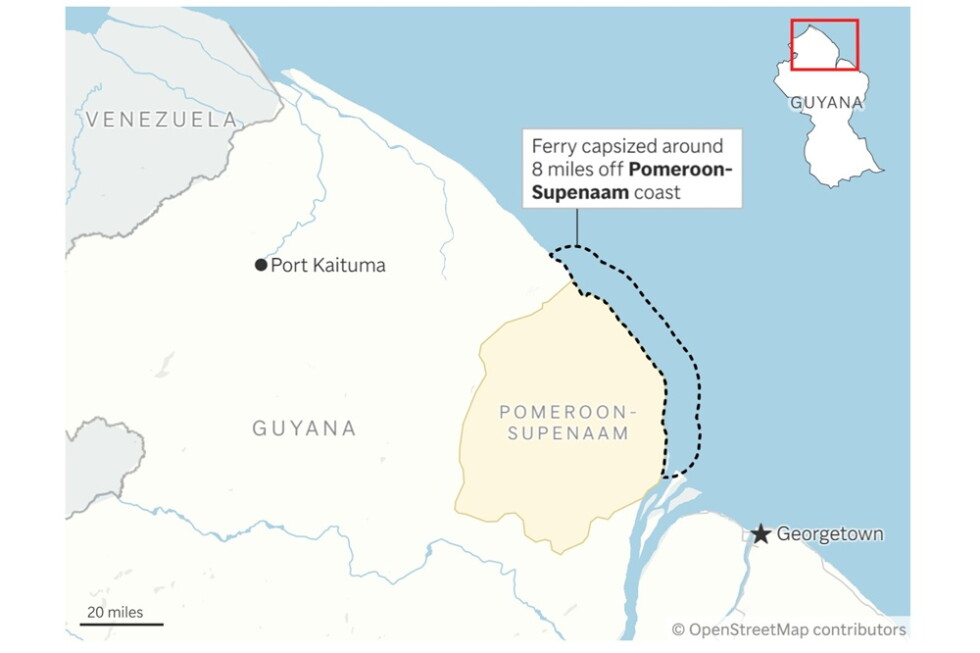
    GEORGETOWN, Guyana – A devastating maritime incident has unfolded off the North Atlantic coast of Guyana, where a government-operated passenger ferry capsized with 133 passengers and crew members on board. As of Sunday, rescue teams have pulled 67 survivors from the water, while urgent search efforts continue across a vast search area to locate dozens of unaccounted-for people, authorities confirmed.

    The vessel in question, the MV Barima, was traveling along the country’s Atlantic coastline from Georgetown, Guyana’s capital, to Port Kaituma when the accident occurred, according to Prime Minister Mark Phillips, who is overseeing the national government’s emergency response to the disaster. Phillips confirmed that the group of rescued people includes 41 adult men, 11 adult women, and 15 children. He declined to comment on whether officials expect fatalities among the missing passengers.

    To cover the wide area where the vessel capsized, search operations have mobilized an extensive fleet of resources: military helicopters, fixed-wing surveillance aircraft, and local fishing vessels are currently combing through a 1,000-square-mile stretch of ocean and coastal water in the hunt for survivors.

    Public Works Minister Juan Edghill shared details of the timeline of the incident in a Facebook post, noting that the MV Barima departed Georgetown just after 3 p.m. local time on Saturday, and began encountering dangerous conditions shortly before midnight. The national emergency response center received the vessel’s distress call at 11:01 p.m. local time (0301 GMT), which immediately triggered the launch of a joint search and rescue operation involving both government-owned and private watercraft.

    The ferry capsized in waters near the mouth of the Pomeroon River, according to official accounts. The MV Barima operates weekly scheduled services to remote, largely Indigenous communities located near Guyana’s border with Venezuela, a key transportation link for residents in the under-served region.

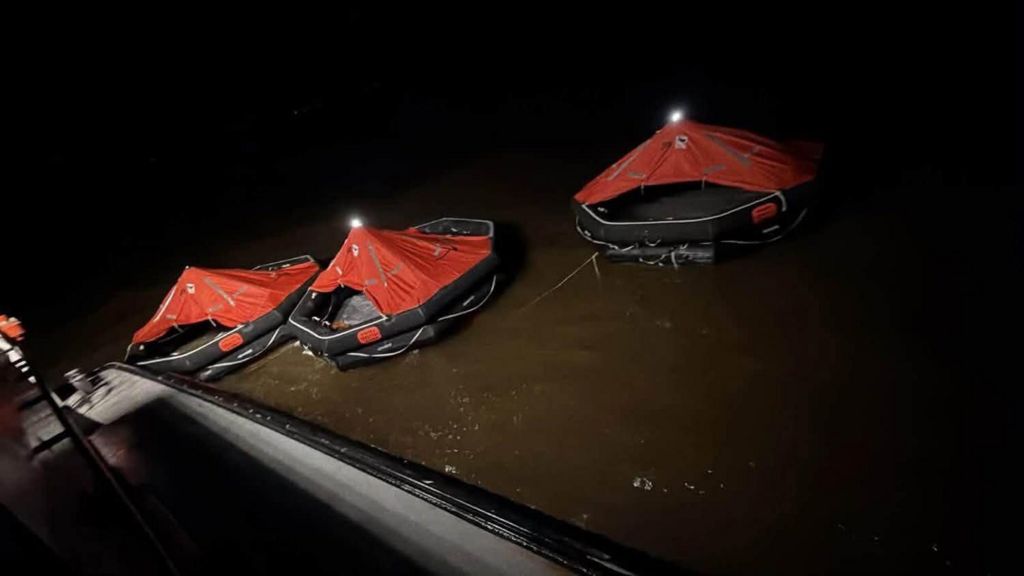
    Edghill pushed back against circulating claims that overloading of passengers or cargo contributed to the capsizing. He confirmed the vessel was properly equipped with 250 life jackets, two rigid life rafts, and six inflatable life rafts, meeting required safety standards. Citing firsthand accounts from rescued passengers, the minister said abnormal tide conditions were the primary cause of the disaster.

  • What to know about the Tate brothers, social media influencers facing rape and trafficking charges

    What to know about the Tate brothers, social media influencers facing rape and trafficking charges

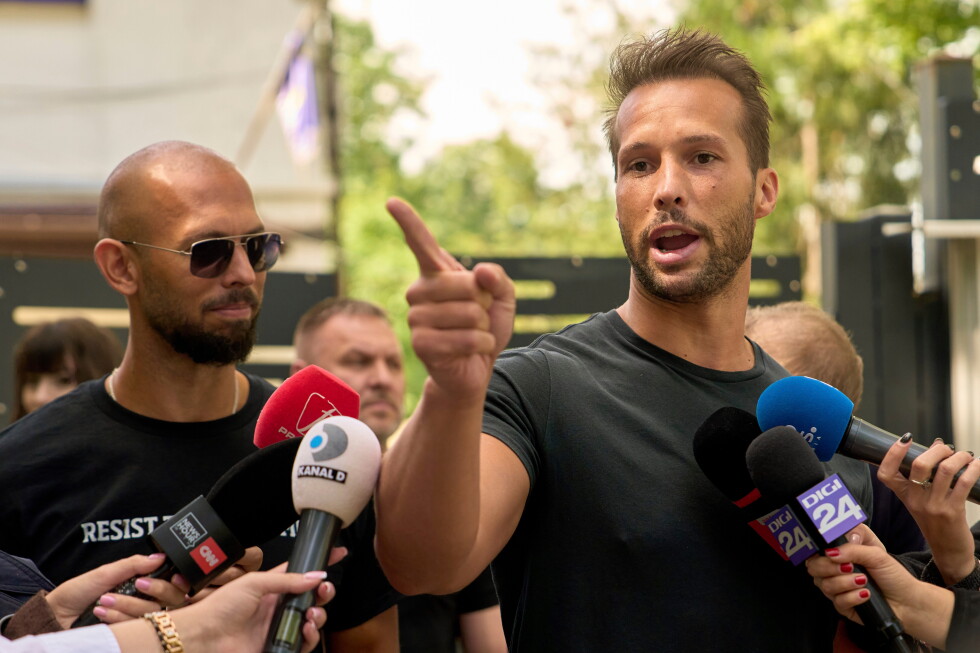
    MIAMI — A years-long international legal case involving high-profile influencer brothers Andrew and Tristan Tate took a sharp new turn Saturday, when U.S. law enforcement took the pair into custody at the request of British authorities who have leveled additional serious charges including rape, sex trafficking, and child indecent image offenses. The development adds another chapter to a sprawling saga that has stretched across three countries and drawn global attention to the pair’s polarizing online presence and repeated denials of wrongdoing.

    Britain’s Crown Prosecution Service (CPS) confirmed that the new charges stem from allegations made by four additional victims, with evidence compiled by investigators from Bedfordshire Police, based in southeastern England. The updated charges bring the total number of alleged victims in the UK case to seven. The offenses are alleged to have occurred between 2010 and 2015, expanding on a previous set of charges filed over claims from three earlier victims dating back to 2012–2015.

    Breakdown of the new charges shows Andrew Tate, 39, faces seven additional counts of rape, three counts of arranging or facilitating trafficking for sexual exploitation, three counts of assault, and 19 offenses related to indecent images of children and extreme pornography. His younger brother Tristan, 38, faces one count of sexual assault, two counts of rape, and three counts of arranging or facilitating sex trafficking. Both brothers are dual U.S.-British citizens, and the CPS has formally requested their extradition from the U.S. to face trial in the UK. The pair remain in U.S. custody as extradition proceedings get underway.

    The Tate brothers first rose to prominence as former professional kickboxers who built a massive global social media following centered on a controversial brand of content that promotes extreme wealth, male dominance, and open misogyny. Andrew Tate, the more prominent of the two, has amassed more than 10 million followers on X, formerly Twitter, but has been permanently banned from major platforms including YouTube, TikTok, and Instagram for repeated violations of hate speech policies. He also operates a paid online academy that markets itself to young men as a guide to building wealth and attracting romantic partners. Both brothers have been open about their vocal support of former U.S. President Donald Trump.

    This is not the first time the pair have faced legal repercussions. In late 2022, they were arrested in Romania, where they had resided since 2016, alongside two local Romanian women. All four were accused of running a criminal network that lured women into coercive sexual exploitation. The brothers have consistently denied all allegations in the Romanian case, and procedural legal delays have kept the case from going to trial, though it remains open. A separate Romanian legal case against the brothers is also still active. Andrew Tate has repeatedly claimed that Romanian prosecutors hold no evidence against the pair and that a political conspiracy is in place to silence him.

    Earlier this year in the UK, a High Court judge rejected a legal attempt by the Tate brothers to force authorities to release the names of their accusers, clearing a key procedural hurdle for the prosecution. Earlier this year in February 2025, after Romanian authorities lifted court-imposed travel restrictions that had kept the pair in the country for more than two years, the brothers were permitted to leave Romania. They flew to Florida on a private jet to enter the United States.

    Their travel to the U.S. sparked minor political controversy after Romania’s foreign minister noted that a former U.S. official from the Trump administration had previously expressed interest in the brothers’ Romanian legal case. When asked whether his administration had pressured Romanian officials to release the Tate brothers, Trump stated he knew nothing about the case. The arrest in Miami marks the latest development in a legal saga that continues to unfold across transnational jurisdictions.

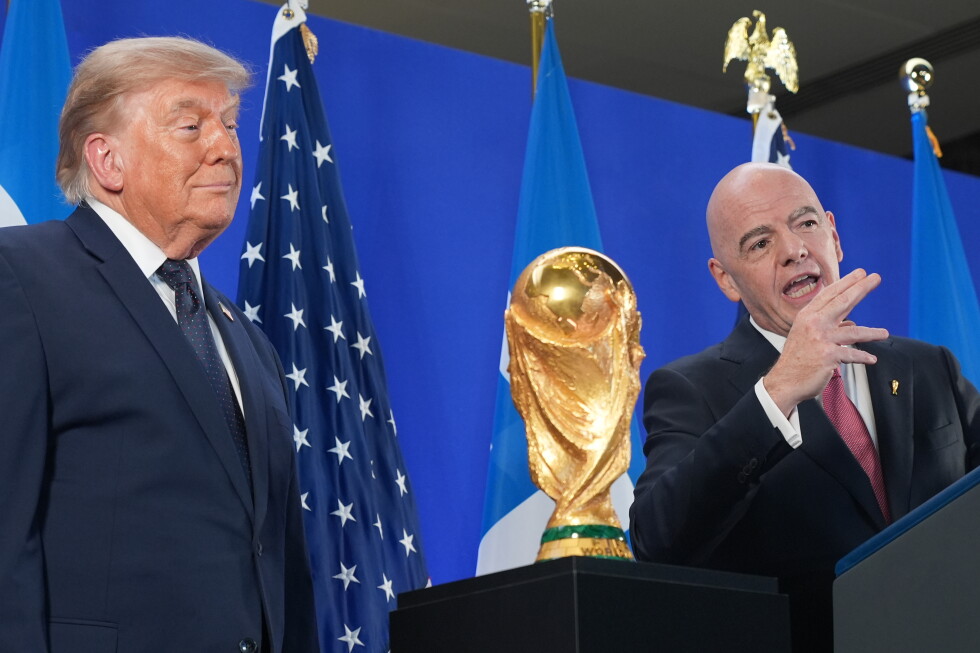
  • World Cup integrity questioned by European rights body urging FIFA to help protect 2030 tournament

    World Cup integrity questioned by European rights body urging FIFA to help protect 2030 tournament

    GENEVA – On the eve of the 2026 men’s World Cup final between Spain and Argentina, the head of Europe’s leading human rights organization has delivered a scathing rebuke of FIFA’s management of the global tournament, calling out systemic threats to competition integrity and pushing for immediate structural reform ahead of the 2030 edition.

    Alain Berset, a former two-term president of Switzerland (FIFA’s host nation) and current Secretary General of the 46-nation Council of Europe, published an open letter Sunday to FIFA, the governing body of global soccer, just hours before the 2026 title match kicked off in East Rutherford, New Jersey. In the letter, Berset warned that the sport’s biggest tournament is already facing a new existential crisis driven by unchecked political influence and outsized commercial interests tied to gambling.

    “The next crisis has already begun. It has two names: money and power,” Berset wrote, pointing to two high-profile incidents from the 2026 tournament that he says expose deep flaws in FIFA’s governance.

    The first controversy centers on U.S. men’s national team forward Folarin Balogun, who was cleared to play in a critical knockout stage match against Belgium just days after receiving a mandatory one-game suspension. Berset confirmed the unusual last-minute reversal of the ban came directly after then-U.S. President Donald Trump personally contacted FIFA President Gianni Infantino to pressure for the decision. Belgium went on to win the quarterfinal-qualifying match 4-1, eliminating the U.S. from the tournament. Berset emphasized that when tournament rules are bent to accommodate political pressure, every match outcome becomes vulnerable to legitimate doubt.

    “Political influence has also moved onto the field,” Berset wrote. “The sanction suspended mid-tournament came after a head of state called the president of FIFA.”

    UEFA, European soccer’s governing body, has already publicly condemned FIFA’s disciplinary ruling on Balogun, saying the decision “crossed a red line” for the rule of law and transparency in global soccer. As of the publication of Berset’s letter, FIFA has still not released any official documentation explaining the reasoning behind the reversal of the ban, which was decided by a FIFA disciplinary judge from the United Arab Emirates.

    A second major integrity risk Berset outlined stems from FIFA’s controversial $150 million sponsorship deal with ADI Predictstreet, an Abu Dhabi-backed prediction betting firm that was formally registered just one week before the partnership was announced in April 2026. The deal is part of a broader series of commercial partnerships FIFA has struck with gambling industry entities for the 2026 World Cup, the first edition of the tournament expanded to 48 teams and 104 total matches.

    Critics have long argued that micro-prediction betting markets create openings for insider trading and match manipulation, because they allow bettors to wager on small, in-game moments that individual players can influence without altering the final score. Berset echoed these concerns, writing that this type of commercial partnership “is an open door to fraud, and this World Cup has opened the door wider.”

    Beyond the two high-profile controversies, Berset also raised a series of additional concerns about the 2026 tournament, including eroded authority for on-field referees, unaddressed racist abuse of players (some of which came from elected public officials), and the proliferation of micro-betting on nearly every in-game event from passes to corner kicks.

    The public rebuke from the Council of Europe carries particular weight, as the intergovernmental body – whose core mission is advancing democracy, human rights and the rule of law across the globe – has maintained a formal working partnership with FIFA since 2018. When the memorandum of understanding was signed eight years ago, Infantino emphasized that the alignment was natural, as both organizations shared core values of transparency, accountability, competition integrity, and respect for human and children’s rights. Berset and Infantino most recently met on the sidelines of the 2024 United Nations General Assembly in New York to discuss cooperation.

    Looking ahead to the 2030 men’s World Cup, which will be hosted primarily by Spain and Portugal with additional matches co-hosted by Morocco and three opening games split between Argentina, Paraguay and Uruguay to mark the centenary of the first World Cup held in 1930, Berset laid out a clear call to action for FIFA.

    “So here is my proposal to FIFA,” Berset wrote. “A working dialogue that starts tonight, to build the integrity framework of the 2030 World Cup before it is played.”

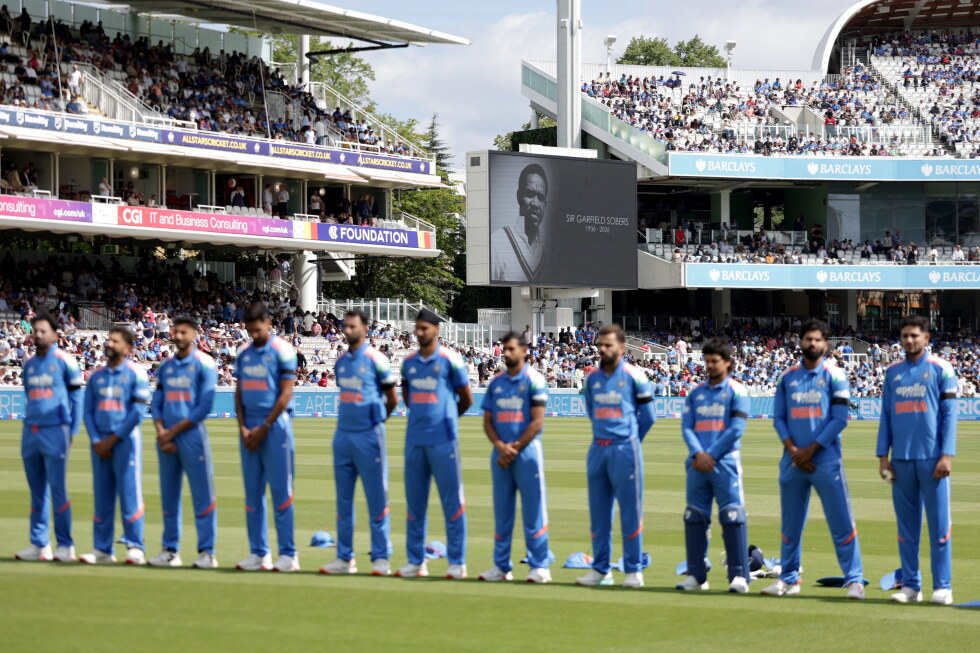
  • England win toss, bat in series-deciding 3rd ODI against India at Lord’s

    England win toss, bat in series-deciding 3rd ODI against India at Lord’s

    One of the most anticipated men’s One Day International series of the northern summer has reached its decisive final chapter, with England winning the pre-match coin toss and choosing to take the batting crease first in the third and final ODI against India at London’s iconic Lord’s Cricket Ground on Sunday.

    The five-match? No, three-match series has already delivered plenty of drama, splitting the two sides one win apiece ahead of Sunday’s decider. England fell to defeat in the opening fixture at Birmingham’s Edgbaston, but mounted a crucial comeback in the second match in Cardiff, where veteran batsman Joe Root’s unbeaten knock of 99 runs proved the decisive difference between the two sides, securing England’s equalizing win.

    For England, this match also carries the weight of historical pressure: the home side has not claimed a series victory over India in ODI play since 2018, giving Sunday’s decider far more stakes than just a single match result.

    Both sides made key tactical changes to their starting lineups ahead of the opening innings. England made one swap, calling up pace bowler Josh Tongue to replace Saqib Mahmood in the 11-man squad. India opted for a more extensive reshuffle, making three total changes to their side: KL Rahul, rookie spinner Prince Yadav, and left-arm pace bowler Arshdeep Singh earned starting spots, stepping in for pace spearhead Jasprit Bumrah, all-rounder Washington Sundar and batting all-rounder Shivam Dube.

    The full confirmed starting lineups for the decider are as follows:
    England: Ben Duckett, Jacob Bethell, Joe Root, Harry Brook (captain), Jos Buttler, Sam Curran, Will Jacks, Gus Atkinson, Jofra Archer, Adil Rashid, Josh Tongue
    India: Rohit Sharma, Shubman Gill (captain), Virat Kohli, Ishan Kishan, Shreyas Iyer, KL Rahul, Axar Patel, Gurnoor Brar, Prince Yadav, Arshdeep Singh, Prasidh Krishna

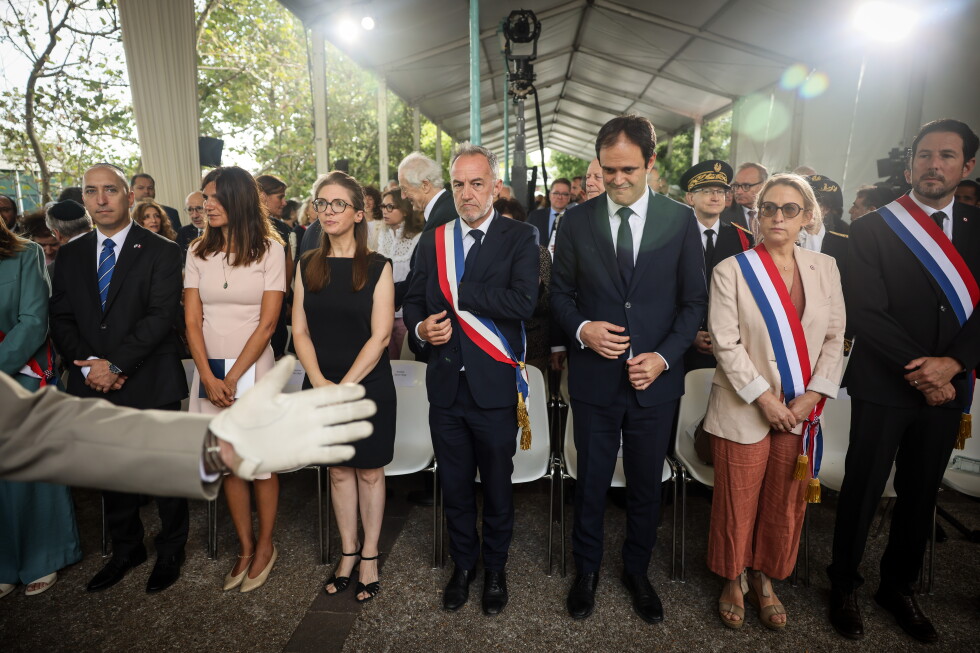
  • France commemorates the Vel d’Hiv roundup after a Paris plaque honoring rescuers is vandalized

    France commemorates the Vel d’Hiv roundup after a Paris plaque honoring rescuers is vandalized

    On a solemn Sunday in Paris, France gathered to honor the memory of more than 13,000 Jewish victims of the 1942 Vel d’Hiv roundup, one of the darkest chapters of collaboration between the wartime Vichy regime and Nazi Germany. The annual commemoration this year carries heightened urgency, as the nation confronts a sharp increase in antisemitic violence and harassment across the country following the outbreak of the Israel-Gaza conflict in October 2023.

    The mass arrest operation, named for the Paris Winter Velodrome where thousands of detainees were crowded in inhumane conditions before deportation, unfolded over four days starting July 16, 1942. French authorities mobilized more than 4,500 police officers and requisitioned dozens of civilian buses to carry out the raid, acting on Nazi orders. Over 13,000 Jews were arrested, one-third of them children. Families were torn apart as officers seized children from their parents’ arms, and nearly all detainees were ultimately sent to Nazi death camps, where very few survived.

    During World War II, after Nazi Germany invaded and occupied France in 1940, the collaborationist Vichy government administered French territory and actively aided the Nazi regime’s genocidal campaign against European Jewry. It would take five decades for the French state to formally take responsibility for its role in the Holocaust: in 1992, then-President Jacques Chirac issued a historic public apology for the French authorities’ central participation in the Vel d’Hiv roundup and other atrocities.

    Today, France is home to the largest Jewish community in Europe. In the months after the October 7, 2023, Hamas attacks on Israel and the subsequent Israeli military campaign in Gaza, official data has recorded a major surge in antisemitic incidents, ranging from verbal threats and graffiti vandalism to physical assaults on Jewish people and sites. The troubling wave of hate cast a shadow over this year’s commemoration, after authorities confirmed a memorial plaque honoring a French family recognized as Righteous Among the Nations by the State of Israel was vandalized in Paris in the days leading up to the ceremony. The family had saved a 13-year-old Jewish child from capture during the 1942 roundup.
    French Deputy Defense Minister Alice Rufo condemned the act of vandalism in stark terms, saying “To attack the Righteous is to desecrate the entire universe.” She reaffirmed the state’s commitment to restoring the plaque and preserving the legacy of those who resisted antisemitism and genocide, stressing that “In the face of antisemitism, in all its forms, the Republic will not yield an inch.”

    Each year’s commemoration serves as both a tribute to the victims of the roundup and a reminder of the ongoing need to confront antisemitic hate in modern French society, keeping the memory of the Vel d’Hiv victims alive for future generations.

  • If history is any indication, expect some goals in the World Cup final between Argentina and Spain

    If history is any indication, expect some goals in the World Cup final between Argentina and Spain

    As the world’s biggest stage in men’s soccer prepares for its headline showdown between Argentina and Spain, decades of World Cup history offer compelling context and fascinating storylines to watch when the two sides step onto the pitch Sunday.

    First, fans can reasonably expect a high-scoring, action-packed clash, if past finals are any indicator. An analysis of 22 prior men’s title matches — including the 1950 decisive fixture between Uruguay and Brazil that settled the tournament despite not bearing the official “final” label — shows that winning sides have notched an average of 2.6 goals per final, while losing teams add an average of 1.1 goals to the scoreboard.

    Recent finals have leaned heavily into this offensive tradition: the 2018 and 2022 title matches combined for a staggering 12 total goals. In 2018, France outpaced Croatia 4-2 to claim the crown, and four years later, Argentina and France fought to a 3-3 draw before Argentina secured the win on penalties. Overall, 17 of the last World Cup titles went to teams that scored at least two goals in the final, though eight teams have hit that two-goal mark and still walked away empty-handed. Low-scoring title games are far rarer: only three finals have ended 1-0 (West Germany over Argentina in 1990, Spain over Netherlands in 2010, and Germany over Argentina in 2014), and just one final ended 0-0 in regulation, when Brazil bested Italy on penalties in the 1994 tournament — the only previous World Cup final held on U.S. soil before this edition.

    Beyond historical scoring trends, multiple coaching and player milestones hang in the balance this Sunday. For Argentina, if the side lifts the trophy, head coach Lionel Scaloni — who already led the Albiceleste to the 2022 World Cup title — will cement his place in history as just the second manager ever to win two World Cup championships. The only other coach to achieve this feat is Vittorio Pozzo, who led Italy to back-to-back titles in 1934 and 1938, a record that has stood unmatched for nearly 90 years. Three other managers (Brazil’s Mário Zagallo, West Germany’s Franz Beckenbauer and France’s Didier Deschamps) have won World Cups as both a player and a coach, but none have claimed two triumphs on the touchline.

    Argentina’s global icon Lionel Messi is also set to make history just by stepping onto the field. At 39 years old, Messi will become the oldest outfield player ever to appear in a men’s World Cup final. The previous record for the oldest outfield finalist belonged to Sweden’s Gunnar Gren, who was 37 when he faced Brazil in the 1958 final. The only player older than Messi to ever start in a World Cup final is Italian goalkeeper Dino Zoff, who was 40 when he backstopped Italy to the 1982 title. Additionally, Messi is on the cusp of joining Brazil’s Cafu as only the second man to play in three men’s World Cup finals; unlike Cafu, who was a reserve for one of his three final appearances, Messi will be the first player ever to start in three men’s World Cup title matches.

    For Spain, the final brings its own set of potential history-making moments, centered on a unique blend of youthful talent and veteran leadership. La Roja is expected to field two 19-year-old teenagers, Lamine Yamal and Pau Cubarsí, in its starting lineup. No men’s World Cup champion has ever put more than one teenager in the starting lineup for the final, putting this young duo in uncharted territory. Teenagers actually hold an unbeaten record in World Cup finals, per FIFA data: only three teens have ever played in a men’s final, and all three left with winner’s medals: 17-year-old Pelé for Brazil in 1958, 18-year-old Giuseppe Bergomi for Italy in 1982, and 19-year-old Kylian Mbappé for France in 2018.

    If Spain claims the win, their 65-year-old head coach Luis de la Fuente will break another age record, becoming the oldest manager ever to win a World Cup. The current record is held by Vicente del Bosque, who was 59 when he led Spain to the 2010 World Cup title.

    Entering the final, both sides carry impressive ongoing streaks that add to the narrative. Spain enters the match unbeaten in 37 consecutive matches (28 wins, 9 draws), a run that ties Italy’s 2018-2021 stretch for the longest unbeaten streak by any European men’s national team in history. Argentina also boasts a notable tournament streak: the Albiceleste have won seven consecutive World Cup matches, tying Italy for the second-longest consecutive win streak in men’s World Cup history. Only Brazil, which won 11 straight World Cup matches across the 2002 and 2006 tournaments, holds a longer streak.

    Sunday’s showdown will only be the second time Argentina and Spain have faced off in a World Cup. The pair’s only prior tournament meeting came in the 1966 group stage, where Argentina claimed a 2-1 win. Across all competitive matches and friendlies, the two sides are remarkably evenly matched: they have played 14 times total, with six wins apiece and two draws, setting the stage for what is expected to be a tightly contested, historic final.

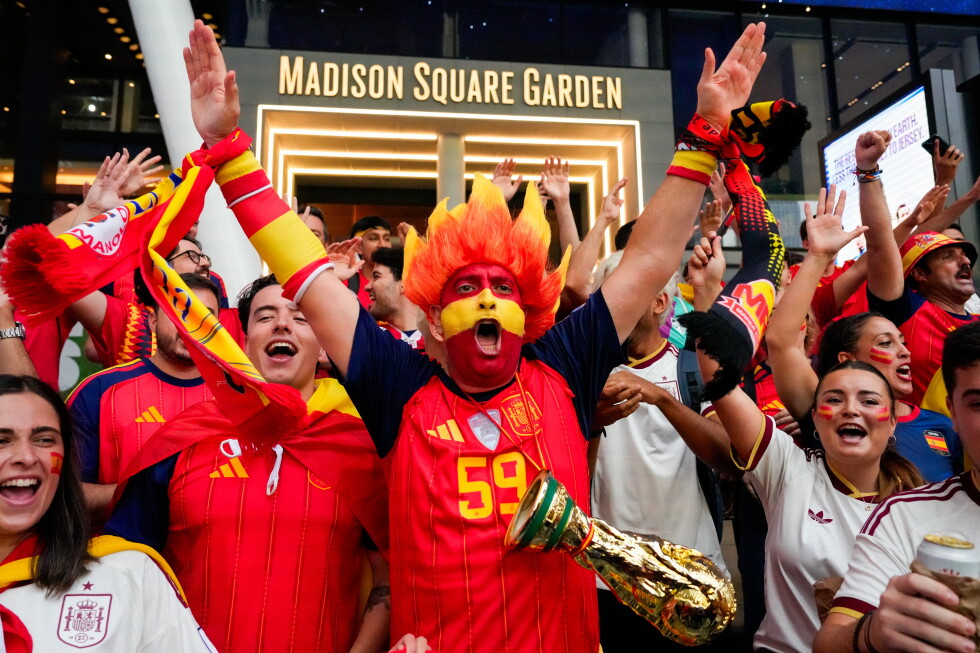
  • The World Cup final is here, with Argentina taking on Spain in soccer’s showdown

    The World Cup final is here, with Argentina taking on Spain in soccer’s showdown

    After more than three weeks of world-class soccer action across the United States, Canada, and Mexico, the 2026 FIFA World Cup — the expanded 48-team edition that already holds the title of the largest World Cup in tournament history — is set for its climax on Sunday. Kickoff is scheduled for 3 p.m. EDT at East Rutherford’s MetLife Stadium, where two global powerhouses will clash for soccer’s most coveted prize: four-time finalists Argentina, seeking their fourth World Cup crown, face off against Spain, who are gunning for their second men’s title. A win for Spain would make history, as it would become the first nation ever to hold both the men’s and women’s World Cup trophies simultaneously, following Spain’s women’s team victory at the 2023 FIFA Women’s World Cup.

    This expanded 48-team tournament has already broken multiple records before the final whistle even blows. With 103 matches completed heading into Sunday’s final, the 2026 edition has already seen more total goals scored than any previous World Cup, with 307 goals on the board entering the championship clash. If Argentina and Spain net at least two combined goals in the final, this tournament will claim another milestone: the highest average goals per game since the 1956 World Cup, which posted an average of 3.6 goals per match. Even if the two sides combine for fewer than two goals, 2026 will still hold the second-highest average goals per game in World Cup history, outperforming every tournament since the 1970 World Cup, which averaged 2.97 goals per game.

    Beyond the on-pitch action, this final will deliver a unprecedented global entertainment spectacle, a first for FIFA’s men’s World Cup. Grammy-nominated multiplatinum artist Post Malone will headline the official closing ceremony, scheduled to begin 90 minutes before kickoff. For the first time in men’s World Cup history, the match will feature a star-studded halftime show headlined by a roster of global superstars: Justin Bieber, Madonna, Shakira, and KRT, joined afropop icon Burna Boy, award-winning Venezuelan conductor Gustavo Dudamel, the acclaimed PS 22 Chorus with a special guest appearance from Coldplay, and even beloved characters from Sesame Street and The Muppets.

    High-profile attendance is also expected for the historic match, with former U.S. President Donald Trump confirmed to be in attendance and scheduled to take part in the post-match trophy presentation. Ahead of kickoff, both sides have confirmed their kit choices: Argentina will take the pitch in its iconic light blue and white vertically striped home jerseys, while Spain will wear its primary kit of predominantly red with navy blue sleeves. Officiating the historic final is a crew from Slovenia, led by head referee Slavko Vinčić, with assistant referees Tomaž Klančnik and Andraž Kovačič.

    For Argentina, the match also represents a chance for captain Lionel Messi to add another chapter to his already legendary career. Messi enters the final within striking distance of tournament leader Kylian Mbappé for the Golden Boot, and is also in contention for a record third Golden Ball award, cementing his legacy as one of the greatest players to ever step onto a soccer pitch.

  • Ferry carrying 116 passengers sinks off Guyana coast, authorities say

    Ferry carrying 116 passengers sinks off Guyana coast, authorities say

    A major maritime disaster has unfolded off the northern coast of Guyana, where a passenger ferry carrying 116 people capsized and sank late Wednesday local time, triggering a large-scale overnight rescue operation involving both government and private vessels. The vessel, identified as the MV Barima, was traveling along its scheduled route from the capital city of Georgetown to Port Kaituma when it overturned near the coastal outpost of Iron Punt.

    According to Public Works Minister Juan Edghill, local emergency authorities received an initial distress signal from the ferry at 23:01 local time, which translates to 03:01 British Summer Time. The alert immediately launched a coordinated search and rescue mission, with rescuers working through darkness and challenging coastal conditions to pull survivors from the water. As of the latest official update, 53 passengers have been pulled to safety, but the fate of the remaining 63 people on board remains unknown.

    Details of the vessel show that the MV Barima is no ordinary ferry: launched all the way back in 1939, the 40-meter (131-foot) craft has been in service for more than 80 years, according to vessel tracking data from maritime industry database VesselFinder. Edghill confirmed that the ship was equipped with sufficient safety equipment ahead of its voyage, including 250 life jackets, two rigid-hulled lifeboats and six inflatable life craft. Even so, the rapid capsizing left many passengers stranded in open water before safety gear could be deployed.

    Guyana’s top government officials have moved quickly to oversee the emergency response. Prime Minister Mark Phillips is personally leading the government’s coordination of the search and rescue effort, as authorities work to clarify the status of ongoing operations and assess what led to the sudden sinking. At this stage, it remains unclear whether rescue teams expect to find more survivors, and officials have not yet released any information about possible casualties or the cause of the incident. Local communities along the coast have mobilized to support the operation, with private boat owners joining the effort to search for missing passengers in nearby waters.

  • Messi on the brink of history – will it be his last World Cup game?

    Messi on the brink of history – will it be his last World Cup game?

    Argentina stands on the cusp of an unprecedented piece of football history, needing just one more victory in Sunday’s 2026 World Cup final to etch their name alongside the sport’s immortals. If head coach Lionel Scaloni’s side can overcome European champions Spain to claim the title, they will become only the third men’s national team ever to win consecutive World Cup trophies, joining an elite club that currently only includes 1930s Italy and 1950s Brazil.

    For Argentina to cross that finish line, all eyes will once again fall on 39-year-old legend Lionel Messi, who has delivered another tournament for the ages to carry his side this far. Whether fans label him the undisputed greatest of all time or merely rank him among the top contenders, there is no arguing that the Argentine playmaker has redefined what elite attacking play looks like across a decades-long career that has rewritten the sport’s record books.

    A Sunday victory would not only secure back-to-back World Cup titles for Argentina — it would also make Messi the first men’s captain in history to lift the World Cup trophy twice. After a string of underwhelming performances across his first four World Cup appearances, Messi exploded into form at the 2022 Qatar tournament, leading Argentina to their first crown in 36 years, and he has picked up right where he left off in North America four years later. Currently, he sits just one goal behind France’s Kylian Mbappe in the race to become the World Cup’s all-time leading men’s goalscorer, an extraordinary milestone for a player who briefly walked away from international football entirely back in 2016, only to reverse his retirement months later.

    Sunday’s final will mark Messi’s 34th World Cup appearance, stretching across six tournaments, and a growing debate has emerged around whether this will mark his final outing in Argentina’s iconic blue and white stripes — or whether the legend has another World Cup run left in him, when the tournament celebrates its 100th anniversary in 2030.

    If Messi does elect to continue his international career through 2030, he will make history again as the oldest outfield player to ever feature at a men’s World Cup, turning 43 before the tournament kicks off — a record that would only be broken if his long-time rival Cristiano Ronaldo chooses to extend his own Portugal career to join him. Beyond the record books, 2030 also offers a deeply sentimental draw for Messi: the centenary tournament will host at least one opening match on Argentine soil, offering the homegrown icon a chance to play a World Cup game in front of his own nation’s fans. That opportunity is one many close to Messi believe will be too tempting to turn down.

    “Even if you hear it is the end, I doubt it but we’ll see. I just see him with the national side, simply because he enjoys it,” Spanish football expert Guillem Balague told BBC Sport. “I don’t see him being at Inter Miami in the MLS, still performing and then saying that’s it and he’s going to play out the rest of his career with Inter Miami. I feel that he hasn’t said the last word yet. He finishes games, 120-minute games, at 39. In the first 90 minutes against Cape Verde, he covered 6.5km and 62% of that is walking. You can add a bit more walking. The passion is still there. All of that means he’s not going to leave the national side.”

    Messi’s 2026 World Cup campaign has been nothing short of sensational, with eight goals in seven matches and a string of match-winning displays that dragged Argentina through the knockout rounds. Scaloni, who has led Messi and his side to two consecutive finals, has no hesitation in anointing the 39-year-old as the greatest to ever play the game.

    “He is history, a legend. I feel proud, he is the best footballer the world has ever seen and reaching a final at 39 is something unbelievable — and that is why I said we must enjoy him,” Scaloni told reporters. “With Diego Maradona, we still miss him but Messi is still with us so we must enjoy him. I have no idea if this is Leo’s last game, you will have to ask him. We haven’t discussed it.”

    Messi’s remarkable late-career resurgence on the World Cup stage is one of the most unexpected stories in modern football: 15 of his 21 all-time World Cup goals have come after his 35th birthday, a statistic that defies conventional wisdom about athletic aging. This late-career hot streak has already seen Messi break multiple tournament records, and he adds more with each game he plays.

    While he didn’t find the back of the net in Argentina’s semi-final comeback win over England, two late assists from Messi secured the victory, pushing his all-time World Cup assist total to 12 — 10 of which have come in knockout rounds, a new all-time record. Already the leader in World Cup appearances with 33, Messi is one of only two players (alongside Ronaldo) to feature at six men’s World Cups, the only player to win two World Cup Golden Balls, and the only player to score in every round of a World Cup on the way to lifting the trophy. He also holds the record for the longest consecutive run of scoring or assisting in World Cup matches, with 11 straight games dating back to 2022, and has scored in nine consecutive World Cup games, another unprecedented record. Sunday’s final will also see him become only the second player after Brazil’s Cafu to start three men’s World Cup finals.

    It is worth noting that Messi already predicted his World Cup career would end after the 2022 tournament, telling reporters before that final: “I am very happy for finishing my journey in World Cups in a final, to play the last game in a final. That is really very gratifying. There are a lot of years from this year to the next one. I don’t think I will be able to do that. To finish this way is brilliant.”

    That prediction, of course, did not come to pass. So regardless of any announcements that come after Sunday’s 2026 final, the football world will be waiting to see if Messi has one more magical chapter left in his World Cup story, on home soil in 2030.