博客

  • Trump orders Smithsonian to post warnings about ‘inaccurate’ US history

    Trump orders Smithsonian to post warnings about ‘inaccurate’ US history

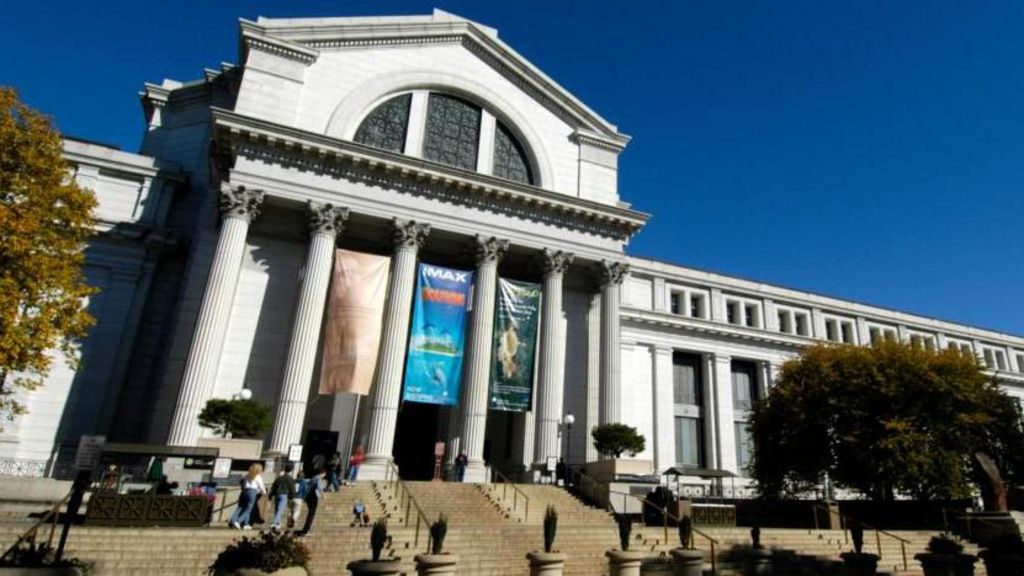
    In a sharp escalation of the Trump administration’s campaign to reshape how American history is presented to the public, former President Donald Trump has issued a new executive order ordering mandatory warning signs to be installed outside the Smithsonian National Museum of American History. The order, formally titled *Restoring Trust in the Smithsonian Institution*, targets exhibits the current administration frames as historically inaccurate, requiring the U.S. Department of the Interior to oversee placement of the signage and direct visitors to alternative sources that the White House deems ideologically aligned with its vision of American history. The order does not specify what those alternative, more accurate sources of historical information would be.

    The order follows months of escalating tension between the Trump White House and the world’s largest research and museum complex, the Smithsonian Institution. For months, the administration has repeatedly accused the Smithsonian and other mainstream academic organizations of harboring systemic anti-American bias. Friday’s order specifically criticizes museum leadership for failing to sufficiently honor the United States’ 250th Independence Day celebration, held July 4, by elevating the legacies of the nation’s founders. It goes further, claiming that museum leadership intentionally uses American history as a tool to advance progressive social justice causes and radical societal transformation.

    An accompanying official statement from the White House doubles down on these accusations, alleging the institution has veered into extreme political activism rooted in Marxist ideology that works to divide, demoralize and dishearten American citizens. The latest directive comes just days after Smithsonian director Anthea Hartig faced intense questioning from Republican lawmakers during two consecutive congressional hearings, where the institution was broadly accused of being permeated by “woke ideology” that has distorted public exhibits, educational resources and internal planning documents. Earlier this July, the White House Domestic Policy Council released a highly critical report claiming the museum actively erases traditional American heritage.

    Democratic leaders with oversight responsibility for the Smithsonian have quickly and forcefully condemned the executive order, framing it as a blatant overreach of executive power driven by partisan ideological goals. “This EO is a clear political overreach, driven by an ideological agenda to rewrite American history,” Congresswoman Melanie Stansbury, ranking member of the House Administration Committee, wrote on social platform X. “Our Smithsonian institutions do not belong to the President, but to the American people and so does our nation’s history.”

    This new directive is not the first administration action targeting the Smithsonian. In March, Trump issued an earlier order mandating the institution eliminate what he described as “improper, divisive, or anti-American ideology” from its programming. The broader push to alter the Smithsonian’s approach is part of Trump’s wider administration-wide effort to overhaul American cultural institutions, which he claims have been corrupted by left-wing “woke” ideology. To date, Trump has signed multiple executive orders eliminating diversity, equity and inclusion (DEI) programs across the federal government, a policy shift that has already sparked multiple legal challenges from opponents.

    Founded in 1846 and primarily funded by U.S. federal appropriations, the Smithsonian Institution operates 21 museums across Washington D.C., Virginia and New York, including the National Museum of American History, National Portrait Gallery, Smithsonian American Art Museum, and the National Zoo, among others. The complex draws between 15 and 30 million free visitors annually. The Smithsonian has not yet issued a public response to requests for comment from the BBC on the latest executive order.

  • India’s ‘Cockroach Party’ takes aim at Narendra Modi’s government after national exam debacle

    India’s ‘Cockroach Party’ takes aim at Narendra Modi’s government after national exam debacle

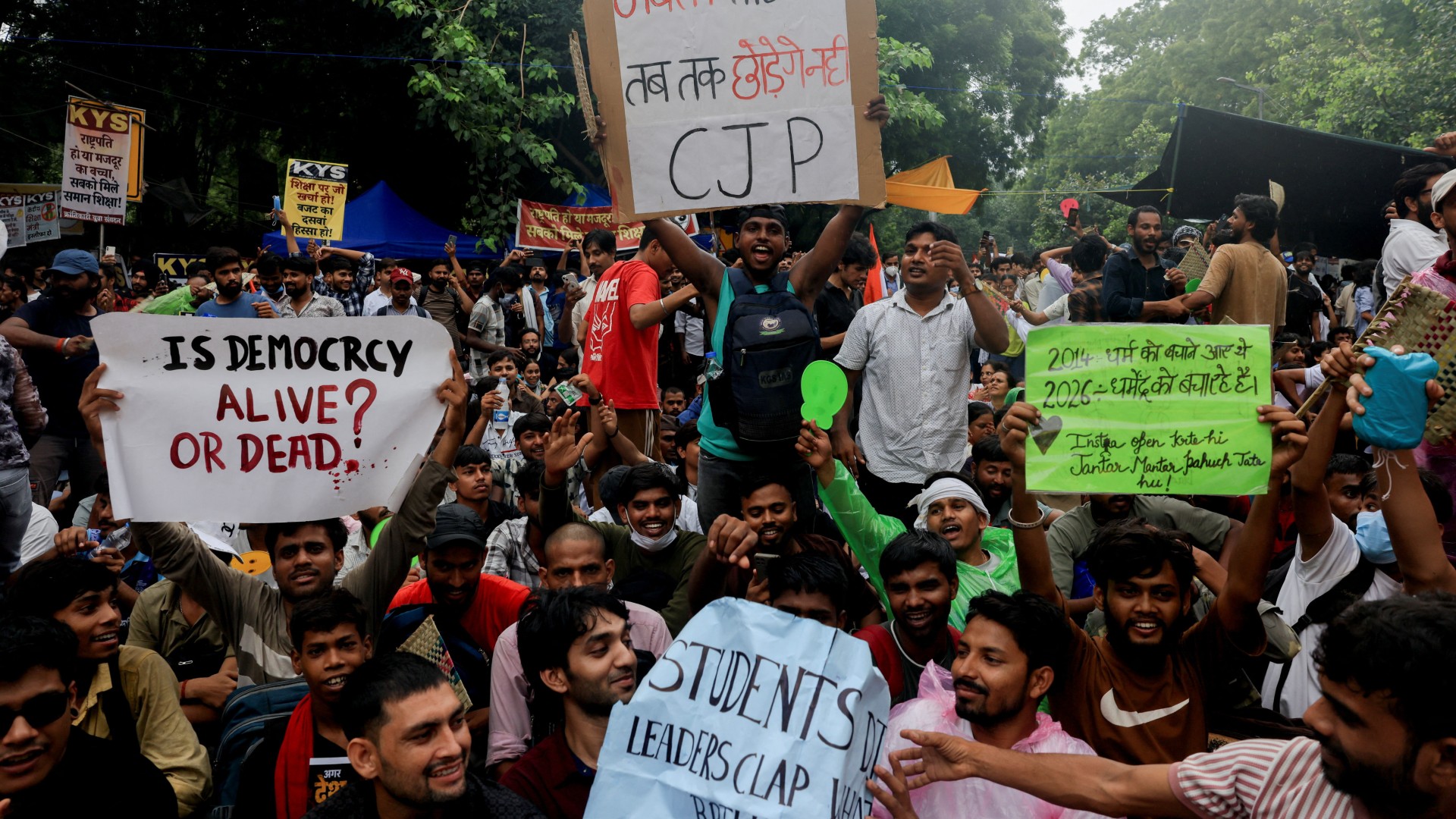
    In a bustling New Delhi public square, 18-year-old Arya Singh sits cross-legged on the pavement, strumming a tambourine as thousands of mostly student protesters crowd around her, chanting in unified roar: “Throw out the incompetent government” and “Long live people’s revolution.” For nearly four weeks, this growing demonstration has centered at Jantar Mantar, a historic 18th-century astronomical observatory that serves as India’s capital’s official designated space for public protest, drawing students from every corner of the country.

    The core demand of the movement is unambiguous: the immediate resignation of Dharmendra Pradhan, senior Bharatiya Janata Party (BJP) leader and India’s federal education minister in Prime Minister Narendra Modi’s cabinet. The trigger for the protest was the high-profile leak of the National Eligibility-cum-Entrance Test (NEET), one of the world’s largest high-stakes entrance examinations that determines admission to 137,000 undergraduate medical seats across the country.

    More than 2.3 million aspirants sat for the OMR-based NEET exam on May 3. But weeks later, an intelligence investigation uncovered that the question paper had been widely shared via the messaging app Telegram across the state of Rajasthan, forcing national exam authorities to cancel the original test and order a full re-examination on June 21. In the chaotic gap between cancellation and the retest, at least 12 students died by suicide, driven by crippling stress, shattered career hopes, and crippling uncertainty, an Indian Express investigation confirmed. Additional self-inflicted deaths have been recorded in the weeks since.

    “These 20 young people gave up every part of their lives—sports, trips, time with family—to prepare for this exam. This is not suicide. This is murder,” Singh told Middle East Eye in an on-site interview. “If this same scandal had happened anywhere else, the minister would have taken responsibility and stepped down immediately. But here in India, he clings to his post without a shred of accountability.”

    The movement, which has drawn widespread Gen Z support, carries the deliberate satirical name the “Cockroach Janta Party (CJP).” The label originated after India’s Chief Justice Surya Kant sparked national outrage during an open court hearing, when he compared unemployed young activists and job-seeking youth to “parasites” and “pests” attacking India’s political system. “There are youngsters like cockroaches who don’t get any employment or have any place in the profession. Some of them become media, some become social media, RTI activists and other activists, and they start attacking everyone,” Kant said in his original remarks. The judge later walked back the comment, clarifying he had targeted only individuals holding fraudulent degrees, not India’s youth, whom he described as “the pillars of a developed India.” But the damage was done, and young activists reclaimed the insult as a badge of honor.

    “They call us cockroaches, and maybe we are, because the system is decayed. What else can they expect such a rotten system to produce? The more rotten the system becomes, the more cockroaches it will produce,” Singh said. “That is why we are here: to show what happens when a government refuses to take accountability for its failures.”

    The movement gained national momentum after prominent Ladakh-based engineer, education reformer, and climate activist Sonam Wangchuk joined the protests in solidarity, launching a 26-day hunger strike that concluded on July 24. In the final hours of his strike, Delhi Police forcibly removed the 50-year-old activist from the protest site and admitted him to a local hospital. Wangchuk agreed to end his fast only after authorities gave formal assurances that police would end the use of force against demonstrators, drop all pending charges against protesters, and open formal negotiations with government representatives.

    Abhigyan, a 26-year-old New Delhi resident and one of the protest’s lead organizers, says the movement is rooted in broader anger over systemic corruption, institutional injustice, and rising religious intolerance under 12 years of BJP rule. He accuses the ruling party of using brutal, authoritarian tactics to suppress the demonstration. “This is not the response expected from a democratic nation but from a fascist regime, and that is what we are witnessing,” he said. Abhigyan alleges that on July 20, when protesters attempted to march toward India’s Parliament building, Delhi Police used iron-studded batons to beat demonstrators, erected electrified iron barricades to shock crowd members, and fired pellet guns to disperse the gathering. Delhi Police has denied all these allegations in an official post on X, calling the claims “completely false and misleading.” Abhigyan counters that three protesters have confirmed pellet gun injuries, 65 demonstrators were admitted to Delhi’s Ram Manohar Lohia Hospital, and 15 of those were in critical condition. He holds Prime Minister Modi and Home Minister Amit Shah directly responsible for the escalation of violence, noting “protesters never had the resources to escalate this crisis—this is entirely on the government.”

    Across the protest site, young aspirants like 21-year-old aspiring doctor Vijay Ratawal say the government’s use of force has pushed even undecided young people firmly into opposition. Reciting a collective protest poem that translates to “Leaked papers have now crossed eighty. What kind of government is this?”, Ratawal points to independent research that records nearly 70 major exam paper leaks across India during Modi’s 12-year tenure. “The use of force is making us reconsider whether the BJP should remain in power. There were doubts earlier, but now everything is clear: there are those who work for ordinary people, and those who only want to cling to power,” Ratawal said. “BJP is turning the majority of the Indian population, the youth, against them. The entire BJP cabinet is incompetent; they have set the country on fire on every front, from the Gujarat farmer protests to the Manipur ethnic violence to the tribal funeral pyre protests in Madhya Pradesh.” He added that families of protesters have lost all trust in the system, not only over exam leaks but across a slate of policies that harm ordinary citizens, and called for the BJP government to step aside to make way for competent, accountable leadership.

    The protest has drawn cross-generational support, including from 72-year-old farmer Jankabi Krishnakumar Nirmohi, who traveled from Bihar’s Bhojpur district to join the demonstration. “In 1974, we had the Navnirman and JP movements against inflation, food scarcity, and corruption, demanding systemic change. Those protests were far larger than this one, but the cruelty the BJP has unleashed on students today has no parallel in Indian history,” Nirmohi said. “When parliament loses its way, the streets begin to speak, and that is when decisions are made. It is shameless that Modi publicly praised the education minister on his birthday while students were protesting against him, and he never even mourned the 20 young people who died. That makes it very clear where his loyalties lie.”

    In recent years, South Asia has seen a wave of mass Gen Z-led protests that have toppled sitting governments in Sri Lanka, Nepal, and Bangladesh. Prominent Indian political scientist and Centre for the Study of Developing Societies professor Sanjay Kumar says the current protest sends a clear signal of widespread youth discontent with the BJP government. Opposition parties have visited the protest site to express solidarity, but Kumar says the movement was not initiated or organized by opposition groups. “My assessment is that it was neither started nor organised by opposition parties. However, once the movement began, the opposition saw it as an opportunity and tried to take advantage of it by sending a message to the youth that they are the ones looking after their interests,” he explained. He also cautions against drawing direct parallels to the regime-change movements in other South Asian countries, noting that “those are smaller countries, and something happening in the capital here has very different implications for the country. If you speak to people in rural areas, which make up nearly 70 percent of the population, I do not think this movement will have much resonance. The momentum is issue-specific and limited to a particular section of the population, mainly the youth of the country.”

    Former University of Kashmir political science professor Noor Ahmad Baba argues that the BJP’s refusal to demand Pradhan’s resignation stems from a desire to avoid appearing weak in the face of public pressure. For his part, Pradhan has struck back at critics, accusing the main opposition party, the Indian National Congress, of exploiting students as political pawns to disrupt the parliament’s Monsoon Session. “Even after the government conveyed its readiness for a comprehensive discussion, the Congress chose political spectacle over democratic debate. Their objective was never solutions for students; it was disruption for political headlines,” Pradhan wrote in an official X post. “The students of India deserve far better than being treated as tools in a political campaign. They deserve certainty over chaos, solutions over slogans and responsibility over disruption. We owe our students more than outrage. We owe them answers, reforms and accountability. That is exactly what our government remains committed to delivering.”

    Baba notes that the BJP has never faced a youth-led protest of this scale, and it remains committed to avoiding any sign of weakness by forcing Pradhan’s exit. “It will be interesting to see how the BJP handles this situation,” he said. “Having no precedent in the past does not necessarily ensure that a new precedent can’t be created.”
  • Young Japanese artists turn school blackboards into a hit medium for creativity

    Young Japanese artists turn school blackboards into a hit medium for creativity

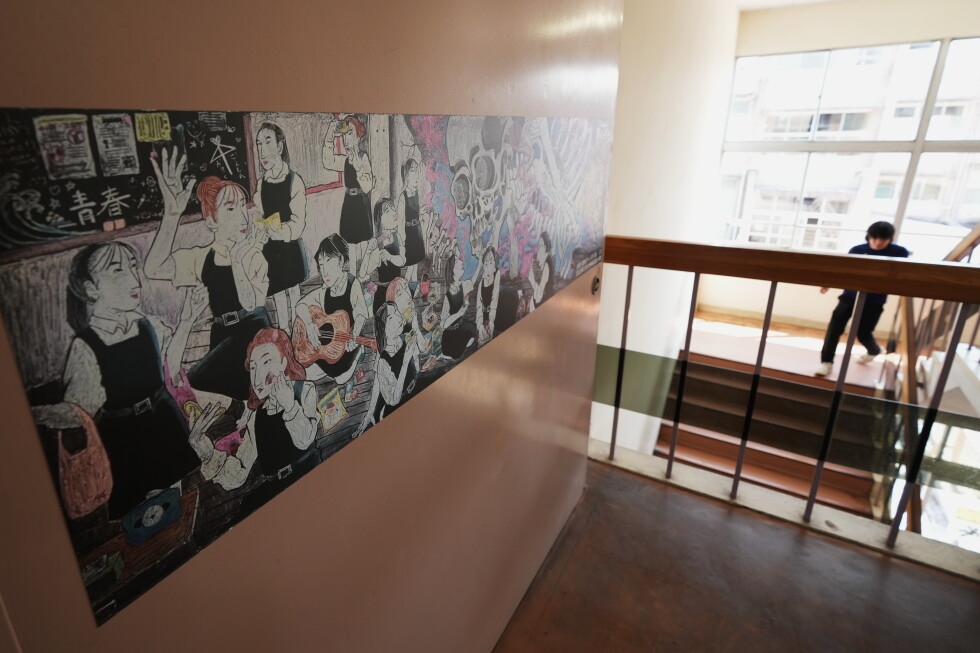
    In the city of Kumagaya, located just northwest of Japan’s capital Tokyo, a group of young art students at Kumagaya Girls High School are huddled together this July, brainstorming their entry for one of the country’s most unique student art competitions: Kokuban Art Koshien, the annual national chalk-on-blackboard art championship for middle and high school creators.

    Blending the Japanese word for blackboard, *kokuban*, with the name of Japan’s iconic high school baseball national tournament held at Koshien Stadium, the competition has grown steadily since its launch in 2015, drawing roughly 300 participating middle and high schools across the country every year. All works are created directly on classroom blackboards, typically during students’ summer break, and range wildly in scope and theme: from vibrant, dynamic renderings of dinosaurs, marine life and household pets, to reimaginations of classic manga scenes, reproductions of iconic masterworks from Hokusai’s Great Wave off Kanagawa to the Mona Lisa and Da Vinci’s Last Supper, and surreal original concepts like underwater classrooms. Even meta pieces depicting a person writing on a blackboard itself have made appearances. Every entry is a collaborative project, bringing together teams as small as two creators or as large as dozens of students, blending individual creativity with group coordination to bring a shared vision to life.

    Unlike many established fine art forms that prioritize permanent, individual work, Kokuban Art Koshien stands out for its experimental, accessible nature. Kazunari Minamishima, an art instructor at Saitama Prefectural High School of the Arts whose students have competed for years, explains that the medium gives young creators freedom that oil painting, sculpture and other traditional forms do not. “It’s still a work in progress,” he notes of the evolving art form itself.

    The competition was founded by Tokyo-based blackboard manufacturer Nichigaku Co., after company leaders spotted a viral, incredibly detailed replica of Da Vinci’s *Last Supper* drawn anonymously on a Japanese school blackboard. At the time, company president Tomohiro Yoshida explains, while casual chalk drawing was common in schools, there was no formal recognized genre of blackboard art. “Back then, there was graffiti, but there was no genre called blackboard art,” Yoshida says.

    While the contest is not designed as a direct marketing push — all Japanese schools already equip their classrooms with blackboards, after all — Yoshida says he is proud to see many past contestants go on to build careers as professional artists. Because full blackboards cannot be transported for in-person judging, organizers collect high-resolution photographs of each completed work to evaluate, with winners set to be announced this coming November.

    The unique medium of chalk on blackboard also allows for creative techniques that cannot be replicated with traditional paints. Artists dust loose chalk powder across the surface to create a soft, stardust-like glow, smudge pigment with fingers or tissue paper to build muted shadows and gradients, and can even replicate the translucent shine of a dragon’s eyeball with skilled shading. One past award-winning entry even mixed chalk pigment with water and sprayed it onto the blackboard in the style of abstract expressionist Jackson Pollock.

    Open to all Japanese schools, including international institutions, organizers have even expressed hopes of expanding the competition to international participants in coming years. Unlike unpermitted street graffiti common in Western countries, all blackboard art pieces for the competition are created with explicit school permission, reflecting Japan’s emphasis on respect for public spaces and collective order. For participating students, the collaborative process is the biggest draw, even more than winning awards.

    Kento Misumi, who competed in the contest as a high school student and now works for organizer Nichigaku, says the experience taught him far more than individual art creation ever could. “The challenge of trying to sort out the conflicting opinions of my two collaborators is the biggest memory about taking part in blackboard Koshien, as opposed to doing your own artwork,” he explained. Misumi recalled that even a single piece required multiple days of coordinated work from his team, a far more demanding process than many first-time competitors expect. “I want young people today to go through the experience,” he added.

    That spirit of collaborative growth is on full display at Kumagaya Girls High School, where a team of first-time competitors are preparing their 2026 entry, building on the legacy of older students who have won top national prizes in past years. “I see it as a chance to deepen my relationships with my schoolmates,” said Chiho Ninomiya, one of the student participants. “It’s our first time so I’m not sure we will be able to do a good job. But even if we don’t win, it’d have been worth it as long as we become better friends while doing it.”

    For this year’s entry, the team is brainstorming a playful concept: parody spinoffs of classic fine artworks by artists like Renoir, juxtaposed with vivid scenes of uniformed Japanese high school students capturing everyday campus life. Ninomiya notes that working with chalk on blackboard is a very different experience than drawing with pencils or paint, requiring constant adjustment, erasing, and reworking as the team learns the quirks of the medium.

    It is true that after the contest is photographed and judged, every labor-intensive piece will eventually be erased to make the blackboard usable for classes again. Proponents of the competition say this impermanence is part of its unique educational power: it teaches students a quiet lesson about the fragility of creation, the transient nature of life, and the courage to create even when a work will not last forever. For the community of Kokuban Art Koshien, a blackboard chalk drawing is only truly complete the moment it is erased.

  • Texts reveal 14-year-old allegedly murdered by singer D4vd had pregnancy and abortion

    Texts reveal 14-year-old allegedly murdered by singer D4vd had pregnancy and abortion

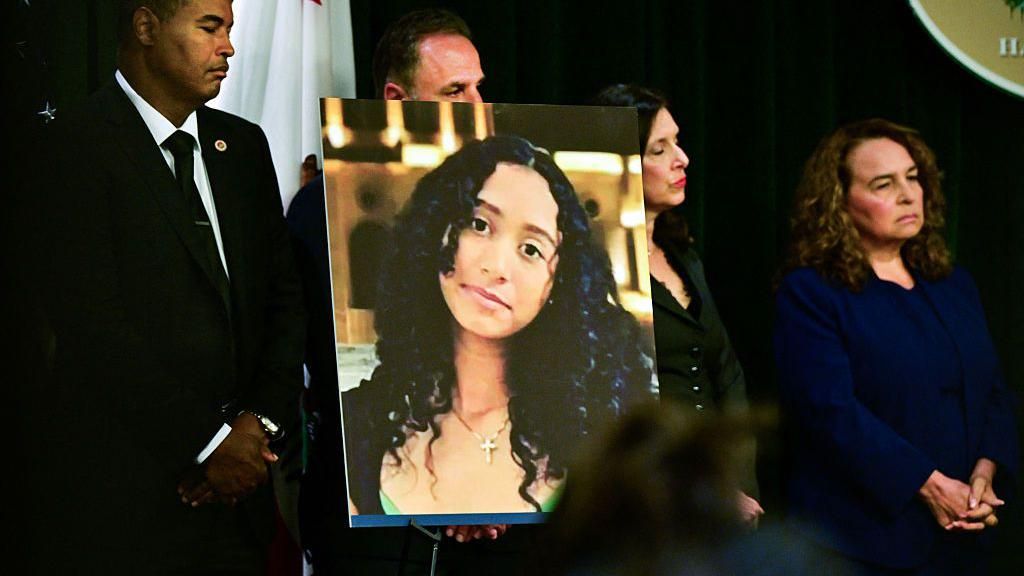
    A preliminary hearing unfolding in a Los Angeles courtroom has laid bare damning text message exchanges that link rising TikTok singer D4vd — whose legal name is David Anthony Burke — to the pregnant 14-year-old he is accused of murdering, exposing a years-long pattern of alleged abuse that preceded the teen’s death. The chilling communications, presented by prosecutors this week, offer unflinching insight into the dynamics between Burke, now 21, and victim Celeste Rivas Hernandez, whose remains were discovered last September hidden in the trunk of Burke’s Tesla, one day after she would have marked her 15th birthday. The hearing’s core purpose is to determine whether there is sufficient evidence to order Burke to stand trial for the killing.

    According to testimony from law enforcement and iCloud data recovered from Burke’s iPhone, the text exchanges lay out that Celeste became pregnant when she was 13, when Burke was already 19, and underwent an abortion before her death. In a message sent to Burke in June 2024, Celeste asked, “What [if] the first abortion didn’t work?” Five months earlier, in January 2024, Burke had apologized to the teen for “putting her through this,” court records show. Celeste responded that neither of them was prepared to care for a child, writing, “neither of us are capable of watching and taking care of the baby. it’s for the best no?”

    In a line that underscores his awareness of the situation, Burke asked Celeste to confirm the pregnancy was his, writing, “also my mother always told me to ask this question if I was ever in this situation … it is mine right?” Celeste replied affirmatively, per detective testimony. Months later, Burke texted a comment that hints at ongoing contact, writing: “Let’s let this abortion be the last one til we have the real one…”

    Prosecutors have advanced the theory that Burke murdered Celeste after she threatened to expose his long-term sexual abuse of a minor, a move that would have destroyed his burgeoning music career. Burke has entered a plea of not guilty to all charges, which include murder, continuous sexual abuse of a child, and mutilation of human remains.

    The recovered iCloud data pushes the start of the pair’s inappropriate contact back even further than prosecutors initially alleged: messages date to August 8, 2022, when Celeste was just 11 years old and Burke was 17. Prosecutors and Los Angeles Police Detective Corey Farell also confirmed Friday that Burke’s iPhone contained explicit photos of Celeste taken during the period of alleged abuse. When details of these graphic images were read aloud in court, Celeste’s mother, Mercedes Rivas Hernandez, became visibly overwhelmed with emotion and left the courtroom alongside her husband.

    Burke catapulted to mainstream fame after his tracks *Romantic Homicide* and *Here With Me* went viral on TikTok, launching him on a planned worldwide tour that was immediately scrapped after Celeste’s remains were found in September 2025. Following the discovery, Burke withdrew almost entirely from public life and social media, and he was formally arrested by authorities in April 2026. Celeste had been reported missing by her family months earlier, after she was last seen at Burke’s Hollywood Hills home on April 3, 2025 — five months before her remains were uncovered. Prosecutors note the pair first connected online when Celeste was 11, with the alleged sexual abuse beginning two years later, when she turned 13 and Burke was 18.

  • Watch: SpaceX’s successful test flight and splashdown for Starship

    Watch: SpaceX’s successful test flight and splashdown for Starship

    SpaceX, the aerospace giant led by billionaire entrepreneur Elon Musk, has pulled off a landmark test flight of its next-generation Starship megarocket, marking a major step forward in the company’s ambition to create a fully reusable heavy-lift launch system capable of deep space missions and future commercial space travel.

    The 13th overall test flight of the Starship program concluded with a controlled soft splashdown in the Indian Ocean roughly 60 minutes after lifting off from the company’s launch facility in South Texas, a outcome that company officials hailed as a full success. The successful mission comes just one week after SpaceX was forced to abort an earlier launch attempt for this flight, after pre-launch checks identified an engine failure at liftoff that would have put the mission at unacceptable risk.

    What makes this test flight particularly historic is its dual status: it is only the second flight of the upgraded V3 variant of Starship, which incorporates multiple design improvements over earlier iterations to boost performance and reliability. It also stands as the first Starship test flight conducted since SpaceX became a publicly traded company, a move that closed last year and brought with it billions in new capital to accelerate the Starship development program. Stakeholders and space industry observers have been closely watching this mission, as its outcome will shape the timeline for Starship’s first operational missions, including NASA’s Artemis program that will use a modified Starship to land astronauts on the moon, and planned commercial space tourism voyages that could carry private passengers to orbit and beyond.

    Industry analysts note that each successful test flight brings SpaceX closer to its long-term goal of establishing a permanent human presence on Mars, while also opening up new opportunities for lower-cost access to low Earth orbit for commercial and government satellite launches. The successful splashdown this week also demonstrates progress toward SpaceX’s goal of full reusability for both the Starship upper stage and Super Heavy booster, a capability that is expected to drastically cut launch costs compared to current expendable rocket systems.

  • After ‘testing ground’ in Kashmir, pellet guns used on student protesters in India’s capital

    After ‘testing ground’ in Kashmir, pellet guns used on student protesters in India’s capital

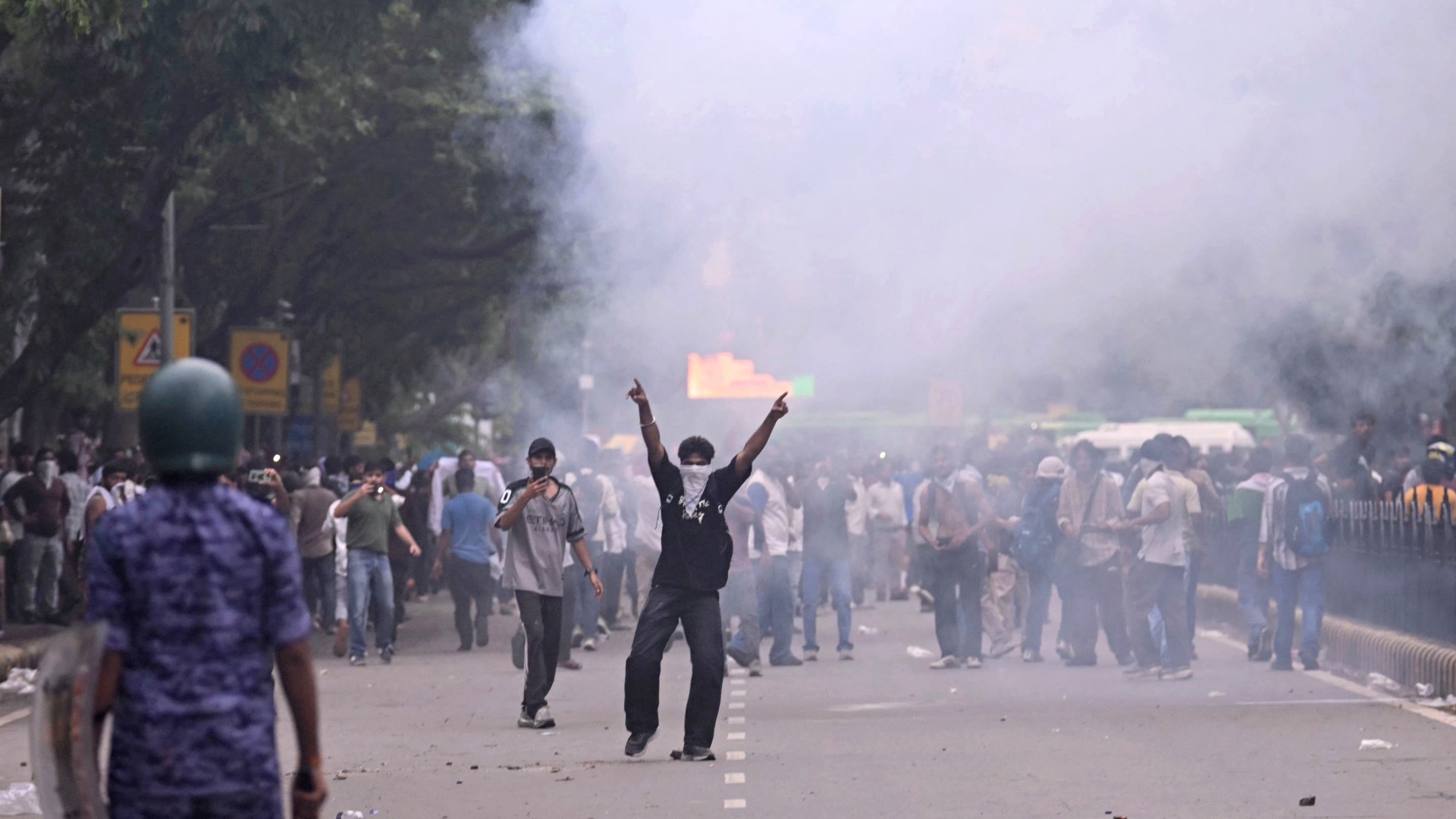
    On July 20, a crackdown on student-led demonstrators and journalists gathered at New Delhi’s iconic Jantar Mantar protest site has ignited national controversy, after evidence emerged that Indian security forces used controversial pump-action pellet guns—weapons that fire hundreds of jagged metal fragments—against the crowd, according to hospital and official records. The demonstration was part of a months-long movement demanding sweeping educational reforms and the ousting of India’s sitting education minister Dharmendra Pradhan, rooted in growing public anger over systemic failures in the country’s national examination system.

    In the aftermath of the crackdown, multiple prominent human rights organizations have called for independent inquiries into allegations of excessive force. Human Rights Watch documented that Delhi Police and the Central Rapid Action Force (RAF) deployed a range of aggressive crowd control tactics beyond pellet guns, including electric shock batons, tear gas, and stone attacks, while also imposing an internet blackout to cut off communication between protesters and the outside world. Local media reports confirm that medical records from Delhi’s Safdarjung Hospital confirm pellet entry wounds on the body of one journalist admitted after the crackdown, who was examined by three separate hospital departments.

    Initial official responses offered conflicting accounts. Delhi Police immediately dismissed claims of pellet gun use as “completely false and misleading” in a statement posted to X on July 21. But just four days later, an internal RAF investigation confirmed that excessive force had been used against the crowd. This incident marks the first documented use of pellet guns by Indian security forces to suppress dissent within the capital New Delhi, though the weapon has been a staple of counter-protest tactics in Indian-controlled Kashmir for decades. In 2018, the United Nations Office of the High Commissioner for Human Rights labeled pellet guns “one of the most dangerous weapons used against protesters” by Indian security forces in the region.

    The current wave of Delhi protests traces its origins back to June, when the online satirical movement Cockroach Janta Party (CJP) launched demonstrations after Indian Chief Justice Surya Kant publicly labeled unemployed Indian youth “cockroaches” and “parasites.” The movement quickly gained momentum around demands for Pradhan’s resignation and accountability for the National Eligibility cum Entrance Test (NEET), a critical medical entrance examination marred by repeated paper leaks, systemic corruption, and widespread inequity. The crisis has been linked to more than 20 suicides by aspirational students who lost opportunities due to the scandal. The protests grew into a mass movement after prominent Indian activist Sonam Wangchuk joined a 26-day hunger strike at Jantar Mantar, culminating in a large-scale march on India’s Parliament the week before the July 20 crackdown.

    Amid escalating public pressure, Pradhan announced his resignation on July 27—minutes after Delhi Police again attacked student protesters with batons and tear gas. But CJP organizers quickly confirmed that demonstrations would continue until all their remaining demands are met, including compensation for the families of students who died by suicide connected to the NEET scandal, and formal accountability for the July 20 police crackdown. In recent weeks, the protest movement has expanded far beyond its original demands for educational reform, with many participants now calling for broader government accountability and even the resignation of Prime Minister Narendra Modi.

    State police forces across India have already responded with a widespread crackdown on participants. In Uttar Pradesh, police raided the home of Muslim CJP volunteer Mohd Junaid, detained his family members, and seized his official identity cards ahead of formal charges. Beyond state security forces, openly Hindu nationalist groups have also issued repeated public threats to disrupt protests and attack participants.

    The use of pellet guns in Delhi marks an unprecedented escalation, even as human rights groups have documented repeated human rights violations by Delhi Police during large-scale protests in recent years—most notably the 2019 Muslim-led student demonstrations against the controversial Citizenship Amendment Act. “This is the first recorded incident in the capital of what is known as the world’s largest democracy,” Tanvi Mishra, a cultural worker and active protest participant, told Middle East Eye. Mishra added that the normalization of repressive tactics in Kashmir has allowed the state to expand those same tactics to the capital. “Many would not have imagined an internet shutdown in the centre of the capital of India until now, but why is it that we are conditioned into accepting it as a state of normalcy in Kashmir?” she said, noting that the same repressive tactics honed in Kashmir are now being used to target Muslim communities across India.

    A Kashmiri writer and researcher, speaking to Middle East Eye under the pseudonym Eph for safety reasons, described Kashmir as a “testing lab” for tools of state suppression. “Once everything was tested and they experimented with ‘efficient’ ways to suppress a protest, they began exporting the tactics to other places,” she explained.

    Following the internal investigation into the Delhi crackdown, the RAF announced last Saturday that it would no longer deploy personnel who normally operate in “special operation zones” such as Indian-controlled Kashmir to manage civilian protests in other parts of India. RAF Inspector General Seema Dhundhia told Indian outlet The Print that personnel from conflict zones “possess a different work environment and operational perspective, but sectors such as Delhi, Bihar, Assam, and Maharashtra require a distinct and balanced approach to crowd control and public order management.”

    Eph emphasized that while the same playbook is being used, there remains a stark gap between the scale of repression in Delhi and Kashmir. “No three-year-old kid was killed in Delhi, but that was done in Kashmir. No students sitting in their homes got hit by pellet guns, but in Kashmir that had happened,” she said. She added that detained protesters in Delhi face only short-term detention, while detained Kashmiri activists are often held indefinitely without trial under the harsh Public Safety Act.

    Mariya, a South Asian anti-colonial urbanism researcher who asked to only use her first name for security, noted that the pellet gun incident in Delhi highlights long-standing blind spots in India’s progressive movement. “For decades, thousands have been subjected to pellet gun violence in Kashmir. The failure to interlink the two is extremely disingenuous and exposes the nature of these protests,” she said. She added that there has been a striking lack of meaningful discussion of the ongoing crackdown in Kashmir, where Indian security forces detained more than 3,500 Kashmiris in a single massive operation this week, one of the largest crackdowns in the valley in recent years, carried out after an attack that killed a local police official.

    Mishra confirmed that even as Delhi protesters have integrated calls for a range of progressive causes beyond educational reform, few have addressed the ongoing militarization of Kashmir. “We know many left-leaning liberals or even leftists, who will claim to be progressive [yet] … when it comes to the issue of Kashmir and self-determination, there is a faltering back towards traditional notions of nationalism,” she said. Still, Mariya argued that the decentralized nature of the current protest movement creates space for cross-issue solidarity, so long as participants are open to critical engagement. “A movement is not only its mass mobilisation but also the contradictions and debates that come out of it,” she said. “Failure to engage with it is to essentially kill the movement.”

  • Rights groups call for help stopping Israeli ‘pogrom’ against Palestinians in West Bank

    Rights groups call for help stopping Israeli ‘pogrom’ against Palestinians in West Bank

    A fresh wave of deadly violence in the occupied West Bank has prompted leading Israeli and Palestinian human rights organizations to issue an urgent plea for global intervention, warning that unchecked escalation could spiral into mass targeted violence against Palestinian communities.

    The unrest erupted Friday when armed Israeli settlers entered the Palestinian village of Tel, located near the northern West Bank city of Nablus. Clashes during the incursion left four Palestinians dead; in the confrontation, a local Palestinian seized a firearm from one of the settlers and returned fire, killing two Israeli men, one a soldier and one a settler.

    Following the incident, an initial Israeli military inquiry confirmed the settlers had entered a restricted area off-limits for civilian entry. Despite this finding, the Israeli government ordered the military to demolish the family home of the Palestinian accused of the fatal shooting, a controversial punitive measure widely criticized by international human rights monitors. The Israel Defense Forces also launched a large-scale arrest operation across Nablus, aiming to detain dozens of Palestinians said to have been involved in the confrontation.

    In a joint statement released after the violence, leading rights groups including Israel’s B’Tselem, Rabbis for Human Rights, and Palestinian-led Adalah called for immediate international pressure on the Israeli government to de-escalate the crisis. The groups warned that ongoing settler militia violence, which they say is actively enabled and backed by Israeli military forces, has reached dangerous new levels across the territory. In recent weeks, attacks have included the arson and complete destruction of Palestinian civilian property, and forced displacement of entire Palestinian families and communities from their land, the statement said.

    The organizations added that the persistent silence and inaction from most of the international community has created a permissive environment that allows this violence to continue and accelerate, putting countless civilian lives at imminent risk. They frame the current moment as a critical juncture, requiring urgent intervention to prevent what they describe as an impending pogrom against Palestinian communities in the West Bank.

    This latest escalation comes amid a longer-term trend of soaring casualty rates, particularly among Palestinian children, according to research from B’Tselem. Last month, the group reported that Israeli forces are killing Palestinian children in the occupied West Bank at a rate not seen since the 1967 occupation began. Already in 2025 alone, 54 Palestinian children have been shot and killed by Israeli forces in the territory. Since the start of the 2023 Israel-Hamas war in October 2023, B’Tselem found that nearly one in four Palestinians killed by Israeli forces in the West Bank has been a minor — the highest share of child fatalities recorded in the 58-year history of the occupation.

    Crucially, the group confirmed that no Israeli security personnel or settlers have faced legal accountability for these child killings to date. There are no public indictments connected to any of the fatalities recorded after October 2023. B’Tselem rejects the framing of these deaths as isolated mistakes or rogue violations of military protocol. Instead, the organization argues the rising death toll is the deliberate outcome of official Israeli policy: a policy that establishes loose rules of engagement for forces operating in the West Bank, systematically categorizes all Palestinians as terrorist suspects, and grants legal immunity to soldiers and settlers who use lethal force against Palestinian civilians.

    The original incident report was first published by Middle East Eye, an independent media outlet covering the Middle East and North Africa region, in a post to social media on 24 July 2026.

  • ICC member states remove prosecutor Karim Khan by majority vote

    ICC member states remove prosecutor Karim Khan by majority vote

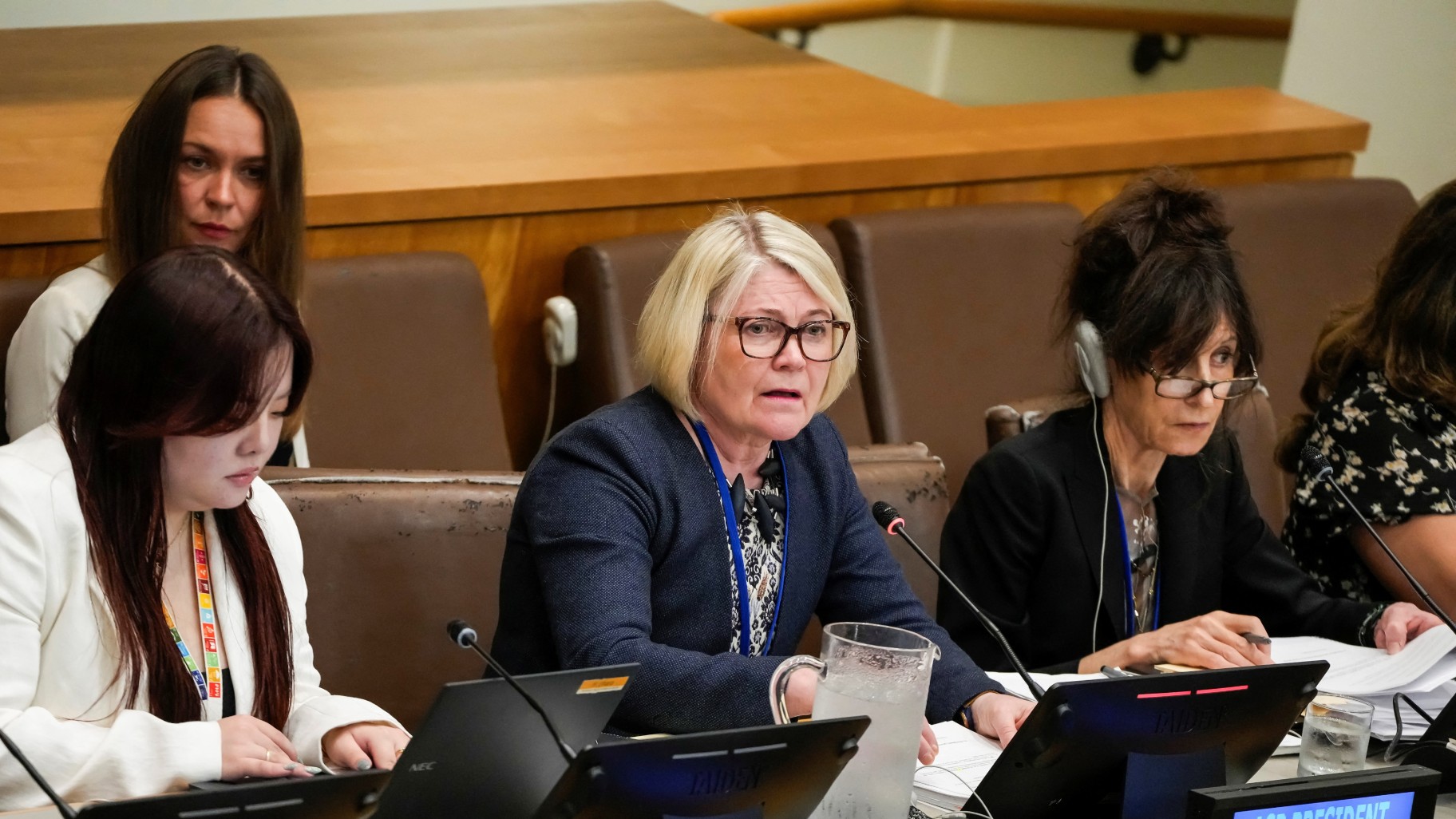
    In a watershed moment marking the first such action in the 24-year history of the International Criminal Court (ICC), a majority of member states voted Friday during a special session at United Nations headquarters in New York to oust sitting chief prosecutor Karim Khan from office over allegations of professional misconduct. The dismissal takes immediate effect, with elections to select a new chief prosecutor slated to follow in the coming period.

    Secret ballot results released by diplomatic sources show that 82 of the court’s 125 member states supported the motion to remove Khan, easily clearing the 63-vote absolute majority threshold required for the decision. Thirteen member states voted against dismissal, while 15 opted to abstain from the vote.

    The allegations against Khan center on claims of a sexual relationship with a junior staff member in his office, which the complainant has described as non-consensual. The disciplinary process was initiated after the Bureau of the Assembly of States Parties (ASP)—the ICC’s governing executive body—concluded that evidence proved “beyond reasonable doubt” that Khan had engaged in the relationship, arguing that the inherent power imbalance between a sitting chief prosecutor and a subordinate staff member made such a relationship inherently inappropriate regardless of context.

    Khan has repeatedly and forcefully denied that any sexual relationship occurred, while the complainant reaffirmed her allegations of non-consensual conduct in her first public interview on the case with CNN last week. Ahead of the vote, Khan had already stated that if removed, he would immediately appeal the decision to the International Labour Organization’s administrative tribunal, the body with jurisdiction over employment-related appeals for ICC personnel.

    The historic vote has unfolded against a charged geopolitical backdrop, with heavy scrutiny over claims that the entire disciplinary process has been politicized. The removal comes just months after Khan’s office moved to request arrest warrants for Israeli Prime Minister Benjamin Netanyahu, former Israeli Defense Minister Yoav Gallant, and three Hamas leaders over alleged war crimes committed in the ongoing Gaza conflict, a step that triggered fierce pushback from major powers including the United States. U.S. Secretary of State Marco Rubio recently issued extraordinary threats to “dismantle the ICC brick by brick, if necessary,” and the U.S. has already imposed sanctions on most of the court’s senior judges and prosecutors, including Khan, over the court’s war crimes investigations into actions in Palestine and Afghanistan.

    Widespread criticism has also been leveled at how the ASP Bureau managed the investigation into the allegations. A panel of independent ICC judges appointed to review the evidence unanimously concluded that no misconduct had been proven, but the ASP Bureau chose to disregard this binding legal opinion. More than 180 Palestinian civil society and human rights organizations signed an open letter last week arguing that the disciplinary process had been “reduced to a political referendum following the national interests of individual States Parties.”

    A timeline of the allegations shows the alleged non-consensual conduct began in March 2023 and continued for nearly a year, with incidents reported on overseas missions and at the ICC’s headquarters in The Hague. The allegations were first brought to Khan’s attention by his own senior staff on May 2, 2024. The ICC’s internal oversight body launched an inquiry the following week, but closed it days later after the complainant refused to cooperate with internal investigators. Eighteen days after the allegations first emerged, Khan’s office formally submitted the request for arrest warrants for Israeli and Hamas leaders, leading some media outlets to suggest he moved forward with the request to shore up political support amid the scandal. However, an investigation by Middle East Eye later confirmed that the decision to pursue the warrants had been finalized six weeks before the allegations against Khan were ever made public, and the application was submitted only after the first internal inquiry had concluded.

    The allegations reemerged in global media and on social media in October 2024, prompting a second internal inquiry that again closed when the complainant declined to cooperate. The ASP then commissioned an external investigation led by the United Nations Office of Internal Oversight Services (OIOS), which spent more than a year compiling evidence and presented a 150-page report plus 5,000 pages of supporting evidence to the independent judicial panel in December 2024. After nearly three months of review, the panel issued its unanimous March 2025 ruling that the evidence presented by UN investigators did not meet the “beyond reasonable doubt” standard to establish misconduct or a breach of professional duty.

    Despite this independent ruling, a majority of ASP Bureau members voted to disregard the panel’s findings weeks later, advancing the motion to find Khan guilty of serious misconduct and suspend him from office. In another break with established protocol, the ASP Bureau altered the voting rules for the full member state session, changing the process from a two-stage vote—one on whether misconduct occurred, a second on whether removal was warranted—to a single up-or-down vote on a motion that combined both the finding of serious misconduct and the order for dismissal. This change lowered the threshold for removal, drawing further allegations of procedural manipulation.

    A British barrister, Khan was elected as the ICC’s third chief prosecutor in February 2021, taking office two decades after the court was founded in 2002. During his tenure, he pursued high-profile investigations and arrest warrant requests against a number of global leaders, including Russian President Vladimir Putin, former Philippine President Rodrigo Duterte, Myanmar’s ruling junta leadership, and Taliban officials in Afghanistan, in addition to the Israeli and Hamas leaders targeted in the Gaza warrants.

  • Zelensky tries to fix crisis over removal of defence minister and counts the cost

    Zelensky tries to fix crisis over removal of defence minister and counts the cost

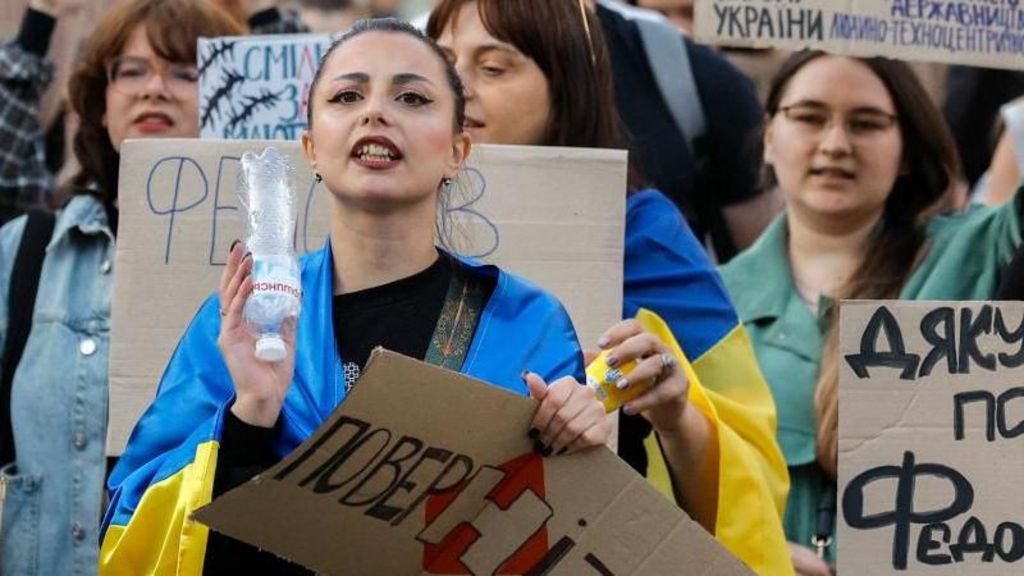
    In the wake of President Volodymyr Zelensky’s mid-July cabinet reshuffle that removed Mykhailo Fedorov from his post as defence minister, Ukraine’s political landscape remains roiled by unrest, even as Russian airstrikes and drone attacks continue to threaten civilian and military infrastructure across the country. While the appointment of a new military commander-in-chief has been broadly welcomed by the public, ongoing street demonstrations led largely by Fedorov’s young base of supporters have kept pressure on Zelensky’s administration to reverse the decision.

    Fedorov, a popular 40-something technocrat widely credited with accelerating Ukraine’s groundbreaking military and technological innovation over the course of the war, has rejected all alternative government positions offered to him by Zelensky. In a public statement last Thursday, he made clear he believes only three roles carry enough influence to meaningfully shape Ukraine’s war effort: defence minister, commander-in-chief, or the presidency itself.

    That comment has sparked widespread speculation about Fedorov’s long-term political ambitions, with many political observers asking whether the ousted minister now positions himself as a potential rival to Zelensky. One former senior defence official went so far as to argue that Fedorov became a legitimate presidential contender the moment he was dismissed from cabinet. But with wartime constitutional rules barring national elections for the duration of Russia’s full-scale invasion, some political insiders have questioned the wisdom of Fedorov’s high-profile stand. Speaking on condition of anonymity, one opposition MP described his actions as childish, arguing that prioritizing personal political advancement amid an ongoing existential war is reckless and short-sighted.

    Zelensky’s supporters have pushed back against criticism, noting the president took extensive steps to de-escalate the broader crisis by consulting nearly all senior Ukrainian military leaders before tapping 43-year-old Major General Mykhailo Drapatyi, a highly decorated, battle-proven former commander of Ukraine’s Land Forces, to replace the widely unpopular outgoing commander-in-chief Oleksandr Syrskyi. Former government advisor Yuriy Sak told the BBC that Zelensky’s decision was well-informed and broadly supported, framing Drapatyi as a modern, forward-thinking leader who can strengthen Ukraine’s defensive capabilities. But despite general acclaim for Drapatyi’s appointment, analysts agree it has only partially mitigated the political damage caused by Fedorov’s removal.

    In an ironic turn, Zelensky – who rose to power in 2019 on a platform of youth-led change and anti-establishment reform – appears to have misread the priorities of young Ukrainians, who overwhelmingly see Fedorov as a representative of their values and aspirations. Oleksandr Merezhko, a ruling Servant of the People party MP, notes that young Ukrainians are hungry for young, anti-corruption, modernizing leaders in a political landscape they often see as corrupt and hypocritical, turning Fedorov into a popular folk hero. Merezhko added that Fedorov’s rising public profile and potential political ambitions likely led to his ousting, pointing to a long-standing pattern of Zelensky sidelining figures he views as potential political threats. Echoing a principle from Robert Greene’s *The 48 Laws of Power*, Merezhko observed that “Don’t outshine your master” proved to be an unwritten rule Fedorov failed to follow.

    Most political analysts agree the core goal of last week’s reshuffle was to curb Fedorov’s growing influence – but that Zelensky’s gambit has backfired dramatically. Since his dismissal, Fedorov’s approval rating has skyrocketed among the Ukrainian public, amplifying rather than diminishing his political standing.

    While few question Fedorov’s personal commitment, creativity, and work ethic, some defence insiders argue his outsized public reputation may exceed his actual individual impact. They point out that Ukraine’s advanced medium- and long-range strike capabilities were already well under development before Fedorov took office as defence minister, and that the country’s thriving defense innovation ecosystem is the product of work by thousands of people across 2,000-plus private and public entities, not a single leader. One anonymous opposition MP argued that protesting young Ukrainians hold an overly simplified, inaccurate view of Fedorov’s contributions and the operations of Ukraine’s defense establishment, a simplification that is understandable amid more than a decade of exhausting war with Russia. Many Ukrainians, worn down by mass conscription and devastating human losses, are naturally drawn to the idea that technological innovation like drones and autonomous systems can reduce the human cost of defending the country.

    Across the political spectrum, there is broad agreement that Ukraine must resolve this toxic political dispute before autumn, when Russia is expected to launch another large-scale campaign targeting Ukraine’s energy infrastructure ahead of winter. In a recent Telegram post, Zelensky emphasized that the country’s top priority must be preparing to withstand the coming cold season. Most politicians and analysts interviewed for this report agree that while the ongoing crisis has eroded Zelensky’s authority and reputation, it is unlikely to cause major setbacks for Ukraine on the battlefield. Ukraine’s “long-range sanctions” campaign targeting Russian economic assets remains in full swing, inflicting growing damage on Moscow’s war economy, and front lines have remained largely static thanks to a sprawling 15-30 kilometer “kill zone” where all Russian movements are tracked and eliminated by Ukrainian drone operations.

    As a young democracy still refining its institutional frameworks, Ukraine has faced enormous strain from Russia’s full-scale invasion. But despite the internal political friction, many observers stress the country remains remarkably resilient. As opposition MP Andrii Osadchuk put it, “The secret of Ukraine’s success is that we are much stronger horizontally than vertically,” expressing hope that the political damage from the current dispute will prove minimal.

  • ‘It eats away at my body’: The human cost of S Korea’s ultra-convenient overnight deliveries

    ‘It eats away at my body’: The human cost of S Korea’s ultra-convenient overnight deliveries

    Six years ago, 27-year-old Jang Deok-jun collapsed unconscious in his bathtub after working more than a year of overnight warehouse shifts for Coupang, South Korea’s largest online retail platform. He was pronounced dead of a heart attack shortly after arriving at the hospital, and a subsequent investigation by South Korea’s state-run workers’ compensation insurer Comwel officially ruled his death a work-related fatality caused by chronic overwork.

    Jang’s death was not an isolated incident. Between 2000 and May 2026, Comwel has attributed 46 work-related deaths of warehouse and delivery workers to stroke or heart disease, conditions widely linked to excessive overwork. Today, his mother Park Mi-suk has spent six years carrying on a relentless advocacy campaign to ban overnight deliveries, the working practice she blames for robbing her of her son.

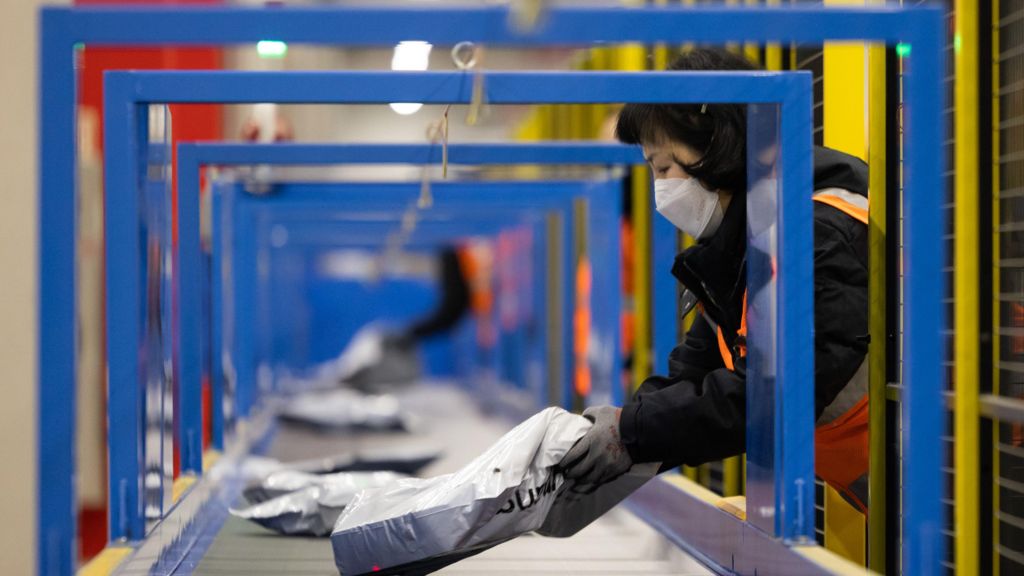
    South Korea’s delivery sector has exploded into a massive industry built on the promise of unrivaled speed and convenience. In the country’s hyper-connected digital economy, customers who place orders before midnight are guaranteed delivery by 7 a.m. the next day – a service that relies entirely on an sprawling network of overnight warehouse staff and delivery drivers. Coupang, founded by a Korean-American entrepreneur, has dominated this market since expanding its overnight fresh produce delivery in 2015, now employing nearly 100,000 workers across its nationwide logistics network.

    But this industry-defining convenience has come at a steep hidden cost to frontline workers, public health experts and labor advocates warn. The UN International Agency for Research on Cancer classifies overnight work as a probable human carcinogen, and research from South Korea’s Catholic University of Korea professor of occupational medicine Kang Mo-yeon adds that mounting evidence also links irregular night shifts to elevated risks of cardiovascular disease, diabetes, and chronic mental illness.

    Unlike the UK, which caps overnight delivery driving at 10 hours per 24-hour period, South Korea imposes no legal limits on overnight working hours, creating a regulatory gap that has allowed extreme working conditions to become normalized. The debate over overnight delivery also reveals deep divides among workers themselves: while the national delivery workers’ union has called for a full ban on overnight deliveries since 2025, many drivers opt for night shifts voluntarily, drawn by higher pay and the flexibility to care for children or ill family members during the day.

    One subcontracted Coupang driver, who spoke to the BBC on condition of anonymity, explained that he earns roughly 7 million won ($4,600) per month – nearly double South Korea’s national average income – working 10-hour overnight shifts five to six days a week. “I know this is destroying my body long-term, but the pay makes it worth it,” he said. “Critics who call for banning overnight deliveries aren’t listening to the choices we’ve made to support our families.” Still, he acknowledged the constant pressure: drivers are paid per package, and failure to complete all deliveries by the 7 a.m. deadline can result in losing their assigned delivery route to a competitor, leaving no time for scheduled breaks. His wife, he added, still worries he will fall asleep at the wheel during long shifts.

    Park argues that as demand for faster deliveries grows, the sacrifice of these frontline workers has been rendered invisible to the consumers who benefit from their labor. In Jang’s case, she says, holding the company accountable was an uphill battle: South Korean law places the burden of proving overwork on grieving families, and Coupang was only required to share Jang’s work records and CCTV footage with Comwel, not with Park. It took months of lobbying lawmakers and government agencies for her to obtain the documents that confirmed Jang’s working hours met the legal threshold for overwork-related death: his shift count met the standard of an average 60-hour workweek over 12 weeks, with overnight hours weighted 30% more heavily under Comwel rules.

    The controversy deepened in 2025, when local media published leaked chat logs allegedly between Coupang’s chairman Bom Kim and a former chief privacy officer, showing Kim ordering staff to remove references to Jang “working hard” from internal reports. Coupang has dismissed the claim as groundless, alleging the leak came from a disgruntled former employee, but labor unions filed a criminal complaint alleging evidence tampering, and South Korean police launched a formal investigation into the company in December 2025. Coupang maintains it has fully cooperated with all investigations and submitted all requested documentation to regulators.

    Jang’s case was followed by another high-profile death that renewed public anger: 34-year-old Oh Seung-yong, a driver for a Coupang-contracted logistics firm, died after crashing his truck into a pole during an overnight delivery run. Comwel also ruled Oh’s death work-related. His sister told parliament that Oh had worked six days a week, clocking more than 11 hours per shift almost entirely overnight – and even continued working for four hours after his father’s sudden death before traveling to the hospital to be with his family. Coupang says it enforces a 52-hour weekly cap for all employees, gives subcontracted drivers a full weekend off every two weeks, provides free health screenings for all direct and contracted staff, and claims it holds the best safety record in the global logistics industry with no recorded industrial accident deaths. Unions argue that safety rules are rarely enforced by third-party subcontractors.

    In December 2025, Coupang CEO Harold Rogers was summoned to South Korea’s national parliament to answer questions about the deaths of Jang and Oh, as well as the country’s largest ever data breach that exposed the personal information of 37.5 million Coupang users, resulting in a record $410 million fine against the company. During the televised hearing, Park publicly demanded Chairman Bom Kim be held criminally liable for her son’s death, while Oh’s sister pressed Rogers for a formal apology. Rogers offered “deepest condolences” and said he was sorry for the families’ loss, but remained silent when pressed for further comment.

    The controversy has also put pressure on South Korean President Lee Jae Myung, who made reducing workplace injuries and deaths a top campaign priority, capitalizing on his own experience of a disabling factory injury earlier in life. South Korea has long struggled with one of the highest workplace fatality rates among developed nations, and the government has already passed major labor reforms: capping overall weekly work hours at 52, and introducing legislation that allows for jail time for executives found negligent in workplace death cases. Ironically, the governing party recently proposed new legislation to relax overnight delivery restrictions for smaller retailers to weaken Coupang’s market monopoly, a move that has angered unions and activists, including Park, who argue the core problem is unregulated overwork, not just Coupang’s market dominance.

    Six years after her son’s death, Park’s advocacy has upended her own life. She was forced to close her small furniture-making business after spending years navigating legal battles for compensation and accountability, and moved from her longtime home to a small rental apartment in Daegu. She still keeps all of Jang’s belongings, including his collection of action figures, stored in a box in her home – not ready to let go, and not ready to end her fight.

    Jang once compared his job to a seesaw: if he stepped down, his overworked colleagues would be left struggling to cover his load. Today, Park reframes that analogy for South Korea’s delivery industry: Jang and thousands of workers like him hold down one end of the seesaw, so consumers can enjoy the convenience of fast, early-morning deliveries on the other. “I hope we never become a society that closes our eyes to other people’s sacrifice just for a little bit of convenience,” she says.