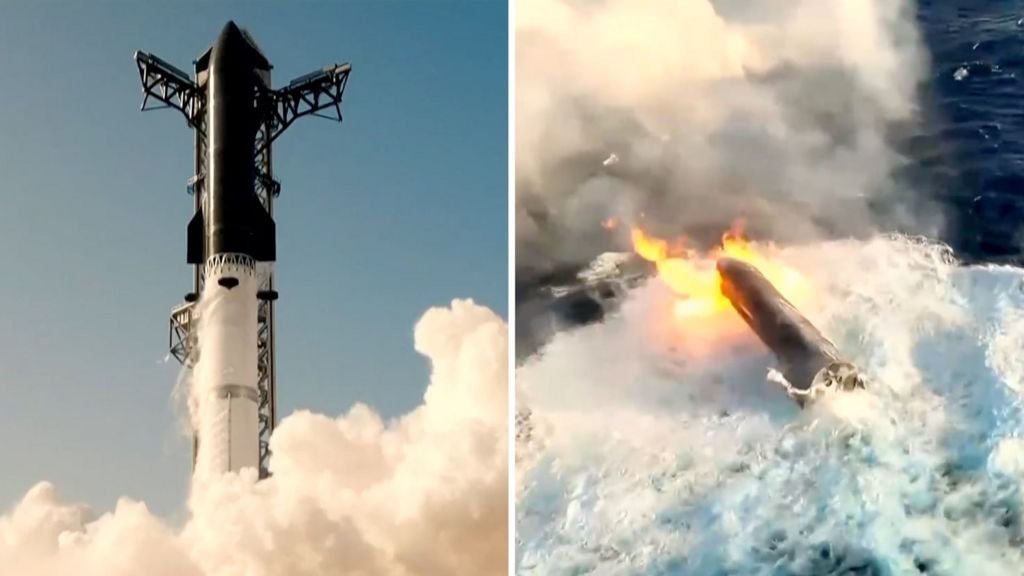
SpaceX, the aerospace giant led by billionaire entrepreneur Elon Musk, has pulled off a landmark test flight of its next-generation Starship megarocket, marking a major step forward in the company’s ambition to create a fully reusable heavy-lift launch system capable of deep space missions and future commercial space travel.
The 13th overall test flight of the Starship program concluded with a controlled soft splashdown in the Indian Ocean roughly 60 minutes after lifting off from the company’s launch facility in South Texas, a outcome that company officials hailed as a full success. The successful mission comes just one week after SpaceX was forced to abort an earlier launch attempt for this flight, after pre-launch checks identified an engine failure at liftoff that would have put the mission at unacceptable risk.
What makes this test flight particularly historic is its dual status: it is only the second flight of the upgraded V3 variant of Starship, which incorporates multiple design improvements over earlier iterations to boost performance and reliability. It also stands as the first Starship test flight conducted since SpaceX became a publicly traded company, a move that closed last year and brought with it billions in new capital to accelerate the Starship development program. Stakeholders and space industry observers have been closely watching this mission, as its outcome will shape the timeline for Starship’s first operational missions, including NASA’s Artemis program that will use a modified Starship to land astronauts on the moon, and planned commercial space tourism voyages that could carry private passengers to orbit and beyond.
Industry analysts note that each successful test flight brings SpaceX closer to its long-term goal of establishing a permanent human presence on Mars, while also opening up new opportunities for lower-cost access to low Earth orbit for commercial and government satellite launches. The successful splashdown this week also demonstrates progress toward SpaceX’s goal of full reusability for both the Starship upper stage and Super Heavy booster, a capability that is expected to drastically cut launch costs compared to current expendable rocket systems.