博客

  • India’s ‘Cockroach’ protests take on Modi with unlikely weapons: Sharp, irreverent humor and memes

    India’s ‘Cockroach’ protests take on Modi with unlikely weapons: Sharp, irreverent humor and memes

    In the bustling streets of New Delhi, thousands of young Indian demonstrators have launched a dual-front movement that is redefining modern political protest: while mass gatherings put direct pressure on authorities off-line, a creative, humor-fueled digital campaign is winning the battle for online narrative, turning the same social media infrastructure that built Prime Minister Narendra Modi’s political brand against his administration. What began as a single-issue outcry over education system corruption has rapidly evolved into a broad youth movement that challenges long-standing taboos around criticizing the image-conscious prime minister, using satire and viral content to sidestep traditional government censorship and crackdowns.

    Rooted in anger over a series of high-profile exam leaks—including the illegal distribution of answers for India’s national medical college entrance exam that has jeopardized the career prospects of millions of aspiring students—the protests first erupted one month ago. Demonstrators initially called for the resignation of Education Minister Dharmendra Pradhan, but public frustration quickly expanded to demand broader government accountability, spreading to major cities across the country.

    The driving force behind the movement’s digital and cultural expansion is the Cockroach Janta Party, a satirical grassroots collective that coined the movement’s identity two months ago. The group has turned humor and meme culture into a powerful tool of resistance, giving Generation Z and young millennial Indians a language that matches their digital-native habits to express widespread discontent. “We find long, formal speeches boring. We’re the summary generation—we consume content in quick, bite-sized chunks, so we use that same format to spread our message,” a 23-year-old student protester explained to The Associated Press, speaking on condition of anonymity over fears of government retaliation.

    This satirical approach has shaped every part of the movement, from online content to on-the-ground demonstrations. Even violent clashes with police have been reframed as viral, shareable content: protesters joke about maintaining their fitness streaks on the tracking app Strava while fleeing baton charges, and edit footage of dodging police barricades to mimic gameplay of the popular endless runner mobile game Subway Surfers. Young female activists have adapted influencer culture for protest, posting “get ready with me” tutorials before marches and “fit check” posts highlighting homemade safety gear like helmets and goggles. Pro-government television anchors, who have repeatedly framed demonstrators as “anti-national” actors backed by foreign conspiracies, have become common targets of parody videos mocking their over-dramatic broadcast styles.

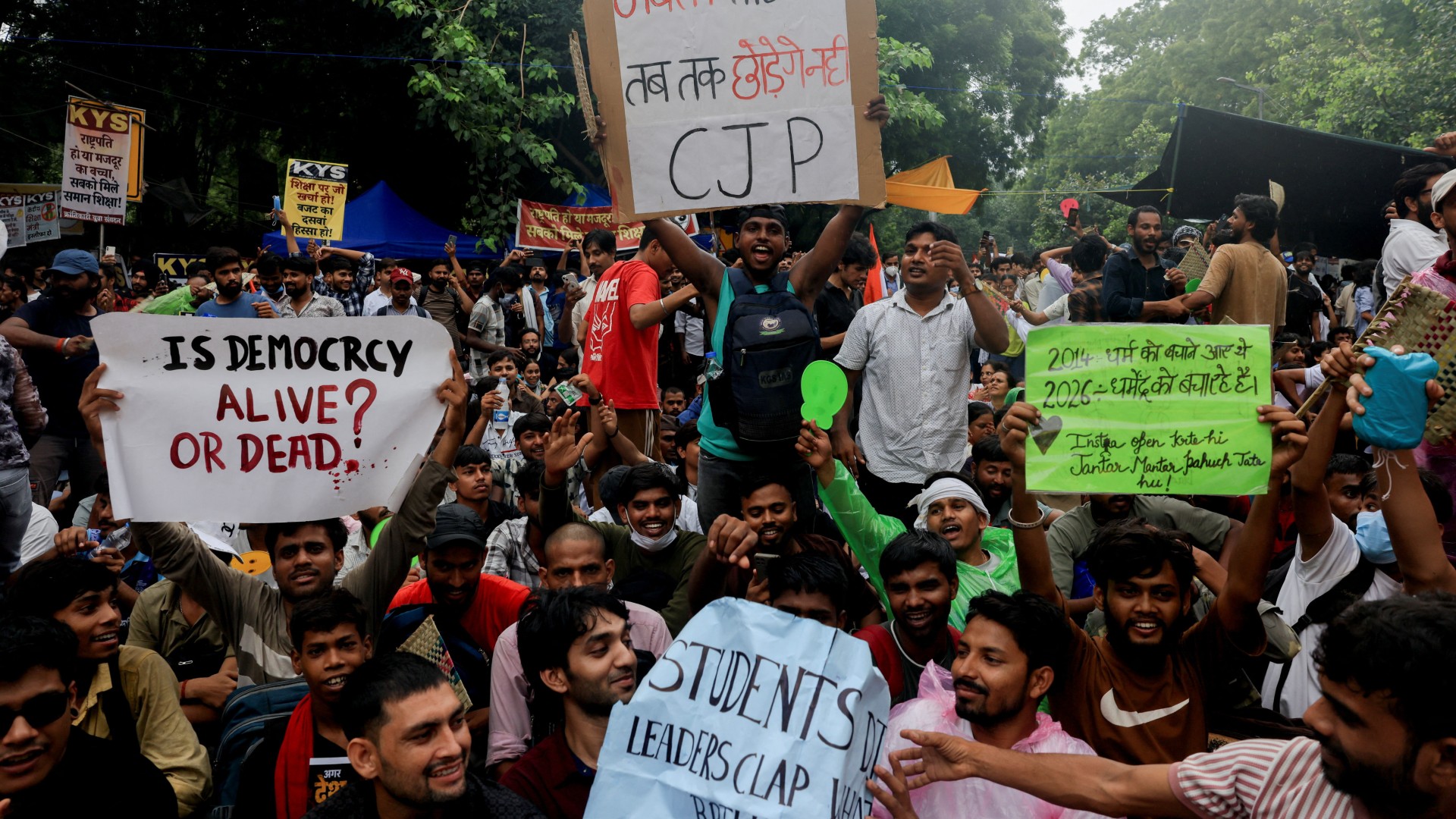
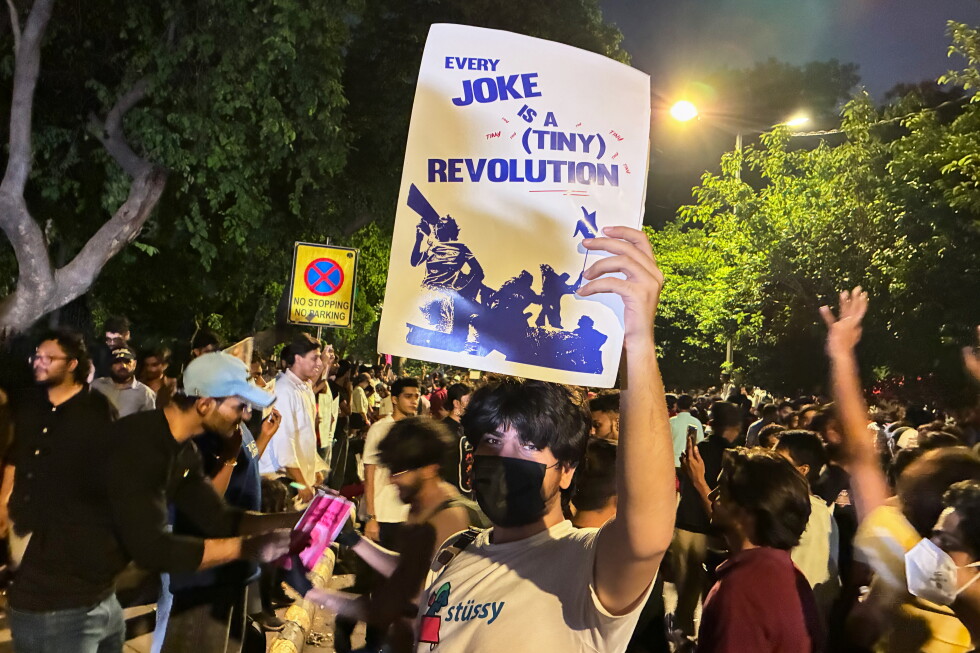
    At the main New Delhi protest site, the influence of digital meme culture is impossible to miss. Demonstrators wear pop culture costumes like Spider-Man and Batman, carrying placards laced with irreverent jokes and references. One sign featuring Education Minister Pradhan quips, “When will AI take his job?” Another sums up the movement’s core ethos: “Every joke is a (tiny) revolution.” While some slogans lean into profane, edgy language that would be unheard of in traditional Indian political protest, activists say it is simply the natural language of their generation.

    For Modi, who has held national office for nearly 13 years and built his political dominance around a carefully curated public image of strength and decisiveness, this humorous grassroots challenge poses an unprecedented dilemma. With nearly half of India’s population under the age of 25, young voters make up one of the country’s largest and most influential electoral blocs. A heavy-handed crackdown on the movement risks alienating this critical demographic, but allowing the mockery to continue unchallenged erodes the carefully cultivated authority Modi has built over his decade in power.

    Most notably, the movement has broken a long-standing unwritten taboo: direct public mockery of the prime minister himself. For years, criticism of Modi was often muted during public protests due to widespread fears of government retaliation against dissent. Today, however, Modi’s own gestures, speech patterns and mannerisms are regularly edited into viral political jokes that circulate widely across social platforms.

    When Modi released a late-night, selfie-style video addressing the protesters last week, promising swift legal action against those responsible for exam leaks, social media users quickly responded with a wave of parody edits. The clips added satirical voice-overs calling out unfulfilled campaign promises from Modi’s past terms. One of the most viral edits cut directly from Modi opening his address by calling protesters “friends” to a clip of three young women staring directly into the camera and responding, “No, we are not.”

    For the protesters, this tactic is not just about comedy—it is about fighting the government on its own turf. “There is no better way to challenge Modi than using the same social media that helped him build his political brand,” a 21-year-old student said. “We’re just answering him in his own language.”

    Beyond the political punchline, young activists say the humor serves a deeper purpose: it is a coping mechanism for a generation that has far less patience for unaddressed injustice than older cohorts. “If our phone data runs out mid-day, we can’t even stand that inconvenience. So of course we’re not going to tolerate this systemic corruption that’s ruining our futures,” a 25-year-old protester explained, noting that the meme-driven movement reflects a core generational shift. Unlike previous generations that were socialized to endure hardship quietly, she said, young Indians today refuse to “simply put up with” a system that they say has failed them. The satirical digital campaign has expanded the movement far beyond its street protest roots, growing its reach and ramping up pressure on an administration that has been careful not to be seen caving to the fast-growing youth movement, even as it struggles to counter the protesters’ narrative.


  • Berlin’s first drag march brings protest, pride and flamboyant celebration to the streets

    Berlin’s first drag march brings protest, pride and flamboyant celebration to the streets

    BERLIN – On a sunny Friday afternoon in late July 2026, Berlin made history with its first ever official drag march, an energetic, glitter-filled opening event that kicked off one of Europe’s largest annual LGBTQ+ Pride celebrations. Organized in part by veteran LGBTQ+ activist and drag queen Sister Daphne OSPI, the march drew hundreds of participants ranging from drag queens and drag kings to allied supporters, building momentum ahead of the main Christopher Street Day parade, which was projected to bring hundreds of thousands of attendees to Berlin’s streets the following Saturday.

    As the march got underway, Sister Daphne – a member of the German chapter of the Sisters of Perpetual Indulgence (SPI), an international LGBTQ+ advocacy organization – stepped forward to address the crowd. Pushing back her signature pink veil, fluttering her dramatic purple false lashes, and lifting her hands in a playful blessing, she declared, “Every step is a declaration, every kiss an act of revolution, every wig is a war cry.” Her words were met with roaring cheers from the crowd, which immediately fell into step behind the Transophonix brass band, dancing and marching through central Berlin to the beat of live music.

    The procession made its way past iconic Berlin landmarks, starting near the Reichstag parliament building before heading toward the Brandenburg Gate. Along the route, the band played *Das lila Lied* (The Lavender Song), a groundbreaking 1920s anthem that has remained a symbol of the global gay rights movement for a century. Participants turned heads with vibrant, over-the-top looks: towering high heels, sequined and glittering gowns, bold artistic makeup, and creative wigs that embodied the drag community’s ethos of unapologetic self-expression.

    In an interview ahead of the march, Sister Daphne explained the core philosophy driving the event: “We’re combining protest and resistance with joy and celebration. That’s what makes us so unique and that’s also what makes our demonstrations so popular.” Like all Pride events held around the world, Berlin’s annual celebration traces its roots to the 1969 Stonewall Rebellion in New York City, when LGBTQ+ patrons of the Stonewall Inn – a Greenwich Village gay bar located on Christopher Street – led an uprising against discriminatory police raids, a movement that redefined global queer advocacy.

    Sister Daphne’s organization, the Sisters of Perpetual Indulgence, was founded in San Francisco in 1979, with its German chapter OSPI established in 1991. Beyond large public events like Pride, the group’s core work centers on community outreach: members regularly distribute safer sex education materials in nightlife venues, raise funds for people living with HIV and AIDS, and support grassroots queer projects across Germany and Europe. “Usually, we sisters are out and about in the nightlife scene, handing out safer-sex materials and collecting donations for people affected by HIV and AIDS, as well as for queer projects,” Sister Daphne noted. “Or we’re out at Pride parades, all over the country — across Germany, and sometimes even throughout Europe.”

    By the time the march got underway, crowds continued to grow as onlookers joined the procession along the route, a trend Sister Daphne said she was delighted to see. Standing with her fellow SPI Sisters Pia and Clementia in front of the Reichstag ahead of the march, she beamed – her face painted the traditional white makeup that is a signature of the Sisters of Perpetual Indulgence – and raised a clenched left fist in a universal symbol of protest and queer pride. For her, the event was as much about personal joy as it was political action. “It brings me incredible joy to get ready, put on my makeup and get into the right mindset,” she said. “I really enjoy being out and about the way I am.”

    The inaugural drag march marked a new milestone for Berlin’s long-standing Pride celebrations, cementing the city’s reputation as a welcoming hub for queer community and advocacy ahead of what organizers expected would be one of the largest Christopher Street Day parades in the event’s history.

  • China hits travel platform Trip.com with $765M in penalties over monopoly abuses

    China hits travel platform Trip.com with $765M in penalties over monopoly abuses

    BEIJING – China’s top market regulator has issued a combined penalty of nearly 5.2 billion yuan, equivalent to around $765 million, against Trip.com Group, the operator of the country’s largest online travel platform, following a finding that the company engaged in persistent monopolistic business practices, the agency announced Saturday.

    Trip.com, which manages well-known travel brands including domestic booking platform Ctrip and global flight search engine Skyscanner, violated anti-monopoly rules by leveraging its dominant market position to stifle industry competition, according to an official statement released by the State Administration for Market Regulation (SAMR).

    The regulator’s investigation, which was launched in January of this year, traced the company’s anti-competitive behavior back to as early as 2020. Over the following years, the platform implemented a series of restrictive practices to lock in market share: it struck exclusive cooperation agreements with partner hotels, granted preferential algorithmic traffic placement to these properties, and barred participating hotels from working with rival online travel platforms. In addition, Trip.com compelled hotels that maintained listings across multiple platforms to guarantee the lowest publicly available online room rates exclusively on its own site, the regulator confirmed.

    Under the penalty order, SAMR has confiscated more than 1.6 billion yuan ($245 million) in illegal gains earned from the anti-competitive practices, levied an additional fine of more than 3.5 billion yuan ($520 million), and ordered the company to refund roughly 122 million yuan ($18 million) in withheld fees collected from partner hotel operators.

    SAMR concluded that Trip.com’s conduct effectively eliminated and constrained fair market competition, restricted hotels’ ability to operate freely across multiple platforms, undermined hoteliers’ independent pricing rights, and ultimately damaged the interests of consumers booking travel through the platform.

    In an official statement released shortly after the penalty announcement, Trip.com acknowledged the regulator’s ruling and confirmed it would fully comply with the order. The company said it would “sincerely accept” the penalty, and committed to systematically rolling out targeted rectification measures one by one to ensure full implementation of all regulatory requirements.

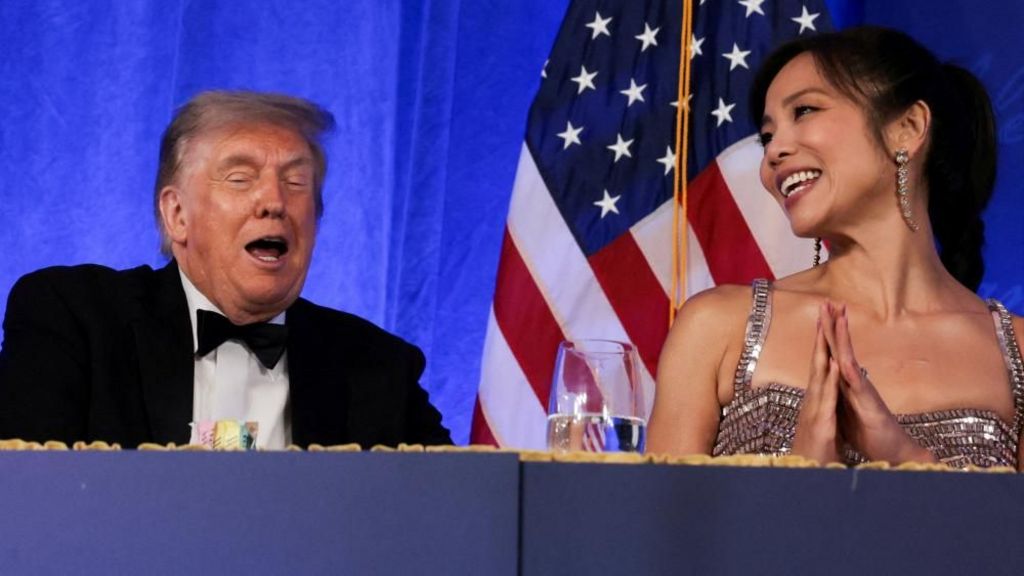
  • Trump pokes fun at press during White House Correspondents’ Dinner

    Trump pokes fun at press during White House Correspondents’ Dinner

    Six months after a would-be presidential assassination attempt forced the cancellation of the annual White House Correspondents’ Association (WHCA) dinner just moments before it was set to begin, the event finally went ahead on Saturday, with U.S. President Donald Trump leading a night of humor, tribute, and reaffirmation of American free speech traditions.

    The original April dinner, scheduled to host more than 2,000 attendees at Washington D.C.’s Hilton Hotel, was cut short when 31-year-old Cole Tomas Allen was tackled by Secret Service agents near the event ballroom. The incident left Secret Service officer Victor Gonzalez wounded, and forced organizers to scrap the gathering entirely. On Saturday, 350 fewer guests than the original planned gathering filled the venue – only 700 attendees were welcomed, amid dramatically ramped-up security measures that included multiple street blockades around the hotel, heavy deployment of uniformed police and National Guard personnel, two layers of identity and QR code screening, mandatory wristbands for all guests, and single-file entry past armed Secret Service officers.

    In her opening remarks, outgoing WHCA president Weijia Jiang of CBS News opened the event by rejecting violence’s ability to disrupt democratic press traditions, saying organizers would refuse to “let an act of violence have the final word.” She also confirmed that the 2027 WHCA dinner would return to the Washington Hilton, the site of the April attempt, to reinforce that commitment. President Trump honored Gonzalez for his quick action during the attempt, presenting him with a special award to recognize his bravery. In a symbolic moment that underscored the dinner’s mission of honoring press work regardless of political tension, Trump also shook hands with a reporting team from *The Wall Street Journal* that took home an award for its investigative coverage of Trump’s ties to disgraced financier Jeffrey Epstein – a story deeply critical of the president. Other high-ranking administration officials in attendance included Defense Secretary Pete Hegseth, acting Attorney General Todd Blanche, FBI Director Kash Patel, Treasury Secretary Scott Bessent, and Commerce Secretary Howard Lutnick.

    Before Saturday’s dinner, many members of the White House press corps had expected Trump to deliver a harsh, combative rebuke of the media, consistent with his long-running public criticism of outlets that have covered him critically, including CNN, *The New York Times*, and the *Wall Street Journal* – all of which have faced lawsuits and public attacks from the president in the past. But Trump struck a largely cordial, if still playful, tone throughout his remarks. Opening with his core message for the night, he said, “As I said three months ago, the show must go on.” He added, “The second time is always better,” noting that he respected most of the journalists in attendance, and called on the country to uphold core free speech values.

    “We settle our differences not with bullets, but with open and vigorous debate,” Trump told the crowd. “And no deranged loser with a gun will ever change that. We can’t let that ever happen.” That said, the president wove his well-known criticism of media coverage into his jokes. He quipped that the dinner was “really the largest group of ‘Trump derangement syndrome’ people ever put together at one time,” joking that “sometimes I really do think that some of you don’t like me.” He added a lighthearted jab that attendees were lucky the April event was cut short, saying he had planned a far harsher speech that night.

    Allen, the suspect in the April assassination attempt, remains in custody facing federal charges of attempted assassination of the U.S. president.

  • Ukraine is still fortifying its border with Belarus years after Russia invaded from there

    Ukraine is still fortifying its border with Belarus years after Russia invaded from there

    Four years have passed since Russian forces launched their full-scale assault on Kyiv from Belarusian territory, and Ukraine continues to ramp up defensive fortifications along its 1,084-kilometer shared border with Moscow’s closest military ally. What once served as a bustling, cross-border transit corridor connecting communities on both sides is now a quiet, restricted zone, off-limits to all civilian travel and laced with hidden landmines.

    An on-the-ground reporting trip by the Associated Press to northern sections of the border earlier this month revealed the scale of Ukraine’s defensive buildup. For miles along border-side roads, anti-drone netting has been stretched to shield infrastructure from aerial attacks. The entire border landscape is crisscrossed with lines of razor-wire fencing and reinforced concrete “dragon’s teeth” anti-tank barriers, designed to block any potential armored incursion.

    The AP visit followed a recent spike in bilateral tensions between Kyiv and Minsk. Ukraine issued a formal demand that Belarus shut down a series of Russian communications relay stations, which Moscow had installed on Belarusian soil to extend the operational range of drones targeting Ukrainian population centers. According to Ukrainian officials, Belarus complied with the request, and hostile rhetoric between the two governments has cooled significantly in the weeks since.

    Despite the de-escalation, Ukrainian security officials remain vigilant. They have confirmed that there are currently no visible signs of a new Russian troop buildup inside Belarus, but have stressed that reinforcing the border will remain a top national security priority for the foreseeable future. Ukrainian border guard units conduct 24/7 patrols across the frontier zone, using armored fighting vehicles, surveillance drones, and integrated monitoring systems to track any unusual activity.

    Belarusian authoritarian leader Alexander Lukashenko has repeatedly stated that his country has no intention of deploying its own troops to join Russia’s invasion of Ukraine, unless Belarus itself comes under direct attack. Even so, for residents living on the Ukrainian side of the border, the persistent risk of deeper Belarusian involvement in the war remains a constant source of anxiety.

    For many local communities, the sprawling network of new fortifications carries a dual meaning: the heavy defensive works serve as a stark reminder of the chaotic, uncertain early days of the 2022 invasion, when Russian forces advanced to the outskirts of Kyiv from this very border, while also offering a measure of reassurance that Ukraine is prepared for every possible security scenario. Additional reporting for this story was contributed by AP journalist Volodymyr Yurchuk based in Kyiv.

  • Southern China on alert for Typhoon Noul as Hong Kong cancels flights

    Southern China on alert for Typhoon Noul as Hong Kong cancels flights

    Over a weekend in mid-summer, Southern China and Hong Kong braced for severe weather impacts as Typhoon Noul barrelled toward the coast, triggering high-level weather alerts, mass transport disruptions and large-scale civilian evacuations across the region.

    According to Hong Kong’s Observatory, the storm had intensified steadily as it crossed the northeastern South China Sea on Saturday, recording maximum sustained winds of 140 kilometers (87 miles) per hour near its center while moving gradually closer to eastern Guangdong’s coastline. Forecasters have offered slightly differing timelines for the storm’s landfall: Hong Kong’s weather service projects Noul will come ashore near the Guangdong cities of Huizhou and Shanwei on Sunday morning, while China’s national weather center predicts landfall will occur sometime between late Saturday and early Sunday. All forecasts agree that the storm will bring a dangerous mix of powerful sustained winds and intense squally rainfall to large swathes of the region.

    Transport disruption has been widespread even before the storm makes landfall. Official data from Hong Kong International Airport confirmed that more than 150 flights scheduled for Saturday and Sunday have already been canceled, leaving thousands of passengers stranded amid travel disruptions. In Guangdong province, all domestic rail services scheduled for Sunday have been scrapped entirely, as local authorities work to clear transport corridors ahead of the storm. By late Friday, local media reports confirmed that more than 20,000 residents in high-risk coastal areas of Guangdong had already been evacuated to emergency shelters.

    In Hong Kong, partial collapse of large-scale scaffolding on a high-rise building was reported Saturday afternoon as pre-landfall wind speeds picked up. Local police confirmed that no injuries had been reported in the incident as of the latest update.

    Beyond Guangdong and Hong Kong, the storm is also bringing weather impacts across the region. China’s National Meteorological Center warned that sections of southeastern Guangdong and southern Fujian’s coastline will see extreme heavy rainfall through the weekend. Off Taiwan, the storm passed through waters south of the island on Saturday, bringing significant rainfall to parts of southern and eastern Taiwan before continuing westward away from the island.

    Typhoon Noul marks the third significant tropical cyclone to impact China within the first half of July. Earlier this month, Typhoon Bavi made landfall in eastern China on July 11, bringing destructive wind and rain that forced the evacuation of more than 2 million people across affected regions. Before that, Typhoon Maysak came ashore in southern China on July 3, marking an unusually active early start to the 2020s Pacific typhoon season for coastal China.

  • Cape Verde’s World Cup sensation Vozinha to join Chile club Colo Colo

    Cape Verde’s World Cup sensation Vozinha to join Chile club Colo Colo

    One of the most surprising standout performers from the recent FIFA World Cup has secured a new club, as Cape Verde goalkeeper Josimar Dias — widely known by his nickname Vozinha — has signed an 18-month deal with Colo Colo, Chile’s most popular and successful professional soccer team.

    At 40 years old, Vozinha became a global fan favorite and one of the most talked-about players of the entire tournament thanks to a series of extraordinary saves that frustrated elite soccer powerhouses. He put on dominant goalkeeping displays against eventual tournament champion Spain and defending World Cup title holder Argentina, turning away high-quality chances that cemented his reputation as one of the event’s biggest breakout talents.

    Cape Verde, a small island nation off West Africa’s Atlantic coast, enjoyed an unexpected deep run in the tournament that captured global attention. Their journey ended in a tightly contested 3-2 extra-time defeat to Lionel Messi-led Argentina in the round of 32, but Vozinha’s individual performance drew widespread praise from pundits, players, and fans alike.

    The 40-year-old entered the World Cup without a professional contract, but his viral tournament success quickly opened new opportunities. Colo Colo’s management confirmed the signing on Friday, making the announcement across the club’s official social media channels that immediately sparked widespread excitement. In a post welcoming the new signing, the club wrote, “Welcome. We’re waiting for you.”

    The announcement resonated far beyond Colo Colo’s own fanbase, coming at a moment when Chilean soccer is still reeling from the men’s national team’s failure to qualify for its third consecutive World Cup. The signing of a globally recognized World Cup star has injected new energy into the country’s club soccer scene.

    Aníbal Mosa, president of Blanco y Negro — the operating company that manages Colo Colo — confirmed the details of the transfer to local media. “Vozinha is going to be a Colo Colo player. In the next few days, he will travel to Chile, undergo the necessary medical examinations, and then be presented here at the Estadio Monumental,” Mosa stated, referring to the club’s 47,000-capacity home stadium in Santiago, Chile’s capital. Local Chilean sports outlets have confirmed the contract will run for 18 months.

    Vozinha’s sudden rise to global fame has been reflected in his social media growth, which exploded during the tournament. His combined social media following jumped from just under 50,000 before the World Cup to nearly 29 million in the weeks following his standout performances, demonstrating the massive global audience that connected with the underdog goalkeeper’s unlikely story.

  • Kuwait and Bahrain launch air strikes on Iran: Report

    Kuwait and Bahrain launch air strikes on Iran: Report

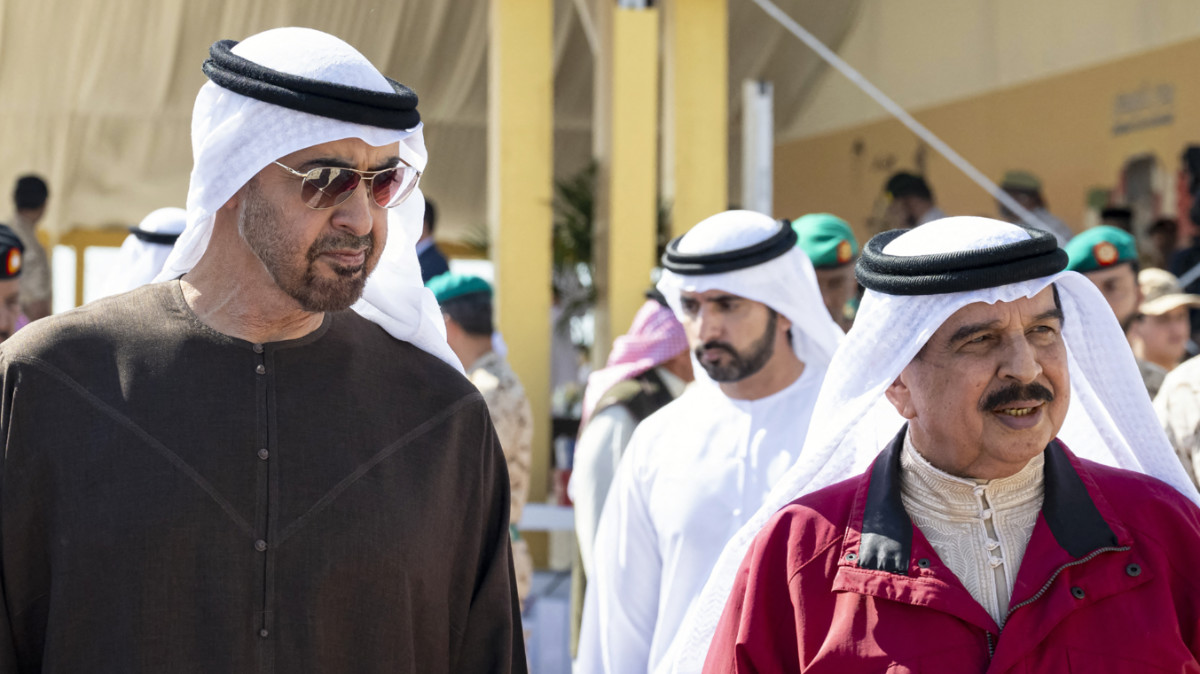
    A sharp new escalation has rocked the Persian Gulf region after The Wall Street Journal reported Friday that Bahrain and Kuwait have launched retaliatory air strikes against Iran, in response to a recent wave of Iranian attacks on their territory. According to anonymous sources cited by the outlet, the joint operation targeted Iranian facilities used to store drones and missiles, with the United Arab Emirates providing critical support in the form of battlefield intelligence and defensive air cover for the mission.

    This development marks a significant widening of the ongoing regional conflict, which reignited earlier this year after a major offensive by the United States and Israel against Iran. Bahrain and Kuwait are the latest Gulf nations to join direct military action against Tehran, joining the UAE and Saudi Arabia, which both launched strikes against Iran in the opening weeks of the conflict. Abu Dhabi has maintained one of the most hawkish stances among Gulf states, carrying out dozens of strikes on Iranian targets after coming under sustained Iranian drone and missile assault, the report notes.

    In recent weeks, both Bahrain and Kuwait have faced an intensification of Iranian attacks, as a June-brokered ceasefire extension has effectively collapsed across the region. Regional analysts point out that Iran has deliberately focused its strikes on these two smaller Gulf nations, avoiding direct attacks on larger, wealthier neighbors Saudi Arabia and the UAE. Both Kuwait and Bahrain face unique vulnerabilities shaped by their geography and economic dependence on critical Gulf waterways: the two nations rely almost entirely on the Strait of Hormuz, the world’s most important oil chokepoint, for their energy exports, leaving their economies exposed to disruption.

    Bahrain, an island kingdom, only maintains one land connection to the outside world: a single causeway linking it to Saudi Arabia. The nation has invested heavily in expanding its defense capabilities in recent years, and made regional waves in 2020 when it normalized diplomatic relations with Israel as part of the U.S.-brokered Abraham Accords.

    Kuwait, located at the northern tip of the Persian Gulf bordering Iraq, has faced dual pressure: regional officials confirm the country has come under heavy attack not just from Iran, but also from Iranian-aligned militia groups based in neighboring Iraq. Earlier this week, Kuwait’s foreign ministry confirmed that an Iranian strike damaged a local power plant and a key water desalination facility. While the damage from that attack was contained, security and public health experts have warned that large-scale targeting of the Gulf’s desalination infrastructure — which supplies nearly all of the region’s drinking water — could trigger a catastrophic humanitarian crisis.

    Unlike the UAE and Saudi Arabia, which boast large, well-funded modern militaries, both Bahrain and Kuwait are relatively minor military players in the regional balance of power. Military analysts broadly agree that the new retaliatory strikes by the two nations are unlikely to shift the overall trajectory of the conflict.

    The current round of hostilities began earlier this year when the United States and Israel launched a large-scale offensive against Iran. A ceasefire deal reached in June has all but fallen apart in recent weeks, with Iran resuming attacks on Gulf states and commercial shipping transiting the Strait of Hormuz. Saudi Arabia, which joined U.S.-led strikes in the opening phase of the conflict, has since shifted its position to back Pakistani-led mediation efforts, though it has still granted the U.S. expanded access to its airbases and airspace for operations against Iran.

    The conflict has drawn renewed international attention after U.S. President Donald Trump told Axios Thursday that he is considering carrying out a massive new attack on Iran. U.S. military officials confirmed Friday that American forces have now carried out 13 consecutive nights of air strikes against Iranian targets.

  • Trump orders Smithsonian to post warnings about ‘inaccurate’ US history

    Trump orders Smithsonian to post warnings about ‘inaccurate’ US history

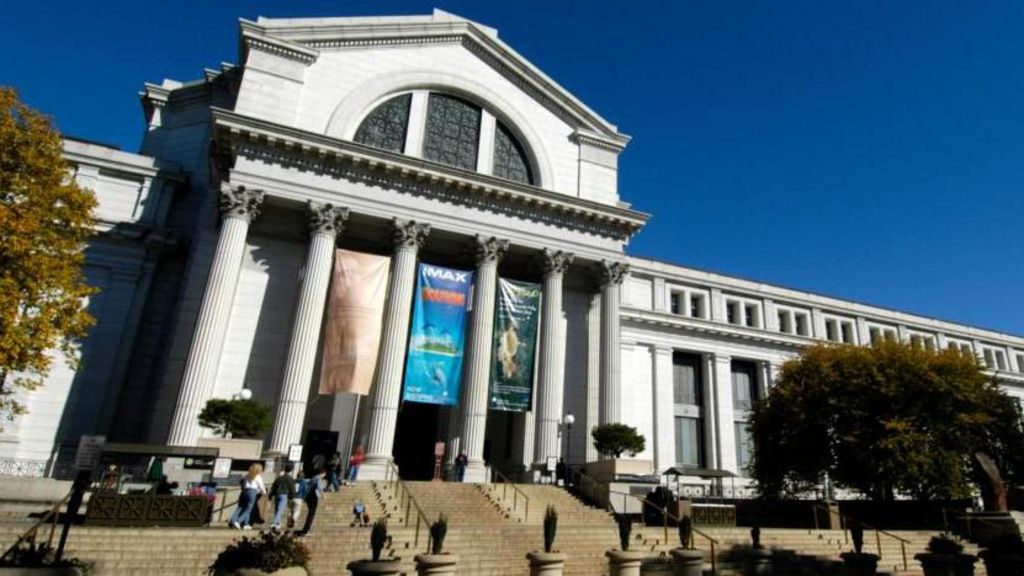
    In a sharp escalation of the Trump administration’s campaign to reshape how American history is presented to the public, former President Donald Trump has issued a new executive order ordering mandatory warning signs to be installed outside the Smithsonian National Museum of American History. The order, formally titled *Restoring Trust in the Smithsonian Institution*, targets exhibits the current administration frames as historically inaccurate, requiring the U.S. Department of the Interior to oversee placement of the signage and direct visitors to alternative sources that the White House deems ideologically aligned with its vision of American history. The order does not specify what those alternative, more accurate sources of historical information would be.

    The order follows months of escalating tension between the Trump White House and the world’s largest research and museum complex, the Smithsonian Institution. For months, the administration has repeatedly accused the Smithsonian and other mainstream academic organizations of harboring systemic anti-American bias. Friday’s order specifically criticizes museum leadership for failing to sufficiently honor the United States’ 250th Independence Day celebration, held July 4, by elevating the legacies of the nation’s founders. It goes further, claiming that museum leadership intentionally uses American history as a tool to advance progressive social justice causes and radical societal transformation.

    An accompanying official statement from the White House doubles down on these accusations, alleging the institution has veered into extreme political activism rooted in Marxist ideology that works to divide, demoralize and dishearten American citizens. The latest directive comes just days after Smithsonian director Anthea Hartig faced intense questioning from Republican lawmakers during two consecutive congressional hearings, where the institution was broadly accused of being permeated by “woke ideology” that has distorted public exhibits, educational resources and internal planning documents. Earlier this July, the White House Domestic Policy Council released a highly critical report claiming the museum actively erases traditional American heritage.

    Democratic leaders with oversight responsibility for the Smithsonian have quickly and forcefully condemned the executive order, framing it as a blatant overreach of executive power driven by partisan ideological goals. “This EO is a clear political overreach, driven by an ideological agenda to rewrite American history,” Congresswoman Melanie Stansbury, ranking member of the House Administration Committee, wrote on social platform X. “Our Smithsonian institutions do not belong to the President, but to the American people and so does our nation’s history.”

    This new directive is not the first administration action targeting the Smithsonian. In March, Trump issued an earlier order mandating the institution eliminate what he described as “improper, divisive, or anti-American ideology” from its programming. The broader push to alter the Smithsonian’s approach is part of Trump’s wider administration-wide effort to overhaul American cultural institutions, which he claims have been corrupted by left-wing “woke” ideology. To date, Trump has signed multiple executive orders eliminating diversity, equity and inclusion (DEI) programs across the federal government, a policy shift that has already sparked multiple legal challenges from opponents.

    Founded in 1846 and primarily funded by U.S. federal appropriations, the Smithsonian Institution operates 21 museums across Washington D.C., Virginia and New York, including the National Museum of American History, National Portrait Gallery, Smithsonian American Art Museum, and the National Zoo, among others. The complex draws between 15 and 30 million free visitors annually. The Smithsonian has not yet issued a public response to requests for comment from the BBC on the latest executive order.

  • India’s ‘Cockroach Party’ takes aim at Narendra Modi’s government after national exam debacle

    India’s ‘Cockroach Party’ takes aim at Narendra Modi’s government after national exam debacle

    In a bustling New Delhi public square, 18-year-old Arya Singh sits cross-legged on the pavement, strumming a tambourine as thousands of mostly student protesters crowd around her, chanting in unified roar: “Throw out the incompetent government” and “Long live people’s revolution.” For nearly four weeks, this growing demonstration has centered at Jantar Mantar, a historic 18th-century astronomical observatory that serves as India’s capital’s official designated space for public protest, drawing students from every corner of the country.

    The core demand of the movement is unambiguous: the immediate resignation of Dharmendra Pradhan, senior Bharatiya Janata Party (BJP) leader and India’s federal education minister in Prime Minister Narendra Modi’s cabinet. The trigger for the protest was the high-profile leak of the National Eligibility-cum-Entrance Test (NEET), one of the world’s largest high-stakes entrance examinations that determines admission to 137,000 undergraduate medical seats across the country.

    More than 2.3 million aspirants sat for the OMR-based NEET exam on May 3. But weeks later, an intelligence investigation uncovered that the question paper had been widely shared via the messaging app Telegram across the state of Rajasthan, forcing national exam authorities to cancel the original test and order a full re-examination on June 21. In the chaotic gap between cancellation and the retest, at least 12 students died by suicide, driven by crippling stress, shattered career hopes, and crippling uncertainty, an Indian Express investigation confirmed. Additional self-inflicted deaths have been recorded in the weeks since.

    “These 20 young people gave up every part of their lives—sports, trips, time with family—to prepare for this exam. This is not suicide. This is murder,” Singh told Middle East Eye in an on-site interview. “If this same scandal had happened anywhere else, the minister would have taken responsibility and stepped down immediately. But here in India, he clings to his post without a shred of accountability.”

    The movement, which has drawn widespread Gen Z support, carries the deliberate satirical name the “Cockroach Janta Party (CJP).” The label originated after India’s Chief Justice Surya Kant sparked national outrage during an open court hearing, when he compared unemployed young activists and job-seeking youth to “parasites” and “pests” attacking India’s political system. “There are youngsters like cockroaches who don’t get any employment or have any place in the profession. Some of them become media, some become social media, RTI activists and other activists, and they start attacking everyone,” Kant said in his original remarks. The judge later walked back the comment, clarifying he had targeted only individuals holding fraudulent degrees, not India’s youth, whom he described as “the pillars of a developed India.” But the damage was done, and young activists reclaimed the insult as a badge of honor.

    “They call us cockroaches, and maybe we are, because the system is decayed. What else can they expect such a rotten system to produce? The more rotten the system becomes, the more cockroaches it will produce,” Singh said. “That is why we are here: to show what happens when a government refuses to take accountability for its failures.”

    The movement gained national momentum after prominent Ladakh-based engineer, education reformer, and climate activist Sonam Wangchuk joined the protests in solidarity, launching a 26-day hunger strike that concluded on July 24. In the final hours of his strike, Delhi Police forcibly removed the 50-year-old activist from the protest site and admitted him to a local hospital. Wangchuk agreed to end his fast only after authorities gave formal assurances that police would end the use of force against demonstrators, drop all pending charges against protesters, and open formal negotiations with government representatives.

    Abhigyan, a 26-year-old New Delhi resident and one of the protest’s lead organizers, says the movement is rooted in broader anger over systemic corruption, institutional injustice, and rising religious intolerance under 12 years of BJP rule. He accuses the ruling party of using brutal, authoritarian tactics to suppress the demonstration. “This is not the response expected from a democratic nation but from a fascist regime, and that is what we are witnessing,” he said. Abhigyan alleges that on July 20, when protesters attempted to march toward India’s Parliament building, Delhi Police used iron-studded batons to beat demonstrators, erected electrified iron barricades to shock crowd members, and fired pellet guns to disperse the gathering. Delhi Police has denied all these allegations in an official post on X, calling the claims “completely false and misleading.” Abhigyan counters that three protesters have confirmed pellet gun injuries, 65 demonstrators were admitted to Delhi’s Ram Manohar Lohia Hospital, and 15 of those were in critical condition. He holds Prime Minister Modi and Home Minister Amit Shah directly responsible for the escalation of violence, noting “protesters never had the resources to escalate this crisis—this is entirely on the government.”

    Across the protest site, young aspirants like 21-year-old aspiring doctor Vijay Ratawal say the government’s use of force has pushed even undecided young people firmly into opposition. Reciting a collective protest poem that translates to “Leaked papers have now crossed eighty. What kind of government is this?”, Ratawal points to independent research that records nearly 70 major exam paper leaks across India during Modi’s 12-year tenure. “The use of force is making us reconsider whether the BJP should remain in power. There were doubts earlier, but now everything is clear: there are those who work for ordinary people, and those who only want to cling to power,” Ratawal said. “BJP is turning the majority of the Indian population, the youth, against them. The entire BJP cabinet is incompetent; they have set the country on fire on every front, from the Gujarat farmer protests to the Manipur ethnic violence to the tribal funeral pyre protests in Madhya Pradesh.” He added that families of protesters have lost all trust in the system, not only over exam leaks but across a slate of policies that harm ordinary citizens, and called for the BJP government to step aside to make way for competent, accountable leadership.

    The protest has drawn cross-generational support, including from 72-year-old farmer Jankabi Krishnakumar Nirmohi, who traveled from Bihar’s Bhojpur district to join the demonstration. “In 1974, we had the Navnirman and JP movements against inflation, food scarcity, and corruption, demanding systemic change. Those protests were far larger than this one, but the cruelty the BJP has unleashed on students today has no parallel in Indian history,” Nirmohi said. “When parliament loses its way, the streets begin to speak, and that is when decisions are made. It is shameless that Modi publicly praised the education minister on his birthday while students were protesting against him, and he never even mourned the 20 young people who died. That makes it very clear where his loyalties lie.”

    In recent years, South Asia has seen a wave of mass Gen Z-led protests that have toppled sitting governments in Sri Lanka, Nepal, and Bangladesh. Prominent Indian political scientist and Centre for the Study of Developing Societies professor Sanjay Kumar says the current protest sends a clear signal of widespread youth discontent with the BJP government. Opposition parties have visited the protest site to express solidarity, but Kumar says the movement was not initiated or organized by opposition groups. “My assessment is that it was neither started nor organised by opposition parties. However, once the movement began, the opposition saw it as an opportunity and tried to take advantage of it by sending a message to the youth that they are the ones looking after their interests,” he explained. He also cautions against drawing direct parallels to the regime-change movements in other South Asian countries, noting that “those are smaller countries, and something happening in the capital here has very different implications for the country. If you speak to people in rural areas, which make up nearly 70 percent of the population, I do not think this movement will have much resonance. The momentum is issue-specific and limited to a particular section of the population, mainly the youth of the country.”

    Former University of Kashmir political science professor Noor Ahmad Baba argues that the BJP’s refusal to demand Pradhan’s resignation stems from a desire to avoid appearing weak in the face of public pressure. For his part, Pradhan has struck back at critics, accusing the main opposition party, the Indian National Congress, of exploiting students as political pawns to disrupt the parliament’s Monsoon Session. “Even after the government conveyed its readiness for a comprehensive discussion, the Congress chose political spectacle over democratic debate. Their objective was never solutions for students; it was disruption for political headlines,” Pradhan wrote in an official X post. “The students of India deserve far better than being treated as tools in a political campaign. They deserve certainty over chaos, solutions over slogans and responsibility over disruption. We owe our students more than outrage. We owe them answers, reforms and accountability. That is exactly what our government remains committed to delivering.”

    Baba notes that the BJP has never faced a youth-led protest of this scale, and it remains committed to avoiding any sign of weakness by forcing Pradhan’s exit. “It will be interesting to see how the BJP handles this situation,” he said. “Having no precedent in the past does not necessarily ensure that a new precedent can’t be created.”