博客

  • India’s education minister resigns after weeks of protests against him

    India’s education minister resigns after weeks of protests against him

    NEW DELHI – In a significant political shift that marks the first major concession to public dissent from Prime Minister Narendra Modi’s administration, India’s top education official Dharmendra Pradhan formally resigned from his post Saturday, capping weeks of growing national unrest over claims of widespread entrance exam leaks and deep-seated irregularities across the country’s education sector.

    Pradhan’s exit comes after sustained grassroots mobilization under the banner of the so-called “Cockroach movement”, which organized weeks of coordinated action across the country – from large public marches and city-center sit-ins to coordinated hunger strikes – all centered on the core demand that the minister step down to take accountability for the failures that have shaken India’s competitive education system.

    The protests have emerged as one of the most high-profile acts of public opposition to Modi’s government in recent years, drawing thousands of demonstrators to the streets even in the face of harsh police intervention. Earlier this week, authorities deployed tear gas and baton charges to disperse crowds attempting to march to India’s Parliament building to amplify their demands, yet protesters refused to be dissuaded, returning to public spaces to continue their push for change. The resignation has now drawn attention to broader calls for systemic reform of India’s hyper-competitive entrance exam framework, which serves as the gateway to top higher education institutions and professional careers for millions of young people across the country.

  • Eastern Rosellas! – Meet the seven-year-old behind viral song

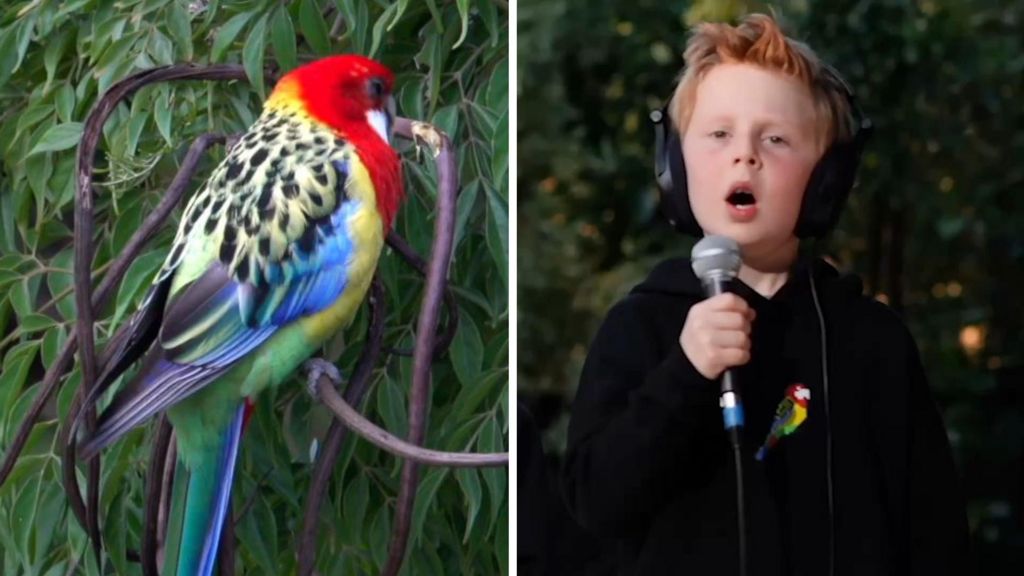
    Eastern Rosellas! – Meet the seven-year-old behind viral song

    What started as a young child’s simple tribute to a colorful native Australian bird has turned into an unexpected internet sensation, capturing the attention of millions of listeners across the globe. Seven-year-old Miles Phillips, the creative mind behind the now-viral track “Eastern Rosellas!”, has seen his homemade song rack up more than 1.5 million views on digital platforms, a milestone that has turned a small personal project into a mainstream cultural moment. The charming, unscripted tune has resonated so widely with audiences that it has even earned a spot on radio playlists, bringing Miles’ infectious enthusiasm for these bright-plumaged parrots to even more listeners outside of social media. The viral success of the young artist’s work highlights how unfiltered, authentic content created by children can cut through the noise of polished mainstream media, connecting with people who crave lighthearted, genuine moments online. What began as Miles’ simple fascination with Eastern Rosellas has now become a global talking point, proving that creativity at any age can capture the public’s heart.

  • Russian attack kills 3 in Ukraine’s Sumy region as Romania downs second drone in 2 days

    Russian attack kills 3 in Ukraine’s Sumy region as Romania downs second drone in 2 days

    Escalating Russian aerial attacks across Ukraine have left multiple civilians dead and injured over the past 48 hours, while cross-border drone incursions into NATO member Romania have prompted successive air defense intercepts, stoking new security concerns along the Eastern European alliance’s eastern flank.

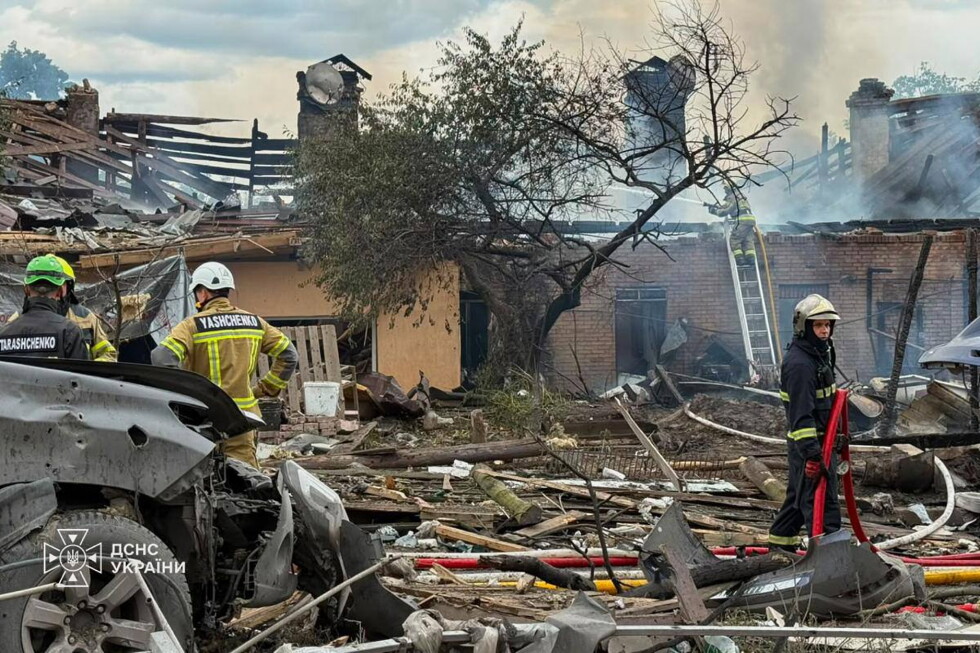
    Local Ukrainian officials announced Saturday that a Russian drone assault on a civilian infrastructure site in the northeastern Sumy region claimed three lives. Oleh Hryhorov, the governor of Sumy Oblast, confirmed the victims were all drivers working for Nova Poshta, Ukraine’s largest private postal and courier service. The impact also ignited a large uncontrolled fire at the targeted location.

    The fatal strike in Sumy followed a separate deadly attack near Kyiv on Friday, where a Russian assault on a venue hosting a defense industry gathering left at least 10 people dead and close to 100 more wounded. Overnight Friday, another Russian drone attack targeted southeastern Ukraine’s Zaporizhzhia region, striking a public shopping center. The blast sparked a massive fire that spread across 500 square meters of the complex, leaving an unspecified number of people injured, regional governor Ivan Fedorov confirmed.

    The string of coordinated attacks comes as Ukrainian President Volodymyr Zelenskyy issued an urgent warning in his Friday evening national address. Zelenskyy stated that Ukrainian intelligence assessments show the Russian military is amassing and preparing long-range missiles for a massive new wave of strikes across Ukraine, with clear indicators suggesting the large-scale attack could launch within 48 hours of his address.

    Beyond Ukraine’s borders, the spillover of the conflict has triggered security alerts in Romania, a NATO member that shares a long border with Ukraine. On Saturday, Romanian defense officials confirmed their air defense forces successfully and safely shot down an unauthorized drone that breached Romanian airspace, targeting the unmanned vehicle over an unpopulated area close to the Ukrainian border. Romanian President Nicușor Dan announced via Facebook that the interception was carried out by an F-16 fighter pilot, marking the second such shootdown in as many days.

    Saturday’s interception follows a similar incident on Friday, when Romanian forces downed a drone near the town of Padina, located northeast of the capital city of Bucharest. Cross-border drone incidents have become a recurring threat for Romania and other neighboring NATO allies since Russia launched its full-scale invasion of Ukraine in February 2022, with incursions involving both Russian and Ukrainian unmanned vessels and aircraft.

    In June 2023, a Ukrainian maritime drone deployed in the Black Sea campaign exploded near the major Romanian port of Constanta, while three additional unmanned sea drones detonated in waters outside the harbor. No casualties were reported in that incident. A month prior, a Russian drone that had been launched as part of an attack on Ukraine veered off course and crashed into an apartment building in eastern Romania, leaving two people injured.

  • African para-athletes praise Commonwealth Games inclusivity

    African para-athletes praise Commonwealth Games inclusivity

    The 2026 Commonwealth Games in Glasgow has emerged as a landmark moment for inclusive global sport, with top African para-athletes crediting the Games’ fully integrated competition structure for driving long-overdue shifts in public perceptions of disability across the continent. Unlike the Paralympic Games, which hosts para-sport competition as a separate, parallel event, the Commonwealth Games embeds para-athletic events directly into its main schedule, meaning every medal won by disabled competitors counts equally toward a nation’s overall medal table alongside medals earned by able-bodied athletes. This groundbreaking inclusive model was first introduced at the 2002 Manchester Games, making the Commonwealth Games the first fully integrated major international multi-sport event in history.

    Originally, the 2026 Games were scheduled to be hosted by the Australian state of Victoria, but the state pulled out of hosting duties in July 2023 citing unmanageable cost overruns and funding gaps. Glasgow stepped in at the last minute to host a scaled-back edition of the Games, cutting 10 full sports from the original program. Even with this reduction, the 2026 Games will feature a record 47 para-sport events across six of the 10 remaining sports, marking a historic high for para-athlete participation.

    For African athletes, this integrated structure has already delivered tangible social change, breaking down long-standing stigma surrounding disability and creating new opportunities for future generations of disabled competitors. “Sport really is a huge pusher for change,” Husnah Kukundakwe, the 19-year-old captain of Uganda’s Commonwealth Games team, told BBC World Service. “It shows that para-swimming and para-sport just deserve the same kind of recognition, funding, and sponsorship that able-bodied sport gets.”

    Kukundakwe is no stranger to making history: at 14, she became the youngest competitor at the 2020 Tokyo Paralympics, a milestone that opened the door for para-sport growth in her home country. Born without a lower right arm, Kukundakwe went on to compete at the 2022 Birmingham Commonwealth Games and carried Uganda’s flag at the 2024 Paris Paralympics. She says her athletic career has not only transformed her own life, but changed how Ugandans see para-athletes. “It was a huge deal when we went back home after Tokyo, and it kind of opened up the world of para-sport to Ugandan people, and it made big changes in terms of the support that para-sport gets from the government,” she explained.

    Before she took up competitive swimming, Kukundakwe says she hid her limb difference by wearing long sleeves even on the hottest days. Today, she competes in the 100m freestyle S9 and 100m breaststroke SB8 categories, and says the sport has helped her embrace her identity. “Swimming really built up my confidence. But ever since I started swimming, a sport which requires you to pretty much be open, I started to feel more comfortable with myself. And eventually I found out that it doesn’t really matter what I look like. It’s all about what I can do.”

    Kukundakwe is targeting Uganda’s first ever Commonwealth Games swimming medal on her home nation’s behalf, aiming for the podium in the 100m breaststroke. Before her Tokyo debut, no Ugandan swimmer had ever qualified for either the Olympic or Paralympic Games; today, Uganda has sent nine swimmers to Glasgow, including two para-athletes. Kukundakwe says increased public attention on her career has led to broader changes beyond sport, including better accessibility in new public buildings and increased government funding for disability initiatives. “It doesn’t make sense for me to open up doors and only I am able to walk through them. I want there to be more para-swimmers,” she said. “The perceptions of people with disabilities and the funding towards para-sport in Uganda really has changed.”

    Similar stories of shifting attitudes are shared by other top African para-athletes at the Games. Mauritian wheelchair racer Noemie Alphonse, who will compete in the 400m and 1500m T54 events as she chases her first Commonwealth medal, says her 2023 World Championship silver medal in Paris inspired a new wave of young disabled athletes to take up sport in her home country. “When I won that medal, the mindset completely changed in Mauritius. Many youngsters with disability and parents also were really inspired through what I did. My team-mates now are those who saw me on TV,” Alphonse said. The integrated structure of the Commonwealth Games, she added, has helped the public see para-athletes as equals. “We are able to showcase what we are able to do, and we are seen as on the same level. Everyone follows us on TV, sending good comments, good messages and encouraging us. We are really happy that the mindset changed and they are seeing that we are able to contribute to our country.”

    Ghanaian powerlifter Tahiru Haruna, who switched to the sport from arm wrestling in 2017, echoed that sentiment, even after finishing seventh in the men’s heavyweight para-powerlifting event, narrowly missing out on Ghana’s second ever para-sport Commonwealth medal. “In Ghana, I always go to schools and on streets teaching about sports, against stigma, trying to tell them that you can play sports,” Haruna said. “Back in schools in Ghana they don’t allow the physically challenged to partake in sports, so we try to teach PE teachers to get them involved. Everything is inclusion, we don’t need to separate us.”

    In a historic marker for inclusion, the first gold medal awarded at the 2026 Games went to a para-athlete: England’s Mark Swan took top honors in the men’s lightweight para-powerlifting, with Nigeria’s Roland Ezuruike claiming silver. Later in day one, Nigeria’s Esther Nworgu won Africa’s first gold medal of the entire Games, also in women’s lightweight para-powerlifting, as part of a dominant opening day for the West African nation that saw Nigeria claim three golds and three silvers in para-powerlifting overall. For many African nations, para-sport has already become a consistent path to medal success at the Commonwealth Games, demonstrating the impact of the integrated model on elevating disabled talent across the continent.

  • Chinese literature attracts readers at Egyptian book fair

    Chinese literature attracts readers at Egyptian book fair

    Egypt’s iconic Bibliotheca Alexandrina International Book Fair, one of the most prominent cultural gatherings in the Middle East and North Africa, has wrapped up its 2026 edition with Chinese publications emerging as an unexpected highlight, drawing broad attention from Arabic-speaking readers across academic and general audiences alike.

    Hosted by Bibliotheca Alexandrina, Egypt’s leading national library and cultural hub located in the coastal city of Alexandria, this year’s fair brought together nearly 100 Egyptian and Arab publishing houses and welcomed around 1,000 registered participants before organizers extended its run by three extra days to accommodate higher-than-expected visitor turnout. Curated alongside major Arabic and global literary titles, Chinese works occupied a dedicated space at the fair, reflecting the event’s commitment to fostering cross-cultural dialogue and encouraging readers to engage with diverse intellectual and civilizational traditions.

    The curated selection of Chinese titles spanned a range of topics designed to resonate with local reader interests, including deep dives into traditional Chinese arts such as ceramics and tea culture, alongside scholarly works examining centuries of historical interaction between Chinese, Arab and Islamic civilizations — content that highlights the long-standing, deep-rooted people-to-people and cultural ties connecting the two regions.

    For Chinese language students in Egypt, the presence of these publications at one of the country’s biggest international book fairs represents far more than a simple literary display: it is a critical platform for strengthening bilateral cultural exchange and breaking down outdated stereotypes about China. Salma Sameh, a Chinese language student and visitor to the fair, explained that the collection fills a key gap for both students and the general Egyptian public.

    “For students, the fair provides access to up-to-date academic references that are hard to find through other local channels,” Sameh said. “For the general public, it is an opportunity to discover China through Chinese voices rather than secondhand stereotypes, helping to build genuine, nuanced cultural awareness.”

    Sameh emphasized that high-quality translation plays an irreplaceable role in bridging civilizational gaps. “A translator does more than transfer words — they convey the spirit of the text and its underlying culture to Arab readers. Translation is therefore a fundamental bridge connecting the two civilizations,” she added. Echoing the sentiment of many local readers, Sameh called for more Arabic translations of Chinese works, particularly contemporary Chinese novels, as well as titles covering history, science, arts and technology.

    “Contemporary Chinese literature offers vivid, first-hand insights into modern Chinese society and everyday life,” she noted. “It can attract a much broader audience, especially young readers, making Chinese culture accessible far beyond academic circles.”

    Hager Rizk, another Chinese language student attending the fair, shared that access to authentic Chinese publications marks an important milestone in expanding Arab readers’ understanding of China through reliable, diverse source material. “Books remain one of the best ways to understand Chinese civilization, history, and philosophy. Specialized titles on Chinese ceramics and the historical exchanges between China and the Islamic world provide valuable academic resources for researchers and Chinese language students like me,” Rizk said.

    Like Sameh, Rizk highlighted the growing demand for more high-quality, accurate Arabic translations of Chinese works that can paint a comprehensive picture of Chinese civilization, including its most distinctive cultural heritage elements such as traditional arts, tea culture and porcelain craftsmanship.

    Rizk stressed that these Chinese publications do more than expand the collections of Egyptian and Arab libraries: they deepen overall cultural exchange between Egypt and China. “These books provide researchers, students, and the general public with a clear window into Chinese civilization, contributing to mutual learning between civilizations and strengthening knowledge exchange between the two peoples,” she said.

  • Untamed wildfires force over 160,000 to flee in France, Spain

    Untamed wildfires force over 160,000 to flee in France, Spain

    In a devastating outbreak of climate-fueled wildfires that has become one of the most extreme weather emergencies Western Europe has faced in modern history, more than 160,000 people have been displaced across France and Spain, with emergency crews stretched to breaking point and military forces deployed to battle the raging infernos.

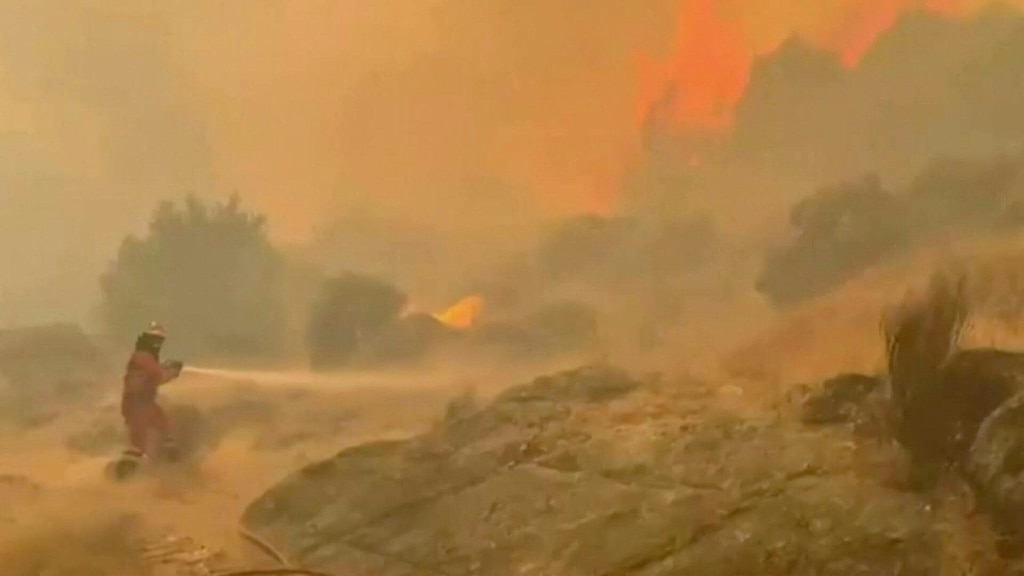
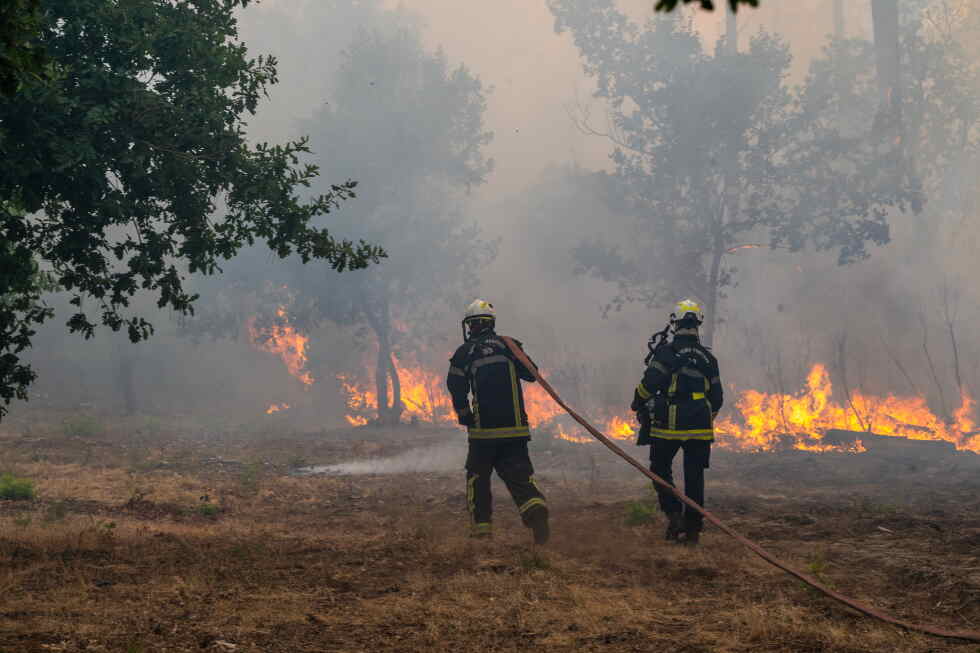
    The crisis unfolded over three days of relentless burning, with large blazes breaking out simultaneously near Bordeaux in southwestern France and on the outskirts of Madrid, Spain. By Saturday, the scale of displacement had reached staggering levels: 141,000 residents and tourists were evacuated from fire zones in France, while 25,000 more fled the Madrid region, with an additional 39,000 people ordered to shelter in place to avoid toxic smoke. The smoke from the Madrid wildfires drifted as far as the city’s center by early Saturday, a stark reminder of how close the disaster has come to one of Europe’s major capital cities.

    The fires have been amplified by exceptionally dry conditions, created by a string of record-breaking heatwaves that have parched forests across the Iberian Peninsula and southern France since May. Climate scientists have repeatedly warned that rising global temperatures are increasing the frequency and severity of droughts and extreme weather events, creating the tinder-dry conditions that allow wildfires to grow rapidly out of control.

    In France, officials have described the Bordeaux-region blaze as the largest wildfire the nation has ever recorded. French President Emmanuel Macron ordered military intervention on Friday, and Prime Minister Sébastien Lecornu later announced that 1,000 military personnel would be deployed to support overstretched firefighters who have been working around the clock to contain the flames. To date, the fire has destroyed more than 22,000 hectares of land – an area roughly twice the size of the city of Paris. Authorities also arranged for 1.5 million protective face masks to be delivered to the Gironde department to protect first responders and local residents from toxic smoke inhalation.

    The blaze near Bordeaux poses an additional high-stakes risk: it is advancing toward the broader Bordeaux wine region, which is home to many of the world’s most famous and prestigious wineries. Among the hardest-hit evacuation zones is the upscale Cap Ferret peninsula, where 44,000 people fled, hundreds of them escaping by boat as flames closed in on coastal roads. So far, 40 firefighters have been injured battling the Cap Ferret blaze, part of a rising toll that has seen three firefighters killed in wildfires across France and Italy this week alone.

    Tens of thousands of evacuees are now sheltering in emergency facilities set up in local schools, gymnasiums, and large public hangars, many unsure if their homes will still stand when they are allowed to return. Ninety-year-old Maria Lalanne, who evacuated from Lege Cap Ferret to a gym in Andernos, told reporters she had left her glasses and hearing aid behind in the rush to escape. Living with pre-existing heart disease and high blood pressure, she said she had no information about the fate of her home. “I don’t know how long all this will last. I don’t know how my house is, whether it has burnt,” she said.

    Forty-nine-year-old Caroline Larrode, who fled her home in Saumos with her three cats, said she had nowhere else to go and ended up in a large Bordeaux hangar housing evacuees from the Arcachon Basin. “We had no one to put us up,” she explained.

    In Spain, the situation remains equally critical. Two of the three large wildfires burning west of Madrid have already merged into a single massive blaze, which is just kilometers from merging into an even larger inferno on the capital’s doorstep. Carlos Novillo, the Madrid regional government’s environment chief, warned Friday that the fire was “at its peak and… currently beyond the capacity of firefighters to contain” the blaze. Spanish Prime Minister Pedro Sánchez planned to visit the fire-ravaged region on Saturday to attend an emergency response meeting in the fire-stricken village of Cenicientos, followed by a press briefing to update the public on the response effort.

    Luis, an audiovisual technician who grew up in a suburban town near the fire zone, had spent an afternoon helping evacuate residents from Pelayos de la Presa when he received his own evacuation order. “I cried at first because it’s where I grew up. But now, it’s more a feeling of anger and resignation, because there’s nothing we can do as long as we’re not allowed to go back and see what we’ll find there,” he told Agence France-Presse.

    Francisco Martín, the Spanish central government’s delegate in Madrid, said a forecast dip in temperatures on Saturday offered a small window of opportunity for firefighters. “There is a real opportunity now to tackle this fire with some guarantee of success,” he said, though he warned that the day would still be challenging, with erratic, rising wind gusts expected through the morning.

    Spain’s largest active wildfire, burning in Guadalajara province roughly 100 kilometers north of Madrid, has already scorched more than 32,000 hectares of land. Both France and Spain have formally requested assistance from the European Union to support their overwhelmed emergency response teams, as hundreds of firefighters on both sides of the border work to the point of exhaustion to contain the blazes.

  • Wildfire leads to evacuations in some suburbs of the French city of Bordeaux

    Wildfire leads to evacuations in some suburbs of the French city of Bordeaux

    In the summer of an escalating climate crisis, two of Western Europe’s most popular destinations are grappling with out-of-control wildfires that have forced more than 200,000 people to flee their homes, with flames now pushing toward the iconic French wine hub of Bordeaux.

    The emergency unfolded rapidly across southwestern France and central Spain this week, with record-high temperatures and prolonged drought amplified by climate change turning vast forested areas into tinder that fueled fires of unprecedented ferocity. Officials in both nations have acknowledged they were caught off guard by the speed and intensity of the advancing flames, which have overwhelmed initial firefighting deployments.

    In France, the blaze that began Wednesday near the Atlantic coastal vacation spot of Cap Ferret — just 37 miles southwest of Bordeaux — has swelled in size driven by strong westerly winds. By Friday, Gironde region prefect Sophie Brocas confirmed the fire had reached an “unprecedented magnitude” and was steadily advancing on the Bordeaux metropolitan area. Overnight Saturday, authorities issued mandatory evacuation orders for portions of three western suburbs of Bordeaux, including the city’s airport, plus additional communities further west beyond the immediate metro area.

    “As the fire continues to spread, and despite the significant resources deployed by firefighters, the evacuation of residents from the affected areas is required to ensure their safety,” the prefecture’s official statement read. Targeted residents received emergency alert notifications directly to their mobile devices with clear evacuation instructions, and authorities have prioritized moving all at-risk people to safe shelter as quickly as possible.

    To date, the French Interior Ministry reports roughly 141,000 people across the Gironde and Landes departments have been forced to leave their homes, with many coastal tourist residents fleeing by boat to escape the fast-moving flames. Dozens of French firefighters have been injured while battling the blazes, though no fatalities have been recorded across either France or Spain. For locals, the scale of the disaster is unprecedented: “An evacuation on this scale has never happened before. All we really hope is that the firefighters can quickly get it under control,” said Laurent Moretti, a resident of the French town of Arès.

    Across the border in central Spain, roughly 60,000 people living west of Madrid have similarly been displaced by raging wildfires that burned out of control Friday. Spanish firefighters have acknowledged the blazes move too quickly and violently to be confronted directly, leaving crews focused on evacuation and containment rather than aggressive frontline attacks. On Saturday, regional officials reported a slight reprieve: cooler temperatures and calmer winds overnight reduced fire intensity, creating a small window to reinforce containment lines.

    The European Union has mobilized a cross-national response to the emergency, with water-dumping firefighting aircraft already deployed from the Netherlands and Portugal to assist Spanish crews. Four additional aircraft — two from Italy and two from Greece — were expected to arrive in Spain Saturday to boost response efforts.

    French officials are also ramping up their response, announcing substantial national reinforcements that include additional firefighters, military personnel, medical workers, and wildfire experts to expand the team tackling the blaze. French Interior Minister Laurent Nunez described the France fire as “a large, self-sustaining fire that is extremely difficult to bring under control,” a assessment echoed by frontline crews and residents alike. As plumes of dark smoke have darkened skies across both regions and panicked residents flee by car, with authorities going door-to-door to clear at-risk neighborhoods, the disaster underscores the growing threat extreme heat and wildfires pose to populated European areas amid accelerating climate change.

  • Japan’s monkey sensation Punch gets thousands of birthday messages as he turns 1 on Sunday

    Japan’s monkey sensation Punch gets thousands of birthday messages as he turns 1 on Sunday

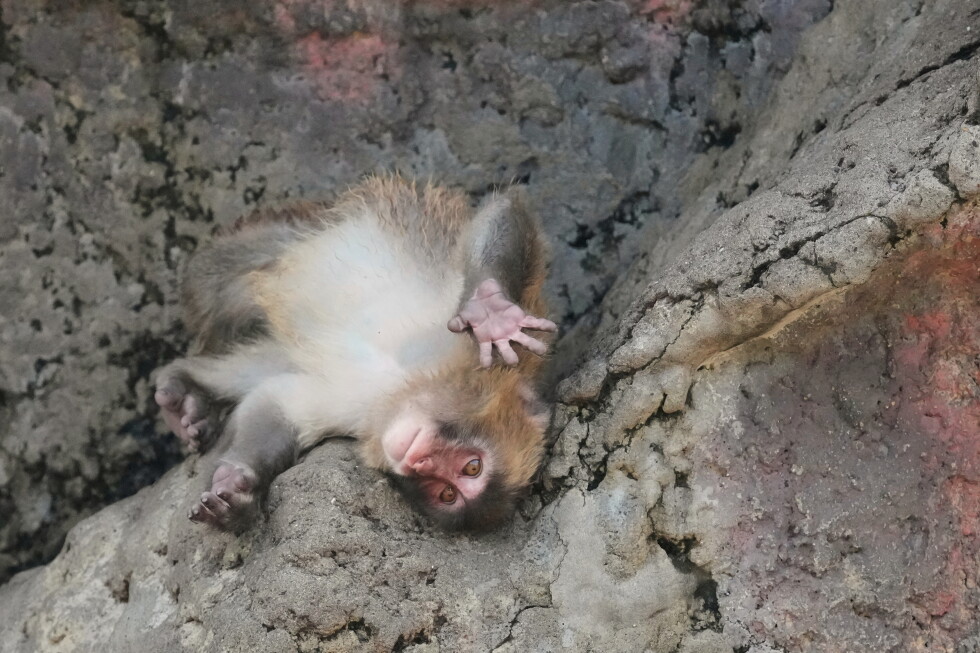
    At Ichikawa City Zoological and Botanical Garden, located east of Tokyo, a once-orphaned baby macaque that captured global attention for his endearing attachment to an orangutan stuffed toy is celebrating a major milestone: his first birthday. One year to the day after he was abandoned by his exhausted mother shortly after birth, Punch is marking the occasion with a flood of warm birthday wishes from fans across the world — a far cry from his lonely early days when the plush toy was his only constant companion.

    When Punch was first rejected by his mother, zoo caregivers stepped in to raise him by hand. To help the newborn macaque build the natural gripping skill that all infant macaques rely on to cling to their mothers and survive, staff gave him the soft orangutan plushie as a substitute. For months, the tiny baby depended on both the toy and the round-the-clock care of his two dedicated keepers, who worked tirelessly to nurture him through the unusually hot summer of his birth.

    Six months of specialized care later, in mid-January, Punch made his big transition: zookeepers introduced him to the zoo’s main macaque enclosure, where he would join a troop of roughly 50 other monkeys. The adjustment was not easy. When older members of the group chased the tiny newcomer away, Punch would retreat back to his trusted plush toy, clinging to it for comfort. In February, the zoo shared photos of Punch hugging his toy on social media, and the images immediately went viral. The hashtag #HangInTherePunch quickly spread across platforms, turning the little monkey into a global sensation.

    Today, Punch is unrecognizable from the tiny orphan that once depended on a stuffed toy. He has fully integrated into the macaque troop, playing and socializing with the other monkeys so seamlessly that he blends right in with the group. But his fame has not faded — he still draws massive crowds of admirers to the zoo, and for his first birthday, the facility has hosted a special indoor exhibit celebrating his first year of life. The exhibit’s walls are lined with roughly 2,500 birthday cards sent by fans from Japan and across the globe, alongside a video timeline chronicling Punch’s journey from a vulnerable newborn to a thriving young macaque.

    Zoo director Takashi Yasunaga reflected on the past year, noting that the extreme heat of the summer when Punch was born remains a vivid memory for staff, who all pulled together to support the baby monkey and his two primary keepers. He added that after the viral social media posts, the zoo saw a surge of tens of thousands of new visitors, half of whom traveled from overseas to catch a glimpse of Punch.

    For many fans, Punch’s story resonated far beyond his cuteness. His quiet struggle to win acceptance from the troop and reliance on his comfort toy struck a chord with people facing their own challenges. Kumi Ishizawa, a resident of Kobe who visited the birthday exhibit, said she first found Punch on social media earlier this year while she was battling an illness. At the time, recovering enough to travel to see Punch in person became her personal goal. Now fully recovered, she made the trip after a business trip, saying “I kept on telling myself that I’m going to get well and come visit to see Punch… And here I am, I made it. I’m very happy I could finally see him in person.”

    Yeye Lights, a long-time Ichikawa resident who had never visited the zoo before becoming a Punch fan, now holds an annual pass. She first learned about the monkey from her daughter living in the Philippines, and joined other local fans to celebrate Punch’s birthday with a custom cake. Using the affectionate Japanese honorific “-kun” for young boys, she thanked the zookeepers for their gentle care of the little celebrity macaque.

    This report was compiled from contributions by Yamaguchi, who reported from Tokyo.

  • Watch: Inside the room as Trump reattempts press dinner

    Watch: Inside the room as Trump reattempts press dinner

    When the first scheduled press dinner featuring former President Donald Trump was cut short by a shocking gunman incident, organizers were forced to postpone the event, sending shockwaves through the political and media communities. Weeks later, the gathering was rearranged, and BBC News reporter Bernd Debusmann Jr was on the ground, granted exclusive access inside the venue to document the rescheduled evening.

    In his on-the-ground reporting, Debusmann captured the subtle but noticeable shifts in atmosphere that set this second attempt apart from the originally planned event. What was meant to be a routine, if high-profile, networking and speech event between political figures and members of the White House press corps had been recontextualized by the violent disruption that preceded it. Guests entered the venue with heightened security protocols, and conversations often circled back to the earlier incident that forced the dinner’s cancellation in the first place.

    Debusmann’s on-site reporting offers audiences a rare, first-hand look at how the event unfolded after the disruption, from the opening remarks to the off-the-record interactions between Trump and attending journalists. The rescheduled dinner carried significant political weight, coming as Trump continues his active political engagement ahead of a high-stakes election cycle, making the inside perspective all the more valuable for observers tracking the former president’s interactions with the national press.

  • Georgia’s Okefenokee Swamp among new additions to join UNESCO’s World Heritage List

    Georgia’s Okefenokee Swamp among new additions to join UNESCO’s World Heritage List

    At the United Nations Educational, Scientific and Cultural Organization (UNESCO) World Heritage Committee session hosted in Busan, South Korea, seven culturally and ecologically significant sites across five continents received formal inclusion to the coveted World Heritage List on Saturday. The annual meeting, which will run through next Wednesday, is still evaluating dozens of additional high-profile nominations from around the globe, including France’s Normandy D-Day landing beaches, Greece’s legendary Mount Olympus, and the ancient Asuka-Fujiwara imperial capitals of Japan.

    The first of the newly inscribed natural sites, Georgia’s Okefenokee Swamp, stands as one of the largest intact freshwater wetland ecosystems on the planet. The sprawling interconnected network of marshes and forests supports an extraordinary level of biodiversity and feeds two major regional water systems. According to UNESCO’s official assessment, the swamp’s largely undisturbed peat layers preserve an unbroken 5,000-year timeline of climatic and environmental shift, making it both a critical habitat for rare species and an invaluable scientific archive for studying long-term ecological change. The designation places the Okefenokee National Wildlife Refuge alongside America’s most iconic protected landmarks, including the Grand Canyon and Yellowstone. Still, the listing has faced local opposition, with some residents raising unfounded concerns that it would grant UNESCO excessive regulatory control over site management. Despite this pushback, conservation leaders have embraced the designation as a lasting promise to protect the swamp. “We accept this inscription not as a finish line, but as a commitment to keep the Okefenokee wild, resilient, and thriving for generations to come,” said Kim Bednarek, executive director of the nonprofit Okefenokee Swamp Park, which collaborated with the U.S. federal government to develop the successful nomination.

    Across Southeast Asia, southern Thailand’s 13th-century Buddhist sanctuary Wat Phra Phra Mahathat Woramahawihan also joined the list, marking Thailand’s ninth entry to the World Heritage register. The temple, famous for its 255-foot central stupa and one-of-a-kind fusion of architectural traditions, was recognized as an exceptional example of living Theravada Buddhist heritage. It remains an active center of worship that has preserved centuries-old religious practices that draw hundreds of thousands of devotees for annual gatherings. First nominated to UNESCO back in 2012, the site underwent more than a decade of upgrades and preparation to meet the body’s strict preservation standards. City officials expect the World Heritage designation to drive a sharp increase in tourist footfall, but say they are fully prepared to manage the growth. “We have prepared our infrastructure, buffer zoning and evacuation plan to fit all the requirements of UNESCO,” Kanop Ketchart, mayor of Nakhon Si Thammarat City, told the Associated Press. “More importantly, the people are getting used to all this process for almost 10 years. So they are very much looking forward to (it).”

    Three additional cultural sites rounded out the new Asian inscriptions. India’s ancient Buddhist pilgrimage site of Sarnath, located adjacent to the holy city of Varanasi, was added for its unique spiritual and historical significance: it is recognized globally as the site where the Buddha delivered his first sermon after achieving enlightenment. Despite cycles of decline and rediscovery over millennia, the site’s remaining archaeological and architectural remains retain outstanding universal cultural value, per UNESCO’s assessment. In eastern China, the historic porcelain production hub of Jingdezhen earned inclusion for its centuries-long legacy of handcrafted ceramic innovation. The inscribed sites document the evolution of Chinese porcelain manufacturing from the 10th to 19th centuries, showcasing the technical breakthroughs that turned Jingdezhen into the global center of fine porcelain production. The city’s iconic blue-and-white porcelain remains a worldwide symbol of Chinese artisanal craftsmanship centuries after it first entered global trade routes. South Korea also saw an expansion of its existing tidal flats, or getbol, World Heritage site, with four additional coastal wetlands in the country’s western Seosan, Goheung, Muan and Yeoju regions added to the designation. UNESCO first recognized four South Korean tidal flats in 2021 for their extraordinary biodiversity and critical role as a refueling stop for migratory birds along the East Asian-Australasian Flyway. The South Korean Foreign Ministry noted that the expanded designation “reaffirms the importance of international cooperation for the conservation of the Yellow Sea ecosystem and the East Asian-Australasian Flyway,” a major migratory route stretching from the Arctic to Australia and New Zealand.

    Off the coast of East Africa, the Indian Ocean island nation of Comoros secured its very first World Heritage listing, with six 11th-century historic towns inscribed. The towns grew to become the primary urban centers of Comoros’ pre-colonial sultanates, and their preserved built environments reflect centuries of cultural exchange across Indian Ocean trade networks, blending African, Arab, and Islamic cultural influences to create a distinct regional urban tradition.